Sleds and Drags for Steep Country
There's nothing quite like the rush of a successful hunt in the rugged beauty of West Virginia. The crisp air, the thrill of the stalk, and the satisfying moment when you make a clean shot. But then reality sets in: you're likely miles from the truck, perched on a steep ridge or tucked deep in a hollow, and now you've got a several-hundred-pound animal to get out. This guide is all about tackling that exact challenge, exploring the different ways hunters in the Mountain State use sleds and drags to conquer the formidable terrain and bring their hard-won game home.
The Unique Challenges of West Virginia's Terrain for Game Retrieval
West Virginia isn't called the Mountain State for nothing. Our hunting grounds, from the Allegheny ridges to the Ohio River Valley bottoms, offer incredible beauty and abundant game, but they also present some serious hurdles when it comes to getting your animal out. It's a reality check after the excitement of the shot.
Steep Grades and Uneven Footing
Anyone who has hunted our state knows that "flat" is a luxury not often afforded. Whether you're hunting deer in the Monongahela National Forest or chasing a bear across a remote mountain, you're going to encounter slopes that can test even the most seasoned hunter's endurance. These aren't just gentle hills; we're talking about pitches so severe that you're practically climbing on all fours in some spots. And it’s not just the sheer angle that’s tough; the footing is often loose. Piles of fallen leaves, slick moss-covered rocks, hidden roots, and treacherous scree slides can turn a simple walk into a precarious balancing act. Trying to drag a heavy deer across this kind of ground can quickly drain your energy and increase the risk of a fall or injury. The effort required is compounded by having to constantly brace yourself, fight for traction, and navigate obstacles while pulling a dead weight. This is why having proper footwear, like sturdy Boots for West Virginia Hollows and Ridges, is absolutely critical for both your safety and your ability to retrieve game.
Dense Cover and Obstacles
Beyond the steepness, West Virginia's landscape is famously covered in thick, unforgiving vegetation. We have vast expanses of dense laurel thickets, rhododendron hells, and gnarly briar patches that can feel impenetrable. Imagine trying to maneuver a deer, even a field-dressed one, through a maze of tangled mountain laurel that's over your head. It's a battle against every branch and vine. Fallen timber from old logging operations or recent storms creates natural barricades, forcing you to constantly lift and pivot your animal over or around them. Creek bottoms might seem like an easier path, but they often come with their own challenges of slick rocks, deep mud, and cold water crossings. All these natural obstacles combine to make a straight-line drag impossible, turning what looks like a short distance on a map into a grueling, winding ordeal. You're not just pulling; you're pushing, lifting, and clearing a path inch by painful inch.
Remote Locations and Long Hauls
Many of West Virginia's most productive hunting spots are deep within public lands, far from any paved road or even a well-maintained logging trail. A successful hunt might happen miles from where you parked your truck, especially if you're targeting areas with less pressure. Think about hunting in the depths of the Cranberry WMA or other parts of the Monongahela National Forest; these aren't places you can just drive into easily. The sheer distance involved in hauling an animal out of these remote areas can be daunting. Even with a well-placed shot, the adrenaline eventually wears off, and the reality of a multi-mile trek back to civilization with a heavy load sinks in. This is where smart planning and the right gear truly come into play. A long haul through steep, brushy terrain tests not just your physical strength but also your mental fortitude. It’s important to conserve energy, plan your route carefully, and understand that sometimes the most direct path isn't the easiest or safest. Understanding Packs for a Monongahela Forest Day Hunt can also inform how you carry your smaller essentials, keeping your hands free for the drag itself.
Understanding Game Sleds: Types and Benefits
When faced with the daunting task of moving a large animal through West Virginia's challenging landscape, a game sled can be an absolute game-changer. These aren't just glorified toboggans; they are specifically designed tools to reduce friction and distribute weight, making the job significantly easier.
Hard-Shell Sleds for Durability
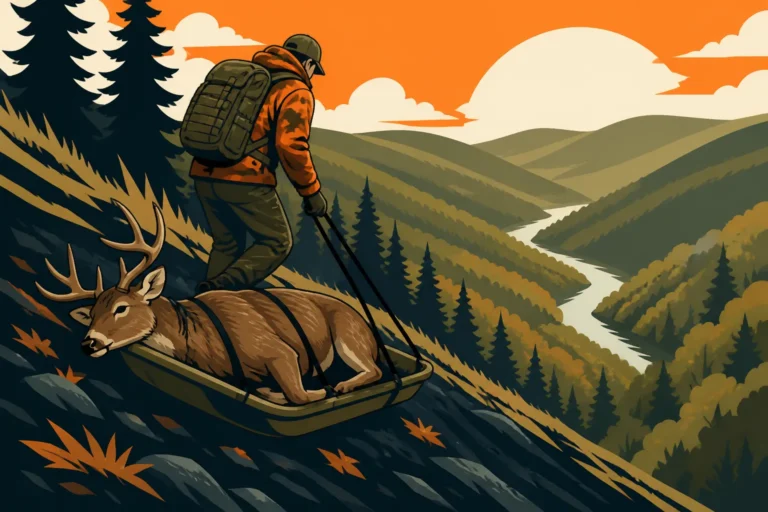
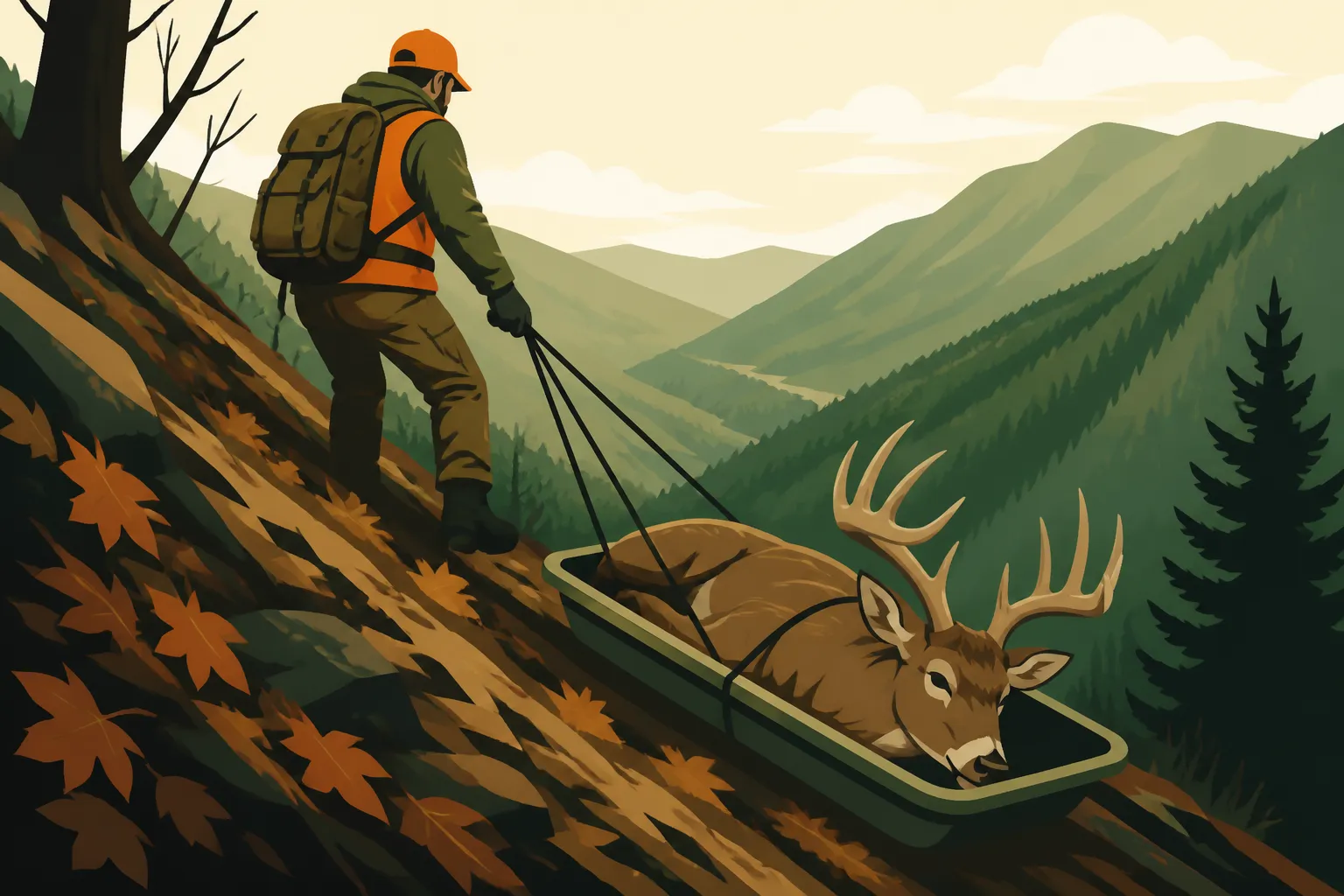
Hard-shell game sleds are typically made from durable, high-density polyethylene (HDPE) plastic. Think of them as robust, rigid plastic tubs with a narrow front end designed to glide over obstacles. Their primary benefit lies in their extreme durability and their ability to protect your game from sticks, rocks, and dirt. When you're Dragging a Deer Off a Steep Ridge in West Virginia, you're going to encounter sharp edges and abrasive surfaces. A hard-shell sled acts like a protective shield, preventing punctures or tears to the hide and keeping the meat cleaner.
These sleds are excellent for very rough terrain, especially when you might be dragging over sharp rocks or through thorny thickets that would shred softer materials. They maintain their shape, making it easier to load and keep the animal secure. Many hard-shell models feature molded-in ribs or channels on the bottom, which further reduce friction and improve tracking, preventing the sled from veering wildly on side slopes. They often come with pre-drilled holes for attaching a heavy-duty tow rope or harness. While they can be a bit bulky to carry in if you're going deep, their performance on the extraction makes the initial effort worthwhile. Some hunters will even cache these sleds near popular hunting areas before the season, knowing they'll be invaluable once a tag is filled. For big bucks or even a black bear, a hard-shell sled is often the preferred choice among serious West Virginia hunters.
Flexible Fabric Sleds for Packability
On the other end of the spectrum, we have flexible fabric sleds, often made from heavy-duty PVC-coated polyester or similar rugged, tear-resistant material. These are essentially reinforced tarps or bags designed to be pulled. Their biggest advantage is packability. Unlike rigid hard-shell sleds, flexible sleds can be rolled up, folded, and stowed away easily in your Packs for a Monongahela Forest Day Hunt or strapped to the outside. This makes them ideal for hunters who venture deep into remote areas where every ounce and every bit of space matters. You can carry one with you as a "just in case" item without feeling like you're lugging extra bulk.
When it's time to use them, you simply lay the fabric out, place your field-dressed animal in the center, and secure it with built-in straps or your own ropes. The flexible material allows the sled to conform to the shape of the animal and the contours of the ground, which can be advantageous in certain situations, like snaking through tight timber or over very uneven terrain. While they might not offer the same level of rigid protection as a hard-shell, a good quality fabric sled is surprisingly durable and resistant to punctures and abrasions. They also tend to be lighter, reducing the overall weight you're pulling. For those quick, unexpected kills or when you're hunting smaller game like a mature doe or a coyote, a flexible fabric sled is an excellent, lightweight option that you'll be glad to have when you're Recovering a Deer From a Steep Hollow.
Key Features to Look For in a Sled
Choosing the right game sled means looking beyond just hard versus soft. Several features can significantly impact its usability and effectiveness in West Virginia's demanding environment.
- Tow Rope/Harness System: This is paramount. A thin piece of rope that bites into your hands is misery. Look for sleds with heavy-duty, integrated tow ropes or, even better, a compatible harness system. A padded shoulder or waist harness distributes the pulling force across your core, saving your hands and back. Some brands like those found through diligent research using tools like GoHunt offer ergonomic handles or specialized rope systems designed for multiple pullers.
- Reinforced Edges and Bottom: Even flexible sleds should have reinforced edges, especially where the tow rope attaches. Hard-shell sleds benefit from thicker plastic or wear-resistant runners on the bottom to extend their lifespan over abrasive surfaces. This reinforcement is crucial when you're Hunting Steep Allegheny Ridges where sharp rocks are common.
- Securing Straps: Integrated straps or bungee cord attachment points are vital for keeping your animal securely in the sled, especially on steep descents or when navigating obstacles. A deer shifting within the sled can throw off your balance and make the drag much harder.
- Size and Capacity: Consider the type of game you typically hunt. A sled meant for a coyote won't cut it for a mature West Virginia black bear. Ensure the sled is long and wide enough to comfortably accommodate your anticipated harvest. Larger sleds are generally harder to maneuver in dense cover but can handle bigger animals.
- Weight: While hard-shell sleds are heavier by nature, there's still a range. Consider the trade-off between weight and durability for your typical hunting style and the distance you usually travel. A lighter sled is always appreciated at the start of a long haul.
Exploring Game Drags: Simple Yet Effective
Before fancy sleds became widely available, hunters relied on simpler, yet incredibly effective, game drags. These tools, often just a sturdy rope or harness, leverage human power to move game. While they require more brute force, their simplicity and versatility make them indispensable, especially in West Virginia's varied terrain where a sled isn't always practical or necessary.
Harness Drags for Ergonomics
A harness drag is, hands down, one of the best investments a West Virginia hunter can make for game retrieval, especially if you often hunt solo or with limited help. Instead of gripping a thin rope that digs into your hands, a harness distributes the pulling force across your shoulders, waist, or both. This engages your core muscles and legs, which are much stronger and more efficient for pulling than your arms and back alone.
These harnesses typically consist of a wide, padded strap that goes over your shoulders or around your waist, with a heavy-duty rope or webbing extending to clip onto the animal. The ergonomic design prevents fatigue in your hands and arms, allowing you to sustain the effort for longer distances. When you're Dragging a Deer Off a Steep Ridge, maintaining control and balance is critical, and a harness helps achieve this by freeing up your hands somewhat for steadying yourself or grabbing branches. Some hunters even incorporate a chest strap with their pack to connect to the drag, creating a makeshift, highly effective harness. This method is particularly useful when you're trying to conserve energy for navigating tough terrain while still making progress. The efficiency gained by using your entire body for the drag makes a significant difference on long hauls or in truly difficult conditions.
Rope and Strap Drags for Versatility
The classic rope drag is the simplest and most universally carried game retrieval tool. A sturdy rope, at least 10-15 feet long and with a good diameter for gripping, can be used in countless ways. You can simply loop it around the deer's neck or antlers, or run it through the animal's mouth and out the opposite eye socket (a trick many old-timers swear by for keeping the head stable and preventing wear on the hide). The beauty of a rope drag is its adaptability; you can quickly attach it, adjust its length, and even use it to lower an animal down a steep bank or secure it temporarily.
Beyond just a straight pull, ropes can be used to create mechanical advantage. For instance, if you have a second person, they can help lift or guide the animal while the primary person pulls. If you're Recovering a Deer From a Steep Hollow, you might use a rope to help guide the animal up a small embankment. Heavy-duty nylon webbing straps, often 1-2 inches wide, offer a similar versatility but are generally more comfortable to grip than thin ropes, especially if they are flat and distribute pressure better on your hands. Many hunters carry a few short sections of these straps or even some heavy-duty bungee cords in their pack for quick, impromptu drags or to secure gear. While they don't offer the same ergonomic benefits as a harness, their low profile, light weight, and sheer utility make them a must-have for any West Virginia hunter.
DIY Solutions and Emergency Drags
Sometimes, despite all your planning, you find yourself miles back in the woods with a successful kill and no dedicated drag or sled. This is where ingenuity comes into play. West Virginia hunters have a long history of making do with what they have.
- Antler Drags: If your buck has antlers, these can serve as natural handles. While not ideal for your hands, especially if the antlers are rough or sharp, they get the job done for short distances or when combined with a jacket sleeve or a section of rope wrapped around them for grip.
- Jacket/Tarp Drags: A sturdy hunting jacket, poncho, or even a heavy-duty contractor bag can be improvised into a temporary sled. Lay it out, place the animal on top, and tie off the corners with rope or heavy twine. This reduces friction significantly over bare ground.
- Belt/Backpack Straps: In a pinch, your hunting belt or the shoulder straps from your backpack (if you can detach them safely) can be fashioned into a makeshift harness, allowing you to pull with your core.
- Natural Materials: Don't underestimate the power of natural materials. A stout sapling can be used as a lever, or a downed log can create a temporary ramp over an obstacle. Even bundling branches to create a wider "sled" base can work in a desperate situation.
The key to any emergency drag is resourcefulness and a clear head. Before you even head out, consider what you might use in an emergency. A multi-tool, some extra cordage, and even a heavy-duty trash bag should be standard items in your Packs for a Monongahela Forest Day Hunt. Planning for the worst often means the worst never happens, or at least isn't as bad as it could have been.
Techniques for Effective Game Retrieval in Steep Country
Successfully retrieving game in West Virginia's steep terrain isn't just about having the right gear; it's also about employing smart techniques. Knowing how to use your body, leverage the terrain, and work with your hunting partners can make a monumental difference in getting your animal out efficiently and safely.
Solo Hunter Strategies
Hunting solo in West Virginia offers unparalleled freedom, but it also means the entire retrieval job falls squarely on your shoulders. This demands smart planning and energy conservation.
First and foremost, field dressing is non-negotiable. Every pound you can remove from the animal is a pound you don't have to drag up a steep incline. Remove the guts immediately after the kill. If allowed by regulations and practical for your situation, consider quartering the animal, especially larger ones like bear or bigger bucks. While more time-consuming, carrying meat out in a frame pack can be far less strenuous than dragging a whole animal, particularly if you're Hunting the Cranberry Backcountry Wilderness Edge where long distances are common.
When dragging solo, take frequent breaks. Push yourself, but don't overdo it to the point of exhaustion, which can lead to mistakes or injury. Use the "leapfrog" method: drag the animal a short distance, then walk back to your pack or a landmark, rest, and repeat. This breaks the seemingly impossible task into manageable chunks. Utilize gravity where possible, but with extreme caution. If you're on a steep downhill, the sled or animal can gain momentum quickly. Maintain control by looping the drag rope around a tree or using your body as a counterweight. Don't let the animal get away from you, as it can cause damage to the meat or a dangerous fall. Always try to pull in a way that uses your legs and core, keeping your back straight and your movements controlled. Thinking ahead about your extraction route before you even set up your stand, especially if you're Hanging a Stand on a Steep Allegheny Ridge, can save you immense effort later.
Team Retrieval Tactics
Having hunting partners is a huge advantage when it comes to game retrieval in West Virginia. The key is to work together, communicate effectively, and distribute the load.
For dragging, two or more people can attach to a single sled or drag harness, with one person leading and setting the pace, and others providing power from behind. If you have multiple people, consider rotating who is at the front doing the heaviest pulling. If the terrain is particularly steep or difficult, one person can pull from the front while another "pushes" or guides the hindquarters from the back, preventing the animal from snagging on obstacles. Communication is paramount. Call out obstacles, signal when you need to rest, and decide on the best path forward together. When you're Deer Drives With Three or Four Hunters, it's a perfect scenario to practice team retrieval.
On especially tricky sections, like lowering an animal down a very steep bank or lifting it over a large log, the team can create a "human chain" or a series of short, controlled lifts and slides. One person might act as an anchor, while others maneuver the animal. For extremely large game like bears or if you're particularly deep in the backcountry, carrying the animal out in quarters might still be the most efficient method, with each hunter taking a loaded frame pack. Remember, the goal is not just to get the animal out, but to do so safely and without damaging the meat.
Leveraging Gravity and Terrain
The mountains of West Virginia are a double-edged sword: they make the uphill climbs brutal, but they also offer opportunities to use gravity to your advantage.
When you're on a downhill slope, let gravity do some of the work, but maintain absolute control. Never let the sled or animal free-slide down a hill, especially if it's rocky or densely timbered. Loop your drag rope around a tree or use your body to create friction, allowing for a slow, controlled descent. This is particularly important when Dragging a Deer Off a Steep Ridge. A runaway animal can be damaged or lost in a thicket.
Look for natural "chutes" or less-vegetated paths that follow the contours of the land. Sometimes, following a slight curve or taking a slightly longer route that has a gentler grade can be much easier than trying to muscle your way straight up or down the steepest pitch. Creek beds or dry washes can sometimes offer a smoother path of least resistance, but be mindful of water, slick rocks, and potential deadfalls. Logging roads or old skid trails, even if overgrown, are often the easiest routes to find and follow. These were designed for heavy equipment and usually have a more manageable grade than pristine forest. Before you even start hunting, use mapping tools, like those you can find on GoHunt's platform, to identify potential retrieval routes. Look for saddles, benches, or gentler draws on the topographical map that might lead back to a main trail. Understanding Wind and Thermals on a Steep Ridge can also give you clues about how deer naturally move, which often correlates with easier travel routes for you too.
Essential Considerations Beyond the Gear
Getting your deer, bear, or turkey out of the West Virginia backcountry involves more than just a sled or a rope. It's about preparedness, safety, and a deep respect for the animal and the regulations. Overlooking these crucial elements can turn a successful hunt into a miserable ordeal.
Physical Preparation and Safety
Retrieving game from West Virginia's steep, rugged terrain is intensely physical work. It's often compared to an extreme workout, and it's not something you should undertake without some level of physical preparedness. Leading up to hunting season, incorporating exercises that strengthen your core, legs, and back will pay dividends when it's time to drag out an animal. Hiking with a weighted pack, doing lunges, squats, and even some deadlifts can simulate the strains you'll encounter in the woods.
Safety is paramount during retrieval.
- Stay Hydrated and Fueled: Pack plenty of water and high-energy snacks. The physical exertion will quickly deplete your reserves.
- Wear Appropriate Footwear: Boots for West Virginia Hollows and Ridges with excellent ankle support and aggressive traction are non-negotiable. A twisted ankle miles from the truck with a deer on the ground is a nightmare scenario.
- Communicate and Plan: If hunting with a partner, discuss the retrieval plan beforehand. If solo, let someone know your general hunting area and expected return time. Carry a reliable communication device, even if it's just a cell phone for emergency calls (though service can be spotty in many West Virginia remote areas).
- Mind Your Surroundings: Be aware of loose rocks, unstable footing, and other hazards. When pulling, keep an eye on where you're stepping. Don't rush; a slow, steady pace is safer and often more efficient in the long run.
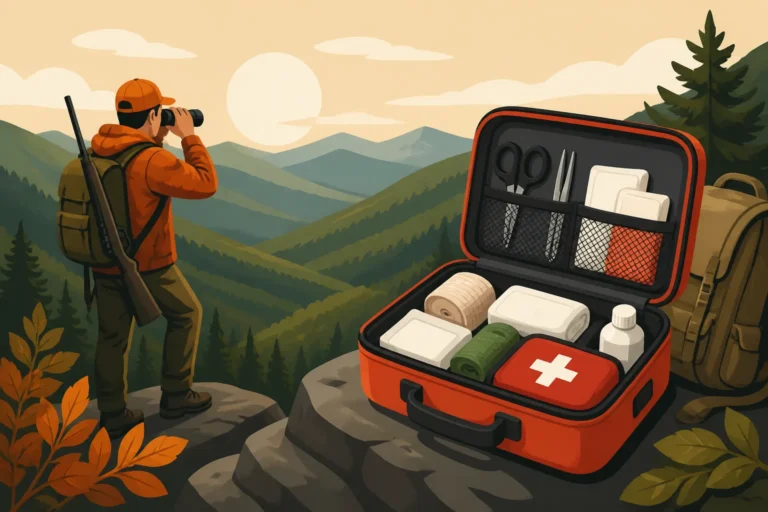
- Carry a First Aid Kit: Scrapes, cuts, and blisters are common. A well-stocked first aid kit should always be in your pack.
Remember, no animal is worth risking serious injury. If the situation feels unsafe, re-evaluate your plan, even if it means taking longer or leaving the animal overnight (if conditions and regulations allow, and you can properly cool the meat).
Field Dressing and Meat Care in Remote Areas
The moment an animal is down, the clock starts ticking on meat care. This is especially true in West Virginia, where early season hunts can still be quite warm, and proper handling is essential to prevent spoilage.
- Immediate Field Dressing: As soon as you've confirmed the animal is expired, field dress it promptly. This removes the internal organs, which are a major source of heat and bacteria. Learning effective methods for Field Dressing a Deer in Cold Weather is beneficial even on warmer days, as the principles of cleanliness and cooling remain the same.
- Cooling the Carcass: After field dressing, prop the cavity open with sticks and elevate the animal off the ground to allow for maximum airflow. This helps dissipate heat. If it's a warm day, consider pouring some cool stream water (if available and clean) into the cavity to help cool it, then quickly dry it out.
- Protection from Contaminants: While dragging, be mindful of dirt, leaves, and other debris getting into the open cavity. If using a sled, position the animal to minimize this. Game bags, even simple cheesecloth, can protect the meat from insects and dirt while still allowing it to breathe.
- Understanding West Virginia CWD Rules: If you're hunting in a Chronic Wasting Disease (CWD) containment area, specific rules apply to carcass movement. You might only be able to transport certain parts out of the area. Be informed about West Virginia CWD Testing for Hunters and West Virginia Carcass Movement Restrictions before you hunt in affected counties. Always check the current WVDNR regulations.
Proper meat care starts the moment of the kill and continues through the retrieval process. It ensures that your hard-earned venison or bear meat is safe, clean, and delicious.
West Virginia Regulations and Ethics
Beyond the physical challenges, hunters must always adhere to West Virginia's hunting regulations and maintain ethical practices.
- Reporting Requirements: All deer and bear harvests must be reported to the WVDNR. Understand the deadlines and methods, whether through the online system or the Go Outdoors WV app.
- Tagging: Immediately after the kill, properly tag your animal according to WVDNR specifications. This includes writing down the date and time of kill, and attaching the tag to the carcass as required.
- Blaze Orange Requirements: During gun seasons, specific blaze orange requirements are in effect. Make sure you and your partners are wearing the correct amount of How Much Blaze Orange West Virginia Requires, even during retrieval, for your safety.
- Private Land: If your retrieval route inadvertently crosses private land, you absolutely must have permission from the landowner beforehand. West Virginia Trespass and Permission Law is clear on this. Even if the animal expired on public land, trespassing to retrieve it is illegal without permission. Always respect private property.
- Ethical Considerations: Dragging an animal can sometimes be messy. Be mindful of others who might be using the same trails or public land. Minimize disturbance, and if possible, clean up any blood trails that might be visible near public access points. Practice the "leave no trace" ethic, taking out everything you brought in, and then some.
Being a responsible West Virginia hunter means not just abiding by the letter of the law but also upholding the highest ethical standards, both in the pursuit and the retrieval of game.
Making the Right Choice: Sleds vs. Drags vs. Carts
Deciding whether to use a game sled, a simple drag, or even a game cart ultimately comes down to the specific conditions of your hunt in West Virginia. Each has its strengths and weaknesses, making one more suitable than another depending on the terrain, the size of your animal, and the number of hunters in your party.
When a Sled Shines
Game sleds, particularly the hard-shell variety, truly come into their own when you're facing abrasive, obstacle-rich, or heavy snow conditions.
- Rough Terrain: If you're Hunting Steep Allegheny Ridges or the rugged backcountry of the Monongahela National Forest, where sharp rocks, downed timber, and dense brush are common, a hard-shell sled provides invaluable protection for your game. It prevents the hide from tearing and keeps dirt and debris out of the cavity, especially important for meat care.
- Deep Snow: In the colder months, if West Virginia gets significant snowfall, a sled becomes an absolute must. It glides effortlessly over snow, drastically reducing friction compared to dragging an animal directly. This is crucial for late-season hunts when you might be Hunting Into the Late December Archery Close.
- Larger Animals: For mature bucks, black bears, or even multiple smaller animals, a sled distributes the weight better, making the overall pull more manageable. The larger surface area reduces the pressure points that a simple drag rope would create.
- Multiple Hunters: With several people pulling, a sled can be incredibly efficient. Multiple ropes or a harness system can be attached, allowing a team to move heavy game with relative ease.
A sled is a significant investment in space and often weight to carry in, but it pays dividends in situations where friction reduction and protection are paramount.
When a Drag is Your Best Bet
Simple game drags – whether a rope, strap, or harness system – are the champions of lightweight portability, quick deployment, and navigating extremely tight or technical terrain.
- Lightweight and Packable: If you're a minimalist hunter or covering vast distances on foot, a rope or a flexible harness drag is ideal. It takes up minimal space and adds negligible weight to your Packs for a Monongahela Forest Day Hunt.
- Quick Deployment: When you make a quick kill and just need to get the animal a few hundred yards to a clearer path or a forest road, a simple drag is fast to set up and get moving.
- Dense Cover and Steep, Technical Terrain: In areas with incredibly dense laurel thickets, rhododendron patches, or extremely steep, rocky sections where a bulky sled might get wedged or caught, a drag allows you to maneuver the animal with more precision. You can lift, pivot, and snake the animal through tight spots more easily than with a rigid sled. This is particularly useful when you need to Recovering a Deer From a Steep Hollow where precise movements are needed.
- Smaller Game: For smaller deer, coyotes, or if you're only dragging a short distance, a drag often provides sufficient friction reduction without the added bulk of a sled.
- Emergency Situations: As discussed, a simple rope can be improvised into a drag using available materials, making it a vital emergency tool.
For the hunter who prioritizes agility and minimal gear, a well-chosen drag system is indispensable for the realities of West Virginia hunting.
The Limitations of Carts in Steep West Virginia Terrain
While game carts are excellent for moving animals over relatively flat, even ground, they generally fall short in the typical rugged West Virginia hunting environment.
- Steep Grades: On steep uphill or downhill slopes, game carts become incredibly unwieldy and dangerous. They are prone to tipping over, can gain uncontrolled momentum on descents, and require immense strength to push or pull uphill.
- Uneven Terrain and Obstacles: Wheels are great on smooth surfaces, but West Virginia's woods are anything but. Logs, rocks, ditches, deep ruts, and thick brush will constantly impede a cart. You'll spend more time lifting and wrestling the cart over obstacles than actually moving it forward. This is especially true when attempting to retrieve game in areas where you might be Hunting Potomac Highlands Public Land which are notoriously rugged.
- Dense Vegetation: Trying to push or pull a wheeled cart through dense laurel or rhododendron thickets is an exercise in futility. The wheels get caught, and the frame gets snagged.
- Narrow Trails: Many of West Virginia's forest trails, especially those less traveled, are too narrow for the width of a game cart, forcing you to constantly bash through brush or lift the cart over obstacles.
When a Cart Might Work: The only scenarios where a game cart might be a viable option in West Virginia are on well-maintained, wide logging roads, very open fields, or exceptionally flat, clear forest floors. Even then, you need to be confident that your entire retrieval path fits these criteria, which is a rare luxury in our mountains. For the vast majority of West Virginia hunting, sleds and drags are simply more practical and effective.
Here's a quick comparison to help you visualize the choice:
| Feature | Game Sled (Hard-Shell) | Game Drag (Harness/Rope) | Game Cart (Wheeled) |
|---|---|---|---|
| Best For | Large animals, deep snow, very rough/rocky terrain, multiple hunters | Solo hunters, tight cover, steep/technical terrain, small to medium animals, lightweight carry | Flat, clear, wide trails/roads, open fields, gentle slopes |
| Friction Reduction | Excellent | Moderate to Good | Excellent (on smooth ground) |
| Carcass Protection | Excellent | Minimal | Good |
| Packability | Poor (bulky) | Excellent (very compact) | Poor (bulky, heavy) |
| Maneuverability | Good (can snag in thick brush) | Excellent (highly agile) | Poor (in steep, rough, or dense terrain) |
| Effort Required | Moderate to High (less on snow) | High (more direct effort) | Low (on ideal terrain), Extreme (on bad terrain) |
| Cost | Moderate | Low | Moderate to High |
Ultimately, the best approach for hunting in West Virginia often involves a combination of strategies and gear. Many hunters will carry a simple drag for impromptu use and have a sled stashed or available for when they know they'll be in challenging terrain. Using mapping tools from GoHunt to scout potential retrieval routes beforehand can also help you make an informed decision about what gear to bring or prepare.
Disclaimer
This article is for general informational purposes only and does not constitute professional advice. Laws, prices and regulations vary by location and change over time. Consult a qualified professional for guidance on your specific situation.