Deer Sleds for Steep Country
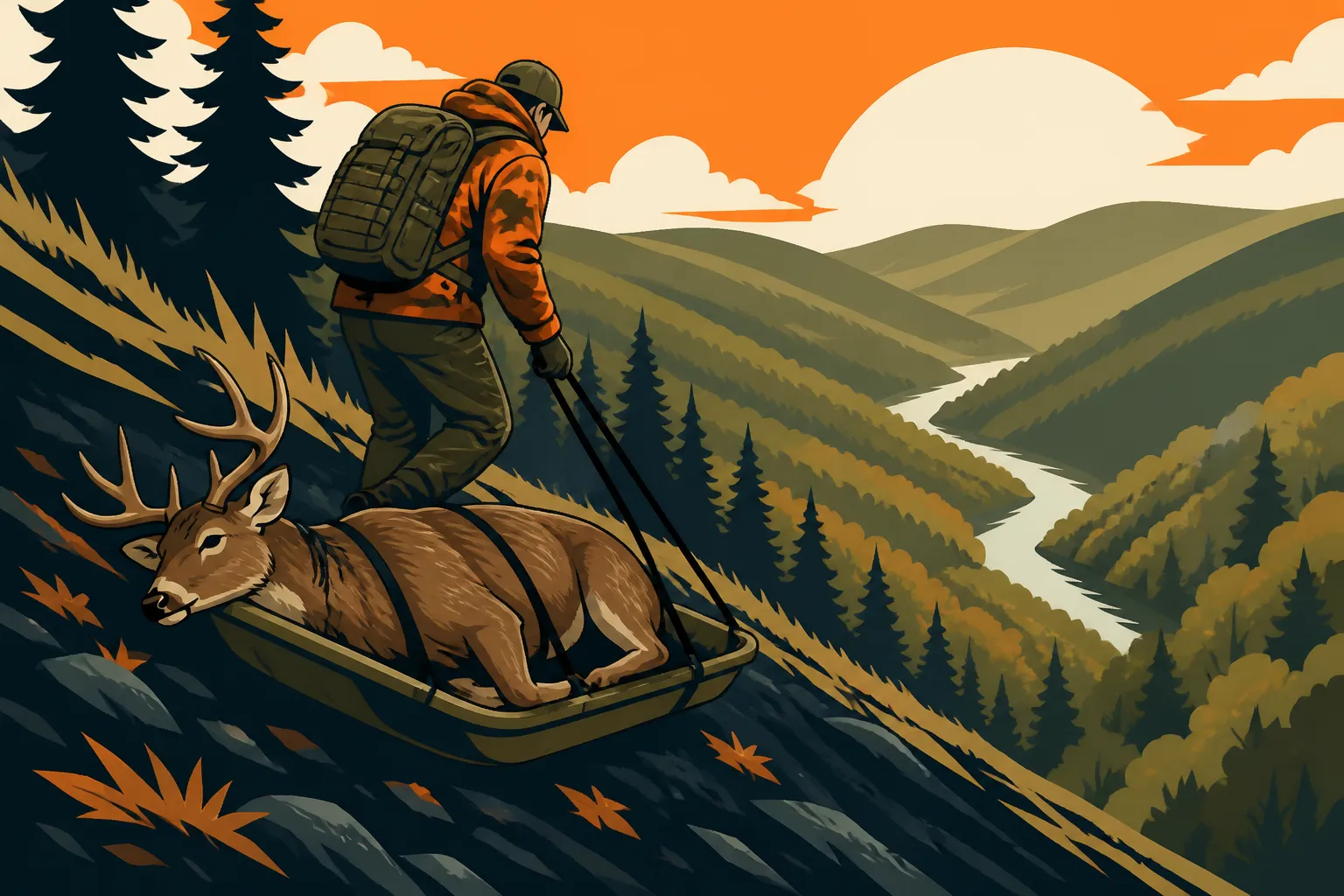
Few experiences are as humbling and exhausting for a West Virginia hunter as successfully tagging a deer deep in the mountains, only to realize the monumental task of getting it out. The steep hollows, rocky inclines, and thick laurel patches of the Mountaineer State can turn a moment of triumph into an hours-long, muscle-burning ordeal. This guide is all about making that retrieval process manageable, focusing on the unsung hero of backcountry deer removal: the deer sled. We'll dive into why they're essential, what to look for, and how to use them effectively when every step feels like climbing a ladder.
Why Deer Retrieval is a Challenge in West Virginia's Steep Terrain
West Virginia isn't called the Mountain State for nothing. Our topography is a beautiful but brutal mistress, offering incredible hunting opportunities but demanding serious physical prowess, especially once a deer is on the ground. Hunters often underestimate the sheer difficulty of moving several hundred pounds of dead weight over unforgiving terrain, and it’s a mistake that can lead to exhaustion, injury, and even spoiled meat.
The Brutal Reality of Mountainous Hauls
Imagine this: you've made a perfect shot on a mature buck on a bench several hundred feet down from a ridge, or perhaps way back in a remote hollow of Monongahela National Forest. The excitement is immense, the gratitude palpable. Then reality sets in. That deer, which looked so much smaller standing, now seems to weigh a ton. Every single foot of elevation gain or loss becomes an obstacle. The ground beneath your feet is rarely flat, often covered in loose rock, slick leaves, or tangled briars.
The physical toll is immense. Dragging a deer by hand, even with multiple people, means constant bending, straining, and pulling. Your back, shoulders, and legs scream in protest. Dehydration can set in quickly, especially during warmer early archery days or if you're out late into a West Virginia Muzzleloader Tactics hunt. The risk of rolling an ankle, slipping on a wet log, or even taking a dangerous tumble with a heavy load is very real. And let's not forget the clock. Time is not on your side, particularly when temperatures are mild, and you need to get that deer field-dressed and cooled to prevent spoilage. What might take an hour on flat ground can easily stretch into half a day in our mountains.
When Traditional Methods Fall Short
Many hunters try to "tough it out" or rely on methods that simply aren't designed for truly steep country. Dragging a deer by its antlers or legs might work for short distances across relatively flat ground or a well-maintained logging road. But try that straight up a 45-degree slope or through a rhododendron thicket that seems specifically designed to trip you, and you'll quickly realize its limitations. The deer's hide catches on every twig, every rock, creating immense friction. You expend an incredible amount of energy for minimal forward progress.
Deer carts, while fantastic for many situations, also hit their limit. These wheeled conveyances are excellent for traversing relatively flat trails, old logging roads, or even gently sloping terrain where you can maintain some balance. However, introduce a steep descent with switchbacks, or try to navigate large boulders and fallen trees, and a cart quickly becomes more of a liability than an asset. The wheels can get caught, the cart can tip, and controlling its momentum on a steep downhill grade, especially with a heavy deer strapped to it, can be outright dangerous. The specialized nature of West Virginia's rugged landscape often calls for something simpler in design but far more effective: a good old-fashioned sled.
What Makes a Good Deer Sled for Mountain Hunting?
Choosing the right deer sled isn't just about picking up the first piece of plastic you see at the sporting goods store. For the kind of steep, rocky, and often unforgiving terrain we encounter hunting in West Virginia, specific features make all the difference between a frustrating, back-breaking haul and a relatively smooth, controlled retrieval.
Durability and Material Science
The number one characteristic of a good deer sled for mountain hunting is its durability. Our mountains are littered with sharp rocks, jagged stumps, fallen timber, and abrasive gravel. A flimsy sled will tear, crack, or get hung up on the first serious obstacle. Look for sleds made from high-density polyethylene (HDPE) or other robust, impact-resistant plastics. These materials offer a balance of stiffness and flexibility; they're rigid enough to hold their shape and protect the deer but flexible enough to glide over uneven ground without shattering.
Thickness matters, too. A thicker material generally means more resistance to punctures and tears. While some flexibility is good for conforming to terrain, a sled that's too flexible can buckle under a heavy load or allow the deer's weight to drag directly on the ground, creating unnecessary friction. Ideally, the material should be slick on the bottom to minimize resistance against the ground, yet tough enough to withstand repeated abuse from rough surfaces. You're not just sliding it over snow; you're often dragging it over exposed roots, shale, and sharp edges.
Design Features for Steep, Rough Ground
The overall shape and specific features of a deer sled are critical for navigating challenging West Virginia topography.
- Tapered Nose/Upturned Front: This is non-negotiable. A sharply tapered and upturned front allows the sled to glide over obstacles like small logs, rocks, and uneven ground without digging in. Without it, the front edge will act like a shovel, getting stuck constantly and forcing you to lift and reposition, wasting precious energy.
- Raised Edges/Sides: While not always a full "tub" design, having slightly raised edges helps contain the deer and prevents it from sliding off the sides, especially during turns or when traversing side-hills. It also offers some protection against external debris.
- Attachment Points: Look for multiple, reinforced rope holes or grommets around the perimeter, especially at the front. These are crucial for securing your pulling rope and for adding extra ropes if you have multiple people assisting with the pull, or if you need to guide the sled from the rear on a steep descent. The holes should be strong enough not to tear out under load.
- Size and Capacity: The sled needs to be large enough to comfortably accommodate the average deer you hunt. For West Virginia whitetails, a sled typically between 5 to 7 feet long and 2 to 3 feet wide is a good general purpose size. You want enough space for the deer to lie flat without excessive overhang, but not so large that it becomes cumbersome to maneuver through tight timber or dense undergrowth. Remember, you might also be strapping your pack or other gear alongside the deer.
- Sled Weight: The sled itself should be as lightweight as possible while still maintaining its durability. You're already hauling your hunting gear and then a deer; you don't need to add unnecessary weight from the sled itself during the initial trek in.
Ergonomics and User Experience
A deer sled is a tool, and like any tool, its effectiveness is greatly enhanced by how well it works with the human using it.
- Pulling Ropes and Handles: Most sleds come with a basic rope, but consider upgrading to a more substantial, comfortable rope. A wider, softer rope is easier on the hands, especially if you're pulling for miles. Some hunters prefer a harness system that attaches to their waist or shoulders, distributing the load more effectively than just pulling by hand. This is especially true for solo retrieves or when Dragging a Deer Off a Steep Ridge. A good rope should also be long enough to give you some distance from the deer, allowing for a better pulling angle and keeping the sled from bumping your heels.
- Securing the Deer: While not always included, the ability to securely strap your deer to the sled is vital. Bungee cords, cam straps, or even a heavy-duty ratchet strap can keep the deer from shifting, which is important for control and preventing it from falling off, particularly on steep or uneven ground. Imagine getting a deer halfway up a climb only for it to slide right back down because it wasn't secured. That's a gut punch no hunter wants to experience.
- Maneuverability: Think about how the sled will handle turns and tight spots. A sled that’s too wide or rigid might get hung up in dense laurel thickets or between closely spaced trees, common in many parts of West Virginia. The overall design should lend itself to being pulled, pushed, and guided through challenging terrain with as little resistance as possible.
Practical Application: Using Your Deer Sled in West Virginia's Mountains
Owning a deer sled is one thing; using it effectively and safely in West Virginia's steep country is another. It takes some forethought, proper technique, and sometimes a little help from your buddies.
Scouting for Retrieval Routes
The best time to plan your deer retrieval is before you even head into the woods. When you're Scouting West Virginia Public Land Before Season or even on your walk in, pay attention to the terrain. What are the natural drainage channels? Are there old logging trails, gas lines, or even game trails that offer a slightly less brutal path? Looking for the path of least resistance before you need it can save hours of pain and frustration.
Mapping tools are your best friend here. Services like GoHunt or other dedicated mapping apps allow you to study contour lines, identify potential bottlenecks, and mark possible retrieval routes from your stand location or target hunting areas. Look for saddles, gradual slopes, or even abandoned ATV trails that might be overgrown but still offer a better surface than raw forest floor. Identifying these potential escape routes during daylight, without a deer down, can drastically speed up your retrieval process later. Even if you have to walk an extra quarter mile, a more gradual slope can be far easier than a direct, brutal climb. Reading Aerial Photos for Eastern Panhandle Deer can also help identify clearings or open timber patches that might offer easier sledding.
Safe and Efficient Loading and Securing
Getting a deer onto a sled on a steep hillside can be a wrestling match in itself. If you're solo, position the sled downhill from the deer if possible. Roll the deer onto its side, then pull the sled up to it. With a combination of pushing and pulling, leverage the deer's weight to roll it onto the sled. If you have a partner, it's significantly easier: one person can lift the front while the other pushes the rear, or both can work together to roll the deer.
Once the deer is on the sled, securing it is paramount. Use bungee cords or cam straps to fasten the deer to the sled. Loop them over the deer's body and through the sled's attachment points. You want it snug enough that the deer won't shift around, especially if the sled tips or slides unexpectedly. A deer that’s properly secured becomes one with the sled, moving as a single, controllable unit. If you're planning a Field Dressing a Deer in Cold Weather operation before moving, consider doing it on the sled to save an extra move.
The Art of the Descent: Controlling Your Load
Moving a loaded sled downhill is often easier than going uphill, but it comes with its own set of challenges, primarily controlling momentum. On a steep slope, a heavy deer in a sled can quickly become a runaway train.
- Team Pulling: If you have multiple hunters, one person can be at the front, guiding and pulling, while one or two others are at the rear, acting as brakes and steering. This is ideal for safety and control. The person in the front needs to communicate constantly with those in the rear.
- Solo Descent: If you're alone, wrap your pulling rope around a sturdy tree or stump at regular intervals to create a makeshift anchor, letting out slack incrementally. This effectively lowers the sled in controlled stages. Alternatively, you can pull from the front, but keep the rope short enough to maintain control and use your body weight to brace against the downhill pull. Always maintain a firm grip and be prepared to dig your heels in.
- Navigating Obstacles: Rocks, logs, and thickets are inevitable. Don't fight them head-on. Try to angle the sled to slide over or around them. If a log is too high, you might need to lift the front of the sled over it, or even temporarily remove the deer, move the sled, and then reload. This is where the slickness of the sled's material truly shines, allowing it to glide with less resistance. Remember, patience is key. Rushing will only lead to more hang-ups and frustration.
Alternative Retrieval Methods and When a Sled Shines
While deer sleds are invaluable for West Virginia's steep terrain, they aren't the only option, and sometimes, other methods might even be better. Understanding the strengths and weaknesses of each helps you choose the right tool for the job.
Deer Carts vs. Sleds
Deer carts are often the first thing hunters consider for easing the burden of game retrieval. They typically feature two large wheels and a frame, allowing you to lift the deer's weight off the ground and roll it out.
- Deer Cart Pros: Excellent for relatively flat ground, old logging roads, ATV trails, or even mildly undulating terrain. The wheels significantly reduce friction, making it easier to move heavy deer with less effort than dragging. They keep the deer cleaner and sometimes allow for more gear to be stacked.
- Deer Cart Cons: They become almost useless in truly steep country, deep ravines, thick brush, large rocks, or extremely muddy conditions. The wheels can get stuck, the cart can tip over, and controlling a cart on a steep downhill grade with a heavy deer can be dangerous, especially if it gains momentum. They can also be bulky to transport to and from your hunting area if you have to walk a significant distance.
- When a Sled Shines: A deer sled truly excels where carts fail. Its low profile and slick bottom allow it to slide over rough, uneven, and steep ground that would high-center or flip a cart. It can be pulled through denser brush, between tight trees, and down steep descents with more control (when properly handled). If you're hunting typical West Virginia mountain ground with significant elevation changes and rough surfaces, a sled is almost always the superior choice.
Backpacking and Boning Out
Sometimes, the terrain is so incredibly rugged, steep, and remote that even a deer sled struggles. This is where the "gutless method" and boning out a deer for pack-out truly shines.
- Boning Out Pros: This method significantly reduces the weight you need to carry out, as you leave behind bones, hide, and entrails. It allows you to break down the deer into manageable pieces that can be carried in a large frame pack. This is often the only viable option for truly deep backcountry hunts, especially if you're alone or hunting areas where a sled or cart is simply impossible. It minimizes the number of trips and the physical strain compared to dragging a whole deer in extreme terrain. You can find excellent Frame Packs for Boning Out a Deer specifically designed for this purpose.
- Boning Out Cons: It requires more time and skill in the field for processing. You need sharp knives, game bags to keep the meat clean, and a good understanding of anatomy. The meat must then be packed out quickly to prevent spoilage, especially if it's warm. For some hunters, the idea of quartering a deer in the field feels like a lot more work than just dragging it.
- When a Sled Shines: If the terrain, while steep, still offers enough relatively clear paths (even if rough) and the distance isn't extreme, a sled can often be faster and less labor-intensive than boning out, especially with a partner. For many West Virginia hunters, the ability to get the whole deer out for processing at home or a butcher is a priority, and a sled facilitates this.
Teamwork and ATV/UTV Assistance
Bringing friends along isn't just for camaraderie; it's a huge asset for game retrieval in West Virginia.
- Teamwork: The power of multiple hunters cannot be overstated. Two, three, or even four people can make a seemingly impossible drag with a deer sled much more manageable. You can take turns pulling, and multiple hands can help navigate obstacles, lift the sled over logs, and control descents. This is often the easiest and safest way to retrieve a large animal from tough terrain.
- ATV/UTV Assistance: On private land or designated public land trails where ATV Rules on West Virginia Forest Roads allow it, ATVs or UTVs can be game changers. You can often use a sled as a sort of "trailer" behind an ATV, although caution is needed on rough trails. For public land hunters, always check specific WMA or National Forest rules regarding vehicle use. Never assume you can take an ATV off-trail, as this can lead to serious fines and habitat damage. Even if you can't drive right to the animal, getting an ATV as close as legally possible to the end of your sled drag can cut down significantly on the total effort.
| Retrieval Method | Best Use Case | Pros | Cons |
|---|---|---|---|
| Deer Sled | Steep, rocky, brushy, off-trail terrain | Glides over obstacles, good control on descents, relatively lightweight, keeps deer contained | Can still be very physically demanding, requires effort on uphill pulls, limited capacity |
| Deer Cart | Flat ground, old logging roads, maintained trails | Wheels reduce friction, easier for single person on flat ground, keeps deer clean | Almost useless on steep or very rough terrain, can tip easily, bulky to transport |
| Pack Out (Boning) | Extreme backcountry, truly impassable terrain for sleds/carts, solo hunts | Lightest total load, allows access to most remote areas, flexible transport | Requires field processing skill/time, more direct meat handling, need game bags/frame pack |
| Dragging (Hand) | Very short distances, minor obstacles, desperation | No extra gear needed | Extremely physically demanding, slow, high risk of injury, can damage meat/hide |
Ultimately, the best retrieval method depends on the specific situation: the size of the deer, the terrain, the distance, the weather, and how many people are with you. For the majority of West Virginia's challenging deer hunting scenarios, a durable, well-designed deer sled is an indispensable tool that will save your back and preserve your hard-earned venison.
Disclaimer
This article is for general informational purposes only and does not constitute professional advice. Laws, prices and regulations vary by location and change over time. Consult a qualified professional for guidance on your specific situation.