First Aid Kits for Remote Highlands Ground
There’s nothing quite like the wild, rugged beauty of West Virginia’s highlands for a hunt, but let’s be honest: that same remoteness that draws us in can also be incredibly unforgiving when things go wrong. A sprained ankle miles from the truck, a deep cut from a broadhead slip, or an unexpected allergic reaction can turn a dream hunt into a nightmare in a heartbeat. This guide is all about empowering you to handle those emergencies by meticulously preparing a first aid kit designed specifically for the unique challenges of hunting remote West Virginia ground.
Why a Specialized First Aid Kit is Non-Negotiable in West Virginia's Highlands
When you're deep in the Monongahela National Forest or traversing the steep, laurel-choked ridges of the Allegheny Mountains, you're not just a short drive from the nearest urgent care. The simple fact is that help, when you need it most, is often hours away. That's why your first aid kit isn't just a nice-to-have; it's a lifeline.
The Reality of Remote Access and Delayed Help
Imagine this scenario: you've been hiking for an hour or more, following a game trail into a secluded hollow on some public land, perhaps near the Cranberry Wildlife Management Area. You're loaded down with your stand, your bow, and all your gear, trying to navigate uneven terrain when your foot slips on a mossy rock. One wrong step, a sickening twist, and suddenly you're on the ground with a searing pain in your ankle. Your cell phone? No service, of course. This isn't just an inconvenience; it's a potential crisis.
In places where the closest road might be an old logging track only accessible by ATV, and the nearest paved road even further, emergency medical services simply can't materialize in minutes. Even with detailed mapping apps like GoHunt that show you every contour and property line, the physical act of getting an injured person out of the woods is a monumental task. You might be looking at hours, or even overnight, before professional help arrives. Your ability to stabilize an injury, manage pain, and prevent conditions from worsening during that critical waiting period becomes paramount.
Think about the sheer physical effort involved in reaching some of these spots, let alone extracting someone who can't bear weight or is in distress. Search and rescue teams, though incredibly dedicated, face the same challenges of terrain and distance. Being prepared to be your own first responder, or at least to sustain yourself and a buddy until help can get to you, isn't about paranoia; it's about realistic planning for the places we choose to hunt. This self-reliance is a hallmark of Monongahela National Forest Hunting and other deep backcountry experiences.
Common Hunting-Related Injuries in Mountain Terrain
Hunting in West Virginia presents a unique set of injury risks, far beyond what you might encounter on a leisurely walk in a park. The environment itself is a major factor. We're often moving through thick underbrush, climbing steep inclines, and descending into hollows where footing is treacherous. Cuts and abrasions are almost guaranteed, whether from briars grabbing at your hands, sharp rocks in a fall, or a momentary lapse in concentration with a field dressing knife. These might seem minor, but a deep, untended cut can become infected quickly, especially in a dirty field environment.
Sprains and fractures are another significant concern. Uneven ground, slick leaves, and hidden roots are constantly trying to trip us up. Climbing into treestands, especially after a long walk in the dark before first light, always carries a risk of a misstep or equipment failure. Treestands and Saddles on Public Land require rigorous safety checks, but even then, accidents can happen. A twisted knee or a broken wrist isn't just painful; it can leave you immobilized.
Beyond direct trauma, environmental hazards are ever-present. Hypothermia can set in quickly if you're injured and exposed to the elements, especially in the late season when temperatures drop, and you’re perhaps not moving around as much while waiting on a stand. Cold-Weather Sitting Strategy in the Mountains is essential, but an unexpected drenching rain combined with an injury can be deadly. Bee stings or other insect bites can trigger severe allergic reactions in some individuals, and encountering poison ivy or oak is almost a given. While rare, understanding how to manage a snake bite (though usually not lethal, they can cause serious tissue damage) or a minor encounter with a black bear, should one occur, is also part of a comprehensive backcountry mindset.
Building Your Essential Highlands First Aid Kit: Beyond the Basics
Forget those flimsy, pre-packaged "travel kits" you find at the big box stores. For West Virginia's backcountry, you need a thoughtfully assembled kit that goes well beyond a few band-aids and antiseptic wipes. This is about real-world preparedness for real-world incidents.
Core Supplies for Cuts, Scrapes, and Blisters
The bread and butter of any first aid kit, especially for hunters, involves managing skin integrity. You'll want a variety of adhesive bandages – think beyond just the standard size. Get some larger ones for bigger scrapes and smaller ones for finger nicks. Moleskin and medical tape are your best friends for preventing and treating blisters, which can become debilitating when you're hiking miles with Boots for West Virginia Hollows and Ridges that might rub you wrong after hours of use. Don't skimp on these; a painful blister can really cut a hunt short.
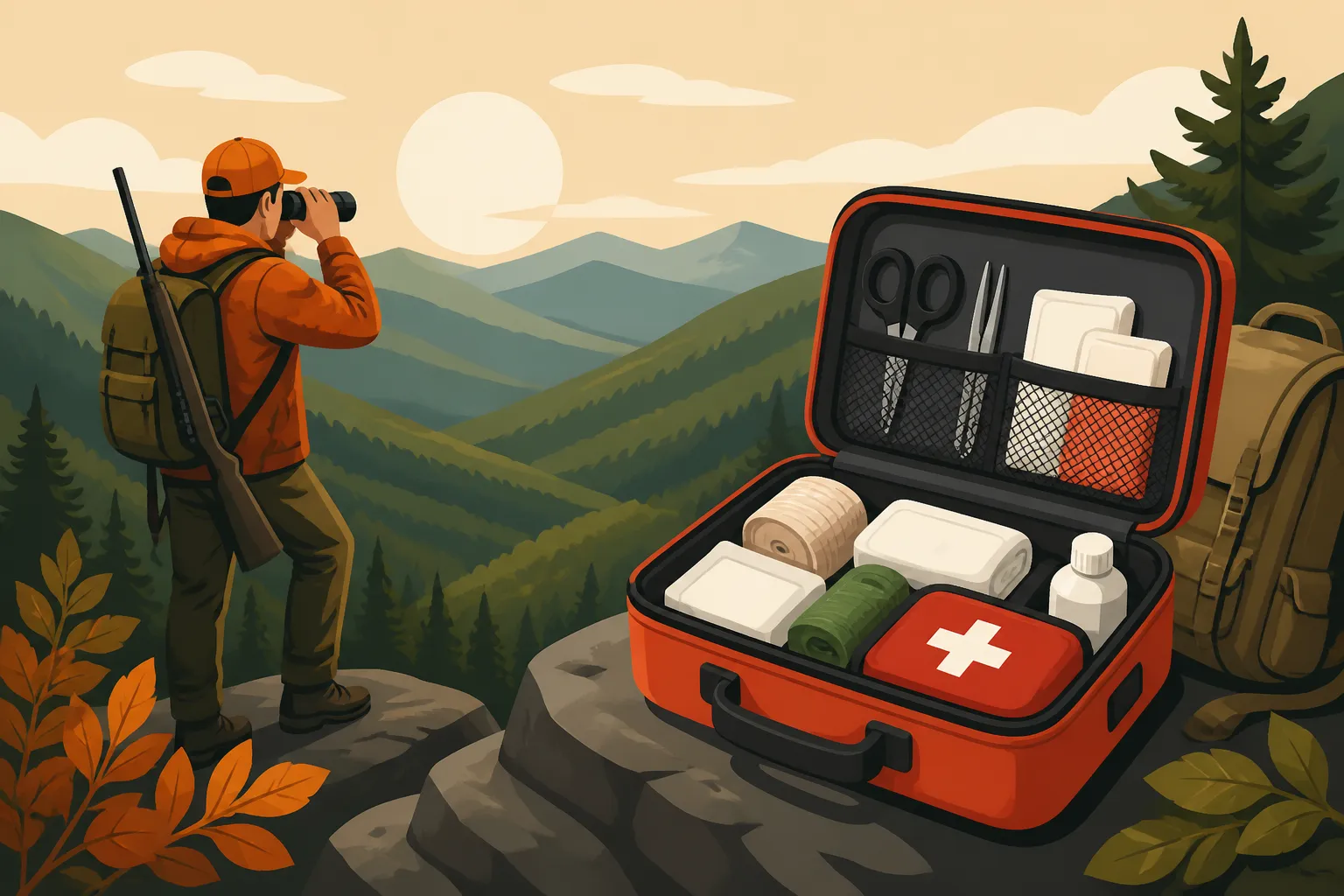
For cleaning wounds, antiseptic wipes are good for quick surface cleaning, but a small bottle of saline solution (or even just clean water if that’s all you have and you can purify it) is crucial for flushing out dirt and debris. Sterile gauze pads in various sizes (2×2, 4×4) are essential for covering wounds and applying pressure. Make sure you have plenty of medical tape, too, preferably a durable, waterproof kind, to secure dressings. A small, sharp pair of trauma shears or sturdy scissors (they can even cut through clothing if needed) is invaluable, far more useful than tiny nail scissors. And please, always include several pairs of non-latex gloves. Protecting yourself from bloodborne pathogens is just as important as treating the injured party, whether that's you or a hunting partner. Many specialized outdoor retailers, and even brands like GoHunt, offer compact, robust versions of these core supplies designed to withstand the rigors of backcountry travel.
Addressing Sprains, Fractures, and Serious Trauma
This is where your kit truly differentiates itself for remote hunting. For sprains and strains, you'll need elastic bandages (like ACE wraps) in at least a couple of sizes. These can provide crucial compression and support for a twisted ankle or knee. But what about something more serious, like a suspected fracture? A lightweight, moldable splint, such as a SAM Splint, is a game-changer. It's flat and flexible, but you can form it into a rigid support for almost any limb, which can make all the difference in pain management and preventing further injury during extraction.
Triangular bandages are incredibly versatile. You can use them as slings for arm injuries, to secure splints, or even folded as pressure dressings. For severe bleeding, a true tactical tourniquet (like a CAT or SOF-T tourniquet) is absolutely essential. This isn't just a belt or a piece of rope; it's a purpose-built device designed to stop arterial bleeding and save a life. You need to know how to apply it correctly, and ideally, have practiced. Alongside a tourniquet, include some hemostatic gauze, like QuikClot. These specially treated gauzes can significantly enhance the body's clotting ability for deep wounds that might not be suitable for a tourniquet or where additional bleeding control is needed. Don't forget pain relievers; ibuprofen and acetaminophen can help manage discomfort, which is vital when someone is injured and facing a long, arduous trip out of the woods. GoHunt often features advanced trauma care components that are lightweight and highly effective for these critical situations.
Environmental and Personal Health Considerations
The West Virginia highlands are beautiful, but they also expose us to various environmental factors and personal health needs that must be addressed. Allergy sufferers should always carry their prescribed allergy medication, and if you or a hunting partner has a severe allergy (e.g., to bee stings), an EpiPen should be a non-negotiable item. Bug repellent is crucial to prevent uncomfortable bites and potential disease, while sting relief wipes can soothe minor insect stings. Sunscreen might seem out of place for deep woods hunting, but if you're on exposed ridges or moving through open power line cuts, it's a good idea.
Dehydration can quickly set in, especially during strenuous activity or if an injury prevents easy access to water. Carry water purification tablets or a small filter; even a small spring or puddle can be a lifesaver if you can make its water safe to drink. Electrolyte packets are also excellent for rehydration. Crucially, any personal prescription medications (heart medication, insulin, etc.) must be carried in a waterproof container, clearly labeled, and easily accessible. Finally, a space blanket or a lightweight emergency bivy sack can literally be a lifesaver for treating shock or preventing hypothermia if you're forced to spend an unexpected night in the woods. A loud whistle, often integrated into pack straps, is a simple yet effective signaling device if you become separated from your group or need to attract attention.
Customizing and Carrying Your Kit for West Virginia Backcountry
Having all the right gear is one thing, but how you organize, carry, and, most importantly, use it, makes all the difference. For the challenging terrain and conditions of West Virginia, thoughtful customization and practice are key.
Weight, Size, and Accessibility
The eternal struggle of the backcountry hunter: how much is too much? You're already hauling your weapon, Optics for Steep Allegheny Terrain, and maybe even a climbing stand. Adding a comprehensive first aid kit can feel like extra bulk. However, the goal isn't to carry a hospital; it's to carry what's essential and effective. Focus on multi-use items and compact versions of supplies. A vacuum-sealed trauma kit takes up less space than individually wrapped components. Brands like GoHunt specialize in ultralight, durable gear, including first aid pouches designed to fit seamlessly into a Packs for a Monongahela Forest Day Hunt without adding undue weight.
The key is organization and accessibility. Your first aid kit should never be buried at the bottom of your pack, underneath your lunch and extra layers. It needs to be in a designated, easily reachable pocket or attached to the outside of your pack, perhaps even on your waist belt, so you can get to it in a hurry, even if you’re injured or in distress. A bright color like red or orange for the pouch itself can make it easy to spot. And absolutely, ensure it's in a waterproof and durable container. A flimsy zip-top bag won't cut it when you're post-holing through wet snow or caught in a downpour on a ridge.
Training and Practice: More Than Just Carrying Gear
Let’s be brutally honest: a top-tier first aid kit is just a bag of supplies if you don't know how to use what's inside. Carrying a tourniquet does absolutely no good if you haven't practiced applying it under pressure. That's why formal training is just as important, if not more so, than the gear itself. Consider taking a basic first aid and CPR course. These are widely available and provide foundational knowledge for common emergencies.
For those who venture deeper into truly remote areas, a Wilderness First Aid (WFA) or even a Wilderness First Responder (WFR) course is an invaluable investment. These courses specifically address how to manage injuries and illnesses when definitive medical care is hours or even days away, covering topics like improvisation, long-term patient care, and evacuation strategies. Practice applying elastic bandages, splints, and tourniquets on yourself and your hunting partners. Understand how to stop bleeding, clean wounds, and stabilize a suspected fracture. Learning how to prevent and treat shock – a critical component of any serious injury – is paramount. This knowledge, combined with your kit, truly makes you prepared for the unexpected when you're Hunting Steep Allegheny Ridges.
Regular Checks and Replenishment
A first aid kit isn't a "set it and forget it" item. It requires regular attention to ensure its effectiveness. Make it a habit to check your kit at the beginning of each hunting season, and ideally, after every trip where you might have used any supplies. Check expiration dates on all medications, antiseptic wipes, and even sterile dressings. Sunscreen and insect repellent can lose their potency over time.
Immediately replenish anything you've used. Don't wait until the next trip; replace it as soon as you get home. This ensures your kit is always at 100% readiness. Also, consider the season and adapt your kit accordingly. You might want more hand warmers and a sturdier space blanket for late-season hunts compared to early archery season, or more sting relief during early fall. Being proactive about maintenance means you're never caught off guard. When you're thinking about Layering for a West Virginia Deer Stand or your Sleds and Drags for Steep Country, spare a thought for the contents of that critical first aid kit.
Essential Highlands First Aid Kit: Quick Reference
This table provides a snapshot of common hunting-related injuries in the West Virginia highlands and the key first aid items designed to address them. Remember, this is a summary; proper training is crucial for effective use.
| Injury Type | Core First Aid Solution | Critical Components | Notes on Highlands Use |
|---|---|---|---|
| Cuts & Abrasions | Wound Cleaning & Dressing | Antiseptic wipes, saline solution, various adhesive bandages, gauze pads, medical tape, non-latex gloves | Keep wounds clean in dirty environments; prevent infection. |
| Blisters | Protection & Relief | Moleskin, blister pads, medical tape | Prevent debilitating foot issues on long hikes; apply early. |
| Sprains & Strains | Compression & Support | Elastic bandages (ACE wraps), pain relievers (ibuprofen) | Stabilize joint, reduce swelling; essential for mobility on uneven ground. |
| Fractures (Suspected) | Immobilization & Stabilization | SAM Splint, triangular bandages, medical tape | Crucial for preventing further injury during extraction; requires practice to apply effectively. |
| Severe Bleeding | Hemostasis & Pressure | Tactical tourniquet, hemostatic gauze (QuikClot), compression bandages, non-latex gloves | Life-saving for arterial bleeds; requires training for correct application. |
| Allergic Reactions | Symptom Management | Antihistamines, EpiPen (if prescribed) | Critical for bee stings, plant exposure; know who in your group has allergies. |
| Hypothermia/Shock | Warmth & Stabilization | Space blanket/emergency bivy, warm layers, electrolyte packets | Essential for an unexpected night out or after injury; prevent core temperature loss. |
| Dehydration | Rehydration & Water Safety | Water purification tablets/filter, electrolyte packets | Maintain fluid balance; ensure access to safe drinking water. |
Disclaimer
This article is for general informational purposes only and does not constitute professional advice. Laws, prices and regulations vary by location and change over time. Consult a qualified professional for guidance on your specific situation.