Shooting Sticks From a Steep Overlook
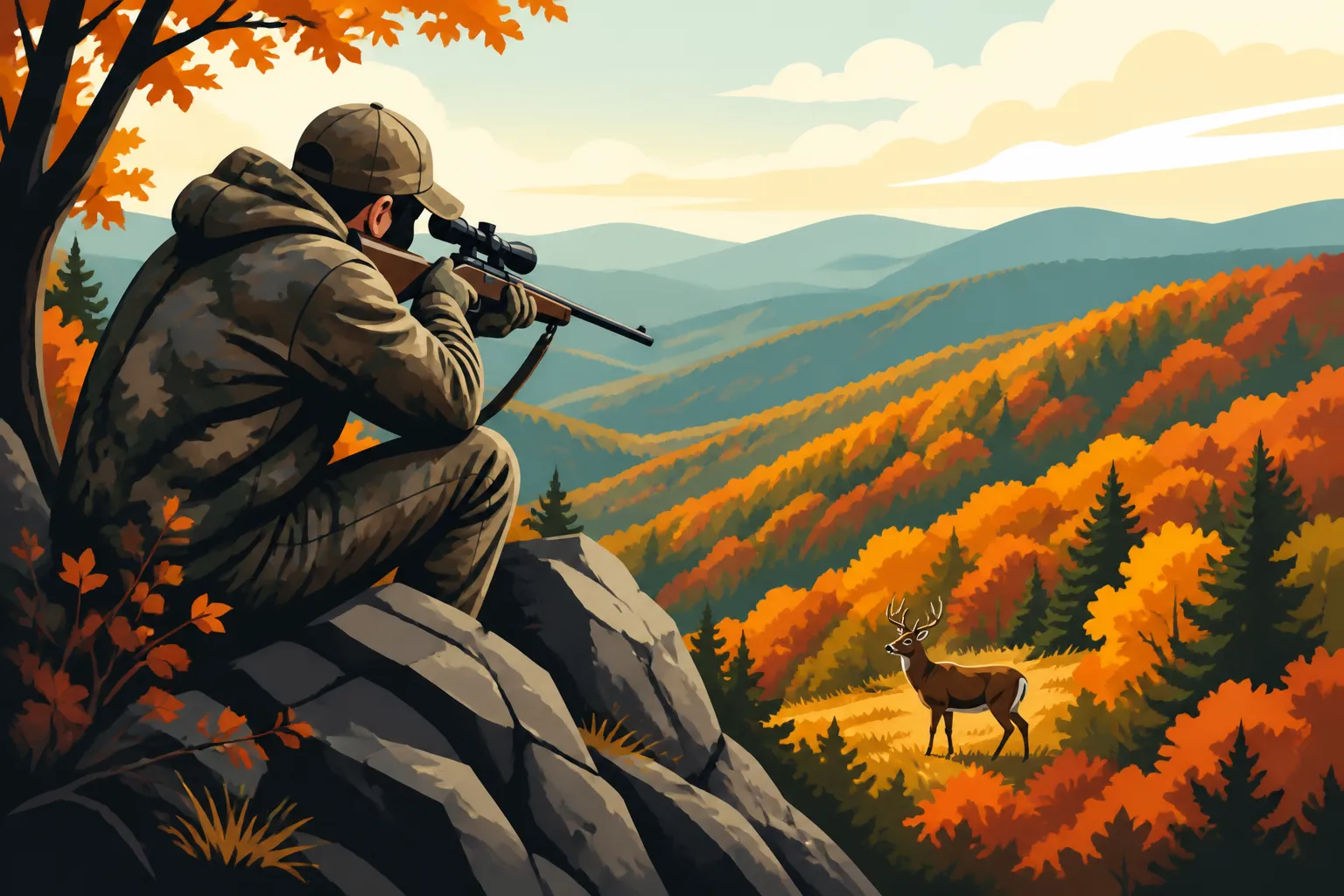
Trying to make a steady, ethical shot from a steep West Virginia overlook can feel like trying to balance a plate of biscuits on a wobbly stool. The terrain is often unforgiving, the angles are extreme, and finding a stable shooting position without a solid rest is a major headache. This guide is all about equipping you with the knowledge and techniques to confidently use shooting sticks from those challenging, high-advantage spots, ensuring you're ready when that elusive buck steps out.
Why Shooting Sticks Become Your Best Friend on Steep Overlooks
Hunting from a steep overlook in West Virginia offers incredible advantages: commanding views, the ability to glass vast areas, and often a better chance to catch deer moving between bedding and feeding. But that advantage comes with a significant challenge: finding a stable shooting platform. Forget leaning against a tree on perfectly level ground; up here, every surface seems to tilt, and every branch feels like it's just out of reach. This is precisely where shooting sticks transform from a nice-to-have accessory into an absolute necessity.
The Unforgiving Reality of Uneven Terrain
Anyone who's spent time on a West Virginia ridge knows that "level" is a foreign concept. You're constantly dealing with rocks, roots, steep inclines, and muddy patches. Trying to get prone in such conditions is often impossible, and kneeling might still leave you unstable or too low to see over the brush. Hand-holding a rifle or bow, especially after a long hike up, introduces wobble and fatigue that significantly increase the margin for error.
Shooting sticks address this head-on by providing adjustable points of contact with the ground. Instead of your body struggling to find balance on three uneven points, the sticks take on that burden. They allow you to distribute the rifle's weight and absorb much of your body's natural sway, even when your feet are planted on a steep slope. This stability is paramount for accurate shot placement, particularly at longer distances where even a slight tremor can mean a missed animal or, worse, a wounded one. It's about taking the guesswork out of your foundation so you can focus entirely on the sight picture.
Overcoming Elevation Challenges
From a high overlook, your target is almost always going to be either significantly uphill or, more commonly, drastically downhill. These extreme angles drastically change the point of impact of your bullet or arrow compared to a flat-ground shot. Without a solid rest, managing these angles while simultaneously trying to hold steady is a recipe for frustration. The natural tendency is to compensate too much or too little, leading to shots that fly high or low.
Shooting sticks elevate your shooting position, allowing you to comfortably aim down or up without straining your neck or back. This ergonomic advantage means you can maintain proper form, which is critical for consistency. Furthermore, the stability provided by the sticks allows you to calmly range your target, consult your ballistics data (if you're a rifle hunter), and make the necessary holdover or hold-under adjustments. It takes the physical stress out of the equation, leaving your mind free to execute the shot correctly. In steep country, you'll often find yourself trying to connect with a deer Hunting Steep Allegheny Ridges, and sticks can be the difference.
Shot Angle and the "True Distance" Conundrum
When you're perched on a ridge, looking down into a hollow, the actual horizontal distance to your target is shorter than the line-of-sight distance measured by your rangefinder. This is what hunters call "true ballistic distance," and failing to account for it is a common mistake that leads to shooting over an animal. While rangefinders with angle compensation have helped, maintaining a rock-solid platform is still essential for precise execution once you have that compensated distance.
Shooting sticks give you the confidence to trust your equipment and the calculations. Once you've ranged, factored in the angle, and decided on your hold, the sticks ensure that your rifle is pointed exactly where it needs to be. This level of stability prevents the tiny movements that can throw off a shot, especially when the target is far below you, making its vital zone appear smaller. It allows for a calm, controlled trigger squeeze, translating directly into better accuracy and ethical harvests. Whether you're hunting during West Virginia's Buck Gun Season or Bowhunting West Virginia's Long Archery Season, sticks help you maximize your opportunity.
Choosing the Right Shooting Sticks for Mountain Terrain
Picking out shooting sticks isn't a one-size-fits-all deal, especially when you're tackling the rugged landscape of West Virginia. What works great in a flat field might leave you cursing on a rocky incline. It's all about finding a balance between stability, adjustability, and portability that suits the specific challenges of steep overlooks. Many hunters, myself included, have gone through a few different setups before finding the "just right" option that fits their style and the local terrain.
Material and Weight Considerations
When you're slogging up and down the inclines of the Monongahela National Forest, every ounce in your pack feels like a pound. That's why the material and weight of your shooting sticks are critical. Carbon fiber sticks are typically the lightest option, offering excellent rigidity without adding undue burden to your Packs for a Monongahela Forest Day Hunt. They're great for hunters who prioritize weight savings for long hikes. However, they can be pricier. Aluminum sticks are a popular middle ground, offering a good balance of durability and reasonable weight at a more accessible price point.
The trade-off is often between robust stability and packability. Thicker-walled aluminum or carbon fiber tubes will be more stable, but heavier. A flimsy set of sticks, no matter how light, won't do you any favors when you need to anchor your rifle for a critical shot. Think about how much abuse your gear takes. If you're going to be pushing through thick rhododendron or dropping them on rocks, durability becomes just as important as weight. Some hunters even prefer a slightly heavier, more robust stick if it means absolute confidence in their setup, particularly if they anticipate limited movement once they've reached their chosen overlook.
Height and Adjustability: Key for Varied Positions
West Virginia's terrain demands versatility. You might be standing on a rock, kneeling behind a log, or sitting on a steep bank. Your shooting sticks need to adapt to all these positions quickly and silently. Look for sticks with a wide range of height adjustment, ideally allowing you to shoot from a low seated position all the way up to a comfortable standing height. Quick-release levers or twist locks are preferable to fiddly buttons, especially when your hands are cold or gloved.
The ability to independently adjust each leg is also incredibly valuable on uneven ground. Imagine trying to set up on a steep sidehill where one leg needs to be fully extended, another halfway, and a third almost collapsed to achieve a level shooting platform. Sticks that allow for this independent articulation are gold. Without it, you're constantly fighting the terrain, trying to find matching high and low points, or relying on your body to compensate, which defeats the purpose of the sticks. You'll often be glassing a powerline cut at last light from a vantage point, and rapid adjustment is key.
Leg Configurations: Monopod, Bipod, or Tripod?
This is where personal preference and the specific hunting situation really come into play. Each configuration offers different advantages:
- Monopod: The lightest and most compact option, essentially a single stick. It provides a quick rest and reduces vertical movement, but offers minimal lateral stability. Great for quick, offhand shots where you just need a little extra support, especially if you're Still-Hunting Cranberry WMA Ridges and need to move fast. Not ideal for maximizing stability from a steep overlook where you might have time to set up.
- Bipod: Two legs, offering good forward and backward stability. More stable than a monopod, and quicker to deploy than a tripod. Many bipods attach directly to your rifle's sling swivel stud or Picatinny rail. They're excellent for prone or seated positions, but can still be wobbly when standing on uneven ground, especially when trying to maintain lateral stability against a crosswind.
- Tripod: Three legs provide the most stability in all directions, making them the undisputed champion for precision shots from a stationary position. This is often the go-to for steep overlooks, as they can be splayed out to account for radical slopes and uneven ground. While heavier and bulkier than the other options, the stability they offer is unmatched, allowing for confident long-range shots. They might take a few extra seconds to set up, but that time is well spent if it means a rock-solid shot. Consider the total weight if you're packing into the backcountry for Hunting Bears Over Natural Mast in the Mountains.
Here's a quick comparison to help you weigh your options for West Virginia's challenging terrain:
| Feature | Monopod | Bipod | Tripod |
|---|---|---|---|
| Stability | Minimal (vertical only) | Good (forward/backward) | Excellent (all directions) |
| Portability | Excellent (lightest, most compact) | Very Good (attaches to rifle) | Moderate (heaviest, bulkiest) |
| Setup Speed | Fastest | Fast | Moderate (requires more adjustment) |
| Uneven Terrain | Challenging to maintain stability | Better, but still prone to lateral wobble | Best (legs adjust independently) |
| Best Use | Quick, supported offhand shots | Prone/seated, some standing support | Long-range, precise shots from stationary positions |
Many hunters find themselves reaching for a tripod when they know they'll be setting up for extended periods on an overlook. The enhanced stability for those critical shots, often taken at extended Rifle Ranges Realistic in Steep Terrain, makes the extra weight worthwhile. When you're using a tool like GoHunt to scout and mark potential shooting positions from high points, you'll want to consider the stability needs of each location.
Mastering the Technique: Shooting from a Steep Overlook with Sticks
Having the right shooting sticks is only half the battle; knowing how to properly utilize them from a steep West Virginia overlook is where true mastery comes in. It's not just about propping your rifle up; it's about integrating the sticks into your body mechanics to create a cohesive, stable shooting system. The mountain environment often adds layers of complexity, from swirling winds to drastic angles, so deliberate practice and understanding are key.
Body Positioning for Maximum Stability
From a steep overlook, your body positioning becomes even more critical than on flat ground. You need to become part of the mountain, not fight against it. When using shooting sticks, especially a tripod, the goal is to create as many stable points of contact as possible. Start by getting your feet set. If you're on a steep slope, position one foot slightly higher than the other to help level your hips and shoulders. A wide stance often helps, giving you a broad base.
Next, focus on leaning into the sticks, not just resting the rifle on them. By applying slight forward pressure into the V-rest or saddle of the sticks, you "load" them, effectively driving them into the ground and increasing their stability. Your non-shooting hand should ideally support the sticks directly or your rifle's forearm on the sticks, creating a solid connection. Your strong-side elbow can rest against your body or inner thigh for additional support, forming a human tripod with the sticks. This triangulation helps absorb recoil and maintain a steady sight picture, which is crucial when trying to pick out a deer through your Rifle Scopes for Low-Light Hollows. If you're using GoHunt for marking waypoints, practice setting up in similar spots to those you've identified.
Adjusting for Extreme Angles: Uphill and Downhill Shots
Shooting uphill or downhill presents unique challenges that shooting sticks can mitigate, but you still need to understand the mechanics. When shooting steeply downhill, gravity is working with you, but your body wants to fight it. Lean slightly into the hill, using the sticks to support the weight of the rifle. Adjust the stick legs so the rifle is level, ensuring the scope's reticle remains plumb. For downhill shots, the perceived distance is greater than the true horizontal distance, meaning your bullet will impact higher than if you shot on flat ground at the same line-of-sight distance. Many modern rangefinders compensate for this, but even with that data, a stable platform from the sticks is essential to hit that precise point.
Uphill shots are often trickier. Your body naturally wants to lean back, creating instability. Again, adjust your stick legs so the rifle is level, and try to lean slightly forward into the slope. You might need to shorten the front legs more dramatically. The physics of an uphill shot mean your bullet will also impact higher than the line-of-sight distance. For both scenarios, once your body is stable and the rifle is resting securely on the sticks, take a slow, natural breath. Exhale partially, find your target, and squeeze the trigger. The stability of the sticks allows you to concentrate purely on managing the shot, not battling your own wobble. Don't forget how important it is to consider Wind and Thermals on a Steep Ridge – they can shift dramatically and affect your shot.
The Importance of Stability and Follow-Through
True accuracy comes not just from the shot itself, but from what happens before and immediately after. With shooting sticks, stability isn't just about holding still; it's about being able to maintain that stillness through the entire shot sequence, including follow-through. A common mistake is to relax or pull off the rifle immediately after the trigger breaks.
A good follow-through means maintaining your position, continuing to look through the scope, and observing the impact (or lack thereof). The stability offered by the sticks makes this possible, allowing you to quickly spot where your bullet hit, or if you missed, where it went. This feedback is invaluable for making quick corrections if a second shot is needed, or for understanding what went wrong. Practice setting up quickly and smoothly. Try using your Binocular Choice for West Virginia Whitetails to glass, then transition to the sticks. You'll want to zero your rifle for mixed distances, too, given the varied shots you'll face. Zeroing a Rifle for Mixed Distances is crucial for hunting in the mountains.
Real-World Scenarios and Practical Tips
West Virginia hunting throws all sorts of curveballs at you, especially when you're set up on a steep overlook. It's rarely a calm, flat-ground range scenario. Understanding how to adapt your shooting stick technique to these real-world situations, from quick engagements to battling the elements, will make you a more effective and confident hunter.
Quick Deployment for Fleeting Opportunities
Sometimes, that deer doesn't linger. It’s a ghost in the timber, and you only get a brief window as it crosses a saddle or pauses on a bench below you. In these moments, speed is paramount. While tripods offer maximum stability, they can be slower to deploy. This is where practicing with your chosen sticks pays off. Don't just extend them; practice setting them up under pressure.
Many sticks feature quick-release leg locks or cam levers that allow for rapid height adjustment. Practice unfolding them, splaying the legs to the correct angle for stability on a slope, and getting your rifle into position fluidly. For quicker shots, a bipod might get you on target faster, even if it sacrifices a touch of the tripod's ultimate stability. The goal is to make the act of deploying your sticks an instinctual motion, not a fumbling struggle. You might only have a few seconds when Hunting the Rut in Mid-November to get steady. When planning your hunt, use GoHunt to identify key travel corridors where a fast setup might be necessary.
Dealing with Uphill and Downhill Angles in the Field
The theoretical understanding of angle compensation is one thing; applying it in the field is another. From an overlook, you'll almost exclusively be dealing with downhill shots, sometimes at very extreme angles. Your laser rangefinder is your best friend here, especially one with angle compensation built-in. Trust its reading for the "shoot-to" distance.
Once you have that distance, use your shooting sticks to stabilize your rifle. Lean into the downhill slope slightly, letting the sticks take the bulk of the rifle's weight. Pay extra attention to your cheek weld and eye relief, as gravity can pull your head away from the stock on steep angles. Before hunting season, set up targets in your backyard or a safe shooting area at varying uphill and downhill angles. Practice shooting at these targets, using your sticks, and noting the points of impact. This practical experience will build confidence and help you internalize the adjustments needed for West Virginia's rollercoaster topography. Also, remember that Trekking Poles for Steep Ridge Access can double as improvised monopods in a pinch if you need a quick rest.
Battling Wind and Other Environmental Factors
West Virginia ridges are notorious for swirling winds, especially on open overlooks. A strong crosswind can push your bullet off course, and even a light breeze can cause your rifle to wobble if not properly supported. Shooting sticks help mitigate this by reducing your body's exposure and providing a rigid platform. However, they don't eliminate the wind's effect on the bullet.
When facing wind, get as low and tight to the sticks as possible. If it's windy, spread the legs of your tripod wider for a more stable base, even if it means sacrificing some height. Use your body as a windbreak if possible. Pay close attention to wind indicators – swaying branches, tall grass, or even the feel of the wind on your cheek. The stability offered by the sticks will allow you to hold steady and wait for a lull in the wind, or to make a calculated windage adjustment if you're confident in your estimation. Without the sticks, a shaky platform combined with wind becomes an almost impossible shot.
Disclaimer
This article is for general informational purposes only and does not constitute professional advice. Laws, prices and regulations vary by location and change over time. Consult a qualified professional for guidance on your specific situation.