GPS Collars for West Virginia Bear Hounds
Hunting bears with hounds in West Virginia is an exhilarating, tradition-rich experience, but it comes with unique challenges, especially when your pack disappears over a ridge in thick timber. The fear of losing a valuable dog in the vast, rugged terrain of our mountains is a constant worry for many hound hunters. This guide is all about embracing modern technology—specifically GPS collars—to keep track of your beloved bear hounds, ensuring their safety and maximizing your hunting success in the Mountain State.
Why GPS Collars Are Essential for Bear Hound Hunting in West Virginia
Let's be real, West Virginia isn't some flat prairie. Our mountains are beautiful, but they're also a labyrinth of steep hollows, dense rhododendron thickets, and endless ridges that can swallow a hound in a matter of minutes. Without a reliable way to track your dogs, you're essentially hunting blind, hoping they return or you stumble upon them. GPS collars have become a game-changer for bear hunters here, transforming a stressful pursuit into a more controlled and safer operation.
The Rugged Reality of Mountain Hunting
Imagine your best lead dog, "Blue," strikes a fresh bear track near Cheat Mountain and takes off with the rest of the pack in hot pursuit. One minute you hear the frantic baying, the next, it's muffled by a deep hollow, then gone completely as they crest an unseen ridge. This is the everyday reality for hunters Running Hounds for West Virginia Bears. The terrain itself is the biggest challenge: steep, broken ground, thick laurel and greenbrier, and deep cuts that amplify or mute sound unpredictably. Traditional tracking methods like listening for distant barks or using older VHF-only systems often fall short in these conditions. The sheer scale of areas like the Monongahela National Forest means your hounds could cover miles in minutes, crossing property lines or getting into areas where a human simply cannot follow without an accurate, real-time location.
Moreover, the variable forest cover impacts signal. A dog might be in a deep hollow, completely out of line of sight from your position on a ridge, or pushing through a stand of dense hemlocks that further degrades traditional radio signals. The ability to see their exact path on a map, even when you can't hear a peep, provides an invaluable sense of security and direction. It’s not just about finding the dog; it's about understanding the chase, the bear's movements, and how your pack is working the track in real-time. This insight allows you to make more informed decisions, whether that's moving to cut them off or waiting patiently.
Safety First: Protecting Your Hounds
Beyond the natural challenges, there are significant safety concerns for hounds running loose in West Virginia's vast landscape. Roads, for instance, are a major hazard. A fast-moving bear can lead a pack across a busy highway before you even realize they're in the vicinity. With a GPS collar, you can get alerts if a dog approaches a road, giving you precious time to react or intercept. Then there are cliffs and steep drop-offs, especially prevalent in areas like the New River Gorge adjacent grounds or the higher elevations of the Potomac Highlands. A dog in a heated chase might not see the danger until it's too late. Knowing their exact location can help you understand if they're in a precarious spot.
Other dangers include encounters with other hunters, especially during overlapping seasons, or even other large predators like coyotes, though bear hounds are typically tough. Perhaps one of the most overlooked aspects of safety is simply getting separated from the pack and becoming disoriented or injured far from human contact. A GPS collar means if "Daisy" limps up lame on a remote bench, you can go directly to her, minimizing her time exposed to the elements or other dangers. It's an investment in their well-being, allowing you to quickly locate and retrieve them, whether they've treed a bear or just lost the track and are trying to find their way back to you. This kind of protection is paramount for any hunter who views their dogs as part of the family, not just tools.
Maximizing Hunting Efficiency and Recovery
The ability to track your hounds in real-time doesn't just improve safety; it makes you a much more effective bear hunter. Think about it: instead of spending hours or even days searching for a lost pack, you can pinpoint their location within minutes. This significantly reduces downtime and allows you to focus on the hunt itself. You can see how fast they're moving, which direction they're headed, and if they've "treed" or "bayed" a bear by observing their stationary pattern on your device. This immediate feedback is critical for planning your approach to the bear.
For example, if the hounds are bayed up in a thick laurel patch deep in a hollow, you can use your mapping device (and perhaps a GoHunt app on your phone) to plot the most direct and safest route to them, factoring in terrain and wind direction. This prevents you from blindly stumbling through the woods, potentially spooking the bear or exhausting yourself unnecessarily. If a chase goes cold, or the bear gives the dogs the slip, you can retrieve your pack efficiently, allowing you to either cast them again on a new track or call it a day without the added anxiety of lost dogs. This kind of tactical advantage is what separates efficient hound hunters from those who spend more time searching than hunting. It means more time actually pursuing West Virginia's Black Bear Comeback and less time worrying.
Understanding the Technology Behind GPS Hound Collars
Modern GPS collars are far more sophisticated than the old one-way radio transmitters. They combine cutting-edge satellite technology with robust design to withstand the rigors of West Virginia's wilderness. Knowing how they work and what features are available can help you select a system that truly serves your hunting style and the demands of our mountainous environment.
GPS vs. VHF: A Hybrid Approach for Mountaineers
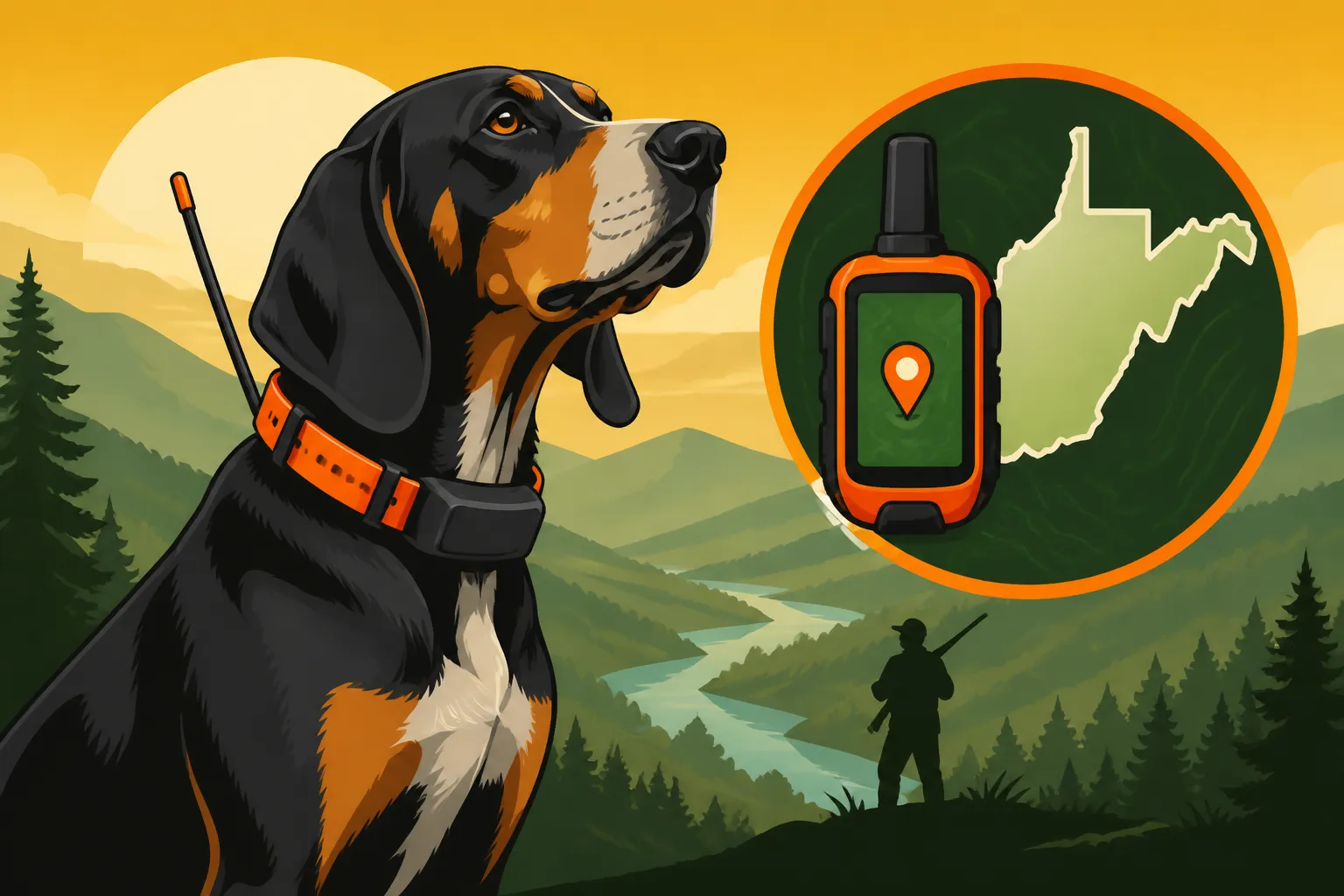
When you look at dog tracking systems, you'll generally encounter two primary technologies: GPS and VHF (Very High Frequency). GPS collars use signals from orbiting satellites to determine a dog's precise location and then transmit that data back to a handheld device or smartphone app. This provides exact coordinates, often shown on a topographic map. The beauty of GPS is its global reach and precision.
However, in West Virginia's deep hollows and dense canopy, satellite signals can sometimes be temporarily obstructed. This is where VHF comes in handy. Many modern, high-end tracking systems are actually hybrid units, incorporating both GPS and traditional VHF radio capabilities. The GPS provides the detailed mapping and distance, while the VHF component acts as a reliable backup. If your GPS signal momentarily drops due to heavy cover or extreme topography, you can switch to the VHF signal to get a general direction, often indicated by an antenna on your handheld unit. This "belt-and-suspenders" approach is often preferred by seasoned Bear Hunting Gear in the Highlands users, ensuring you always have a way to locate your dogs, even in the most challenging conditions. It's like having a detailed roadmap and a compass, always giving you an option to navigate.
Features to Look for in a West Virginia-Ready Collar
Not all GPS collars are created equal, and for the tough conditions of West Virginia, specific features are paramount.
- Battery Life: This is huge. Hounds can run for hours, sometimes all day or even into the next if the chase is long. Look for collars with extended battery life, often boasting 20-40 hours or more on a single charge. Some even have power-saving modes or rechargeable options. You don't want a collar dying halfway through a deep-woods chase.
- Durability: West Virginia terrain is hard on gear. Collars need to be rugged, waterproof, and impact-resistant. They'll be scraping against rocks, plunging into creeks, and crashing through thickets. Look for solid construction and a secure fastening mechanism that won't come loose.
- Mapping Capabilities: The quality of the maps displayed on your handheld device or smartphone app is critical. Detailed topographic maps showing contour lines, elevations, and waterways are invaluable for navigating the mountains. Some systems allow for pre-loading maps or offer subscription services for enhanced mapping.
- Range: While GPS isn't range-dependent in the same way VHF is (satellites are always "in range"), the transmission of that GPS data back to your handheld unit does have a range limit. Look for systems that offer robust long-range communication, often several miles, which is crucial when dogs disappear over multiple ridges.
- Update Rate: How often does the collar send its location data? A faster update rate (e.g., every 2.5 seconds versus every 30 seconds) gives you a more real-time picture of the chase. While faster updates use more battery, having the option to adjust the rate is a good feature.
- Bark Detection: Some collars include bark detection, which tells you when your dog is actively barking, a strong indicator they've treed or bayed a bear. This can save you a lot of walking if you know they're "on the bear."
- Geo-fencing/Boundary Alerts: The ability to set virtual boundaries (geo-fences) and receive alerts if a dog crosses them can be a lifesaver, especially near roads, private property, or dangerous terrain.
How Mapping and Tracking Apps Integrate
The magic of modern GPS tracking truly shines when combined with robust mapping software. While many systems come with their own dedicated handheld units, many also integrate seamlessly with smartphone apps. This means you can view your dogs' positions on detailed maps right on your phone, often with satellite imagery, public/private land boundaries, and topographic overlays. This can be incredibly convenient, as most hunters already carry a smartphone.
Many hunters use mapping applications like GoHunt to scout and navigate, and some GPS collar systems can overlay dog locations directly onto these platforms. This allows for a unified view, where you see not only your dog's tracks but also your own position relative to them, potential access points, and terrain features. This integration allows for more dynamic hunting strategies, letting you adapt your movements based on the hounds' progress. Imagine seeing your pack heading towards a known pinch point on a map; you can then hustle to get ahead and be in position. When considering GPS Units Versus Phone Apps, many hunters find a hybrid approach of a dedicated handheld unit (for reliability) combined with a smartphone app (for rich map data and convenience) is the best solution for West Virginia. It’s all about having multiple tools in your arsenal to deal with whatever the mountains throw at you.
Choosing the Right GPS Collar System for Your Pack
Selecting a GPS collar system isn't a one-size-fits-all decision, especially given the unique challenges of hunting in West Virginia. You need to consider factors like the range, durability, battery life, and how easily you can use the system in the field. Investing wisely here means more peace of mind and more successful hunts.
Evaluating Range and Signal Reliability
The range of a GPS collar system in West Virginia's topography is arguably the most critical factor. While GPS satellites provide the location, the collar needs to transmit that data back to your receiver. In open country, systems can claim ranges of 5-10 miles or more, but the reality in our mountains is often different. Deep hollows, dense timber, and undulating terrain can quickly diminish effective range. You need a system that can punch through some of this interference.
When researching, look for systems that specifically highlight their performance in "challenging terrain" or "heavy cover." User reviews from hunters in similar mountainous regions can be incredibly insightful. Some systems may employ higher power transmitters or more advanced antenna designs to improve signal penetration. It's also vital to understand that while GPS location data is generally reliable, the transmission of that data to your handheld unit can be interrupted. This is where those hybrid GPS/VHF systems shine, giving you a fallback. Always test your system thoroughly in your hunting grounds before the season. What works in an open field near home might fail spectacularly on a steep Allegheny ridge, leaving you searching for a Hunting a Funnel Between Two Hollows where your dog was last seen.
Durability and Battery Life for Extended Hunts
West Virginia weather can be fickle, and a bear chase can last for hours or even days. Your GPS collars need to be built like tanks and last as long as your hounds are running.
- Durability: Hounds are hard on gear. Collars will get wet from rain, snow, or creek crossings. They'll be dragged through briar patches, bashed against rocks, and chewed on by curious pack mates. Look for collars that are fully waterproof (IPX7 or higher ratings are good indicators) and have robust, sealed casings. The antenna and charging ports should also be well-protected. Test the collar's fit on your dog to ensure it's snug but comfortable, reducing the chance of it snagging and tearing off in thick cover.
- Battery Life: This ties directly into extended hunts. A long-lasting battery means you won't have to worry about a collar dying when your dogs are still miles away. Systems with 20-40+ hour battery life are ideal. Consider options with user-replaceable batteries or easily rechargeable units that can be topped off at camp. Some collars also offer customizable update rates, allowing you to extend battery life by reducing how often the position is transmitted, which can be a good trade-off in less critical tracking situations. For those multi-day hunts into the backcountry, having backup power banks or extra charged collars becomes a wise consideration. No hunter wants to be on a Hunting Bears in the Cranberry Backcountry trip only to have their tracking system fail.
User Interface and Ease of Use in the Field
When you're out in the field, likely in cold weather with gloves on, under pressure, you don't want to be fumbling with a complicated device. The user interface (UI) of your handheld unit or smartphone app needs to be intuitive and quick to navigate.
Look for a system with a clear, bright screen that's easy to read in varying light conditions, from bright sun to low light in deep timber. Buttons should be large and tactile enough to operate with gloved hands. The menu system should be logical, allowing you to quickly switch between dogs, view their tracks, zoom in on maps, or adjust settings. Many devices offer customizable views, letting you prioritize the information most important to you.
If you're using a smartphone app for tracking, ensure it's well-designed and stable. A good app should load maps quickly, update dog positions smoothly, and offer simple navigation. Consider if the app functions reliably without cell service, which is a common issue in many parts of West Virginia. Brands like GoHunt are known for their user-friendly mapping interfaces, and if your GPS collar system integrates with such apps, it can make managing your hunt much easier. Ultimately, the best system is one you can operate instinctively, allowing you to keep your focus on the chase and your surroundings, not on wrestling with technology.
Legal Considerations and Responsible Use of GPS Collars
While GPS collars offer undeniable advantages, it's crucial to understand the rules and ethical guidelines surrounding their use in West Virginia. Just because you can track them anywhere doesn't mean you should or may always do so. Responsible hunting means respecting regulations, private property, and the experience of others.
West Virginia Regulations on Electronic Tracking
West Virginia is generally progressive regarding technology in hunting, but specific rules can apply. As of this writing, using GPS collars for tracking hounds is widely accepted and legal in West Virginia for bear hunting, and they are even mentioned in some of the regulations regarding West Virginia Bear Hound Training Rules. However, it's always a hunter's responsibility to stay informed about the latest regulations published by the West Virginia Division of Natural Resources (WVDNR). Laws can change, and interpretations can evolve.
Here are a few general points to keep in mind, although this is not legal advice and you should always consult the official WVDNR hunting regulations:
- No Direct Hunting Aid (generally): The primary purpose of these collars is tracking your dogs, not directly aiding in the harvest of an animal by, for example, using the collar to direct the dog to the bear. However, using the collar to locate a treed or bayed bear after the dogs have done their work is standard practice for hound hunting.
- Private Land: Even if your dog's GPS shows it on private land, you absolutely do not have implied permission to enter that property without the landowner's explicit consent. West Virginia law is clear on trespass. Always attempt to contact the landowner first if your dog crosses onto private property. This also applies to situations like Retrieving Game From Private Land in West Virginia, even for a downed animal.
- WMA/National Forest Rules: While GPS collars are typically allowed on public lands like those covered in Monongahela National Forest Hunting, always check specific WMA rules. Some areas might have unique regulations that affect electronic devices or access.
The bottom line is to always understand the current hunting guide and, when in doubt, contact the WVDNR directly for clarification. Ignorance of the law is never an excuse.
Ethical Use and Minimizing Impact
Beyond legality, there's the ethical dimension of using GPS collars. As responsible hunters, our actions shape public perception, and we want to ensure we're always conducting ourselves in a way that respects wildlife, other hunters, and the land.
- Respecting Property Lines: This is huge. Even if a private landowner has given you permission to hunt, that permission might not extend to all their property, or to all times. If your dogs cross onto land where you don't have permission, the ethical (and legal) action is to notify the landowner and seek permission to retrieve your dogs, not to simply follow them in. Good relationships with landowners are gold in West Virginia.
- Minimizing Disturbance: While tracking, try to minimize your impact on other wildlife or other hunters. Running a loud pack of dogs, even if you know where they are, can disrupt other people's still-hunting or disrupt non-target species. Be mindful of your presence.
- Honest Hunting: The spirit of hunting involves a fair chase. GPS collars enhance safety and efficiency, but they shouldn't be used to circumvent the challenges of the hunt. Ensure your reliance on technology doesn't diminish the traditional aspects of hound hunting you cherish. It's a tool, not a shortcut to unethical practices.
Best Practices for Hound Safety and Public Perception
Your hounds are often viewed differently by the non-hunting public, and their presence, especially when running, can sometimes cause concern. Good communication and best practices can help maintain a positive image for hound hunting.
- Pre-season Training: Beyond West Virginia Bear Hound Training Rules, ensure your dogs are well-trained to respond to calls or tracking commands. A well-behaved, obedient hound pack is less likely to cause issues if they interact with the public.
- Clear Identification: All your hounds should wear clear identification tags with your contact information. If a collar system fails and a dog is found by a non-hunter, they can easily reach you.
- Visibility: Consider collars that incorporate reflective materials or even small lights, especially if hunting near roads or in low-light conditions. This increases visibility for both you and any non-hunters who might encounter them.
- Communicate: If you anticipate your hounds might cross into an area where others are present (e.g., near hiking trails or campsites), be prepared to explain what you're doing and why. A friendly, informative conversation can go a long way in dispelling misconceptions about hunting. Remember, our goal is to preserve our hunting heritage, and that means being good stewards and good neighbors.
| Feature | Traditional VHF Collar | GPS Only Collar | Hybrid GPS/VHF Collar |
|---|---|---|---|
| Tracking Method | Radio signal, direction only | Satellite signal, precise location | Both |
| Mapping | No, requires separate map | Yes, integrated | Yes, integrated |
| Precision | General direction & distance | High, exact coordinates | High, exact coordinates |
| Range (Typical) | Good, line-of-sight dependent | Excellent (satellite), good (transmission to handheld) | Excellent (GPS), good (VHF fallback) |
| Terrain Impact | Signal can be blocked | Can lose satellite lock in deep cover | Best, has backup system |
| Battery Life | Usually long | Variable, depends on update rate | Variable, usually good |
| Real-time Data | Limited | High, constant updates | High, constant updates |
| Cost | Lower | Moderate to High | Higher |
| Handheld Unit | Simple receiver/antenna | Dedicated GPS unit or smartphone app | Dedicated unit (often with antenna) or smartphone app |
Tips for Optimizing Your GPS Collar Performance in West Virginia
You've invested in a quality GPS collar system, but simply strapping it on your dog isn't enough. To truly get the most out of your gear and ensure reliability in the challenging West Virginia environment, a bit of preparation and understanding of the technology is crucial. Think of it as tuning your equipment for peak performance, much like you would zero a rifle for specific Rifle Ranges Realistic in Steep Terrain.
Pre-Season Prep and Field Checks
The season opener isn't the time to discover your GPS collar isn't working right. Dedicate some time before the season to thoroughly check and prepare all your tracking equipment.
- Charge All Batteries: This seems obvious, but it's often overlooked. Fully charge every collar and handheld unit. If your batteries are old and not holding a charge, consider replacing them. Invest in a reliable portable power bank for extended trips or to recharge devices at your camp.
- Update Software: GPS devices and smartphone apps often have software or firmware updates. Check for these regularly and install them. Updates can improve performance, fix bugs, and even enhance battery life.
- Test Collars and Units: Take your dogs out for a training run with the collars on. Mimic hunting conditions as much as possible. Make sure each collar is communicating with your handheld unit or phone. Check that the mapping is accurate and the refresh rate is adequate. Identify any "dead zones" where signal might be lost (more on that below).
- Familiarize Yourself with Features: Practice using all the features of your system. Can you quickly switch between dogs? Do you know how to mark a waypoint or set a geo-fence? Can you troubleshoot basic issues in the field? The more proficient you are, the smoother your hunt will be.
- Proper Collar Fit: Ensure the collars fit snugly but comfortably on your dogs. A loose collar can snag, chafe, or even fall off. A too-tight collar can cause discomfort or injury. Check regularly for wear and tear on the collars themselves. For some insights on Packs for a Monongahela Forest Day Hunt or Boots for West Virginia Hollows and Ridges, remembering that preparing your gear holistically, including your tracking systems, contributes to a much more enjoyable and effective hunt.
Understanding Topography and Signal Loss
West Virginia's dramatic topography is a blessing for its beauty and the challenge it presents to hunters, but it's a curse for electronic signals. Understanding how mountains affect your GPS collars is key to anticipating and mitigating signal loss.
- Line of Sight: Both GPS satellite signals and VHF radio transmissions rely on some form of line of sight. In deep hollows, surrounded by steep ridges, your GPS collar might temporarily lose its lock on enough satellites to get a precise fix. Similarly, VHF signals are easily blocked by terrain features.
- Dense Cover: Thick forest canopy, especially dense evergreen stands or rhododendron thickets, can also degrade satellite signals. The signals can be bounced around or absorbed, reducing accuracy or causing temporary dropouts.
- Anticipate Dead Zones: Through scouting and experience, you'll start to learn where your specific hunting areas have potential "dead zones." These are areas where signal loss is common. When your dogs enter such a zone, be prepared for a temporary loss of track. If your mapping app (like GoHunt) includes detailed topographic layers, you can often predict these areas by looking for deep, narrow valleys or very steep, heavily wooded slopes. This foresight allows you to mentally prepare for intermittent tracking.
- High Points: Conversely, moving to a higher elevation or a ridge top often improves signal reception. If you lose track of your dogs, moving to the nearest high point with clear sky visibility is often your best first troubleshooting step. This is especially relevant when Hunting Steep Allegheny Ridges, where gaining elevation can be your best friend for re-establishing contact.
Battery Management on Long Hunts
Long chases are the hallmark of bear hunting, and battery life is often the limiting factor for your GPS collars. Smart battery management can extend your tracking capabilities significantly.
- Adjust Update Rates: Most modern GPS collars allow you to adjust how frequently the collar transmits its position. A faster update rate (e.g., every 2.5 seconds) provides a very real-time track but drains the battery quickly. A slower rate (e.g., every 30 seconds or 2 minutes) conserves battery but gives you less immediate feedback. Consider starting with a faster rate when the chase is hot and you need precise tracking, then switching to a slower rate once the dogs have treed or are moving slowly, allowing you to conserve power while you make your approach.
- Carry Spare Batteries or Power Banks: For multi-day hunts or particularly long, grueling chases, always have spare charged batteries for your handheld unit or a robust power bank capable of recharging both your handheld and potentially the collars themselves. Some handheld units can also be powered by AA or AAA batteries, offering an easy field replacement option.
- Optimize Handheld Unit Settings: Your handheld unit's screen brightness, backlight duration, and other settings can also impact its battery life. Dim the screen when not actively looking at it, and turn off unnecessary features to conserve power.
- Cold Weather Considerations: Cold weather can significantly reduce battery performance. Keep spare batteries warm in an inside pocket. Some hunters even insulate their handheld units in cold conditions to extend their operational time.
By understanding the nuances of your GPS collar system and implementing these practical tips, you'll be well-equipped to tackle the challenges of bear hunting in West Virginia, ensuring your hounds are safe and your hunts are successful.
Disclaimer
This article is for general informational purposes only and does not constitute professional advice. Laws, prices and regulations vary by location and change over time. Consult a qualified professional for guidance on your specific situation.