Ground Blind Anchoring in Wind
There’s nothing quite as disheartening, or frankly, as aggravating, as getting your ground blind all set up, brushed in just right for a perfect ambush, only to have a sudden gust of West Virginia wind turn it into a flapping, rattling mess – or worse, a crumpled heap. We've all been there, watching our carefully placed hideaway become a noisy distraction or even fly away entirely. This guide is all about tackling that exact frustration, giving you the solid strategies and anchoring methods to ensure your ground blind stays put, silent, and effective, no matter what the mountain winds throw at it.
The Real Struggle with West Virginia Winds and Your Ground Blind
West Virginia’s landscape is absolutely breathtaking, but those rolling hills, deep hollows, and towering ridges also create some incredibly tricky wind patterns. What might seem like a calm morning can quickly turn into a blustery afternoon, and a ground blind can go from a stealthy asset to a glaring liability in a matter of minutes if it's not properly secured. The constant worry about your blind's stability can pull your focus away from the hunt itself, which is the last thing any of us want.
Why West Virginia Wind is a Unique Challenge
Unlike flatter terrain, the Appalachian Mountains have a way of channeling and swirling wind that can be unpredictable. You might feel a gentle breeze at the base of a hollow, but climb halfway up a ridge, and it’s a whole different story. Wind currents can be funnelled through gaps, accelerate over saddles, and create eddies in sheltered pockets. This means a blind set up in what looks like a calm spot can still be hammered by gusts you didn't anticipate. Think about setting up near a major creek bottom, or perhaps Hunting Potomac Highlands Ridgelines; the wind can come from anywhere and shift direction without warning. The dynamic topography here truly makes anchoring a ground blind a crucial skill, not just an afterthought. You can’t just stick a few flimsy stakes in the ground and hope for the best; the ground itself can be rocky, soft, or anything in between, making standard stakes unreliable.
The Frustration of a Flapping Blind
A ground blind that’s flapping in the wind is more than just an annoyance; it’s a major deterrent to deer, turkeys, or whatever game you're after. The constant motion and noise are unnatural, screaming "hunter!" to any wary animal within earshot. Imagine a mature buck coming down a Scrape Lines Along a Logging Road only to be greeted by your blind rippling like a flag. It's enough to send them bolting, taking all your scouting and preparation with them. Beyond spooking game, a poorly anchored blind can also be physically damaged. Poles can snap, fabric can tear, and zippers can break, rendering your investment useless. It’s a frustrating cycle where a lack of proper anchoring can lead to a ruined hunt and a damaged piece of gear you depend on.
Essential Anchoring Techniques for Ground Blind Stability
When it comes to keeping your ground blind rooted to the earth, there are several tried-and-true methods that go far beyond the flimsy stakes most blinds come with. Combining these techniques will give you a fortress against the wind, no matter where you set up shop in West Virginia.
Traditional Staking Methods – Beyond the Basics
Let's be honest, those little metal stakes that come with your blind are often more decorative than functional. They're fine for a calm day, but when the wind truly blows, they're typically useless. You need to upgrade.
- Heavy-Duty Tent Stakes: Look for stakes designed for serious camping, made of robust steel or thick plastic with aggressive profiles. These are longer, thicker, and have more surface area to grab the soil.
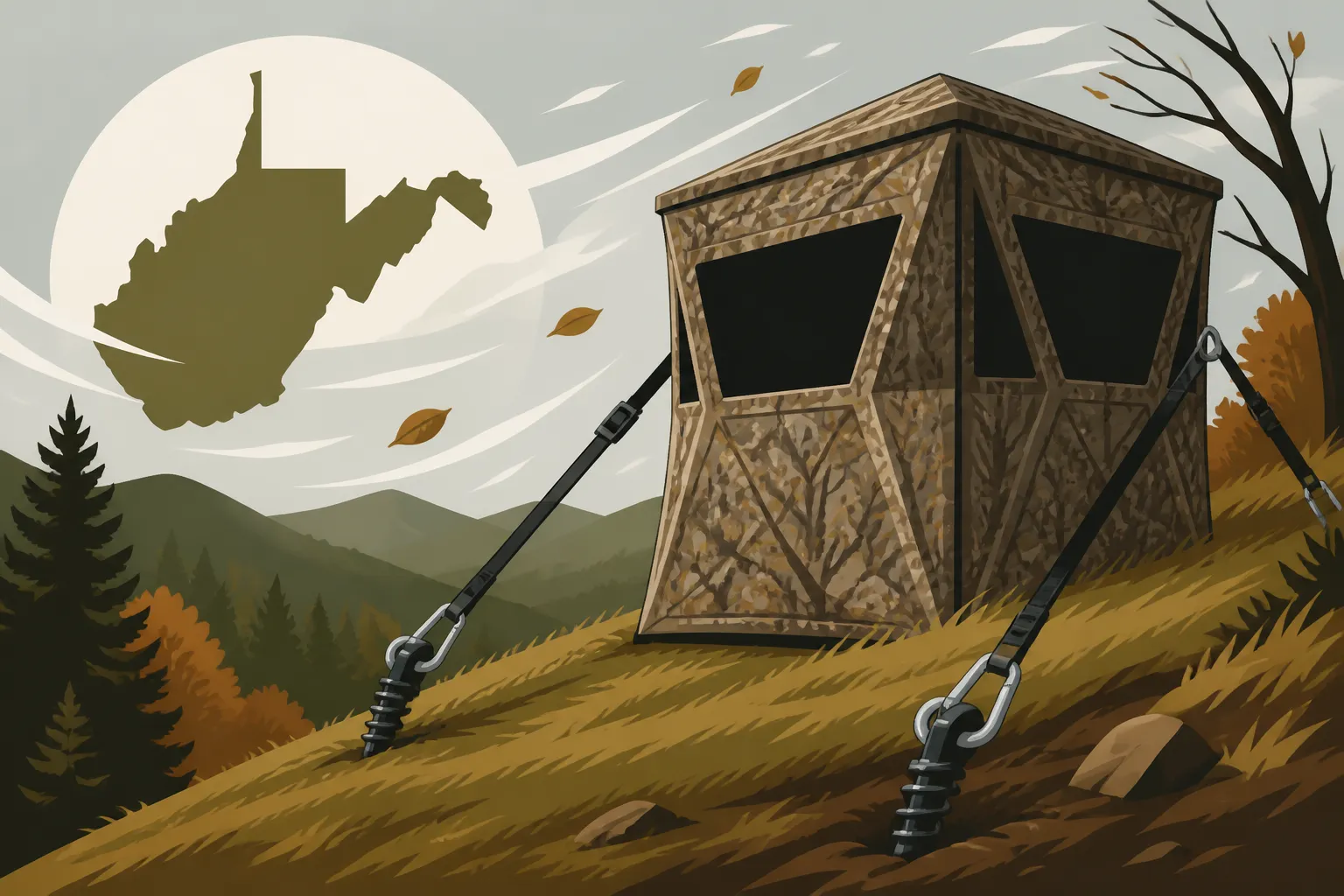
- Screw-In Anchors/Augers: These are a game-changer, especially in softer soil or areas with some roots. They twist deep into the ground, creating a much stronger hold than traditional stakes. You can find them at most outdoor or hardware stores. Just be sure to test them in your specific hunting spot; some rocky West Virginia terrain might make them difficult to use.
- Rebar or Large Spikes: For incredibly rocky or hard ground, short sections of rebar (about 12-18 inches) or heavy-duty construction spikes can be driven in with a small mallet. Be careful to avoid hitting buried rocks that can bend them.
When placing your stakes, angle them away from the blind’s base, almost like a tripod leg. This creates better resistance against uplift and lateral forces from the wind. Don't just stake the four corners; many blinds have extra loops along the bottom perimeter or mid-wall sections that offer additional tie-down points. Using all available points will distribute the load and prevent a single point from failing.
The Power of Guy Ropes and Tie-Downs
Stakes secure the bottom, but guy ropes are what really stabilize the entire structure and prevent it from collapsing or becoming a parachute. This is where most hunters fail, thinking stakes alone are enough.
- Attach to Frame: Instead of just tying to fabric loops, try to attach your guy ropes directly to the blind's internal frame poles if possible. This transfers the stress to the structural integrity of the blind, not just the stitching of the fabric.
- Angle for Strength: Run ropes from the top-third of the blind’s frame or designated tie-off points down to anchor points (stakes, trees, rocks) at roughly a 45-degree angle. This creates a wide base of support.
- Tension is Key: Use knots that allow for easy tensioning, like a taut-line hitch, or employ cam-tensioning devices. A loose rope is a useless rope in high winds. You want them taut, but not so tight you stress the blind fabric.
- Multiple Anchor Points: For a standard hub-style blind, I like to run at least four main guy ropes, one from each corner, but often add more if the blind has additional attachment points higher up on the walls. In extremely windy situations, you might run eight or even twelve ropes for maximum stability.
Consider how a sail works on a boat – it catches the wind. Your blind can do the same. Guy ropes prevent your blind from lifting and catching that wind. Using a Ground Blind on West Virginia Public Land can often mean setting up in exposed areas, so don't skimp on these crucial tie-downs.
Reinforcing with Natural Materials
Sometimes, the best anchoring solutions are right there in the environment around you. West Virginia's woods are full of excellent natural anchors if you know how to use them.
- Trees and Logs: If you're setting up near trees, use short sections of rope to tie off blind corners or guy lines directly to tree trunks. Smaller fallen logs or branches can also be used as deadman anchors; simply bury them a few inches deep and tie your rope around them.
- Rocks and Boulders: Large rocks can be used as direct anchor points by wrapping rope around them. For smaller, but heavy, rocks, you can create a "rock bag" by tying a square knot in the middle of a piece of rope, placing the rock in the loop, and then securing the rope ends to your blind. This acts as a ballast.
- Brush and Saplings: While not as strong as mature trees, thick brush or sturdy saplings can be woven into the fabric loops of your blind, especially at the bottom, to provide additional resistance against flapping and movement. This also helps with concealment, allowing you to Brushing In a Blind on a Field Edge.
- Dirt and Sod: Don't underestimate the power of simply banking dirt or cutting sod around the base of your blind. This creates a seal that prevents wind from getting under the blind, which is often how they start to lift and destabilize.
By combining the manufactured stakes and ropes with the natural resources available, you create a multi-layered defense against even the strongest gusts. It's about being resourceful and understanding your environment.
Here's a quick comparison of common anchoring methods:
| Method | Pros | Cons | Ideal Use Case |
|---|---|---|---|
| Standard Tent Stakes | Lightweight, compact, quick to deploy | Weak hold in soft soil/high wind, prone to bending | Calm days, temporary setups, sandy soil |
| Screw-In Anchors | Excellent hold in most soil types, easy to remove | Slower to deploy, can struggle in rocky ground | Longer-term setups, moderate to high wind |
| Rebar/Spikes | Extremely strong hold, good for hard/rocky ground | Heavy, requires mallet, can damage blind loops | Permanent setups, very rocky or hard soil, high wind |
| Guy Ropes (to stakes) | Distributes wind load, prevents lift, adds stability | Requires extra effort/knots, can be tripping hazard | Any setup with wind, crucial for tall blinds |
| Guy Ropes (to trees) | Extremely strong, doesn't require ground stakes | Limited by tree proximity, can damage tree bark if not careful | Wooded areas with available trees, very high wind |
| Weighted Bags/Rocks | Simple, adaptable to ground conditions, movable | Heavy to transport, can take up interior space | Rocky areas where stakes fail, quick stability boost |
Advanced Anchoring Solutions and Best Practices
Sometimes, you need to pull out all the stops. When hunting those exposed ridgelines or wide-open fields, basic anchoring might not cut it. These advanced techniques provide extra peace of mind.
Leveraging Internal Frame Stabilizers
Your ground blind's frame is its skeleton, and strengthening it from the inside can make a huge difference.
- Tension Rods: Some higher-end blinds come with internal tension rods that push out against the fabric, making the walls taut and reducing flapping. If your blind doesn't have these, you can improvise with adjustable tent poles or even sturdy branches cut to length. Place them diagonally or horizontally between opposing frame poles.
- Corner Braces: Reinforcing the corners where the hub poles meet can prevent structural collapse. Small bungee cords or even duct tape wrapped tightly around these joints can add surprising rigidity.
- Backpacking Poles: If you carry trekking poles for those steep West Virginia ascents, consider using them internally to brace the roof or walls of your blind. They're lightweight and adjustable, making them perfect for on-the-fly stabilization. This is especially useful after a long hike to Hunting a High Elevation Mountain Bench where winds can be fierce.
The goal here is to make the blind's walls and roof as rigid as possible, minimizing the "sail effect" that wind loves to exploit. A taut blind won't flap as much, reducing noise and movement.
Weighting Down Your Blind from the Inside
While external anchoring secures the blind to the ground, internal weight acts as ballast, further preventing lift and making the entire structure more stable.
- Sandbags or Rock Bags: These are fantastic. You can purchase dedicated ground blind sandbags, or simply use durable bags (like feed sacks or heavy-duty trash bags) and fill them with local sand, dirt, or rocks once you reach your setup location. Place them in each corner of the blind, against the bottom skirts.
- Water Jugs: A gallon of water weighs about 8 pounds. If you carry water into your blind, bring extra jugs and use them as weights. This is especially useful for early season hunts where water is a necessity anyway.
- Your Pack and Gear: Don't just toss your hunting pack in a corner. Unpack it and spread out heavier items like extra clothes, ammunition, or binoculars along the perimeter of the blind's floor. Every pound helps. Even your boots, once you take them off for comfort, can be pushed against a corner. Just make sure to keep your essentials organized and accessible, perhaps using a small pouch from GoHunt to keep critical items within reach.
Internal weighting works in conjunction with external anchoring. If the wind tries to lift the blind, it first has to overcome all that internal weight, making it much harder for it to pull the stakes or ropes free.
Strategic Placement for Wind Protection
Sometimes the best anchoring isn't about more stakes, but about smarter placement. Using the natural terrain to your advantage is crucial in West Virginia.
- Behind Natural Barriers: Look for large boulders, fallen logs, thick stands of evergreens (like mountain laurel or rhododendron), or even dense brush thickets. Setting your blind directly behind these features can significantly reduce the wind hitting your blind head-on.
- In a Hollow or Depression: A slight depression in the ground, or even just behind a small rise, can offer surprising protection from direct wind. Just be mindful of swirling winds that can occur in these areas.
- Edge of Timber: Instead of setting up in the wide open, place your blind just inside the timber line. The trees will break up the wind and provide cover. This is a common tactic when Hunting a Clear-Cut Regrowth Edge or Hunting Spruce Knob Adjacent Terrain.
- Leeward Side of Ridges: Identify the prevailing wind direction for your hunt day. Set your blind up on the leeward side of a ridge or hill, the side sheltered from the wind. While winds can shift, this gives you the best chance of natural protection. Tools like the GoHunt app can often provide real-time wind forecasts and even terrain analysis to help you pick the best spot. Understanding Wind and Thermals on a Steep Ridge is vital, as they play a huge role in deer movement and your scent control.
Pre-Season Prep and In-Field Adjustments
A successful hunt often begins long before opening day, and preparing your ground blind for West Virginia's unpredictable weather is no exception.
Scouting for Wind-Protected Locations
Effective anchoring isn't just about securing the blind; it's about where you secure it. Pre-season scouting is your best friend here.
- Identify Natural Windbreaks: As you’re Scouting West Virginia Public Land Before Season, actively look for those natural barriers mentioned earlier: thickets, large rock outcroppings, changes in elevation, or even the edge of a dense timber stand. Use your GoHunt maps to analyze topography and pinpoint potential sheltered spots. A good map can help you visualize how wind might interact with the terrain.
- Observe Wind Patterns: Pay attention to how the wind behaves in different areas you plan to hunt. A calm valley might have a stiff breeze just a few hundred yards up a hillside. Carry a small wind checker or even a piece of flagging tape to get a feel for the prevailing directions and how they interact with specific terrain features. For example, knowing the prevailing winds when Hunting a Ridge-Top Saddle for Rutting Bucks can tell you exactly where to set up for concealment and scent control.
- Consider Sun and Shade: While not directly wind-related, positioning your blind to minimize direct sun exposure can make for a more comfortable sit, allowing you to focus on the hunt rather than overheating. Also, consider how shadows will play out throughout the day, especially if you plan to Hunting the West Virginia Rut in November when days are shorter.
The Importance of a Test Run
Don't let opening morning be the first time you deploy your blind in a significant breeze. A test run can save you a lot of headache.
- Backyard or Camp Setup: Before you head out for the real thing, set your blind up in your backyard or at hunting camp on a windy day. Use all your intended anchoring methods – the heavy-duty stakes, the guy ropes, the internal weights.
- Simulate Conditions: Try to simulate the conditions you expect to face. Is the ground soft or hard? How does the blind react to gusts from different directions? This test run will quickly reveal any weak points in your anchoring strategy or any areas where the blind might flap unexpectedly.
- Practice Brushing In: Use the opportunity to practice Brushing In a Blind on a Field Edge or integrating it into natural cover. The better it blends, the less it stands out, and the less likely it is to be a visual distraction even if there's a slight wobble. This practice helps refine your setup so it’s quick and efficient when it counts.
Quick Fixes When the Wind Picks Up Unexpectedly
Even with the best preparation, West Virginia weather can be famously unpredictable. Having a few emergency tactics in your back pocket can turn a potentially ruined hunt into a manageable one.
- Add More Guy Ropes: Always carry extra cordage (paracord works great) in your pack. If the wind unexpectedly picks up, you can quickly add more guy ropes to available trees, bushes, or additional stakes you might have carried in your Packs for a Monongahela Forest Day Hunt.
- Stack More Weight: If you have extra rocks, logs, or even heavy parts of your gear (like a backpack or insulated layers), pile them inside the blind against the corners and skirts.
- Use Your Body: In a truly desperate situation, you can lean against a wall that’s catching the most wind, using your own body weight to stabilize it until you can implement a more permanent solution or the gust passes.
- Relocate (if possible): If the wind becomes truly unmanageable and you fear for the safety of your blind or your hunt, don't be afraid to pull up stakes (literally!) and relocate to a more sheltered position if time and the situation allow. Sometimes the best anchor is simply a better location.
By understanding the unique challenges of West Virginia’s winds and having a robust anchoring strategy, you can turn your ground blind into a truly effective and reliable hunting tool. Don't let a gust of wind ruin your next big woods adventure!
Disclaimer
This article is for general informational purposes only and does not constitute professional advice. Laws, prices and regulations vary by location and change over time. Consult a qualified professional for guidance on your specific situation.