Hunting Potomac Highlands Ridgelines
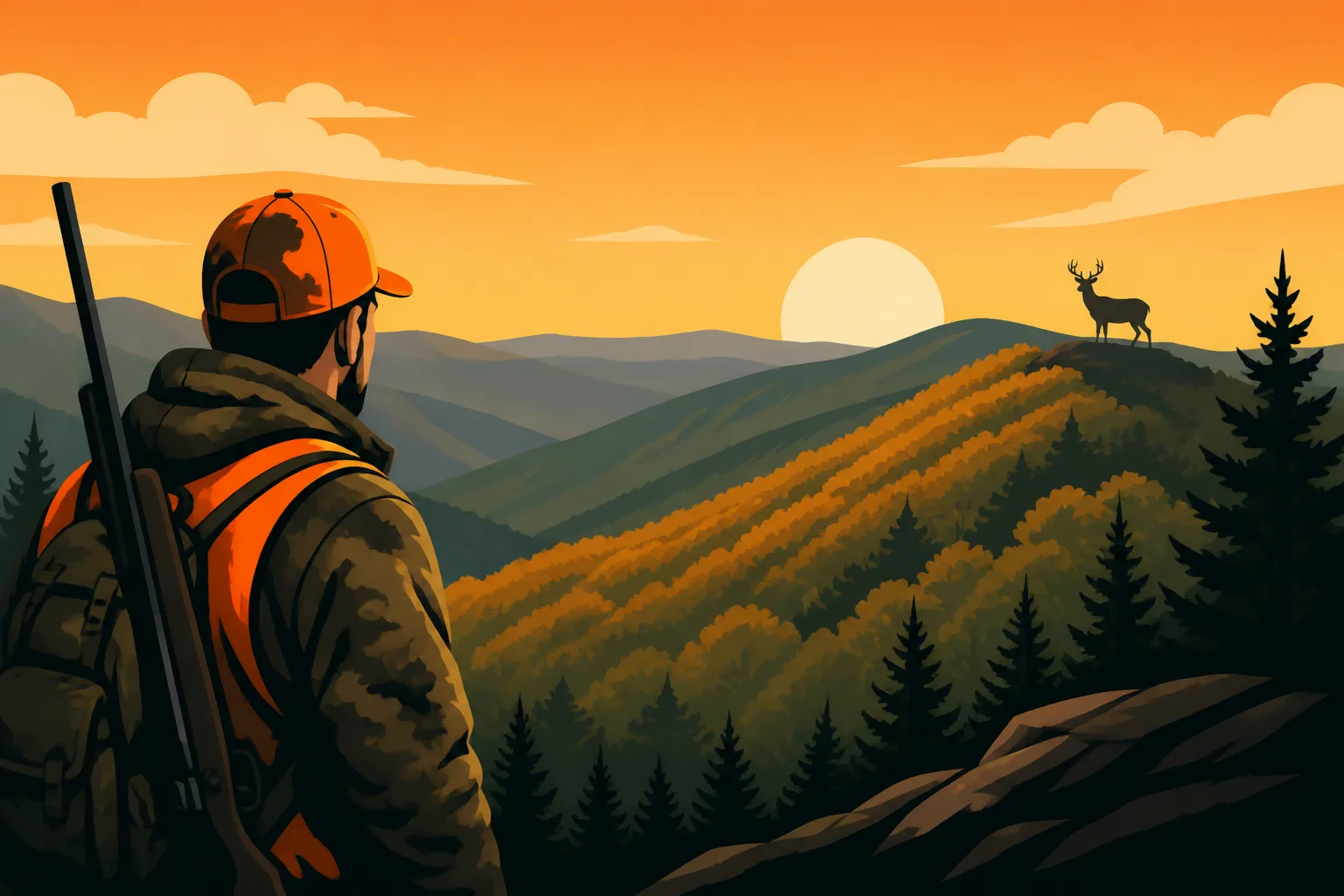
Hunting the rugged ridgelines of West Virginia's Potomac Highlands can be one of the most physically demanding, yet incredibly rewarding, pursuits for any hunter. The steep ascents and deceptive terrain often intimidate folks, leading to frustration when trying to pinpoint deer or bears that seem to vanish into thin air. This comprehensive guide will walk you through understanding this unique landscape, effective scouting methods, and proven hunting strategies to help you conquer those formidable mountain crests and fill your tag.
Understanding the Unique Terrain of the Potomac Highlands
The Potomac Highlands, a stunning region encompassing counties like Pendleton, Grant, Hardy, and parts of the Monongahela National Forest, presents a distinctive challenge to hunters. It's not your typical flat farmland or rolling hills; this is a land defined by ancient mountains, deep hollows, and, of course, those imposing ridgelines. Before you even think about setting a stand or still-hunting, you need to grasp the nuances of this environment.
The Ridge and Valley Topography
At its core, the Potomac Highlands is characterized by parallel ridges and valleys, a geological feature known as Ridge and Valley topography. These ridges can run for miles, often exceeding elevations of 3,000 to 4,000 feet, with steep, unforgiving slopes plummeting into dark, cool hollows. Deer, bears, and other game animals are intimately familiar with this vertical world, using it to their advantage for travel, bedding, and escape.
Imagine traversing a ridge: on one side, you might have a gentle slope covered in mature hardwoods, offering good visibility. On the other, a near-vertical drop-off choked with dense laurel thickets and impenetrable rhododendron, providing perfect cover. Game animals often use the gentler slopes for feeding and travel, while retreating into the nasty stuff when pressured. They also utilize saddles and benches along these ridges as natural travel corridors, making these areas prime ambush points. Understanding these micro-terrain features is critical, as they dictate how game moves and where you should focus your efforts.
Vegetation and Cover Types
The vegetation in the Potomac Highlands is a diverse tapestry that directly influences animal behavior. You'll encounter vast tracts of mature oak and hickory forests, which are crucial mast producers, especially during the fall. When acorns are dropping, deer and bear will gravitate to these ridge-top flats and gentler slopes to feed. Learning to identify these mast trees, even without nuts on the ground, can tell you where game will be concentrated.
Beyond the hardwoods, you’ll find dense stands of evergreens, particularly hemlock and pine, often mixed with mountain laurel and rhododendron in the steeper, shadier hollows. These thickets provide unparalleled thermal cover during cold weather and security cover when animals feel pressured. Deer, especially mature bucks, are notorious for bedding down in these almost impenetrable areas, often just off a ridgeline on a south-facing slope to catch the sun. Knowing how to read a ridge for Eastern Panhandle deer is crucial, as the principles largely apply to the Potomac Highlands. Don't be afraid to get into these thick areas; that's often where the biggest game hides.
Water Sources and Their Influence
Water is life, and in the mountains, it plays a huge role in animal movement. While the Potomac Highlands is crisscrossed by numerous streams and creeks in the valley bottoms, dependable water sources higher up on the ridgelines can be scarce, especially during dry spells. Animals will often travel significant distances to reach reliable springs, seeps, or small intermittent creeks that might run along a bench or in a shallow depression on a ridge.
These elevated water sources act as magnets, creating natural funnels and congregation points. Scouting for these hidden oases, particularly during the late summer and early fall, can reveal consistent travel patterns. Look for damp ground, fresh tracks, and worn trails leading to and from these spots. Sometimes, a small, mossy seep barely noticeable to the untrained eye can be a daily stop for several deer or a bear, making it an excellent location for a treestand or ground blind.
Scouting and Planning Your Ridgeline Hunt
Success on Potomac Highlands ridgelines is rarely accidental; it's the result of meticulous scouting and thoughtful planning. This isn't a place where you can just wander in and expect to connect. The sheer scale and difficulty of the terrain demand a strategic approach.
Using Topographical Maps and Satellite Imagery
Before you ever set foot in the woods, the best scouting happens from your armchair. High-quality topographical maps and satellite imagery are your best friends. Services like GoHunt, or other comprehensive mapping platforms, allow you to analyze the terrain in incredible detail. Look for obvious ridgelines, identifying saddles (low points where ridges connect), benches (flat or gently sloping areas on a steep hillside), and distinct points. These are natural travel corridors and congregation areas for game.
Pay close attention to changes in elevation, steepness of slopes, and transitions in timber types visible on satellite views. A bench running along a steep hillside, visible as a slight contour line on a topo map, might be a deer highway. A saddle connecting two major ridges could be a pinch point where animals funnel when moving between bedding and feeding areas. I use mapping tools from GoHunt to mark potential stand locations, bedding areas (often on south-facing slopes in thick cover), and feeding zones (like oak flats). This virtual scouting helps you narrow down vast tracts of public land, such as those found in Monongahela National Forest hunting, into manageable sections for boots-on-the-ground investigation.
Boots-on-the-Ground Reconnaissance
Once you have a general idea from your maps, it's time for some serious legwork. Nothing beats walking the ground. During the off-season or before the hunt, dedicate time to hiking those ridgelines. Look for well-worn game trails, rubs, scrapes, and bedding areas. Follow those trails to see where they lead. Do they connect a thick bedding area to an oak flat? Do they funnel through a narrow saddle?
When scouting, try to move as quietly as possible, mimicking how you would hunt. Pay attention to how the wind swirls and thermals move, especially around those steep breaks. You might discover a hidden spring or a small, overlooked clear-cut that isn't obvious on a map but holds tons of sign. This is also the time to identify potential treestand locations, considering access, prevailing wind direction, and shot angles. Don't forget to look for areas with less hunting pressure; often, the deeper you go into those hollows or the higher you climb on those ridges, the less human interference you’ll find. Scouting West Virginia public land before season is an investment that pays dividends.
Reading Sign on a Ridgeline
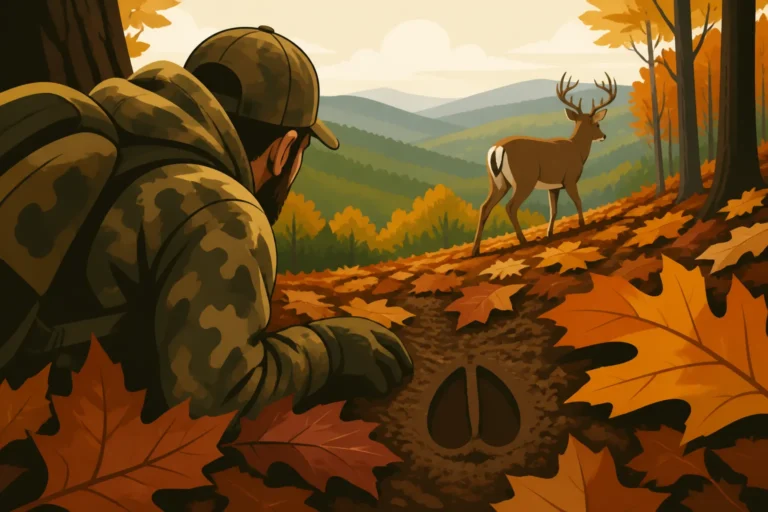
The sign left by deer and bears on a ridgeline tells a story if you know how to read it. Fresh rubs, especially large ones on sturdy trees, indicate a buck is actively marking his territory and often traveling that particular ridge. Scrape lines, particularly those along logging roads or less-traveled trails on a ridge, are communication hubs. These can be goldmines during the rut.
Bedding areas are often found just off the top of a ridge, typically on the leeward side to escape wind, or on south-facing slopes to catch morning sun. Look for flattened grass or leaves, sometimes with a fresh scent of deer. Bear sign includes claw marks on trees, overturned rocks, and scat. In a good mast year, you’ll find copious bear scat filled with acorn hulls. These signs indicate not just presence, but activity and patterns. Remember, fresh sign is paramount. Old sign only tells you what was there; fresh sign tells you what is there.
Effective Hunting Strategies for Ridgelines
Hunting ridgelines requires a blend of patience, stealth, and a deep understanding of animal behavior in vertical terrain. It's not about covering miles quickly; it's about moving deliberately and positioning yourself smartly.
Still-Hunting and Stand Placement
Still-hunting is a highly effective strategy for ridgelines, especially when animals are on the move or when you want to cover ground quietly. This involves moving incredibly slowly, taking a few steps, then pausing for several minutes to scan, listen, and glass. Use the terrain to your advantage: move into the wind, stay on the leeward side of the ridge if the wind is strong, and use benches or natural contours to mask your movement. When still-hunting Cranberry WMA ridges, similar principles apply.
For stand placement, saddles are often considered prime real estate. Deer and bear will use these low points to cross from one side of a mountain to another, especially when moving between feeding and bedding areas. Benches and points are also excellent. On a point that juts out from a main ridge, you can often see into multiple drainages and catch animals skirting the edges. When setting up, always consider your access route, your exit route, and how the wind and thermals will affect your scent. A well-placed treestand or ground blind, especially on a steep Allegheny ridge, can offer incredible shot opportunities. Look for mature, straight trees for your stand, and consider the difficulty of hanging a stand on a steep Allegheny ridge.
Understanding Wind and Thermals
This is arguably the most critical aspect of hunting ridgelines. The wind in mountainous terrain is rarely consistent. Thermals, which are air currents that rise as the ground heats up and fall as it cools, add another layer of complexity. In the mornings, thermals generally pull scent up the mountain, while in the evenings, they pull it down into the hollows.
You need to factor in both prevailing wind direction and thermal movement. For a morning hunt, setting up just below a ridgeline saddle, with the thermal pulling your scent uphill and away, can be effective. In the evening, a stand higher on the ridge, allowing your scent to be carried down into a valley where animals might be moving up to feed, could work. Always have a clear understanding of the wind and thermals on a steep ridge, and adjust your approach accordingly. Often, I will plan two or three stand locations for a given area, allowing me to pick the best one based on the day's conditions.
Calling and Decoying Tactics
While often associated with flatland hunting, calling and decoying can be surprisingly effective on Potomac Highlands ridgelines, especially during the rut for deer or active periods for bears. For deer, subtle grunts, bleats, and even rattling can draw a curious buck in, especially if he thinks there's a rival or a receptive doe on his travel corridor. Given the thick cover often found on these ridges, short, soft calls are usually more effective than aggressive, loud sequences.
For bears, calling isn't as common as still-hunting or baiting (where legal), but predator calls mimicking a distressed fawn or rabbit can sometimes pique a bear's curiosity, particularly if they are opportunistic feeders. Decoys can work, especially a lone doe decoy for deer during the rut, but their effectiveness can be limited by the often-steep terrain and thick cover. A well-placed decoy needs good visibility to be seen, which can be challenging on a cluttered ridgeline. Focus on realism and minimal movement for deer decoys.
Essential Gear and Safety Considerations
Hunting these West Virginia mountains isn't just about strategy; it's also about having the right gear and prioritizing safety. The remote, rugged nature of the Potomac Highlands means you need to be prepared for anything.
Footwear and Clothing for Steep Terrain
Your feet are your most important asset when hunting ridgelines. Invest in high-quality, waterproof, and supportive boots for walking West Virginia ridges. They should have excellent ankle support to prevent twists and durable soles with aggressive tread for traction on loose rock and slick leaves. Consider a pair that's broken in well before the season to avoid blisters.
For clothing, layering is key. The weather in the Potomac Highlands can change rapidly, from frosty mornings to warm afternoons, and then back to chilly evenings, especially with the elevation changes. Start with a moisture-wicking base layer, add insulating layers like fleece or wool, and top it off with a waterproof and windproof outer shell. Wool is an excellent choice for its warmth-to-weight ratio and ability to retain insulation even when wet. Don't forget durable, quiet brush pants for navigating thick laurel and rhododendron. You'll also need to comply with West Virginia's blaze orange requirements during certain seasons, so make sure to have enough visible orange or blaze pink.
Navigation and Emergency Preparedness
Getting lost in the vastness of the Monongahela National Forest or other public lands in the Potomac Highlands is a real concern. Always carry a reliable GPS unit or a smartphone with a downloaded mapping app like GoHunt that works offline. Don't solely rely on cell service; it's often nonexistent in the deep hollows and remote ridgelines. Carry a physical map and compass, and know how to use them as a backup.
Beyond navigation, a comprehensive first aid kit is non-negotiable. Include essentials for cuts, scrapes, blisters, and any personal medications. Carry a headlamp with spare batteries, a fire starter, a small emergency shelter, and plenty of water or a water filter. A fully charged power bank for your phone is also a smart addition. Always let someone know where you are hunting and when you expect to return. Being able to communicate or signal for help in an emergency is paramount. Consider a personal locator beacon (PLB) or satellite messenger for truly remote hunts.
Weapon Choices and Shot Placement
The steep angles and often-thick cover of ridgeline hunting influence your weapon choice and shot placement. If you're rifle hunting, a caliber that delivers good energy at moderate ranges, like a .308 or .270, is a solid choice. Practice shooting at various angles, including uphill and downhill, to understand how bullet trajectory changes. For archery, broadhead selection and shot placement are critical, especially when taking an angled shot on an animal moving along a contour. Many hunters choose a heavier arrow setup for better penetration through bone and muscle on those tricky mountain shots.
Regardless of your weapon, always wait for the best possible shot. Animals can be difficult to recover in this steep country, and a marginal shot can lead to a long, arduous, and potentially unsuccessful tracking a deer through West Virginia leaf litter or a bear that might retreat into an impenetrable thicket. Be patient, understand your weapon's capabilities, and know your own limitations.
Ridgeline Hunting Strategies: A Comparative Look
To help you decide which tactics might work best, here’s a quick overview of different ridgeline hunting approaches and their ideal conditions.
| Strategy | Ideal Conditions | Pros | Cons |
|---|---|---|---|
| Still-Hunting | Active game movement (rut, feeding times), changing winds, unknown game locations | Highly adaptable, allows covering ground, good for scouting on the fly, mimics natural predator movement | Requires extreme patience and stealth, can be physically demanding, scent control is challenging |
| Stand Hunting | Known game trails, saddles, benches, reliable food sources, consistent wind | High success rate in proven areas, less physically demanding (once set), excellent for ambushing | Less adaptable to changing conditions, requires pre-scouting, can be boring if game is slow |
| Calling | Rut for deer, active periods for bear, thick cover (less visible targets) | Can draw game out of thick cover, adds excitement, works well with stand hunting | Relies on animal curiosity, can spook game if overdone or done incorrectly, limited visibility |
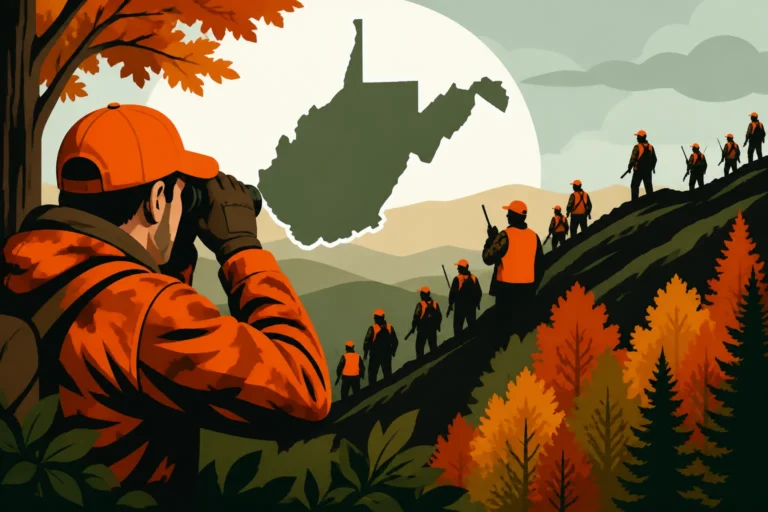
| Driving | Groups of hunters, thick bedding areas, deep hollows (use with caution!) | Can push game out of impenetrable cover, highly effective with proper planning | Dangerous if not well-coordinated, requires multiple participants, can push game off public land |
Ultimately, hunting the Potomac Highlands ridgelines is an experience unlike any other. It challenges you physically and mentally, but the rewards—a hard-earned deer or bear, and the sheer beauty of the West Virginia wilderness—are unforgettable.
Disclaimer
Hunting is an inherently dangerous activity. Always prioritize safety, adhere to all West Virginia hunting regulations, and ensure you have the necessary licenses and permits. This guide provides general information and should not replace professional safety training or local wildlife agency guidelines. Be prepared for emergencies, and always inform someone of your hunting plans and location.