Tracking a Deer Through West Virginia Leaf Litter
The sound of your shot echoes through the West Virginia hollers, and while you feel good about the placement, the deer just vanished into the sea of fallen leaves. That feeling of uncertainty, the pit in your stomach as you wonder if you made a good hit, and the daunting task of finding a faint blood trail in an endless carpet of rustling foliage is a situation every Mountain State hunter knows all too well. This comprehensive guide will walk you through proven strategies and the patient mindset required to confidently track and recover your deer, even when West Virginia's dense timber and thick leaf litter conspire to hide your prize.
The Critical First Steps After the Shot
It’s completely natural to want to immediately charge after an animal once the shot is fired. Your adrenaline is pumping, and the instinct to recover your game is powerful. However, this is often the biggest mistake a hunter can make, especially when faced with the challenging terrain and thick cover found throughout West Virginia. Patience, my friend, is your absolute best ally in these crucial first moments.
Why Waiting is the Smartest Play
Think about it: a deer that's been hit, even mortally, can travel a surprising distance on pure adrenaline. If you push it too quickly, you risk bumping the deer, causing it to run even further, potentially into an impenetrable thicket or across a property line. A deer left undisturbed will often bed down nearby, allowing its body to shut down and the blood trail to become more evident as it bleeds out.
The waiting period varies significantly based on where you believe your shot connected. If you had a perfect broadside shot, saw the deer visibly react like a "death kick," and heard a crash, you might be looking at a shorter wait, perhaps 30 minutes to an hour. However, if you suspect a less-than-perfect hit—a gut shot, a leg hit, or if you simply weren't sure—you need to extend that wait time dramatically. For a suspected gut shot, I personally recommend waiting at least 4-6 hours, and ideally, even longer, especially if temperatures are cool. Overnight is often best if conditions allow. It’s hard, I know. It's agonizing to just sit there, but it dramatically increases your chances of a successful recovery.
Marking the Point of Impact and Last Sight
Once you've decided on your wait time, the very first thing you should do is meticulously mark the exact spot where you were standing when you shot. Use flagging tape, a brightly colored hat, or even your hunting pack. Then, walk directly to where you last saw the deer standing or where you believe it was when your bullet or arrow connected. This is your "point of impact" and is absolutely critical for establishing your starting point. Again, mark this spot clearly.
From the point of impact, scan the ground immediately around it for any sign: blood, hair, disturbed leaves, or even a piece of bone. Mark any initial blood you find. This systematic approach, marking your last known point and the initial signs, helps you stay oriented and prevents you from getting lost or confused as you begin your actual track. It's also incredibly helpful if you decide to come back later or bring in help. Using a GPS on your phone or a dedicated GPS unit to drop waypoints for your stand, the point of impact, and any blood you find can be immensely helpful, especially when you're Scouting West Virginia Public Land Before Season. Many hunters use apps like GoHunt to mark their shot location and initial blood trail, which can save a lot of heartache in the thick woods.
Deciphering the Clues in West Virginia's Woods
Tracking a deer in West Virginia often feels like solving a puzzle, with each piece of evidence, no matter how small, contributing to the bigger picture. The notorious thick leaf litter, especially after a dry spell, can make every step a crunchy, noisy challenge, and yet, it can also hold subtle clues if you know how to read them.
Understanding Blood Sign: Color, Consistency, and Quantity
The blood trail is often the most significant clue you'll follow, but not all blood is created equal. Learning to interpret what the blood is telling you about the hit will guide your tracking strategy.
- Bright Red, Frothy Blood with Bubbles: This is the Holy Grail of blood trails. It indicates a lung hit, which is typically fatal and causes significant internal bleeding. Lungs are filled with air, so blood mixed with air will appear frothy. This is usually a sign that your deer won't be far, and a shorter wait time (30-60 minutes) is generally sufficient.
- Dark Red, Thick Blood with Flecks of Undigested Food/Stomach Contents: This unfortunately points to a gut shot. This is a lethal hit, but it's a slow one. The deer will need a lot of time to expire, and pushing it will only make recovery harder. This is when you must commit to a long wait, often 6-8 hours or even overnight if conditions are cool enough to prevent spoilage. The smell can also be distinctively musky and unpleasant, a strong indicator of a gut shot.
- Bright Red, Watery Blood: This can indicate a muscle hit, often in the leg or shoulder, or a superficial wound. While these can eventually be lethal if a major artery is severed, they often aren't immediately fatal. A deer hit in the leg might survive, or it might eventually bleed out. The trail can be sporadic and difficult to follow.
- Sparse, Dark Red Blood with a Greasy Sheen: This might indicate a liver hit. The liver is a large, vital organ, and a hit here is fatal. Deer with a liver hit typically don't run as far as a lung-shot deer, but they might take a bit longer to succumb than a perfect lung shot. A 2-4 hour wait is usually appropriate here.
The quantity of blood is also important. A heavy, consistent trail makes tracking easier, while sparse drops mean you'll need to slow down and meticulously search for every single clue.
Reading Leaf Litter, Tracks, and Other Physical Clues
West Virginia's ground cover, from the thick laurel in the mountains to the deep leaf beds in the river bottoms, is both a blessing and a curse. While it can obscure blood, it also registers other disturbances.
- Disturbed Leaves: Pay close attention to scuff marks, pushed-aside leaves, or areas where leaves are matted down. Even without blood, this can indicate the direction of travel. Look for patterns—is the deer stumbling? Are there deep gouges from hooves as it pushes off? Sometimes, a deer will drag a leg, leaving a distinct line in the leaves.
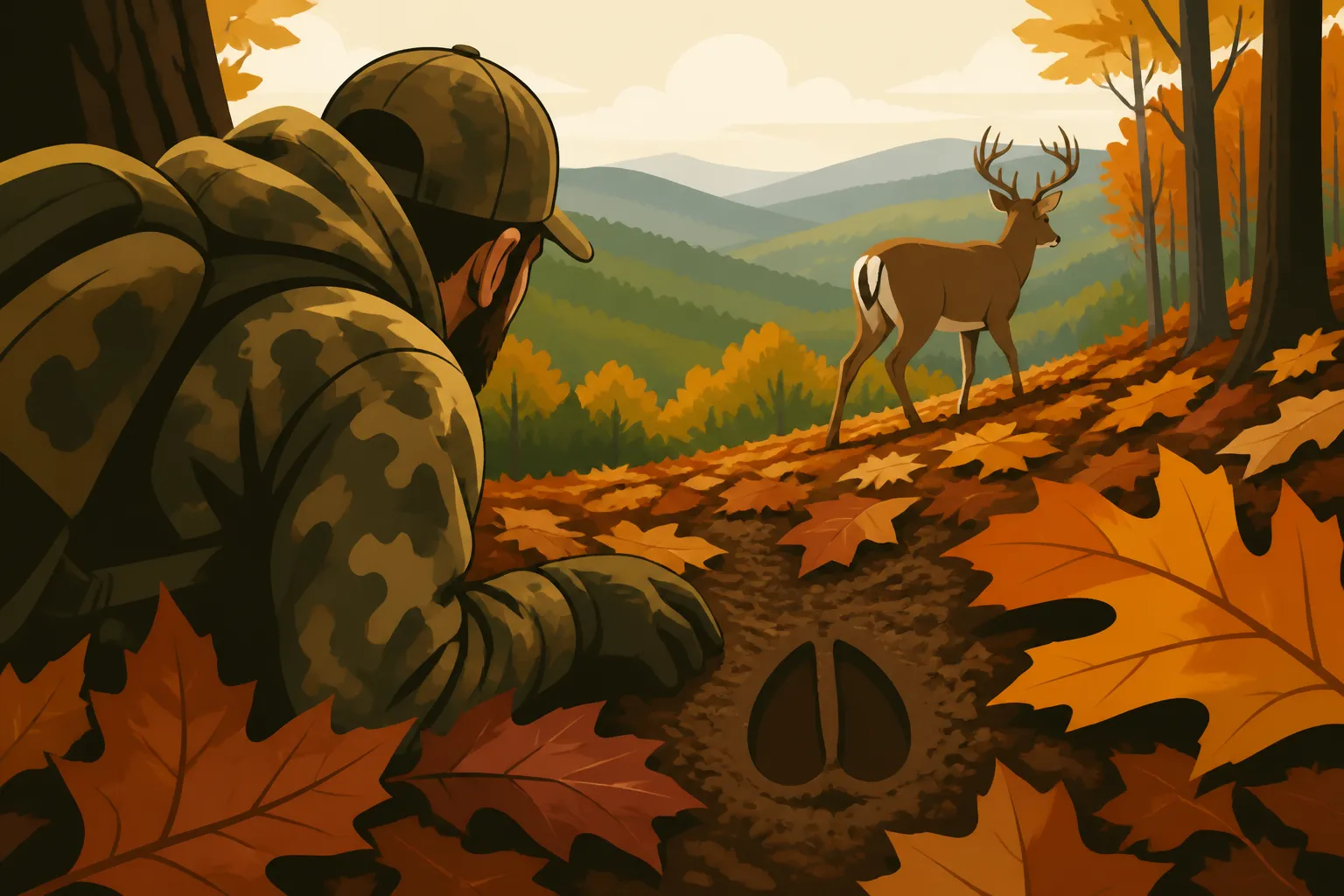
- Tracks: While often challenging to discern in deep leaf litter, especially in the rocky terrain common in West Virginia, look for any defined hoof prints. Even partial prints can tell you direction and gait. Soft ground near creek bottoms or muddy spots will offer the best opportunities for clear tracks. Understanding Reading West Virginia Mud for Fresh Deer Movement can greatly aid your tracking efforts.
- Hair: Finding hair at the point of impact or along the trail is an excellent clue. The color of the hair can confirm it's your deer. More importantly, the length and stiffness of the hair can indicate where on the body the deer was hit. Short, stiff hair usually means a hit higher on the body, possibly in the back or shoulder. Longer, coarser hair might come from the flank or belly.
- Bone Fragments: If you find small bone fragments, it often indicates a hit to a leg bone, shoulder, or rib. While alarming, it also means the bullet or arrow has certainly penetrated and caused damage.
- Smell: While not always present, sometimes a gut-shot deer will leave a distinctive, pungent smell of stomach contents along its trail. If you catch a whiff of something foul, slow down and intensify your search.
Using your senses—sight, hearing (for faint rustling ahead), and smell—becomes paramount when the blood trail is thin. Move slowly, head down, scrutinizing every inch of ground.
Advanced Strategies for a Challenging Track
So, you've waited, you've looked for blood, and the trail is either sparse, has vanished, or has led you to a frustrating dead end. This is where many hunters give up, but with the right strategies, you can often pick up even the most difficult trails in West Virginia's rugged landscape.
The Grid Search and Expanding Your Search Area
When the blood trail dries up, don't panic. Go back to the last confirmed spot of blood. From there, mentally divide the area into a grid. Start by walking in ever-widening circles or squares, expanding your search out from that last drop. Move slowly, looking for any sign—a disturbed leaf, a faint track, a broken twig, or even a tiny specks of blood that you might have missed initially.
If you have a tracking partner, this becomes much easier. One person can stay at the last known blood, while the other moves out in a search pattern. When a new sign is found, the first person moves to that spot, and the process repeats. This method is incredibly effective and prevents you from losing your last known point. Using a mapping app like GoHunt can be invaluable here. You can drop pins at your last blood and then mark your search perimeter, making sure you cover all ground systematically.
Recruiting Help and Ethical Considerations
Don't be afraid to call for backup. Two or three sets of eyes are almost always better than one, especially on a tough trail. When working with partners, communicate constantly. Designate one person as the primary tracker, usually the one with the best eyes or the most experience, to keep the group focused. Others can fan out slightly, but always within earshot and visual range of the primary tracker.
It's also important to know the legalities and ethics of tracking. In West Virginia, if a deer crosses onto private property, you must obtain permission from the landowner before continuing your track. This is non-negotiable and essential for maintaining a good reputation among landowners. Never trespass. If permission is denied, or you can't reach the landowner, it's a heartbreaking situation, but you must respect property rights. If you find yourself in this predicament, contacting a local conservation officer might offer a solution, but always ask first.
Night Tracking and the Use of Technology
Sometimes, the trail is so difficult that you're facing darkness before you've recovered your deer. While challenging, Blood Trailing After Dark in West Virginia is possible with the right tools. High-powered flashlights or headlamps are absolutely essential. A UV light can sometimes make blood "pop" against the natural background, but results vary. Thermal imaging devices are becoming more accessible and can be incredibly useful for locating a downed animal at night, though they are often cost-prohibitive for many hunters.
When tracking at night, move even slower than in daylight. The shadows and limited visibility can play tricks on your eyes. Use your markers and GPS waypoints religiously. If the trail is truly impossible after dark, it’s often best to mark your last sign, exit quietly, and return at first light with fresh eyes and a renewed mindset.
Dealing with Environmental Factors: Rain, Snow, and Steep Terrain
West Virginia's weather is notoriously unpredictable. Rain can quickly wash away a blood trail, making tracking nearly impossible. If it starts to rain while you're tracking, push harder and faster to try and find the deer before the trail vanishes. If the rain has already fallen, you'll need to rely almost entirely on disturbed earth, tracks, and physical clues.
Snow, on the other hand, can be a tracker's best friend. A fresh snowfall provides a pristine canvas, making blood, tracks, and disturbed snow incredibly obvious. However, falling snow can also cover a trail quickly. Always consider the weather forecast when planning your hunt and your recovery strategy.
Then there's the terrain. Hunting Steep Allegheny Ridges and navigating the rugged mountains of West Virginia means you'll likely encounter challenging recovery scenarios. Deer tend to run downhill when hit, so be prepared for a steep descent. When tracking in these areas, pay attention to fallen leaves catching on brush or rocks, indicating the deer's path. Gravity works in your favor when the blood is dripping, making it potentially easier to spot on the underside of leaves or brush lower down. Using Trekking Poles for Steep Ridge Access can save your knees and help maintain balance when focused on a trail.
The Recovery and Beyond: What Comes Next
Finally, after what might feel like an eternity, you spot your deer. The relief is immense, but the work isn't quite over.
Confirming the Kill and Field Dressing
Before approaching, take a moment to observe the animal from a distance. Look for any signs of breathing or movement. Approach cautiously from behind the head, with your weapon ready, just in case. A quick poke with a stick to the eye can confirm it’s expired. Once you’re certain, take a moment to appreciate your harvest. It’s a profound experience.
Now comes the practical part: field dressing. The goal is to quickly remove the entrails to cool the carcass and prevent spoilage. In West Virginia, especially during the warmer early archery season, quick cooling is paramount. If you're hunting in warmer temperatures, having Coolers and Game Bags for Early Archery Kill ready back at the vehicle is wise. For detailed steps, consider reading up on Field Dressing a Deer in Cold Weather if you're out during the late season. Be mindful of West Virginia's Chronic Wasting Disease (CWD) containment areas. If you're hunting in a CWD-positive county, there might be specific guidelines regarding carcass movement and testing, which you can learn about in West Virginia CWD Testing for Hunters.
The Drag: Getting Your Deer Out of the Woods
This is often the hardest part, particularly in West Virginia's often rugged and steep terrain. If you've been Hunting a Steep Hollow Head at First Light and your deer is at the bottom, you're in for a workout.
- Dragging Aids: Consider bringing a deer drag, a deer cart (if the terrain allows), or even a deer sled, especially if you're in snow. For truly steep country, a good Deer Sleds for Steep Country can be a lifesaver.
- Teamwork: Again, a partner makes all the difference. Share the load.
- Bone-Out Method: For particularly large deer or extremely challenging terrain, you might consider boning out the deer. This means butchering the animal on site, placing the meat in game bags, and packing it out in a frame pack. This method is lighter but requires more time and specific knowledge. Having Packs for a Day on Public Land or a dedicated frame pack will make this much easier.
Checking and Reporting Your Harvest
Once your deer is out of the woods, it's crucial to fulfill your legal obligation to report your harvest. In West Virginia, you are required to check in your deer within 24 hours of harvest. You can do this online via the Go Wild West Virginia website or app, by phone, or through a licensed checking station. Understanding West Virginia Deer Reporting Requirements is an essential part of responsible hunting. Be prepared with your license information and the county of harvest.
Tracking a deer through West Virginia's leaf litter can be one of the most challenging yet rewarding aspects of hunting. It tests your patience, your observational skills, and your grit. But with preparation, a systematic approach, and an understanding of the clues Mother Nature provides, you can turn a moment of anxiety into a successful and deeply satisfying recovery.
Disclaimer
The information provided in this article is for general guidance and educational purposes only. Hunting regulations and conditions can change. Always consult the current West Virginia Department of Natural Resources (WVDNR) hunting regulations and local laws before hunting. Safety should always be your top priority in the field.