Trekking Poles for Steep Ridge Access
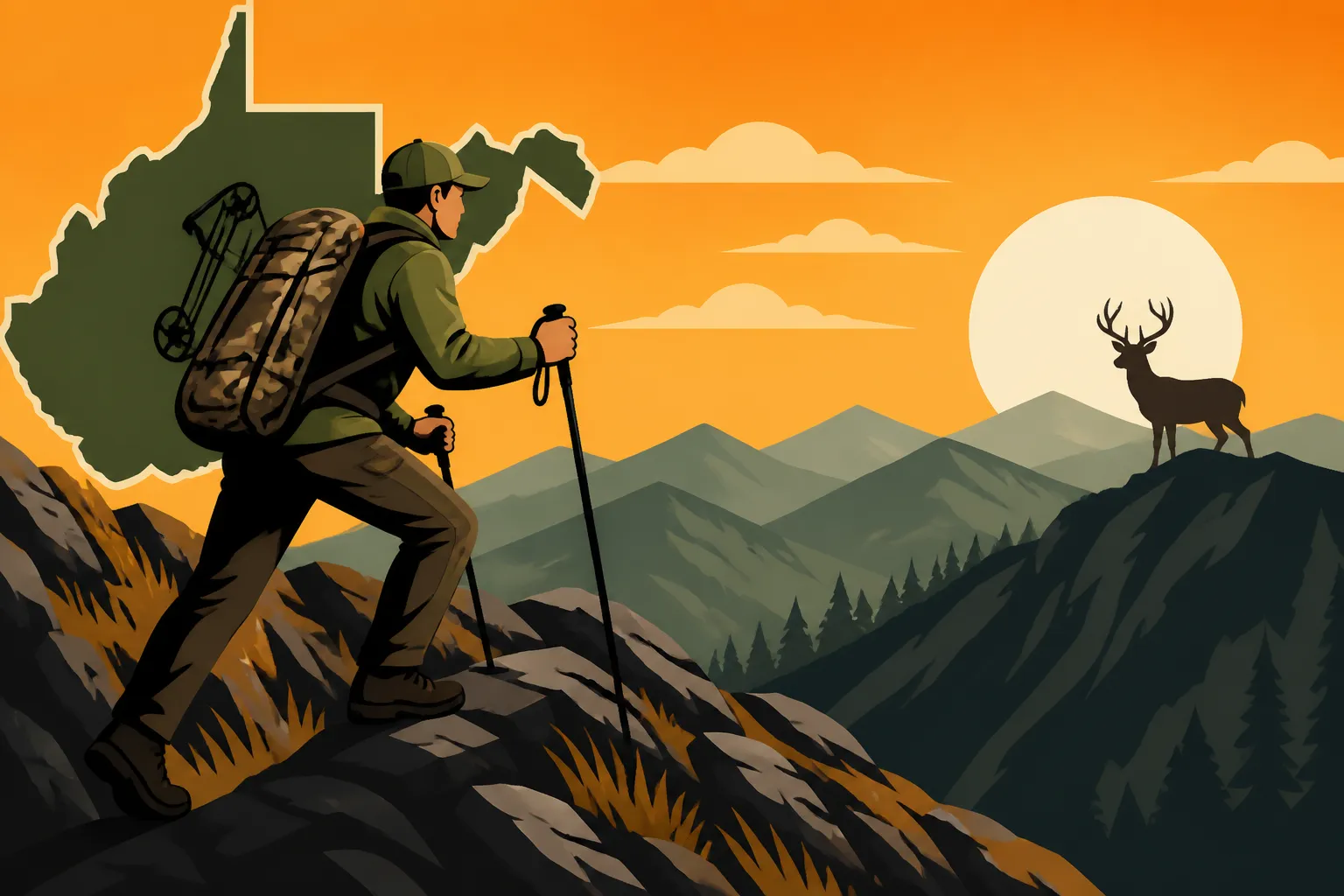
You've been there, haven't you? That moment when you're halfway up a steep West Virginia ridge, your calves are burning, your pack feels like it weighs a ton, and one misplaced foot could send you tumbling down a scree slope. Hunting in our mountains is exhilarating, but the terrain is no joke. This guide is all about one simple, yet incredibly effective tool that can transform your experience: trekking poles. We'll dive into why they're not just for hikers anymore, how to pick the right pair, and the best ways to use them to conquer our wild and wonderful landscape, keeping you safer and less fatigued for the hunt.
Why Trekking Poles Are Essential for West Virginia Hunters
Let's be honest, West Virginia isn't known for flat ground. Our state is a glorious maze of hills, hollows, and ridges that can test even the most seasoned hunter's endurance and balance. Many of us overlook trekking poles, thinking they're just for backpackers on designated trails, but that couldn't be further from the truth when you're navigating off-trail, through thick laurel, or across wet, leaf-covered ground. These aren't just an accessory; they're a legitimate piece of safety and performance gear.
The Unseen Challenge of Mountain Terrain
Our mountains, while beautiful, present a unique set of physical demands. It’s not just the steepness, though that’s certainly a factor. It’s the constant unevenness underfoot. You might be climbing over blowdowns one minute, traversing a sidehill where the ground is constantly shifting, or picking your way through slippery moss-covered rocks. A heavy hunting pack only exacerbates these challenges, pulling your center of gravity higher and making you more prone to losing balance. This isn't just uncomfortable; it's genuinely dangerous, especially when you're carrying a firearm or a bow. The energy expenditure is also immense, draining your stamina before you even get to your stand or chosen hunting spot. Imagine trying to stay still and focused for hours after a grueling climb – it’s tough, to say the least.
Stability, Safety, and Reduced Strain
This is where trekking poles shine. They essentially turn you into a four-legged creature, providing two extra points of contact with the ground. This dramatically increases your stability, whether you're climbing a near-vertical slope or carefully picking your way down a treacherous descent. That added stability translates directly to safety, helping prevent slips, falls, and ankle twists that can quickly end a hunt or worse, lead to a serious injury far from help. Beyond safety, they significantly reduce the strain on your knees, ankles, and lower back. Every step you take, especially downhill with a pack, puts immense pressure on your joints. Poles distribute some of that weight and impact to your arms and shoulders, saving your legs for when it truly counts, like that final stalk or packing out a trophy. When you're scouting new ground, perhaps using a tool like Scouting West Virginia Public Land Before Season, having that added stability allows you to explore more confidently and thoroughly.
Navigating Wet and Leafy Conditions
If you've spent any time hunting in West Virginia, you know our woods can be perpetually damp. Rain, morning dew, and even just the humidity create incredibly slick conditions. Add a thick layer of wet leaves in the fall, and every step can feel like walking on marbles. This is particularly true when you're navigating off-trail in areas like Monongahela National Forest, where the leaf litter can hide everything from loose rocks to slick roots. Trekking poles cut through that uncertainty. They allow you to test the ground ahead, probe for hidden obstacles, and maintain your balance even when one foot slips. Think about the difference between a controlled slide and a full-on fall – poles give you that extra margin of control. They also provide leverage, allowing you to push off roots or rocks more effectively, especially during tricky climbs or descents. This can be a real game-changer when you're trying to move quietly and carefully without making too much noise or taking a spill.
Choosing the Right Trekking Poles for Hunting
Just like choosing the right bow or rifle, selecting trekking poles for hunting isn't a one-size-fits-all decision. There are a few key features that make certain poles better suited for the rugged demands of the West Virginia backcountry. You want something durable, reliable, and comfortable enough to become an extension of your body.
Material Matters: Aluminum vs. Carbon Fiber
When it comes to the material, you'll generally find two main options: aluminum and carbon fiber. Each has its pros and cons, and your choice will likely depend on your priorities and budget.
-
Aluminum poles are generally more affordable and known for their exceptional durability. They can take a beating, bend before they break, and are less susceptible to catastrophic failure from an awkward impact. This makes them a solid choice for hunters who anticipate rough use, like bushwhacking through dense rhododendron thickets or using them for extra leverage to clear fallen timber. The trade-off is weight; they're heavier than carbon fiber, which can add up on long days in steep terrain, particularly if you're already carrying a heavy pack for a bear hunt in the Highlands or a multi-day deer expedition.
-
Carbon fiber poles are significantly lighter, which can be a huge advantage when every ounce counts, especially on those grueling climbs to a high-elevation mountain bench. Their lighter swing weight also reduces arm fatigue over long distances. However, they are more brittle than aluminum. While incredibly strong when used correctly, a sharp, hard impact (like jamming it between two rocks or hitting a tree at an odd angle) can cause them to crack or snap cleanly, rather than just bending. This makes them a more delicate option, often with a higher price tag.
Here's a quick comparison:
| Feature | Aluminum Trekking Poles | Carbon Fiber Trekking Poles |
|---|---|---|
| Weight | Heavier, more robust feel | Lighter, reduces fatigue over long distances |
| Durability | Very durable, tends to bend rather than snap | Strong, but can snap with sharp, heavy impacts |
| Cost | Generally more affordable | Typically more expensive |
| Vibration Dampening | Good, but can transmit more shock | Excellent, absorbs vibrations well |
| Ideal For | Rugged terrain, bushwhacking, budget-conscious hunters | Ultralight enthusiasts, long treks, reducing overall pack weight |
Many hunters choose aluminum for its sheer toughness, knowing it can handle the abuse our terrain often dishes out. If you're using an app like GoHunt to scope out potential routes, you can often get a feel for how rugged the approach might be, helping you decide which material is best for that particular area.
Adjustable Length and Locking Mechanisms
Adjustability is paramount. You'll want poles that can be easily lengthened for descending and shortened for climbing or storing on your pack. Most poles use either external lever locks or internal twist locks.
-
External lever locks (like FlickLock or SpeedLock systems) are generally preferred by hunters. They are quicker and easier to adjust, even with gloved hands or in cold, wet conditions. They're also often more reliable and less prone to slipping under heavy load, which is crucial when your balance depends on it. They can be tightened or loosened with a simple flip.
-
Internal twist locks are typically more compact when collapsed but can be fiddly to adjust, especially if they get wet, muddy, or icy. They require twisting the pole sections to lock them in place, which can sometimes seize up or slip if not tightened sufficiently. For the dynamic and often adverse conditions of West Virginia hunting, the robust simplicity of lever locks usually wins out.
Look for poles that adjust to a good range, typically from about 24-55 inches (60-140 cm). This allows you to fine-tune the length for different activities and terrains. A good starting point for proper pole length is to hold the pole with your elbow at a 90-degree angle when standing on flat ground.
Grip Types and Basket Considerations
The grip is your primary contact point with the poles, so comfort and function are key.
- Cork grips are excellent for comfort. They mold to your hand over time, absorb sweat, and provide good insulation in cold weather. They are generally the most comfortable for extended use.
- Foam grips are also popular, offering good cushioning and moisture-wicking properties. They are often softer than cork and can be very comfortable.
- Rubber grips are durable and offer excellent grip in wet conditions but can cause blisters or feel less comfortable over long periods due to less breathability.
Many hunters prefer foam or cork for the all-day comfort. Straps are also important – use them correctly by putting your hand up through the strap and then grabbing the grip, so the strap supports your wrist and transfers some of the load.
Baskets are the small, circular attachments near the tip of the pole. Most trekking poles come with small, all-season baskets. For hunting in West Virginia, these are usually sufficient. They prevent the pole from sinking too deep into soft mud or getting wedged between rocks. If you plan to hunt in deep snow (though less common for deer season, it can happen in the higher elevations), you might consider larger "snow baskets," but for most general hunting, the standard small baskets work perfectly. You want tips that are durable, usually carbide, for maximum grip on rock and ice.
Proper Technique for Using Trekking Poles on the Trail
Having the right poles is only half the battle; knowing how to use them effectively is where the real advantage comes in. It’s not just about walking with them; it’s about making them an integral part of your movement, especially on our challenging West Virginia topography. Think of them as extensions of your limbs, providing balance, propulsion, and cushioning.
Ascending Steep Ridges with Power
Climbing a steep ridge can be absolutely brutal, especially with a full pack. Trekking poles can turn this grueling effort into a more controlled and efficient ascent. The basic idea is to use your arms and poles to help propel you upwards, reducing the load on your legs.
When heading uphill, shorten your poles by a few inches compared to your flat-ground setting. This allows you to plant them further ahead and push off more effectively. As you step, plant your poles in front of you, slightly wider than your shoulders, and use your upper body to push down and forward. This engages your triceps and back muscles, taking some of the strain off your quads and hamstrings. You're essentially creating a four-wheel drive system for your body. On very steep sections, you can even use a "double plant" technique, planting both poles simultaneously ahead of you, then stepping up with both feet. This provides maximum leverage and stability.
Remember to keep your core engaged and maintain a steady, rhythmic pace. Don't rush. The goal is to conserve energy and reduce fatigue, ensuring you arrive at your destination ready to hunt, not completely winded. If you're pushing into some really steep terrain, perhaps Hanging a Stand on a Steep Allegheny Ridge, poles are indispensable for navigating with your stand and gear.
Descending Safely and Minimizing Impact
Descending is often harder on the body than ascending, especially for your knees. Trekking poles are an absolute savior here, transforming what could be a dangerous, uncontrolled slide into a much safer and more comfortable experience.
When going downhill, lengthen your poles by a few inches from your flat-ground setting. This allows you to reach further ahead and brace yourself. Plant your poles in front of your body, usually alternating with your opposite foot, and use them to absorb impact and maintain balance. Lean slightly forward, keeping your knees bent to absorb shock. The poles will take a significant amount of pressure off your knees and ankles, cushioning each step. Think of them as shock absorbers.
On very steep, loose terrain, such as a scree slope or a leaf-covered grade, you can use the poles to effectively "self-arrest" a potential slip. If you feel yourself losing balance, firmly plant the poles and use them to brace yourself. It's much safer than trying to regain balance with only your feet on unstable ground. This is especially vital when you're making your way down an unfamiliar route or trying to Recovering a Deer From a Steep Hollow after a successful hunt.
Adapting to Varied Terrain and Conditions
West Virginia hunting isn't just about up and down; it's a mix of side-hilling, traversing rocky creek beds, and picking through dense undergrowth. Good technique means adapting your pole use to these varied conditions.
- Side-hilling: When traversing a slope, shorten the pole on the uphill side and lengthen the pole on the downhill side. This keeps your torso more upright and provides better balance. You’ll be planting the uphill pole closer to your body and reaching further with the downhill pole.
- Rocky or uneven ground: Use your poles to probe for stable footing before committing your weight. This is particularly helpful in low light or when the ground is obscured by leaves. They can help you maintain three points of contact at all times, drastically reducing the chance of a twisted ankle.
- Creek crossings or muddy areas: Poles offer extra points of contact for stability on slippery rocks or when crossing soft, mucky ground. Use them to test depth and firmness before stepping.
- Bushwhacking: While they can sometimes get caught in thick brush, the stability they offer when pushing through dense cover, especially steep sections of laurel or rhododendron, often outweighs the minor inconvenience. You can use them to push branches aside or brace yourself as you navigate through obstacles. When you're using a tool like onX Layers for West Virginia Land Status to plan an off-trail route, visualize where these conditions might pop up and prepare your pole strategy.
Integrating Trekking Poles into Your West Virginia Hunt
Now that we've covered the why and the how, let's talk about the practical integration of trekking poles into your actual hunting experience. It's not always about having them in your hands; sometimes it's about knowing when to use them and how to carry them effectively when you don't.
When to Use Them, When to Stow Them
This is often a question hunters have. For long hikes to and from your hunting area, especially on steep or challenging terrain, poles should almost always be in your hands. They conserve energy, reduce fatigue, and provide vital stability. Think of those pre-dawn walks to a remote spot in Monongahela National Forest Hunting or the long trek back to the truck after sunset.
However, once you get close to your stand, or if you're still-hunting slowly and quietly, having poles in your hands can be a hindrance. They can clank, get caught on brush, and make it harder to quickly shoulder a rifle or draw a bow. This is when you want to stow them. The key is to find a balance between using them for the approach and being able to quickly put them away when the hunting gets serious. Some hunters will use them right up to the base of their stand, then collapse them and attach them to their pack or hang them on a tree nearby. Others might stow them a few hundred yards out and approach silently. This decision depends on your hunting style and the specific terrain.
Carrying Poles with Your Hunting Pack
Most modern hunting packs, even smaller daypacks, have features designed to carry trekking poles. Look for side compression straps, elastic cord loops, or dedicated pole attachment points. The goal is to secure them tightly so they don't swing, snag on brush, or make noise.
- Side attachments: Many packs have loops at the bottom and compression straps higher up on the sides. You can slide the collapsed poles through the bottom loops and then cinch them tight with the compression straps. This keeps them vertical and out of the way.
- Back attachments: Some packs have external lash points or elastic cords on the back, which can also be used. This keeps them centered and often allows for quicker access.
Practice attaching and detaching your poles with your pack at home before you hit the woods. You want to be able to do it smoothly and quietly, especially if you need to stow them quickly when you spot game. Make sure they're not interfering with drawing your bow, shouldering your rifle, or accessing other gear in your pack. Thinking about a trip into the backcountry? Consider a pack that integrates pole storage seamlessly, as discussed in Packs for a Monongahela Forest Day Hunt.
Maintenance for Longevity in the Backcountry
Trekking poles are tools, and like any tool, they need a little care to ensure they last. Given the harsh environments of West Virginia, a little maintenance goes a long way.
- Clean them regularly: After each hunt, especially if the poles are muddy or wet, extend them fully and wipe down all sections with a damp cloth. Pay close attention to the locking mechanisms, removing any dirt or grit that could impede their function. Let them air dry completely before collapsing them for storage.
- Check locking mechanisms: Periodically inspect your lever locks or twist locks. If you have lever locks, ensure the tension is appropriate – tight enough to hold, but not so tight that they're hard to open and close. Twist locks might benefit from a drop of silicone lubricant if they start to seize up, but avoid petroleum-based lubricants as they can attract dirt.
- Inspect tips and baskets: Check the carbide tips for wear and tear. If they become excessively dull or chipped, they can be replaced on many models. Ensure your baskets are securely attached.
- Store properly: When not in use, store your poles in a dry place. It's often best to store them partially extended rather than fully collapsed, as this can relieve tension on internal mechanisms.
With proper care, a good set of trekking poles will be a reliable companion for many seasons, helping you navigate the beautiful, challenging terrain of West Virginia safely and efficiently, whether you're climbing Hunting Steep Allegheny Ridges or just heading to your favorite creek bottom.
Disclaimer
This article is for general informational purposes only and does not constitute professional advice. Laws, prices and regulations vary by location and change over time. Consult a qualified professional for guidance on your specific situation.