Bow Sights for Timber Shots
Oh, the West Virginia timber! It's a beautiful, challenging place to hunt, especially with a bow. We all know that feeling of being tucked into a thick stand of oaks or laurels, waiting for a buck to slip through the shadows. But when that moment comes, and a deer materializes at 25 yards in dim light, is your bow sight up to the task? Many hunters find themselves frustrated by sights that just don't cut it in the dense, often low-light conditions of our mountain woods. This guide is all about helping you pick and set up the perfect bow sight for those critical timber shots, ensuring you're ready when opportunity knocks.
The Unique Challenges of Timber Bowhunting in West Virginia
Bowhunting in West Virginia's dense timber isn't like hunting open fields or sparse western plains. It presents a very specific set of obstacles that demand a particular kind of bow sight setup. If your sight is optimized for wide-open spaces, you might find yourself at a serious disadvantage when that big buck walks through a rhododendron thicket.
Low Light and Shadows
One of the biggest hurdles in West Virginia's timber is the perpetually dim lighting. Think about it: you've got thick canopy overhead, often compounded by steep hollows and ridges that keep the sun from penetrating until late morning, or cause it to disappear entirely by mid-afternoon. Add in a cloudy day or the crucial early and late hours of the season, and you're often staring into a world of deep shadows. Your sight pins, no matter how bright they seem in your garage, can get swallowed up in these conditions.
This low-light environment impacts everything from target acquisition to ethical shot placement. If your pins aren't glowing clearly, it becomes incredibly difficult to settle on the correct aiming point, especially on a dark-colored deer. You need a sight that actively works with these conditions, not against them. It’s not just about visibility; it’s about confidence when you can barely make out the deer's shoulder through the gloom.
Close-Range, High-Pressure Shots
Unlike hunting expansive food plots where shots might stretch out to 50 or 60 yards, most encounters in West Virginia timber happen within a much tighter window. We're talking 10, 20, maybe 30 yards at the absolute maximum, especially when you're deep in the woods or Hunting a Funnel Between Two Hollows. These aren't long-distance, calm-and-collected shots. These are often quick, reactionary opportunities where a deer suddenly appears, gives you a brief window, and then disappears just as fast.
This close-range dynamic means that speed and simplicity are paramount. You don't have time to range multiple times, fidget with a slider, or try to figure out which pin is which. You need to pick a pin, put it where it needs to go, and execute the shot. The pressure is immense in these moments, and your equipment should reduce that stress, not add to it. Missing a shot because you fumbled with your sight can haunt a hunter for seasons.
Uneven Terrain and Shooting Angles
West Virginia is, to put it mildly, lumpy. When you're Hunting Steep Allegheny Ridges or set up in a stand overlooking a deep hollow, you're rarely shooting perfectly level. This brings angle compensation into play. Shooting downhill, for example, makes the shot effectively shorter than the true horizontal distance, leading to over-shooting if you aim with a straight-line range. Conversely, shooting uphill can have a similar effect, albeit less pronounced in most bowhunting scenarios.
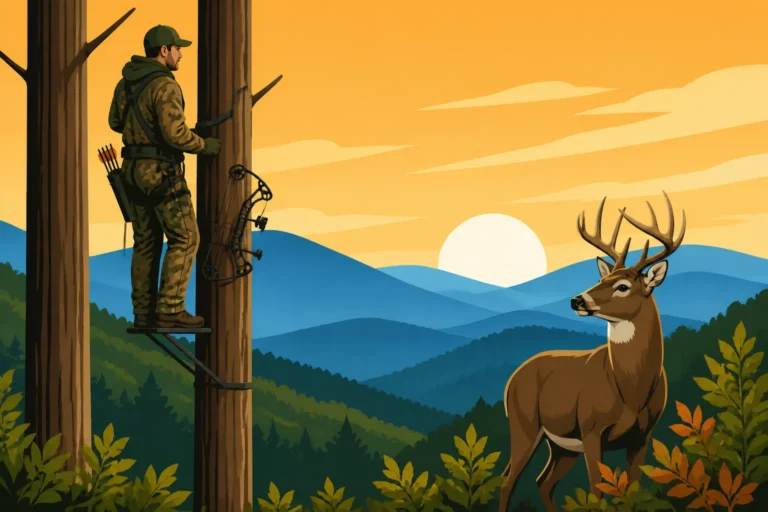
Your sight itself usually doesn't compensate for angle, but your understanding and potentially your rangefinder do. However, the complexity of managing multiple pins, especially if they're gapped for flat ground, becomes even more pronounced when you're factoring in severe angles. A sight that offers clarity and helps you focus on the animal, rather than an array of confusing pins, is a huge benefit here. When you're perched in a Treestand Setups in Monongahela National Forest overlooking a steep drop, the last thing you need is a cluttered sight picture.
Understanding Different Bow Sight Types for Timber
Choosing the right type of bow sight is a fundamental decision that will significantly impact your effectiveness in the timber. Each style has its advantages and disadvantages, and understanding them will help you make an informed choice for your West Virginia adventures.
Fixed-Pin Sights: Simplicity and Speed
Fixed-pin sights are the tried-and-true workhorses for many bowhunters, and for good reason. They feature multiple pins, typically 3 to 7, that are set at specific yardages (e.g., 20, 30, 40 yards). Once you've sighted them in, they stay put. This simplicity is their greatest strength, especially in the thick woods where shots are often close and sudden. You don't have to adjust anything; you just pick the correct pin for the estimated distance and shoot.
The main benefits of fixed-pin sights in timber are their durability, straightforward operation, and quick target acquisition. When a deer steps out at 25 yards, you instinctively know to hold your 20-yard pin a little low or use your 30-yard pin slightly high. There's no fumbling, no movement, just a quick draw and release. For most West Virginia timber hunting, where shots are rarely beyond 40 yards, a 3 or 4-pin sight (20, 30, 40, and perhaps a 50-yard pin for those rare longer opportunities) provides all the range you need without cluttering your sight picture. The trade-off is that intermediate distances, like 27 yards, require a bit of estimation between pins, which comes with practice.
Single-Pin Slider Sights: Precision at Any Range
Single-pin slider sights, often simply called "sliders," offer a different approach. They feature just one aiming pin, which can be manually adjusted up or down to dial in a precise yardage. If you range a deer at 32 yards, you can move your single pin to precisely 32 yards and aim dead-on. This eliminates the need for "gapping" between pins or holding high/low.
The precision offered by a single-pin slider is unmatched, and the uncluttered sight picture is a major advantage for hunters who find multiple pins distracting. However, this precision comes at a cost of speed. Adjusting the pin takes time and movement, which can be problematic in high-pressure, fast-breaking timber scenarios. If you're still-hunting or stalking, and a deer jumps out at an unknown distance, you might not have the precious seconds needed to range and adjust your pin before the opportunity vanishes. Sliders shine when you're sitting over a known distance, like a water source or a specific trail, and can pre-set your pin, but they generally aren't the first choice for dynamic timber hunting.
Hybrid Sights: Best of Both Worlds?
Hybrid sights attempt to combine the best features of both fixed-pin and single-pin slider sights. These often feature 2 or 3 fixed pins for your most common close-range shots (e.g., 20, 30, 40 yards), and then a slider mechanism that allows you to move the bottom pin to dial in longer distances (50+ yards). This offers versatility, providing quick aiming for close shots while still allowing for precision at extended ranges.
For some West Virginia hunters who might transition between dense timber and the edge of a small food plot or gas well clearing, a hybrid sight could be an appealing option. You get the speed of fixed pins for most timber engagements, and the precision of a slider for those occasional longer opportunities. The main downsides can be increased complexity, potentially more moving parts to fail, and sometimes a slightly heavier sight overall. Deciding if the added versatility outweighs these factors depends heavily on your specific hunting style and the terrain you frequent.
Key Features to Look For in a Timber Bow Sight
When you're shopping for a new bow sight for West Virginia's timber, it's not just about the type of sight; it's also about the specific features that will stand up to the rigors and unique demands of our mountain hunting. Don't overlook these critical elements.
Brightness and Fiber Optics
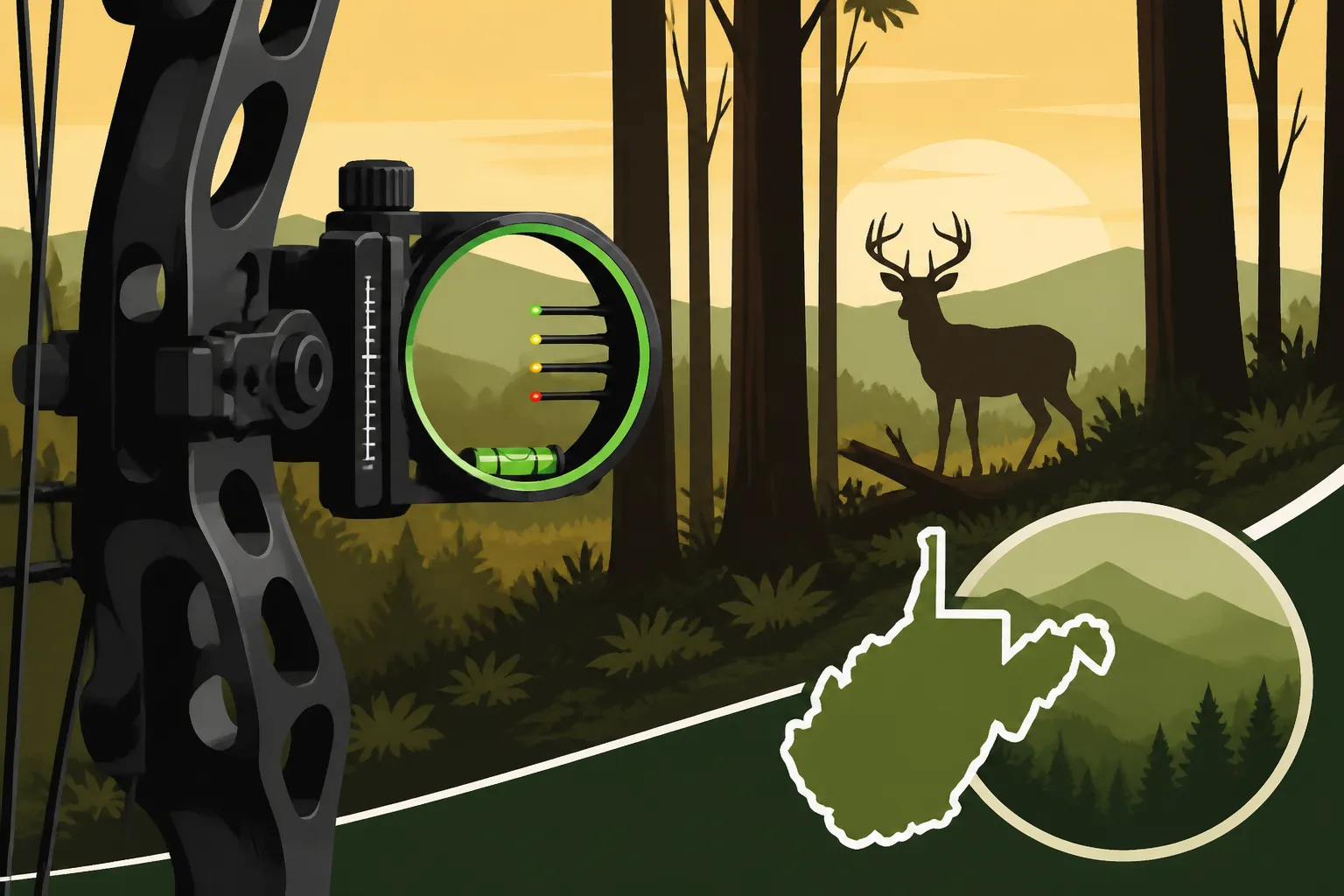
Given the low-light conditions prevalent in West Virginia's dense woods, the brightness of your sight pins is absolutely crucial. You want long, vibrant fiber optics that gather as much ambient light as possible. Shorter fibers or those that aren't well-protected simply won't glow as brightly, leaving you with dim, hard-to-see pins when it matters most. Look for sights with fiber optics that are encased and run the full length of the sight housing, maximizing their light-gathering ability.
Many sights also offer an adjustable rheostat light, which illuminates the fiber optics in truly dark conditions. This can be a game-changer during those first and last minutes of legal shooting light. Make sure any light source is legal in your hunting area and practice with it to get a feel for the right brightness—too bright and it can create a starburst effect, obscuring your target. Having clear, visible pins provides peace of mind and allows you to focus solely on the shot, rather than straining to see your aiming point.
Durability and Construction
Our West Virginia woods are tough on gear. You're constantly bumping through laurel thickets, navigating downed timber, and often taking long, strenuous hikes to get to those secluded spots. Your bow sight needs to be built like a tank to withstand this abuse. Flimsy plastic components or poorly machined parts won't last a season. Look for sights made from high-quality aluminum or robust composite materials.
Pay attention to how the pins are protected. Are they exposed, or are they shrouded by the sight housing? Are the adjustments solid, with no play or wiggle? A robust sight won't get knocked out of alignment easily, which can spell the difference between a clean kill and a frustrating miss. When you're miles back in the Monongahela National Forest Hunting, you can't afford a piece of gear to fail. Investing in a sight that can take a beating is just smart hunting.
Adjustability and Micro-Adjustments
Sighting in your bow can be one of the most tedious parts of getting ready for the season, but precise adjustments are key. Look for sights that offer micro-adjustments for both windage and elevation. This means you can make tiny, incremental changes to fine-tune your pins, rather than large, coarse adjustments that might leave you just a hair off. Tool-less adjustments are also a fantastic feature for hunters who like to tweak things in the field or quickly make minor corrections.
Being able to easily and precisely adjust your pins means you'll be more accurately dialed in, which is particularly important when you're shooting at different distances within that typical timber range. Even a small error at 20 yards can lead to a significant miss on a deer. A sight that's easy to adjust will make your pre-season practice more efficient and give you greater confidence in your setup.
Angle Compensation (for steep terrain)
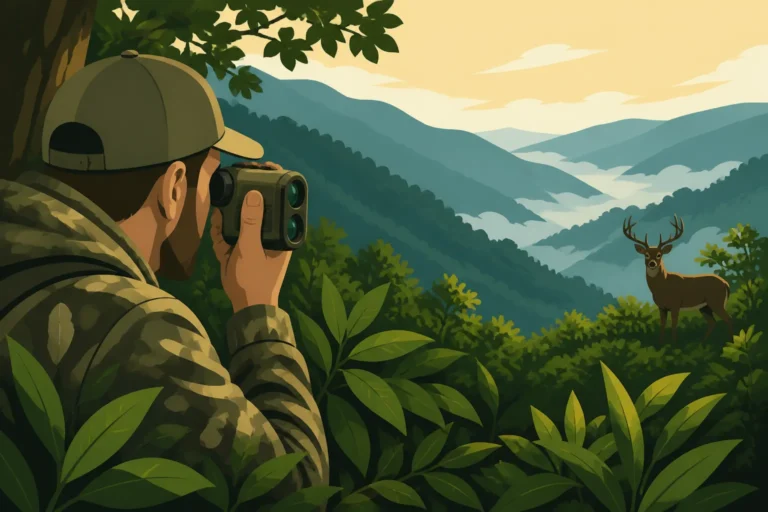
While the bow sight itself doesn't typically compensate for angle, it's a critical feature to consider in your overall ranging and shooting system, especially in West Virginia's mountainous terrain. Many modern rangefinders, including those you might use in conjunction with scouting tools like GoHunt, offer angle compensation technology. This feature calculates the "shoot-to" distance, which is the effective horizontal distance to the target, rather than the straight-line distance, which is longer when shooting up or down a steep slope.
When you're Wind and Thermals on a Steep Ridge, understanding the true horizontal distance is vital to avoid overshooting your target. A good sight, combined with an angle-compensating rangefinder, becomes a powerful duo. If your sight has multiple pins, you'll still need to use the pin corresponding to the angle-compensated distance provided by your rangefinder. For single-pin users, it's even simpler: dial the pin to that compensated distance. It's about combining your gear effectively to overcome the challenges of our rugged landscape.
Setting Up Your Bow Sight for West Virginia Timber
Once you’ve chosen your perfect timber bow sight, the work isn’t over. Proper setup and diligent practice are what truly turn that piece of gear into a precision instrument. This is where you transform your investment into results in the field.
Choosing Your Pin Gaps
For fixed-pin sights, choosing and setting your pin gaps is critical. Most West Virginia timber shots fall within 10 to 40 yards. A common and effective setup is to have pins sighted in at 20, 30, and 40 yards. Why these specific distances?
- 20 yards: This is your primary "kill shot" distance for close encounters. It's often the minimum distance a deer will tolerate before bolting, and gives you a good, solid aiming point.
- 30 yards: A versatile intermediate pin that covers many typical timber shots.
- 40 yards: This gives you a maximum ethical range for most timber scenarios. Beyond this, shot opportunities become scarce and often too obstructed.
If you're using a single-pin slider, you'll likely want to set your "home" or default pin at 20 or 25 yards, which is a common close-range distance. This allows for quick, instinctual shots if a deer pops out close, and you can then adjust for longer ranges as needed. Remember, consistent practice at these specific yardages is key, as is practicing holding between pins for those "in-between" distances. You want your pin gaps to be intuitive, especially when the moment of truth arrives.
Practice, Practice, Practice
This might sound obvious, but for timber hunting, the kind of practice you do matters immensely. Simply shooting at a flat target from 20 yards won't fully prepare you for the realities of our West Virginia woods. You need to simulate real hunting scenarios as much as possible.
- Shoot from elevation: If you hunt from a treestand, practice shooting from a stand or elevated platform. This changes your anchor point and introduces new angles. When Hanging a Stand on a Steep Allegheny Ridge, your shooting dynamics change dramatically.
- Shoot at odd angles: Practice shooting uphill and downhill. Understand how your arrows impact relative to your pins at various angles, especially if your rangefinder doesn't have angle compensation.
- Practice quick target acquisition: Have a friend suddenly call out a yardage, or surprise you with a pop-up target. The ability to quickly identify the correct pin and settle it on target is invaluable in the timber.
- Low-light practice: Shoot at dawn or dusk, or in heavily shaded areas, to get a feel for your pins' brightness.
- Simulate obstacles: Place small branches or leaves near your target (but safely away from your shooting lane) to train your eye to pick through potential obstructions.
The more realistic your practice, the more confident and proficient you'll be when that big buck walks into your shooting lane in the deep woods, especially if you've done your homework scouting and used tools like GoHunt to analyze the terrain.
Maintenance and Care
Your bow sight is a precision instrument, and like any other piece of critical hunting gear, it needs regular attention. West Virginia's weather can be brutal, from damp fogs to driving rains and freezing snow. Moisture can fog lenses, corrode screws, and dim fiber optics.
- Keep it clean: Regularly wipe down your sight, especially the fiber optics, to ensure maximum brightness. A small brush can remove dirt and dust from crevices.
- Check screws: Vibration from shooting and travel can loosen screws. Before every hunt, and certainly before opening day, check all mounting screws and pin adjustment screws. A small bit of blue Loctite on non-adjustable screws can prevent issues.
- Protect your pins: Consider a sight cover or a simple elastic band to protect your fiber optics from damage when not in use or when hiking through thick brush.
- Storage: Store your bow in a dry, temperature-controlled environment to prevent rust and corrosion.
A well-maintained sight is a reliable sight. Taking a few minutes for routine care can prevent a catastrophic failure in the field and ensure that your arrow flies true every time. When you're out Hunting Into the Late December Archery Close, enduring cold, wet conditions, you'll be glad you took care of your gear.
Fixed-Pin vs. Single-Pin for West Virginia Timber
Let's break down the two main sight types head-to-head for our particular hunting scenarios here in West Virginia:
| Feature | Fixed-Pin Sight | Single-Pin Slider Sight |
|---|---|---|
| Speed in Timber | Excellent – instant pin selection | Slower – requires adjustment for each shot |
| Precision | Good – requires holding between pins | Excellent – exact yardage dial-in |
| Sight Picture | Potentially cluttered with many pins | Very clean and uncluttered |
| Durability | Generally very rugged, fewer moving parts | Can be rugged, but slider mechanism adds complexity |
| Low-Light Performance | Relies on individual pin brightness | Relies on single pin brightness |
| Ideal WV Scenario | Still-hunting, quick shots in dense cover | Sitting over a food plot, known-distance blind |
| Learning Curve | Low – intuitive use after initial setup | Moderate – requires practice with adjustments |
Ultimately, for the vast majority of West Virginia timber hunting, especially if you're stalking through thickets, still-hunting ridges, or setting up for close-range ambush points, a fixed-pin sight often holds the edge. Its simplicity and speed are invaluable when a deer ghosts through the shadows at 20 yards and you have mere seconds to react. While a single-pin slider offers incredible precision, the time and movement required for adjustment can be a deal-breaker in high-pressure timber situations. For hunters who leverage detailed scouting insights from platforms like GoHunt and know they'll have ample time to range and set their pin for a specific, pre-determined shot scenario, a slider might be appealing. But for the run-and-gun nature of many West Virginia archery hunts, keeping it simple and fast is often the winning strategy.
No matter which sight you choose, remembering the unique challenges of our mountainous state – the low light, the close shots, and the steep angles – will guide you toward a setup that truly works when it counts. Your sight, along with your Bow Draw Weight for West Virginia Whitetails and Fixed Versus Mechanical Broadheads, forms a critical part of your hunting system.
Disclaimer
This article is for general informational purposes only and does not constitute professional advice. Laws, prices and regulations vary by location and change over time. Consult a qualified professional for guidance on your specific situation.