Treestand Setups in Monongahela National Forest
The sheer scale and rugged beauty of the Monongahela National Forest can feel overwhelming when you're trying to pinpoint the perfect spot for a treestand. It's a vast expanse of steep mountains, dense timber, and remote hollows, and finding that elusive sweet spot where deer feel safe but also travel regularly is a challenge that many West Virginia hunters grapple with. This guide is here to walk you through everything you need to know, from understanding the unique landscape to selecting the right gear and executing a flawless setup, so you can increase your odds of success in the Mon.
Understanding Monongahela's Unique Terrain and Challenges
Hunting the Monongahela National Forest isn't like hunting flatland agricultural fields. It's a beast of its own, demanding a different kind of preparation and strategy. If you don't respect its unique characteristics, you'll spend more time hiking and less time hunting.
Steep Slopes and Ravines
The Monongahela is synonymous with elevation changes. We're talking about relentless, leg-burning climbs up steep ridges and equally treacherous descents into deep, dark hollows. These aren't gentle rolling hills; they're genuine mountains that can test your endurance and your nerve. This topographical extreme directly impacts deer movement, often funneling them through saddles, benches, and along creek bottoms that offer easier travel.
The significant elevation also plays a huge role in how wind and thermals behave, which is absolutely critical for treestand placement. What might be a consistent wind direction at the top of a ridge can be a swirling vortex down in a hollow. Understanding these microclimates is paramount to not getting busted. It means you can't just pick a tree; you have to pick a location where you can anticipate these air currents throughout your hunt, which often means having multiple stand options for different wind directions, or focusing on areas where terrain dictates more predictable flow.
Dense Cover and Mature Timber
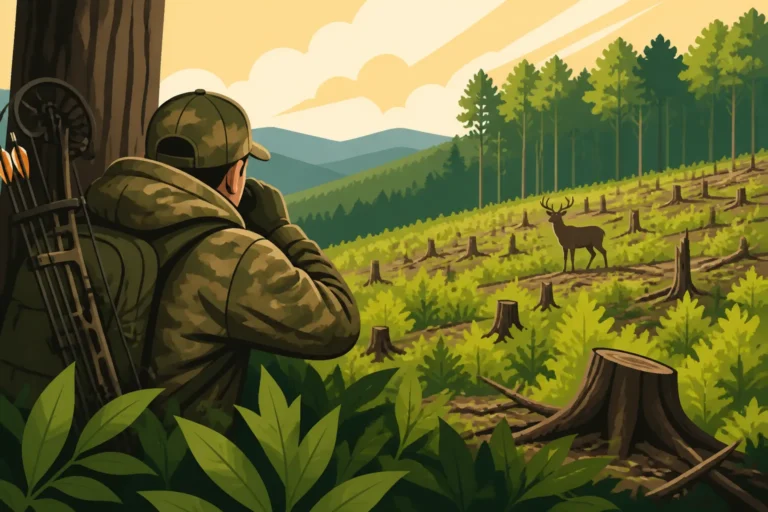
While there are some clear-cuts and younger growth areas, much of the Monongahela is characterized by mature, dense timber. We're talking big hardwoods, thick rhododendron patches, and expansive evergreen stands. This dense cover offers incredible security for deer, making them hard to spot from a distance and even harder to pattern. It also makes for tough going when you're trying to carry in a stand and climbing sticks.
The sheer thickness of the forest also limits visibility, meaning your shot opportunities might be shorter and quicker. This isn't wide-open country where you can see a deer coming for hundreds of yards. You'll likely be dealing with close-quarters encounters, demanding quick reflexes and precise shot placement. This dense environment also impacts sound, often muffling deer movement, but also making your own sounds more pronounced if you're not careful. It's a double-edged sword that requires heightened awareness.
Remote Access and Limited Cell Service
A significant portion of the Monongahela National Forest is remote, with limited road access and often no cell phone service. This isolation is part of its charm for many hunters, offering a true backcountry experience. However, it also presents practical challenges, especially when you're packing in equipment or, heaven forbid, need emergency assistance. You can find more details about How Many Acres Monongahela Forest Covers to appreciate the scale.
Preparing for these conditions means being entirely self-reliant. A reliable GPS unit or a mapping app like GoHunt with offline capabilities is not just recommended, it's essential. You need to know your way in and out, and have a plan for communication or emergency self-rescue. The lack of infrastructure also means you'll be doing a lot of hiking to get away from other hunters, but the reward is often less pressured deer that stick to their natural routines.
Essential Gear for Monongahela Treestand Hunting
Going into the Monongahela under-prepared is a recipe for a bad day. The right gear makes all the difference, enhancing your safety, comfort, and ultimately, your success.
Portable Treestands and Climbing Aids
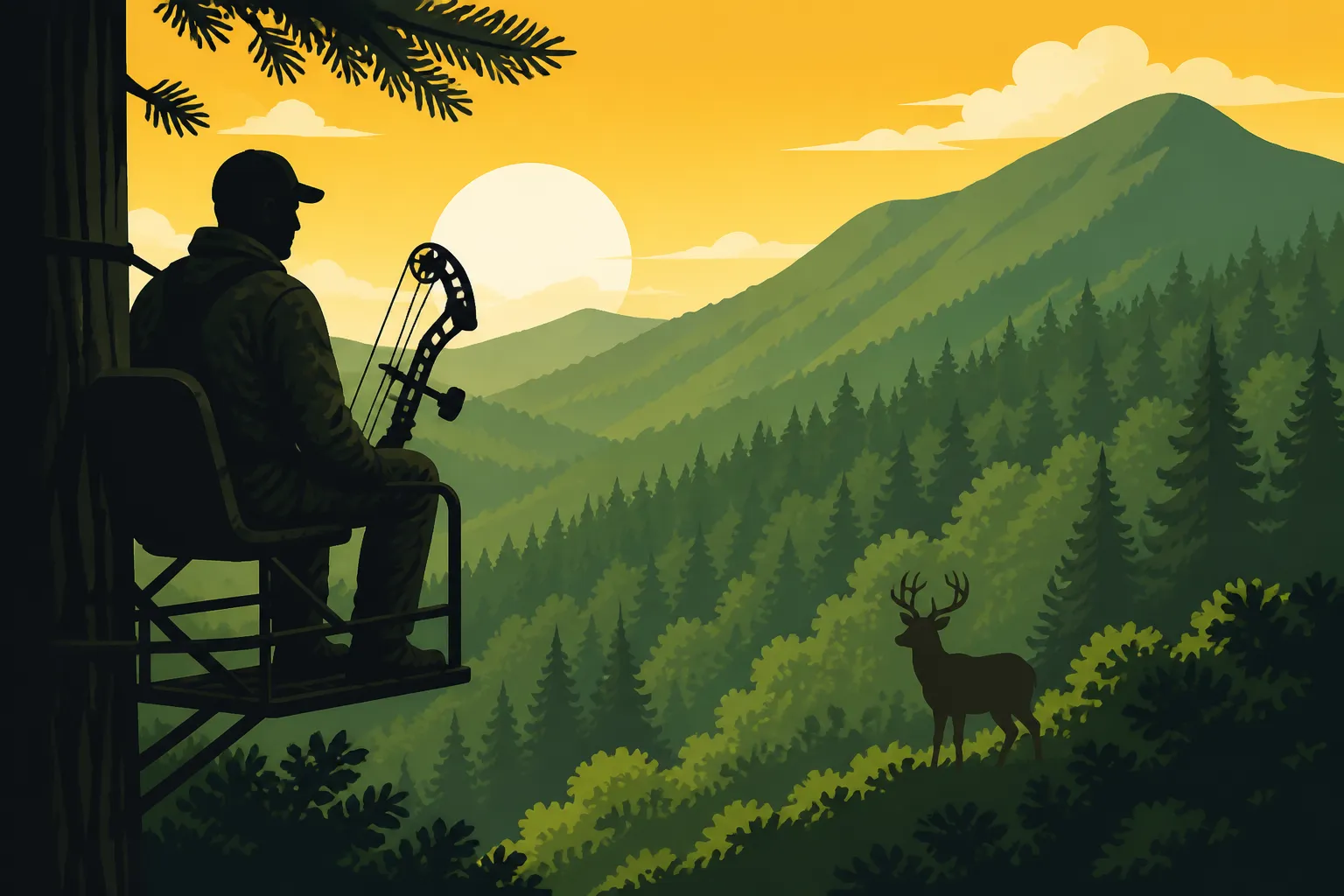
Forget those big, bulky ladder stands or permanent setups you might use on private land. For the Monongahela, portability is king. Climbing stands, hang-on stands, and saddle hunting setups are the go-to choices because they allow you to go deep, adapt to the diverse tree types, and move quickly if your scouting indicates a shift in deer patterns. Each type has its pros and cons depending on the specific terrain and tree availability.
When choosing a stand, consider its weight, ease of setup, and stability on uneven terrain. Paired with climbing sticks, sections of screw-in steps, or even a climbing rope, you'll be able to ascend a variety of trees. For hunters looking to maximize stealth and mobility, a saddle hunting system, as discussed in Saddle Hunting in West Virginia Hardwoods, offers unparalleled versatility for hunting those steep ridges and setting up on awkward trees that traditional stands can't handle. No matter your choice, practice setting it up quietly and efficiently in your backyard before you hit the woods.
| Treestand Type | Pros for Monongahela | Cons for Monongahela | Ideal Use Case |
|---|---|---|---|
| Hang-On Stand | Very lightweight, compact, versatile for various tree shapes/sizes, good for deep penetration. | Requires climbing sticks/steps, slower setup than a climber, might need two hands for hanging. | Deep backcountry, awkward trees, multiple stand locations. |
| Climbing Stand | All-in-one unit, relatively fast to set up on straight trees, less to carry in separate pieces. | Only works on straight, limbless trees; bulkier and heavier than hang-ons; noisy if not careful. | Areas with plentiful straight oaks/poplars, less rugged terrain. |
| Saddle Hunting | Extremely lightweight, highly mobile, allows 360-degree shooting, excellent for steep/crooked trees. | Steeper learning curve, takes practice to be comfortable, requires a platform/steps. | Steepest terrain, maximum stealth, precise shot angles, all-day comfort for some. |
Safety Equipment and Redundancy
Hunting from a treestand inherently carries risks, and those risks are amplified in the remote, rugged environment of the Monongahela. A full-body safety harness is non-negotiable; it should be worn from the moment your feet leave the ground until they return. But safety doesn't stop there. Having a haul rope to pull up your bow or rifle, ensuring your stand is properly secured, and checking your climbing sticks for stability every single time you use them are critical steps.
Beyond the harness, consider redundancy. Carry a small emergency kit with basic first aid, a whistle, and a fire starter. Make sure someone knows exactly where you're going and when you expect to be back. The concept of " Treestand Safety Gear for Steep Ground " is more than just a phrase; it's a mantra in the Mon. Accidents happen, and a twisted ankle miles deep in a hollow can turn into a life-threatening situation if you're alone and unprepared.
Navigation and Communication Tools
As mentioned, cell service is often nonexistent in the Monongahela. Relying solely on your phone for navigation is a gamble you don't want to take. A dedicated GPS unit like a Garmin inReach or a handheld GPS is a smart investment. Even better, pair it with a robust mapping app on your phone, like GoHunt, that allows you to download offline maps before you leave home. Mark your truck, your stand locations, potential bedding areas, and any significant terrain features.
Communication in the backcountry is also vital. A satellite communicator like a Garmin inReach Mini allows you to send and receive text messages and, more importantly, trigger an SOS call even without cell service. For communicating with hunting partners on a deer drive, two-way radios can be invaluable, especially when discussing " Deer Drives With Three or Four Hunters " tactics. Always carry a traditional compass and a paper map as a backup – batteries die, electronics fail, but a compass and map will always point the way.
Strategic Scouting for Treestand Placement
You can't just wander into the Monongahela and expect to stumble upon a great treestand location. Successful hunting here is built on diligent, strategic scouting. The adage "you can't kill a big buck from the couch" is particularly true when it comes to the vastness of the Mon.
Identifying Key Deer Movement Patterns
Deer in the Monongahela have their highway systems, just like we do. Your job is to find them. Look for pinch points, saddles between ridges, benches on steep hillsides, and crossings over creeks or logging roads. These are natural funnels that concentrate deer movement. In the mountains, deer often travel along contours to conserve energy, especially when moving between bedding and feeding areas. Learning to " Reading a Ridge for Eastern Panhandle Deer " (which applies equally well to the Mon) can help you anticipate where deer will travel.
Pay close attention to deer sign: rubs, scrapes, tracks, and droppings. Fresh sign indicates recent activity and can help you confirm travel corridors. Remember that deer patterns can change throughout the season due to food sources, hunting pressure, and the rut. Early season might find deer near acorns and soft mast, while late season might see them concentrating on evergreen cover and remaining hard mast. Understanding these shifts is vital to staying in the game all season long.
Leveraging Terrain Features for Funnels and Cover
Terrain is your biggest ally and your biggest challenge in the Mon. Deer use the terrain to their advantage for security and efficient travel, and you should too. A deep ravine with only one or two easy crossing points is a natural funnel. A subtle bench on a steep mountainside provides an easier travel route and often holds rubs. Thick laurel patches or rhododendron thickets offer impenetrable bedding cover, and deer will often stage just outside of them before moving to feed.
When scouting, look for combinations of features. A saddle on a ridge that connects two bedding areas, flanked by dense cover, could be a goldmine. A point of land jutting out into a hollow, offering a vantage point and easy travel along its sides, is another prime candidate. Mapping tools like GoHunt allow you to analyze topography layers from home, helping you identify these features before you even step foot in the woods, saving you valuable time and effort.
Reading Sign and Anticipating Pressure
Beyond fresh tracks and rubs, consider the cumulative effect of deer sign. Are there multiple rub lines converging? Is there a heavy concentration of droppings in a specific area? This tells you about the intensity and direction of deer traffic. During the rut, look for " Scrape Lines Along a Logging Road " or at the edges of benches, as these are often prime spots for bucks checking does.
However, it’s not just about reading deer sign; it's about reading human sign too. The Monongahela is public land, and it sees significant hunting pressure. If you see truck parking areas, well-worn trails, or old stands, you know that area is likely pressured. To find less-pressured deer, you often need to go deeper and into areas that are harder to access. This means putting in the miles and being willing to hunt areas others walk past, as advised in "Finding Ground Others Walk Past". Anticipate where other hunters will go, and then go somewhere else.
Optimal Treestand Setup Techniques
Once you've done your scouting and identified a promising location, the next step is to execute a quiet, concealed, and effective treestand setup. This isn't just about getting high in a tree; it's about orchestrating a successful encounter.
Maximizing Concealment and Shot Angles
The goal of a treestand is to get you above a deer's primary line of sight and minimize your scent footprint. Choose a tree that offers natural cover—think evergreens, trees with thick canopies, or a cluster of hardwoods that breaks up your silhouette. Don't pick the tallest, straightest tree in an open area; pick one that blends in. Aim for a height that gives you good visibility over obstacles but isn't so high that it makes shot angles too steep and recovers difficult, particularly in the Mon where "Recovering a Deer From a Steep Hollow" can be a real challenge.
Once in the tree, trim only what is absolutely necessary to create shooting lanes. Over-trimming can remove valuable concealment. Consider your dominant hand and the direction deer are most likely to approach. If you're a right-handed archer, you'll want deer to approach from your left to allow for a comfortable draw. For rifle hunters, think about rests and stable shooting positions. Always think about the sun's position throughout the day to avoid being silhouetted or having glare blind you.
Planning Entry and Exit Routes
This is where many hunters go wrong, especially on public land. Your entry and exit routes are just as important as your stand placement. A noisy, scent-spreading walk to your stand can alert every deer in the vicinity before you even climb up. Plan a route that keeps you out of known bedding areas and off primary travel corridors. Use terrain features like ridge lines, creek beds, or dense cover to conceal your approach.
Consider the wind for both your entry and exit. If you hunt a morning stand, plan to approach with a favorable wind so your scent is carried away from where deer might be active. For evening hunts, plan an exit route that again avoids busting deer out of their nocturnal feeding or bedding areas. Sometimes, this means taking a longer, more circuitous route, but it’s worth the extra effort to keep your spot from getting blown. Remember, "West Virginia Public Land Hunting Hours" are sunrise to sunset for most game, so plan your exit well before dark if you're not tracking a deer.
Adapting to Changing Conditions Wind, Thermals
The mountains of West Virginia are notorious for unpredictable wind and thermals. What seems like a perfect wind in the morning can completely switch by midday, or as the sun heats the opposing slope. Thermals typically rise in the morning as the ground heats up and fall in the evening as it cools. This means your scent will often be carried uphill in the morning and downhill in the evening.
Successful Monongahela hunters often have multiple stand locations for different wind directions, or they'll focus on areas where terrain creates more predictable airflow. For example, a saddle between two peaks might have more consistent crosswinds than a deep hollow. Understanding "Wind and Thermals on a Steep Ridge" is crucial. Always check the forecast, but also carry a wind-checker puff bottle and pay attention to how leaves and branches are moving around you. Be ready to move, or at least be prepared for your scent to be carried in an undesirable direction if conditions change suddenly.
Public Land Considerations and Regulations
Hunting public land like the Monongahela National Forest comes with its own set of rules and ethical responsibilities beyond just state game laws. Respecting the land and fellow hunters is key to preserving this incredible resource.
Understanding WVDNR and USFS Rules
Before you even think about hanging a stand, familiarize yourself with the specific regulations for hunting on National Forest land in West Virginia. The West Virginia Division of Natural Resources (WVDNR) sets the game laws, while the U.S. Forest Service (USFS) governs land use. Generally, permanent stands are prohibited, meaning you can't leave a stand up year-round. Most require stands to be removed within a certain timeframe after the season closes. Make sure you understand "Treestand Rules on West Virginia Public Land" and "Trail Camera Rules on West Virginia Public Land" to avoid fines or losing your equipment.
Always check for any specific local restrictions or closures that might be in effect for particular areas within the Monongahela. These could be due to timber operations, prescribed burns (as detailed in "Prescribed Burns and West Virginia Hunting Closures"), or wildlife management activities. Ignorance of the rules is not an excuse, and enforcement can be strict to protect both the wildlife and the public lands.
Minimizing Impact and Practicing Ethical Hunting
We are guests on public land, and it's our responsibility to leave no trace. This means packing out everything you pack in, including trash, spent cartridges, and any flagging tape you used to mark trails. When trimming shooting lanes, do so minimally and discreetly. Avoid damaging trees unnecessarily.
Ethical hunting also means being a good steward of the resource. Don't overcrowd other hunters. If you arrive at a spot and see another hunter's vehicle or stand, respect their space and move on. The Monongahela is huge, and there's plenty of room for everyone if we're considerate. Practicing good woodsmanship, making ethical shots, and committing to "Blood Trailing After Dark in West Virginia" if necessary are all part of being a responsible hunter.
Dealing with Hunting Pressure
Public land, especially accessible areas, can experience significant hunting pressure. You're likely to encounter other hunters, especially during opening weekends or peak rut. While this can be frustrating, it’s a reality of public land hunting. Instead of letting it ruin your hunt, adapt to it. This might mean adjusting your hunting hours to be in your stand well before daylight, or staying later.
It also means being willing to hike further than most. The further you get from main roads and popular access points, the less pressure you'll likely encounter. Sometimes, deer will even use hunting pressure to their advantage, moving into the thickest, nastiest cover during daylight hours, only to emerge in low-light. Learning to find ground that others overlook, as we talked about earlier, is perhaps the greatest skill a public land hunter can cultivate to mitigate pressure. When it comes to Opening Weekend Crowds on West Virginia Public Land, a strategic mindset is your best asset.
Disclaimer
Please remember that hunting regulations and land access rules can change. Always consult the latest West Virginia Division of Natural Resources (WVDNR) regulations and specific U.S. Forest Service (USFS) guidelines for the Monongahela National Forest before planning any hunt. This guide is for informational purposes only and does not supersede official government regulations.