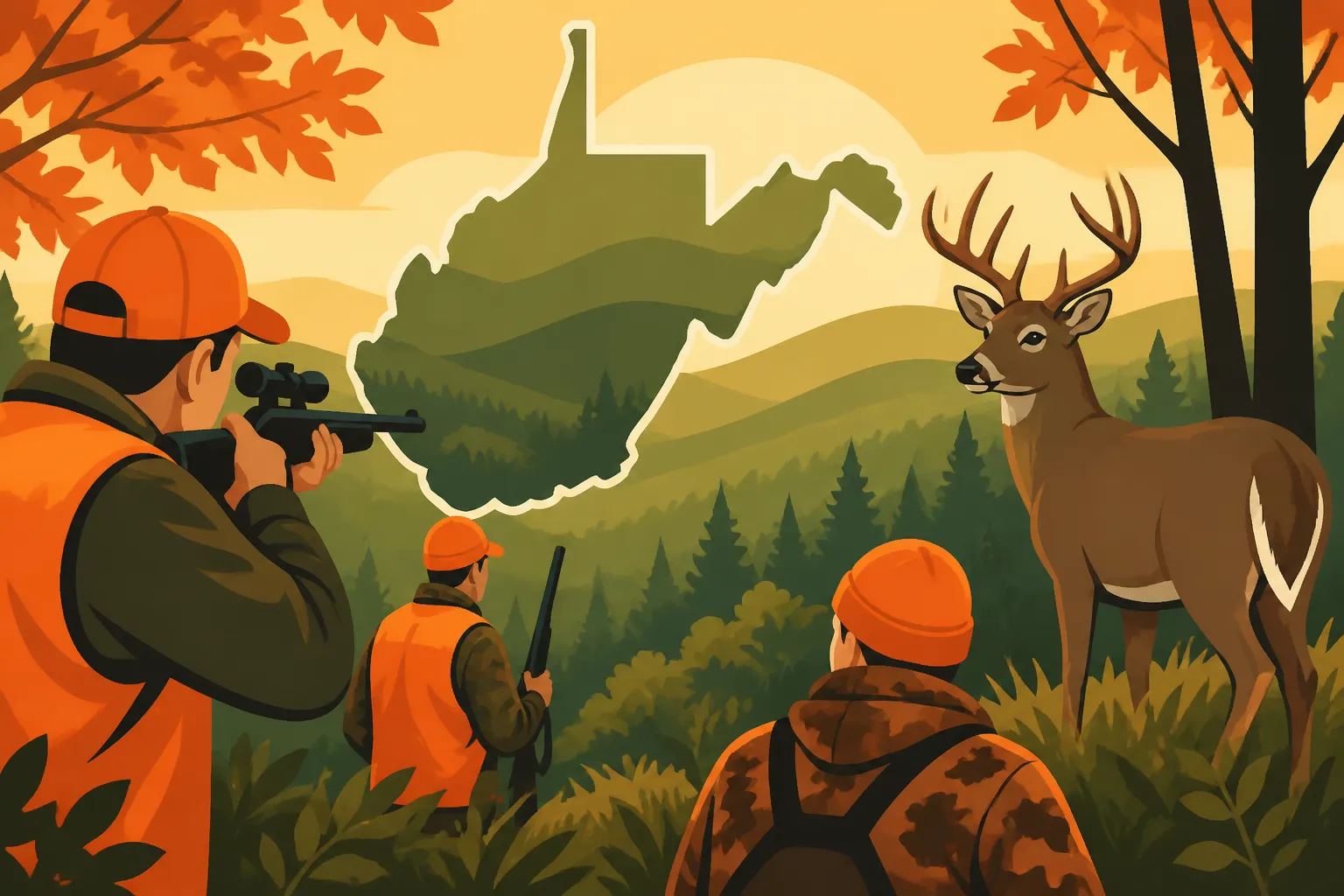
Deer Drives With Three or Four Hunters
Ah, West Virginia deer season. If you've spent any time chasing whitetails in our beautiful, rugged mountains, you know the frustration of seeing tracks, finding fresh rubs, but having deer slip by you like ghosts. It’s enough to make you feel like you’re constantly playing chess against a master. This guide is all about tackling that challenge head-on by leveraging the power of a small, coordinated deer drive with three or four hunters—a highly effective method for breaking those deer out of their hidden pockets, especially on public land.
The Basics of Small-Group Deer Drives in West Virginia
Hunting in West Virginia is often a solitary pursuit for many, but there's a certain magic and strategic advantage to working with a small, cohesive group. Forget the image of a chaotic, yelling mob; we're talking about a thoughtful, tactical approach that can be incredibly effective, particularly when you're dealing with the dense cover and steep topography our state is known for.
Why Three or Four Hunters is the Sweet Spot
Many hunters shy away from deer drives, envisioning large, unwieldy groups that make more noise than progress, often pushing deer miles away or simply alerting them without offering a shot. But with just three or four hunters, you achieve a delicate balance: enough manpower to cover a significant piece of ground and direct deer, but not so many that you create a cacophony that sends every whitetail to the next county.
This smaller number allows for much better communication and coordination, which are absolutely critical in our varied West Virginia landscape. You can adapt quickly to unexpected deer movement or changes in terrain. Safety is also enhanced; with fewer people, you have a clearer understanding of everyone's position, minimizing the risk of errant shots. Plus, it’s just more enjoyable with a few buddies, isn’t it? You’re not just hunting; you’re sharing an experience, working together towards a common goal, and building those memories that last a lifetime around the deer camp. This also makes the tactic less intrusive and keeps Hunting Pressure on West Virginia Public Land to a minimum in any given area, meaning you won't burn out a spot too quickly.
Understanding the Terrain: Where Small Drives Shine
West Virginia's topography is arguably its most defining feature, and it’s precisely why small, calculated deer drives can be so successful here. We're not talking about flat Midwestern cornfields. We're talking about steep ridges, deep hollows, thickets of rhododendron and mountain laurel, and old clear-cuts grown up in dense, young timber. These are the places where deer love to hide, often bedding down just out of sight of a lone hunter on a stand.
A small group can effectively push these pockets. Imagine a steep hollow, dense with cover, running down to a creek bottom. Two drivers can meticulously work the sides or the bottom of that hollow, slowly pushing deer toward one or two standers positioned at strategic escape routes. The same goes for thickets on ridge tops or small woodlots nestled between open fields in the Eastern Panhandle. Identifying natural funnels—like a narrow saddle between two peaks, or a pinch point where a creek bends sharply—becomes paramount. These are the spots where deer have to go, and where your standers should be waiting. Knowing how to identify and position yourself in these locations is key to success, whether it's Hunting a Funnel Between Two Hollows or targeting a prime Hunting a Ridge-Top Saddle for Rutting Bucks.
Strategic Planning for Your West Virginia Deer Drive
Success in a small deer drive isn't about brute force; it's about smart planning and execution. You wouldn't just wander into the woods and hope for the best, and a deer drive demands even more forethought. This phase is where you turn casual hunting buddies into a coordinated, deer-driving unit.
Scouting Your Target Area and Deer Movement
Before you even think about putting on a drive, you need to understand the ground you're trying to push and the deer that live there. This means dedicated scouting, preferably before the season opens. Walk the area, look for fresh deer sign—rubs, scrapes, trails, and most importantly, bedding areas. Deer drives are most effective when you know generally where the deer are bedding and, crucially, their most likely escape routes.
Pay attention to topography. Are there steep faces that deer will try to skirt? Are there logging roads that act as natural travel corridors? What about dense thickets of young pines or overgrown clear-cuts that scream "bedding sanctuary"? Tools like the GoHunt app are invaluable here. You can spend hours poring over satellite imagery and topo maps, marking potential bedding areas, escape routes, and stander locations. You can identify those subtle terrain features that might concentrate deer movement. Look for fresh tracks in soft soil or along creek banks; Reading West Virginia Mud for Fresh Deer Movement can tell you a lot about recent activity. Consider factors like prevailing winds and how Wind and Thermals on a Steep Ridge might influence deer movement and your strategy for the day. Understanding where deer move and why is half the battle.
Assigning Roles: Drivers and Standers
With only three or four hunters, assigning roles is straightforward but critical. You'll typically have one or two "drivers" and two "standers." The drivers are the ones pushing through the cover, while the standers are positioned to intercept deer that are pushed out.
Drivers need to be patient, methodical, and understand the terrain. Their goal isn't to run deer out wildly, but to move slowly, deliberately, and make just enough noise to encourage deer to get up and walk. They should maintain awareness of each other's positions, often using two-way radios or pre-arranged signals to stay coordinated. Their pace should be slow and steady, pausing occasionally, which often makes deer nervous enough to move, but not run full-tilt past the standers.
Standers need to be positioned in key areas where deer are most likely to exit the drive. This could be a natural funnel, a bench on a ridge, or a thicket where deer are known to hide before making a break for it. They must be absolutely still, silent, and ready to shoot. Their job is to be invisible until a deer comes into range. Safety is paramount here; standers must know the exact line of the drive and where other hunters are.
Here’s a quick overview of typical roles for a small drive:
| Role | Number | Primary Objective | Key Considerations |
|---|---|---|---|
| Driver | 1-2 | Slowly push deer from bedding to escape routes. | Maintain steady pace, make subtle noise (footfalls, light calls), stay aware of other drivers/standers. |
| Stander | 2-3 | Intercept deer escaping the drive. | Position in natural funnels/escape routes, remain still and silent, prioritize safe shooting lanes, wear blaze orange. |
Remember that communication throughout the drive is vital. Clear instructions before starting, understanding your boundaries, and having a plan for after a shot are all part of a successful and safe operation.
Executing the Drive: Tactics and Safety
Once your plan is set, it's time to put boots on the ground. This phase is where the coordination you practiced during planning truly comes into play. A small group can be incredibly efficient, but only if everyone understands their role and executes it perfectly.
The Art of the Slow Push and Strategic Pauses
For the drivers, this isn't a race through the woods. It's more like coaxing reluctant cattle from a pasture. The goal is to apply just enough pressure to get deer moving, but not so much that they explode out of the cover and blow past your standers at full speed. Think of it as a "slow burn" rather than a wildfire. As drivers, you'll want to move at a deliberate pace, perhaps making some light noise—a rustle of leaves, a quiet conversation, or even some soft grunts or doe bleats if you're feeling adventurous. This subtle pressure is often enough to get bedded deer on their feet.
Strategic pauses are critical. Deer often try to circle back or hide when they sense immediate pressure. If drivers pause for a minute or two, deer might think the threat has passed and try to sneak out, often right into the waiting standers. It's an art, not a science, and it comes with experience. Working through dense areas like thick laurel patches, old multiflora rose hedgerows, or overgrown clear-cuts requires patience. These are prime bedding areas where deer will often let you walk right past them if you're not paying attention. When performing Deer Drives With Three or Four Hunters, always prioritize safety. Ensure all hunters are wearing sufficient blaze orange or pink, as required by West Virginia law. This is where knowing How Much Blaze Orange West Virginia Requires becomes a non-negotiable part of your pre-hunt checklist.
Standers' Placement and Readiness
The standers are the critical interceptors. Their success hinges on being in the right place at the right time and being absolutely ready. As a stander, you need to think like a deer. Where would you go if you were pushed out of that thicket? Deer are creatures of habit and often take the path of least resistance or their most familiar escape routes. This could be a game trail running along a bench, a saddle connecting two ridges, or a pinch point where cover narrows.
Your setup as a stander should be quiet and concealed. A ground blind brushed into a field edge, or simply standing still with good cover behind you, can be effective. If you're on public land, consider options like a portable treestand or a saddle hunting setup to get an elevated vantage point and clear shooting lanes. Always ensure you have a safe backdrop for your shot and that you know precisely where the drivers are and their anticipated line of travel. When Posting a Drive Around a Steep Hollow, standers should be positioned at the mouth or side trails that lead out of the hollow, anticipating deer attempting to skirt the drivers. Be prepared for deer to sneak, run, or even stand and try to watch the drivers pass before making their move. Your weapon should be ready, and your mind focused.
Post-Drive Considerations and Ethical Practices
The hunt doesn't end when the shot is fired, or even when the drive is over. The responsible hunter understands that ethical considerations and thorough follow-up are just as important as the drive itself.
Tracking and Recovery in Challenging Terrain
If a shot is taken, the immediate priority shifts to ethical recovery. Mark the precise spot where the deer was standing or where it was last seen. Even if you think it was a perfect shot, resist the urge to immediately charge after the animal. Give it some time—often 30 minutes to an hour for a well-placed shot, or several hours for a questionable hit. This allows the deer to bed down and expire, rather than being pushed further.
Once you begin tracking, move slowly and deliberately. Look for blood, hair, bone fragments, and disturbed vegetation. West Virginia's leaf litter can make blood trailing particularly challenging, so take your time. If you lose the trail, spread out your small group to grid-search the area. Use your GoHunt app or other GPS device to mark the last known blood trail and the direction of travel. In steep, rugged terrain, a deer can travel a surprising distance, often downhill. Don't give up prematurely; every effort should be made to recover the animal. If you're facing a tough trail, remember that Tracking a Deer Through West Virginia Leaf Litter requires immense patience and careful observation.
Respecting Private Land Boundaries and Public Land Etiquette
Hunting in West Virginia means being acutely aware of property lines. Even if you're hunting public land, it's often bordered by private tracts. Before conducting a drive, thoroughly review your maps on the GoHunt app or physical maps to identify all boundaries. It is illegal to trespass, and pushing deer onto private land where you don't have permission is a bad practice that can sour landowner relations for everyone. Always know where you are, and educate your hunting partners on the boundaries.
If you wound a deer that crosses onto private property, West Virginia law dictates specific procedures. Generally, you must attempt to contact the landowner and gain permission before pursuing the animal. Charging onto someone's land without permission is trespassing, even if you're trying to recover game. Understanding Retrieving Game From Private Land in West Virginia is a critical part of being a responsible hunter.
Beyond legal boundaries, there's also the unwritten code of public land etiquette. Be mindful of other hunters. If you see another vehicle parked, consider driving elsewhere or planning your drive to avoid disturbing their hunt. Leave no trace, pack out everything you pack in, and respect the land. Our public lands are a shared resource, and it's up to all of us to ensure they remain accessible and enjoyable for future generations.
Disclaimer
Please remember that hunting regulations and safety guidelines are subject to change. Always consult the latest West Virginia Division of Natural Resources (WVDNR) hunting regulations manual before heading afield. Safety should be your number one priority in any hunting situation.