Posting a Drive Around a Steep Hollow
Trying to coordinate a deer drive in West Virginia's rugged, steep hollows can feel like trying to herd cats in a maze made of rhododendron. The terrain is unforgiving, deer are masters of evasion, and getting everyone in the right spot safely is a serious challenge. This guide is here to walk you through the precise strategies needed for effectively posting a drive around one of these formidable West Virginia hollows, ensuring a safer and more successful hunt for your whole group.
Understanding the Challenges of Steep Hollows in West Virginia
Hunting in the Mountain State isn't for the faint of heart, and nowhere is that more true than when you're dealing with deep, steep hollows. These geographic features, carved by countless years of water runoff and geological forces, present unique hurdles for hunters trying to execute a coordinated deer drive. It’s a lot more than just walking in a straight line; it requires an intimate understanding of the land and the animals that call it home.
The Nature of Mountain Terrain
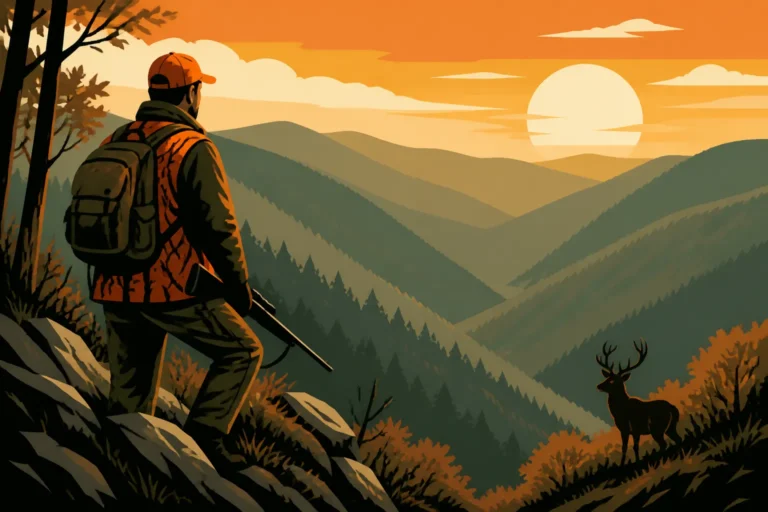
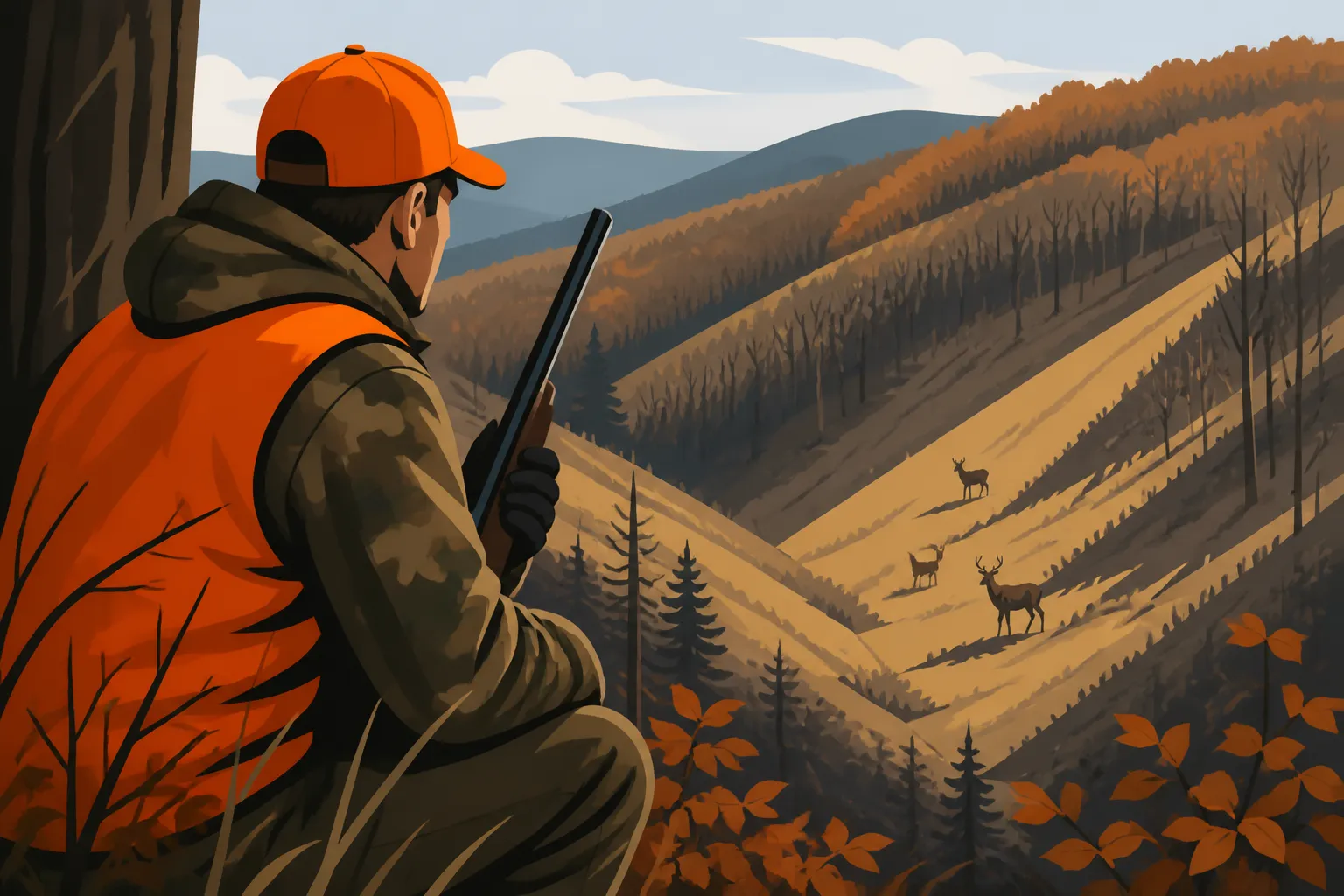
West Virginia's landscape is famously mountainous, and those mountains are riddled with steep hollows that can dramatically impact a hunting strategy. Picture this: you're standing on a ridge, looking down into a hollow so thick with laurel and rhododendron that you can barely see twenty yards. The slopes are often a 45-degree angle, making walking difficult and quiet movement almost impossible. Add in rocky outcroppings, hidden creek beds, and overgrown logging roads, and you've got a recipe for navigational headaches. Traditional deer drives that work well in flatter, more open country simply don't translate here. The sheer elevation changes mean what looks like a short distance on a map can be an exhausting, vertical climb or descent, impacting how quickly drivers can move and how effectively standers can get into position.
Deer Behavior in Steep Hollows
Deer, especially mature bucks, are masters of their environment. They use the topography of steep hollows to their advantage, making drives particularly tricky. These hollows often serve as bedding areas, providing excellent thermal cover from winter winds and dense escape cover from predators (including hunters). When pressured, a deer in a steep hollow isn't just going to bolt straight out the other side. Oh no, they're far more cunning. They might circle back through the drivers, slip out a low point unnoticed, or even hold tight in a thicket, letting the commotion pass them by. They understand the wind and thermals of these microclimates and will often try to get downwind of the drivers or circle up to a higher bench to observe the situation. Anticipating these nuanced escape tactics is crucial for successful posting.
Safety Concerns in Rugged Country
Beyond the hunting challenge, safety is paramount when conducting a drive in steep, rugged terrain. The dense cover and undulating ground significantly reduce visibility, making it difficult for standers to see approaching deer clearly, and even harder to identify other hunters. The risk of slips, falls, and injuries is heightened, especially when navigating steep slopes, loose rock, or slick leaf litter. Losing communication or a hunter becoming disoriented in the thick woods is a real possibility. This is why clear communication, knowing your group's positions, and establishing definite shooting lanes and backstops are not just recommendations—they're absolute necessities. A successful drive is always a safe drive, and in West Virginia's hollows, that takes extra planning and vigilance.
Strategic Planning for Posting a Drive
Executing a successful deer drive around a steep West Virginia hollow is less about brute force and more about strategic brilliance. It demands meticulous planning, an understanding of the terrain, and a well-coordinated team. Without this groundwork, you're essentially just taking a walk in the woods and hoping for the best, which rarely pans out when deer are involved.
Scouting the Hollow and Escape Routes
Before you even think about setting up a drive, you need to understand the hollow inside and out. Pre-hunt scouting is non-negotiable, even if you think you know the area like the back of your hand. That old logging road you remember might be overgrown, or a new clear-cut could have changed deer movement patterns entirely.
This is where modern tools really shine. Detailed topographical maps are your best friend, and a mapping application like GoHunt can elevate your scouting game significantly. Zoom in on that hollow on your GoHunt app and identify all the subtle terrain features: those barely perceptible benches halfway down the slope, the saddles that connect one ridge to another, the natural funnels created by rock formations or thick laurel patches. These are the highways and escape routes deer use, and they are exactly where your standers need to be. Look for pinch points—areas where the terrain narrows, forcing deer into a smaller corridor. These are golden opportunities for posting. Walk the hollow beforehand, noting fresh sign like tracks, rubs, and scrapes, especially along the rim or any benches. Pay attention to how deer might move under pressure. Where would you go if you were trying to escape? This helps you anticipate their natural tendencies. You can also explore how to maximize your scouting efforts by reading up on Scouting West Virginia Public Land Before Season.
Assigning Roles and Communication
A drive is only as effective as its coordination. Every member of your hunting party needs a clearly defined role: drivers, who push the deer; and standers, who are positioned to intercept them. For a steep hollow drive, having a dedicated "spotter" on a high vantage point with good optics can also be invaluable, if available, to provide real-time updates on deer movement.
Communication is critical, especially when visibility is limited. Two-way radios are essential. Establish clear, concise commands and check-ins. "Stander 3, deer pushing your way, move up to the saddle," or "Driver 1, maintain your line, you're drifting left." Hand signals can also be useful for short distances. Before the hunt even begins, gather your group and go over the plan in detail. Show everyone the map (GoHunt can be great for sharing waypoints and routes) and explicitly point out where each stander will be, the intended path of the drivers, and the boundaries of the drive. This upfront communication prevents confusion and minimizes risk during the drive itself.
Determining Wind and Thermals
In West Virginia's steep terrain, wind and thermals aren't just factors; they are the factors. Thermals are air currents that rise as the sun heats the ground in the morning and fall as the air cools in the evening. In a deep hollow, these can be incredibly strong and unpredictable. A deer drive initiated too early in the morning, when thermals are still falling, might push deer right past your standers as their scent drifts downhill into the hollow. Conversely, an afternoon drive might see thermals rising, carrying your scent up and over the hollow.
You need to position your standers so their scent isn't blowing directly into the hollow where the deer are. Often, this means placing standers on the downwind side of known escape routes or slightly above the hollow where rising thermals will carry their scent over the deer. Understanding how Wind and Thermals on a Steep Ridge interact is key. Checking a detailed wind forecast, and then carrying a wind checker during the hunt, will help you make real-time adjustments. A common mistake is ignoring the thermal aspect, assuming general wind direction is enough. In a hollow, it absolutely is not.
Effective Posting Tactics for Steep Hollows
Once your plan is laid out and everyone understands their role, it’s time to get down to the nitty-gritty of actually executing the drive. This is where the subtleties of positioning and movement in tough terrain truly come into play. It’s not just about being in the hollow; it’s about anticipating where deer will go and being there first.
Positioning Standers for Success
Placing your standers effectively is the cornerstone of a successful drive in a steep hollow. You're not just blocking; you're intercepting. Forget simply lining hunters up at the bottom of the hollow. Deer rarely run directly out of a deep hollow unless they're completely panicked. Instead, they'll often try to slip out to the sides, gain elevation on a bench, or use a saddle to cross into an adjacent hollow.
Focus on these key locations for your standers:
- Saddles: These low points in a ridge are natural crossing areas for deer moving between drainages. A stander placed quietly in a saddle with good shooting lanes can be incredibly effective.
- Benches: Look for flatter areas or terraces along the steep sides of the hollow. Deer often travel along these horizontal contours to avoid the steepest climbs. A stander on a bench might catch a deer moving laterally or pausing before a major ascent or descent.
- Downwind Escape Routes: Identify those subtle trails that deer might use to circle downwind and escape. A stander positioned slightly downwind of such a trail, with good cover, can pick off deer trying to loop around the drivers.
- Logging Road Crossings: If an old logging road cuts through or around the hollow, deer will often use it for easier travel. Position a stander to cover sections where deer might cross this path. For more on stand placement, check out Hanging a Stand on a Steep Allegheny Ridge.
Always emphasize clear shooting lanes and, critically, a safe backstop. In steep terrain, knowing what's behind your target is more important than ever. Avoid posting standers where they might be shooting uphill or downhill into dense cover without knowing what's beyond the deer. Using a ground blind can also be an option for some standers, especially if you need to obscure your movement while waiting, as detailed in Using a Ground Blind on West Virginia Public Land.
The Role of the Drivers
The drivers are the engine of the operation, but in a steep hollow, their job is far more nuanced than just making noise and walking. The goal isn't to scare deer into a full sprint (which often causes them to circle back or blow out unseen). Instead, drivers should move slowly, methodically, and purposefully, pushing deer out of their beds and towards the standers.
- Pace: Drivers should maintain a slow, steady pace, allowing deer to move naturally ahead of them. This controlled pressure encourages deer to walk or trot, rather than bolt, making them easier targets for standers.
- Noise: Use noise strategically. Casual conversation, an occasional grunt call (relevant for Grunt Calls in Mature West Virginia Timber), or rattling sticks can be effective in moving deer without panicking them. Too much noise, too fast, and deer will often hunker down or burst through the line in an unexpected direction.
- Maintaining Formation: Drivers need to maintain their line, especially when dealing with thick brush and steep inclines. If one driver lags behind, deer can easily slip through the gap. Use radios to stay coordinated and ensure consistent spacing. For more on coordinating group efforts, look at Deer Drives With Three or Four Hunters.
Utilizing Natural Barriers and Funnels
West Virginia's rugged landscape often provides natural advantages that can be incorporated into your drive plan. These aren't just obstacles; they are tools to guide deer.
- Thick Cover: Dense patches of rhododendron, mountain laurel, or thick regrowth from an old clear-cut can act as natural walls, pushing deer around them. Position standers at the edges of these thickets where deer are likely to skirt the heavy cover.
- Rock Formations: Cliff bands, large boulders, or rocky scree fields can also act as barriers. Deer will often choose the path of least resistance around these features.
- Funnels: These are natural constrictions in the landscape that concentrate deer movement. A narrow saddle, a small opening between two dense thickets, or a bench that narrows as it rounds a point can create excellent funnels. Positioning a stander in a Hunting a Funnel Between Two Hollows can be incredibly effective, as deer are almost forced into a kill zone. By studying these on your GoHunt map, you can pinpoint the best locations.
Executing the Drive and Post-Drive Considerations
The planning is done, the standers are posted, and the drivers are in position. Now comes the moment of truth: executing the drive. But even after the drive itself, there are crucial steps to ensure safety and ethical recovery, especially in West Virginia's challenging terrain.
Safety First During the Drive
No deer is worth a hunting accident. In steep, thick West Virginia hollows, safety measures must be amplified.
- Blaze Orange is Non-Negotiable: Every hunter, whether driving or standing, must wear sufficient blaze orange. This is a legal requirement in West Virginia and a critical safety measure, helping identify fellow hunters in dense cover. Make sure you understand How Much Blaze Orange West Virginia Requires.
- Clear Shooting Zones: Before the drive, standers should identify their safe shooting lanes and potential backstops. Never shoot in the direction of drivers or other standers, or towards areas where you know other hunters are positioned. When a deer appears, take a moment to confirm what's beyond it. If in doubt, don't shoot.
- Positive Deer Identification: In the excitement of a drive, it can be easy to make a quick decision. Always take the time to positively identify your target as a legal deer (buck or doe, depending on the regulations and your tag) before taking a shot.
- Acknowledge Your Position: Drivers and standers should periodically check in over radios, or audibly, to confirm their positions, especially if the terrain causes them to lose sight of one another.
Adapting to Unforeseen Circumstances
Even the best-laid plans can go awry, especially in the unpredictable environment of a West Virginia deer drive. A sudden wind shift, a deer breaking early in an unexpected direction, or a radio losing signal can throw a wrench into the works.
- Contingency Plans: Discuss potential scenarios beforehand. What if a deer breaks the line early? What if a driver gets lost? Having a designated rally point and protocols for ending a drive early due to unforeseen circumstances is important.
- Real-Time Adjustments: If a deer is spotted heading in an unplanned direction, communicate it immediately. Sometimes, standers can be quietly repositioned, or drivers can adjust their line. If you’ve pre-loaded your GoHunt maps for offline use, your group can reference these in areas without cell service to make quick, coordinated changes.
- Patience and Flexibility: Deer hunting in West Virginia often demands patience. Not every drive will yield a deer, and sometimes adapting means calling off a drive that isn't working out or repositioning for another attempt later in the day.
Tracking and Recovery in Steep Terrain
The shot is taken. Now the real work begins. Recovering a deer in a steep, often brushy West Virginia hollow can be an arduous task, but it’s an ethical responsibility.
- Wait and Mark: After the shot, wait patiently for 20-30 minutes (or longer if you suspect a marginal hit). Mark the exact spot where the deer was standing or where you last saw it. This is crucial for establishing a starting point for the blood trail.
- Blood Trailing Challenges: West Virginia’s leaf litter can make blood trailing incredibly difficult. The leaves quickly absorb blood, and the uneven terrain and thick brush can obscure the trail. Move slowly, looking for every speck of blood, disturbed leaves, or broken twigs. If you lose the trail, spread out and walk circles around the last confirmed sign. Having your GoHunt app marked with the last known sign can help you search systematically. Get insights from Tracking a Deer Through West Virginia Leaf Litter.
- Calling for Help: Don't be afraid to call in your hunting partners. More eyes make a difference. Use landmarks and cardinal directions to guide them to your location.
- Extraction: Once recovered, getting a deer out of a steep hollow is often the most physically demanding part. Consider the route carefully. Dragging a deer straight uphill is brutal. Look for paths of less resistance, like old logging roads or gentler slopes. Deer sleds or game carts can be invaluable, though often difficult to use in the steepest, thickest areas. Sometimes, boning out the deer and packing it out in pieces with frame packs is the only practical option. Be prepared for a challenge; check out tips for Recovering a Deer From a Steep Hollow.
Stander Placement Strategies in Steep West Virginia Hollows
| Placement Zone | Advantages | Disadvantages | Key Considerations |
|---|---|---|---|
| Ridge-Top Saddle | Natural deer crossing, good visibility, easier access. | Can be exposed to wind, deer may drop into hollow below. | Hunt slightly downwind, cover both sides of the saddle. |
| Hollow Bench/Terrace | Intercepts deer moving laterally, offers cover. | Difficult access, limited visibility into deep hollow. | Scout thoroughly for active benches, ensure clear lanes. |
| Logging Road Crossing | Predictable deer crossing, relatively flat ground. | Can be noisy for deer, limited cover on road itself. | Set up off the road, watching both approaches, watch wind. |
| Downwind Escape Route | Catches deer trying to circle, unexpected angle. | Requires precise wind prediction, deer may hold tight. | Ensure stander has cover, clear shooting lanes. |
Disclaimer
The information provided in this guide is for informational purposes only. Hunting regulations and conditions can change rapidly. Always consult the most current West Virginia Department of Natural Resources (WVDNR) regulations before hunting. Safety should always be your top priority in the field.