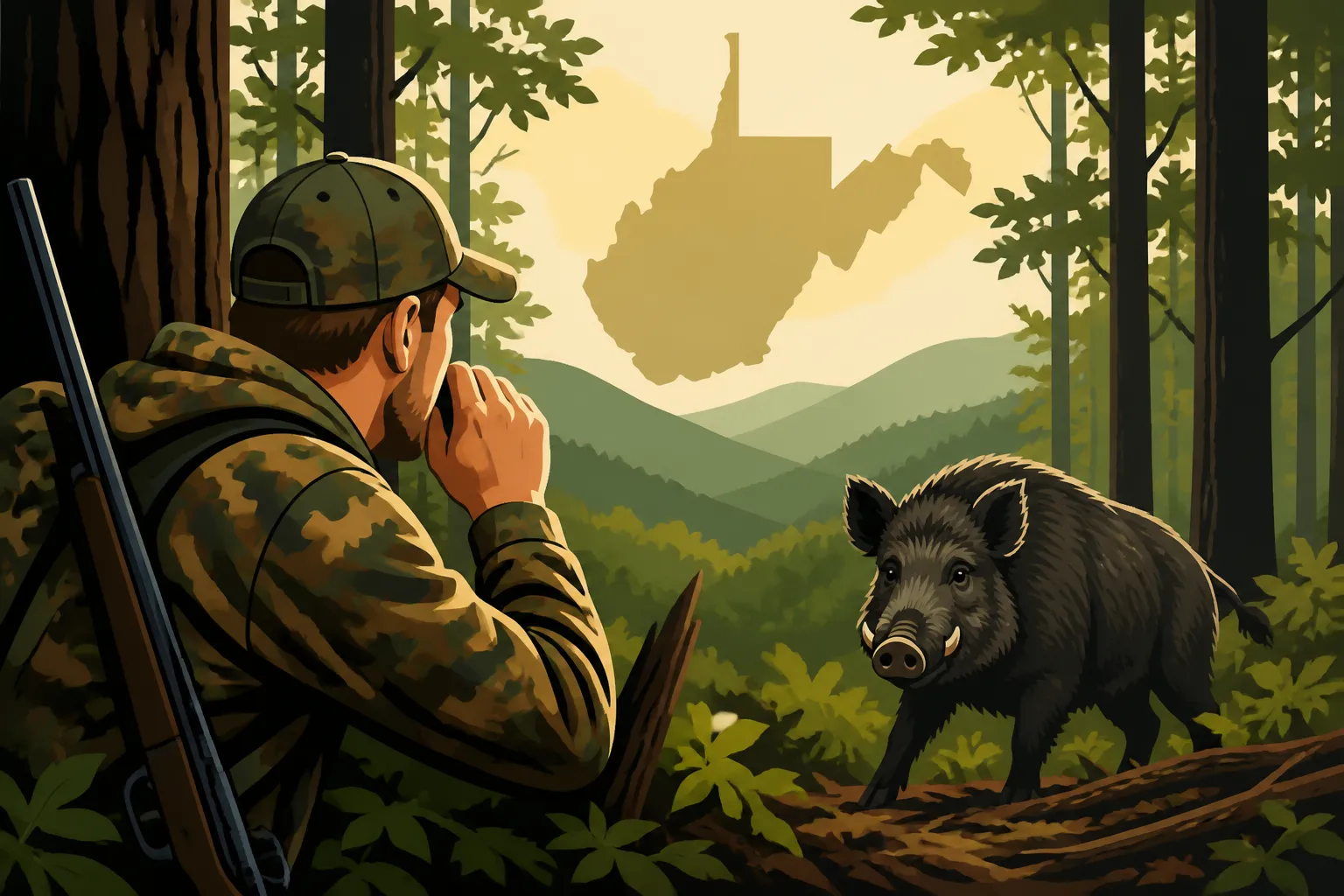
Grunt Calls in Mature West Virginia Timber
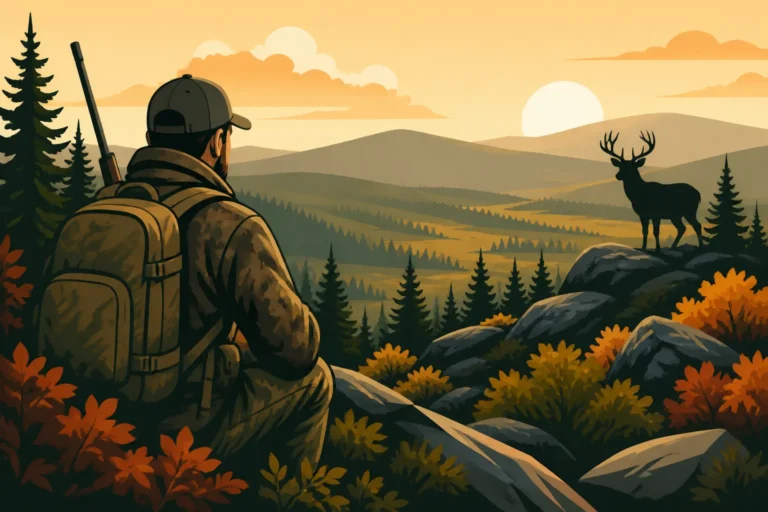
There's nothing quite like the challenge of hunting big, mature bucks in West Virginia's dense timber, especially when those woods are so vast that it feels like the deer could be anywhere and nowhere at the same time. Many hunters find themselves frustrated, wondering how to effectively draw a reclusive whitetail out of the seemingly endless cover. This guide dives deep into the strategic use of grunt calls in West Virginia's mature timber, helping you understand how to use these vital tools to your advantage and bring those elusive deer into range.
Understanding Deer Communication in Mature West Virginia Timber
Hunting mature timber in the Mountain State presents a unique set of challenges, not least of which is the sheer scale and density of the environment. Unlike open farmland or clear-cuts, big woods absorb sound, limit visibility, and often feature complex topography that makes traditional deer location tough. But even in these vast forests, deer communicate, and understanding their language—especially the subtle nuances of grunts—can be a game-changer.
The Acoustic Challenge of Dense Woods
Imagine trying to shout across a football stadium filled with pillows; that's a bit like sound travel in dense, mature West Virginia timber. The thick canopy, abundant underbrush, and rolling terrain of areas like the Monongahela National Forest or the deep hollers of the Southern Coalfields work together to muffle sound. This makes it incredibly difficult for deer, and hunters, to pinpoint the exact location of a sound source. A buck grunt that might carry for hundreds of yards in an open field could be barely audible beyond 50 yards in a rhododendron thicket. This acoustic dampening means that when you use a grunt call, you need to think about how far your sound is realistically traveling and how the terrain will impact it. Deer are constantly listening, but their ability to localize sounds is hindered by the environment. This is why aggressive calling in thick cover can often be less effective than subtle, well-placed grunts designed to pique curiosity rather than announce your precise location.
How Bucks Use Grunts to Communicate
Bucks aren't just making noise; they're communicating a wealth of information through various grunts. These sounds are essentially their form of verbal communication, used to establish dominance, attract does, and even to simply announce their presence. You'll hear everything from soft, social grunts—often a sign of a buck moving casually or interacting with other deer—to more aggressive tending grunts and even snort-wheezes. Tending grunts are particularly interesting for hunters; these are usually made by a buck actively pursuing a receptive doe, indicating high levels of interest and often leading to increased aggression. Understanding these different vocalizations is crucial. A mature buck might grunt subtly as he cruises a ridge looking for does, while a younger buck might be more vocal. The key is to match your call to the situation you're trying to simulate. Are you trying to sound like a dominant buck challenging another? Or a quieter, cruising buck hoping to catch a passing doe's attention? Your choice of grunt—and its intensity—should reflect this.
Reading the Timber for Grunt Call Opportunities
Before you even think about blowing a call, you need to read the timber. This means paying attention to subtle signs that tell you where deer are likely to be, and more importantly, where a grunt call will be most effective. Look for fresh rubs and scrapes, which are clear indicators of buck activity, especially during the pre-rut and rut. These signposts show you where bucks are actively traveling and marking territory. A Scrape Lines Along a Logging Road can be a prime spot. Also, identify natural funnels—places where topography or vegetation forces deer into narrower travel corridors. This could be a saddle between two ridges, a pinch point between a steep drop-off and a dense laurel thicket, or even a subtle bench on a mountainside. These funnels concentrate deer movement, making them ideal places for calling because deer are more likely to pass by and hear your call. Furthermore, consider the wind and thermals. In West Virginia's mountainous terrain, wind can swirl unpredictably, carrying your scent and calls in unexpected directions. Always try to set up with the wind in your favor, so your scent blows away from where you expect deer to approach. Wind and Thermals on a Steep Ridge are a constant factor in West Virginia. Understanding these elements from your Scouting West Virginia Public Land Before Season will dramatically increase your success rate.
Choosing the Right Grunt Call for Your Mountain Hunt
With so many grunt calls on the market, it can feel overwhelming to pick the "right" one. But in the context of West Virginia's mature timber, simplicity and versatility often reign supreme. The goal isn't to own every call, but to master a few that can accurately replicate the various grunts you're likely to encounter in the woods.
Differentiating Call Types and Tones
Deer calls come in various designs, from open-reed calls to closed-reed models, and each has its own characteristics. Open-reed calls often allow for a wider range of tones and pitches, giving you more control over the sound. Closed-reed calls, while sometimes less versatile in tone, can be easier to use consistently, especially for beginners. The key is to find a call that allows you to produce the range of sounds a buck makes: a soft social grunt, a more insistent tending grunt, and ideally, even a snort-wheeze. Some calls, like those from Primos or Buck Commander, are designed with chambers that enhance realism. You want a call that can produce deep, guttural sounds for older bucks, as well as lighter, shorter grunts for younger deer or when trying to sound less dominant. The most important aspect, however, is not the brand or the type, but your ability to manipulate it to sound like a real deer.
Adjustable Versus Fixed-Tone Calls
This is where personal preference and hunting style come into play. Adjustable grunt calls feature a slider or a rubber O-ring that lets you change the pitch, allowing you to mimic bucks of different ages. This versatility is incredibly valuable in West Virginia, where you might encounter a variety of deer and want to adjust your calling to the situation. For instance, if you're trying to challenge a dominant buck, you'd want a deeper, more aggressive grunt. If you're trying to sound like a younger, less threatening buck, a higher-pitched grunt would be appropriate. Brands like Flextone offer calls known for their adjustability.
On the other hand, fixed-tone calls are simpler; they produce one or a limited range of pitches. While less versatile, they can be very consistent. Some hunters prefer them because they're foolproof: you know exactly what sound you're going to get every time. If you're primarily targeting older, bigger bucks and want to focus on a deep, mature grunt, a high-quality fixed-tone call might be all you need. Consider what kind of hunting you do most often and what level of control you prefer. For serious hunters, a reliable call that integrates well with mapping tech like GoHunt can make all the difference in analyzing terrain and planning setups.
Practicing and Mastering Your Calls
Having the right call is only half the battle; the other half is knowing how to use it effectively. Practice, practice, practice! Start by listening to real deer grunts online or on hunting shows. Pay attention to the cadence, the duration, and the intensity. Then, try to replicate those sounds with your call. Practice in different environments—indoors, then outdoors—to get a feel for how the sound carries. Record yourself and listen back critically.
Grunt Call Practice Table
| Grunt Type | Description | Suggested Cadence & Intensity | When to Use in Timber |
|---|---|---|---|
| Social Grunt | Soft, short "urp" or "unh." | 1-2 grunts, low volume, 1-2 seconds apart. | Blind calling, curiosity, moving through thick cover, in conjunction with other subtle movements. |
| Tending Grunt | Longer, more drawn-out "grrrruuunhh." Often followed by light breathing sounds. | 2-4 grunts, medium volume, faster cadence. | When you suspect a buck is tending a doe or when trying to draw in a dominant buck during the rut. |
| Challenge Grunt | Deep, aggressive, guttural "GRRR-UNHH!" | 1-3 loud, drawn-out grunts, often followed by light rattling. | When you see a buck at a distance, or want to challenge a buck that has responded to other calls. |
| Snort-Wheeze | Series of short snorts followed by a wheezing sound. Indicates aggression. | Loud, sharp snorts then a distinct wheeze. | As a last resort to challenge a dominant buck, or when a buck is staring you down. Use sparingly! |
Don't be afraid to experiment with different volumes and durations. Sometimes a short, subtle grunt is all it takes to get a buck to commit. Other times, a more aggressive, drawn-out grunt is necessary. Also, learn to incorporate short pauses between grunts, just as a real deer would. And remember, the goal isn't just to make noise, but to sound like a real deer in the timber. This isn't about calling to the deer, but creating a scenario the deer responds to.
Strategic Grunt Calling Tactics in West Virginia's Big Woods
Once you've got your call chosen and you've practiced your sounds, it's time to put those skills to work in the field. The vastness of West Virginia's mature timber means you can't just randomly grunt; you need a strategy tailored to the environment and the deer you're pursuing.
Situational Calling: When and Where to Grunt
The most important aspect of effective grunt calling in timber is knowing when and where to use it.
- Blind Calling: If you're still-hunting through a thick hardwood stand or waiting in a strategic ambush point like a Hunting a Funnel Between Two Hollows, soft social grunts every 15-20 minutes can be incredibly effective. This isn't meant to aggressively pull a deer in, but rather to pique curiosity. A buck moving through the timber might hear it and simply veer slightly off course to investigate, bringing him into your shooting lane. This is particularly useful in areas where visibility is limited, or you're unsure of deer movement patterns.
- Seeing a Buck at a Distance: This is where things get exciting. If you spot a buck moving out of range, especially during the rut, a series of tending grunts or even a challenge grunt can stop him or turn him your way. Watch his body language carefully. If he stops, perks his ears, or looks in your direction, you've got his attention. Be patient and wait for his next move. Sometimes a single grunt is enough.
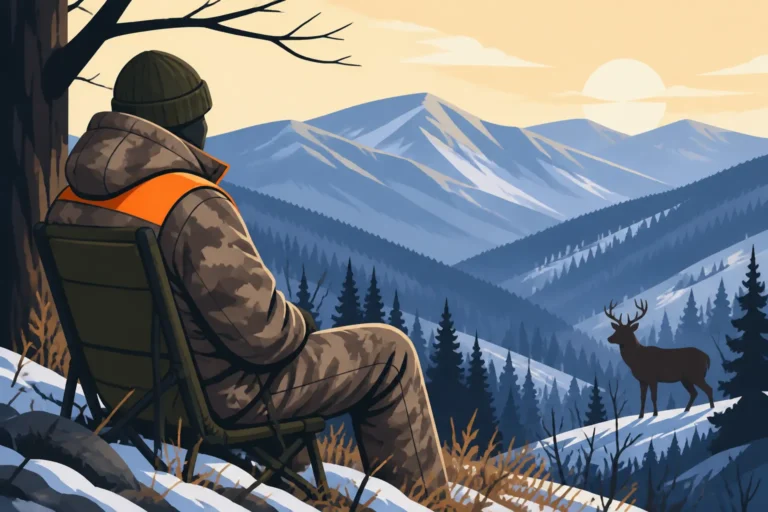
- During the Rut: This is prime time for grunting. Bucks are actively seeking does, and they're often more responsive to vocalizations. Mimicking a tending grunt can make a cruising buck think another buck has found a hot doe, creating an irresistible urge for him to investigate. Hunting the Rut in Mid-November is when this tactic really shines. A common strategy is to call from a Treestand Setups in Monongahela National Forest overlooking a bench or saddle.
The key is to set up in a location where a buck is likely to travel, or where you have a good field of view, even if it's limited. Look for areas with fresh sign, or strategic travel corridors that you identified during your scouting trips.
Combining Grunts with Other Tactics
Grunt calls are powerful, but they become even more potent when combined with other hunting tactics.
- Rattling: This is a classic combination. During the rut, a series of aggressive rattling sequences followed by tending or challenge grunts can often simulate a full-blown buck fight. This can draw in curious bucks from a surprising distance. Remember, Rattling Volume in Thick Laurel Cover needs to be adjusted. You don't want to overdo it and sound unnatural. A good sequence might involve 30-60 seconds of rattling, followed by a few grunts, then a minute or two of silence, and repeat.
- Decoys: While less common in super thick timber, a buck decoy placed strategically on a logging road or field edge can be deadly when combined with grunts. The visual stimulus, coupled with the auditory, can seal the deal. This is more of a tactic for the fringe of mature timber near more open areas.
- Still-Hunting and Calling: This is one of my favorite methods for West Virginia's big woods. Move slowly and deliberately through the timber, taking a few steps, stopping for a minute or two to scan, and then emitting a soft social grunt. This allows you to cover ground while still actively hunting. It's about being patient and letting the deer think the "grunt" is just another deer moving through its territory. Don't be afraid to try this in areas you previously might have thought too thick.
- Scent Control: Always, always pay attention to scent control. If a buck hears your call but smells you, the game is over. Use scent elimination sprays, store your hunting clothes in scent-free containers, and play the wind religiously. Even the best grunt call won't overcome a hunter's scent blowing into a buck's nose. For mapping and planning your approach and exit routes with wind in mind, a mapping tool like GoHunt can be invaluable.
The Art of Aggressive vs. Subtle Calling
This is where experience really comes into play. There's a fine line between effective calling and overcalling.
- Subtle Calling: Most often, especially in West Virginia's heavily hunted public lands, subtle calling is your best bet. A few soft social grunts, or a single tending grunt, can be enough to pique a buck's interest without making him feel pressured or suspicious. This is especially true for mature bucks who have heard it all. Think of it as a quiet invitation, not a loud announcement. You might be Hunting Small Private Tracts in West Virginia or Finding Ground Others Walk Past on public land, and subtlety is often rewarded.
- Aggressive Calling: This involves louder, more frequent, and more challenging grunts, sometimes combined with snort-wheezes. Aggressive calling is best reserved for specific situations:
- High-intensity rut periods: When bucks are already feeling feisty and competitive.
- When you see a buck that's ignoring subtle calls: If he's walking away or clearly not interested, a more aggressive approach might be your last chance.
- In very thick cover: Paradoxically, sometimes in extremely dense cover, a slightly louder grunt is needed simply because the sound doesn't travel far. However, use caution, as you don't want to alert deer too close to your position.
The most important rule is to read the deer. If a buck responds positively to a subtle grunt, stick with subtlety. If he's acting hesitant, back off the calling. If he's walking away, you might try one more aggressive sequence, but be prepared for him to blow out. Don't be a broken record; vary your calls and listen to the woods.
Overcoming Common Grunt Calling Challenges in Thick Timber
Hunting mature timber is tough, and grunt calling within it comes with its own set of hurdles. From dealing with the unpredictable mountain weather to avoiding spooking those wary West Virginia whitetails, there's always something to learn.
Dealing with Wind and Topography
West Virginia is famous for its steep ridges, deep hollers, and unpredictable wind patterns. This complex topography can make grunt calling a real head-scratcher.
- Swirling Winds: In the mountains, wind often doesn't blow in a single, predictable direction. Thermals (air currents created by temperature differences) can pull your scent up the hollow in the morning and down in the evening. This means your scent cone can be erratic, and your calls can be carried in unexpected ways. Always be aware of your scent. A crucial tip is to always try and position yourself on the downwind side of where you expect the deer to come from. This way, if a buck circles downwind (as they often do to scent-check), he'll smell you only after he's in your shooting lane. Tools like GoHunt offer wind direction overlays that can help you visualize how scent might travel on specific terrain.
- Sound Absorption: As mentioned earlier, thick timber devours sound. This means you might need to adjust your calling volume. What sounds loud to you might be barely audible 75 yards away. However, don't just blast your call. Instead, consider using slightly more volume and then waiting longer between calls to allow the sound to dissipate and for deer to process it. This is particularly relevant when you're Hunting Potomac Highlands Ridgelines where sounds echo differently.
- Elevated Positions: Often, setting up on an elevated position like a ridge or a bench can help your calls carry further down into hollows or across valleys. However, this also means your scent can carry further. Always balance sound propagation with scent control.
Avoiding Overcalling and Spooking Deer
This is arguably the biggest mistake new and even experienced callers make. It's exciting when a buck responds, and the urge to keep calling can be overwhelming. But overcalling is a surefire way to spook deer, especially mature ones.
- Less is More: Start with subtle, infrequent grunts. Let the woods breathe. Give a buck time to react and approach. Remember, deer move slowly and cautiously, especially if they think another deer is nearby. If you call too frequently, it sounds unnatural, almost like you're desperate, or worse, fake.
- Read Their Reaction: If a buck hears your grunt and stops, or perks his ears, that's a positive response. Now, shut up. Let him come to you. He knows where the sound came from. If he starts walking away or acts nervous, don't keep calling; you'll only reinforce his suspicion. Sometimes, a well-placed grunt only serves to inform a buck of your general presence, and he'll simply continue on his path, albeit more cautiously. In this case, more calling might just cause him to circle downwind and scent you.
- Simulate Natural Movement: Deer don't grunt constantly. They grunt as they move, feed, or interact. Try to match your calling rhythm to what a real deer might do. A good rule of thumb is to wait at least 5-10 minutes between calling sequences, especially if you're blind calling. If you've been sitting for a while, a soft grunt as if a deer just walked up might be effective.
Patience and Persistence in Mature Timber
Hunting West Virginia's big woods is rarely a quick affair. It demands patience and persistence, and grunt calling is no exception.
- Long Waits: Don't expect a buck to come charging in immediately after your first grunt. Sometimes it takes 20, 30, or even 45 minutes for a curious buck to slowly work his way through the thick cover to investigate. Be prepared for long waits. If you're Hunting the Late-Season December Lull, patience is even more critical.
- Move When Appropriate: If you've called for an extended period without a response, it might be time to move. Don't sit in one spot for hours grunting into thin air. Use a still-hunting approach, covering ground and calling intermittently. This increases your chances of encountering a deer that might respond. Even slight shifts in your position can open up new lanes of sight and sound.
- Don't Get Discouraged: Not every call will work, and not every grunt will bring a buck trotting in. There will be days when the deer are simply not responsive, or they're just not in the area. Learn from each outing, adjust your tactics, and remember that persistence is a virtue in the deer woods. Hunting public ground for West Virginia deer will still require effort and strategy. The most successful hunters are those who adapt and keep trying.
Ultimately, mastering grunt calls in mature West Virginia timber is about understanding the deer, reading the land, and practicing your technique with a healthy dose of patience. It's a tool that, when used wisely, can turn a quiet sit into an unforgettable encounter with a Mountain State buck.
Disclaimer
Hunting is an inherently dangerous activity. This content is for informational purposes only and does not constitute professional advice. Always prioritize safety, follow all local, state, and federal hunting regulations, and obtain proper licenses and permits before hunting. Be aware of your surroundings, inform others of your hunting plans, and never hunt under the influence of drugs or alcohol. The author and publisher are not responsible for any accidents, injuries, or legal ramifications that may result from hunting activities.