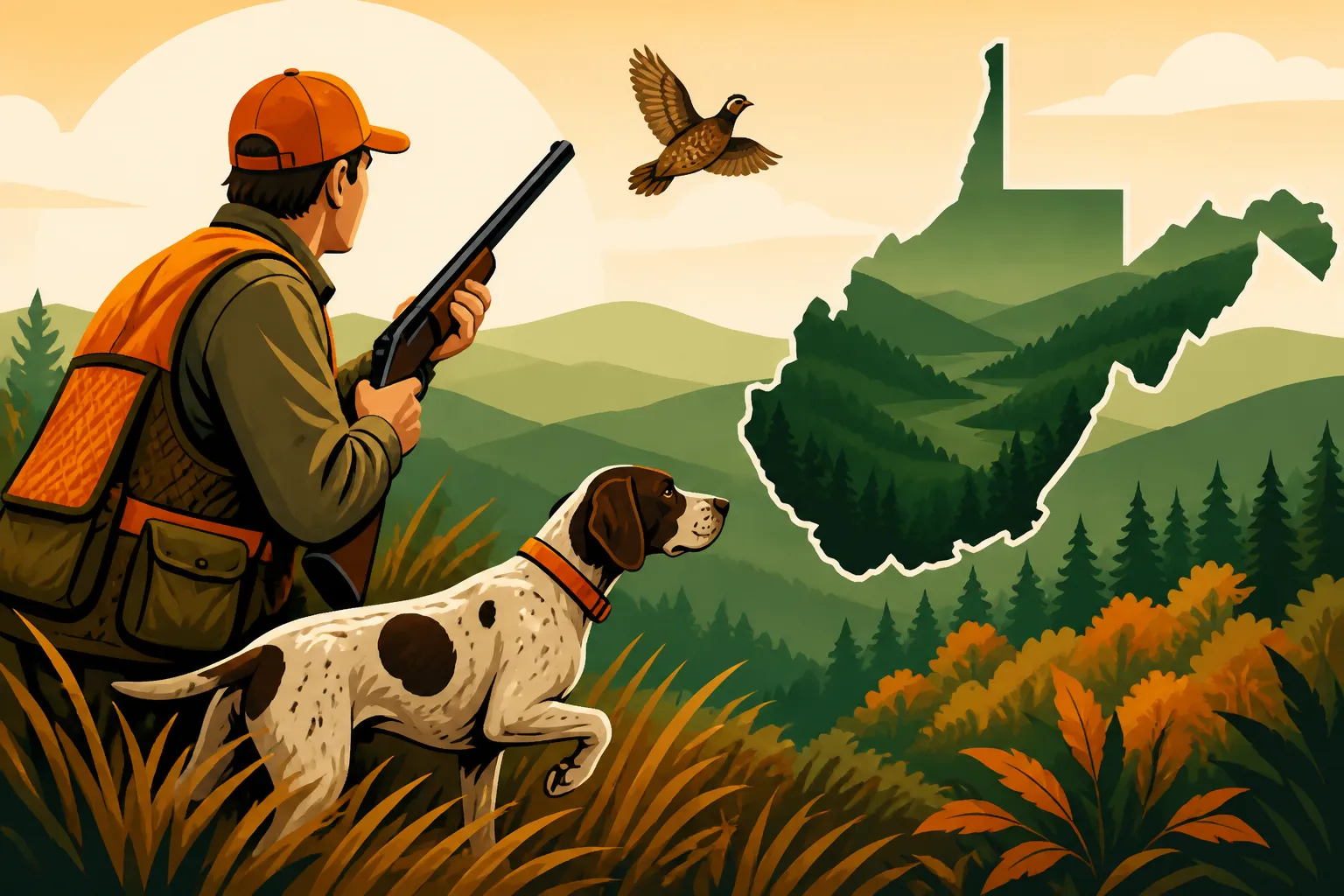
Run-and-Gun on West Virginia Public Land
You’ve probably been there: perched patiently in a treestand or huddled quietly in a ground blind, watching the hours tick by, hoping a deer or turkey will just happen to walk past. On West Virginia's vast, rugged public lands, that passive approach can feel like an exercise in futility. The sheer amount of ground and the often-scattered nature of game make sitting still a low-odds game for many. This guide is all about embracing mobility and aggression – learning how to effectively "run-and-gun" on West Virginia public land to increase your encounters and fill your tags.
Understanding the Run-and-Gun Philosophy for West Virginia Public Land
The concept of run-and-gun hunting isn't new, but it's particularly well-suited to the unique challenges and opportunities presented by West Virginia's wild landscapes. It’s about active participation, not just waiting.
Why Run-and-Gun Works in Mountainous Terrain
West Virginia isn't Kansas; it's a state of steep hills, deep hollows, and dense cover. Deer, turkeys, and even bears here are masters of using topography to their advantage, often moving through hidden benches, thick laurel slicks, or along obscure creek bottoms. If you’re committed to one spot, you might be a hundred yards from the freshest sign, or just over a ridge from where the action is happening. Run-and-gun capitalizes on this by allowing you to cover significant ground, systematically checking promising areas for fresh sign, and actively seeking out game.
Think about it: in areas like the Monongahela National Forest, where you could literally walk for days without hitting a road, the chances of game stumbling into your static setup are often slim. By moving, you become the active predator, forcing encounters and putting yourself in positions you might never find by sitting still. This is especially true when hunting the West Virginia rut in November, where bucks are constantly on the move, chasing does or checking scrape lines. You need to be able to follow that activity.
Key Principles of Effective Run-and-Gun Hunting
At its heart, run-and-gun is about efficiency and adaptability. It's not about crashing through the woods like a bull in a china shop; it's about moving purposefully and quietly, observing constantly, and being ready to react at a moment's notice.
First, stealth is paramount, even when moving. While you're covering ground, you're not trying to spook every animal in the forest. You're constantly scanning, listening, and using terrain features to mask your approach. This often means slow, deliberate steps, especially when entering or exiting thicker cover. Second, observation is your best friend. Your eyes and ears should be working overtime, not just looking for game, but for fresh tracks, droppings, rubs, and scrapes. These are the clues that tell you where game has been and where they might be going. Third, quick decision-making is essential. When you find fresh sign or spot game, you need to be able to assess the situation rapidly and decide on your next move – whether it's a quick setup, a stalk, or a change of direction. Lastly, adaptability is non-negotiable. No two days, no two hollows, are exactly alike. You need to be ready to change your tactics based on wind shifts, new sign, or unexpected encounters. You might start out looking for deer, but if you bump a group of turkeys, you might switch gears entirely.
Essential Gear and Setup for Mobile Hunting
To hunt effectively with a run-and-gun strategy, your gear needs to support your mobility, not hinder it. Every item in your pack should serve a clear purpose, and anything extra becomes a burden.
Lightweight and Streamlined Pack Essentials
When you're constantly moving, every ounce feels like a pound. Your pack needs to be a minimalist's dream, carrying only what's absolutely necessary. I typically recommend a small, comfortable daypack, perhaps 15-20 liters, that sits tight to your back and doesn't snag on brush. Inside, think about core essentials:
- Navigation: A fully charged smartphone with a reliable hunting app like GoHunt is invaluable. Make sure you've downloaded offline maps because cell service is often spotty in West Virginia's mountains. Always carry a physical map and compass as a backup, and know how to use them. For a deeper dive into modern navigation, consider reading about GPS Units Versus Phone Apps.
- Hydration: A hydration bladder or a couple of water bottles. You’ll be burning calories and sweating, even on cooler days.
- Calls: If hunting deer, a grunt tube and a bleat call are usually sufficient. For turkeys, a pot call or a couple of mouth calls are light and effective. You don't need a whole arsenal.
- First Aid Kit: A compact kit with essentials for cuts, blisters, and minor emergencies. You’re often a long way from help on public land.
- Safety Gear: Headlamp (even for day hunts, you might walk out in the dark), a small fire starter, and a whistle.
- Game Processing: A sharp knife and a few game bags for boning out an animal if you’re successful deep in the woods. This lightens the load for the pack out significantly, especially when faced with Recovering a Deer From a Steep Hollow.
- Snacks: High-energy snacks like granola bars, nuts, or jerky.
A good pack for a Monongahela Forest day hunt should feel almost invisible, allowing you to focus on the hunt, not on juggling gear.
Optimizing Your Weapon and Optics for Mobility
Your choice of weapon and optics also plays a crucial role in a successful run-and-gun strategy.
- Firearms: For rifle hunters, consider a lighter, more compact rifle. A carbine-length barrel (16-20 inches) is much easier to maneuver through thick brush than a 24-inch magnum. Caliber choice is less about raw power and more about shootability and ethics; something like a .308 or 6.5 Creedmoor is perfectly adequate for West Virginia deer.
- Archery: Bowhunters should prioritize a compact, well-balanced bow that's easy to draw and hold in awkward positions. Fixed-blade broadheads might be preferred for their reliability in brushy encounters, though mechanicals can also work. For cross-bow users, ensure your Crossbow Rules During West Virginia Archery Season knowledge is current.
- Shotguns: For turkey hunters, a nimble shotgun that points quickly and handles well is key. A shorter barrel (24 inches or less) can be a significant advantage when weaving through timber or setting up quickly against a tree.
- Optics: Keep it light. A good quality 8×42 or 10×42 binocular is generally sufficient for identifying game and scanning terrain. A lightweight rangefinder is also a must for quick shot placement. For rifle scopes, a variable power optic (e.g., 2-7x, 3-9x) with good low-light performance is ideal, allowing you to adapt to both close-quarters and longer shots across hollows. Think about Binocular Power for Mountain Hunting when making your selection.
A small, lightweight tripod or shooting sticks can be a tremendous asset for steadying your shot after a long, strenuous hike, especially on uneven ground.
Executing Run-and-Gun Tactics in West Virginia's Diverse Habitats
West Virginia offers a variety of terrain, each requiring slightly different run-and-gun adjustments. The beauty of this method is its adaptability.
Navigating Steep Ridges and Hollows
This is quintessential West Virginia hunting. Steep ridges often serve as travel corridors, while hollows provide bedding and security. When moving along a ridge, try to stay just off the top, using the crest for concealment. This allows you to peer down into both sides of the hollow without silhouetting yourself. As you move, constantly scan ahead and downwind. Learn to read a ridge for Eastern Panhandle deer, identifying those subtle benches or saddles that funnel movement.
When dropping into a hollow, use switchbacks to conserve energy and reduce noise. If you find fresh sign at the bottom, move slowly and deliberately, checking every nook and cranny. Thermals are your friend here; in the morning, air usually flows downhill, so you might hunt up the hollow. In the afternoon, it reverses, so hunting down might be better. Understanding Wind and Thermals on a Steep Ridge is absolutely critical.
Working Laurel Thickets and Dense Cover
West Virginia is famous for its "rhododendron hells" and dense stands of mountain laurel. These thickets, while challenging, are prime bedding and security areas for deer and bears. Don't avoid them; learn to hunt them.
The trick is to move through them, not around them, if the sign indicates game is present. This is where your quiet clothing and compact weapon pay off. Move excruciatingly slowly, literally step by step, pausing frequently to listen and scan. Many times, you'll hear or see game before it busts out. If you jump a deer, don't give up; sometimes they'll only run a short distance and then stop to look back. Be ready for a quick, close-range shot. This is also where understanding where Monongahela Forest bucks bed can be a game-changer. These areas are often adjacent to food sources but offer maximum security.
Hunting Creek Bottoms and River Edges
Water sources, from small mountain creeks to larger rivers like the New River, are natural travel corridors and often provide food and water. Deer and turkeys frequently use creek bottoms as highways, especially where the terrain is otherwise steep.
When hunting these areas, walk slowly along the banks, constantly looking for tracks in mud or sand, and checking for rubs or scrapes on trees along the edge. The sound of moving water can be a double-edged sword: it can mask your own noise, but it can also mask the sound of approaching game. Use it to your advantage by moving when the water is louder, and pausing when it's quieter to listen intently. Focus on bends in the creek, pinch points, and areas where smaller drainages feed into the main waterway – these are natural funnels. Hunting a funnel between two hollows can be incredibly productive, as it concentrates game movement.
Reading the Land and Adapting on the Fly
The essence of run-and-gun is constant adaptation. You are a detective, interpreting clues and adjusting your strategy in real-time.
Interpreting Fresh Sign and Hotspots
Your eyes should always be glued to the ground and surrounding vegetation for tell-tale signs. Fresh tracks are a clear indicator of recent activity; look for sharp edges and displaced dirt. Droppings that are soft and dark mean game was recently there. Rubs (where bucks rub their antlers on trees) and scrapes (areas where bucks paw the ground, urinate, and create an overhead licking branch) are crucial, especially during the rut. If you find a hot scrape line along a logging road, you know you're in an active area.
Don't just observe; interpret. Is the sign sparse but fresh, indicating passing movement? Or is it heavily concentrated, suggesting a bedding area, feeding zone, or travel corridor? If you find a cluster of fresh sign, slow down dramatically, become ultra-stealthy, and prepare for an encounter. This active searching for game sign is a cornerstone of Scouting West Virginia Public Land Before Season, but it's equally important during the hunt itself.
Using Wind and Thermals to Your Advantage
As mentioned, West Virginia’s topography dictates air movement, which directly impacts scent dispersal. Always try to keep the wind or thermal in your favor, meaning it should be blowing from the game to you.
- Morning Thermals: As the sun rises and warms the earth, thermals generally rise, pulling your scent uphill. This makes hunting uphill in the morning challenging. Conversely, hunting down a ridge or hollow with the thermal rising can be effective, as your scent is carried up and away.
- Evening Thermals: As the sun sets and the air cools, thermals reverse and start to fall, pulling your scent downhill. Hunting up a ridge in the evening with falling thermals can be productive, as your scent is carried away from animals higher up.
- Wind: Above the canopy, prevailing winds take over. Always know the wind direction and use it to dictate your approach. If the wind is swirling or unpredictable (common in hollows), try to stay as mobile as possible, or position yourself where swirling winds are less likely to carry your scent directly to game. Understanding Wind and Thermals on a Steep Ridge is a non-negotiable part of successful West Virginia hunting.
The Importance of Scouting and Prior Knowledge (Even for Run-and-Gun)
While run-and-gun is about adapting on the fly, it’s not an excuse to go in blind. Pre-season scouting, even just from aerial maps, gives you an immense advantage. Identify potential travel corridors, pinch points, bedding areas, and food sources. Tools like the GoHunt app allow you to mark these points, identify property lines, and understand the terrain before you ever step foot in the woods. You can even use these tools to identify areas with less hunting pressure on West Virginia public land.
Knowing a few good starting points and having a general game plan for how you’ll dissect an area makes your run-and-gun more efficient. It helps you focus your efforts on the most promising ground, rather than aimlessly wandering. Even a quick scout the day before can reveal fresh activity that guides your next day's hunt.
Overcoming Challenges and Staying Safe
Run-and-gun hunting in West Virginia is physically demanding and often takes you into remote areas. Preparation and safety are paramount.
Managing Physical Exertion in Rugged Terrain
Hiking up and down West Virginia’s steep ridges, especially with hunting gear, is tough work. It’s not uncommon to gain and lose thousands of feet of elevation in a single day.
- Physical Conditioning: The best preparation is physical fitness. Regular exercise, particularly cardio and leg strength training, will make your hunts more enjoyable and safer.
- Pacing: Don't try to sprint up every hill. Pace yourself. Take short breaks to catch your breath and listen. Hydrate consistently, even when you don't feel thirsty.
- Nutrition: Keep those high-energy snacks handy. Replenish your calories throughout the day to avoid bonking.
- Footwear: Invest in high-quality, broken-in hiking boots with good ankle support. Nothing will ruin a hunt faster than blisters or a twisted ankle miles from the truck. For more on navigating rough terrain, read about Hunting Steep Allegheny Ridges.
Navigating Unfamiliar Territory and Emergency Preparedness
Getting lost or having an emergency in remote West Virginia public land is a serious concern.
- Map and GPS/App: Always carry redundant navigation. Your GoHunt app is excellent, but batteries die. A physical map and compass are lifesavers. Know how to use them.
- Tell Someone: Always inform someone of your hunting plans, including your exact location, expected return time, and who to call if you don't check in.
- Emergency Supplies: Beyond your first aid kit, consider a space blanket, extra layers, and a powerful headlamp. A fully charged power bank for your phone is also a smart idea.
- Communication: Cell service is often nonexistent. A satellite messenger device (like a Garmin inReach or Zoleo) can be a literal lifesaver, allowing you to send messages and trigger an SOS even without cell service.
- Hunting Partners: Whenever possible, hunt with a buddy or at least within shouting distance of one, especially in truly remote areas. Agree on rendezvous points and check-in times.
Run-and-gun hunting can be incredibly rewarding, offering a dynamic and engaging way to hunt West Virginia's public lands. It requires effort, but the feeling of actively finding and pursuing game is hard to beat.
Recommended Run-and-Gun Gear Summary
Here's a quick look at some essential gear for your mobile hunting adventures in West Virginia:
| Gear Category | Recommended Item | Why It's Essential |
|---|---|---|
| Navigation | Smartphone with GoHunt (offline maps) | Detailed maps, property lines, quick navigation |
| Physical Map & Compass | Backup, no battery needed, crucial in remote areas | |
| Pack | Lightweight Daypack (15-20L) | Comfort, minimal bulk, easy to maneuver |
| Hydration | Hydration Bladder / Water Bottles | Prevents dehydration, critical for energy |
| Calls | Grunt Tube, Bleat Call (deer) / Pot or Mouth Call (turkey) | Lightweight, versatile for active calling |
| First Aid | Compact First Aid Kit | Addresses minor injuries, crucial for remote hunts |
| Safety | Headlamp, Fire Starter, Whistle | Emergency signaling, night egress, survival essentials |
| Weapon | Compact Rifle (carbine) / Balanced Bow / Nimble Shotgun | Easy handling in thick cover, less fatigue |
| Optics | 8×42 or 10×42 Binoculars | Light, ample magnification for observation |
| Lightweight Rangefinder | Accurate distance for ethical shots | |
| Footwear | Quality, Broken-in Hiking Boots | Ankle support, comfort, blister prevention |
| Game Care | Sharp Knife, Game Bags | Field dressing and light packing of game |
| Communication | Satellite Messenger (optional but recommended) | Emergency communication outside cell service |
Disclaimer
Hunting carries inherent risks, including but not limited to injuries, falls, and animal encounters. Always prioritize safety, understand and follow all West Virginia hunting regulations, and ensure you have the necessary skills and equipment for your chosen hunting methods and terrain. This guide is for informational purposes only and does not substitute for professional training, official regulations, or personal judgment.