Binocular Power for Mountain Hunting
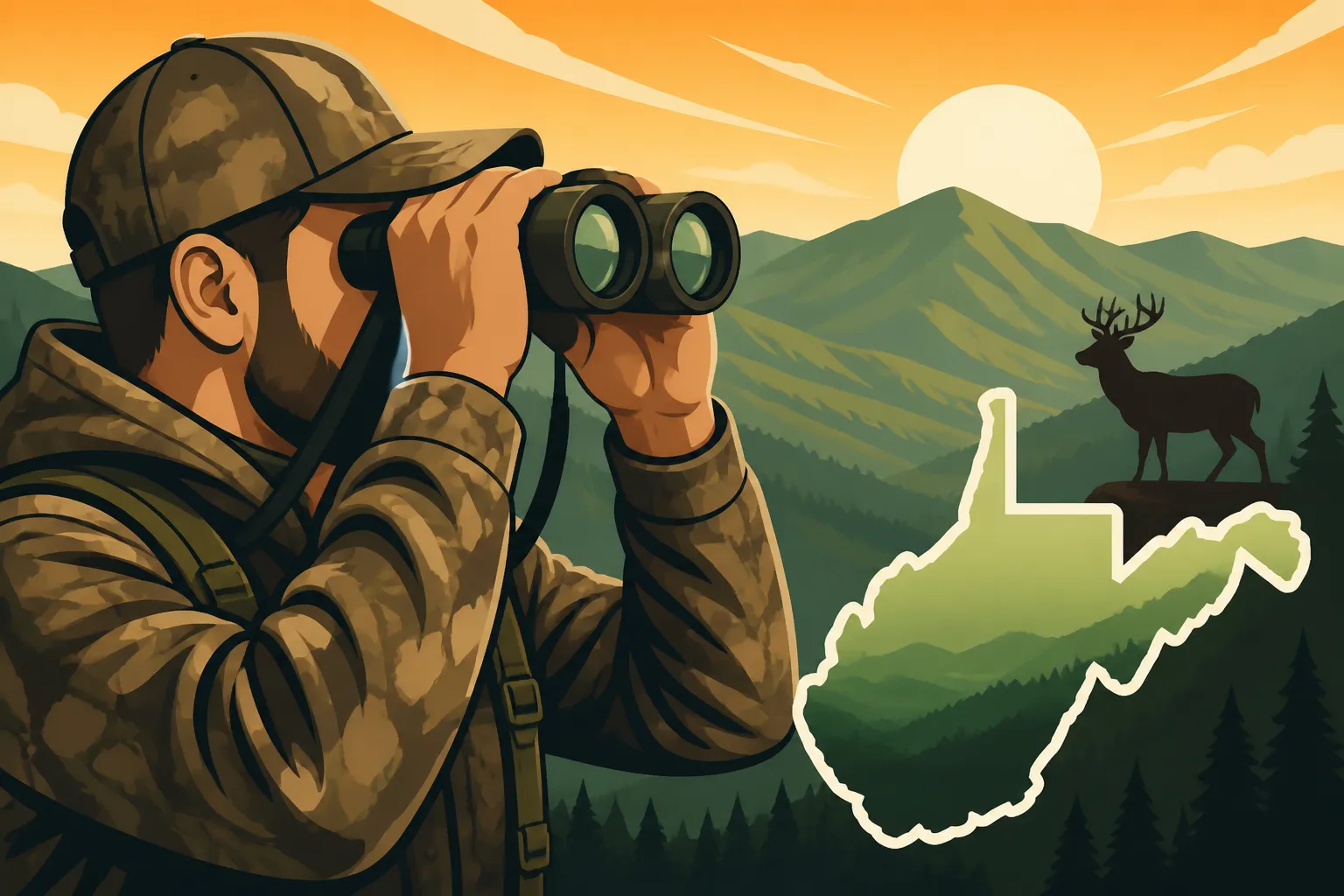
Oh, the age-old question that plagues every hunter heading into our wild, wonderful West Virginia mountains: "What binoculars do I actually need?" It's not just about seeing something far away; it's about piercing through the thick rhododendron, picking apart dark timber, or trying to discern antler points on a ridge at last light. The sheer variety of terrain here, from the dense laurel thickets of the Allegheny Highlands to the more open reclaimed mine lands of the south, makes choosing the right binocular power a genuinely frustrating puzzle. This guide is here to break down the complexities of binocular magnification and help you navigate the options so you can glass more effectively and make confident decisions in the field.
Why Binocular Power Matters in West Virginia's Mountains
Hunting in West Virginia is rarely flat or open. You're often dealing with steep hollows, dense canopy, and fleeting glimpses of game. Your binoculars aren't just for spotting deer or bears across a wide field; they're an extension of your eyes, helping you dissect cover, confirm details, and navigate challenging terrain. The "power" of your binoculars, often expressed as a number followed by an "x" (like 8x or 10x), directly influences how well you can do all of this.
It's a delicate dance, really. Too much power, and your view becomes a shaky, tunnel-like experience, frustratingly hard to hold steady when your heart is pounding after a steep climb. Too little power, and that distant movement you thought was a deer might just remain an unidentifiable blur, leaving you second-guessing. The mountains demand a balance, a tool that can adapt to both the close-quarter brush and the expansive vistas from a ridgeline.
The Dance Between Magnification and Field of View
When we talk about magnification, we're talking about how much closer an object appears through the binoculars than with your naked eye. An 8x binocular makes an object appear 8 times closer, and a 10x makes it 10 times closer. Sounds simple enough, right? But here's the kicker: as magnification goes up, your field of view (FOV) almost always goes down. The FOV is the width of the area you can see through your binoculars at a specific distance, usually measured in feet at 1,000 yards.
Imagine you're trying to locate a buck that just slipped into a dense patch of mountain laurel. With an 8x binocular, you'll have a wider swath of that cover visible at once, making it easier to "scan" and pick up subtle movements. However, with a 12x, your view will be much narrower, like looking through a straw. While the buck will appear larger if you find him, finding him in the first place within that confined view can be a real struggle in tight West Virginia cover. Conversely, if you're trying to identify the exact number of points on a buck across a large, open powerline cut, that extra magnification of a 10x or 12x becomes a distinct advantage.
Light Gathering and Exit Pupil in Low-Light Conditions
Beyond magnification, the second number on your binoculars, like 8x42 or 10x50, refers to the diameter of the objective lens in millimeters. This objective lens is what gathers light, and its size directly impacts how bright and clear your image will be, especially in low-light conditions. In West Virginia, where legal hunting hours often mean being in the woods at dawn and dusk, or tucked deep in shadowy hollows, light gathering is crucial.
The "exit pupil" is another important concept, though it's not usually printed on the binoculars themselves. It's the small circle of light that exits the eyepiece and enters your eye. You can calculate it by dividing the objective lens diameter by the magnification (e.g., 8×42 = 5.25mm exit pupil, 10×42 = 4.2mm exit pupil). A larger exit pupil generally means a brighter image, especially when your own eye's pupil is dilated in low light (which can be up to 7mm in young people, less as you age). This is why a 50mm objective lens will often provide a brighter image than a 42mm at the same magnification in dim light. When you're trying to confirm a deer's gender or antler size in the dark timber, or identify something just before legal shooting light fades, that extra light gathering can make all the difference between a successful hunt and a missed opportunity.
Common Binocular Powers and Their Mountain Hunting Applications
Let's dive into the typical binocular powers you'll encounter and where they shine—or falter—in our West Virginia hunting scenarios. It's not about one being inherently "better" than another, but rather which one aligns best with your predominant hunting style and the specific terrain you frequently encounter.
8x Magnification: The Agile Workhorse
An 8x binocular, often paired with a 42mm objective lens (8×42), is arguably the most common and often recommended power for general hunting, and for good reason. Its wider field of view means you can sweep large areas of forest more quickly and efficiently. This is especially helpful when Still-Hunting Cranberry WMA Ridges where deer might appear and disappear in thick cover in an instant. The wider view helps you locate animals faster and keep them in sight as they move through brush.
Another huge benefit of 8x is its stability. The lower magnification makes hand-holding much easier, resulting in a steadier image. When your heart is pounding after a steep climb up an Allegheny ridge, or when you're trying to glass from an awkward position in a treestand, that stability is invaluable. It reduces eye fatigue, allowing you to glass for longer periods without getting a headache. For hunters who spend a lot of time still-hunting or need quick target acquisition in dense woods, the 8x is a fantastic choice. It excels in scenarios like picking apart a Hunting a Funnel Between Two Hollows, where deer might cross quickly through a narrow pinch point.
10x Magnification: The Versatile All-Rounder
Stepping up to a 10x magnification, typically a 10×42, offers a noticeable increase in "reach." While it narrows your field of view compared to an 8x, it gives you that extra bit of power to resolve detail at greater distances. For hunters who frequently encounter more open terrain, like reclaimed surface mines, gas well pads, or expansive powerline cuts, the 10x can be a significant advantage. It allows you to more accurately judge antler size, confirm species, or pick out a bedded animal that might be just a bit too far for an 8x.
The 10x is often considered the most versatile power for hunters who split their time between thick woods and more open areas. It provides a good balance: enough magnification for those longer observations, but still manageable for hand-holding without excessive shake, especially with a good binocular harness. If you're hunting areas where you might be glassing a distant Hunting a High Elevation Mountain Bench one moment and then scanning a creek bottom the next, a 10x is often a great compromise. When researching different optics to fit this versatile role, many hunters use platforms like GoHunt to compare models, read reviews, and find binoculars that offer a clear image and robust construction suitable for varied terrain.
12x and Higher: Reaching for the Horizon
When you start talking about 12x, 15x, or even 18x binoculars, you're entering specialized territory. These high-magnification optics are designed for serious long-range observation. The image resolution and detail you can achieve at extreme distances are impressive, making them ideal for glassing vast expanses, like a Hunting a Reclaimed Surface Mine Bench or a vast canyon system, where you might be trying to spot an animal miles away.
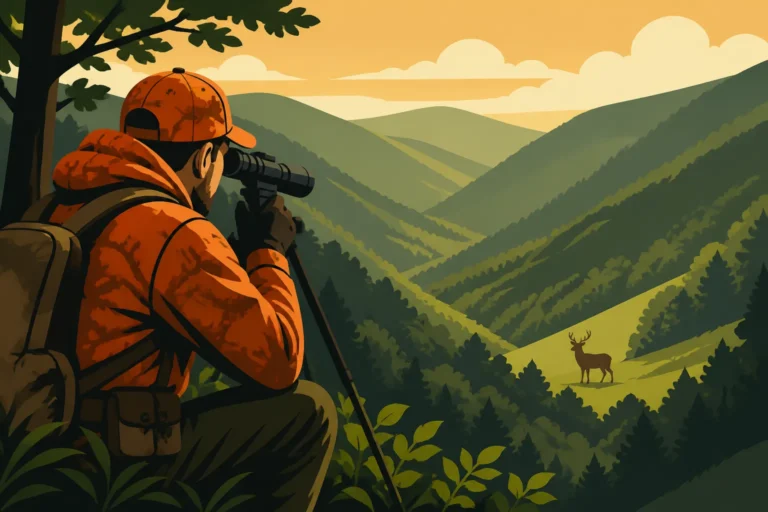
However, with great power comes great responsibility—and a few significant downsides for typical West Virginia hunting. The field of view becomes quite narrow, making it difficult to find and track animals quickly in anything but the most open landscapes. More critically, hand-holding anything above 10x, and often even 10x, becomes incredibly difficult. Image shake is pronounced, leading to rapid eye fatigue and making it nearly impossible to resolve fine details. For 12x and higher, a tripod is almost always a necessity for practical use. This added bulk and setup time means they are less suited for mobile, run-and-gun hunting or quick checks in dense timber. They truly shine for stationary glassing positions, such as when you are set up for a prolonged period, carefully dissecting a distant hillside for movement, perhaps like someone Glassing a Powerline Cut at Last Light from a comfortable perch.
Factors Beyond Magnification: Making the Right Choice
While magnification is what most people focus on, it's really just one piece of the puzzle. The best binoculars for West Virginia hunting consider a range of other critical factors that impact performance, comfort, and durability in our rugged environment.
Objective Lens Size and Its Impact
We touched on objective lens size (the second number, like 42mm or 50mm) when discussing light gathering, but its impact goes beyond just brightness. Larger objective lenses do gather more light, giving you a brighter image, particularly at dawn and dusk or in heavily shaded areas like dark hollows. However, there's a trade-off: weight and bulk. A 10×50 binocular will be noticeably heavier and larger than a 10×42.
For mountain hunting, where every ounce counts when you're climbing steep terrain or hiking miles into the backcountry, that extra weight can become a burden. A larger binocular might also be less comfortable to carry in a chest harness or pack. Consider your physical conditioning and how far you typically hike. If you're mostly hunting from a stationary position, a heavier 50mm might be fine, but if you're covering a lot of ground, a lighter 42mm could be a better choice.
Weight, Size, and Ergonomics for All-Day Carries
The ergonomics of your binoculars are often overlooked until you're a few hours into a hunt, and they start feeling like bricks around your neck. The weight and how comfortably they fit in your hands, how easy the focus wheel is to manipulate with gloves, and how they integrate with your carrying system are all crucial. In West Virginia, you're constantly moving, climbing, and navigating challenging ground. You need binoculars that don't hinder your movement or add unnecessary fatigue.
Compact binoculars are an option, but often come with smaller objective lenses, sacrificing light gathering. Mid-sized (like 8×42 or 10×42) often strike the best balance. Consider how the binoculars feel in your hands – do they offer a secure grip even when wet? Is the focus knob smooth and easy to turn? How do they ride in your Binocular Harnesses Worth Wearing? These details, while seemingly minor, make a huge difference in real-world use over a long day. When you're planning your Packs for a Monongahela Forest Day Hunt, remember that a comfortable binocular system is just as important as your water and snacks.
Durability and Weatherproofing: Built for the Backwoods
West Virginia weather is notoriously unpredictable. One minute it's a clear, crisp fall morning, the next you're caught in a sudden downpour or a dense fog rolls in. Your binoculars need to be able to withstand these conditions without failing. Look for optics that are nitrogen-purged and O-ring sealed. This prevents internal fogging, which is a common issue when moving between warm and cold environments, or in high humidity. There's nothing worse than pulling up your binoculars only to find the inside of the lenses completely fogged up, rendering them useless, especially in conditions that could lead to Fogged Optics in West Virginia Cold.
A durable rubber armor coating is also essential. It protects against bumps, drops, and scrapes that are inevitable when traversing rocky slopes or thick brush. When investing in optics, you want a tool that can take a beating and keep performing. If you're researching options and comparing specs for ruggedness and waterproofing, resources like GoHunt can provide detailed product information and user reviews that highlight how different brands perform under harsh field conditions, helping you pick a pair that will last through many West Virginia seasons.
Practical Tips for Mountain Glassing in West Virginia
Having the right binoculars is one thing; knowing how to use them effectively in our challenging terrain is another. These practical tips can help you get the most out of your optics and increase your chances of spotting game.
The Importance of a Steady Platform
No matter how good your binoculars are, if you can't hold them steady, you won't be able to resolve fine details. Even an 8x binocular can be shaky after a strenuous hike. For 10x and especially 12x and higher, a steady platform is absolutely non-negotiable.
When you're glassing, try to find a natural rest. Lean against a tree trunk, brace your elbows on your knees while sitting, or use your backpack as a rest. Many hunters carry shooting sticks not just for rifle support but also as a stable platform for their binoculars. For dedicated, long-range glassing sessions, a lightweight tripod adapter for your binoculars can transform your high-magnification optics into a powerful spotting tool, allowing you to glass for extended periods without fatigue. The more stable your platform, the clearer the image and the longer you can glass effectively.
Methodical Glassing Techniques
Just haphazardly sweeping your binoculars across a hillside is a great way to miss game. Instead, adopt a methodical approach. Break the area you're scanning into smaller grids or sections. Start at the nearest points and slowly work your way out, or start at the top and systematically work your way down. Don't just look for an entire deer; look for parts of a deer: an ear flick, a horizontal line that doesn't fit the vertical trees, a patch of contrasting color, or the glint of an antler.
Pay close attention to changes in cover, shadows, and areas where deer might bed or feed. Take your time. Spend several minutes dissecting each section before moving on. Sometimes, a deer will appear as if from nowhere, simply because you held your binoculars steady on a spot long enough. Many hunters also use mapping applications, like those found on GoHunt, to identify potential bedding areas, food sources, and travel corridors beforehand, giving them a more informed strategy for where to focus their glassing efforts in the field.
When to Use Them and When to Put Them Away
There's a time to glass and a time to move. While it's tempting to have your binoculars glued to your eyes constantly, doing so can slow you down and make you miss game that's closer than you think. Learn to balance systematic glassing with silent movement. When still-hunting through dense timber, rely more on your peripheral vision and quick, silent steps, occasionally pausing to slowly scan with your binoculars, especially before crossing open areas or entering potential bedding zones.
When you reach a good vantage point, however, that's when it's time to settle in and glass thoroughly. This might be a ridgetop overlooking a hollow, or an elevated position at the edge of a clear-cut. Knowing when to commit to a long glassing session versus when to make a quick scan is a skill that comes with experience. Your binoculars are a tool to enhance your vision, not replace it entirely. They should complement your hunting style, not dictate it.
Matching Your Binos to Your Hunting Style and Terrain
The "perfect" binocular power truly depends on how and where you hunt in West Virginia. There's no one-size-fits-all answer, so consider your typical hunting scenarios.
Archery Hunters in Thick Cover
For those of us who brave the woods with a bow during Bowhunting West Virginia's Long Archery Season, especially in the dense, close-quarter cover that dominates much of the state, an 8x binocular often reigns supreme. The wider field of view is critical for quick target acquisition when a deer might pop out of a thicket at 30 yards. You need to locate it instantly, assess it, and prepare for a shot. The stability of an 8x also helps you maintain focus without excessive shake, which is vital when trying to thread an arrow through tight shooting lanes.
While a 10x can work, the slightly narrower field of view can be a disadvantage in truly thick stuff. For archery, quick identification and a stable image are often prioritized over extreme magnification. You're not usually trying to count points at 500 yards; you're trying to identify a legal buck at bow range.
Rifle Hunters Covering Big Country
If your hunting style involves more open country, longer shots, or extensive glassing of distant hillsides, then a 10x or even a tripod-mounted 12x might be more beneficial. This is particularly true for Rifle Setups for West Virginia Deer Hunting in areas like the Eastern Panhandle's more open farmland edges, or the unique visibility offered by reclaimed surface mines in the south. The extra magnification aids in spotting deer that are farther away, allowing for more precise evaluation of antler size and ensuring positive identification before taking a shot.
For rifle hunters, especially those operating on larger public land tracts with varied terrain, the ability to effectively glass a distant hillside can save a lot of walking and allow you to strategize your approach more effectively. A 10x offers a strong balance for many rifle hunters, providing good reach without being overly cumbersome for hand-holding or too narrow in its field of view for moderate cover. For those venturing into truly expansive views, the precision of a tripod-mounted higher power optic can be invaluable.
The Value of Scouting with Quality Optics
Good binoculars aren't just for opening day. They are an invaluable tool for Scouting West Virginia Public Land Before Season. Even in the off-season, quality optics allow you to thoroughly examine habitat, identify potential bedding areas, locate forgotten trails, and spot rub lines or scrape trees from a distance without disturbing the area.
By using your binoculars to dissect distant terrain during scouting, you can learn so much about deer movement patterns, preferred food sources, and entry/exit routes. This pre-season intelligence can drastically improve your chances of success. They help you find those subtle clues that tell a story, whether it's the slight disturbance of a fresh rub on a sapling or the glint of an old deer shed tucked away under a brush pile.
Here's a quick comparison of common binocular powers for West Virginia hunting:
| Binocular Power | Magnification | Objective Lens (Common) | Exit Pupil (42mm) | Field of View (Relative) | Best For West Virginia | Typical Use Cases |
|---|---|---|---|---|---|---|
| 8x | 8 times closer | 42mm | 5.25mm | Wide | Thick cover, still-hunting, quick scans | Dense laurel, creek bottoms, tracking moving game, archery |
| 10x | 10 times closer | 42mm / 50mm | 4.2mm (42mm) / 5mm (50mm) | Moderate | Versatile, mixed terrain | Clear-cuts, powerlines, open benches, identifying distant deer |
| 12x | 12 times closer | 50mm+ | 4.17mm (50mm) | Narrow | Stationary long-range glassing | Reclaimed mine lands, very open ridgelines (often with tripod) |
Ultimately, choosing the right binocular power for mountain hunting in West Virginia comes down to understanding your personal hunting style, the specific terrain you frequent, and your budget. Whether you opt for the stable, wide-view of an 8x, the versatile reach of a 10x, or the long-distance precision of a 12x (and a tripod!), investing in quality optics is an investment in your hunting success and enjoyment. Take the time to try different options, consider the advice here, and select the binoculars that will best help you unlock the secrets of our beautiful West Virginia mountains.
Disclaimer
This article is for general informational purposes only and does not constitute professional advice. Laws, prices and regulations vary by location and change over time. Consult a qualified professional for guidance on your specific situation.