Hunting a Reclaimed Surface Mine Bench
Hunting a reclaimed surface mine bench in West Virginia can feel like stepping into an alien landscape compared to the classic hardwood ridges or deep hollows. Many hunters, myself included, have looked at these areas on a map – vast, often treeless expanses, sometimes scarred with highwalls and old access roads – and just shrugged, thinking there's no way a big buck or a wary gobbler would spend much time there. But that's where we often get it wrong, and this guide is here to unravel the hidden potential of these unique hunting grounds. We're going to dive deep into understanding these overlooked spots, learning how to scout them effectively, and figuring out exactly how to hunt them for success in the Mountain State.
Understanding Reclaimed Surface Mine Benches
Before you can hunt a reclaimed surface mine bench, you really need to understand what you're dealing with. These aren't your typical West Virginia woods. They represent a unique ecological niche, often teeming with life, precisely because they are different.
What Exactly Are Reclaimed Mine Benches?
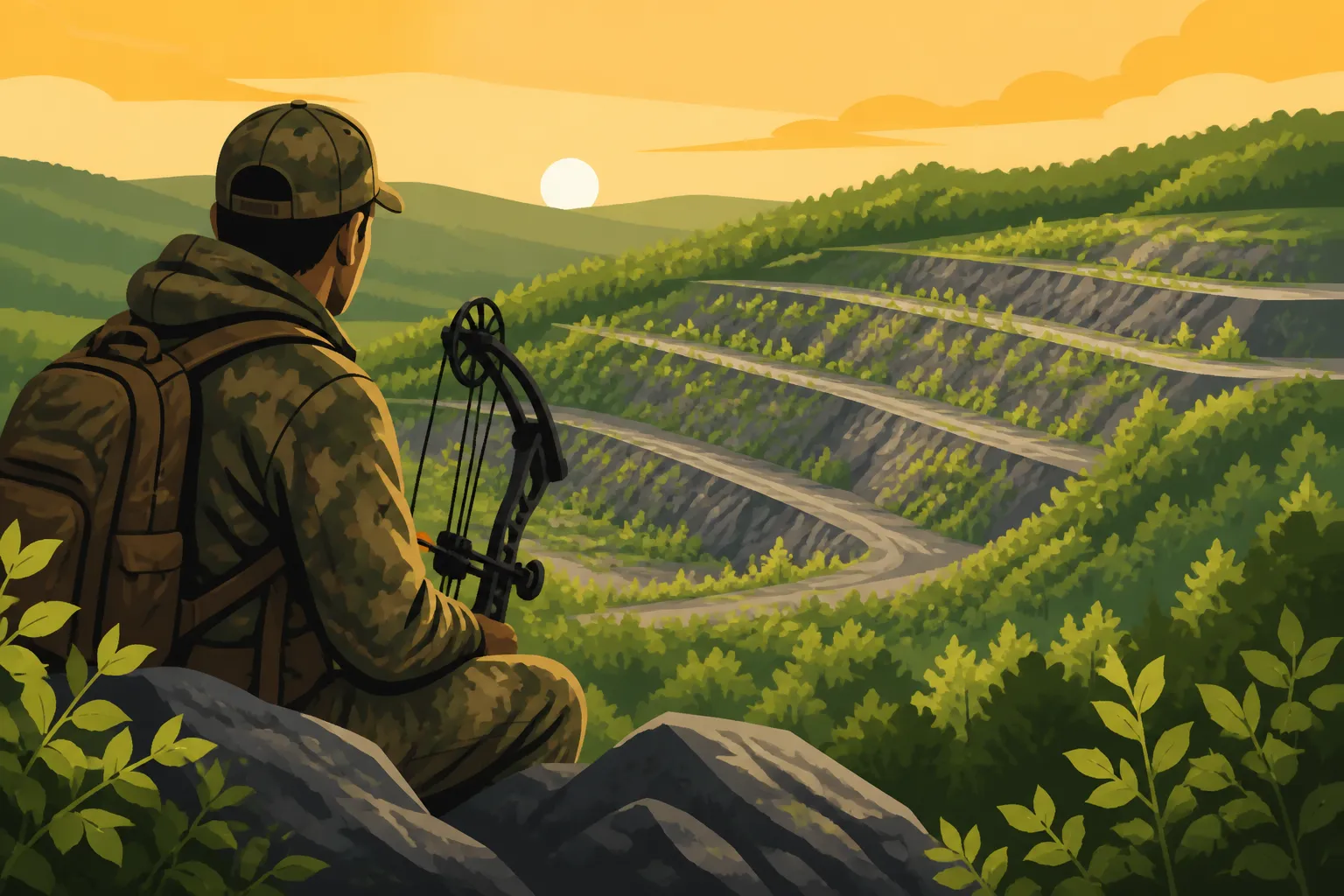
Imagine a landscape that was once a mountain, then carved open by massive machinery to extract coal. After the coal was removed, the land was "reclaimed." This involves backfilling and regrading the area to approximate the original contour, reseeding it with grasses, legumes, and often planting various native and non-native trees and shrubs. The result is a series of flat to gently rolling terraces, or "benches," often separated by steep slopes or old highwalls. These areas are quite distinct from the surrounding forest, typically featuring younger, successional vegetation, open fields, and unique water features. They might look barren or out of place, but for wildlife, they offer a mosaic of cover and food that's often irresistible.
One of the key things to grasp is that the reclamation process itself creates diverse microclimates and habitats. You'll find sections with dense brambles and briars, areas of thick, young pines, and open fields of clover or fescue. Water often collects in old settling ponds or low spots, creating wetlands that wouldn't typically exist on a natural mountainside. It's a patchwork, and it's this patchwork that makes them so attractive to wildlife seeking diverse resources.
Why Reclaimed Areas Attract West Virginia Wildlife
The very nature of these reclaimed benches creates a haven for wildlife. While a mature hardwood forest offers certain resources, it can be quite uniform. Reclaimed lands, on the other hand, offer "edge habitat" on a massive scale. Deer, turkeys, small game, and even bears thrive on edges – where two different habitat types meet. Think about it: an open field next to a thicket provides both food (in the field) and bedding/cover (in the thicket). These benches are essentially all edge.
For deer, the thick, regenerating vegetation on these benches provides incredibly dense cover, perfect for bedding and escaping pressure. The early successional plants, like blackberry, sumac, and young aspen, offer abundant browse that's often richer in nutrients than the older growth in surrounding forests. Turkeys find open areas for strutting and bugging, while the dense undergrowth provides excellent nesting and brooding cover for hens and poults. The small game, like rabbits and grouse, also thrive in these thick, brushy environments. Even black bears will frequent these areas, especially if there are berry bushes or soft mast trees that have taken root. It's a buffet and a fortress all rolled into one. The sheer variety often outcompetes the surrounding, more mature timberland, especially if those areas have been heavily hunted.
Scouting Reclaimed Surface Mine Benches Effectively
You can't just walk onto a reclaimed bench and expect to stumble upon game. These areas demand smart, thorough scouting. Because they are so different from traditional woods, your scouting approach needs to adapt.
Topographical Maps and Aerial Imagery for Initial Reconnaissance
Your best friend when starting your scouting journey on a reclaimed mine bench is a good mapping tool. Applications like GoHunt provide incredible satellite imagery and topographical overlays that are absolutely essential for understanding these landscapes before you even set foot on them. Forget trying to interpret contour lines on a standard topo map for a traditional mountain; here, you're looking for the distinct, man-made features.
What you're looking for:
- Bench Edges: These are the flat areas. Identify where they meet steeper slopes, old highwalls, or ravines. These edges are natural travel corridors.
- Vegetation Changes: Zoom in and look for different shades of green or brown. Lighter green often indicates open grassy areas or young growth, while darker, denser patches could be thickets of briars, pines, or larger shrubs. Pay attention to how these patches connect.
- Water Features: Old settling ponds, drainage ditches, or low-lying areas where water collects are critical. Water sources are magnets for all wildlife, especially in dry periods.
- Old Roads and Trails: Mining operations left a network of access roads. While some might be overgrown, others are still clear and serve as excellent travel routes for both game and hunters. These can also be perfect places to look for deer sign. You can often see these clearly on a satellite view and plan your entry routes.
- Connecting Habitat: How do these benches connect to surrounding mature timber, agricultural fields, or other habitat types? Wildlife often uses the benches for cover and food during the day, then retreats to more traditional cover at night or uses the benches as travel routes between larger feeding or bedding areas. This knowledge will inform your strategy for how West Virginia's season runs archery to December.
I find it incredibly helpful to spend hours on GoHunt, marking potential bedding areas (thick cover), feeding zones (open grassy areas, berry patches), and travel corridors (edges, old roads, funnels between thickets) before I ever step foot on the ground. This pre-scouting saves immense time and helps you pinpoint the most promising areas.
Reading Sign Unique to Reclaimed Habitats
Once you're on the ground, reading the sign takes on a slightly different flavor than in a typical forest. The softer, often loamy soil, and the different vegetation types mean that rubs, scrapes, and tracks might appear differently or be more concentrated in certain areas.
- Tracks and Trails: Look for well-worn game trails along the edges of benches, where dense cover meets open areas. Also, check around water sources. The ground on many benches is softer than hard-packed forest floor, so tracks can be more distinct.
- Rubs and Scrapes: While rubs in the big woods often target larger trees, on reclaimed benches, bucks will rub smaller saplings, sumac, or even dense briar stems. Scrapes will be found in more open areas or along the edges of clearings, often near transition lines where a field meets a thicket. These areas can be absolute hotspots for deer during the rut. Keep an eye out for scrape lines along a logging road – a common occurrence in these areas.
- Droppings and Beds: Deer beds are often found in the densest thickets – young pines, blackberry brambles, or even tall switchgrass. The key is finding areas that offer both concealment and a good vantage point for the deer to detect predators. Turkey droppings and scratch marks will be obvious in more open, feeding areas, especially where there's clover or seed-producing grasses.
- Food Sources: Actively identify the food sources wildlife is currently using. This could be soft mast like blackberries or raspberries (common in early successional habitats), clover, fescue, or even specific weeds that deer are browsing. If there are pockets of oaks that have been planted or regenerated, check for acorns. Finding late-season food sources for West Virginia whitetails is critical here, as the benches can retain forage longer than frost-killed fields elsewhere.
Strategic Hunting Approaches for Mine Benches
Hunting these unique areas requires a blend of traditional tactics and adaptations to the specific terrain. Don't go in expecting to hunt it like a typical mountain ridge or bottomland.
Stand and Blind Placement Considerations
Given the open nature of many reclaimed areas and the prevalence of thick cover, your choice of hunting setup is crucial.
- Treestands: While not always feasible due to limited mature trees, if you find a suitable tree along an edge or overlooking a natural funnel, a treestand can be highly effective. Focus on trees that offer good concealment within the canopy and a clear view of game trails, food plots, or bedding areas. Often, these stands will be lower than what you might use in mature timber. Consider using a mobile setup like a saddle or lightweight climbing sticks, as suitable trees might be few and far between, requiring you to be flexible.
- Ground Blinds: This is where ground blinds truly shine. The thick vegetation on reclaimed benches makes brushing in a blind on a field edge or within a dense thicket relatively easy. A well-placed ground blind offers excellent concealment, allows for movement, and can be critical for staying hidden in areas with limited vertical cover. Look for natural depressions, brush piles, or the edge of a pine plantation where you can tuck a blind away, providing both cover and a clear shot lane.
- Ambush Points: Focus your setup on pinch points, funnels, and transition areas. These might be narrow strips of cover between two open fields, a saddle between two benches, or where a game trail crosses an old haul road. Deer often use the "back side" of benches, where they drop down into hollows for quick escape or to access water.
Still-Hunting and Stalking Tactics
Still-hunting or stalking can be incredibly effective on reclaimed benches, especially when hunting the rut in mid-November. The rolling terrain and varied vegetation allow you to use the landscape for concealment and to slowly pick apart the habitat.
- Utilize Terrain Features: Use the contours of the benches, old spoil piles, or thickets to break up your silhouette. Move slowly, pausing frequently to glass ahead and listen. The wind and thermals on a steep ridge or bench edge are critical here, as thermals will often rise in the morning and fall in the evening, sometimes acting counter-intuitively compared to a natural valley.
- Walk the Edges: Focus on the edges where different habitat types meet. Deer often browse along these transition zones and use them as travel corridors. Work your way along the boundary of an open field and a dense thicket, or along an old road that parallels a section of thick cover.
- Wind and Scent Control: In open areas, scent control is paramount. Always hunt with the wind in your favor. On benches, swirling winds can be a real problem, so pay close attention to wind direction and topography. A slight change in elevation can cause the wind to swirl, especially in hollows or cuts within the benches.
- Spot and Stalk: In more open areas, particularly during the late season when vegetation is down, spot-and-stalk can be viable. Climb to a high vantage point overlooking a large section of bench, use good optics to glass for deer, and then plan a careful stalk using available cover. This works particularly well if you're trying to hunt into the late December archery close.
Deer Drives on Reclaimed Lands
Deer drives can be highly successful on reclaimed mine benches, especially on larger tracts with distinct features. The combination of dense cover and open lanes creates ideal conditions for pushing deer.
- Identify Natural Barriers: Look for features like steep highwalls, deep ravines, or major open fields that can act as natural barriers to funnel deer in specific directions. This allows standers to be placed strategically to intercept deer as they try to escape.
- Driver and Stander Placement: Drivers should move through the densest cover, pushing deer towards standers positioned along the edges of benches, old roads, or open areas. Communication is key, especially when you might have multiple thickets separated by open ground.
- Small Groups: Even deer drives with three or four hunters can be effective on these benches. One or two hunters push through a thicket, while others are positioned to catch deer slipping out. It's often about pushing small pockets of cover.
- Safety First: Always prioritize safety. Clearly communicate boundaries, stander locations, and safe shooting lanes. The undulating terrain and mixed vegetation can sometimes obscure lines of sight, so extreme caution is always necessary. Make sure everyone understands the rules, especially regarding shot placement on a West Virginia black bear if you happen to jump one during a drive, or a deer.
Game-Specific Tactics on Reclaimed Benches
While deer are a primary target, these areas offer opportunities for a variety of game. Adapting your tactics to each species will increase your success.
Whitetail Deer Strategies
For West Virginia whitetails, reclaimed benches offer crucial elements: food, cover, and travel routes.
- Bedding Areas: The densest thickets, often comprised of blackberry, multiflora rose, or young pines, are prime bedding areas. These provide unparalleled security. During scouting, look for well-used trails leading into these areas and beds within them. Hunting these thickets directly can be tough, so focus on the trails leading in and out, or the edges of the cover.
- Feeding Zones: Open grassy areas, especially those reseeded with clover or other legumes, are major feeding zones. Edge habitat where thick cover meets these fields is a hotspot, especially during dawn and dusk. Areas with abundant soft mast (like blackberries or sumac) are also critical. Deer will also browse on young saplings and regenerating woody growth.
- Travel Corridors: Deer will use the flat bench tops, old haul roads, and the transitions between thickets and open ground as travel routes. Funnels created by changes in elevation or converging strips of cover are also key. These are ideal ambush points. Don't forget that deer will often work a creek bottom for late-season deer, even if it's a small one.
- Hunting the Rut: During the rut, bucks will cruise these benches, checking thickets for does. Rattling and grunting in West Virginia can be very effective in these more open areas, allowing the sound to carry. Set up near dense cover, allowing you to visually scan for approaching bucks.
Wild Turkey Tactics
Wild turkeys, especially gobblers in the spring, can be found frequently on reclaimed benches, using them for strutting, feeding, and nesting.
- Spring Gobblers: Open, flat areas on the benches are ideal strutting zones. Gobblers will often fly down from roost trees in surrounding timber and head straight for these openings. Setting up against a big oak or other cover with a clear view of these open areas, using a decoy spread for pressured West Virginia birds, can be deadly. Learn to roost hunt West Virginia gobblers from adjacent timber and call them into the bench.
- Fall Turkeys: During the fall, flocks will utilize the benches for foraging, especially if there are good mast crops or abundant insects. Breaking up a fall turkey flock and then calling the scattered birds back together can be a very effective tactic. The varied terrain and cover on benches can be perfect for this.
- Nesting and Brooding: The thick, low-lying vegetation provides excellent nesting cover for hens and poults. Look for sign around these dense areas.
Small Game and Predator Opportunities
Don't overlook the other hunting opportunities these benches provide.
- Rabbits and Grouse: The dense briar patches, young pines, and brushy cover are perfect for rabbits and ruffed grouse. Flushing grouse without a dog can be challenging but rewarding. Focus on the thickest parts of the bench, especially near old logging roads or clear-cut regrowth edge.
- Coyotes: Coyotes are opportunists and will frequent these areas to hunt the abundant small game, deer fawns, and even sick or injured deer. Predator calling West Virginia ridgelines (or bench edges) at dusk or dawn can draw them in. The open nature of many benches allows for long-range calling setups.
Safety, Access, and Ethical Considerations
Hunting reclaimed mine benches comes with its own set of practical challenges and ethical considerations.
Navigating the Unique Terrain
These areas are not always easy to navigate. Be prepared for:
- Steep Slopes and Highwalls: While benches are flat, they are often bordered by very steep slopes or sheer highwalls that were part of the mining operation. Always be aware of your surroundings, especially when hunting above the fog line in the mountains, as visibility can change quickly. A fall from a highwall can be deadly.
- Overgrown Roads and Trails: While some old mining roads are well-maintained, many are overgrown with thick vegetation, making travel difficult. A good map (like GoHunt's) showing these old roads is invaluable.
- Water Obstacles: Old settling ponds, flooded ditches, or muddy areas can be encountered. Be prepared for wet conditions, especially when working a gas well pad clearing for deer which might have drainage issues.
- Uneven Ground: Even on the "flat" benches, the ground can be uneven, with hidden holes, old culverts, or rock piles. Watch your step, especially when blood trailing after dark in West Virginia.
Property Ownership and Access
Reclaimed mine lands can have complex ownership structures. Some are public lands (e.g., part of a WMA or state forest), while others are privately owned, either by timber companies, energy companies, or private individuals.
- Verify Public Access: Always verify if the specific bench you want to hunt is public land or if you have permission to hunt private land. The Go Wild West Virginia app or website can help with this. Finding ground others walk past often means double-checking these access points.
- Private Land Permission: If it's private land, you absolutely need to obtain permission. Knocking on doors in Eastern Panhandle farm country or calling land management companies is crucial. Do not assume access. West Virginia's trespass law requires written permission for private land hunting unless specific signage says otherwise.
- Respect Boundaries: Clearly understanding property lines is critical. Use mapping tools to mark boundaries and respect them. Hunting a clear-cut regrowth edge might inadvertently lead you onto private ground if you're not careful.
Environmental and Ethical Considerations
- Lead vs. Non-Toxic Shot: Be aware of any regulations regarding lead shot, especially near water sources or in specific wildlife management areas that may be experimenting with non-toxic options.
- Leave No Trace: Practice strict "leave no trace" principles. Pack out all trash, including spent shell casings and anything else you brought in. These areas are still recovering, and keeping them clean helps their ecological health.
- CWD Concerns: If hunting in a Chronic Wasting Disease (CWD) containment area, be aware of carcass movement restrictions and mandatory testing requirements. West Virginia's Chronic Wasting Disease Counties are expanding, and understanding how to handle venison from a CWD containment area is vital.
By approaching reclaimed surface mine benches with respect, thorough preparation, and the right tactics, you can unlock some truly unique and rewarding hunting experiences in West Virginia. These aren't easy places, but for the hunter willing to put in the work, they can be incredibly productive.
Disclaimer
Hunting carries inherent risks, including but not limited to injury or death. Always prioritize safety, understand and follow all West Virginia hunting regulations, and obtain appropriate licenses and permissions. The information provided in this guide is for informational purposes only and should not replace professional advice, hunter education, or personal judgment. Be aware of local conditions, weather, and your own physical limitations.