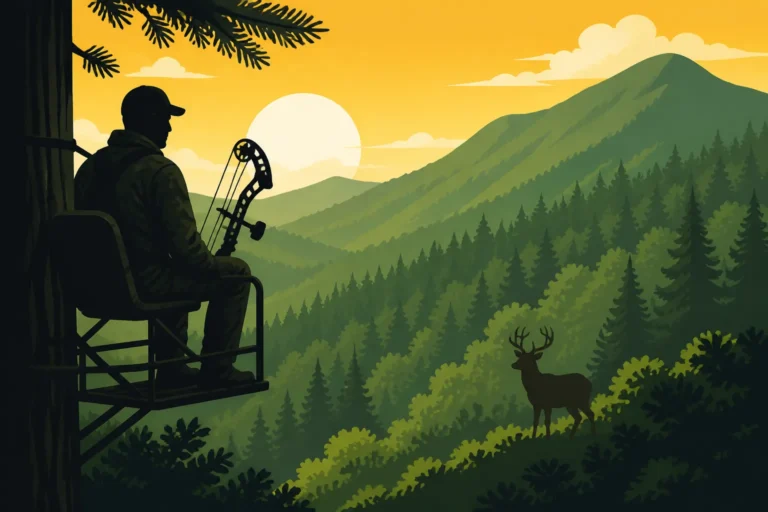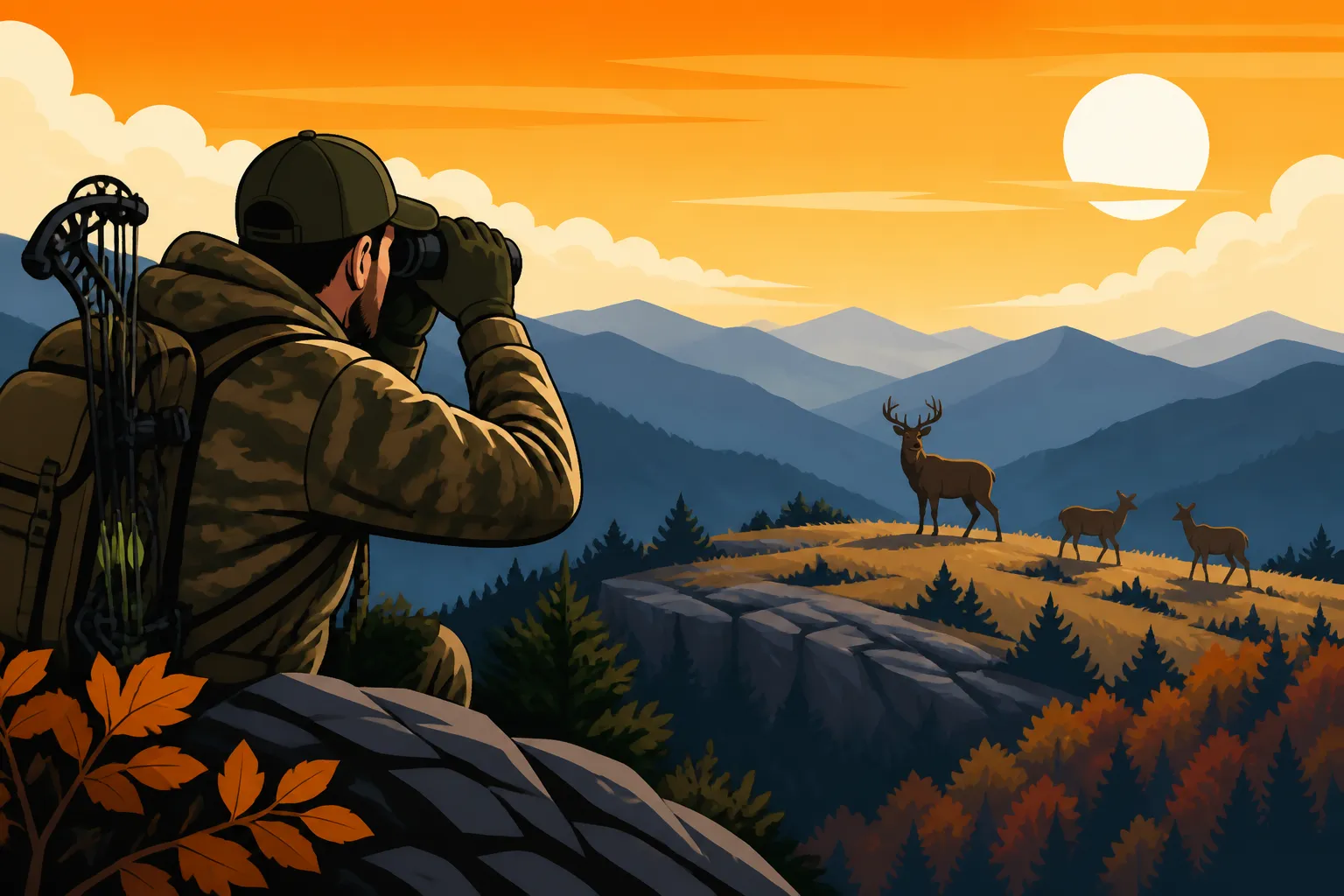
Hunting a High Elevation Mountain Bench
Hunting high elevation mountain benches in West Virginia can feel like searching for a needle in a haystack, especially when you're staring at an endless sea of hardwoods and steep terrain. Many hunters overlook these subtle features, or they just don't know how to effectively scout and hunt them, leading to frustrating days without seeing much more than squirrels. This guide is here to change that, breaking down exactly how to locate, interpret, and successfully hunt these often-overlooked hotspots where mature whitetails love to roam.
Understanding High Elevation Mountain Benches
When you're slogging up a steep West Virginia mountain, it's easy to just focus on getting to the top or scanning the dense hollows below. But tucked away on those slopes are subtle, often flat or gently sloped areas known as benches. These aren't always obvious on every map, and they certainly don't scream "deer highway" to the untrained eye, but for a savvy hunter, they're gold.
What Exactly Is a Mountain Bench?
Picture a staircase carved into the side of a mountain. A mountain bench is essentially one of those "steps" – a relatively flat or gently sloping piece of terrain that interrupts the otherwise steep incline of a mountainside. They can vary wildly in size, from a small, football-field-sized plateau to a narrow, barely discernible shelf just wide enough for a deer trail. These benches are typically formed by erosion, ancient geological shifts, or even varying rock strata that resist weathering differently. They often appear as a distinct break in the contour lines on a topographical map, looking like a "level" spot on a steep slope. What makes them so special is this sudden change in topography; it creates a natural travel corridor and often holds different types of vegetation than the surrounding steep ground. You'll find these gems nestled into the Allegheny Mountains, throughout the Monongahela National Forest, and across other mountainous regions of the state.
Why Deer Use High Benches
Deer, especially mature bucks, are masters of efficiency and security. High elevation mountain benches provide both in spades. First off, they're usually less frequented by human activity than valley bottoms or easily accessible ridgetops, offering a crucial sense of security. Deer can move along these benches with less effort than climbing straight up or down a steep hill, making them natural travel routes from bedding areas to feeding grounds.
These benches often catch specific thermal currents, providing comfortable bedding locations. In colder weather, a bench on a south-facing slope might get more sun, offering warmth. In early season or during warmer spells, a north-facing bench might provide cooler relief. They also act as incredible funnels. Deer moving from one ridge to another, or from a thicket down to a water source, will often hit a bench and follow it rather than navigating the tougher, more exposed steep ground. Furthermore, benches can boast unique microclimates and soil compositions, leading to different vegetation, including important mast crops like acorns or soft mast, creating secluded feeding opportunities. For more on where bucks prefer to bed, check out our guide on Where Monongahela Forest Bucks Bed.
Identifying Productive Bench Features
Not all benches are created equal, and knowing what to look for can save you a lot of wasted time. The most productive benches often have specific features that concentrate deer activity. Look for benches that connect two distinct habitat types, like a thick laurel patch to an oak flat. These transition zones are always high-traffic areas.
Saddles within a bench are another prime spot. A saddle is a low point along a ridge or bench between two higher points, creating an easy crossing for deer. Points or fingers jutting out from a bench are also excellent, as deer often use these as lookout spots or staging areas before moving into more open terrain. Water sources, even small seeps or temporary puddles, found on or near a bench, will draw deer in like a magnet. Finally, look for benches that are punctuated by thick cover – downed timber, brush piles, or dense evergreens. These offer immediate escape cover and security, making deer feel safe to linger and travel.
Scouting Strategies for High Elevation Benches
You can't effectively hunt what you haven't scouted. This rings especially true for mountain benches, which require a keen eye and often a lot of legwork. Combining digital scouting with boots-on-the-ground reconnaissance is the winning formula.
Pre-Season Digital Scouting
Before you even lace up your boots, your best friend is a good mapping application like GoHunt. Start by pulling up detailed topographical maps of your hunting area. Look for those subtle flat spots or changes in contour lines on steep slopes – those are your potential benches. Pay close attention to how these benches connect to other terrain features: do they lead to a major food source in a valley? Do they run along a steep drop-off, making a natural barrier on one side? Are there saddles or distinct points along the bench?
Use the aerial imagery to identify different timber types. Are there oak stands or beech trees visible on or above the bench? Are there areas of dense cover like hemlock thickets or old clear-cuts that might serve as bedding? Trace potential travel corridors on these maps. Look for where a bench might narrow into a funnel or where it meets a ridgetop or a creek bottom. Mark these promising spots as waypoints. This digital reconnaissance is crucial for narrowing down the vastness of mountain terrain, making your in-person scouting much more efficient. For more comprehensive tips on preparing, check out Scouting West Virginia Public Land Before Season.
Boots-on-the-Ground Reconnaissance
Once you have your digital waypoints, it’s time to hit the woods. This is where you confirm your theories and uncover the subtle details that maps can't show. When you're on a bench, walk it slowly and methodically. Look for physical sign: fresh tracks, rubs, and scrapes. Rubs will tell you a buck's general travel direction and whether he's using the bench regularly. Scrapes, especially active ones, are clear indicators that a buck is marking his territory there. Look for deer droppings to gauge the frequency of use and potentially even diet.
Follow deer trails as far as you can. Do they lead to bedding areas? Water sources? Other benches or feeding spots? Pay attention to the subtle terrain changes you might have missed on a map. A small rock outcropping, a cluster of thick pines, or a slight dip can all create an ambush point. Don't be afraid to go off the established trails, as mature bucks often skirt the main routes. Remember, a bench is often a transitional area, so look for sign that suggests deer are actively moving through, not just occasionally passing by.
Reading Wind and Thermals
In the mountains, wind and thermals are your constant companions and, if misunderstood, your worst enemy. On high elevation benches, these air currents behave uniquely. As the sun rises and warms the earth, thermals tend to lift warm air up the mountain. In the evening, as the air cools, thermals reverse, pulling cool air down the mountain into the hollows.
However, benches can disrupt these predictable patterns. A bench can create a "thermal eddy" where air swirls, or it can funnel air in unexpected directions. Always carry a wind checker, like a small bottle of unscented powder, and use it frequently. Pay attention to how the terrain affects the wind. A point or a thick stand of timber on a bench might redirect the breeze. Your goal is to understand these dynamics well enough to set up a stand or plan a stalk where your scent is carried away from where you expect deer to approach. This understanding is critical; a slight shift in wind can blow your cover, literally. Our article on Wind and Thermals on a Steep Ridge provides even more detail on this vital skill.
Hunting Tactics for Mountain Benches
Once you've done your homework, it's time to put a plan into action. Hunting high elevation benches requires patience, stealth, and adaptability.
Stand Placement and Access Routes
Choosing the right stand location on a mountain bench is paramount. First, consider your access route. You need a way to get to and from your stand without alerting deer that are already on the bench or nearby. Often, this means circling wide, using natural terrain features like creek bottoms or secondary ridges, or approaching from above and dropping down quietly. Never walk directly through the area you intend to hunt.
When picking your tree, look for one that offers good cover from multiple angles, but also gives you clear shooting lanes along the most prominent deer trails and funnels you identified during scouting. Think about prevailing winds and thermals. If you expect deer to be moving up the bench in the morning, set up on the downwind side of their expected travel. If they're coming down in the evening, adjust accordingly. Don't be afraid to hang multiple stands in a productive area if the terrain dictates different wind directions for different times of day. Consider both traditional treestands and even mobile saddle hunting setups for increased flexibility. For more on stand strategy, read Treestand Setups in Monongahela National Forest.
Still-Hunting and Stalking Approaches
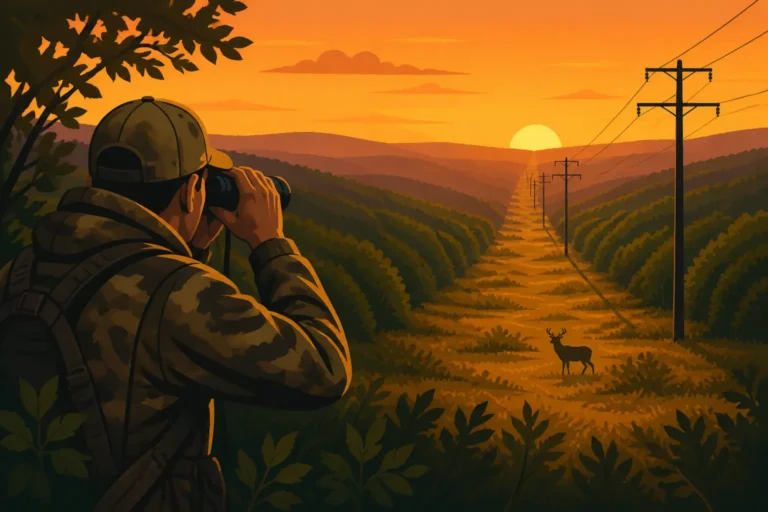
Sometimes, a static stand isn't the best option, especially if you're trying to cover a long, winding bench or if deer patterns are unpredictable. This is where still-hunting or stalking comes into play. Still-hunting on a bench means moving incredibly slowly, taking only a few steps at a time, then pausing to glass and listen for several minutes before moving again. Use binoculars to pick apart every piece of cover, looking for a flick of an ear or the horizontal line of a deer's back in a vertical forest.
When stalking, use the terrain to your advantage. Move from one piece of cover to the next, using trees, rocks, and dips to conceal your movement. Always be aware of the wind, even when moving slowly. Stalking is especially effective when you've located a bedding area on a bench and want to try and slip in on a bedded buck. This requires absolute quiet, often taking hours to cover a few hundred yards. Success hinges on patience, observation, and an intimate knowledge of how deer use that specific bench.
Calling Strategies on Benches
While mountain hunting might not conjure images of aggressive calling like open country, selective calling can absolutely be effective on high elevation benches. During the rut, rattling and grunting can draw a curious buck in, especially if he's cruising the bench looking for does. The acoustics on a bench can be tricky; sometimes sounds carry far, other times they get muffled by thick timber or terrain features. Start softly and gauge the response.
Fawn bleats or doe grunts can also be effective, especially during the early season or post-rut, to entice a deer that might be feeding or traveling along the bench. The key is subtlety and realism. You're not trying to call a deer from a mile away; you're trying to pique the interest of a deer already in the vicinity, perhaps just out of sight in a thicket. Using calls in conjunction with careful observation and being ready for a quick shot is crucial. For deeper insight into vocalizations, refer to Rattling and Grunting in West Virginia.
Essential Gear and Safety Considerations
Hunting West Virginia's high country is physically demanding and often takes you far from easy access. Having the right gear and a safety-first mindset is non-negotiable.
Gear for Mountain Hunting
- Layered Clothing: The weather in the mountains can change on a dime. Start with a moisture-wicking base layer, add insulating layers, and top it off with a waterproof/windproof outer shell. Wool or synthetic materials are your best bet.
- Boots: Quality, broken-in hiking boots with excellent ankle support and good traction are vital for navigating steep, uneven terrain. Waterproofing is a must. Check out Boots for West Virginia Hollows and Ridges for specific recommendations.
- Navigation: Don't rely solely on your phone. Carry a GPS unit or a dedicated app like GoHunt with offline maps, along with a compass and physical map as a backup. Batteries die, and cell service is often non-existent.
- Optics: Good binoculars (8×42 or 10×42) are essential for picking apart distant cover or identifying subtle movements. A rangefinder will help confirm shot distances in varied terrain.
- Pack: A comfortable daypack is crucial to carry your essentials: water, snacks, extra layers, first-aid kit, game processing tools, and safety gear. Consider a larger frame pack if you anticipate boning out an animal. See Packs for a Monongahela Forest Day Hunt for guidance.
- Headlamp: You'll likely be hiking in before dawn and out after dark. A reliable headlamp with extra batteries is a lifesaver.
- Game Processing Tools: Sharp knife, bone saw (optional), game bags, and cordage. If hunting early season, a small cooler might be needed for the trip out.
Safety in Remote Mountain Terrain
The beauty of West Virginia's mountains comes with inherent risks. Being prepared can mean the difference between a successful hunt and a dangerous situation.
- Tell Someone Your Plan: Always let a non-hunter know exactly where you're going, your planned route, and when you expect to return.
- First-Aid Kit: A comprehensive first-aid kit is essential. You're often hours from help, so be prepared for cuts, sprains, and other common injuries. Our article on First Aid Kits for Remote Highlands Ground has a good checklist.
- Water and Food: Carry more water than you think you'll need, along with high-energy snacks. Dehydration and bonking are real risks on strenuous mountain hunts.
- Weather Awareness: Check the forecast, but be prepared for sudden changes. A sunny morning can turn into a cold, driving rain or even snow very quickly in the high elevations.
- Hunting Buddy: Whenever possible, hunt with a partner, especially in remote areas. If an accident occurs, having someone there can be critical.
- Fire Starter: Always carry waterproof matches, a lighter, or a ferro rod. An emergency fire can provide warmth and a signal if you get lost or stranded.
By understanding the terrain, diligently scouting, employing smart tactics, and prioritizing safety, those challenging West Virginia mountain benches can become some of your most rewarding hunting grounds.
Key Features of Productive Mountain Benches
Here's a quick overview of what makes a mountain bench a prime hunting location:
| Feature | Why It's Productive | What to Look For |
|---|---|---|
| Relatively Flat Terrain | Easier for deer movement, conserves energy | Breaks in steep contour lines on topo maps |
| Connecting Corridors | Links different habitats, common travel routes | Benches running between ridges, hollows, or food sources |
| Thick Cover | Offers security, bedding, and escape routes | Laurel thickets, downed timber, pine stands |
| Mast Production | Primary food source, especially acorns | Oak, beech, or hickory trees, fresh cuttings |
| Saddles/Points | Natural funnels and observation points | Dips in elevation along the bench, fingers of land |
| Water Sources | Essential for all wildlife, draws deer | Seeps, springs, small puddles, damp soil |
| Thermal Advantage | Provides comfort from heat or cold | South-facing benches for warmth, north for cool |
Disclaimer
Hunting involves inherent risks, and conditions in West Virginia's mountains can be unpredictable. This guide provides general information and recommendations, but individual situations and safety should always take precedence. Adhere to all West Virginia Department of Natural Resources regulations and local laws. Always prioritize safety, responsible hunting practices, and ethical conduct in the field.