Rattling and Grunting in West Virginia
Oh, the age-old question for West Virginia deer hunters: how do you get those elusive mountain whitetails to show themselves, especially when they're tight-lipped and hunkered down in the thick stuff? Many of us have spent countless hours in a stand, only to see the same few does or yearlings. Rattling and grunting, when done correctly, can be a game-changer, breaking the silence and challenging a buck to reveal himself, and this guide is all about helping you master these vocalizations and antler clashes in our challenging Mountain State terrain.
Decoding the Language of West Virginia Whitetails
Understanding why and when deer make certain sounds is the first step to effectively using rattling and grunting calls. It’s not just about making noise; it’s about speaking their language, mimicking scenarios that naturally pique their curiosity or challenge their dominance. Our West Virginia deer, particularly those savvy old bucks, are highly attuned to these subtle cues, especially during the breeding season.
The Rut's Pivotal Role in Deer Vocalizations
When we talk about rattling and grunting, we're really talking about the rut. This is the period when deer activity surges, and bucks are most inclined to respond to simulated challenges or the allure of a receptive doe. In West Virginia, the peak rut often falls around the second and third weeks of November, though pre-rut activity can start as early as late October, and post-rut activity can extend into December. During this critical window, a buck's primary instincts are breeding and establishing dominance, making him more susceptible to the sounds of other deer. He’s looking for a fight, or he’s looking for love, and your calling can simulate either scenario.
It's crucial to remember that the rut isn't a flip of a switch; it's a progression. Early in the pre-rut, bucks might be more curious and less aggressive, investigating sounds from a distance. As the rut heats up, their aggression spikes, and they're more likely to charge in, looking to confront a rival or court a doe. Post-rut, when most does have been bred, bucks might still respond but often with less intensity, perhaps looking for the last remaining unbred doe or still defending their territory. Understanding these phases is key to knowing what kind of call to make and how aggressively to make it.
Interpreting the Sounds of Deer
Deer have a surprisingly diverse vocabulary, and recognizing these different sounds is essential for effective calling. Beyond the grunts and rattles we'll focus on, deer communicate through snorts, wheezes, bleats, and even stomps. A snort-wheeze, for instance, is a clear sign of an aggressive, challenging buck, often a precursor to a fight. Hearing this in the woods means a dominant buck is nearby and likely agitated. Likewise, a fawn bleat signifies distress, often drawing in protective does and sometimes curious bucks.
The most common sounds for a hunter to mimic are various grunts and the sounds of antlers clashing. A short, guttural grunt is often a "trailing grunt" made by a buck actively pursuing a doe. A louder, more assertive grunt can signal a buck asserting his presence or challenging another. Doe bleats, especially estrous bleats, are designed to attract bucks. The more you immerse yourself in the actual sounds deer make in the wild—whether through observation or high-quality audio recordings—the better you'll become at discerning and replicating these nuanced vocalizations. This deep understanding, much like learning to accurately identify different types of sign in big timber, gives you a significant edge.
The Art of Rattling for West Virginia Bucks
Rattling is perhaps the most exciting and intimidating form of deer calling. The idea of simulating a full-blown buck fight right there in the woods is thrilling, but it needs to be executed properly, especially in West Virginia's diverse and often rugged terrain. A well-executed rattling sequence can pull a buck from hundreds of yards away, while a poorly timed or unnatural one might send him running for the hills.
Choosing Your Rattling Antlers
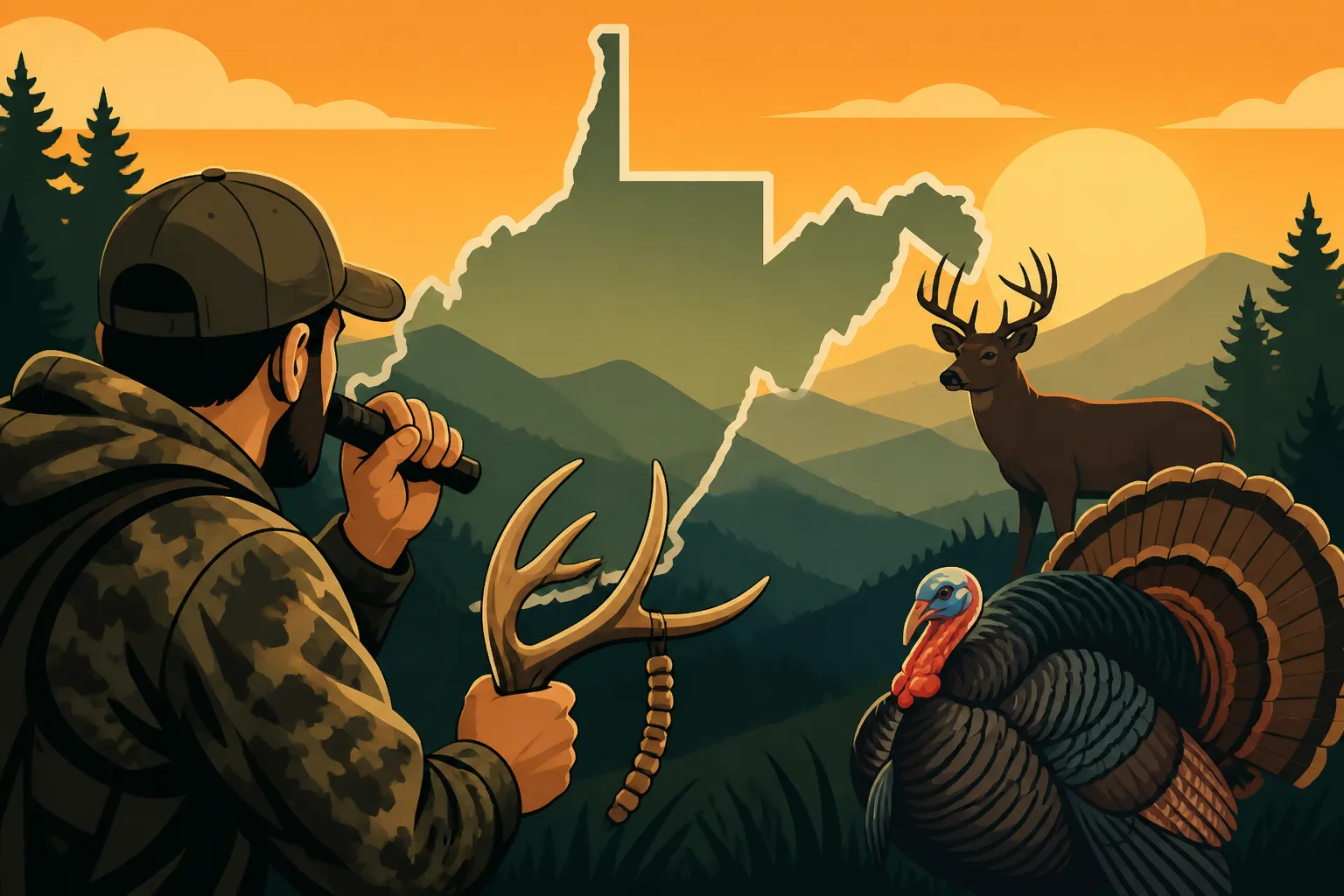
When it comes to rattling, your "weapon of choice" can make a difference. Many hunters opt for actual shed antlers from whitetails, and for good reason—they produce the most authentic sound. Ideally, you want a pair of antlers with decent mass and tines, perhaps from a 1.5 to 2.5-year-old buck, as this simulates a fight between two respectable, but not necessarily trophy, bucks. Remember, most fights aren't between two Boone and Crockett giants. The sound should carry, but not be overly heavy or clunky. If you're using real sheds, make sure they're not too brittle; a good, solid clash is what you're after.
For convenience, especially if you're hiking into remote areas of the Monongahela National Forest, many companies offer synthetic rattling bags or compact rattle calls like those from RattleBag or Rattling Forks. These are great for reducing bulk and noise while walking, and can still produce a surprisingly realistic sound. Some, like the "Rattling Primos Can," are even designed for one-handed operation. The key is to practice with whatever you choose until you can produce varied sounds—from light sparring to an all-out brawl—convincingly. It's not just about banging them together; it's about making them sound like two deer are genuinely engaged in a struggle for dominance.
Simulating a Buck Fight
The real trick to rattling is making it sound authentic. Most deer fights aren't continuous, loud banging. They start with some light sparring, testing each other out, then escalate to more intense clashing, pushing, and shoving, often punctuated by grunts. A good rattling sequence should mimic this progression. Start with a minute or two of light sparring—gentle clashing and rubbing the antlers together, almost like two bucks pushing heads. Follow this with a few minutes of silence, listening intently for any deer approaching.
Then, ramp it up. Bring the antlers together with more force, thrashing them around, raking nearby brush, and really making it sound like a tussle. Incorporate a few aggressive grunts during this phase. This louder, more violent sequence should last about 30 seconds to a minute. After this intense burst, go completely silent for at least 5 to 10 minutes, maybe even longer, scanning all around you. Bucks, especially older ones, are often cautious and will circle downwind to get a scent before committing. They might approach very quietly, so patience and keen observation are critical. Repeating this sequence every 20-30 minutes, or once an hour, depending on the response, can be effective. Your ability to gauge the natural rhythm of a fight and then listen for faint footsteps or the snap of a twig can be the difference between success and a silent walk back to the truck.
Mastering Grunt Calls and Their Nuances
Grunt calls are arguably the most versatile and widely used deer vocalization tool. Unlike rattling, which is best reserved for specific times of the year, grunts can be effective throughout much of the season, from early archery all the way through the late December lull. The key, however, lies in understanding the different types of grunts and using them appropriately to communicate the right message.
Types of Grunts and What They Mean
Deer communicate a lot through various grunts, and mastering these nuances can significantly improve your success. The most common is the contact grunt, a short, soft sound bucks make while moving through the woods, almost like they're announcing their presence or looking for other deer. This is a great, non-threatening call to use periodically, especially when still-hunting Cranberry WMA ridges or moving through thick cover, to let deer know there’s another deer in the area.
Then there's the trailing grunt, a slightly longer, often more guttural grunt that bucks make when actively pursuing a doe. This indicates high interest and can be a powerful attractant for other bucks looking for a hot doe. During the peak of the rut, mimicking this call can often draw in a curious or challenging buck. Finally, the aggressive grunt or challenge grunt is a louder, more assertive sound, sometimes coupled with a snort-wheeze. This is a clear message of dominance and can provoke a fight. It's best used during the peak rut when bucks are feeling their oats and are ready to confront rivals. Using this call, especially in combination with rattling, can sometimes bring a buck charging in from surprisingly far distances. However, overdoing it, or using it too early in the season, can spook deer rather than attract them.
Incorporating Fawn and Doe Bleats
While grunts are primarily associated with bucks, fawn and doe bleats are incredibly effective calls to add to your repertoire. A fawn bleat, often a plaintive, drawn-out sound, is a universal distress call. It signals vulnerability and can often draw in does looking to protect their young, and sometimes even bucks who are curious about the commotion or might be looking for a doe accompanying the fawn. This call can be particularly effective during the early archery season, when does are still highly protective of their fawns.
Doe bleats, especially an estrous bleat or mating bleat, are designed specifically to attract bucks. This is a soft, nasal, drawn-out bleat that simulates a doe ready to breed. During the pre-rut and peak rut, this call can be incredibly effective, signaling to bucks that there's a receptive doe nearby. Many hunters use a "can" call (such as those from Primos or Quaker Boy) to produce these bleats, as they are relatively easy to use and sound very authentic. Some hunters will combine a series of short doe bleats with a trailing grunt to create a scenario of a buck pursuing a hot doe, adding another layer of realism to their calling sequence. Remember, every sound tells a story, and the more compelling your story, the better your chances of bringing a deer into range.
Combining Calls for Maximum Effect in West Virginia
Calling deer effectively in West Virginia often means more than just making a single sound. It's about orchestrating a symphony of deer vocalizations and actions that paint a convincing picture for any nearby whitetails. The varied terrain, from steep Allegheny ridges to dense laurel thickets, demands a dynamic approach to calling, where you might need to adjust your volume and strategy based on your location and the deer's behavior.
Integrating Grunts with Rattling Sequences
The most powerful calling strategy, especially during the rut, is often the combination of grunts and rattling. Imagine a dominant buck finding a receptive doe, only to be challenged by another buck. That's the story you're trying to tell. Start your sequence with some light rattling, simulating initial sparring. As the fight escalates, add some aggressive grunts, particularly the deeper, guttural challenge grunts. This makes the scenario much more believable, suggesting an actual confrontation is unfolding.
After an intense rattling sequence, when you go silent, it's a good time to throw in a few soft trailing grunts. This can make it sound like one of the "bucks" from the fight is now pursuing the doe, or perhaps just moving away, adding curiosity for a buck that hung up just out of sight. A single, soft estrous bleat before or after a grunt and rattle sequence can also sweeten the deal, indicating a receptive doe is indeed the prize. The key is to blend these calls naturally, avoiding a machine-gun approach. A good rule of thumb is to listen, then call, then listen again. Sometimes, less is more, but when you do call, make it count. Don't be afraid to experiment with rattling volume in thick laurel cover or adjusting your grunt calls in mature West Virginia timber; the habitat often dictates how far and how clearly your calls will carry.
The Role of Decoys in Calling Setups
While this article primarily focuses on vocalizations, it's worth noting how effectively decoys can complement your rattling and grunting efforts. A visual cue combined with auditory signals creates an irresistible illusion for many bucks. Imagine a buck hearing intense rattling and grunting, then catching a glimpse of a rival buck decoy, or even better, a doe decoy with a buck decoy locked in a mock fight. This visual confirmation can often be the final nudge a wary buck needs to commit.
When using decoys with calling, always set your decoy upwind or crosswind from your position, ensuring any approaching buck will come into your shooting lane as he circles downwind to scent-check the "deer." A common and effective setup is a buck decoy facing away from you, as if challenging your calls, or a doe decoy positioned naturally. Just be mindful of local regulations on decoys and ensure they are clearly visible and safe to use, especially on heavily trafficked public lands. For those hunting the Eastern Panhandle farmland deer, a well-placed decoy in an open field can be especially effective when paired with aggressive calling sequences.
| Call Type | Sound Description | Primary Purpose (Message) | Best Time to Use |
|---|---|---|---|
| Rattling | Antlers clashing, thrashing brush | Two bucks fighting for dominance or a receptive doe | Peak rut (late October to mid-November) |
| Contact Grunt | Short, soft, guttural "errrp" | "I'm here," "Where are you?" | Throughout season, especially when still-hunting |
| Trailing Grunt | Longer, deeper, guttural "errrrrrp" | Buck actively pursuing a hot doe | Pre-rut and peak rut |
| Aggressive Grunt | Loud, sharp "OINNNNNK!" (sometimes with wheeze) | Challenge, dominance assertion | Peak rut, when bucks are highly aggressive |
| Fawn Bleat | High-pitched, drawn-out "Maaaaah!" | Distress, lost fawn | Early season (September/October), can attract does and bucks |
| Doe Bleat (Estrous) | Soft, nasal, drawn-out "Maaaaah-waaaah" | Receptive doe seeking a buck | Pre-rut and peak rut |
| Snort-Wheeze | Exhalation through nose, followed by wheeze | Aggression, warning, challenge (often done by dominant bucks) | Peak rut (best if mimicking this after hearing one) |
Timing and Environmental Considerations
Even the best calling sequence can fall flat if the timing isn't right or if environmental factors are working against you. West Virginia's weather and topography play huge roles in how deer react, and ignoring these elements can lead to frustration. Understanding how to adapt your approach to the conditions is just as important as knowing how to make the right sounds.
Best Time of Year and Day for Calling
As discussed, the rut is prime time for rattling and aggressive grunting. For West Virginia, this typically means late October through mid-November, with peak activity often falling in the second and third weeks of November. However, the pre-rut, when bucks are beginning to search for does, can also be productive for curiosity-based calls. During the late season, after the primary rut has passed, a few desperate bucks might still respond to a doe bleat or a light grunt, looking for unbred does.
The time of day is equally critical. Early mornings and late evenings are generally the most active times for deer movement, and therefore, the best times to call. Bucks are often on their feet, searching, and more likely to respond. Around mid-day, especially during the peak rut, bucks might still be active, checking scrapes or dogging does, making midday calling sessions surprisingly effective. A common strategy when hunting the rut in mid-November is to set up well before daylight, call aggressively for the first hour or two, take a break to listen, then repeat. For optimal results, check your hunting app like GoHunt for specific rutting activity in your area, as local conditions can vary.
Wind and Thermals in Mountain Terrain
West Virginia's mountainous terrain presents unique challenges, especially when it comes to wind and thermals. Deer, with their incredible sense of smell, will almost always try to approach from downwind to get a scent of whatever is making noise. If you're rattling aggressively, a buck will often circle downwind, often moving quietly and out of sight, before presenting himself. This is why understanding wind and thermals on a steep ridge is paramount.
When calling, always consider your setup relative to the prevailing wind. Try to position yourself so that any buck circling downwind will pass through a clear shooting lane before he gets your scent. In mountain hollows, thermals can be tricky. In the morning, cold air sinks, causing thermals to pull down into the valleys. As the sun rises and warms the earth, thermals reverse and start to climb uphill. This means your scent cone will shift throughout the day. A savvy hunter will use these thermal shifts to their advantage, planning calling sequences for times when their scent is least likely to carry directly to an approaching deer, or setting up to intercept a buck as he uses these natural air currents to check for danger. This might mean adjusting your location, even slightly, throughout your hunting session.
Overcoming Common Calling Challenges
Even with perfect timing and ideal conditions, deer calling isn't always a guaranteed success. West Virginia deer are notorious for being wary, especially on public land. Learning from common mistakes and adapting your strategy can turn frustrating experiences into valuable lessons, ultimately making you a more effective caller.
Avoiding Over-Calling and Unnatural Sequences
One of the biggest mistakes hunters make is over-calling. It's easy to get excited and blast away on your grunt tube or bang your antlers together for minutes on end. But think about what's natural: deer fights aren't usually long, continuous brawls, and bucks aren't constantly grunting. An unnatural, continuous barrage of noise can quickly spook a wary West Virginia buck, making him believe something is off.
Instead, aim for realism and restraint. A typical calling sequence might involve a few minutes of rattling, followed by several minutes of silence (listening intently!), then perhaps a few grunts, another pause, and maybe a soft bleat. Vary the intensity and duration, just as a real interaction would. The "less is more" adage often applies here. If a buck responds, even from a distance, dial back your calling and let him come to you. Don't chase him with more noise. Let his curiosity and instinct be the driving force. An overzealous approach will often result in a hung-up buck or one that simply slips away undetected.
The Importance of a Strategic Setup
Your physical setup is almost as important as your calling technique. You can make the most realistic grunt or clank antlers perfectly, but if you're not in a position to see or shoot an approaching deer, it's all for naught. When you decide to call, visualize how a deer will approach. As mentioned, bucks will often circle downwind, so ensure your setup accounts for this. Have clear shooting lanes in the direction you expect a buck to approach from, and be prepared for him to appear silently.
Consider using natural cover to break up your silhouette, whether you're in a ground blind or a treestand. When setting up a stand, think about where Monongahela Forest bucks bed and how they'll move through the area. Avoid setting up in wide-open areas where deer can easily spot you. Before you even make your first call, get settled, get your weapon ready, and clear your mind. Be patient, as some bucks will take their time. They might stop, look, listen, and then move again. Your job is to be ready for that moment when they finally commit to stepping into your shooting window.
Adapting to Hunting Pressure
West Virginia's public lands, particularly during the buck gun season opening weekend, can see significant hunting pressure. Deer on these lands are often more wary and less likely to respond aggressively to calls, especially rattling. They’ve heard it all before, and they've learned that such sounds can sometimes mean danger. If you're hunting heavily pressured areas, you might need to adjust your calling strategy.
This could mean using softer, more subtle calls, like contact grunts or quiet doe bleats, rather than aggressive rattling. It might mean only calling during low-pressure times, like mid-week or during periods of inclement weather when other hunters are scarce. For really pressured areas, you might even consider foregoing calling altogether and focusing on more subtle tactics like still-hunting or scouting West Virginia public land before season to find undisturbed pockets. Another approach for public land is to go deeper, finding ground others walk past, where deer might be less accustomed to human-mimicked sounds. The key is to read the deer and the environment; if deer are bolting at the first hint of a call, it's time to change your tune.
Disclaimer
Hunting is an inherently dangerous activity. This guide provides information for educational purposes only and does not endorse unsafe practices. Always consult the most current West Virginia hunting regulations, use appropriate safety gear, and hunt responsibly. Ensure you have proper licenses and landowner permissions before hunting.