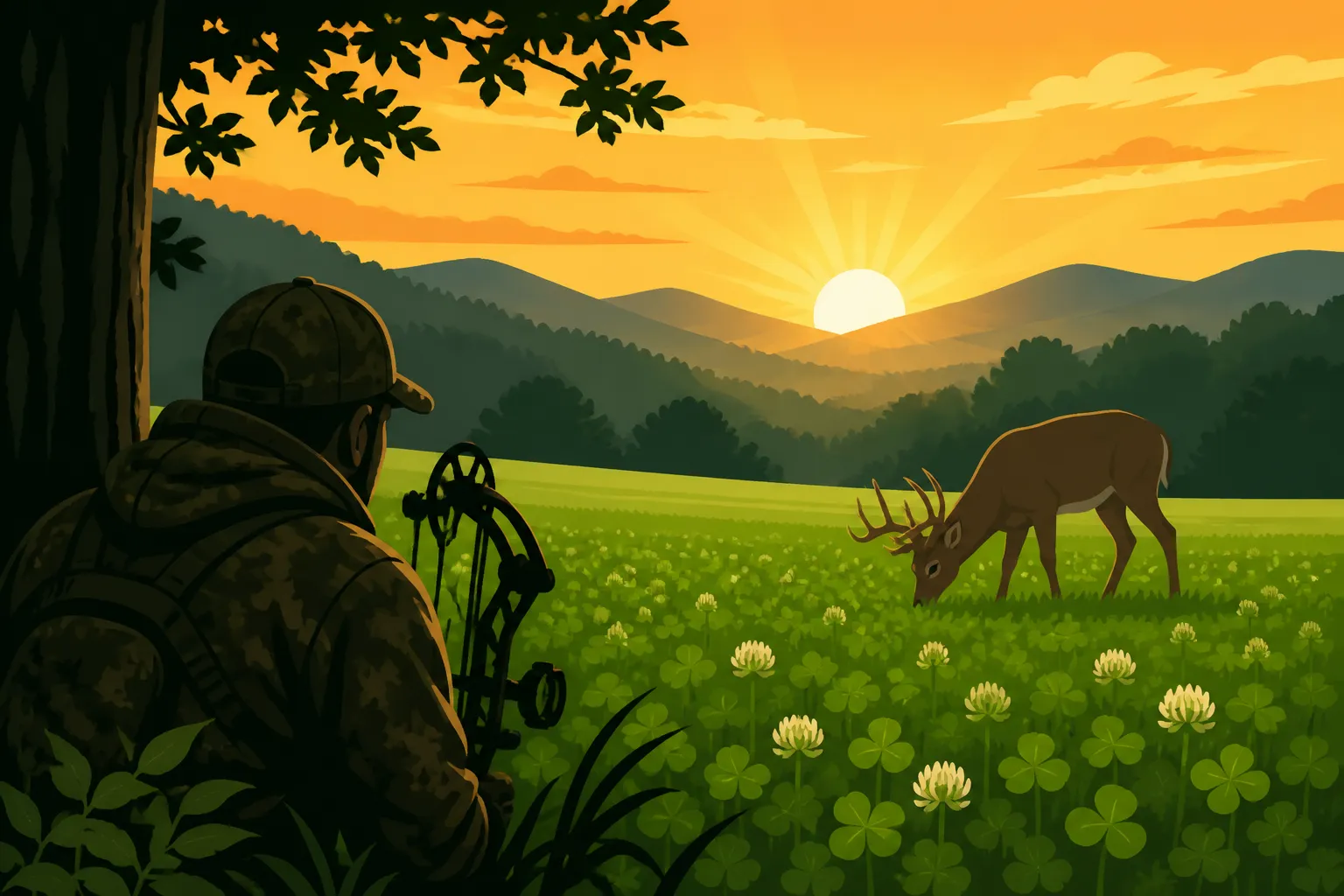
Hunting a Clover Plot at First Light
For any West Virginia deer hunter, the thought of a lush, green clover plot at dawn is enough to get the blood pumping. It’s a vision of deer moving predictably, hooves silent on the dew-kissed leaves, offering that perfect first-light shot opportunity. However, turning that dream into a reality is tougher than it looks. Deer are incredibly wary, and their patterns around food sources, especially when the sun starts to peek, can be fickle. This guide will help you decode those early morning movements and strategize your hunt on clover plots, maximizing your chances of success in the Mountain State.
Understanding Clover Plots and Early Morning Deer Behavior
Clover plots are absolute magnets for deer in West Virginia, and for good reason. Understanding why they're so attractive and how deer use them at first light is the foundation of a successful hunt.
Why Deer Love Clover
Deer are constantly seeking out the best nutrition available, and clover delivers that in spades. It’s packed with protein, which is vital for antler growth in bucks and milk production in does, and it’s highly digestible. Unlike some other forage, clover remains palatable and nutritious throughout much of the year, providing a consistent food source when other options might be declining. Early in the season, when many natural food sources are abundant, clover still stands out for its quality. Later in the season, when acorns might be gone and other greens are frosted, a healthy clover plot can be the only game in town. Different varieties, like ladino or crimson clover, have slightly different growth habits and palatability, but all offer that irresistible green carpet of nutrition.
The Dynamics of First Light Movement
The first hour of daylight is often referred to as the "golden hour" for deer hunting, and it’s particularly true for clover plots. Deer, having fed throughout the night or moved from nearby bedding areas, will often make one last pass through a prime food source before heading to cover for the day. This is when they feel relatively safe under the cloak of low light, before human activity really ramps up.
However, this movement isn't random. Deer usually have established entry and exit routes to and from a plot. They’ll use terrain features, dense cover, or even old logging roads as corridors. In West Virginia's rugged landscape, understanding how thermals work at first light is critical. As the air warms, thermals tend to rise, but in the initial moments of dawn, cold air often sinks into hollows and valleys. This means scent can drop and swirl, making your approach and stand placement even more challenging. If you’re not mindful of the wind and those dropping thermals, your scent can easily alert deer still in or around the plot before you even get settled.
Scouting Your West Virginia Clover Plot
Effective scouting is paramount to hunting clover plots at first light. You can't just stumble into a plot and expect success; you need to understand exactly how deer are using it.
Pre-Season Reconnaissance
Long before opening day, you should be putting in the legwork. Use trail cameras extensively, especially on the edges and common entry points of your clover plots. Look for consistent patterns: what time are deer entering and leaving? Are there specific trails that get more use? Pay attention to the age class of the deer you’re seeing – are there mature bucks, or mostly does and young deer?
Beyond cameras, get on the ground and look for physical sign. Fresh tracks in the mud around the plot edges, abundant droppings, and obvious browse lines on nearby shrubs or young saplings can tell you a lot. These observations help confirm active feeding and travel patterns. Identify the densest cover nearby, which likely serves as bedding areas. The closer the bedding is to the plot, the higher the chance deer will be moving there right at first light. Reviewing satellite imagery on platforms like GoHunt can give you a bird's-eye view, helping you pick out those hidden trails, saddles, or creek bottoms that might be funnels for deer movement. Remember, West Virginia's terrain is unforgiving, so knowing the lay of the land digitally before you hike it can save you a lot of time and effort. This kind of detailed scouting is crucial for setting up your treestand effectively in the challenging environment of the Monongahela National Forest, for instance.
Understanding Wind and Thermals for Entry/Exit
This cannot be stressed enough: wind and thermals are everything for morning hunts, especially on food plots. Your scent is your biggest enemy. Before you even think about where to set up, you need to know where your scent will go. In West Virginia's steep hollows and ridges, morning thermals typically pull your scent downhill until the sun starts to warm the landscape. This means if you walk in from above a plot, your scent will likely blanket the plot itself or any deer still making their way in.
Plan your approach route meticulously. It needs to be silent, covered, and, most importantly, completely downwind of where you expect deer to be. This often means taking a longer, more circuitous route. Your GoHunt app can even help you visualize wind direction and how it might interact with the topography. You want to arrive at your stand or blind before any deer would reasonably be in the plot, and without them ever knowing you were there. Think about "Wind and Thermals on a Steep Ridge" – the principles apply even when hunting lower plots if a ridge is nearby.
Strategic Setup and Tactics for First Light
Once you understand the deer and the landscape, it's time to put your plan into action. Your setup and in-the-moment tactics will dictate your success.
Optimal Stand or Blind Placement
Your choice between a treestand or a ground blind largely depends on the specific plot and surrounding cover.
| Feature | Treestand | Ground Blind |
|---|---|---|
| Concealment | Elevated, uses tree as natural break-up | Complete visual concealment, scent containment |
| Visibility | Wide field of view, avoids ground clutter | Limited visibility, may require shooting lanes |
| Scent Control | Elevated helps carry scent over deer | Enclosed space can contain scent |
| Mobility | Can be moved, but takes effort to hang | Easier to move, quick setup |
| Shooting Angle | Downward angle, good for vital shots | Eye-level, potential for deflections |
| Comfort | Can be less comfortable for long sits | Often more comfortable, especially in cold |
| Setup Time (Hunt Day) | Requires silent climb, typically pre-hung | Quick to enter, if brushed in properly |
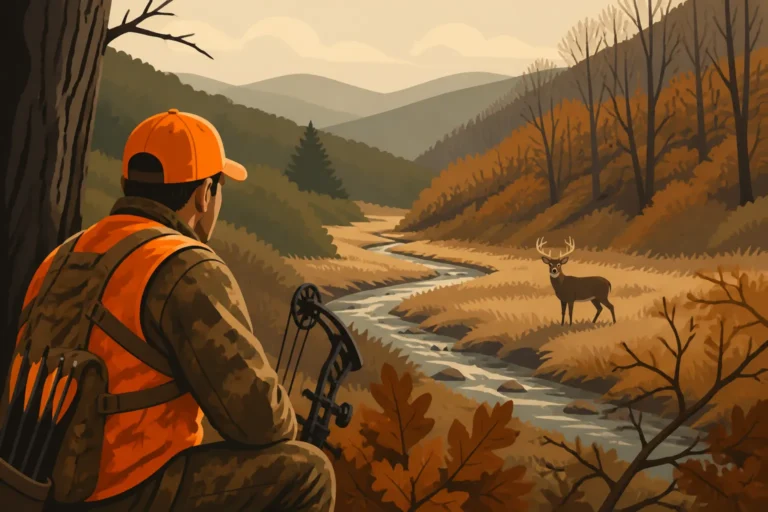
For a treestand, you want to be on the downwind side of the plot, preferably where a major deer trail meets the edge. Look for a tree that offers a good backdrop to break up your silhouette and ideally, some canopy cover to block your outline against the sky at first light. Make sure your shooting lanes are clear but not overly cut, as that can make the area look unnatural. Positioning yourself slightly off the main travel routes, perhaps 20-30 yards into the timber, can give you a better chance to intercept deer before they commit fully to the open plot, or as they skirt the edge. For specific guidance, you might review tips on "Treestand Setups in Monongahela National Forest".
If you opt for a ground blind, ensure it’s brushed in meticulously to blend with the surroundings. You want it to look like a natural part of the landscape. Position it considering the sun's direction; you don't want the rising sun blinding you or silhouetting your blind. A slight rise or knoll overlooking the plot can give you a better vantage point without being too exposed. For more on this, check out "Using a Ground Blind on West Virginia Public Land". No matter your choice, get your setup in place well before the season to allow deer to habituate to its presence.
Patient Hunting and Shot Opportunities
The morning hunt demands supreme patience. You need to be in your stand or blind at least an hour before legal shooting light. This means a pre-dawn hike, potentially in complete darkness, guided only by your headlamp (which you should turn off well before reaching your setup). Once settled, remain absolutely silent and still. Don't fidget, don't check your phone, don't snack. Just listen and observe. The woods come alive slowly at first light, and you need to be part of that natural rhythm.
When deer appear, don't rush the shot. Wait for legal light. Wait for the deer to offer a clear, ethical shot. In the low light of dawn, distances can be deceptive, and a deer's vitals can be harder to discern. Use your binoculars to confirm details before raising your weapon. If deer are already in the plot when you arrive, a common occurrence, you have a couple of choices. You can try to slip in, but often the best move is to wait. Let them clear out naturally. Trying to force an entry when deer are present almost guarantees they’ll bust you, educating them and potentially ruining future hunts on that plot. Sometimes, the most disciplined hunter is the one who waits for the next opportunity rather than pressing for a low-percentage shot.
Adapting to Changing Conditions
West Virginia weather can change on a dime, and deer behavior often follows suit. A sudden cold front, a heavy rain, or even just a shift in the wind can alter how deer use a clover plot. Be ready to adapt. After a cold front, deer often feed more heavily, making morning plot hunts even more productive. Conversely, a warm, foggy morning might keep deer bedded longer.
You also need to be aware of hunting pressure, especially on public land. If the plot is getting hit hard by other hunters, deer will quickly become nocturnal or start skirting the edges in thick cover. Your precise knowledge of deer trails, possibly learned from "Reading West Virginia Mud for Fresh Deer Movement", becomes even more valuable here. If conditions aren't right – say, the wind is wrong, or deer have been heavily pressured – sometimes the best tactic is to pull out quietly and try again another day or switch to a different strategy, like still-hunting a ridge or a creek bottom. Always have an exit strategy that minimizes disturbance to the remaining deer in the area.
Seasonality and Plot Types
Clover plots aren't just one-trick ponies; they offer opportunities throughout West Virginia's diverse hunting seasons, but how deer use them can change.
Early Season Advantage
When "When West Virginia's Archery Season Opens" in September, clover plots can be absolute hotspots. While acorns might be starting to drop in some areas, and other natural forage is still abundant, clover offers a highly palatable, digestible protein source that deer crave as they transition from summer to fall patterns. Bucks are still relatively relaxed, establishing their daily routines, and often hit clover plots in the mornings before heading to cool bedding cover for the day. Does and fawns will be frequent visitors, sometimes staying in or near the plots for extended periods. This makes early season a fantastic time to pattern deer on clover, as their movements are often more predictable than during the chaos of the rut. This is a prime time for bowhunters to capitalize, especially if they’ve done their homework on scouting.
Late Season Draw
As West Virginia's hunting seasons progress into the colder months, especially during "Hunting the Late-Season December Lull", clover plots can become even more critical. By late season, most natural food sources have dwindled. Acorns are long gone, browse is heavily consumed, and native grasses are dormant. A healthy, green clover plot stands out like a beacon, providing essential energy and nutrients when deer need them most. Deer will often brave colder temperatures and even light snow to feed in these plots.
Morning hunts in the late season can be particularly productive as deer are trying to pack on calories after a long, cold night. If snow covers the ground, it can actually make scouting easier, as fresh tracks will clearly show you which routes deer are using to access the plot. However, in deep snow, deer might switch to conifer cover for shelter and thermal protection, making plots less appealing if they're too exposed. Understanding these dynamics is key to staying successful when temperatures drop and the landscape changes.
Disclaimer
Always consult the latest West Virginia hunting regulations from the West Virginia Division of Natural Resources (WVDNR) before heading afield. Seasons, bag limits, and specific rules (including those for public land, baiting, and trail cameras) can change annually. This guide is for informational purposes only and does not supersede official regulations.