Working River Cane Thickets for Deer
It's a familiar sight for many West Virginia hunters: standing on the edge of a river bottom, gazing into an almost impenetrable wall of what looks like bamboo. These dense river cane thickets can seem impossible to hunt, leaving you wondering how a deer could even move through them. But for savvy hunters, these tangled havens are often the key to finding those elusive, pressured whitetails. This guide will dive deep into understanding, scouting, and successfully hunting river cane thickets across our beautiful mountain state.
Understanding River Cane Thickets in West Virginia
River cane, often mistaken for bamboo, is a native grass that creates some of the densest cover imaginable along our state's waterways. To successfully hunt these areas, you first need to understand what you're dealing with and why deer are drawn to them.
What is River Cane and Where Does It Grow?
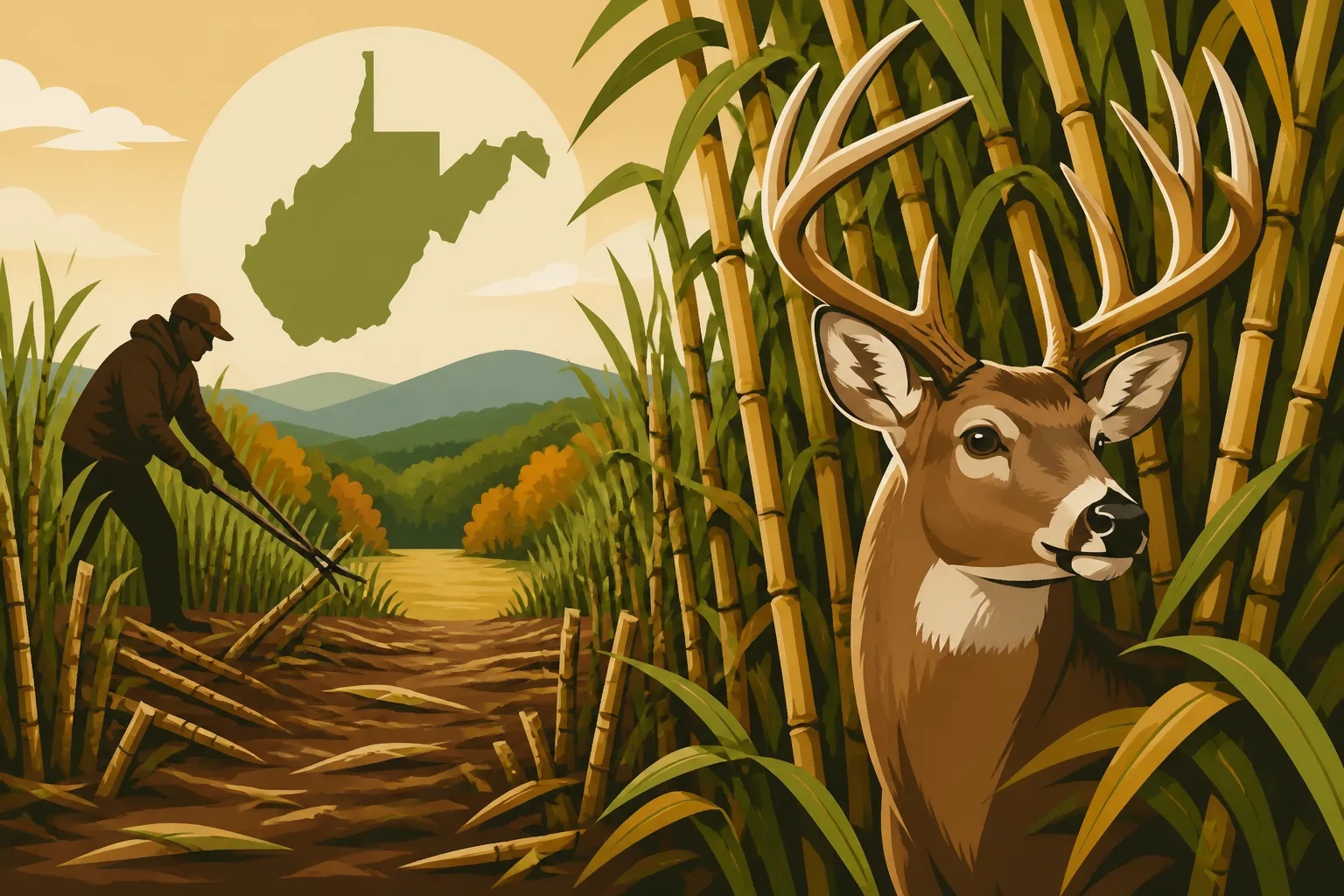
River cane (Arundinaria gigantea) is indeed a type of native bamboo, but it's not the invasive species you might commonly think of. It's a perennial grass that can grow anywhere from 6 to 30 feet tall, forming incredibly dense, clonal stands. The stalks are woody, stiff, and grow so close together that a human can barely push through them, let alone see more than a few feet in any direction. When you encounter a thick patch, it's like walking into a maze of vertical sticks, often with deadfall and tangles beneath, creating an almost impassable barrier.
In West Virginia, you'll typically find river cane thickets in moist, fertile soils along river and creek bottoms, particularly in the larger river valleys like sections of the Ohio River Valley bottomland, the Kanawha River, and many of their larger tributaries. These areas often receive periodic flooding, which the cane tolerates well. It thrives where sunlight can reach the ground, often on the edges of agricultural fields or clearings adjacent to these waterways, forming natural, linear cover strips that deer absolutely adore.
Why Deer Seek Out River Cane
Deer are masters of survival, and river cane thickets offer them a perfect blend of security, thermal cover, and often, a convenient food source. It's not just a place they pass through; it's often where they live, especially when hunting pressure ramps up.
First and foremost, river cane provides unparalleled security cover. When hunters hit the woods, deer immediately seek out the nastiest, thickest cover they can find. These cane brakes offer visual obscurity from all angles and make it incredibly difficult for predators—including two-legged ones—to penetrate. A buck can bed down just a few yards into a cane thicket and be virtually undetectable, hearing an approaching hunter long before they are seen. This makes them prime spots during the general season, especially when you're dealing with Opening Weekend Crowds on West Virginia Public Land.
Beyond security, river cane offers excellent thermal regulation. In the colder months, the dense stands act like a natural windbreak and insulation, helping deer stay warmer. During the warmer parts of the early season, the shade and dense canopy can provide relief from the summer sun. Deer often browse on the tender shoots of cane, especially in the spring, but they also use the protective cover to access other food sources nearby, like agricultural fields or mast crops, providing a crucial travel corridor between bedding and feeding areas. This consistent appeal helps explain why these deer populations remain robust, despite challenges like West Virginia Deer Population Estimate fluctuations.
Scouting and Locating Deer in Cane
Trying to hunt a river cane thicket without scouting is like throwing darts blindfolded—you might get lucky, but success is fleeting. Effective scouting involves looking for external clues and, sometimes, carefully venturing into the dense interior.
Reading the Edges and Entry Points
The most practical way to start scouting river cane is to focus on its periphery. Deer are going to enter and exit these thickets, and those are your primary points of opportunity. Look for distinct trails leading into and out of the cane, especially where the cane meets more open timber, a field edge, or a water source. These trails will often be well-worn, almost tunnel-like, as deer repeatedly push through the dense stalks.
Pay close attention to funnels and pinch points along these edges. Does the cane border a creek that creates a narrow crossing? Does it meet a steep bank that funnels movement to a specific flat? Look for rubs and scrapes on trees just outside the cane, particularly on the corners or where a trail veers off. Fresh rubs indicate a buck is actively using the area, and scrapes are like calling cards. Using modern mapping tools like GoHunt can really help identify these geographical features and potential travel corridors. You can mark obvious entry points, terrain changes, and nearby food sources on your map to build a clearer picture of deer movement. Also, keep an eye out for Reading West Virginia Mud for Fresh Deer Movement near water or low-lying areas at the edges of the cane.
Internal Trails and Bedding Areas
Venturing deep into a river cane thicket is often a painstaking, noisy endeavor, but it can reveal invaluable information about internal deer movement and bedding areas. This is usually best done in the off-season, perhaps right after deer season closes in December, or even in late winter before new growth emerges, when foliage is at its minimum and deer aren't being actively pressured.
When you do decide to go in, move incredibly slowly and quietly. Listen for the snap of cane stalks, which can sound unnervingly like a deer breaking brush, and watch for subtle signs. Look for faint game trails that wind deeper into the thicket, often barely discernible. These internal trails might lead to small, relatively open pockets within the cane where deer feel secure bedding down. Look for flattened grass or leaves, fresh droppings, and the distinct scent of deer. In some cases, you might find small, very old rubs or even shed antlers deep inside a cane brake, proving it's a long-term sanctuary. Remember, the deeper and nastier it gets, the more likely a mature buck is using it as a daytime hideout. Accessing these areas is challenging, so understanding the nuances of Packs for a Monongahela Forest Day Hunt can help you carry essentials without creating unnecessary bulk or noise.
Effective Hunting Tactics for River Cane
Hunting river cane requires patience, strategic thinking, and sometimes, a willingness to get a little uncomfortable. It's not a place for casual hunting; it's for those dedicated to cracking the code of dense cover.
Stand Placement on the Perimeter
For many hunters, especially during Bowhunting West Virginia's Long Archery Season, setting up on the perimeter of a cane thicket is the most effective tactic. Your goal is to intercept deer as they enter or exit this dense cover. Look for those well-worn trails you found during scouting, particularly those leading to obvious food sources or water. Place your treestand or ground blind downwind of these trails, ideally 15-25 yards off the edge of the cane, facing the prevailing wind direction.
Consider elevation if available. Even a few feet of elevation can give you a better vantage point into the dense edge, allowing you to see deer approaching through the lower parts of the cane before they step into the open. Remember to account for thermals, especially in morning and evening hunts. As described in Wind and Thermals on a Steep Ridge, thermals will typically pull air down into the bottom in the morning and rise up the hillsides in the evening. In flat river bottoms, these movements can be subtle but still impact scent dispersal. A well-brushed-in ground blind can also be highly effective here, providing excellent concealment right on the edge of the thick stuff. Think about using natural cover and blending in seamlessly, much like you would when Brushing In a Blind on a Field Edge.
Still-Hunting the Thickets
Still-hunting through river cane is arguably one of the most challenging but potentially rewarding tactics. It requires extreme patience, stealth, and a keen understanding of wind and scent. This is not a fast-paced hunt; it's a slow, methodical creep, taking minutes to move just a few yards. The goal is to surprise a bedded deer or catch one moving cautiously within its sanctuary.
Before you even think about still-hunting cane, ensure you have a favorable wind. Your scent is your biggest enemy. Dress in quiet clothing that won't rustle against the stalks. Take one step, pause, look, and listen for several minutes before taking another step. Use your binoculars to pick apart every shadow, every flicker of movement. Deer ears are incredibly sensitive, and they'll hear you long before you see them if you're not careful. This tactic is similar in principle to Still-Hunting Cranberry WMA Ridges, where the terrain is different but the emphasis on slow, quiet movement and reading the landscape remains the same. A short, maneuverable firearm or a bow is crucial here; long barrels or limbs will constantly snag and make noise. This is where a compact Rifle Setups for West Virginia Deer Hunting or an archery setup optimized for close-quarters proves its worth.
Strategic Deer Drives
In particularly large or inaccessible river cane thickets, a small, well-planned deer drive can be an effective last resort, especially during the later portions of West Virginia's Buck Gun Season or Hunting the Late-Season December Lull. This isn't a free-for-all; it requires coordination and an understanding of how deer use the cane. The idea is to have one or two "pushers" slowly, deliberately, and quietly move through a section of the cane, pushing deer towards "standers" positioned on the downwind edge or known exit points.
The key to success is keeping the drive small and controlled. Too many people, too much noise, and deer will simply melt away deeper into the cane or sneak out unseen. The pushers need to move agonizingly slow, mimicking a predator, pausing frequently, and using the wind to their advantage. Standers should be positioned where the cane thins out, where it meets a field, or where a major creek crossing provides an escape route. This strategy is an adaptation of what you might consider for Deer Drives With Three or Four Hunters, but with even more emphasis on containment and silent execution due to the dense cover. Communication, perhaps with two-way radios, is critical to ensure everyone knows where others are and to adapt to deer movement.
Gear and Considerations for Cane Hunting
Hunting river cane presents unique challenges, and having the right gear can make a significant difference in your success and comfort.
Essential Gear for Navigating and Hunting
- Durable, Quiet Clothing: You'll be brushing against stalks constantly, so quiet fabrics are paramount. Avoid anything that snags easily or makes noise. Look for rip-stop materials in your pants and jacket to withstand the abuse.
- Puncture-Resistant Boots: River cane can be sharp, and there's often deadfall and other debris on the ground. Invest in good quality, waterproof boots with sturdy uppers to protect your feet and ankles. Rubber boots are often preferred for their waterproof qualities and silent movement.
- Maneuverable Weapon: As mentioned, a short rifle, shotgun, or a compact bow/crossbow is ideal. Long barrels or limbs will constantly catch on stalks, creating noise and frustration. If using a rifle, a robust sling is a must, but be mindful of it snagging.
- GPS or Mapping App (GoHunt): Getting turned around in dense cane is incredibly easy, even on familiar ground. A reliable GPS unit or a mapping app like GoHunt on your phone (with downloaded offline maps) is essential for navigation, marking trails, and finding your way out. Always carry a portable charger for your phone.
- Blaze Orange: West Virginia requires blaze orange during firearm seasons, and it's a good idea to wear it during archery season too if you're in a gun hunting area, for safety. In dense cane, visibility is severely limited, making it even more important to ensure you're seen by other hunters. Make sure your blaze orange is durable and quiet, just like your other clothing. How Much Blaze Orange West Virginia Requires can vary by season and weapon, so always check the current regulations.
Safety and Ethical Considerations
Hunting in river cane thickets can be dangerous due to limited visibility and difficult terrain. Always prioritize safety. Let someone know exactly where you are hunting and when you expect to return. Consider carrying a small personal locator beacon (PLB) if you're venturing deep into remote areas.
Tracking a wounded deer in river cane is incredibly difficult. Even a well-hit deer can disappear into the dense cover, leaving a minimal blood trail that's hard to follow. This means shot placement is even more critical. Aim for high-percentage shots, and if you have any doubt about the shot, wait for a better opportunity. If you do wound a deer, give it ample time before tracking, and be prepared for a long, arduous process, potentially with a partner. Understanding Blood Trailing After Dark in West Virginia protocols and having a powerful headlamp are crucial if you're forced to track late into the evening. Ethical hunting means doing everything in your power to recover every animal you harvest.
| Tactic | Best Use Case | Pros | Cons | Key Considerations |
|---|---|---|---|---|
| Perimeter Stand | Intercepting deer entering/exiting | Higher visibility, less physical exertion | Deer may detect scent/movement before exiting, limited shooting windows | Wind direction, thermal drafts, clear shooting lanes |
| Still-Hunting | Active search for bedded deer in dense cover | Direct engagement, can cover more ground | Extremely noisy and difficult, high risk of spooking deer, physically demanding, limited visibility | Extreme stealth, favorable wind, short-range weapon |
| Deer Drive | Large, impenetrable thickets | Can push deer out of inaccessible areas | Requires multiple hunters, high risk of deer sneaking out, safety concerns due to limited visibility | Small, controlled group, clear communication, stander placement |
Disclaimer
Always consult the latest West Virginia Department of Natural Resources (WVDNR) regulations and guidelines before planning any hunting trip. Hunting laws and seasons can change, and it is every hunter's responsibility to be informed and compliant.