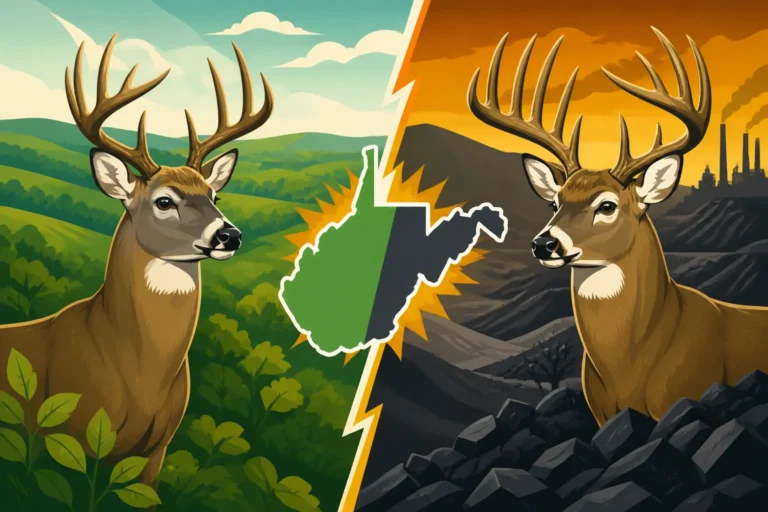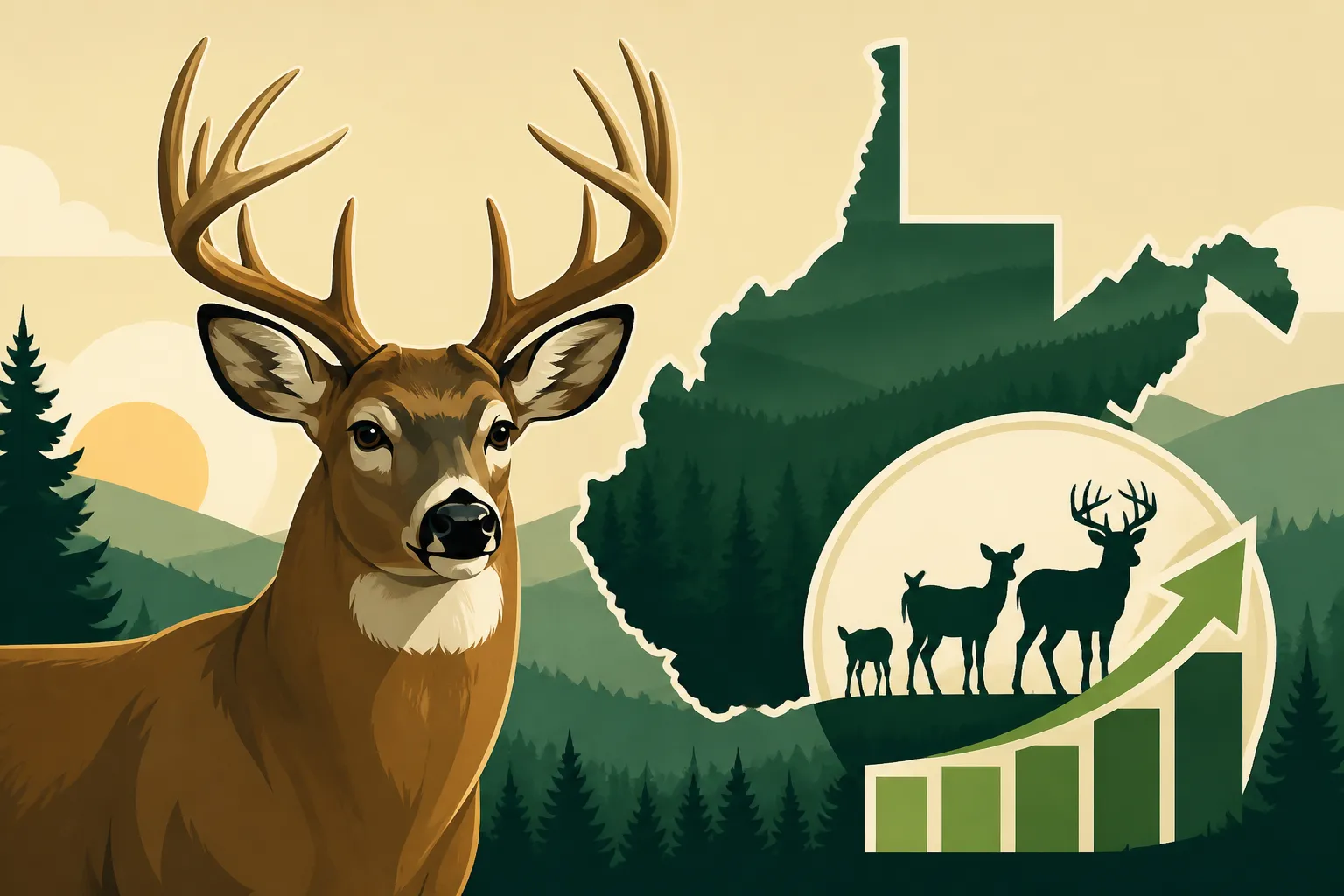
West Virginia Deer Population Estimate
It can feel like you need a crystal ball to truly understand what's happening with West Virginia's deer population from year to year. One season you might see deer everywhere, and the next, it feels like they've vanished, leaving you scratching your head about whether the numbers are up or down. This guide aims to pull back the curtain on how the West Virginia Division of Natural Resources (WVDNR) estimates these crucial figures, what factors truly influence the herd, and what it all means for your hunting efforts here in the Mountain State.
Decoding West Virginia's Deer Population Estimates
Trying to get a precise count of every single white-tailed deer in West Virginia is a bit like trying to count every raindrop in a summer storm – it's just not practical. However, understanding the overall health and size of the herd is absolutely essential for sustainable hunting and effective wildlife management. The WVDNR dedicates considerable resources to making the most accurate estimations possible, even if they aren't exact headcounts.
The WVDNR's Approach to Deer Census
The West Virginia Division of Natural Resources doesn't literally count every deer. Instead, they rely on a sophisticated combination of data sources and scientific modeling to arrive at their population estimates. The primary pillar of this approach is the annual harvest data, which provides a direct insight into the number of deer removed from the population by hunters. Every time a hunter checks in a deer, that data point contributes to a much larger picture. This includes details like the deer's sex, age, and the county where it was harvested, which are all vital pieces of the puzzle. Beyond harvest data, the WVDNR also considers things like annual fawn recruitment rates, which estimate how many young deer survive to join the adult population, and mortality rates from other causes like vehicle collisions, disease, and predation.
What's really fascinating about their method is the use of population models. These aren't just simple spreadsheets; they're complex algorithms that take all the collected data—harvest numbers, biological surveys, observation reports, and even environmental factors—and project population trends. The goal isn't just to tell us how many deer are out there right now, but to predict how the herd might respond to different hunting regulations or environmental changes in the future. It's a constant effort to fine-tune these models, adapting them as new information becomes available and as the deer herd itself evolves.
Why Exact Numbers Remain Elusive
Even with all this scientific rigor, it’s important to remember that deer population figures are always estimates, not precise counts. Deer are wild animals, constantly on the move, and living in diverse, often rugged terrain across West Virginia. Factors like dense cover, steep hollows, and vast tracts of public land make direct observation challenging, if not impossible, on a large scale. Furthermore, deer populations are dynamic; they fluctuate throughout the year due to births, deaths, and movements. An estimate from one month might be different from the next, simply because the population is always in flux.
This inherent variability is why the WVDNR focuses more on trends and indices rather than single, absolute numbers. They are looking for patterns: Is the population generally increasing, decreasing, or stable in a particular region? Are the buck-to-doe ratios healthy? Are deer reaching older age classes? These trends are often more actionable for management purposes than a precise count that would be outdated the moment it's published. As hunters, it’s helpful for us to keep this in mind, too. While we all love to hear "big numbers," understanding the overall health and direction of the herd often tells us more about our hunting prospects than a single digit ever could.
The Science Behind Deer Population Management
Effective deer management isn't just about setting season dates and bag limits; it's a deep dive into wildlife biology, ecology, and human behavior. The WVDNR employs a range of scientific methods to understand and manage West Virginia's deer herd, aiming for a balance that supports both the ecosystem and hunting opportunities.
Understanding Harvest Data and Its Role
The annual deer harvest is arguably the most critical piece of data the WVDNR collects. Every deer legally checked by a hunter provides invaluable information. This includes the date of harvest, the county, and whether it was an antlered buck or an antlerless deer. But it goes deeper than that. WVDNR biologists often collect biological samples from harvested deer at check stations, especially in areas of concern like those impacted by Chronic Wasting Disease. These samples can provide data on age, health, and reproductive rates.
This harvest data allows wildlife managers to track trends over time. For example, by looking at the proportion of yearling bucks in the harvest, they can infer how successful the previous year's fawn crop was. A consistently low proportion might indicate a struggling population or heavy hunting pressure on young bucks. Similarly, by analyzing the harvest of antlerless deer, the WVDNR can gauge the effectiveness of doe seasons in managing overall population growth and maintaining a healthy buck-to-doe ratio. Understanding the nuances of the harvest report is key to understanding the herd, and you can delve deeper into it by checking out resources like "Reading a West Virginia Harvest Report".
Advanced Modeling Techniques
Beyond simple counts, the WVDNR utilizes advanced statistical and demographic modeling to estimate deer populations. These models integrate various data points, including harvest data, roadkill numbers, observation surveys from both WVDNR staff and the public, and even habitat assessments. One common approach is the use of age-structured models, which track deer populations by age class, accounting for birth rates, natural mortality, and harvest mortality across different age groups. These models are particularly powerful because they can simulate how changes in regulations, habitat, or environmental conditions might affect the herd in the coming years.
Another tool that's becoming increasingly important is GIS (Geographic Information System) mapping, which allows biologists to visualize deer distribution, habitat use, and areas of higher or lower density. This kind of spatial analysis can reveal hotspots of deer activity, migration corridors, and even areas where deer might be over-browsing habitat. By combining these sophisticated models with real-world data, the WVDNR strives to make informed decisions that ensure a robust and healthy deer population for West Virginia's future generations of hunters and wildlife enthusiasts alike. Tools like GoHunt can even help hunters overlay publicly available data with their own scouting information to better understand local deer patterns.
Key Factors Shaping West Virginia's Deer Herd Size
West Virginia's diverse landscape, from the Eastern Panhandle's farmlands to the rugged Allegheny Highlands, offers varying conditions that profoundly impact deer numbers. Understanding these factors is crucial for appreciating why deer populations fluctuate and how management strategies are tailored to local realities.
Habitat Quality and Food Availability
The quality and availability of habitat are fundamental drivers of deer population density and health. In West Virginia, deer thrive in areas with a mosaic of different cover types: dense young forests for bedding and security, mature hardwoods for mast crops (like acorns), and open fields or clearings for foraging on browse and agricultural crops. Areas with diverse plant life and a good mix of cover types can support more deer, and often healthier deer, than monoculture forests or heavily fragmented landscapes. For instance, a good mast crop year, particularly acorns, can significantly boost deer health and reproductive success, leading to higher fawn survival rates. Conversely, a poor mast year can stress the herd, making them more susceptible to disease and winter mortality.
The WVDNR actively works to improve habitat across public lands, including various Wildlife Management Areas (WMAs), through timber harvests, prescribed burns, and planting efforts. These practices aim to create diverse early successional habitats that provide abundant browse and cover for deer. Hunters who focus on finding diverse habitat, perhaps by Scouting West Virginia Public Land Before Season, often find more consistent deer activity. Similarly, private landowners who manage their property with deer in mind—through practices like food plots or selective timbering—can create veritable deer havens.
Impact of Weather and Predation
Weather plays an undeniable, often dramatic, role in West Virginia's deer population dynamics. Harsh winters with deep snow and prolonged cold can increase mortality, especially among fawns and older, weaker deer, as food becomes scarce and energy demands are high. Conversely, mild winters generally lead to higher overwinter survival rates, contributing to population growth. Droughts in summer can also reduce the quality and quantity of forage, impacting fawn development and overall herd health. Understanding these yearly weather fluctuations helps explain shifts in deer numbers that might not be immediately obvious.
Predation, primarily by coyotes and black bears, also influences deer populations, particularly fawn survival. While bears are opportunistic predators and will take fawns if the opportunity arises, coyotes are more consistent predators of young deer. The impact of predation is usually most pronounced when deer populations are already stressed or low due to other factors like poor habitat or severe winters. In a healthy, robust deer population, predation typically has a less significant impact on the overall herd size. However, knowing that West Virginia has a healthy black bear population and widespread coyotes means that fawn recruitment isn't a given, and these predators play a natural, if sometimes challenging, role in the ecosystem.
Regional Variations in Deer Abundance and Management
West Virginia's rugged and varied topography means that deer populations aren't uniformly distributed. Hunters quickly learn that tactics that work in one part of the state might be completely ineffective in another due to significant regional differences in deer density, habitat, and even antler quality.
Eastern Panhandle's Big Buck Potential
The Eastern Panhandle counties, including areas like Berkeley, Jefferson, and Morgan, are renowned for their robust deer populations and the potential for harvesting larger-bodied, mature bucks. This region often boasts fertile agricultural lands interspersed with woodlots, providing an exceptional mix of high-quality forage and dense cover. Deer here benefit from nutrient-rich crops like corn and soybeans, leading to better body weights and impressive antler growth. The generally milder winters in this part of the state also contribute to higher fawn survival and overall herd health.
However, hunting in the Eastern Panhandle often comes with its own set of challenges, particularly related to hunting pressure and access to private land. While public hunting opportunities exist, a significant portion of the prime deer habitat is privately owned. Hunters often need to gain permission from landowners or utilize the limited public lands effectively. For those who do secure access, understanding deer movement patterns along field edges and through timber blocks can be highly rewarding, especially during the rut. The WVDNR carefully monitors these populations, often implementing specific antlerless quotas to manage herd numbers in response to agricultural damage concerns and to maintain a healthy buck-to-doe ratio. More insights on this can be found in discussions comparing the Eastern Panhandle Versus Southern Coalfield Deer.
Southern Coalfield Challenges and Opportunities
Moving south to the rugged Southern Coalfields, encompassing counties like Logan, McDowell, and Wyoming, the deer hunting experience shifts dramatically. This region is characterized by steep, heavily forested terrain, often impacted by past mining operations and dense stands of timber. While deer are present, their densities are typically lower than in the Eastern Panhandle, and they tend to be smaller-bodied due to less access to agricultural food sources. Survival is often dictated by the availability of mast crops and quality browse in these more remote, mountainous areas.
What makes the Southern Coalfields unique for deer hunters is the "archery-only" rule for deer hunting in several counties, a long-standing tradition aimed at reducing pressure and allowing deer to mature. This offers a different kind of challenge and a longer season for dedicated bowhunters. While the deer might not be as large on average, the satisfaction of harvesting a mature buck in this unforgiving landscape is immense. Hunters often focus on finding prime food sources like oak ridges after a good acorn year or navigating steep hollows and benches. For those interested in this specific challenge, exploring "Hunting Where Gun Deer Season Is Banned Entirely" can provide valuable context.
Mountain and Central Hardwood Dynamics
In the vast mountain ranges and central hardwood forests of West Virginia, deer populations thrive in a different kind of environment. Areas like the Monongahela National Forest, Cranberry WMA, and other large tracts of public land offer immense expanses of habitat. Here, deer densities can vary widely depending on elevation, timber management practices, and the prevalence of mast-producing trees. Deer in these regions are often leaner and hardier, relying heavily on acorns, greenbriar, and other natural browse.
Hunting in these areas is often characterized by significant physical demands, with hunters needing to navigate steep slopes and dense cover. However, the reward can be finding less pressured deer and experiencing a truly wild hunting adventure. The WVDNR manages these populations through a combination of general season regulations and, in some areas, specific antlerless seasons to manage herd health and reduce localized overpopulation. Understanding elevation and how it impacts deer movement, particularly during harsh weather, is key to success. Focusing on features like ridge-top saddles for rutting bucks or working a creek bottom for late-season deer can be highly effective.
Here's a quick comparison of regional deer characteristics:
| Region | Typical Deer Density | Antler Quality | Primary Food Sources | Hunting Pressure (Public Land) | Common Challenges |
|---|---|---|---|---|---|
| Eastern Panhandle | High | Excellent | Agriculture (corn, soy), hard mast | High | Private land access, educated deer |
| Southern Coalfields | Moderate to Low | Good | Hard mast, natural browse | Moderate (archery-only) | Steep terrain, dense cover |
| Mountain/Central | Moderate | Good | Hard mast, natural browse | Moderate to High | Rugged terrain, vastness of public land |
| Ohio River Valley | High | Very Good | Agriculture, bottomland browse | Moderate | Access, fragmented habitat |
Chronic Wasting Disease and Its Influence on Deer Numbers
Chronic Wasting Disease (CWD) represents one of the most significant challenges to deer management in West Virginia, directly influencing population estimates and demanding adaptive strategies from the WVDNR and hunters alike. This neurological disease, always fatal, has a profound impact beyond just the individual deer it infects.
Tracking CWD's Spread and Prevalence
CWD was first detected in West Virginia in 2016 in Hampshire County, and since then, the WVDNR has meticulously tracked its spread. The disease affects the brain, spinal cord, and other tissues of deer, elk, and moose. It's caused by infectious proteins called prions and can be transmitted directly through animal-to-animal contact or indirectly through the environment, as prions can persist in soil for years. The WVDNR's ongoing surveillance efforts, which include mandatory CWD testing in designated containment areas, are critical for understanding how many deer have tested CWD-positive in West Virginia and monitoring its prevalence.
The presence of CWD introduces a complex variable into population dynamics. As the prevalence of the disease increases in an area, it can lead to higher mortality rates among adult deer, potentially causing a decline in local deer populations over time. This makes accurate population estimation even more challenging, as CWD mortality needs to be factored into the overall death rates alongside harvest, vehicle collisions, and predation. The WVDNR's long-term goal is to contain the disease and minimize its impact on the state's healthy deer herd, which requires a robust understanding of its distribution and effects. You can learn more about the specific counties affected and the broader impact by researching West Virginia's Chronic Wasting Disease Counties.
Management Responses in Affected Zones
In response to CWD, the WVDNR has implemented specific management strategies within designated CWD Containment Areas, which currently include parts of Hampshire, Hardy, Berkeley, Mineral, and Morgan counties. These strategies are designed to slow the spread of the disease and reduce its prevalence where it already exists. Key measures include restrictions on carcass movement out of the containment areas, increased opportunities for antlerless deer harvest to reduce overall deer density (which can help limit disease transmission), and mandatory CWD testing of harvested deer. These efforts aim to reduce the overall deer population density, thereby reducing deer-to-deer contact, which is a primary mode of CWD transmission.
For hunters, these regulations mean a change in routine. For instance, in CWD counties, hunters might be required to check their deer at a designated CWD sampling station or submit samples for testing. There are also strict rules about what parts of a deer can be transported out of a CWD county. While these measures can be an inconvenience, they are vital for protecting the broader West Virginia deer herd. The WVDNR also encourages hunters to report any deer that appear sick or exhibit CWD symptoms, such as emaciation, lethargy, or abnormal behavior, as this helps with early detection and monitoring. Understanding and adhering to these rules is a critical part of being a responsible hunter in West Virginia today.
Practical Implications for the West Virginia Deer Hunter
Understanding West Virginia's deer population estimates isn't just an academic exercise; it has real, tangible implications for how you plan and execute your hunts. When you grasp the dynamics of the herd, you can become a more adaptable, successful, and responsible hunter.
Adjusting Your Strategy to Local Conditions
Knowing that deer populations and their characteristics vary significantly across West Virginia means that a "one-size-fits-all" hunting strategy simply won't cut it. For example, if you're hunting in a high-density area of the Eastern Panhandle, your focus might be on stealth and precision to target mature bucks that have learned to evade pressure. Here, patience on a well-used trail or near a late-season food source could be key. In contrast, if you're venturing into the vast, lower-density mountain regions, your strategy might shift to covering more ground, still-hunting through diverse timber, or focusing on remote travel corridors. Tools like GoHunt can provide valuable insights into specific WMAs or public lands, showing topography and past harvest trends that can help you plan.
The type of habitat, prevailing weather conditions, and even the local CWD status should all factor into your hunt plan. For instance, if you know you're in an area with a strong acorn crop, scouting for those preferred feeding areas becomes paramount. If it's a cold, snowy late season, understanding how deer use thermal cover and seek out specific Late-Season Food Sources for West Virginia Whitetails will give you an edge. The more you educate yourself on the localized conditions and WVDNR's insights into Deer Density by West Virginia Region, the better equipped you'll be to adapt your approach and increase your chances of success.
Supporting Sustainable Deer Management
As hunters, we are critical partners in the WVDNR's efforts to manage West Virginia's deer population sustainably. Our participation in the annual harvest not only helps control deer numbers where needed but also provides the essential data that informs future management decisions. Every time you check in a deer, you're contributing to a massive dataset that helps biologists understand herd health, population trends, and the impacts of various regulations.
Beyond checking in your deer, being an informed and ethical hunter involves adhering to all regulations, including those related to CWD. This might mean getting your deer tested, understanding carcass movement restrictions, and reporting any sick deer you encounter. Supporting the WVDNR through license purchases and participation in surveys also helps fund the vital research and conservation efforts that ensure healthy deer populations for generations to come. By staying engaged, respecting the resource, and actively participating in the management process, we help ensure the future of White-Tailed Deer Across West Virginia remains bright and robust.
Disclaimer
The information provided in this guide is for general informational purposes only and is not intended as legal advice or a substitute for official West Virginia Division of Natural Resources (WVDNR) regulations. Hunting laws and regulations can change frequently. Always consult the most current WVDNR hunting regulations and proclamations before engaging in any hunting activities. Your safety and adherence to all laws are your sole responsibility.