Glassing a Powerline Cut at Last Light
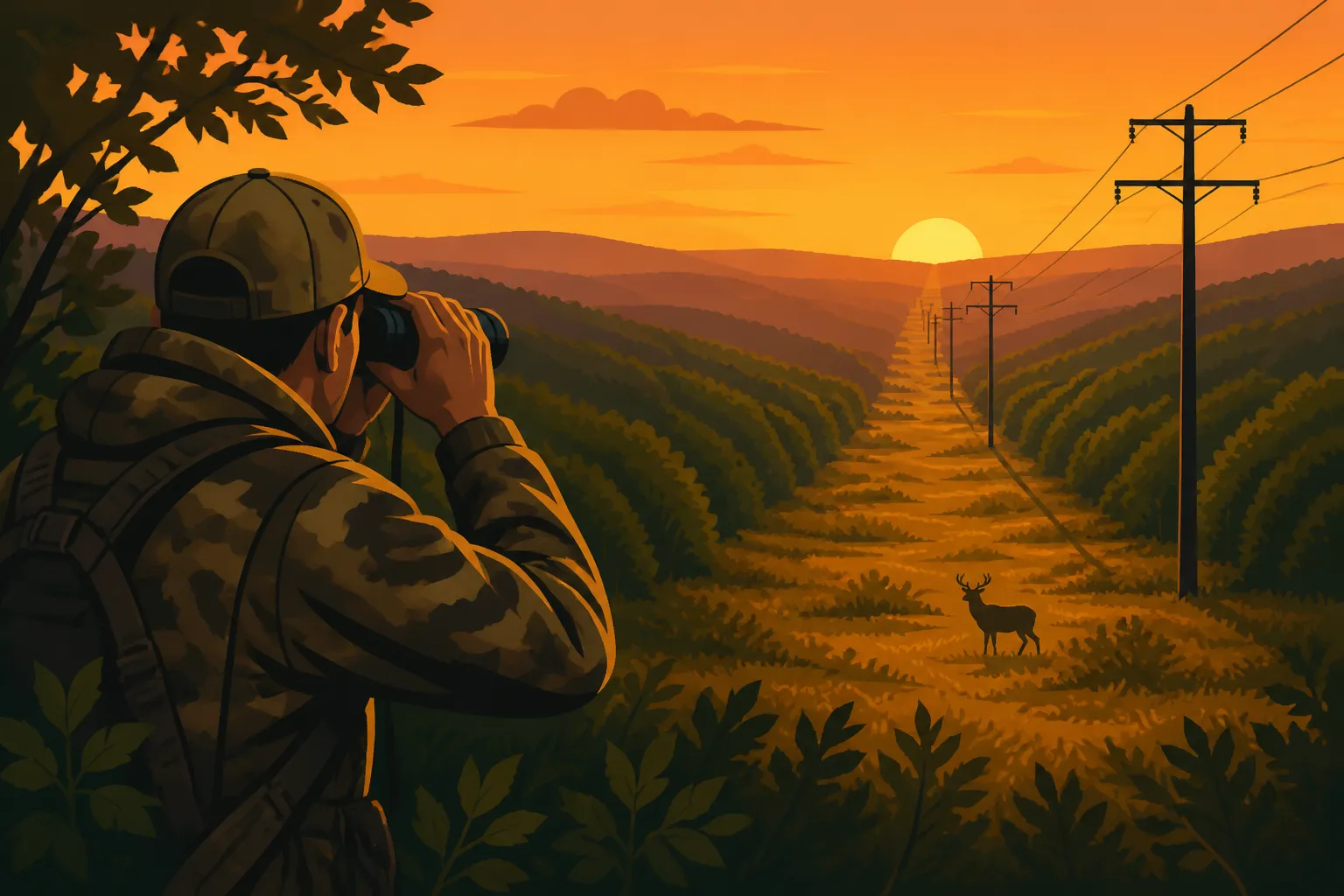
There's nothing quite like that golden hour in the West Virginia woods, especially when the light starts to fade, and you know deer, bear, or turkey are about to make their move. However, thick timber and rugged terrain often make actually seeing that movement incredibly difficult. This guide will walk you through the precise art of glassing powerline cuts at last light, helping you cut through the fading visibility to pinpoint game and greatly increase your chances of a successful hunt.
Why Powerline Cuts Are Prime Last-Light Spots
Powerline cuts, or rights-of-way, are often overlooked but incredibly productive areas for West Virginia hunters, especially as the sun dips below the ridgelines. These man-made clearings create a unique microhabitat and travel corridor that game animals simply can't resist, making them absolute magnets for last-light activity.
Natural Funnels and Food Sources
Think about it: in a state as heavily timbered as West Virginia, any open corridor is going to be utilized by wildlife. Powerline cuts are exactly that. They create long, linear breaks in the dense forest, essentially acting as natural funnels that deer, bear, and even turkeys will use for travel. Instead of pushing through thick brush, game animals often prefer the path of least resistance. These clearings also become prime feeding grounds. The sunlight reaching the ground promotes the growth of various grasses, forbs, and young woody browse that are highly palatable to deer. You might find patches of clover, natural regeneration of saplings, or even leftover agricultural crops if the powerline passes through a farm field. During the fall, these edges can also hold scattered acorn trees, providing another crucial food source as deer transition from their bedding areas. This "edge effect"—where two distinct habitats meet—is always a hotbed of activity, providing both cover and food in close proximity.
Visibility and Vantage Points
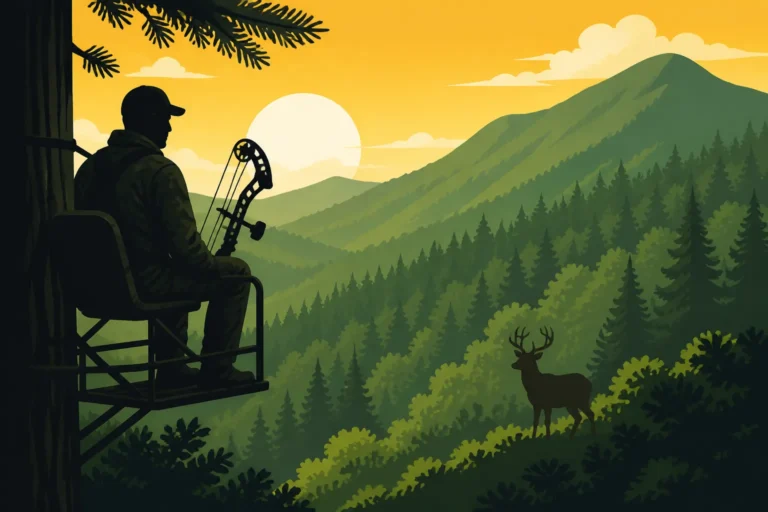
One of the biggest struggles in West Virginia hunting is visibility. Our mountains are steep, our hollows are deep, and our timber is thick. Trying to spot a deer more than 50 yards away in many areas is a pipe dream. Powerline cuts, however, change that equation dramatically. They offer extended lines of sight, sometimes for hundreds of yards, providing a hunter with a precious commodity: the ability to see. The trick is finding a vantage point. Often, this means positioning yourself on an elevated ridgetop or a high knob overlooking a section of the powerline. From such a perch, you can effectively scan a wide area without being detected. These clearings can also act as thermal sinks as the evening progresses, drawing game out into the open to feed or stage before heading to their final bedding locations for the night. The ability to observe game in a more open setting allows you to study their movement patterns and identify specific travel routes, which is invaluable for planning future hunts.
Predictable Game Movement at Dusk
Game animals, especially whitetail deer, operate on a fairly predictable schedule, particularly during the crucial last hour of daylight. They spend the bulk of the day bedded in thick cover, conserving energy. As evening approaches, their internal clock tells them it's time to move towards their primary feeding areas. Powerline cuts frequently bridge the gap between these secure bedding sites and preferred food sources. A savvy hunter knows that deer will often stage in the thicker cover just off the edge of the powerline, patiently waiting for the light to soften before stepping out into the more exposed clearing. Bear, too, will use these corridors, especially if soft mast like blackberries or blueberries is present along the edges, or if they're simply traveling between different sections of their territory. Observing these movements can give you critical insight into how to approach the area the following morning or even how to set up for an ambush as described in our guide on Hunting the West Virginia Rut in November.
Essential Gear for Effective Last-Light Glassing
Effective glassing at last light isn't just about having sharp eyes; it's about having the right tools to maximize those precious minutes of fading daylight. Without quality optics and supporting gear, you'll be fighting an uphill battle against the encroaching darkness.
High-Quality Optics are Non-Negotiable
When the light starts to fail, your optics become your most important piece of gear. This isn't the time to skimp. You need binoculars that can gather as much ambient light as possible and present a clear, crisp image. Look for objective lens sizes of 42mm or larger (e.g., 10×42, 12×50). While 8x magnification offers a wider field of view, a 10x or 12x can provide that crucial extra detail at longer distances, which is often what you need when glassing a sprawling powerline cut. Popular choices include models from Vortex, Nikon, and Zeiss, which offer excellent light transmission and durability for the rugged West Virginia environment. For really long stretches of powerline, or when you want to truly pick apart every last shadow, a spotting scope mounted on a sturdy tripod is a game-changer. It allows you to dial in on minute details that even 12x binoculars might miss, like the flicker of an ear or a slight shift in a deer's body. And speaking of tripods, they are absolutely non-negotiable for stable glassing at last light. Holding binoculars steady for extended periods is impossible; a tripod eliminates shake and allows you to truly "melt" into the glass, revealing hidden animals. For those serious about scouting and pre-season planning, many hunters utilize comprehensive tools from companies like GoHunt, which often have gear reviews and recommendations that can help you select the best optics for your needs.
Supporting Gear for Comfort and Safety
Beyond your primary optics, a few other items will make your last-light glassing sessions more comfortable and, crucially, safer. Temperatures in West Virginia can drop surprisingly fast after sunset, even in early fall, so having extra layers of clothing is essential. A quiet, insulated jacket or a wool sweater can make a world of difference. Once the sun is fully down, you'll be walking out in the dark, often over uneven terrain. A reliable headlamp with both a white light and a red light (to preserve night vision) is a must-have safety item. You'll also want a rangefinder to accurately gauge distances to any game you spot; this information is vital for planning a stalk or identifying potential shot opportunities for future hunts. All of this gear, plus water and snacks, should be carried in a comfortable backpack. Many hunters find that a pack with integrated spotting scope attachment points or a dedicated optics pocket works best for quick deployment and packing.
Digital Scouting Tools
In this modern age, digital mapping and scouting tools are just as critical as your physical optics. Apps like onX Hunt or those integrated into platforms like GoHunt provide invaluable satellite imagery, topo maps, and land ownership information. Before you even head into the woods, you can use these tools to identify potential vantage points overlooking powerline cuts, scout out access routes that minimize disturbance, and mark areas of interest like thick bedding cover or distant food plots. Having these maps downloaded for offline use is crucial, as cell service can be spotty at best in many parts of the West Virginia mountains. Once you're out glassing and you spot game, you can immediately use your phone's GPS function to mark their exact location, helping you pattern their movements over multiple evenings. This digital record becomes a powerful planning asset for future hunts, allowing you to refine your strategy based on real-time observations, similar to how one might scout effectively before the season opens, as detailed in Scouting West Virginia Public Land Before Season.
Mastering the Art of Last-Light Glassing Techniques
Glassing effectively at last light is more than just looking through binoculars; it’s a systematic approach that combines strategic positioning, meticulous scanning, and unwavering patience. It’s a skill that improves with practice, but adhering to some core techniques will put you on the fast track to success.
Choosing Your Vantage Point and Setup
Your vantage point is everything. The goal is to find an elevated position that offers a clear, unobstructed view of the powerline cut, while simultaneously minimizing your chances of being detected. Often, this means hiking to a ridgetop or a prominent knob that overlooks a long stretch of the cut. When selecting your spot, always consider the wind direction. You want the wind blowing from the powerline towards you, or at least crosswind, to prevent your scent from spooking any animals that might be moving in the clearing or along its edges. Also, pay attention to the sun's position. As it sets, you want it at your back or to your side, never in front of you, as looking into the setting sun will cause glare and significantly reduce your visibility.
Once you’ve chosen your spot, take the time to set up comfortably and stably. This is where your tripod for binoculars or a spotting scope becomes essential. Get into a position where you can sit or kneel for extended periods without fatigue. Clear any noisy leaves or twigs from underfoot and arrange your gear for quick, quiet access. Remember, the less you move and the more stable you are, the more effectively you’ll be able to pick apart the shadows. This careful consideration of terrain and wind mirrors the tactics often employed when Hunting Steep Allegheny Ridges or even when trying to decipher deer movement in the Reading a Ridge for Eastern Panhandle Deer context.
Grid Searching and Picking Apart Cover
The biggest mistake people make when glassing is simply "eyeballing" the landscape. Your eyes will naturally be drawn to movement or obvious shapes, but at last light, animals often blend in perfectly with their surroundings. The key is a systematic grid search. Start at one end of the powerline cut and slowly, meticulously scan across, moving your optics a tiny increment at a time, from left to right, then drop down slightly and scan right to left. Repeat this process until you’ve covered the entire area.
Don't just look for an entire deer; look for parts of a deer. An ear flick, a horizontal backline against vertical trees, the glint of an antler, a patch of hide through the brush, or even the subtle movement of a tail. Focus intensely on the edges of the powerline, the shadows, and any breaks in vegetation where an animal might be standing or feeding. Game animals often use slight depressions or humps within the powerline for cover, so don't ignore those subtle terrain features. Think about how deer use cover even in seemingly open areas, much like when you're trying to locate Finding Sign in Big Monongahela Timber. Slow down your scan even further as the light diminishes, allowing your eyes and optics every chance to register the slightest detail.
Patience, Persistence, and Post-Sunset Observation
Last-light glassing demands immense patience. The "magic hour" isn't always precisely 60 minutes; sometimes, the best movement occurs in the last 15 minutes of legal shooting light, or even after. Game animals are masters of using darkness as their cover, and they often wait until the very last sliver of daylight before committing to crossing an open area or stepping into a field. Don't pack up your gear the second the sun disappears below the horizon. Keep glassing, even for 15-20 minutes after legal shooting light.
While you won't be able to shoot, observing game in these post-sunset moments is invaluable for scouting. You might see the biggest buck of your life step out just as the light completely fades, revealing his travel route or preferred entry point into a feeding area. This intelligence is gold for planning your next morning hunt or positioning yourself for a future evening sit. Remember, the goal isn't just to shoot an animal today, but to understand game movement for tomorrow and beyond. This persistence is crucial, especially when dealing with the nuanced timings of deer movement during periods like Hunting the Late-Season December Lull or the intense activity seen in Hunting the Rut in Mid-November.
Interpreting What You See and Planning Your Next Move
Successfully glassing a powerline cut at last light is only half the battle. The real victory comes in interpreting what you observe and using that information to strategize for future hunts. Every flick of an ear, every step, every interaction tells a story about the local wildlife.
Identifying Species and Behavior
Once you've spotted an animal, take a moment to identify not just the species, but also its behavior. Is it a lone buck, a doe with fawns, a bear foraging, or a gobbler strutting? Each observation provides a piece of the puzzle. For deer, are they feeding calmly, moving quickly across the cut, or staging nervously at the edge? If it's a buck, is he scraping, rubbing, or sparring with another buck? These behaviors tell you about the local rutting activity or resource availability. If you spot a bear, is it actively feeding on berries or acorns, or just passing through? Understanding the nuances of these animals, from the White-Tailed Deer Across West Virginia to the resilient West Virginia's Black Bear Comeback, helps you predict their future movements.
For example, a group of does and fawns feeding casually in the open suggests a relatively undisturbed feeding area. A mature buck, however, might only step out into the powerline for a few minutes before disappearing back into the timber, indicating he's more cautious or perhaps checking a scrape line. Pay attention to which direction they emerge from and where they eventually vanish. This helps you deduce bedding locations and travel corridors.
Marking Locations for Future Hunts
This is where your digital tools really shine. The moment you spot an animal or identify a key area of movement, immediately mark it on your GPS or mapping app like the GoHunt app. Don't rely on your memory; in the vastness of West Virginia's public lands, "just over that hill" can be surprisingly difficult to relocate in daylight. Mark the exact spot where you saw the animal, its direction of travel, and any distinguishing features like a specific tree or terrain change.
Also, mark your vantage point. You might find that one spot offers a superior view compared to others. Noting potential entry and exit routes for yourself is equally important. How will you approach this area tomorrow morning without spooking game? Where can you park? Use these digital waypoints to create a detailed map of activity. This meticulous approach to mapping is far more effective than just generally knowing an area has deer, much like using the comprehensive features of the Using the Go Wild West Virginia Map Tool to understand WMA boundaries and terrain, or deciding Where to Hang a Camera on a Logging Road based on historical movement.
Developing a Strategy for the Next Day
Your last-light observations are the foundation for your next day's hunting strategy. If you saw a mature buck emerge from a particular hollow and head towards a specific section of the powerline, your goal for the next morning or evening is to intercept him.
Consider the prevailing wind, the thermals (which often pull scent downhill in the morning and uphill in the evening in mountainous terrain), and how you can approach the area stealthily. Will you set up a treestand in the timber just off the powerline edge, anticipating his entrance or exit? Perhaps a ground blind tucked into some thick cover at a known crossing point? Or, if the terrain allows, a still-hunting approach along the ridge that he used for travel? If you saw a group of deer working a particular section of browse, that's your starting point for a morning hunt, possibly setting up to intercept them returning to bed. Every detail you observed helps you refine your plan. Whether it's choosing a specific tree for Treestand Setups in Monongahela National Forest or executing precise movements for Still-Hunting Cranberry WMA Ridges, your glassing intel empowers your next move.
| Magnification/Objective | Best Use Case for WV Powerline Cuts | Pros | Cons |
|---|---|---|---|
| 8×42 Binoculars | Wider field of view, closer range | Excellent light gathering, easy to hold | Less detail at very long distances |
| 10×42 Binoculars | Versatile all-around performance | Good balance of magnification and light | Still requires a steady hand for extended periods |
| 12×50 Binoculars | Max detail, longer distance | Superior detail, excellent low-light | Heavier, harder to hold steady, narrower field of view |
| Spotting Scope (60-80mm obj) | Extreme long range, detailed inspection | Unmatched detail at hundreds of yards | Bulky, expensive, requires tripod, slow to deploy |
Disclaimer
Hunting is an inherently dangerous activity. Always prioritize safety, understand and follow all West Virginia hunting regulations, and ensure you have the proper licenses and permits. The information provided in this guide is for informational purposes only and should not be taken as legal advice. Always scout thoroughly and be aware of your surroundings.