White-Tailed Deer Across West Virginia
The West Virginia landscape can be incredibly challenging, full of steep ridges, dense timber, and unpredictable weather, but beneath that rugged exterior lies a vibrant ecosystem teeming with white-tailed deer. For many hunters, understanding the nuanced life of these elusive creatures across the Mountain State feels like trying to read a secret code etched into the forest floor. This comprehensive guide is designed to demystify the habits, habitats, and management of white-tailed deer in West Virginia, offering deep insights to help you connect with the deer you pursue.
The Resilient Comeback of West Virginia's White-Tailed Deer
It’s easy to take for granted the sight of a whitetail bounding through a clear-cut or grazing in an open field, but their presence today is a testament to incredible resilience and dedicated conservation efforts. West Virginia’s deer population wasn't always as robust as it is now.
From Near Extinction to Abundance: A Historical Journey
Think back to the late 19th and early 20th centuries. West Virginia, much like many other states, saw its white-tailed deer population decimated. Unregulated market hunting, coupled with extensive logging and habitat destruction during the industrial boom, pushed whitetails to the brink of local extinction. Imagine hunting trips where seeing a single deer track was a rare event, let alone a deer itself. The forests, once teeming, fell silent. It's a stark reminder of how quickly human impact can alter a landscape.
By the early 1900s, deer were virtually non-existent in many parts of the state, confined to only the most remote and inaccessible pockets. Realizing the gravity of the situation, state agencies and conservation groups stepped in. Reintroduction programs, often involving trapping deer from states with healthier populations like Michigan and Wisconsin and releasing them into West Virginia, began in earnest. Alongside these efforts, strict hunting regulations were implemented, including closed seasons and reduced bag limits, allowing the surviving and newly introduced deer to reproduce and establish new herds. It took decades of careful management and patience, but the deer, with their incredible adaptability, slowly but surely reclaimed their rightful place in the Appalachian ecosystem.
West Virginia's Deer Population Estimates Today
Fast forward to today, and the story couldn't be more different. White-tailed deer are abundant across all 55 counties of West Virginia, thriving in a variety of habitats from the agricultural lands of the Eastern Panhandle to the sprawling wilderness of the Monongahela National Forest. The West Virginia Division of Natural Resources (WVDNR) diligently monitors the herd, using a combination of harvest data, biological surveys, and hunter input to estimate population trends and overall health.
While exact numbers fluctuate annually, the general consensus is that West Virginia boasts a healthy and robust deer population, a far cry from those lean years. You can often find specific figures and analysis in the West Virginia Deer Population Estimate reports published by the WVDNR. These estimates are crucial for setting appropriate hunting seasons and bag limits, ensuring the population remains sustainable while providing ample hunting opportunities. However, "healthy" doesn't always mean problem-free. Overpopulation in some localized areas can lead to increased crop damage and deer-vehicle collisions, presenting ongoing management challenges that require careful balancing acts by wildlife biologists.
Understanding West Virginia's Diverse Deer Habitats and Behavior
West Virginia is a state of incredible topographical diversity, and its deer have adapted to thrive in everything from river bottoms to high mountain peaks. Understanding these varied habitats is key to finding and hunting deer successfully.
Regional Differences in Deer Density and Distribution
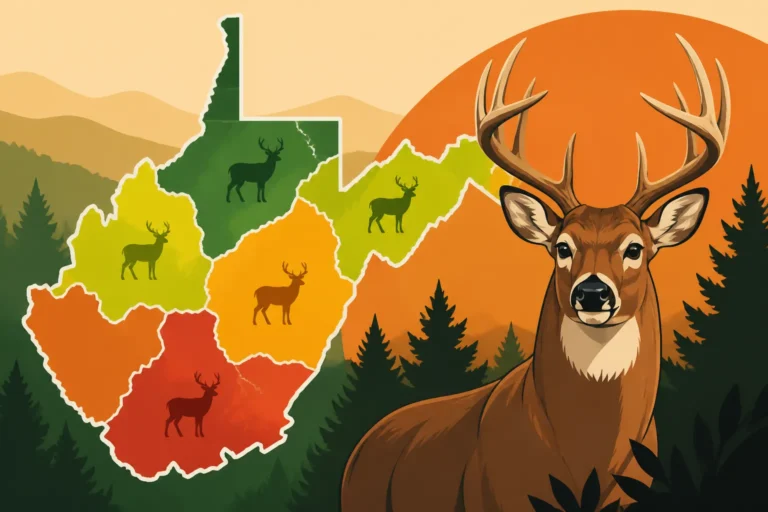
It's a common misconception that deer are just "everywhere" in West Virginia, but the reality is much more nuanced. Deer densities can vary dramatically from one region to another, influenced by everything from land use to elevation.
In the Eastern Panhandle, for example, which includes counties like Berkeley, Jefferson, and Morgan, you'll often find higher deer densities. This region is characterized by more agricultural land, providing abundant food sources like corn, soybeans, and alfalfa. The rolling hills and smaller woodlots offer excellent cover, and the milder winters mean less stress on the herd. It's no wonder that the Why the Eastern Panhandle Grows Big Bucks is a topic often discussed among seasoned hunters. Deer here tend to be well-fed, and with careful management, have the potential to grow larger.
Conversely, venture into the vast, rugged wilderness of the Allegheny Highlands, encompassing areas within the Monongahela National Forest in counties like Randolph, Pocahontas, and Pendleton, and deer densities often decrease. Here, the landscape is dominated by mature hardwood forests, steep mountainsides, and dense rhododendron and laurel thickets. Food sources, primarily acorns and various types of browse, can be patchier and more dependent on mast crop success. While the deer might be fewer, they are often bigger-bodied and wilder, having adapted to survive in a more challenging environment. The southern coalfields and Ohio River Valley also present their own unique challenges and opportunities, with deer adapting to reclaimed lands, river bottom agriculture, and fragmented forests. This regional variability underscores why a one-size-fits-all hunting strategy simply doesn't work in West Virginia.
| Region | Primary Habitat Types | Typical Deer Density | Notable Characteristics |
|---|---|---|---|
| Eastern Panhandle | Farmland, small woodlots, suburban fringes | High | Abundant food, often larger bucks, higher roadkill rates |
| Allegheny Highlands | Mature hardwood forest, steep mountains, thickets | Moderate to Low | Wild, strong deer, mast-dependent, rugged terrain |
| Ohio River Valley | River bottoms, fragmented forests, agriculture | Moderate to High | Mixed habitat, good cover, variable food sources |
| Southern Coalfields | Reclaimed mine lands, regenerating forests | Moderate | Unique blend of habitat, good cover, increasing populations |
Primary Food Sources Across the Mountain State
Understanding what deer eat is foundational to hunting them effectively. West Virginia's diverse flora provides a smorgasbord for whitetails, but their diet shifts throughout the year, driven by availability and nutritional needs.
During spring and summer, deer are primarily browsers, munching on a variety of lush, green vegetation. Young, tender shoots of maples, sassafras, sumac, and blackberry brambles are highly favored. They'll also consume various forbs, grasses, and agricultural crops like clover, alfalfa, and young soybeans when available. This period is critical for antler growth in bucks and for does to nourish their fawns. As fall approaches, the focus shifts dramatically to mast crops. Acorns, particularly from white oaks (which are less bitter than red oaks), become a powerhouse food source, packed with carbohydrates and fat crucial for putting on weight before winter. Hickory nuts, beechnuts, and even wild grapes and persimmons supplement their diet.
A poor mast crop year can significantly impact deer health and movement, pushing them to seek alternative food sources, often leading to increased browsing pressure on specific plants or forcing them into agricultural fields. In winter, when snow covers the ground, deer revert to browsing on twigs and buds of woody plants, like greenbrier, holly, and the ever-present rhododendron. They'll also paw through snow to find leftover acorns or browse on evergreens if nothing else is available. Recognizing these seasonal dietary shifts is paramount. If you're out Hunting After a Poor Acorn Year, you know deer will be concentrated where other food sources are present, often near standing corn or in dense evergreen cover.
How Terrain Shapes Deer Travel and Bedding
West Virginia's topography isn't just scenic; it's a blueprint for deer movement. The state's renowned steepness, deep hollows, and winding ridges dictate where deer eat, sleep, and travel, making it a critical factor for hunters to understand.
Deer are creatures of efficiency, always seeking the path of least resistance while remaining safe. On steep slopes, they'll often utilize benches – flat, terrace-like sections along a hillside – as travel corridors or bedding areas. These benches offer a slight reprieve from the grade and often have slightly different vegetation, providing both food and cover. Similarly, saddles, which are dips or low points along a ridge line, act as natural funnels, concentrating deer movement as they cross from one side of a mountain to another. Knowing Hunting a Ridge-Top Saddle for Rutting Bucks can be a game-changer.
Dense cover, such as thick stands of laurel, rhododendron, or regenerating clear-cuts, provides crucial bedding and security areas, especially in heavily hunted regions. Deer will often bed on the downwind side of a ridge or in thickets, allowing them to detect approaching danger by scent. Understanding how Wind and Thermals on a Steep Ridge interact is also vital. In the mornings, cold air sinks, carrying scent down into hollows. In the afternoons, as the sun warms the earth, thermals rise, carrying scent up the hillsides. Deer use these air currents to their advantage, and smart hunters learn to do the same, planning their approach and stand locations accordingly. These natural features create predictable travel patterns, even for the wariest bucks.
Demographics and Health of the West Virginia Deer Herd
Beyond just numbers, understanding the internal workings of the deer population—who makes up the herd and how healthy they are—provides critical context for both hunters and conservationists.
Buck-to-Doe Ratios and Their Impact on the Rut
The ratio of bucks to does within a local deer population is a significant factor, not just for population dynamics but especially for the quality and timing of the rut. In a natural, unhunted environment, this ratio would typically hover around 1:1, meaning roughly equal numbers of adult bucks and does. However, hunting pressure, particularly on bucks, can skew this ratio dramatically.
In areas with heavy hunting pressure and lenient buck harvest regulations, it's common to find ratios as high as 1:5 or even 1:10 (one buck for every five or ten does). This imbalance can lead to a "stressed rut" where many does may not be bred during their first estrus cycle, extending the overall breeding period. This means a more drawn-out, less intense rut, as bucks have to chase more does over a longer period. For hunters, this translates to a less predictable and less concentrated rutting activity. Conversely, in areas with more restrictive buck harvest or where antlerless deer are heavily harvested, the ratio can be much closer to 1:2 or 1:3. These healthier ratios often lead to a more intense and synchronized rut, where a higher percentage of does are bred during their initial cycle. This concentrates buck activity, making the Hunting the Rut in Mid-November a more exciting and predictable period for hunters. The WVDNR uses antlerless quotas to help manage these ratios, aiming for a healthier, more balanced herd.
Age Structure and Trophy Potential
The age structure of a deer population refers to the distribution of different age classes (fawns, yearlings, mature adults) within the herd. This is crucial for understanding a herd's health, its ability to reproduce, and, for many hunters, its potential to produce mature, trophy-class bucks.
In many parts of West Virginia, particularly on public lands that see heavy hunting pressure, the age structure of bucks tends to be younger. Yearling bucks (1.5 years old) often make up a significant portion of the harvest. This means that many bucks are taken before they have a chance to reach their full antler growth potential, which typically occurs between 3.5 and 5.5 years of age. While there's nothing wrong with harvesting a yearling, a herd with a more balanced age structure – meaning a good number of 2.5, 3.5, and older bucks – generally indicates a healthier population and offers more opportunities for hunters seeking a mature animal. The West Virginia Buck Age Structure is something wildlife managers closely monitor.
Factors like antler point restrictions (APRs), where implemented, or simply a shift in hunter mindset towards passing younger bucks, can influence the age structure. In areas where bucks are allowed to age, their body weights increase, and their antlers develop more mass and points, leading to a higher West Virginia Boone and Crockett Whitetails potential. This takes patience and management, but the rewards are often worth the wait.
Monitoring Fawn Survival and Recruitment Rates
Fawn survival and recruitment rates are vital indicators of a deer herd's overall health and its ability to sustain itself. Recruitment refers to the number of fawns that survive to be yearlings and enter the breeding population. A healthy fawn recruitment rate ensures a stable or growing population.
Several factors influence fawn survival in West Virginia. Predation, primarily by coyotes and black bears, can significantly impact fawn numbers, especially in the first few weeks of life. While predators play a natural role in the ecosystem, localized high predator populations can sometimes suppress deer recruitment. Habitat quality is another major driver; does that have access to nutritious food and dense fawning cover are more likely to successfully raise their young. Thin, open woods offer little protection for vulnerable fawns, while thick clear-cuts or brushy bottoms provide excellent hiding spots.
Weather also plays a role. Severe cold snaps or prolonged periods of wet, cold weather shortly after fawns are born can lead to higher mortality rates. Diseases, though less common in fawns than adult deer, can also contribute to losses. The West Virginia Fawn Survival Rates are carefully studied by the WVDNR, often through spotlight surveys and trail camera data. Understanding these rates helps biologists determine whether a population is stable, growing, or declining, which then informs future hunting regulations, particularly concerning antlerless deer quotas.
Chronic Wasting Disease and Other Health Concerns
No discussion about white-tailed deer in West Virginia would be complete without addressing the significant health challenges they face, particularly Chronic Wasting Disease (CWD). This issue is a major focus for wildlife managers and hunters alike.
The Spread and Impact of CWD in West Virginia
Chronic Wasting Disease (CWD) is a neurological disease that affects deer, elk, and moose. It's caused by an abnormal protein called a prion, and it's always fatal. In West Virginia, CWD first made its appearance in Hampshire County in 1998, a sobering moment for hunters and conservationists across the state. Since then, it has slowly but steadily spread, impacting a growing number of counties, primarily in the Eastern Panhandle. The West Virginia's Chronic Wasting Disease Counties list continues to evolve, necessitating vigilance and adaptive management strategies.
The impact of CWD on individual deer is devastating, leading to emaciation, abnormal behavior, and ultimately death. On a population level, while CWD is a slow-moving disease, it can, over time, lead to significant declines in deer numbers and alter population structures. It poses a long-term threat to the health of West Virginia's deer herd and, by extension, to the future of deer hunting in the state. Understanding How Many Deer Have Tested CWD-Positive in West Virginia highlights the ongoing challenge. It's not just about losing individual animals; it's about the potential for widespread population effects and the management burden it creates.
Mandatory Testing and Carcass Movement Restrictions
To combat the spread of CWD, the WVDNR has implemented stringent measures, especially within the designated CWD Containment Area, which includes counties like Hampshire, Hardy, Mineral, and Berkeley. For hunters harvesting deer within these areas, mandatory CWD testing is often required. This involves taking the head of a harvested deer to an official WVDNR sampling station, where tissue samples (specifically lymph nodes) are collected for analysis. This data is critical for monitoring the disease's prevalence and geographic spread.
Perhaps one of the most challenging regulations for hunters, particularly those from outside the CWD zone or non-residents, is the West Virginia Carcass Movement Restrictions. These rules prohibit the movement of certain parts of a harvested deer carcass out of the CWD containment area, with specific exceptions for deboned meat, hides, and cleaned skulls. The goal is to prevent the physical transport of prions to new areas. While these rules can be inconvenient, they are a necessary tool in the fight against CWD. Hunters must be aware of their county's status and follow all regulations to help protect the wider deer population. Checking your harvest and adhering to these guidelines is a core part of being a responsible hunter in the Mountain State.
Other Health Issues: EHD and Parasites
While CWD rightly garners much attention, West Virginia's deer also contend with other health challenges, including Epizootic Hemorrhagic Disease (EHD) and various parasites. These issues, though often more localized or cyclical, can still impact deer health and populations.
EHD is a viral disease transmitted by biting midges (often called "no-see-ums" or "gnats"). It causes fever, internal hemorrhaging, and often leads to death. EHD outbreaks typically occur in late summer and early fall, particularly during periods of drought followed by heavy rains, which create ideal breeding conditions for the midges. While EHD can cause significant localized die-offs, it does not persist in the environment like CWD, and deer populations usually rebound fairly quickly. The EHD Die-Offs in West Virginia Deer can be alarming for hunters who discover deceased deer, but it’s important to understand the different nature of this disease compared to CWD.
Deer in West Virginia also host a variety of parasites, including ticks, lice, and various internal worms. While usually not fatal in healthy deer, heavy parasite loads can weaken animals, making them more susceptible to disease, predation, or harsh environmental conditions. The presence of these parasites is a natural part of the ecosystem, but extreme infestations can be an indicator of a stressed deer population or unusually high densities in certain areas. The WVDNR monitors for these issues as part of its broader wildlife disease surveillance efforts, providing a holistic view of the herd's health.
Navigating West Virginia's Deer Hunting Seasons and Regulations
Hunting white-tailed deer in West Virginia offers diverse opportunities, but it requires a solid understanding of the state's West Virginia Deer Season Structure Explained and regulations. Seasons are carefully set to manage the herd, provide recreational opportunities, and balance diverse interests.
Key Season Dates and Opportunities
West Virginia offers a long and varied deer hunting season, extending from early fall into winter, providing opportunities for different hunting styles and preferences. The archery season kicks off first, typically in late September or early October, offering hunters the chance to pursue deer in relatively mild weather before the leaves have fully dropped. This season is long, running well into December, often overlapping with key periods like the rut. When West Virginia's Archery Season Opens marks the true start of deer season for many.
The buck firearms season, often referred to simply as "gun season," is usually a two-week period in late November, coinciding with the peak of the rut in many areas. This is often the most popular and heavily hunted season, drawing thousands of hunters into the woods. Following this, the muzzleloader season provides another opportunity in early December, typically offering a unique challenge and a chance to hunt later in the season. There are also youth hunting weekends and other specialized seasons designed to manage specific populations or provide specific hunting experiences. Keeping up with these dates is crucial, and the WVDNR website is the best source for the most current information each year.
Antlerless Harvest and Special Hunts
An often-misunderstood but critically important component of West Virginia deer management is the antlerless harvest. Allowing hunters to take does is essential for controlling deer populations, balancing buck-to-doe ratios, and mitigating impacts like agricultural damage and deer-vehicle collisions. Without adequate antlerless harvest, deer populations can quickly grow beyond the carrying capacity of the land, leading to stressed, less healthy herds.
The WVDNR implements antlerless seasons, often county-specific, and sometimes through special permit-based hunts or bonus tags. These seasons typically run concurrently with archery, muzzleloader, or specific antlerless-only firearms weekends. For example, some counties might have a longer antlerless season, while others may be more restricted based on local deer densities and management goals. The West Virginia County-Specific Antlerless Rules can vary significantly, so always check the regulations for your specific hunting area. Additionally, certain areas might offer special quota hunts or controlled hunts on public lands, such as some Wildlife Management Areas (WMAs), to address localized population objectives. Participating in antlerless harvests is a vital way for hunters to contribute to healthy deer populations and sustainable hunting in West Virginia.
The West Virginia Division of Natural Resources Role
The West Virginia Division of Natural Resources (WVDNR) is the primary governmental agency responsible for managing the state's wildlife resources, including white-tailed deer. Their role is multi-faceted, encompassing research, regulation, enforcement, and education, all aimed at ensuring the long-term health of the deer herd and the sustainability of hunting opportunities.
WVDNR biologists conduct extensive research, collecting data on deer health, population dynamics, habitat use, and disease prevalence. This scientific data forms the backbone of their management decisions, informing everything from season dates and bag limits to specific antlerless quotas. They also manage critical public lands like Wildlife Management Areas, implementing habitat improvement projects and providing access for hunters. Law enforcement officers, the Natural Resources Police, ensure compliance with hunting regulations, upholding ethical standards and protecting the resource from poaching and illegal activities. The WVDNR also plays a crucial role in hunter education, with the West Virginia Hunter Education Requirements ensuring new hunters are knowledgeable and safe. Their website and annual hunting regulations digest are indispensable resources for every West Virginia deer hunter, providing detailed maps, season dates, and important updates.
Mastering Deer Sign and Rutting Behavior
One of the most rewarding aspects of deer hunting in West Virginia is learning to read the subtle clues deer leave behind and understanding their behavior, especially during the exciting period of the rut. It's like piecing together a puzzle, where every track, scrape, and rub tells a part of the story.
Interpreting Scrapes, Rubs, and Tracks
Deer leave behind a wealth of information in the woods if you know what to look for. Scrape Lines Along a Logging Road and rubs are particularly telling signs of buck activity, especially as the rut approaches. A scrape is an area on the ground, usually under a low-hanging branch, where a buck has pawed away leaves and debris, exposing the bare earth. He'll then urinate over his tarsal glands into the scrape, depositing scent. The overhanging branch is often rubbed by his preorbital glands. Scrapes are communication hubs, telling other deer who's in the area and if a doe is ready to be bred. Fresh scrapes, damp and recently disturbed, indicate a buck is actively working the area.
Rubs, on the other hand, are spots where a buck has rubbed his antlers against the trunk or branches of a tree, stripping the bark. Bucks rub for several reasons: to remove velvet, to mark territory, to strengthen neck muscles, and as a display of dominance. The size of the rub and the diameter of the tree can give you clues about the size of the buck. Fresh rubs, with exposed, moist wood, signify recent activity. When you find these signs, especially a line of them leading somewhere, you're Reading a Ridge for Eastern Panhandle Deer or discovering a travel corridor in the rugged terrain. Coupled with tracks, which can indicate direction of travel and recentness of movement, these signs are invaluable for placing a stand or planning a still-hunt.
Hunting the West Virginia Rut in November
Ah, the rut! For many West Virginia deer hunters, November is the most anticipated month of the year, a time when bucks, driven by the urge to breed, let down their guard and become more active during daylight hours. The Hunting the Rut in Mid-November is often considered prime time.
The rut isn't a single event but a series of phases. The pre-rut, often in late October and early November, sees bucks becoming increasingly aggressive, making more rubs and scrapes, and beginning to cruise for does. This is a great time to be in the woods, as bucks are on the move. The peak rut, typically occurring around mid-November in West Virginia, is when the majority of does enter estrus. Bucks go into a frenzy of chasing and tending, often dogging does for hours, sometimes even days. During this period, bucks can be seen at any time of day, often paying little attention to their surroundings. Post-rut, in late November and early December, sees bucks recovering from the exhaustive breeding period, often seeking out food sources to replenish their reserves, though some may still be looking for unbred does. Using calling techniques like rattling and grunting can be particularly effective during the pre-rut and early peak rut to bring in curious or dominant bucks.
Utilizing Modern Scouting Tools
Gone are the days when a paper map and a compass were your only scouting tools. While those traditional methods are still valuable, modern technology has revolutionized the way we prepare for a deer hunt in West Virginia. Tools like GoHunt and various mapping apps are now indispensable for efficient scouting.
Applications like GoHunt provide layers of topographical maps, aerial imagery, land ownership boundaries, and even historical weather data right on your phone or computer. You can use these tools from the comfort of your home to virtually Scouting West Virginia Public Land Before Season. Identify potential bedding areas (often dense, thick cover on south-facing slopes for warmth), travel corridors (ridges, saddles, creek bottoms), and feeding zones (clear-cuts, mast-producing oaks, agricultural fields). You can mark waypoints for potential stand sites, plan entry and exit routes that minimize disturbance, and even analyze wind direction for different hunting scenarios.
Beyond initial scouting, these apps can be used in the field. Imagine verifying property lines with precision, navigating in dense fog, or tracking your path back to your vehicle in the dark. Trail cameras, another modern marvel, can be strategically placed to monitor deer activity, identify specific bucks, and pinpoint when and where they are moving. This blend of virtual and physical scouting, utilizing advanced tools like GoHunt, gives hunters an unprecedented advantage, making their time in the challenging West Virginia woods more productive and safer.
Ethical Hunting and Conservation for Future Generations
Hunting white-tailed deer in West Virginia is more than just a pastime; it's a deep-rooted tradition that comes with significant responsibilities. Ethical practices and a commitment to conservation are paramount to ensuring this heritage thrives for generations to come.
Best Practices for Responsible Deer Harvest
Taking a responsible approach to deer harvest is a cornerstone of ethical hunting. This begins long before you pull the trigger or release an arrow. It involves meticulous preparation, understanding your weapon, and knowing your limits. For rifle hunters, Rifle Setups for West Virginia Deer Hunting means confirming your rifle is sighted in accurately and you can consistently hit your target at various distances, especially in the steep and varied terrain of West Virginia. Bowhunters need to ensure their Bow and Crossbow Setups for West Virginia are tuned, and they've practiced extensively from elevated positions or ground blinds.
Once afield, the focus shifts to shot placement. A clean, ethical shot that results in a quick, humane kill is the ultimate goal. This means waiting for the right shot angle, often a broadside or quartering-away shot, and avoiding risky shots like those to the head or neck that have a higher chance of wounding an animal. After the shot, diligent tracking is essential. Even if you think you made a perfect shot, always assume the deer has run. Take your time, look for blood, tracks, and disturbed vegetation. Learning Tracking a Deer Through West Virginia Leaf Litter can be incredibly challenging but is a vital skill. Finally, once an animal is recovered, Meat Care Gear for West Virginia Hunters becomes critical. Proper field dressing, cooling, and processing of the venison respects the animal and ensures high-quality meat.
Hunters as Stewards of the Land
The hunting community plays an indispensable role in conservation, often footing the bill for wildlife management and habitat preservation. In West Virginia, as in other states, hunters contribute significantly through the purchase of licenses, stamps, and equipment, which in turn funds the WVDNR's vital conservation programs. This is the foundation of the "user pays, user benefits" model of wildlife conservation.
Beyond financial contributions, hunters are often the most ardent advocates for healthy habitats. We are the eyes and ears in the woods, reporting unusual animal behavior, identifying potential disease outbreaks, and recognizing changes in habitat. Many hunters actively engage in habitat improvement projects, whether it's planting food plots on private land, participating in public land cleanups, or advocating for sound forest management practices that benefit deer and other wildlife. Understanding the importance of Public Hunting Land in West Virginia and using it respectfully ensures these resources remain available and healthy. This active stewardship, often passed down through generations, is what truly defines the hunter's commitment to the land and the animals we pursue.
Venison Processing and Handling for Quality
Bringing home venison is a deeply rewarding part of the hunt, but ensuring that meat is high-quality and safe to eat requires proper handling from the moment of harvest. Every step, from field dressing to freezer, impacts the final product.
Immediately after a deer is down, the clock starts ticking, especially in warmer weather during the early archery season. Rapid field dressing is crucial to cool the carcass quickly and prevent bacterial growth. Removing the internal organs allows heat to escape and reduces the chance of spoilage. If you're in rugged terrain, mastering the Butchering a Deer at Camp or even using the gutless method can make extraction easier. Once field dressed, the deer needs to be cooled down as fast as possible. This might mean hanging it in a shaded area, placing ice bags in the cavity, or getting it to a cooler or processing facility.
Aging venison, if done correctly in a cool, controlled environment (ideally between 34-40°F), can significantly improve its tenderness and flavor. For many, taking their deer to a local processor is the preferred option, as they have the expertise and facilities to handle the meat professionally. However, for those who prefer to process their own deer, having the right Field Dressing Knives Worth Carrying and knowing techniques for deboning and packaging are essential. Vacuum sealing is highly recommended for freezing venison, as it removes air and prevents freezer burn, preserving the meat's quality for longer enjoyment. Proper processing not only ensures delicious meals but also honors the animal and the effort of the hunt.
Disclaimer
The information provided in this guide is for informational and educational purposes only. Hunting regulations, season dates, and wildlife management practices are subject to change. Always consult the official West Virginia Division of Natural Resources (WVDNR) regulations and guidelines before planning or engaging in any hunting activities. Adherence to all local, state, and federal laws is the responsibility of the individual hunter.