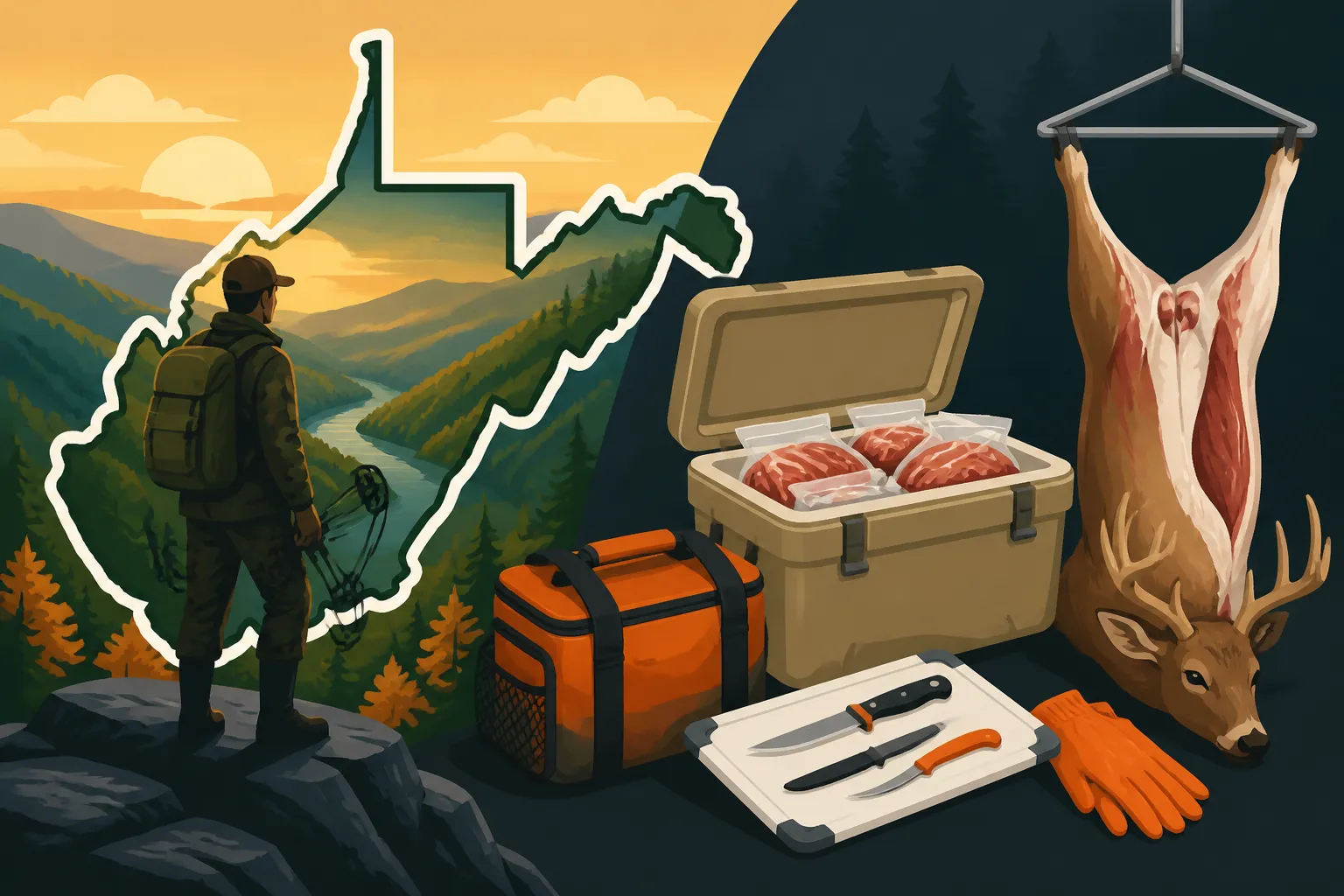
Meat Care Gear for West Virginia Hunters
There's nothing quite as rewarding as dropping a beautiful West Virginia buck or bear, but the work truly begins the moment that animal hits the ground. Many hunters, myself included, have stood over a hard-earned harvest, suddenly feeling the weight of the task ahead: getting that meat from the woods to the freezer in prime condition. From the warm days of early archery season to the deep cold of December, West Virginia's diverse terrain and weather present unique challenges for proper meat care. This guide is dedicated to equipping you with the knowledge and gear to confidently handle your harvest, ensuring every ounce of that precious wild game makes it to your table.
The Critical First Steps: Field Dressing Essentials
Field dressing is the absolute first line of defense for preserving your meat. It’s about quickly removing the internal organs to allow the carcass to cool down and prevent bacterial growth. Doing this right, and doing it efficiently, sets the stage for everything that comes after.
Choosing the Right Field Dressing Knife
The knife you choose for field dressing is probably the most personal piece of gear you'll carry, next to your firearm or bow. It's an extension of your hand in a critical moment. For West Virginia hunting, you'll want something that can handle tough hide, cartilage, and even some bone, all while being comfortable and secure in your grip – even if your hands are cold, wet, or bloody.
A fixed-blade knife with a blade length between 3.5 and 5 inches is often ideal. Drop-point blades are popular because they offer a strong tip for piercing and a generous belly for skinning, reducing the chance of nicking the gut bag. Some hunters prefer a gut hook on their blade, which can be incredibly useful for opening the body cavity cleanly without puncturing the intestines, particularly on larger animals. However, it's worth noting that a gut hook needs to be kept incredibly sharp to be effective, and some find them harder to sharpen than a plain edge. The steel quality matters, as you want a blade that holds an edge through a full field dressing, but can also be easily resharpened in the field or back at camp. Handles should offer a secure, non-slip grip, even when wet or slick. Look for textured synthetic materials, G10, or stabilized wood. Remember, a dull knife is a dangerous knife, so a keen edge is paramount.
Carrying a Bone Saw or Alternatives
For larger game like mature deer or especially bear, a bone saw can be an invaluable tool. While you can often split the sternum and pelvis of a deer with a stout knife and some elbow grease, a dedicated bone saw makes these tasks much quicker and cleaner. A folding bone saw is portable and designed to make short work of bone, opening the chest cavity wide for faster cooling and allowing you to fully remove the organs. This is particularly helpful if you're deep in the woods and need to ensure maximum air exposure to the body cavity.
However, many hunters today are turning to the "gutless method" for field processing, especially in West Virginia's steep and challenging terrain. This technique involves skinning and quartering the animal without opening the body cavity at all. Instead, the meat is removed in major muscle groups directly from the bone. This method significantly reduces the weight you have to drag, eliminates the need for a bone saw, and keeps the meat incredibly clean, as it never comes into contact with the gut pile. While it requires a bit more skill with a boning knife and a good understanding of animal anatomy, it's a game-changer for solo hunters or those tackling remote areas like those found when Hunting Steep Allegheny Ridges.
Gloves and Sanitation for Safe Handling
This might seem like a small detail, but carrying multiple pairs of disposable nitrile gloves is absolutely non-negotiable for proper meat care. They serve several critical purposes. First, they protect you from potential pathogens that can be present in an animal's blood or organs. Second, they protect the meat from contamination from your hands, which might carry dirt, oils, or other bacteria.
When field dressing, you're working in a potentially messy environment, and keeping things as sanitary as possible is crucial for the quality and safety of the meat. Changing gloves if they tear or become excessively soiled is a good practice. Beyond gloves, a small bottle of hand sanitizer is great for cleaning up your hands after you've finished the initial dressing and before you handle any other gear or food. These simple steps go a long way in ensuring your harvest is clean and safe to eat.
Protecting Your Harvest: Game Bags and Quartering Gear
Once an animal is field-dressed, the next immediate concern is protecting the exposed meat from insects, dirt, and bacteria, especially in West Virginia's often humid conditions. This is where quality game bags and thoughtful quartering become essential.
Selecting Quality Game Bags
Game bags are not just glorified trash bags; they are specifically designed to protect your meat while allowing it to breathe and cool. This breathability is key, as it helps form a dry "crust" on the meat's surface, further deterring bacterial growth.
You'll find various materials, from traditional cotton pillowcase-style bags to lightweight synthetic mesh options. Cotton bags are often reusable, but they can be heavy when wet and prone to staining. Synthetic mesh bags, like those offered by GoHunt and other specialized brands, are usually more durable, lighter, and easier to clean. They provide excellent protection against flies and larger insects, while still allowing air circulation. For a deer, you'll typically need four quarter bags and a fifth bag for the backstraps, tenderloins, and trim. For a bear, you might need larger, more robust bags. If you're hunting during the warmer early days of Bowhunting West Virginia's Long Archery Season, good game bags are absolutely critical to prevent fly blow and keep your meat clean until you can get it to a cooler.
Here's a quick comparison of common game bag types:
| Feature | Cotton Game Bags | Synthetic Mesh Game Bags |
|---|---|---|
| Material | Natural Cotton | Polyester, Nylon |
| Breathability | Excellent | Excellent |
| Durability | Moderate, can tear | High, tear-resistant |
| Weight | Heavier when wet | Lightweight |
| Reusability | Washable, but can stain | Highly reusable, easy to clean |
| Pest Protection | Good for flies, not tiny gnats | Good for flies, some protection from tiny gnats |
| Cost | Generally less expensive | Generally more expensive |
| Best Use | Shorter hauls, cooler weather | Longer hauls, variable temps, backcountry |
Quartering Tools for Backcountry Success
If you're hunting deep in the Monongahela National Forest or far from a road, quartering your animal is often the only practical way to get it out. This involves breaking the animal down into manageable pieces – typically the four quarters, the backstraps, and tenderloins. For this, you'll need a good boning knife. A boning knife usually has a thinner, more flexible blade than your field dressing knife, allowing you to work around bones and separate muscle groups cleanly. A blade around 6 inches is a good all-around size.
Having a small sharpening steel or ceramic stick can be a lifesaver when quartering, as working through an entire animal can dull even the best blade. The goal of quartering is to remove as much meat as possible from the bone to reduce weight, and to package it efficiently into your game bags. Taking the time to do this cleanly in the field minimizes contamination and ensures that your hard work translates into delicious meals. Imagine breaking down a bear in a remote hollow; efficient quartering means fewer trips and less physical strain.
The Role of Pepper and Citric Acid Sprays
Once your meat is field dressed and potentially quartered, you might consider using an extra layer of protection, especially during warmer hunting seasons. Many hunters carry a small bottle of black pepper or a commercial game meat spray containing citric acid.
Black pepper acts as a natural insect repellent. A generous dusting over the exposed meat inside the body cavity or on quartered sections can significantly deter flies from landing and laying eggs. It's a simple, non-toxic solution that can buy you precious time, particularly if you have a long drag ahead or if ambient temperatures are higher than ideal. Citric acid sprays go a step further. They not only deter insects but also slightly lower the pH of the meat's surface, creating an environment less hospitable for bacterial growth. This can help form that protective dry crust on the meat more quickly and extend its freshness for a few critical hours. While not a substitute for proper cooling, these sprays can be a valuable addition to your meat care kit, providing peace of mind when circumstances are less than perfect.
Extraction and Transport: Moving Your Trophy Off the Mountain
Getting your harvested animal from the kill site to your vehicle can often be the most physically demanding part of the hunt, especially in the rugged terrain of West Virginia. The right gear can make all the difference between an exhausting ordeal and a manageable extraction.
Game Carts for Forest Roads and Flat Terrain
If your hunt takes you to areas with relatively flat terrain or old logging roads, a game cart can be your best friend. These two or four-wheeled devices are designed to carry significant weight with less effort than dragging. Look for carts with robust frames and durable tires. Pneumatic tires are great for absorbing bumps and rolling easily over uneven ground, but be sure to carry a small repair kit or opt for solid tires if flats are a major concern.
Carts are particularly effective on wildlife management areas (WMAs) with established trails or in some parts of the Eastern Panhandle with flatter farmland access. They protect the carcass from abrasive ground, keeping the hide and meat cleaner. However, it's important to be realistic: a game cart will be next to useless on a truly steep West Virginia mountainside or through thick laurel thickets. Know your hunting ground, and choose your extraction method accordingly.
Sleds and Drags for Steep, Rugged Country
For the classic West Virginia challenge – a deer down in a steep hollow or halfway up a rugged ridge – a game sled or sturdy drag harness is often the most practical solution. Game sleds are typically made from heavy-duty plastic, allowing the carcass to glide over obstacles like fallen logs, rocks, and leaf litter with less friction than a direct drag. They also keep the animal cleaner, protecting it from dirt and debris. Many sleds have molded sides or attachment points to secure the animal.
When you're faced with a situation like Dragging a Deer Off a Steep Ridge, technique matters as much as gear. A heavy-duty drag harness worn by the hunter distributes the weight more evenly across your shoulders and back, rather than just pulling with your arms. For very steep descents, using a rope to lower the animal slowly can be safer and prevent uncontrolled slides. Teamwork on deer drives on West Virginia public land often means multiple hunters can share the drag, making it much more feasible.
Frame Packs and Boning Out for Deep Wilderness Hunts
When you venture into true backcountry, like the interior of the Monongahela National Forest or Cranberry Wildlife Management Area, dragging or carting an entire animal becomes virtually impossible. This is where the gutless method combined with a sturdy frame pack becomes not just an option, but a necessity.
A quality frame pack, designed to carry heavy and awkward loads, allows you to bone out the animal in the field, place the meat into game bags, and carry it out in manageable loads. This might mean multiple trips, but it ensures you can access and harvest game in remote areas that would otherwise be out of reach. Look for packs with a robust internal or external frame, a comfortable hip belt to transfer weight to your legs, and ample lashing points for securing meat. GoHunt and similar outdoor retailers often feature packs specifically designed for backcountry hunting that prioritize durability and load-carrying comfort. Preparing for this type of extraction means having your boning knife, game bags, and pack ready, and mentally preparing for the physical exertion involved. It's a testament to the dedication required for deep-woods West Virginia hunting.
Chilling Your Meat: Coolers and Cooling Strategies
Once you’ve successfully extracted your harvest, the next critical phase is rapidly cooling the meat. Heat is the enemy of fresh game, and getting the core temperature down quickly prevents bacterial growth and ensures optimal flavor and tenderness.
Choosing the Right Cooler for West Virginia Conditions
A high-quality cooler is an investment that pays dividends in meat preservation. For West Virginia hunting, especially during the early archery or fall turkey seasons when temperatures can still be warm, a rotomolded cooler is often the best choice. These coolers offer superior insulation, thicker walls, and better seals compared to standard models, meaning they'll hold ice for days.
The size of your cooler should be appropriate for the game you anticipate harvesting. For a typical West Virginia whitetail, a 100-quart cooler is often sufficient for boned-out quarters, while a large bear might require a 150-quart or even larger capacity. Always consider the internal dimensions to ensure it can accommodate the largest pieces of meat you might put in it. Features like sturdy latches, a reliable drain plug, and non-slip feet are also important. Pre-chilling your cooler with sacrificial ice the day before your hunt can significantly extend the life of your fresh ice once the meat is loaded.
Ice Management and Meat Storage Techniques
Effective ice management is key to keeping your meat cold. For long-term cooling, block ice is generally superior to cubed or crushed ice because it melts much slower. However, a mix can be effective: use crushed ice to pack tightly around the meat for initial rapid cooling, then add block ice for sustained cold.
When loading meat into the cooler, layer it with ice. Ideally, try to keep the meat elevated off the bottom of the cooler, away from standing meltwater, using a cooler grate or by placing the meat in sealed bags (though breathable game bags are still preferred for air circulation if not directly on ice). Don't let your meat soak in bloody water, as this can degrade its quality and flavor. If you're going to be driving for an extended period, drain off excess water periodically and add more ice as needed. The goal is to keep the meat consistently cold, ideally below 40°F (4°C), until it can be further processed.
Air Flow and Overnight Cooling Methods
Sometimes, a cooler isn't immediately available, or you're hunting during the colder parts of the season, like Hunting the Late-Season December Lull, when ambient temperatures can assist with chilling. In these situations, maximizing air flow is crucial.
If temperatures are consistently below 40°F (4°C) overnight, hanging your field-dressed animal (or quarters in game bags) in a cool, shaded, and well-ventilated area can be an excellent way to continue the cooling process. A clean garage, a shed, or even a sturdy tree branch with a gambrel can serve as a makeshift meat pole at your camp. Ensure there's good air circulation around the entire carcass or individual pieces. Critter control is essential: hang the meat high enough to deter scavengers, and cover it with game bags to protect it from insects, even in cold weather. Allowing the meat to "air out" for a period before final processing can also help tenderize it and develop a better flavor profile.
Processing at Home: Tools for Butcher Block Success
Bringing your game home is just the beginning. For many West Virginia hunters, the true satisfaction comes from transforming that field-dressed animal into delicious, freezer-ready cuts. Having the right tools for home processing makes this task enjoyable and efficient.
Essential Butchering Knives and Sharpening Systems
A good set of butchering knives is indispensable for home processing. While your field dressing knife is great for its initial purpose, you'll want more specialized blades for breaking down an animal on the butcher block. This typically includes:
- Boning Knives: With thin, flexible blades (6-8 inches), these are perfect for separating meat from bone and trimming silverskin.
- Breaking Knives: Sturdier, curved blades (8-10 inches) for breaking down larger primals and separating major muscle groups.
- Slicing Knives: Long, thin, often straight-edged knives for cutting roasts and steaks evenly.
Keeping these knives razor-sharp is paramount. A dull knife makes for harder work, jagged cuts, and increases the risk of injury. Invest in a quality sharpening system – whether it's a set of sharpening stones (water stones or diamond stones), a guided sharpening system, or an electric sharpener. Regular honing with a steel or ceramic rod between sharpening sessions will maintain your edge. Sterilize your knives and cutting surfaces frequently to prevent cross-contamination, just as you would in the field.
Grinders and Sausage Stuffers for Value-Added Products
One of the great joys of processing your own game is the ability to create customized ground meat, sausage, and other delicious products. A meat grinder is a staple for turning trim into burger, chili meat, or sausage. Electric grinders are a huge time-saver for larger volumes, with various plate sizes for different grind textures. Manual grinders can work for smaller batches or if you prefer a more hands-on approach.
Once you have ground meat, a sausage stuffer allows you to make your own links. These range from simple hand-crank models to attachments for your meat grinder. With a stuffer, you can control the ingredients, spice levels, and fat content, creating unique flavors that you won't find at the grocery store. Imagine making your own spicy deer sausage for breakfast after a successful hunt during West Virginia's Buck Gun Season! You can even find tutorials and gear recommendations on platforms like GoHunt for mastering these techniques.
Vacuum Sealers and Freezer Storage Solutions
To protect your hard work and ensure your meat stays fresh for months (or even years) in the freezer, a vacuum sealer is an absolute must-have. Vacuum sealing removes air from the packaging, which is the primary cause of freezer burn. Freezer burn not only affects the taste but also the texture of the meat.
Invest in a reliable vacuum sealer and a good supply of freezer-safe vacuum sealer bags. Make sure to label each package with the cut of meat and the date it was processed. This helps you rotate your stock and easily identify what you have on hand. Properly vacuum-sealed and frozen venison can last 12-18 months or even longer without a significant loss in quality. For odd-shaped cuts or if you don't have a sealer, heavy-duty freezer paper, wrapped tightly to remove as much air as possible, is a decent alternative.
Specialized Gear for Unique West Virginia Situations
While the core gear is essential, some specialized items can be lifesavers, particularly when hunting West Virginia's challenging terrain and unpredictable weather. Being prepared for anything will ensure your meat care is never compromised.
Headlamps and Lighting for Night Recovery
In West Virginia, a deer or bear doesn't always go down cleanly at last light, and blood trailing after dark is a common reality. A powerful and reliable headlamp is indispensable for this, and for any field processing that extends into the evening. Look for headlamps with multiple brightness settings, a long battery life, and ideally, a red light option to preserve your night vision.
Trying to Blood Trailing After Dark in West Virginia with a dim light or a phone flashlight is a recipe for frustration and potentially losing an animal. A good headlamp keeps your hands free for tracking, cutting, or packing. Carrying extra batteries or a rechargeable power bank is also a wise precaution. The mountain hollows and thick woods become incredibly dark after sunset, and safe, efficient work depends on adequate illumination.
Portable Shelters and Tarps for Field Processing
Picture this: you've got a bear down in a remote hollow, and a sudden West Virginia pop-up shower rolls through. Or maybe the sun is beating down on a warm October day during fall archery season. In these scenarios, a lightweight portable shelter or even a simple tarp can be a game-changer for field processing.
A small, lightweight tarp can be quickly rigged to provide cover from rain, keeping your meat and tools dry and clean. It can also offer shade, which is crucial for keeping meat cool if you're processing in direct sunlight. Beyond protection from elements, a tarp can be spread on the ground to create a clean workspace for quartering, keeping the meat off the forest floor. This reduces the risk of contamination from dirt, leaves, and other debris. For longer trips or more intensive processing, some hunters even carry compact, pop-up shelters that offer more comprehensive protection and privacy.
Advanced GPS and Communication Devices for Remote Access
Hunting in West Virginia often means venturing into areas with no cell service, such as the expansive Monongahela National Forest Hunting grounds or remote WMAs. While not directly "meat care gear," reliable navigation and communication tools are indirectly vital for successful meat recovery. Losing your way or being unable to call for help can easily lead to spoiled meat, not to mention a dangerous situation for yourself.
A dedicated GPS unit or a robust smartphone app with downloaded offline maps (like those offered by GoHunt or similar mapping services) is crucial for marking the kill site, navigating back to your vehicle, and potentially finding the easiest extraction route. Satellite communicators (e.g., inReach, Zoleo) provide a lifeline in areas without cell service, allowing you to send messages to hunting partners or emergency services. This ensures that if you need assistance with a heavy pack out or encounter an unforeseen issue, help can find you, preventing a hard-earned harvest from being wasted. These devices offer peace of mind and are an essential part of responsible hunting in the rugged Mountain State.
Disclaimer
This article is for general informational purposes only and does not constitute professional advice. Laws, prices and regulations vary by location and change over time. Consult a qualified professional for guidance on your specific situation.