Safety Harnesses and Lifelines
Hunters in West Virginia often face challenging terrain, dense cover, and the exhilarating heights of a perfectly placed treestand. However, that height comes with a hidden danger: falls. This guide isn't here to scare you, but to equip you with the essential knowledge about safety harnesses and lifelines, ensuring every hunt from a treestand is not only successful but, most importantly, safe, bringing you home to tell the tale.
The Harsh Reality of Treestand Accidents
Every year, hunters across West Virginia, and indeed the entire country, experience preventable accidents from elevated stands. It's a sobering thought, especially when you consider how quickly a moment of distraction or a worn piece of equipment can turn a thrilling hunt into a life-altering tragedy. We all go into the woods with dreams of big bucks or gobbling turkeys, but we must never forget the fundamental responsibility of personal safety. It's easy to get complacent, to think "it won't happen to me," but gravity plays no favorites, especially on those slick, frosty November mornings or after a long day in the stand when fatigue sets in.
The Silent Danger: Why Falls Happen
It’s often not a dramatic failure, but a series of small missteps or oversights that lead to a fall. Complacency is arguably the biggest culprit. We've all seen, or perhaps even been, the hunter who skips clipping in "just for a second" to adjust their camera, or who uses an older harness that's been stored in a damp shed for years. Maybe the tree strap was hastily installed, or the climbing sticks weren't quite secure. Add to this the variable conditions of West Virginia's rugged landscape – slippery mud, icy rungs, unstable limbs, or even just reaching for a piece of gear that's just out of comfortable reach – and the risk factors multiply. Think about that moment when you're Hanging a Stand on a Steep Allegheny Ridge, balancing precariously, and suddenly your foot slips. Without a lifeline, that momentary lapse in balance can be catastrophic.
Moreover, distractions play a huge role. You might be focused on the sound of a deer rustling leaves, or the movement of a squirrel, and forget to secure yourself while transitioning from climbing to sitting, or vice-versa. Even the excitement of spotting a deer can make you forget to clip in before standing up for a shot. We're often so fixated on the hunt itself that the methodical, repetitive steps of safety become secondary. It's human nature, but it's a dangerous instinct when you're 20 feet off the ground. The wind can shift unexpectedly, a branch can snap, or a foothold can give way. Any of these scenarios, combined with a moment of unsecured movement, is a recipe for disaster.
The Devastating Impact
The consequences of a treestand fall are far-reaching and utterly devastating, extending far beyond just the hunter. Physically, you could be looking at broken bones, spinal injuries, concussions, internal trauma, or even paralysis. Recovery can be long, painful, and often incomplete, forever altering your ability to enjoy the outdoors or even perform daily tasks. Imagine being laid up for months, unable to walk, unable to work, unable to play with your kids. That's the reality for many who survive a serious fall, impacting everything from your career to your daily routine.
Emotionally, the toll is immense. There's the trauma of the fall itself, the pain, the fear, and then the long-term psychological impact of recovery. Hunters often feel guilt, frustration, and a deep sense of loss for their former abilities. And it's not just the hunter; families bear the brunt of medical bills, lost income, and the emotional stress of caring for an injured loved one. A hunting accident can change the entire trajectory of a family's life, creating financial burdens and emotional scars that may never fully heal. It's a stark reminder that a few extra minutes spent on safety is an investment in your future and the well-being of those who depend on you.
Understanding Your Lifeline: Safety Harnesses and Their Components
Alright, enough with the grim reality. Let's talk about the solution! Modern safety harnesses and lifelines are absolute game-changers, designed to keep you safe and give you peace of mind when you're elevated. They're not just straps; they're engineered systems that distribute forces, prevent free falls, and allow for safe self-rescue. Understanding how these pieces work together is crucial, because a piece of gear is only as effective as its proper application. Don't just own one; know how to use it inside and out. It’s an essential part of your kit, as important as your weapon or your Packs for a Monongahela Forest Day Hunt.
Anatomy of a Full-Body Harness
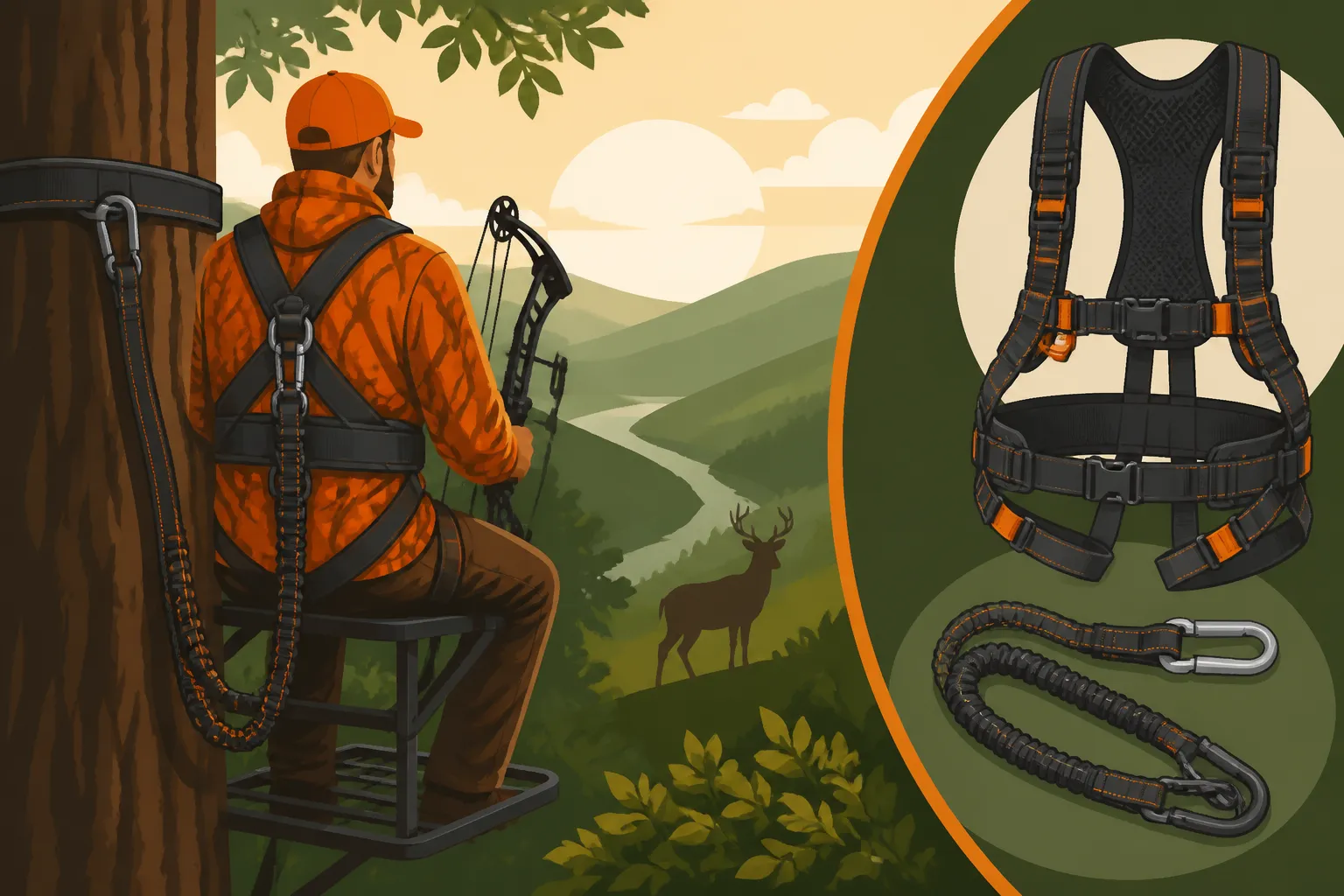
A full-body harness is much more than a simple strap around your waist. It's a complex system designed to cradle your body and distribute the force of a fall across your shoulders, chest, and thighs, rather than concentrating it in one potentially harmful area. Typically, it consists of several key parts:
- Leg Straps: These go around your thighs, similar to a rock climbing harness, preventing you from sliding out of the harness during a fall. They should be snug but not uncomfortably tight, allowing for full range of motion. Properly adjusted leg straps are crucial for preventing injury and enabling self-rescue.
- Shoulder Straps: These run over your shoulders and connect to the back, ensuring the harness stays upright and that your torso is supported. They often feature padding for comfort, especially during extended wears or when carrying a loaded pack.
- Chest Strap: This connects the shoulder straps across your chest, keeping them from slipping off and ensuring a secure fit. It prevents the shoulder straps from separating and helps maintain the integrity of the harness system.
- Back D-Ring: This is the most crucial attachment point, located between your shoulder blades on the back. Your tether (the strap connecting to the lifeline) attaches here. In the event of a fall, this D-ring helps orient your body vertically, allowing you to breathe and use self-rescue devices. Its placement is strategic to minimize discomfort and injury during a fall.
- Buckles and Adjusters: Found on all straps, these allow you to customize the fit for your body type and clothing layers, from a light early-season jacket to heavy cold-weather gear. A properly fitted harness should be snug, with no slack, but still comfortable enough for a long sit. You should be able to reach, twist, and move freely without the harness shifting or binding.
The goal is to fit the harness so that if you do fall, the impact is absorbed and distributed, preventing dangerous jolts or restricting your ability to breathe or move. Many harnesses today are designed to be lightweight and relatively low-profile, so they don't impede your movement or add unnecessary bulk, even when wearing thicker layers. Some hunters even prefer minimalist designs for Saddle Hunting in West Virginia Hardwoods setups.
The Critical Role of the Lineman's Belt and Tree Strap
Beyond the harness itself, two other components are absolutely essential for treestand safety: the lineman's belt and the tree strap. These aren't just accessories; they are integral to keeping you connected at all times.
-
Lineman's Belt: This short, adjustable strap is designed to be used while climbing and installing your stand or sticks. You clip one end to a loop on one side of your harness, wrap it around the tree, and then clip the other end to a loop on the opposite side of your harness. This creates a secure, hands-free attachment to the tree, allowing you to use both hands to manipulate Climbing Sticks for West Virginia Hardwoods or fasten your stand. It’s an indispensable tool when you’re doing any work aloft, providing that continuous connection, so you're never truly unsecured. Whether you're hanging a brand new stand or just adjusting an old one, a lineman's belt should be your constant companion. It’s a vital piece of gear for anyone doing Treestand Setups in Monongahela National Forest or installing climbing sticks.
-
Tree Strap (or Safety Strap): This is what you attach your harness to once you're in the stand. It's a sturdy strap that wraps securely around the tree at your treestand height, usually a foot or two above your head. Your tether (the short strap coming off your back D-ring) then clips into the loop of this tree strap. This maintains a continuous connection to the tree while you are sitting or standing in your treestand. Crucially, the tree strap should be installed before you step onto the stand platform, again ensuring you are always connected during the transition. Make sure it's taut, without excess slack, so that if you fall, the drop distance is minimized. The tree strap should be rated for the same weight as your harness and be free of any wear or damage.
The combination of these elements means that from the moment your feet leave the ground until they return, you are always tethered to the tree. This continuous connection is the golden rule of treestand safety, ensuring there's no moment of vulnerability.
Lifelines: Your Vertical Safety Net
While the harness, lineman's belt, and tree strap keep you secure in and around the stand, a lifeline is what truly ensures your safety during the ascent and descent. This often-overlooked piece of equipment is arguably one of the most important innovations in treestand safety.
A lifeline is essentially a long rope that extends from the base of your treestand all the way up to above your stand platform, where it's secured with a second tree strap. A Prusik knot, or similar sliding knot, is attached to this rope. As you climb, you slide the knot up the rope with you, keeping it just above your head. If you slip, the Prusik knot immediately cinches down on the rope, arresting your fall.
There are generally two main types:
- Rope-Style Lifelines: These are the most common, featuring a single braided rope with a Prusik knot and carabiner. You connect your harness's tether to the carabiner on the Prusik knot. This setup is straightforward and highly effective.
- Rope-and-Prusik Systems: Some systems come with a separate Prusik cord that you tie yourself, or with a pre-sewn Prusik loop. While requiring a bit more technical know-how, these can be customized for specific needs, but ensure the knots are tied correctly and securely.
The installation of a lifeline is critical. It needs to be secured tightly at both the top and bottom of the tree, with no slack, to ensure it functions correctly. I've seen some folks try to just tie it off loosely, thinking "good enough." Trust me, "good enough" is not good enough when your life is on the line. Ensure the bottom is secured to the base of the tree with a strong knot or a separate anchor strap, keeping it off the ground where it can become a tripping hazard or get damaged by animals.
The beauty of the lifeline is that it provides constant protection. You’re clipped in from the moment you leave the ground until your feet are back on solid earth. This eliminates those incredibly dangerous moments of transition – getting on and off the stand, or going up and down your climbing sticks – when many falls occur. It is the ultimate safety net, catching you before you can even hit the ground, and it should be a non-negotiable part of any elevated hunting setup.
Practical Application and Best Practices in West Virginia
Having the right gear is only half the battle; knowing how to use it correctly and consistently is the other. West Virginia’s diverse terrain, from the steep, rocky ridges of the Allegheny Mountains to the dense, laurel-choked hollows, presents unique challenges that demand careful attention to treestand safety. This isn’t just about putting on a harness; it’s about making safety an ingrained habit for every single hunt. Even when you're focused on Reading Aerial Photos for Eastern Panhandle Deer to find the perfect spot, remember that safety on the ground and in the air is paramount.
Pre-Season Checks and Maintenance
Before you even think about climbing a tree, your safety gear needs a thorough inspection. This isn't a one-and-done thing; it should be part of your Scouting West Virginia Public Land Before Season routine.
- Inspect Your Harness: Look for any signs of wear, fraying, cuts, or UV degradation on the webbing. Check all buckles and stitching for integrity. Are they rusty? Do they operate smoothly? Any visible damage means it's time for a replacement. Remember, sunlight, moisture, and even rodent chewing can compromise the strength of the material, making it unsafe.
- Examine Your Lifeline and Tree Straps: Just like your harness, ropes and straps can show wear. Look for frays, nicks, or weak spots. Ensure the Prusik knot slides freely but cinches tightly when pulled. Check carabiners for proper function and any signs of damage or bending. Dirt and debris can also get into the mechanisms of buckles or carabiners, so clean them if necessary. Pay close attention to any areas that might rub against the tree or other equipment.
- Storage: How you store your gear matters. Keep your harness and ropes clean and dry, away from direct sunlight, extreme temperatures, and chemicals like gasoline or oil, which can degrade the materials. A sealed tote in a cool, dark place is ideal. Don't just toss it in a pile in your shed where mice can chew on it or it can get wet. This meticulous approach extends the life of your gear and, more importantly, ensures it performs when you need it most.
Proper Installation and Use in West Virginia's Terrain
West Virginia's topography requires some specific considerations for treestand setup and safety gear use. Those steep slopes and dense forests mean you might be hanging a stand on an oak that's at an angle, or climbing through thick underbrush to get to your setup.
- Tree Selection: Choose a healthy, living tree that's straight and sturdy enough to support your weight and your stand. Avoid dead trees, leaning trees, or those with excessive bark shedding that could interfere with your climbing sticks or stand attachment. On steep ridges, ensure your stand platform can be leveled properly. A tree that wobbles or has loose bark isn't worth the risk.
- Lifeline Placement: When installing your lifeline, make sure it extends far enough down the tree so you can clip in before your feet leave the ground. Secure the bottom end well above any brush or potential animal interference. The top should be several feet above your stand platform to give you maximum protection as you step onto the stand and settle in. When using a lineman's belt to hang your stand, ensure you're always connected, even when moving around the tree. This proactive approach ensures continuous safety.
- Continuous Connection: This cannot be stressed enough. From the moment you begin to climb until your feet are back on the ground, you should always be connected to the tree. Use your lineman's belt for climbing and hanging, then immediately transition your tether to the tree strap before sitting in your stand. When descending, reverse the process, moving your tether from the tree strap back to the Prusik knot on the lifeline before stepping off the platform. This consistent habit is your best defense against falls.
- Consider the Elements: West Virginia weather can be unpredictable. Rain, ice, and snow make everything slippery. Take extra caution on cold, frosty mornings when stand platforms and climbing sticks can be treacherous. Wear appropriate footwear, like those Boots for West Virginia Hollows and Ridges you rely on, with good traction. Even when using a premium map tool like GoHunt to pinpoint your stand location, remember that conditions on the ground can change rapidly, affecting your safety.
What to Do After a Fall
Despite all precautions, accidents can happen. Knowing what to do in the immediate aftermath of a fall, even if your harness catches you, is crucial for survival and minimizing injury. This is where an emergency plan comes into play.
- Self-Rescue Device: Many harnesses come with a suspension relief strap or a similar device. This allows you to stand or push against something with your feet, relieving pressure on your femoral arteries. Hanging motionless for too long can lead to suspension trauma, a serious condition where blood pools in your legs, potentially causing organ damage or even death. Always carry and know how to use your relief strap. Practice with it in a safe, low-to-the-ground environment before the season begins.
- Call for Help: If you can, use your cell phone or a satellite communication device (like a Garmin InReach or similar) to call for help. Make sure someone knows exactly where you are and when you expect to return. This is why it’s always a good idea to let a friend or family member know your exact Hunting Potomac Highlands Public Land spot or wherever you are. Even when doing Deer Drives on West Virginia Public Land with a group, having individual emergency plans is vital.
- Emergency Kit: Always carry an emergency kit with you in your hunting pack. This should include a whistle, a fully charged phone, a backup battery, and a First Aid Kits for Remote Highlands Ground. You might also consider a sharp knife to cut yourself free in an absolute emergency if all other self-rescue attempts fail (though this is a last resort, as it would render your harness useless).
- Stay Calm: Panic can make a bad situation worse. Take deep breaths, assess your situation, activate your suspension relief strap, and focus on the steps you need to take to get help or self-rescue. Remember, your gear has done its job by catching you; now it's up to you to implement your escape plan.
Choosing the Right Gear
With so many options on the market, selecting the right safety harness and lifeline can feel a bit overwhelming. But it's an investment in your life and your ability to keep enjoying those crisp West Virginia mornings. Don't skimp here; quality and proper fit are non-negotiable. While a Using a Ground Blind on West Virginia Public Land setup avoids the need for a harness, for elevated hunting, this gear is your best friend.
Key Features to Look For
When you're shopping for a new safety harness or lifeline, keep these critical features in mind:
- Certification: Ensure the harness and all components are certified by a reputable organization like the Treestand Manufacturers Association (TMA). This means they've undergone rigorous testing and meet specific safety standards. You'll often see the TMA logo right on the product packaging. Don't settle for anything less.
- Comfort and Fit: A harness that's uncomfortable will be one you're less likely to wear consistently. Look for padded shoulder straps, adjustable leg straps, and a design that allows for full range of motion. Try it on with your hunting clothes (including your thickest layers) to ensure a proper fit. You should be able to sit, stand, and draw your bow or shoulder your rifle without restriction. Many brands offer harnesses with flexible back panels or stretch fabrics for enhanced comfort.
- Ease of Use: Can you put it on quickly and easily, even in the dark or with cold hands? Are the buckles intuitive? Can you adjust it without fumbling? Some harnesses feature quick-connect buckles that make donning and doffing a breeze. Simplicity often leads to consistent use.
- Weight Rating: Every harness has a maximum weight rating. Make sure it can safely accommodate your body weight plus the weight of your hunting clothes and any gear you'll be carrying on your person (like a small pack or calls).
- Accessories and Systems: Does the harness come as a complete system with a tree strap and a lifeline? Many reputable brands, like those you might explore on GoHunt, offer comprehensive packages that ensure all components are compatible and designed to work together seamlessly. Look for features like accessory loops for gear attachment or integrated pockets.
- Suspension Relief Device: As mentioned earlier, this is a non-negotiable. Confirm the harness includes an integrated suspension relief strap or that you purchase one separately and attach it correctly.
- Durability: Look for robust stitching, heavy-duty webbing, and corrosion-resistant metal hardware. Your gear needs to withstand the elements of the West Virginia outdoors, which can be tough on equipment.
When to Replace Your Harness and Lifeline
Safety gear isn't designed to last forever, and knowing when to retire a piece of equipment is as important as knowing how to use it.
- After a Fall: This is absolutely critical. If your harness or lifeline has caught you in a fall, even a minor one, it must be replaced immediately. The forces involved in arresting a fall can compromise the integrity of the materials, even if there's no visible damage. Think of it like a bicycle helmet after a crash – it did its job, but it's now compromised.
- Age: Even if never used, materials degrade over time. Manufacturers typically recommend replacing harnesses and lifelines every 3-5 years, regardless of apparent condition. Check the manufacturer's specific recommendations and any date stamps on your gear.
- Visible Wear and Tear: Any signs of fraying, cuts, tears, excessive fading (UV damage), mold, mildew, or damage to buckles, stitching, or connectors mean it's time for a new one. Don't try to repair it yourself; its strength cannot be guaranteed.
- Exposure to Chemicals: If your harness has come into contact with strong chemicals, oils, or solvents, it should be replaced. These substances can weaken synthetic materials.
- Manufacturer Recalls: Always stay informed about any product recalls issued by manufacturers. Sign up for email lists or check product registration websites.
Don't gamble with your life to save a few dollars. Replacing compromised safety gear is a small price to pay for your well-being. Keeping an eye on your gear's condition should be as routine as checking your West Virginia Blaze Orange Requirements before the season starts.
Here’s a quick comparison of common safety harness features to help you decide:
| Feature | Standard Full-Body Harness | Lightweight/Minimalist Harness |
|---|---|---|
| Comfort | Good, often padded for long sits | Very good, designed for maximum mobility and minimal bulk |
| Weight | Moderate to heavy | Light to very light |
| Adjustability | High, typically offers ample customization | Good, but sometimes fewer points of adjustment for weight savings |
| Pockets/Loops | Often includes accessory loops, sometimes pockets | Minimalist design usually means fewer or no integrated pockets |
| Ideal Use | All-around hunting, long sits, larger framed hunters | Mobile hunting, saddle hunting, hunters prioritizing low weight |
| Price Range | Mid to High | Mid to High (can be premium for advanced materials) |
| Key Advantage | Broad appeal, often very comfortable for extended periods | Unobtrusive, excellent for active hunters or covering long distances |
Remember, no matter which type you choose, it's about making sure it fits you well and you commit to using it every single time you leave the ground. Your next West Virginia adventure depends on it!
Disclaimer
This article is for general informational purposes only and does not constitute professional advice. Laws, prices and regulations vary by location and change over time. Consult a qualified professional for guidance on your specific situation.