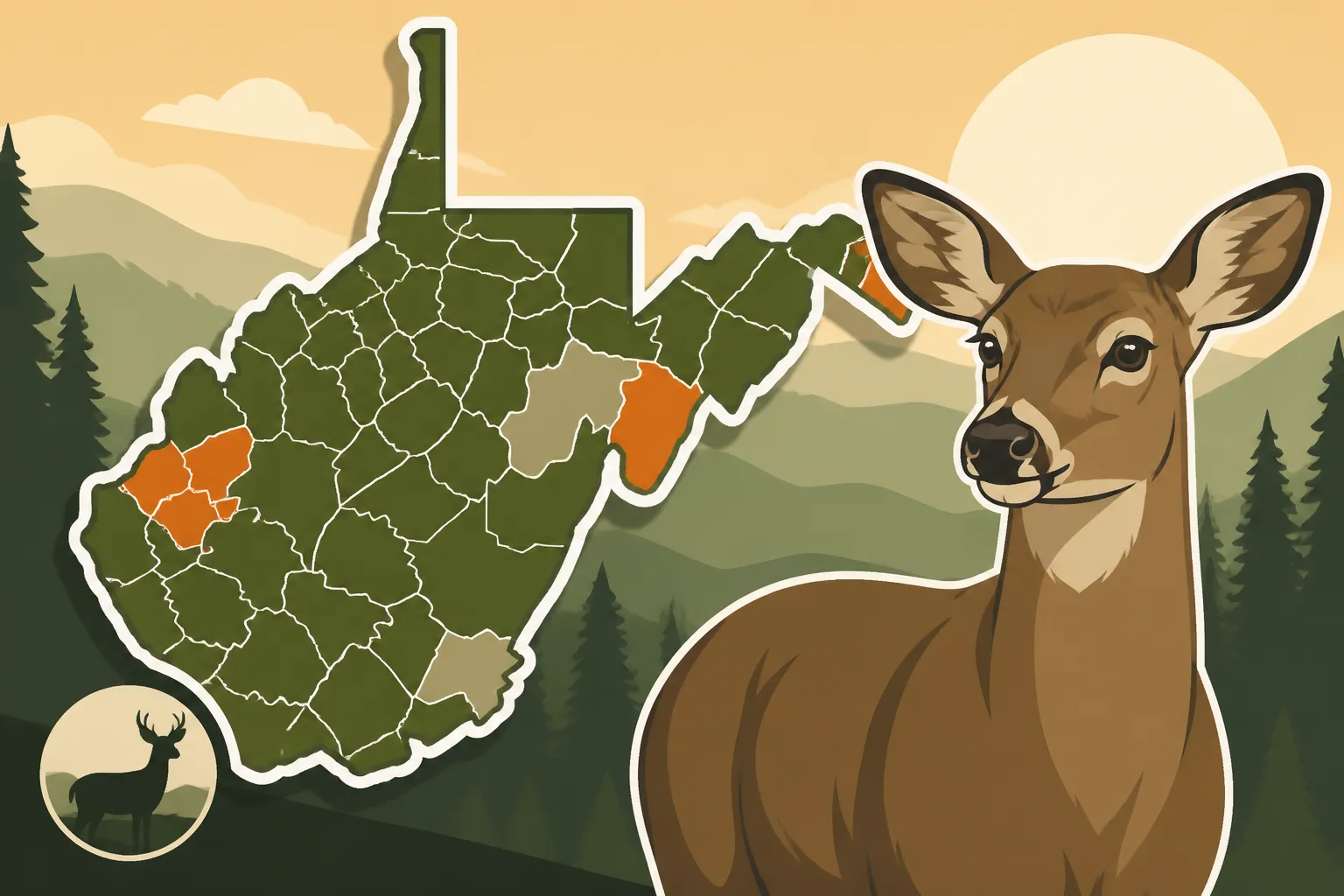
West Virginia County-Specific Antlerless Rules
One of the most common headaches for deer hunters in West Virginia isn't spotting a trophy buck, but rather understanding the maze of antlerless deer hunting regulations that change from county to county. It can feel like you need a law degree just to figure out when and where you can harvest a doe, and a simple mistake can lead to a violation. This guide is here to untangle those complexities, explaining why these rules exist, how they're structured, and practical ways you can confidently pursue antlerless deer throughout the Mountain State.
Understanding the "Why" Behind County-Specific Rules
It’s easy to get frustrated with all the different rules, but there’s a real method to the madness when it comes to West Virginia’s county-specific antlerless deer regulations. The West Virginia Division of Natural Resources (WVDNR) doesn't just pull these dates and bag limits out of thin air; they’re carefully crafted to manage deer populations effectively. The state is incredibly diverse, from the agricultural fields of the Eastern Panhandle to the rugged, remote mountains of the Monongahela National Forest, and each region presents unique challenges and deer densities. What works for one area simply won't work for another.
Balancing Deer Populations and Habitat Health
At its core, antlerless deer hunting is a critical tool for maintaining a healthy deer herd and preventing overpopulation. Deer, especially does, are incredibly prolific, and without proper management, their numbers can quickly outstrip the natural carrying capacity of the land. When deer populations get too high, it leads to a cascade of negative effects. You see increased competition for food, which can stress the herd, make them more susceptible to disease, and reduce overall body weights and antler quality. This is particularly noticeable after a poor mast year when acorns and other natural foods are scarce. Over-browsing also devastates forest understories, impacting other wildlife species that rely on those plants for food and cover, like wild turkeys and ruffed grouse. The WVDNR uses scientific data, harvest reports, and public input to assess each county's deer population health and adjust antlerless opportunities accordingly, aiming for that sweet spot where deer are abundant but not destructive.
Addressing Agricultural Damage and Vehicle Collisions
Beyond ecological balance, antlerless hunting directly addresses two significant human-wildlife conflicts: agricultural damage and deer-vehicle collisions. In farming communities, particularly in the fertile valleys and plateaus of the Eastern Panhandle, deer can inflict substantial damage to crops, leading to significant financial losses for farmers. Rows of corn or soybeans can be mowed down overnight, and freshly planted fields can be decimated before they even have a chance to grow. The WVDNR often expands antlerless seasons or provides additional bonus tags in these high-damage areas to alleviate pressure. Similarly, high deer densities near roads and highways lead to an increase in dangerous deer-vehicle accidents, costing lives and millions of dollars in property damage annually. By allowing for more antlerless harvest in these hotspots, the state aims to reduce the overall deer population, which in turn reduces the likelihood of these unfortunate encounters. It’s a pragmatic approach to managing wildlife in a way that benefits both the environment and the human communities sharing the landscape.
Decoding the Antlerless Deer Season Tiers
If you've ever tried to make sense of the West Virginia hunting regulations booklet, you know it can feel like cracking a secret code. The antlerless deer season rules are certainly one of the sections that cause the most head-scratching. Instead of a single statewide season, West Virginia divides its counties into different tiers, each with its own specific dates and bag limits for antlerless deer. This system allows the WVDNR to be much more granular in its management, applying pressure where it's needed most and allowing populations to grow where they're sparse. Understanding these tiers is crucial because it directly dictates when and how many antlerless deer you can legally harvest in your chosen hunting area.
The Different Antlerless Season Lengths
West Virginia's antlerless deer seasons for firearms vary significantly by county, typically falling into several main categories:
- Archery Season Overlap: Throughout the entire state, antlerless deer are legal to harvest during the full archery season, which traditionally runs from late September through the end of December. This provides a long, consistent opportunity for bowhunters. Many hunters prefer to fill their freezer with a doe early in the season, focusing on a buck later. For those interested in the full scope, you can learn more about West Virginia's Long Archery Season.
- Early Antlerless Weekend: Certain counties, often those with higher deer populations or specific management needs, will have an early antlerless-only firearm season, usually a short weekend in late October. This is a targeted effort to reduce deer numbers before the general buck gun season begins, particularly in areas where agricultural damage is a concern or where managers want to ensure a certain level of doe harvest.
- Concurrent with Buck Gun Season: Many counties allow antlerless deer to be harvested during the buck firearm season, which typically runs for two weeks in November. The rules here can still vary: some counties might allow antlerless harvest on specific days (e.g., the first day, or specific weekdays), while others allow it throughout the entire buck season. You’ll need to check the regulations for your specific county to know the exact dates.
- Extended Late Season: Some counties will have an extended antlerless firearm season that runs into December, often after the regular buck gun season has concluded. This provides additional opportunities, especially for hunters looking to fill remaining tags or in areas where deer populations are particularly robust. This late-season hunt can be excellent for targeting doe groups gathered around available food sources.
The exact dates for these vary year to year, so always check the current WVDNR regulations digest. A good tool to visualize these is the Using the Go Wild West Virginia Map Tool available through the WVDNR website, which GoHunt also integrates for a seamless experience. This map is updated annually and can be a lifesaver for quickly identifying your county's specific regulations.
Understanding the Class N/NN Stamp Requirement
Beyond just knowing when you can hunt antlerless deer, you need to understand the specific license and stamp requirements. For firearm season, West Virginia hunters must possess a Class N (resident) or Class NN (non-resident) stamp to harvest an antlerless deer. This stamp is an additional purchase beyond your basic hunting license. Without it, you are only legally allowed to harvest antlered bucks during the firearm seasons where they are permitted. This system is another layer of control, allowing the WVDNR to track antlerless harvest numbers more accurately and manage hunter participation.
It's important to remember that this Class N/NN stamp is generally required for firearm antlerless harvest. During the archery and crossbow seasons, any valid deer tag (often part of your Class X or base license) typically allows for the harvest of either an antlered or antlerless deer, depending on the specific county and bag limit, without the need for an additional N/NN stamp. Always double-check the current regulations for any changes or specific exceptions, as rules like Crossbow Rules During West Virginia Archery Season can have nuances.
Bonus Antlerless Tags: How They Work
In counties where deer populations are particularly high, or where specific management goals require a larger doe harvest, the WVDNR often makes "bonus" antlerless tags available. These are additional tags that allow a hunter to harvest more than the standard county limit of one antlerless deer per season. These bonus tags are typically available for purchase in specific high-population counties, and they allow hunters to take up to two or even three extra antlerless deer, depending on the county and the current year's regulations.
The purchase of bonus tags usually requires the hunter to already possess a Class N/NN stamp. These tags are explicitly for antlerless deer and cannot be used for antlered bucks. The intent behind these tags is to provide an incentive for hunters to remove more does from the herd in areas that can sustain a higher harvest, further helping to balance populations and reduce issues like crop damage and vehicle collisions. If you're hunting in a county known for its high deer numbers, such as some of those found when Hunting the Eastern Panhandle, it's always worth checking if bonus antlerless tags are available. They're a fantastic way to fill your freezer and contribute positively to deer management efforts.
Navigating Antlerless Hunting in Special Areas
West Virginia is a patchwork of public and private lands, and within these categories, there are further distinctions that impact antlerless deer hunting. You can't just assume the rules are uniform across the board; whether you're on a sprawling national forest or a small private woodlot, different considerations come into play. Understanding these nuances is key to a successful and legal hunt.
Public Lands: WMAs and National Forests
Hunting antlerless deer on public land, such as Wildlife Management Areas (WMAs) and the Monongahela National Forest, often comes with its own set of rules that can be stricter or, conversely, offer more opportunities depending on the management goals for that specific area. Many WMAs, like Cranberry WMA, have their own tailored regulations. For instance, some WMAs might have an early antlerless season that differs from the surrounding county, or they might allow a higher bag limit to control deer numbers within the managed area. It's not uncommon for a WMA to be a hotspot for hunters, so checking the specific WMA regulations in addition to the county regulations is absolutely essential. You'll find these special WMA rules detailed in the annual regulations digest.
The Monongahela National Forest, covering vast tracts of mountainous terrain, generally follows the county antlerless regulations for the counties it spans (which include parts of Pocahontas, Randolph, Pendleton, and others). However, access rules, camping regulations, and specific vehicle restrictions might influence how you plan your antlerless hunt. Remember, there can be significant hunting pressure on easily accessible public lands, so effective Scouting West Virginia Public Land Before Season is crucial. Using apps like GoHunt can help you differentiate public from private land and overlay WMA boundaries, helping you avoid accidental trespass and ensuring you understand the specific area you're in. Always confirm the specific regulations for the WMA or national forest you plan to hunt, as they can sometimes vary even within the same county.
Private Land Considerations and Permission
Hunting antlerless deer on private land offers a different set of opportunities and responsibilities. While the county-specific season dates and bag limits (including the need for a Class N/NN stamp and any bonus tags) still apply, the primary hurdle on private land is securing permission. West Virginia law is clear: you need permission to hunt on private property, and it's always best to get it in writing. This protects both you and the landowner. You can learn more about West Virginia Trespass and Permission Law to ensure you're always on the right side of things.
Many landowners, especially farmers, are often more amenable to allowing hunters to pursue antlerless deer. They recognize the value of doe harvest in controlling populations that might damage crops or overbrowse their woodlots. When you approach a landowner, emphasize your willingness to help manage their deer herd by specifically targeting does. This can often be the key to gaining access. For tips on how to go about this, check out strategies like Knocking on Doors in Eastern Panhandle Farm Country. Building a good relationship with a landowner by focusing on doe management can lead to long-term hunting access and foster goodwill, making your antlerless hunting efforts much more rewarding.
Archery-Only Counties and Antlerless Opportunities
West Virginia has a unique set of four southern counties—Logan, McDowell, Mingo, and Wyoming—that are entirely archery-only for deer hunting, meaning no firearm deer seasons are permitted. This is a significant distinction that directly impacts antlerless hunting. For hunters in these counties, all antlerless deer must be harvested with archery equipment (bow or crossbow). While this might seem restrictive to some, it actually offers a prolonged and consistent antlerless opportunity throughout the entire archery season, from late September through December.
The WVDNR implemented these archery-only zones to cater to a unique hunting culture and to provide specific management outcomes in these rugged, densely forested areas. If you're hunting in one of these counties, your antlerless strategy will revolve entirely around your bow setup. This means focusing on stand placement for close shots, scent control, and understanding deer movement patterns in dense cover. Despite the lack of a firearm season, these counties still provide ample opportunities to harvest antlerless deer, especially for hunters dedicated to the challenge of archery. For those curious about the specific reasoning, delve into Why Four Southern Counties Skip Gun Season.
Practical Tips for Hunting Antlerless Deer Successfully
Hunting antlerless deer isn't just about filling a tag; it's about smart hunting that contributes to herd management. It requires different strategies than pursuing a trophy buck, often focusing on herd dynamics and food sources rather than scrapes and rubs. Approaching antlerless hunting with a specific plan will increase your success rate and ensure an ethical harvest.
Scouting for Doe Groups
The key to consistently finding and harvesting antlerless deer is to focus your scouting efforts on identifying areas where doe groups congregate. Does and their fawns typically stick together in family units, and they are primarily driven by food, water, and security cover. Look for heavy trails leading to known food sources – agricultural fields like standing corn or soybean fields, mast-producing oak ridges, or even planted food plots. Deer often utilize thickets, overgrown clear-cuts, or dense laurel patches for bedding cover, especially during daylight hours.
During early archery season, concentrate your scouting around lush green food sources like alfalfa fields or even newly sprouted plots. As the season progresses into late fall and early winter, focus shifts to hard mast (acorns, beech nuts) and then to leftover agricultural crops or evergreen cover for warmth. GoHunt and other mapping applications can be incredibly useful for pinpointing these areas, identifying potential travel corridors between feeding and bedding, and even showing you where others might be hunting. Pay attention to fresh droppings, browse lines, and distinct deer trails. Understanding Late-Season Food Sources for West Virginia Whitetails is paramount for success when the woods go dormant.
Choosing the Right Time and Conditions
Timing your antlerless hunt can significantly impact your success. While deer are active throughout the day, doe groups often move more predictably during the early morning and late afternoon, especially when heading to and from feeding areas. However, during periods of cold weather or light precipitation, deer might move more throughout the middle of the day. A light rain can often get deer up and moving, muffling your sounds and washing away your scent.
Wind direction is always crucial, particularly when targeting less wary does. They might not be as hyper-vigilant as mature bucks, but their noses are still incredible. Always set up downwind of anticipated travel routes or feeding areas. Thermals also play a significant role, especially in West Virginia's hilly terrain. In the mornings, thermals typically rise, carrying scent uphill, while in the evenings, they fall, carrying scent downhill. Account for these shifts in your stand placement. For specific tactics related to weather, consider Hunting Deer After a Cold Front. On public land, choosing weekdays over weekends can also reduce pressure and increase deer movement.
Ethical Harvest and Meat Care
An ethical harvest of an antlerless deer involves not just a clean shot but also proper meat care immediately afterward. Aim for the vital organs (heart/lungs) for a quick, humane kill. After the shot, give the animal time if needed, then track it efficiently. Once recovered, field dressing immediately is critical, especially in warmer early season temperatures. Removing the entrails helps the carcass cool down rapidly, preventing spoilage.
If you're hunting in early archery season when temperatures can still be quite warm, consider boning out the deer in the field or at least getting it into game bags and on ice as quickly as possible. This is particularly important if you have a long drag or hike out of remote areas, such as those found during Monongahela National Forest Hunting. Even in colder weather, hanging the deer in a cool, shaded area or a meat locker is best. For detailed guidance on processing, articles like Butchering a Deer at Camp can be very helpful. Remember, the goal is not just to take a deer, but to utilize it respectfully, and good meat care ensures delicious venison for your table.
Common Misconceptions and Troubleshooting
The world of hunting regulations, especially those as granular as West Virginia's antlerless deer rules, is ripe for misunderstanding. These aren't just minor details; getting them wrong can lead to fines, loss of hunting privileges, and even an illegal harvest. Let's clear up some common areas of confusion and provide practical troubleshooting advice.
Confusing Antlerless with Youth or Special Hunts
One frequent point of confusion arises when hunters conflate the general county-specific antlerless seasons with special hunts, such as the statewide Youth Deer Weekend or specific antlerless-only quota hunts on certain WMAs. While these special hunts do often allow for the harvest of antlerless deer, their dates, bag limits, and participant eligibility are distinct from the general season structure. For example, the West Virginia Youth Deer Weekend Rules allow eligible youth hunters to take an antlerless deer (and sometimes a buck) before the regular firearm seasons open, but these dates and rules apply only to those specific youth hunters.
Similarly, some WMAs might have special controlled hunts or quota hunts that have their own specific antlerless allowances. Always read the fine print for any special hunt you plan to participate in. Do not assume that because it’s an antlerless hunt, it aligns with the county's general antlerless season. Cross-referencing the rules for your county with any specific regulations for the youth hunt or WMA you are interested in is the only way to ensure compliance.
The Role of Antler Point Restrictions
Another common area where antlerless hunting rules can intersect with other regulations is antler point restrictions (APRs). Some states implement APRs to protect young bucks and improve buck age structure. While West Virginia does not have a statewide antler point restriction rule, some individual counties or specific WMAs might have special regulations regarding antlered bucks. The important thing to remember is that antler point restrictions only apply to antlered deer. An antlerless deer, by definition, is any deer without antlers, or a deer with antlers less than three inches in length (this can vary slightly by state, but that's the general definition).
Therefore, when you are hunting antlerless deer, APRs are not a factor in determining legality. You don't need to count points or worry about spread. Your focus is simply on confirming the absence of legal antlers. However, if you are hunting in a county that also has APRs for bucks, you still need to be mindful of those rules if you decide to pursue an antlered deer on the same hunt. Just remember: antlerless means no legal antlers, period, and APRs don't muddy those waters.
Misinterpreting Map Data
In our digital age, map applications like GoHunt, onX Hunt, and the WVDNR's own online map are invaluable tools. They layer public and private land boundaries, WMA outlines, and often even regulation summaries. However, a significant troubleshooting point is the misinterpretation of this map data, especially regarding dynamic regulations like county-specific antlerless rules. While these apps strive for accuracy, they are only as current as their last update, and mistakes can happen.
Never rely solely on a map app for the definitive word on antlerless season dates or bag limits. Always cross-reference the information with the official, current West Virginia Hunting & Trapping Regulations Summary (the physical or PDF version from the WVDNR website). For example, a map might show a county in a certain antlerless tier, but the printed digest will confirm the exact dates and stamp requirements. Pay close attention to effective dates of regulations, as they can sometimes change even during a season. It's a small extra step, but verifying with the official source can save you from a potential violation and ensure you're hunting legally and ethically.
| Antlerless Season Tier | Example Counties | General Firearm Season Length | Class N/NN Stamp Required? | Bonus Tags Typically Available? |
|---|---|---|---|---|
| Archery-Only | Logan, McDowell | N/A (Archery Sept-Dec) | No (for Archery) | Often Yes (for Archery) |
| Early Antlerless + Gun | Berkeley, Grant | Early Oct. + Buck Gun + Dec. | Yes | Yes |
| Buck Gun + Late Season | Pocahontas, Clay | Buck Gun + Dec. | Yes | Sometimes |
| Buck Gun Only | Webster, Summers | Buck Gun Only | Yes | Rarely |
Staying Informed: Your Responsibility as a Hunter
In West Virginia, the responsibility to know and adhere to hunting regulations falls squarely on the hunter. While state agencies like the WVDNR and helpful tools like the GoHunt app do their best to disseminate information, the landscape of regulations can be complex and ever-changing. Staying informed isn't just about avoiding a ticket; it's about ethical hunting and contributing to the conservation efforts that make West Virginia such a great place to pursue game.
Consulting the WVDNR Regulations Digest
The absolute bedrock for understanding West Virginia hunting rules, including the intricate county-specific antlerless regulations, is the official West Virginia Hunting & Trapping Regulations Summary. This digest is published annually and is the definitive source for all season dates, bag limits, licensing requirements, and special rules. You can pick up a physical copy at any license agent, or download a PDF version directly from the WVDNR website.
Take the time to read through the sections relevant to deer hunting, specifically paying attention to the county tables that detail antlerless seasons. Don't just skim it; actively read and highlight the information pertinent to the counties you plan to hunt. It's easy to overlook a small footnote or an asterisk that changes everything. Treat it like a reference manual, and consult it frequently, especially if you're planning to hunt in a new area or after regulations have been updated. This proactive approach is fundamental to responsible hunting.
Utilizing Online Resources and Apps
While the official digest is paramount, modern hunters have an array of online resources and mobile applications that can be incredibly useful supplements. The WVDNR's website itself is a treasure trove of information, offering news updates, season changes, and interactive maps. Many hunters also swear by mapping applications like GoHunt, which overlays property boundaries, public land designations, and, crucially, often integrates regulation summaries directly onto the map interface. This can be immensely helpful for quickly seeing if the spot you're looking at is in an early antlerless zone or an archery-only county.
However, a word of caution: always use these digital tools in conjunction with the official digest. Technology is fantastic, but it's not infallible. Updates can be delayed, or a nuance might be missed. Use GoHunt to visualize your hunting area and get a quick overview, but always confirm the specific dates and rules with the official WVDNR publication before you head into the woods. Utilizing a combination of these resources will ensure you're as informed as possible, helping you avoid any potential missteps and allowing you to focus on enjoying your hunt.
Disclaimer
Please remember that hunting regulations can change, and it is always the hunter's responsibility to review and comply with the most current official West Virginia Hunting & Trapping Regulations Summary available from the West Virginia Division of Natural Resources (WVDNR) before engaging in any hunting activities. This guide provides general information and should not be considered a substitute for the official regulations.