Knocking on Doors in Eastern Panhandle Farm Country
Hunting in West Virginia is a cherished tradition, but for many, the vast public lands of the Allegheny Mountains feel a world away when your heart is set on the rolling farmlands of the Eastern Panhandle. It's frustrating to drive past prime habitat only to see "No Trespassing" signs everywhere. This guide is here to demystify the process of gaining hunting access on private land in places like Berkeley, Jefferson, and Morgan counties, walking you through the respectful and effective ways to approach landowners and secure a coveted spot.
Understanding the Eastern Panhandle Landscape and Landowner Mentality
The Eastern Panhandle is a unique part of West Virginia, offering a blend of rural charm and agricultural productivity that presents both challenges and incredible opportunities for hunters. It's not the deep, wild backcountry of the Monongahela National Forest, and understanding that difference is key to your success.
The Mix of Agriculture and Woodlots
When you drive through counties like Berkeley, Jefferson, or even parts of Hampshire and Hardy, you immediately notice the landscape. It’s a mosaic of open fields – corn, soybeans, hay, and pasture – interspersed with woodlots, dense fencerows, and small creek bottoms. This creates incredible edge habitat, which as any seasoned hunter knows, is a magnet for deer and turkeys. You'll often find deer bedding in these smaller timber blocks and fencerows, only to pour into the fields at dawn and dusk. Turkeys frequently work the field edges, too, scratching for bugs and grains.
Unlike the expansive, unbroken timber of the central mountains, these smaller, fragmented cover areas mean that deer often don't have to travel far to find food or bedding. This also means their patterns can be more predictable, but it requires a different scouting approach. You're looking for subtle funnels between woodlots and crop fields, or small pockets of hardwoods that provide mast crops. Knowing the crop rotation can also be a game-changer; a standing cornfield offers entirely different hunting dynamics than a recently cut soybean field, and these details can influence where you ask to hunt. For more insight into these specific environments, check out our guide on Hunting Eastern Panhandle Farmland Deer.
Building Trust in a Close-Knit Community
The Eastern Panhandle, despite its proximity to larger metropolitan areas, often maintains a strong sense of tight-knit, rural community. Generations of families have farmed these lands, and they take pride in their property and their way of life. This means that gaining permission isn't just about showing up; it’s about earning trust. Landowners here value respect, honesty, and a good reputation. They've likely dealt with irresponsible hunters in the past, so your goal is to immediately differentiate yourself from those negative experiences.
A landowner's decision to grant hunting access might be based as much on their gut feeling about you as it is on the actual request. They want to know you're responsible, safe, and will treat their property as if it were your own. Showing genuine interest in their farm, asking about their crops, or simply chatting for a few minutes before diving into your request can go a long way. Remember, you’re not just asking to hunt; you’re asking to enter their home and livelihood. Demonstrating an understanding of the local culture and the challenges farmers face can open doors that a purely transactional approach would slam shut.
The Art of Approaching Landowners for Hunting Permission
Successfully knocking on doors isn't just about courage; it's about strategy, timing, and respectful communication. It’s a skill, and like any skill, it improves with practice and preparation.
Timing and Preparation are Key
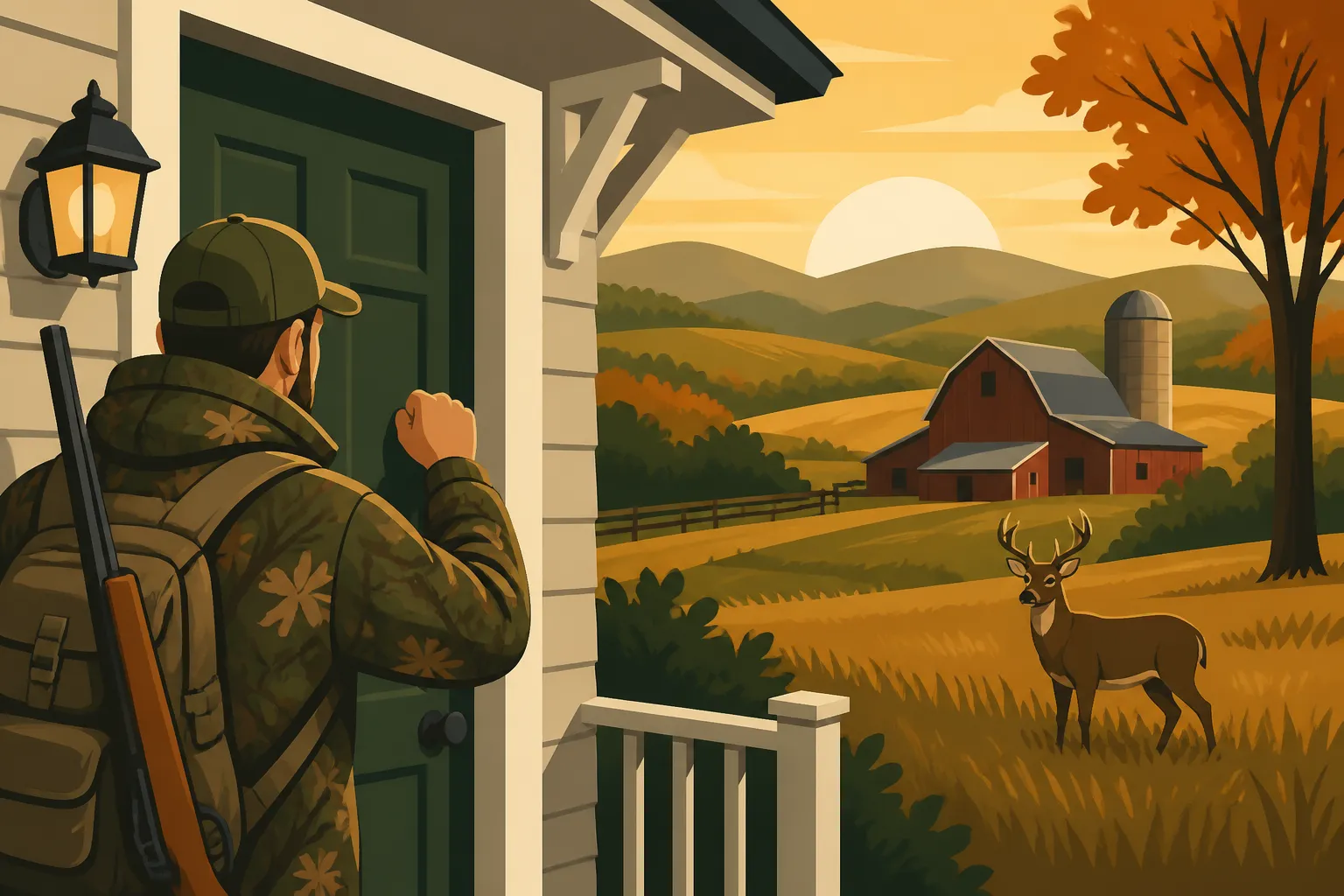
One of the biggest mistakes hunters make is showing up unannounced, in full camo, on opening day. Imagine a farmer already stressed with harvest or planting, or just trying to enjoy a quiet Sunday, suddenly confronted by a stranger in hunting gear. That's a quick way to get a "no." The best time to approach landowners is typically in the off-season – late winter, spring, or mid-summer – before the hunting rush begins. Weekdays are often better than weekends, and aim for non-peak hours, avoiding meal times or busy work periods.
Your appearance matters. Dress neatly and presentably; you're making a first impression. Drive a clean, respectable vehicle. Before you even knock, have some basic information ready: your name, where you live, and what kind of hunting you're interested in (deer, turkey, small game). Carry a printed map of the area, perhaps one showing property lines (more on that later), so you can clearly point to the specific sections you're interested in. Also, have your hunting license readily available, even if they don't ask for it. This shows you're a legitimate, licensed hunter. Consider having a calendar handy to discuss potential dates, demonstrating you're organized and considerate of their schedule.
Crafting Your Introduction and Request
When the door opens, lead with a polite greeting and a clear, concise introduction. "Hello, my name is [Your Name], and I live nearby in [Your Town/County]." If you have any mutual acquaintances or local connections, this is the time to mention them – "I believe I know [Neighbor's Name], who mentioned you might be open to a hunter." This can instantly establish a degree of trust. Then, state your purpose directly but humbly: "I was wondering if you ever allow respectful hunters on your property for [e.g., deer hunting]?"
Be prepared for questions and always be honest. If they ask about your hunting style, explain it clearly: "I primarily hunt from a treestand, I’m very safety-conscious, and I always pick up after myself." You might even offer to help with something around the farm – "I'd be happy to help mend a fence or do some chores if you ever need an extra hand." Even if they don't take you up on it, the offer demonstrates respect and a willingness to contribute. Always, and I mean always, be gracious if they say no. A polite "Thank you for your time, I understand" can leave a positive impression that might lead to a "yes" down the road if circumstances change.
What to Discuss: Setting Expectations
If the landowner seems receptive, this is your chance to discuss the critical details and set clear expectations for both parties. This open communication is paramount to avoiding misunderstandings later. Key topics include:
- Safety: Emphasize your commitment to safety, including always knowing your backdrop, respecting property lines, and wearing blaze orange during applicable seasons. Discuss if there are any specific areas they want off-limits due to livestock, homes, or active work. If hunting in a CWD-affected county like Hampshire or Berkeley, you might discuss your understanding of the regulations around West Virginia's Chronic Wasting Disease Counties.
- Access Points and Parking: Ask where they prefer you park your vehicle and how you should access the hunting areas. Never drive off designated farm roads or park in a way that blocks access without explicit permission.
- Game Species: Clarify exactly what you're permitted to hunt. Is it just deer? Can you hunt turkeys in the spring or fall? Are you allowed to pursue small game? This is also a good time to ask about antlerless deer opportunities, especially if you're interested in Hunting the County-Specific Early Antlerless Season to help manage local deer populations, which farmers often appreciate.
- Harvest Reporting: Confirm how they want to be notified if you harvest an animal. A quick text or phone call, or simply showing them the animal, can go a long way.
- Gates and Property: Reassure them that you will always close any gates you open and leave the property exactly as you found it, with no trash.
- Other Users: Ask if other people, like family members, hikers, or other hunters, will be using the property. This helps you avoid uncomfortable or dangerous encounters.
Having these conversations upfront shows that you are responsible and thinking ahead, which reassures the landowner that you'll be a respectful guest.
Maintaining a Positive Relationship and Long-Term Access
Getting permission is just the first step. The real test is how you behave as a guest on their land. A positive relationship can lead to years of enjoyable hunting access, not just for you, but potentially for others in the future.
Being a Respectful Guest
Once you have permission, your actions speak louder than any initial promises. Always, always adhere to every rule and guideline discussed with the landowner. If you say you'll close a gate, close it every single time. If you say you'll only hunt deer, don't suddenly decide to try for a coyote. Communication is vital: if your plans change, or if you see something concerning on their property (like a downed fence or suspicious activity), let them know.
When you harvest an animal, consider offering some of the meat to the landowner. This gesture of gratitude is often deeply appreciated, even if they decline. A gift around the holidays – maybe a gift basket, a homemade treat, or a gift card to a local store – is another excellent way to show appreciation. Occasionally offering a helping hand, whether it's for a few hours of fence mending, picking up trash along a fencerow, or helping them move hay bales, can solidify your standing as a valued and trusted individual, not just a hunter. These small acts of goodwill can turn a temporary privilege into a long-standing tradition.
Leveraging Technology to Your Advantage
In today's world, technology can be a powerful ally in the quest for private land access. Before you even set foot on a potential landowner's porch, tools like mapping applications can be incredibly useful. Services like GoHunt allow you to view detailed aerial imagery, identify property boundaries, and sometimes even find landowner names and mailing addresses. This information is invaluable.
Before you knock, using GoHunt can help you understand the parcel's layout, identify key habitat features like woodlots, drainages, or potential travel corridors. You can determine if the property is large enough to sustain hunting pressure, or if it borders public land, giving you insight into deer movement. Having this knowledge helps you present a more informed and professional request to the landowner. You can confidently point to a specific woodlot on your phone's map and say, "I noticed this oak ridge on the north side, and I'd be interested in setting up a quiet stand there." This level of preparedness, enabled by tools like GoHunt, shows respect for their time and property and demonstrates that you're a serious, responsible hunter. It’s also an excellent way to prepare your scouting strategy, much like you would for Scouting West Virginia Public Land Before Season, but tailored for private ground. Moreover, knowing exactly where property lines lie can help prevent accidental trespassing, a crucial point for landowners.
The Value of a Handshake Agreement and Written Permission
In many rural parts of West Virginia, a handshake agreement has been the gold standard for generations. It signifies trust and mutual respect. For many landowners and hunters, this is perfectly sufficient. It's informal, personal, and embodies the spirit of local community. However, times are changing, and it's always wise to discuss the option of written permission.
A simple written agreement, even a basic one, can protect both you and the landowner. It can outline the specific terms of access: dates, allowed activities, parking locations, and liability clauses. This clarifies any ambiguities and provides a clear record in case of misunderstandings. For example, if a landowner has multiple people hunting, a written agreement helps prevent confusion. While it might feel a little formal, it can actually strengthen the relationship by ensuring everyone is on the same page. Always bring it up respectfully, perhaps saying, "To make sure we're both clear on the details, would you be open to a simple written agreement outlining what we've discussed?" Many landowners appreciate the professionalism. For a deeper dive into this, you might explore Do You Need Written Permission in West Virginia?.
Remember that the Eastern Panhandle often features some of the Best West Virginia Counties for Big Bucks, and understanding the dynamics of permission here is crucial for accessing those opportunities.
| Feature | Good Approach | Bad Approach |
|---|---|---|
| Timing | Off-season (late winter, spring, summer), weekdays, non-peak hours | Opening day, Sunday morning, during harvest, late at night |
| Appearance | Neat, clean, everyday clothes | Full camo, muddy boots, looking disheveled |
| Vehicle | Clean, parked respectfully, not blocking driveways or gates | Mud-splattered, loud exhaust, blocking access, parking on crops |
| Introduction | Polite, clear, concise, offer local connection if possible | Rambling, vague, demanding, no personal connection |
| Request | Humble, specific (e.g., "for deer hunting"), offer help | Entitled, generic ("to hunt"), imply a right to hunt |
| Preparation | Map (GoHunt!), license ready, understanding of local laws | No map, no license, ignorant of CWD zones or local regulations |
| Communication | Clear expectations discussed, prompt notification of changes/harvest | Vague, assuming, no communication, leaving trash or gates open |
| Follow-Up | Thank you note, offer meat, small gift, offer help with chores | Disappearing until next season, no appreciation |
| Rejection | Gracious, polite "thank you" | Arguing, complaining, leaving a negative impression |
Disclaimer
The information provided in this guide is for general informational purposes only and does not constitute legal advice. Hunting regulations and landowner permissions can vary and change. Always consult the latest West Virginia Division of Natural Resources (WVDNR) regulations and obtain explicit, clear permission from landowners before hunting on private property. Respect private property and local laws at all times.