Grouse Hunting Highlands Aspen Cuts
For many seasoned hunters in West Virginia, the elusive ruffed grouse represents the ultimate challenge, a ghost of the timber that can send even the most experienced wingshooter into a fit of frustration. If you've spent countless hours slogging through barren woods or thick laurel hells without so much as a flush, you know the feeling. This guide is designed to cut through that struggle, directing your efforts to the most consistently productive habitat in the Mountain State: the vibrant, dense world of aspen cuts in our beautiful Highlands. We'll explore exactly why these areas are grouse magnets, how to identify them, and the proven tactics you'll need to finally connect with this iconic bird.
Why Aspen Cuts are a Grouse Hunter's Goldmine in West Virginia
The Allegheny Highlands of West Virginia are a treasure trove of wild places, and within these sprawling forests, certain habitats stand out as prime grouse territory. While many different forest types can hold ruffed grouse, the clear-cuts and subsequent regrowth of aspen are consistently among the most productive. It's a specific ecological recipe that attracts these birds, offering everything they need to thrive, especially in a landscape that can sometimes feel overwhelmingly mature and open elsewhere.
The Ecological Niche of Ruffed Grouse in Aspen
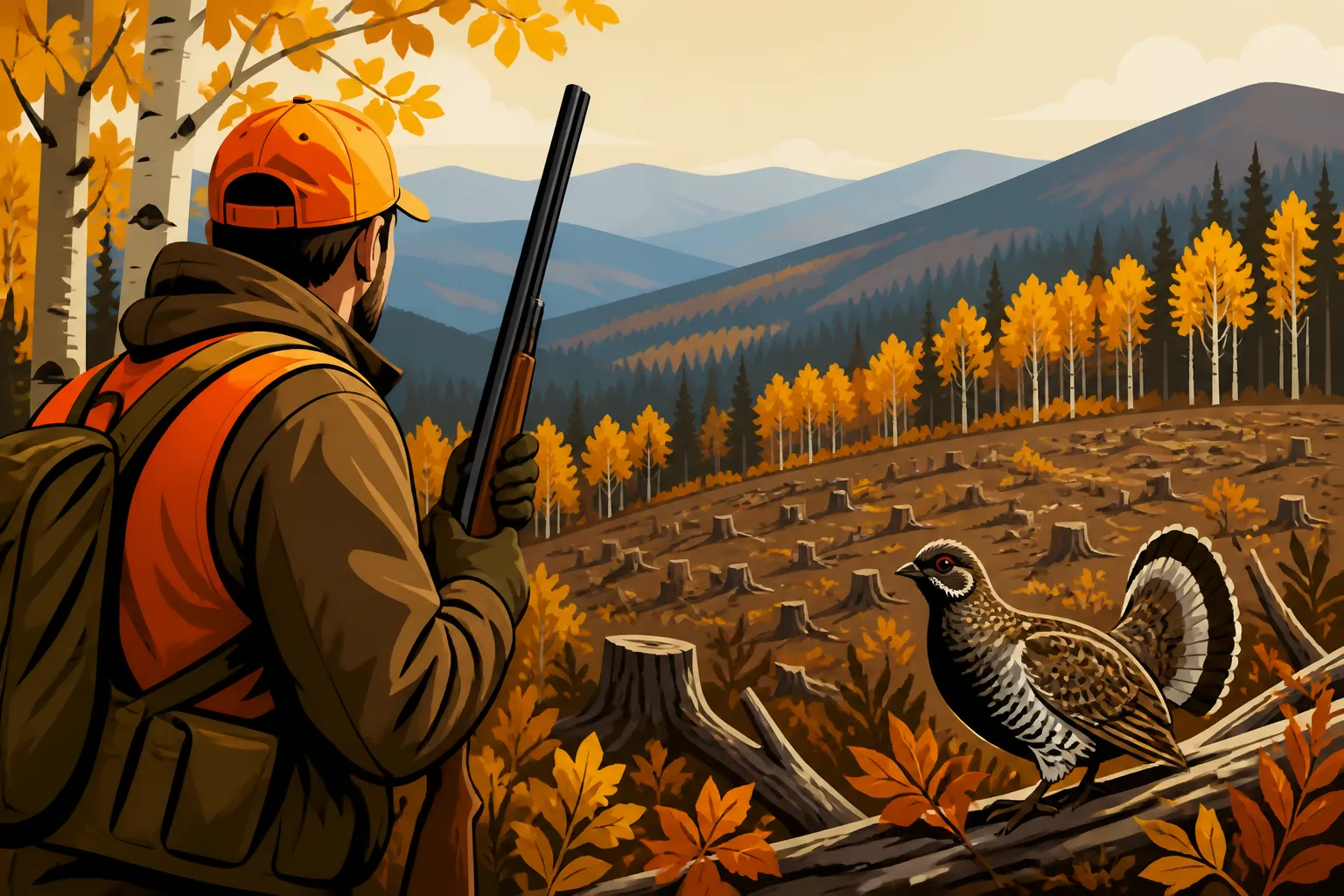
Ruffed grouse are birds of dense, early successional forest. They aren't looking for pristine, old-growth timber where you can see for a hundred yards. Instead, they crave the kind of nearly impenetrable cover that makes walking a challenge and offers protection from aerial predators like hawks and ground predators like coyotes. This is where young aspen stands truly shine. The rapid growth of aspen after a timber harvest creates an incredibly dense tangle of small trees, shrubs, and briars from ground level up to 10 or 15 feet. This vertical cover provides immediate refuge and makes it incredibly difficult for predators to spot a crouching grouse.
Beyond cover, these areas are also rich in food sources. Young aspen shoots and buds are a critical winter food for grouse, providing sustenance when other options are scarce. As the stand matures slightly, a diverse understory of other plants, berries, and insects flourishes beneath the aspen canopy. Think about it: a grouse can easily disappear into this thicket, find plenty to eat, and stay hidden from most dangers. Furthermore, the ground in these areas often provides ample drumming logs—fallen trees or stumps where male grouse perform their iconic courtship display, attracting mates and further signaling a prime habitat. If you're looking for Ruffed Grouse in the West Virginia Highlands, these aspen cuts are where you should start.
Identifying Productive Aspen Stands from Afar
Before you even step foot in the woods, modern mapping tools can be your best friend in locating these grouse havens. I've spent countless hours pouring over maps, and it's a huge time-saver. You're looking for areas that have been clear-cut within the last 5 to 25 years. These will typically appear as lighter green patches on satellite imagery compared to the darker, more uniform green of mature hardwoods or conifers. Look for irregular shapes, often with logging roads or skid trails winding through or around them, indicating past timber operations.
Pay close attention to terrain features as well. While grouse can be found anywhere, aspen tends to thrive in areas with good drainage, often on benches, points, or gently sloping hillsides. High-elevation plateaus and saddles in places like the Monongahela National Forest are frequently managed with timber cuts, creating excellent aspen habitat. Utilizing a mapping application like GoHunt, you can layer satellite imagery with timber cut data (if available from the DNR or Forest Service) and topo maps to pinpoint these promising areas. This pre-scouting can dramatically reduce the amount of unproductive ground you cover and increase your odds of finding a covey of birds.
Understanding Aspen Age and Stand Characteristics for Success
Not all aspen cuts are created equal. Just like different stages of a deer's life cycle prefer certain habitats, grouse have a "sweet spot" when it comes to the age and characteristics of an aspen stand. Knowing what to look for on the ground, and how that translates from what you see on a map, is crucial for maximizing your efforts.
The "Sweet Spot" Age for Grouse Habitat
The most consistently productive aspen stands for ruffed grouse typically fall within the 10 to 25-year age range after a clear-cut. In these stands, the aspen trees are tall enough to provide canopy cover but still dense enough below to create that critical vertical screening. The trunks are often only a few inches in diameter, growing so close together that it's a constant struggle to push through. This density, while a pain for the hunter, is exactly what a grouse wants for protection.
- Younger Stands (0-5 years): While rapid growth starts immediately, these areas are often too open initially, lacking sufficient vertical cover. You might find a stray bird, but they're generally not consistently holding grouse.
- Prime Stands (5-15 years): This is often the gold standard. The regenerating aspen is a virtually impenetrable wall of stems, providing maximum protection. Walking through these areas is a workout, but the reward can be worth it.
- Maturing Stands (15-25 years): These stands are still good, but the canopy is starting to close, and the understory might begin to thin out slightly. Grouse will still use them heavily, especially where there's good interspersion with other cover types or where pockets of dense regeneration persist.
- Older Stands (25+ years): As aspen ages, it becomes more open underneath, and the trees grow larger. While they might still hold some birds, especially along edges, they generally aren't as consistently productive as younger, thicker cuts. If you're wondering How Old a Cut Should Be for Grouse, aim for that 10-25 year window.
Recognizing Key Features of Productive Cuts
While the age of the stand is paramount, there are other subtle characteristics that can make an aspen cut even more appealing to grouse. Look for areas where the aspen regrowth is not a monoculture, but rather an "interspersion" of other tree species like conifers (pine, hemlock, spruce) or various hardwoods. These mixed stands offer a wider variety of food sources and thermal cover, especially important during harsh winters. A patch of evergreens within or adjacent to an aspen cut can be a real hotspot on a cold day.
Water sources are another key factor. While grouse don't need a flowing river, proximity to seeps, small streams, or wet depressions can be beneficial, drawing in insects and promoting a more diverse plant community. Subtle changes in elevation, like benches or shallow draws within a larger cut, can also concentrate birds. When you're using your GoHunt app or other mapping tools, pay attention to these transitions – where an aspen cut meets an old logging road, a mature timber edge, or a small creek bottom. These "edge habitats" are often where grouse feel most secure and are most likely to be encountered. Understanding these micro-habitats within the larger cut can be the difference between a quiet walk and a flurry of wings.
Proven Tactics for Working West Virginia Aspen Grouse Cover
Grouse hunting in West Virginia's Highlands is rarely a casual stroll. It’s physically demanding, often frustrating, but incredibly rewarding when you hear that explosive flush. Having a strategy is key, as simply wandering through the woods won't cut it for these wily birds.
The Slow, Deliberate Walk-Through Strategy
The most effective way to hunt dense aspen cuts for grouse is with a slow, deliberate, and methodical approach. Forget covering miles quickly; your goal is to cover ground thoroughly, leaving no pocket of cover unexamined. I often zig-zag through the thickest parts, constantly changing direction to keep birds guessing and to maximize the chance of a flush. Think of it like a grid search.
Pay attention to the wind direction. Whenever possible, try to hunt into the wind. This allows your scent to blow behind you, minimizing the chances of birds flushing wild long before you're in range. More importantly, it helps you hear the subtle sounds of a grouse — the rustle in the leaves, the scratching as they feed, or the quiet patter of their feet as they run. Often, you'll hear a grouse before you see it, and a bird flushed into the wind tends to fly slower and more predictably. Take frequent pauses, sometimes for 30 seconds to a minute, just listening. Grouse will often hold tight, but a short break in your movement can sometimes make a nervous bird decide to flush, giving you a shot. This methodical approach is a cornerstone of Grouse Hunting Allegheny Highlands Cover.
Utilizing Dogs Versus Going Solo
This is one of those age-old debates among grouse hunters, and both methods have their merits. There's no denying that hunting with a well-trained bird dog can dramatically increase your success rate and, for many, is the pinnacle of the grouse hunting experience.
- Hunting with a Dog: A good dog, especially a pointing or flushing breed, can scent birds that you would walk right past. They can pinpoint a bird's location, giving you time to get into position for a shot, or aggressively flush birds that would otherwise hold tight. Retrieving capabilities are also invaluable in dense cover, as a downed bird can be incredibly difficult to find without a dog's keen nose. Breeds like English setters, pointers, and springer spaniels are popular choices. However, a dog needs extensive training in the field, especially in the rugged terrain and thick cover of West Virginia, to be truly effective. They also need proper care and protection from hazards like briars and steep terrain, so having Bird Dog Gear for West Virginia Cover is essential.
- Hunting Without a Dog: Many grouse hunters go it solo, either by choice or necessity. This is entirely feasible, but it requires even more discipline in your slow, methodical approach. You become the "dog," relying on your eyes and ears to detect birds. When hunting Flushing Grouse Without a Dog, you'll learn to anticipate flushes from dense pockets, listen for wing beats, and sometimes simply walk through the nastiest cover you can find, knowing that a bird is likely holding tight until the last second. It's a tougher way to fill a vest, but incredibly satisfying when you make a shot.
Dealing with Thick Cover and Fast Flushes
West Virginia's aspen cuts are dense, and grouse are fast. This combination means you'll rarely get an open, easy shot. Most flushes will be explosive, startling, and offer only a split-second window of opportunity through a maze of branches. The key here is preparedness and quick reflexes.
Your shotgun should always be carried in a ready position, usually with the safety off (or ready to be clicked off instantly) and the muzzle pointed safely forward. As you walk, maintain a "ready mount," keeping the stock tucked into your shoulder pocket and your lead hand out on the forend. This minimizes movement when a bird flushes, allowing you to swing smoothly. Don't try to track the bird through the branches for too long; instead, pick a clear lane where you anticipate the bird will fly, swing to that point, and squeeze the trigger. It's often more about shooting where the bird will be rather than where it is. This is where an open choke (like an improved cylinder or skeet choke) and smaller shot sizes (like 7.5 or 8) become crucial. They provide a wider pattern to compensate for those fleeting opportunities in close quarters. Remember that practice is key; a round of skeet or sporting clays can greatly improve your ability to hit fast-moving targets in unpredictable directions, simulating a grouse flush. This type of hunting really drives home the importance of Choke Choice for Fast Flushes in thick cover.
Essential Gear and Safety for Highlands Grouse Expeditions
Hunting grouse in the West Virginia Highlands, especially in aspen cuts, isn't a casual affair. The terrain can be steep, the cover punishing, and the weather unpredictable. Having the right gear isn't just about comfort; it's about safety and increasing your chances of success.
Shotgun and Ammunition Selection for Aspen
For grouse hunting in dense aspen, your firearm choice is critical. You need something lightweight, quick to shoulder, and capable of throwing a broad pattern at close range.
- Gauge: The 12-gauge is popular, but many serious grouse hunters prefer a 20-gauge or even a 28-gauge for their lighter weight and quicker handling. A 20-gauge offers a great balance of power and maneuverability for these tight quarters. For specific recommendations, check out Best Shotgun Gauge for West Virginia Grouse.
- Action: Over/under, side-by-side, or semi-automatic shotguns are all viable. Pump actions can work, but their slower second shot can be a disadvantage when you get multiple flushes or need a quick follow-up. Double barrels, with their ability to quickly switch between two choke constrictions, are often favored.
- Choke: This is paramount for aspen cuts. You're almost always shooting birds at close range, often under 25 yards, through thick cover. An open choke, like an Improved Cylinder or Skeet choke, will give you the widest pattern and the best chance of connecting with a fast-flushing bird. Avoid anything tighter than a Modified choke for the lead barrel; Full or Extra Full chokes are entirely too tight for this kind of hunting.
- Ammunition: Stick with lighter loads and smaller shot sizes. 7.5 or 8 shot in lead is standard for grouse. These smaller pellets create a denser pattern, increasing your chances of hitting the bird without over-penetrating and ruining meat. Non-toxic shot is not typically required for upland birds on most public lands unless specifically stated, but always double-check regulations. For more on appropriate firearms, see Upland Guns for Highlands Grouse Cover.
Clothing, Navigation, and Preparedness
Being properly dressed and equipped for the woods is non-negotiable, especially when you're working your way through briars and climbing steep hillsides in potentially inclement weather.
- Clothing: Layering is your friend. You'll be working hard, so start with moisture-wicking base layers, add insulating layers, and top it with a durable, briar-resistant outer layer. Briar pants or chaps are an absolute must; without them, your legs will be shredded by the end of the day. A good upland vest with plenty of game and shell pockets is invaluable. Don't forget durable, waterproof boots with good ankle support to navigate uneven terrain.
- Navigation: While you might know the general area, it's incredibly easy to get turned around in dense aspen cuts or thick laurel. A GPS unit or a reliable mapping app on your phone (like GoHunt, which allows for offline maps) is critical. Always carry a compass and a physical map as a backup. Know how to use them! Mark your truck, key features, and any birds you flush.
- Safety: Always wear sufficient blaze orange, as per West Virginia Grouse and Woodcock Season Rules, to be visible to other hunters. Carry a small first-aid kit, especially if hunting alone. A whistle can be useful for communicating with a hunting partner or dog, or signaling for help. Bring plenty of water, even on cool days, as the physical exertion is significant. Inform someone of your hunting plans, including your general location and expected return time. The Highlands can be remote, and cell service is often nonexistent, so prepare accordingly.
| Aspen Stand Age (Years) | Grouse Use Level | Key Habitat Characteristics | Primary Hunting Strategy Notes |
|---|---|---|---|
| 0-5 | Low | Open, minimal vertical cover, young saplings. | Generally unproductive; focus on edges if nearby. |
| 5-15 | Excellent | Extremely dense, chest-high thickets of stems. | Slow, deliberate zig-zagging; expect close, explosive flushes. |
| 15-25 | Good | Canopy closing, understory still dense but starting to thin. | Work thickest pockets, transition zones, and edges. |
| 25+ | Declining | More open understory, larger trees, less effective cover. | Hunt sparse birds in isolated thickets or where it meets younger growth. |
Disclaimer
Hunting is an inherently risky activity. Always prioritize safety, adhere to all West Virginia hunting regulations, and ensure you have the necessary licenses and permits. The information provided in this guide is for educational purposes and should not replace proper hunter education or professional guidance. Conditions in the field can change rapidly, and personal responsibility is paramount.