Recovering a Deer From a Steep Hollow
The thrill of watching your deer drop, knowing your shot was true, is one of the best feelings in hunting. But that euphoria can quickly give way to a sinking dread when you realize your hard-earned animal has taken its last run straight into a deep, dark, seemingly impenetrable West Virginia hollow. Suddenly, the focus shifts from the kill to the seemingly impossible task of getting that deer back to the truck. This guide is dedicated to helping you navigate those grueling, often back-breaking recoveries, offering practical advice and a realistic look at what it takes to get your deer out of the most challenging terrain our beautiful mountains can throw at you.
Anticipating the Drop and Pre-Shot Strategy in Steep Country
It's easy to get caught up in the moment of truth, but in West Virginia's rugged topography, a little foresight before you even release an arrow or squeeze a trigger can save you hours of pain and potential lost game. We’re often hunting on steep Allegheny Ridges, where gravity is either your best friend or your worst enemy.
Reading the Terrain for Potential Recovery Paths
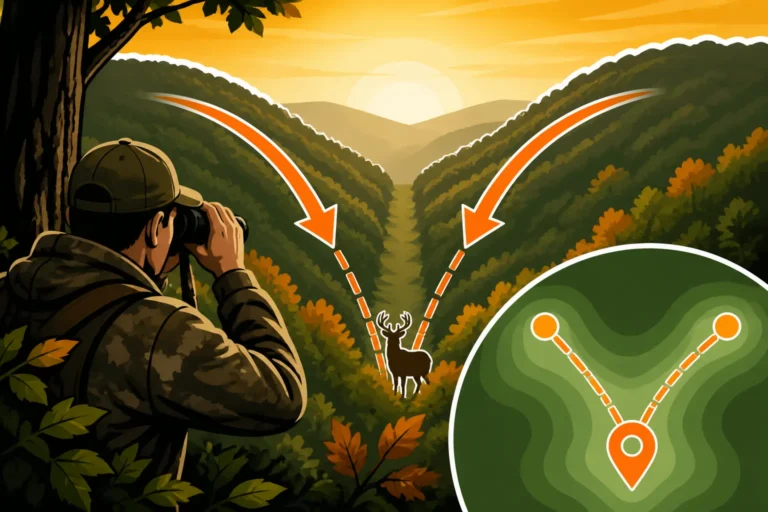
Before you even raise your weapon, take a moment to scan the landscape around your stand or hunting position. Where are the likely escape routes? Are there benches, saddles, or old logging roads that might provide a more manageable path for a deer to run after the shot? Often, deer will try to get to thicker cover when hit, which in our mountains, often means plunging down into a laurel-choked hollow or a rhododendron thicket. However, if there’s a somewhat traversable path, like a gradual bench or an old skidder trail a few hundred yards down, sometimes a deer will naturally gravitate towards that, making your job slightly less brutal. Pay attention to those subtle changes in elevation, even if you're not using a specific app, try to visualize the topography. Using mapping tools like the ones available on GoHunt can be invaluable during scouting to identify these features long before season, giving you an advantage.
The Importance of Shot Placement and Patience
In steep country, shot placement becomes even more critical due to the angles involved. A shot that looks perfect broadside on flat ground might be high or low when you're shooting significantly uphill or downhill. Always aim for the vitals, of course, but remember that the deer's anatomy doesn't change relative to the ground you're standing on, but rather your line of sight. Shooting downhill, for instance, can often result in a higher-than-intended shot if you don't adjust for the angle. Conversely, an uphill shot might hit lower. A well-placed shot means a shorter track and often, a deer that expires more quickly, reducing its ability to dive into the nastiest spots. Even with a perfect shot, patience is paramount. The immediate aftermath of a shot, especially if you suspect a difficult recovery, is not the time to rush in. Give the deer time to expire. If you jump it, you risk pushing it even deeper into an inaccessible area, turning a tough recovery into a near-impossible one. Waiting 30 minutes to an hour, or even longer for marginal hits, can be the difference between finding your deer quickly and losing it.
The Gritty Work: Following the Sign in Rugged West Virginia Terrain
Once you’ve given the deer enough time, the real work begins. Tracking a deer through West Virginia leaf litter, over rocks, and through dense cover is a skill honed by experience, and our mountains present unique challenges.
Decoding the Blood Trail
Blood doesn't always paint a clear picture. You might find a bright red, frothy trail indicating a lung shot, which is excellent news for a quick recovery. However, a dark red, sparse trail might suggest a liver or muscle hit, requiring more patience and a slower, more meticulous track. Green or brownish matter often signals a gut shot – the toughest of all. In a gut-shot scenario, backing out for several hours, or even overnight if conditions allow, is usually your best bet. Trying to push a gut-shot deer typically ends in a lost animal. Remember, the color and consistency of the blood, as well as the presence of hair, bone fragments, or internal contents, are all clues to piece together the deer's condition and the severity of the wound.
Overcoming West Virginia’s Unique Tracking Challenges
Our state’s terrain is beautiful, but it's also a tracking nightmare. The thick layer of fallen leaves, especially in the late fall, can completely obscure blood. Heavy dew or rain can wash it away, and a sudden downpour can make an otherwise clear trail vanish in minutes. Then there are the obstacles: tangled rhododendron thickets, massive downed trees, slippery moss-covered rocks, and steep, unstable ground. You'll often find yourself on your hands and knees, slowly crawling, looking for the faintest drop of blood on a leaf, a disturbed patch of moss, or a freshly turned rock. Don't just look on the ground; check low-hanging branches and brush where a wounded deer might have brushed against, leaving tell-tale signs. For those really tough tracks, a bright flashlight or headlamp, even during the day, can help illuminate blood that’s hard to see in dappled sunlight or deep shadows. If you find yourself needing to track after dark, remember that Blood Trailing After Dark in West Virginia requires specific tools and an even slower pace.
Leveraging Technology and Teamwork
In today’s hunting world, technology can be a huge asset. Your phone's GPS or a dedicated unit, paired with a reliable mapping app, allows you to mark every speck of blood, every piece of sign you find. This creates a virtual breadcrumb trail that helps you visualize the deer’s path and avoids getting disoriented in dense cover. When tracking with a partner, having one person focus on finding sign while the other flags the trail with biodegradable ribbon or toilet paper (which you remove after recovery, of course!) can speed things up and keep you from losing the last known location. Another great tip: after finding blood, mark it, then walk ahead 10-15 yards and scan in a grid pattern. Often, you’ll find the next sign faster than by staring directly at your feet. Don't be afraid to call in friends or family if the trail goes cold or enters truly nasty terrain. Many hands make light work, especially when faced with a Deer Drives With Three or Four Hunters situation, though this is for live deer, the principle of multiple eyes still applies to tracking.
The Herculean Effort: Strategies for Extracting Deer from Steep Hollows
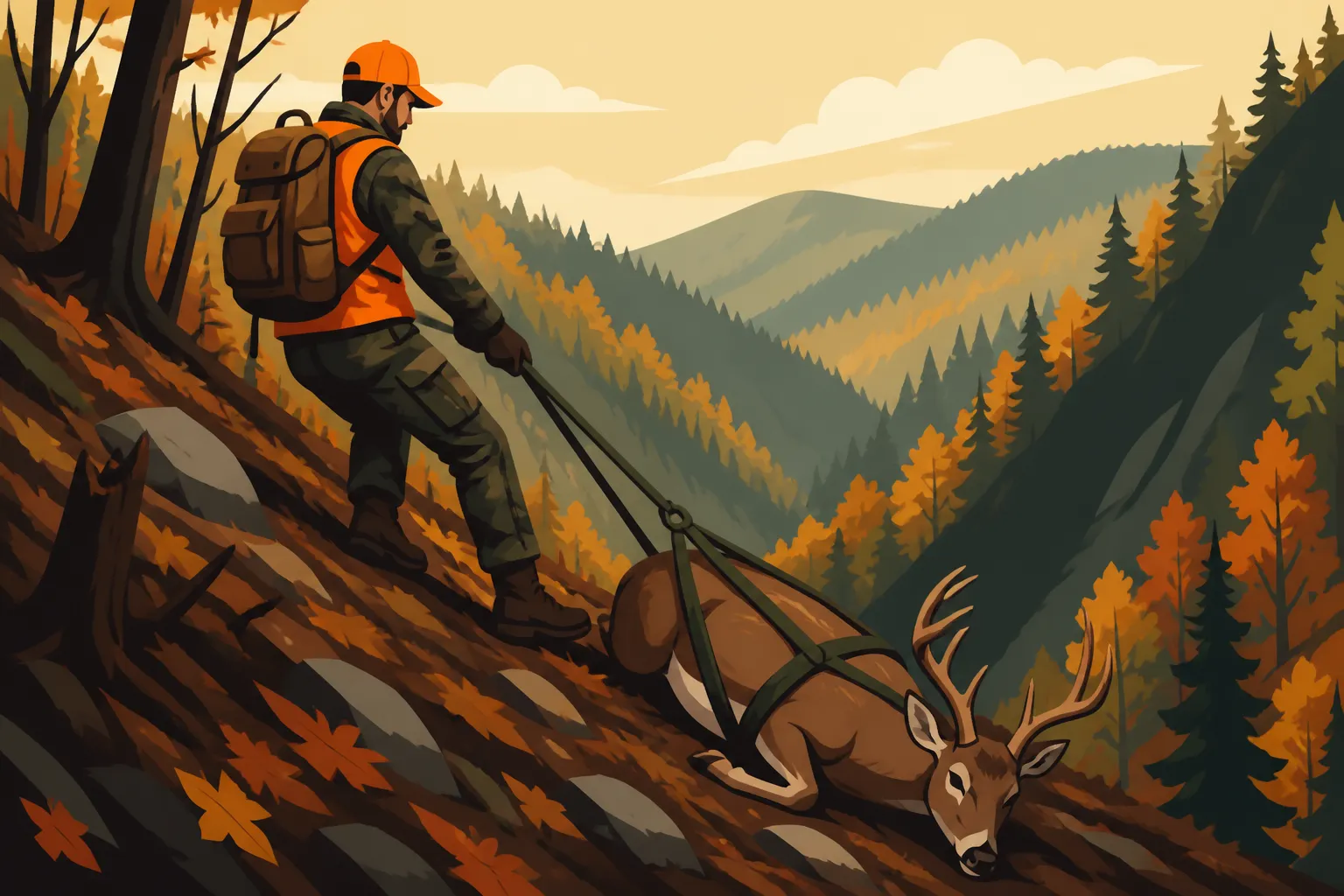
Once you find your deer in a steep hollow, the real physical and mental test begins. Dragging a deer straight uphill, through thick brush, often feels like trying to pull a refrigerator up a flight of stairs. It's exhausting, frustrating, and sometimes, frankly, dangerous.
When and Why to Go Gutless
For deer that expire far down a steep slope or deep in the backcountry, the "gutless method" can be an absolute lifesaver. This technique involves field dressing the deer by removing the quarters, backstraps, tenderloins, and neck meat without opening the body cavity. It significantly reduces the weight you need to move, turning an impossible drag into a series of manageable pack loads. It's not for the faint of heart or those uncomfortable with field butchering, but it's a skill worth learning for West Virginia hunters. You can use a frame pack to carry out the meat, making several trips if necessary. This method often ensures you recover all the valuable meat while leaving the less desirable parts (guts, hide, bones) behind, reducing your hauling burden by a huge margin. Consider bringing game bags, especially during warmer early archery season days, to keep the meat clean and cool.
Utilizing Mechanical Aids and Teamwork
Even if you opt for a whole deer recovery, having the right tools can make a big difference. A deer sled or a specialized game cart can dramatically reduce friction, making it easier to pull the animal over rough ground. However, carts are often impractical in very steep, rocky, or heavily timbered terrain where you’d be constantly lifting them over obstacles. Sleds like the ones from reliable brands are generally more adaptable in West Virginia's thick woods, sliding over logs and rocks that would stop a cart dead. Ropes are also indispensable. You can fashion a harness to distribute the weight across your chest and shoulders, or if you have multiple people, multiple ropes can be attached to the deer, allowing everyone to pull from different angles. When you have a team, coordinate your efforts: "Pull! Stop! Watch your step!" communication is key to moving the deer safely and efficiently. Remember, Deer Sleds for Steep Country are designed for this exact challenge.
Table: Deer Recovery Methods in Challenging Terrain
| Recovery Method | Pros | Cons | Ideal Terrain in WV |
|---|---|---|---|
| Whole Deer Drag (No aid) | Simple, no extra gear | Extremely strenuous, high risk of injury, meat damage | Short, mild slopes, minimal brush, close to vehicle |
| Deer Sled | Reduces friction, protects hide, can be pulled by one | Cumbersome on very steep/rocky ground, requires clearing path | Moderate slopes, somewhat open woods, snow-covered ground |
| Game Cart | Excellent on relatively flat/smooth ground, preserves carcass | Nearly impossible on very steep, rocky, or brushy terrain | Logging roads, wide trails, gentler slopes |
| Gutless Method / Quartering | Drastically reduces weight, allows pack-out by one | Requires butchering skill, more time, additional gear (bags, pack) | Extremely steep, remote, thickest hollows, long distances |
| Team Drag (2+ people) | Shares the load, provides safety in numbers | Coordination needed, can still be very strenuous depending on terrain | Any challenging terrain where a single hunter struggles |
Navigating Obstacles and Maintaining Progress
Moving a deer, whether whole or in pieces, through a West Virginia hollow means constantly encountering obstacles. You'll be climbing over downed trees, squeezing through laurel tunnels, and scrambling up rock faces. When dragging, try to keep the deer's head pointing uphill to minimize snagging. If you encounter a particularly stubborn obstacle like a large log, use leverage. Lift the front of the deer over, then push from behind, or use ropes to hoist it. When going downhill, control is paramount. Don't let the deer get away from you, as it can build momentum and cause you to lose your footing, or even drag you into a fall. Take it slow, one step at a time, and always maintain a secure grip. Sometimes, the path of least resistance isn't a straight line. It might mean traversing sideways along a contour for a bit, even if it adds distance, to avoid an impassable section. This is where your Reading a Ridge for Eastern Panhandle Deer skills can even apply to post-shot recovery.
Safety First: Essential Gear and Precautions for Tough Recoveries
The moment you find your deer is not the time to become complacent. Difficult recoveries are inherently risky, especially when you’re tired, potentially disoriented, and dealing with a heavy animal in unforgiving terrain.
Essential Gear for Recovery
Beyond your hunting gear, a dedicated recovery kit is a smart investment. A high-lumen headlamp or flashlight is non-negotiable, even if you start tracking in daylight. Daylight fades fast in a deep hollow, and you don’t want to be caught in the dark. Carry extra water and snacks – you’ll burn a surprising number of calories. A good field dressing knife, perhaps even a bone saw for quartering, is essential. Heavy-duty gloves protect your hands from sharp branches, rocks, and the deer itself. A first aid kit for Remote Highlands Ground is critical, packed with items for cuts, scrapes, sprains, and blisters, because you’re almost guaranteed to get at least one. If you’re using ropes, make sure they’re strong enough for the job. And a fully charged phone or satellite communicator is important for emergencies, especially if you’re in an area with spotty cell service.
Prioritizing Personal Safety
Fatigue, steep slopes, and uneven footing are a dangerous combination. Falls are a major risk. Always be mindful of your footing, especially on wet leaves or mossy rocks. Trekking poles for Steep Ridge Access can provide much-needed stability, particularly when navigating difficult inclines or declines with a load. Hydration and nutrition are vital; take breaks, drink water, and refuel. Hypothermia is another real threat, even if it doesn't feel bitterly cold. Sweating profusely during exertion, then resting in cold, damp conditions, can rapidly lower your core body temperature. Carry extra layers, especially a dry base layer and a waterproof outer shell. If you're working late into the night, keep an eye on your hunting partners (and they on you) for signs of exhaustion or hypothermia. When the temperature drops, Cold-Weather Sitting Strategy in the Mountains is important for staying warm, but staying warm during heavy exertion and then resting is a different beast.
Knowing Your Limits and When to Seek Help
There’s no shame in admitting a recovery is beyond your current capabilities. If you’re alone and the deer is in a truly impossible spot, or if you're injured, don't risk further harm. Mark the deer's location accurately with GPS and consider if you need to call friends, family, or even professional recovery services (though these are rare in WV for deer). If conditions are favorable (cold temperatures, no rain or scavengers), it might be better to hike out, get help, and return the next morning. A lost deer is a tragedy, but a lost or injured hunter is far worse. Always assess the risk honestly. The effort of Dragging a Deer Off a Steep Ridge is immense, and sometimes it truly takes a team.
Navigating West Virginia’s wild places, especially after the shot, demands respect, preparation, and a healthy dose of grit. By planning ahead, refining your tracking skills, choosing the right recovery methods, and prioritizing safety, you can turn those daunting hollow recoveries into hard-earned successes, filling your freezer and creating stories that will last a lifetime.
Disclaimer
Hunting carries inherent risks, and conditions in West Virginia's rugged terrain can be unpredictable and dangerous. Always prioritize safety, adhere to all state and local regulations, and be prepared for emergencies. The information provided in this guide is for educational purposes only and should not replace professional advice or personal experience.