Spring Turkey Hunting in West Virginia
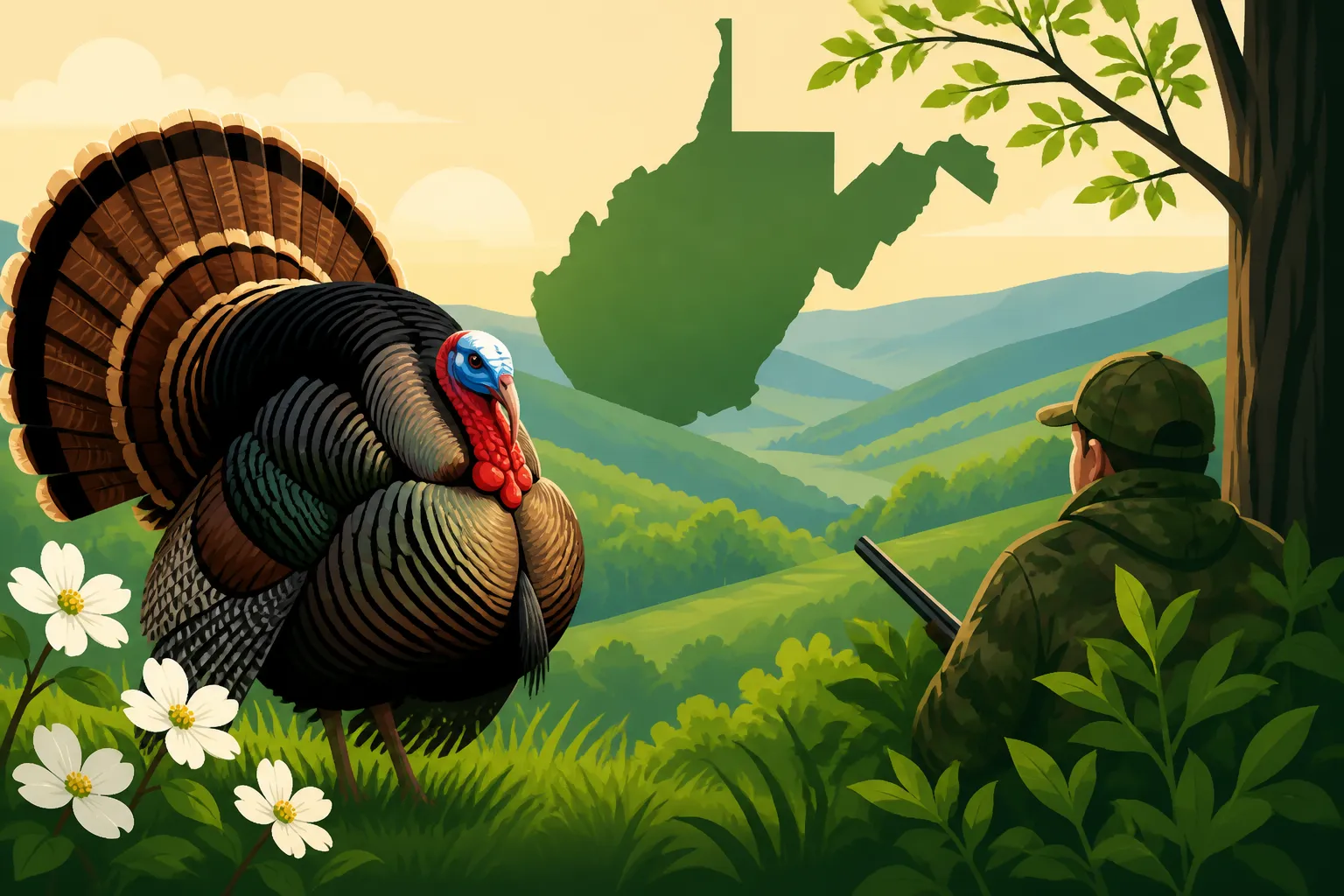
There's nothing quite like the sound of a spring gobbler hammering on the roost in the predawn darkness of a West Virginia hollow. But if you've spent any time chasing these wary birds, you know the frustration: they're either completely silent, roosted across an impassable ridge, or they fly down and immediately head the other direction. It can be incredibly disheartening, but with the right approach and a deep understanding of Mountain State turkeys, you can turn those frustrations into success. This comprehensive guide is here to walk you through everything you need to know about spring turkey hunting in West Virginia, from understanding the regulations to advanced calling and setup strategies.
Understanding West Virginia's Spring Turkey Season Framework
Before you even think about stepping foot in the woods, it's absolutely crucial to have a solid grasp of West Virginia's spring turkey season rules. These regulations are designed to manage the turkey population responsibly, ensuring there are birds for years to come. Skipping over these details can lead to fines, losing your harvest, or worse. The West Virginia Division of Natural Resources (WVDNR) publishes a hunting and trapping regulations summary each year, and it’s your bible. Always consult the latest version, as things can occasionally shift.
Key Season Dates and Bag Limits
West Virginia's spring turkey season typically kicks off in mid-April and runs through mid-May, offering a decent window of opportunity for hunters. However, the exact dates can vary slightly year to year, so double-checking the official WVDNR regulations is paramount. Generally, the season is statewide, meaning you can pursue gobblers in all 55 counties.
The bag limit for the spring season is pretty straightforward: two bearded turkeys per hunter. This means you can harvest two gobblers or jakes, as long as they have a visible beard. It’s important to remember that you can only take one bird per day. So, if you manage to call in a strutting tom in the morning, your hunting for that day is over, even if another one steps out an hour later. This one-per-day rule helps distribute hunting pressure and provides more hunters with an opportunity. Many seasoned hunters will try to fill their first tag early in the season, then take a break before heading back out later to pursue their second bird. It allows for a more relaxed experience and prevents over-harvesting specific areas. You can dive deeper into the specifics of the official West Virginia Spring Turkey Bag Limit to make sure you're always compliant.
Youth Spring Turkey Weekend Rules
West Virginia is incredibly proactive in encouraging the next generation of hunters, and the youth spring turkey weekend is a shining example. This special weekend, usually held a week or two before the general season opener, allows young hunters (typically ages 8-17) to experience the thrill of turkey hunting under the guidance of an adult mentor. It's an invaluable opportunity for them to learn skills, ethics, and safety in a less pressured environment.
During the youth weekend, the same bag limit of one bearded bird applies, and that bird counts towards their overall two-bearded-bird season limit. The accompanying adult mentor must be licensed, but they are not permitted to carry a firearm or bow, nor can they call in birds themselves. Their role is strictly to guide, instruct, and supervise. This setup ensures the youth hunter is truly engaged in the hunt. For many families, this early start provides a special bonding experience and often results in some of the most memorable hunts of the year, as the birds haven't yet been exposed to heavy calling pressure. If you have a young hunter in your family, I highly recommend looking into the specific dates and guidelines for the West Virginia Youth Spring Turkey Weekend. It's a fantastic program.
Legal Hunting Hours and Restrictions
Turkey hunting in West Virginia has specific legal hunting hours that every hunter must adhere to. Generally, these hours run from one-half hour before sunrise until 1 p.m. This midday cutoff is designed to allow turkeys to return to their normal daily routines, feed, and roost without constant pressure, especially important for breeding success. It also provides a clear boundary for hunters, preventing all-day harassment of birds.
The 1 p.m. cutoff means you need to be mindful of your time. If you’re deep in the woods, you need to allow ample time to exit before the legal hunting period ends. Hunting past 1 p.m. is a violation and can carry serious penalties. Remember, even if a gobbler is still responding after the cutoff, you must cease hunting activities. This regulation also applies to calling; once 1 p.m. hits, the hunt is over for the day. Additionally, there are specific restrictions on baiting and using electronic calls, both of which are illegal for turkey hunting in West Virginia. You must also ensure you are not hunting on Sundays, as West Virginia has specific Sunday hunting restrictions that apply to turkeys.
Scouting Before the Season Kicks Off
If you want to consistently put West Virginia gobblers in your truck, you simply cannot skip pre-season scouting. It’s the difference between a frustrating blind guess and a strategic, high-percentage hunt. Turkeys are creatures of habit, especially in the spring, and knowing their routines before opening day gives you an immense advantage. Don't underestimate the power of quiet observation and legwork.
Locating Roosts and Travel Corridors
Finding a gobbler's roost tree or general roosting area is like finding gold. Turkeys will often roost in the same general vicinity night after night, especially if it offers good protection and a clear fly-down area. Before the season, you need to be in the woods well before dawn, listening for gobblers sounding off from their roosts. Pay attention to the specific trees or ridges where the sound originates. Pines, tall hardwoods along a ridge line, or trees overlooking a hollow are common choices.
Once you pinpoint a roost, observe their fly-down routine. Do they fly directly into a field? Do they hit the ground in thick timber and then head to an open bench? Identifying these travel corridors – the paths they take from their roost to feeding areas or strut zones – is critical. These might be old logging roads, subtle benches on a hillside, or saddles between ridges. By knowing these routes, you can set up strategically on opening morning, anticipating their movement rather than reacting to it. Understanding Roost Hunting West Virginia Gobblers tactics can really elevate your game. This is also where tools like GoHunt can shine, helping you visualize terrain features that might serve as natural travel corridors or roosting locations, even without stepping foot in the woods yet.
Identifying Prime Spring Turkey Habitat
West Virginia's diverse landscape offers various habitats, and understanding what makes an area attractive to spring turkeys is key. Gobblers are looking for areas that provide food, water, safety from predators, and open ground for strutting and breeding. Hardwood ridges, especially those with good mast crops from previous falls, are often prime. Turkeys will forage for residual acorns, insects, and new green growth.
Look for areas with a mix of open timber and denser undergrowth. The open timber allows them to strut and display, while the thicker cover offers escape routes and nesting sites for hens. Stream bottoms and creek beds can also be hotspots, providing water sources and lush vegetation. Agricultural fields, particularly those with clover or winter wheat, are magnets for birds, especially as the morning progresses and they move from the timber. Don't forget old clear-cuts or logging operations, which can create excellent regrowth for bugging and offer dense cover. These varied habitats often dictate how turkeys move and where you should focus your efforts.
Using Technology for Pre-Season Prep
In today's hunting world, technology is an indispensable tool for pre-season scouting. Gone are the days of relying solely on paper maps and intuition. Satellite imagery and topographic maps available through apps like GoHunt have revolutionized how we prepare. Before you even lace up your boots, you can digitally scout vast tracts of land.
Start by poring over aerial photos, identifying potential roosting ridges, open timber patches, clear-cuts, and connecting saddles. Look for subtle terrain features that might funnel turkeys, such as fingers of timber extending into fields, or benches that cut across steep hillsides. Use the topographic layer to understand elevation changes and potential obstacles, helping you plan your approach routes without spooking birds. You can mark waypoints for potential setups, strut zones, or water sources. GoHunt also often includes public land boundaries, which is incredibly helpful for planning your hunts on state forests or Wildlife Management Areas (WMAs). While technology doesn't replace boots-on-the-ground scouting, it certainly makes your time in the field far more efficient and productive, helping you narrow down your focus to the most promising areas.
Essential Gear for Mountain Gobblers
Chasing gobblers in West Virginia's rugged terrain requires specific gear that can withstand the elements, get you close to birds, and allow you to make an ethical shot. Being under-prepared can lead to a missed opportunity or, worse, a dangerous situation. Think of your gear as an extension of your hunting strategy, each piece playing a critical role.
Shotguns, Chokes, and Ammunition
Your shotgun is your primary tool for harvesting a spring gobbler, and selecting the right setup is paramount. Most turkey hunters opt for a 12-gauge, though 20-gauge shotguns have become increasingly popular, especially with modern tungsten super shot (TSS) ammunition. The key is patterning your shotgun. Don't just buy a box of shells and assume it's good to go.
A tight choke is essential for turkey hunting, as you want a dense pattern of pellets at 30-40 yards to ensure a clean head and neck shot. Full, extra-full, or even super-full chokes are standard. Experiment with different choke and ammunition combinations on a patterning board. Shoot at turkey head targets at various distances (20, 30, 40, and even 50 yards if your setup allows) to see which combination gives you the most consistent and dense pattern. TSS loads have been a game-changer, offering incredible knockdown power even from smaller gauges. Brands like Federal, Winchester, and Hevi-Shot all offer excellent turkey-specific loads. Remember, shot placement is critical, so a tight pattern ensures you have the best chance for a humane harvest. You can explore more on specific Turkey Shotguns and Chokes to find the ideal combination for your hunting style.
Turkey Calls: Mastering the Language
Turkey calls are the heart of spring gobbler hunting. Being able to mimic the sounds of a hen can draw in even the wariest tom. There's a wide array of calls, each with its own advantages and learning curve.
- Mouth Calls (Diaphragm Calls): These are incredibly versatile, allowing for hands-free calling, which is crucial when a gobbler is in close. They take practice to master but can produce a full range of turkey sounds, from soft yelps to excited cutting. Carrying several with different reeds allows you to vary your sound.
- Slate and Pot Calls: These calls produce beautiful, realistic hen sounds. They require two hands but are excellent for yelps, clucks, and purrs. They are relatively easy to learn and are a staple for many hunters. Different surfaces (slate, glass, aluminum) and strikers (wood, carbon) create varying tones.
- Box Calls: Classic and effective, box calls are simple to use and produce loud, far-reaching yelps, ideal for locating birds or reaching out across a hollow. They're a bit bulky but incredibly reliable.
- Locator Calls: Owl hoots, crow calls, and coyote howlers are used to elicit a "shock gobble" from a tom, revealing his location without him thinking a hen is nearby. These are invaluable for finding birds on the roost or in the middle of the day.
Mastering a few different call types gives you options for various situations. Sometimes a soft purr is all it takes; other times, aggressive cutting is needed to spark a tom's interest. Practice, practice, practice! Learn more about the Turkey Calls Worth Carrying in West Virginia to build your perfect arsenal.
Decoys and Apparel for Stealth
Decoys can be incredibly effective in spring turkey hunting, giving gobblers a visual to home in on and often convincing them to commit the last few yards. A single hen decoy or a jake/hen combination is often enough. The goal is to make the decoy look natural and inviting, positioning it so the approaching gobbler offers a clear shot. However, in heavily pressured areas, some hunters opt not to use decoys at all to avoid being seen setting them up or drawing attention to their position. Understanding Decoy Placement for Pressured West Virginia Birds can significantly increase your success rate.
As for apparel, stealth is the name of the game. Full camouflage, head-to-toe, is essential. This includes a face mask or face paint and gloves. Turkeys have incredible eyesight and can spot the slightest movement or unnatural color. Layering is also crucial for West Virginia's unpredictable spring weather. Mornings can be freezing, but by midday, it might be warm and sunny. Moisture-wicking base layers, insulating mid-layers, and a quiet, waterproof outer shell will keep you comfortable. Look for quiet fabrics that won't rustle as you move. Comfortable, waterproof boots with good ankle support are also a must for navigating steep, often wet, mountain terrain.
Effective Calling Strategies for West Virginia Birds
Calling is an art form in turkey hunting, and it's less about making perfect sounds and more about knowing when and how to use them. Every situation is different, and West Virginia gobblers, especially those on public land, can be notoriously tight-lipped or "hung up." Developing a versatile calling strategy is key to success.
Soft Calls and Subtle Persuasion
Sometimes, less is more, especially when you suspect a gobbler is close, or when dealing with a bird that's been heavily pressured. Soft yelps, clucks, and purrs can often seal the deal when aggressive calling sends a tom running. Imagine a contented hen softly calling to other birds in the woods; this is the sound you want to emulate.
When a gobbler is within 100 yards and you're set up, switch to these soft calls. A few quiet clucks, a subtle purr, or a short, sweet string of tree yelps can pique his curiosity without alarming him. Often, a tom will come in silently at this stage, so unwavering focus is paramount. These subtle calls can be particularly effective when a gobbler hangs up just out of sight. A soft series of yelps, coupled with a slight pause, can be enough to draw him those last few critical yards into range. Practice these quiet sounds with your mouth, slate, and box calls to have them ready when the situation demands a delicate touch.
Aggressive Calling for Hung-Up Toms
On the flip side, some West Virginia gobblers, particularly those that have heard it all, might need a jolt of confidence or a challenge to get them to commit. This is where more aggressive calling comes into play. If a tom is gobbling consistently but won't come closer, or if he's across a large hollow, loud, excited calling can sometimes be the answer.
Think about a hot hen that's ready to breed. Her calls would be sharp, loud, and confident. Try a series of rapid, excited yelps, or a cut and yelp sequence that mimics a hen aggressively searching for a mate. Throw in some aggressive clucks and purrs. The goal is to make the gobbler think a hen is moving away or is being courted by another tom, triggering his competitive instinct. Sometimes, moving slightly after an aggressive calling sequence – just enough to simulate a hen walking off – can convince a hung-up tom to close the distance. This strategy is higher risk, higher reward, but it can be incredibly effective when a passive approach isn't working.
Locator Calls and Shock Gobbles
Locator calls are your secret weapon for finding birds, especially early in the morning or when scouting in unfamiliar territory. These aren't meant to sound like a turkey, but rather to elicit a "shock gobble" – an involuntary response from a tom. They gobble because they're startled, territorial, or simply responding to another loud sound.
Owl hoots, crow calls, and coyote howlers are the most common locator calls. In West Virginia, the hoot of a barred owl before dawn is a classic way to get a roosted gobbler to sound off. Use these calls sparingly and realistically. You don't want to overdo it. Once you hear a gobbler, resist the urge to immediately hit him with hen calls. Instead, try to pinpoint his exact location and plan your approach. Locator calls are also excellent for identifying birds in the middle of the day when they might not be gobbling on their own. If you're hiking a ridge and haven't heard anything, a few crow calls might just shock a tom into revealing himself. This initial contact is crucial for setting up your next move. Using a locator call can be a fantastic way to find a gobbler without alerting him to your position as a hunter, especially helpful when trying to effectively call a Calling a West Virginia Gobbler Off the Roost.
Setting Up for Success: Positioning and Tactics
You can be the best caller in the world, but if your setup isn't right, that gobbler will inevitably hang up, spot you, or simply walk away. Proper positioning is absolutely critical to closing the distance and getting a shot in West Virginia's varied terrain. Every ridge, hollow, and field edge presents unique challenges and opportunities.
Reading Terrain and Approaching Roosts
West Virginia's topography is defined by its mountains and valleys, and understanding how turkeys use this terrain is paramount. When you hear a gobbler on the roost, your immediate goal is to get as close as possible without being detected, putting a natural barrier between you and him, if possible. This means utilizing dips, folds in the terrain, and thick cover.
If a gobbler is on a ridge above you, try to approach from the side or parallel to the ridge, staying below the skyline. If he's below you, approach carefully, remembering that sound travels down much more easily. Your goal is to get within 100-150 yards, ideally with a clear view of his expected fly-down area but from a concealed position. Avoid walking directly at him or over the top of a ridge where you might silhouette yourself. Consider the direction the bird will likely fly down and where he'll want to strut. Try to set up in a spot that funnels him past you. This is where a pre-scouted knowledge of the area, potentially aided by a GoHunt app showing elevation changes, really pays off.
Concealment and Blind Placement
Once you've decided on your setup location, concealment becomes your top priority. Turkeys have fantastic eyesight, and they will spot movement. You need to break up your outline completely. This means sitting with your back against a tree that's wider than your shoulders. If possible, choose a tree with some low-hanging branches or thick undergrowth around it.
If you're using a ground blind, position it so it blends naturally into the surroundings. Brush it in with local vegetation like saplings, deadfall, or laurel. Make sure you have a clear shooting lane but remain completely hidden from the bird's approach. Pay attention to your background; don't sit in front of a completely open area where your silhouette will be obvious. Think about where the sun will be when the bird approaches; you want it at your back, making it harder for the turkey to see into your shadowed position. Remember, once a gobbler is focused on your calling, any unnatural movement or flash of color will send him packing. When considering your setup, remember the classic advice for Setting Up Against a Big Oak or other large trees for optimal concealment.
Run-and-Gun Tactics on Public Land
West Virginia's public lands, particularly the vast stretches of the Monongahela National Forest or various Wildlife Management Areas (WMAs), can be challenging. Birds are often scattered, and pressure can make them hesitant. This is where a run-and-gun strategy shines. Instead of committing to one spot and waiting for hours, run-and-gun involves covering a lot of ground, stopping frequently to call, and moving quickly to a bird that responds.
This tactic works best mid-morning or later when birds are off the roost and actively moving. Walk old logging roads, ridgetops, or established trails, pausing every few hundred yards to send out some loud locator calls (crow, owl) or aggressive hen yelps. If a gobbler responds, immediately try to pinpoint his location, plan a quick, quiet approach, and set up. This might mean dropping behind a fallen log, hunkering down behind a clump of rhododendron, or finding a suitable tree. Speed and efficiency are key. Don't linger if a bird doesn't respond; keep moving until you find one that does. This active approach can be incredibly rewarding and is often the best way to connect with a gobbler on heavily hunted public lands. To perfect this approach, read up on Run-and-Gun Turkey Tactics on Public Land.
Adapting to Pressure and Mid-Season Lulls
No matter how good you are, West Virginia gobblers will throw you curveballs. Hunting pressure, changing weather, or simply the natural ebb and flow of the breeding season can make birds incredibly challenging. The key to consistent success is adaptability. Don't stick to a failing strategy; be willing to change your approach.
Hunting Public Land Pressure
West Virginia boasts an abundance of public hunting land, which is a fantastic resource, but it also means more hunters. Turkeys on public land quickly become "educated" – meaning they’ve heard every call, seen every decoy, and developed an aversion to anything that seems unnatural. This requires a shift in tactics.
First, consider hunting weekdays instead of weekends if your schedule allows. Less pressure generally means more receptive birds. Second, be willing to walk further than most. Many hunters stick close to roads and trails. By venturing deeper into the backcountry, utilizing mapping tools like GoHunt to find remote pockets, you’ll find less pressured birds. Third, change your calling. Instead of aggressive, excited calls, try softer, more infrequent calling. Sometimes, mimicking the sound of a lone hen quietly feeding is enough to draw in a wary tom. Fourth, focus on stealthy approaches and quick setups. Minimize movement and don't overcall. Sometimes, a silent approach and one or two soft calls is all it takes to bring in a bird that's heard too much. Consider hunting terrain others avoid, like steep, thick hollows. These areas often hold birds that have been pushed out of more accessible spots.
Dealing with Quiet Gobblers
Not every morning will greet you with booming gobblers. Mid-season, or after a few days of heavy pressure, toms might go silent, only gobbling sporadically or not at all on the roost. This can be frustrating, making you feel like there are no birds around. However, silent birds are still callable birds; you just have to work harder to find them and understand their mood.
When birds are quiet, your ears become even more critical. Listen for subtle sounds: a distant fly-down cackle, the drumming of a strutting tom, or the soft putts and clucks of feeding birds. Use your locator calls more frequently but vary them. Try different tones and pitches. If you hear nothing, don't give up. Move to a new location, wait 20-30 minutes, and try again. Often, a silent gobbler might be coming to your calls but without gobbling. Maintain patience and sharp vision. If you suspect a bird is close but silent, try a soft "kee-kee run" or a series of clucks and purrs to entice him. Another tactic is to move on and actively search for fresh sign – tracks, droppings, and strut marks – to pinpoint where birds are spending their time.
Relocating and Changing Tactics
Stubborn gobblers require a willingness to relocate and change your tactics entirely. If you've worked a bird for an hour and he's not committing, or if you're not getting any responses, it's often best to pack up and move. Staying in a non-productive spot for too long wastes valuable hunting time.
When relocating, think about what might be different in a new area. Is it a different type of habitat, less pressured, or has a better food source? Sometimes, just a quarter-mile move around a ridge can put you in front of a whole new group of birds. Consider changing your calling sequence, volume, and pace. If you've been aggressive, go soft. If you've been silent, try a few loud yelps. Change your setup. If you were on a field edge, try a deep timber setup. Be willing to experiment with different calls – if a box call isn't working, try a slate or a mouth call. The most successful turkey hunters are those who can quickly diagnose a situation and adapt their strategy on the fly. Don't be afraid to try something completely different if your initial plan isn't yielding results.
Safety First: Crucial Considerations in the Spring Woods
Safety in the spring turkey woods is non-negotiable. While turkey hunting might not seem as inherently dangerous as big game hunting, the nature of calling a game animal into close range, often in camouflaged attire, requires extreme caution. Always prioritize safety for yourself and others.
Identifying Your Target and Backstop
This is the golden rule of turkey hunting, and frankly, all hunting: positively identify your target and what is beyond it before you even think about raising your gun. The sounds you hear and the movements you see might not always be a turkey, or it might be another hunter. Never, ever shoot at sound or movement alone. Wait until you clearly see the head and neck of a gobbler and confirm it's a legal bird (bearded).
In the spring woods, especially on public land, other hunters are likely present. It’s incredibly easy for someone calling to be mistaken for a turkey, or for two hunters to stalk the same bird from different directions. Take a moment, scan the area, and ensure your shot is clear, safe, and ethical. Know your gun's range and trajectory, and confirm there are no buildings, roads, or other people downrange. This vigilance is paramount to preventing accidents.
Navigating Steep Terrain Safely
West Virginia's beauty often comes with rugged, steep terrain. This can be a significant safety challenge, especially when moving quietly in the dark or navigating quickly to a gobbler. Falls are a real risk, and a serious injury in a remote area can be life-threatening.
Always wear appropriate footwear with good ankle support and traction. Take your time, especially when traversing steep slopes, wet leaves, or rocky areas. Use trekking poles for added stability, particularly when carrying heavy gear. Be mindful of loose rocks, slippery moss, and treacherous roots. If you're hunting alone, always let someone know your hunting plan, including your intended location and expected return time. Carry a fully charged cell phone (though service can be spotty in the mountains) and a basic first-aid kit. Consider carrying a personal locator beacon (PLB) for truly remote hunts. A slip or fall can quickly turn a great hunting day into an emergency, so always move cautiously and deliberately.
Hunter Orange and Visibility
While hunter orange (or blaze pink) is not legally required during West Virginia's spring turkey season (except for those accompanying a youth hunter during the youth weekend or general firearms deer season overlap), many seasoned hunters strongly recommend carrying and displaying it when moving.
When you're actively setting up or calling, you should be in full camouflage. However, when you're walking to your spot, relocating, or carrying a harvested bird, wearing a blaze orange hat or vest dramatically increases your visibility to other hunters. It’s a simple, effective way to reduce the risk of being mistaken for game. Think of it as a courtesy and an extra layer of protection. Once you get to your setup, you can carefully remove it and store it, then put it back on before you move again. This small act of vigilance can make a huge difference in safety, especially on heavily hunted public lands.
Post-Harvest Care and Reporting
Congratulations! You've successfully called in and harvested a West Virginia gobbler. The hunt isn't over yet, though. Proper post-harvest care and adherence to reporting requirements are crucial steps that ensure your bird is in excellent condition and you remain compliant with state regulations.
Field Dressing and Transporting Your Bird
Immediately after harvesting your turkey, the first step is to properly field dress it. This involves removing the internal organs to cool the carcass down as quickly as possible, especially on warm spring days. Heat is the enemy of wild game meat, and turkeys can spoil quickly if not handled correctly.
Carefully make an incision around the vent and remove the entrails. You can often reach in and pull most of them out. If you plan to mount the bird, be extra careful not to damage the breast or beard area. Once field dressed, find a cool, shaded spot to hang the bird if possible, allowing it to drain and cool. If you’re far from your vehicle, you might need to carry it out. Secure the bird in a game bag or simply carry it by the legs. The goal is to get it to refrigeration or ice as soon as possible. Plucking or skinning can wait until you get home, but getting the internal heat out is critical for meat quality.
West Virginia Turkey Checking Requirements
West Virginia has mandatory harvest reporting requirements for turkeys. This data is vital for wildlife managers to monitor populations and set future seasons. Failure to report your harvest is a violation and can result in penalties.
You must report your harvested turkey, or "check it," using one of the methods provided by the WVDNR. This can typically be done online through the Go Wild West Virginia website, by calling a toll-free number, or through a mobile app. You will need your license information and details about your harvest, such as the date, county, and sex of the bird. Once reported, you’ll receive a confirmation number. This confirmation number, or the physical tag if you used one, must remain with the turkey until it reaches its final destination and processing. Make sure you understand the specific West Virginia Turkey Checking Requirements for the current season to avoid any issues. This process is generally quick and easy, and it helps ensure the future of turkey hunting in the Mountain State.
Disclaimer
The information provided in this guide is for general informational purposes only and is not a substitute for official regulations. Hunters are responsible for consulting the current West Virginia hunting and trapping regulations summary issued by the West Virginia Division of Natural Resources (WVDNR) before engaging in any hunting activities. Regulations, season dates, and bag limits are subject to change. Always prioritize safety and ethical hunting practices.