Retrieving Game From Private Land in West Virginia
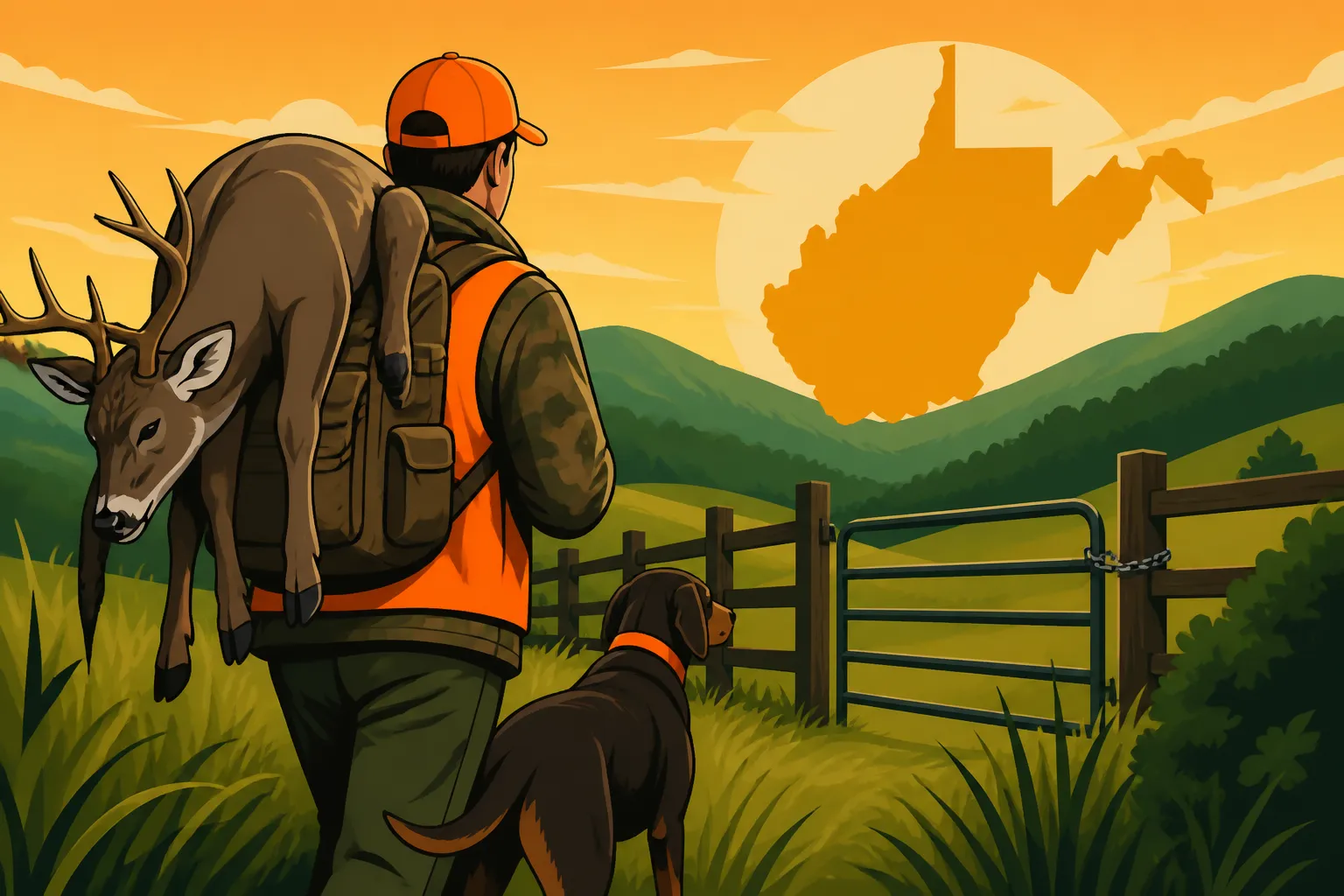
It's one of the most disheartening moments in a hunter's life: you've made a good shot, but your game animal, with the last surge of adrenaline, somehow manages to cross a property line onto land you don't have permission to hunt. Your heart sinks. You know it's your ethical duty to recover that animal, but you also know that blindly stepping onto someone else's land can lead to serious legal trouble and ruin landowner relations for everyone. This guide will walk you through the proper, respectful, and legal steps for retrieving game from private land in West Virginia, ensuring you honor both the animal and the landowner.
Understanding West Virginia Trespass Law and Hunter Responsibilities
Navigating property boundaries in West Virginia, especially when a wounded animal is involved, can feel like a minefield. Many hunters, myself included, have stood at a fence line, staring across at a private parcel, heart pounding with frustration and worry. The law is clear: in West Virginia, you generally need permission to enter private land, even to retrieve game. This isn't just about avoiding a fine; it's about respecting private property rights, which are the backbone of continued hunting access in our state.
The Legal Ramifications of Trespassing
Simply put, walking onto private land without permission is trespassing. It doesn't matter if you believe your animal is just yards over the line, or if you feel a moral obligation to retrieve it. The property owner has the right to control who enters their land. Violating this can lead to citations, fines, and potentially even more severe consequences, like the loss of hunting privileges. Think about it from the landowner's perspective: they don't know you, they don't know your intentions, and they value their privacy and property. An unexpected hunter appearing on their land, even with the best intentions, can be alarming and lead to a negative perception of all hunters. This is why it’s so critical to understand the rules. For more detailed information, check out West Virginia Trespass and Permission Law.
Consider a scenario: you're hunting public land along the edge of a large cattle farm in Greenbrier County. You arrow a beautiful whitetail buck, watch it run 50 yards, and then see it pile up just inside the tree line on the farm. Your first instinct is to go get it. But if you cross that fence without permission, and the landowner sees you, you could be facing a hefty fine and a negative interaction that poisons future opportunities for other hunters in the area. It's a tough pill to swallow, but waiting and seeking permission is almost always the better, safer, and more responsible choice.
Ethical Imperatives to Recover Game
While the law dictates your actions regarding property access, the ethics of hunting demand that you do everything within your power to recover any game animal you wound. As hunters, we accept the responsibility that comes with taking an animal's life. Leaving a wounded or deceased animal to waste is not only unethical but also a disservice to the animal and the hunting tradition. This creates a difficult tension when private property is involved, and it's precisely why a methodical approach is necessary.
I remember a few years back, I had a client wound a bear in Pocahontas County. It wasn't a fatal shot, but the bear was clearly injured and headed towards a thick rhododendron patch that bordered a private timber parcel. The client was distraught, convinced he had to go in. We talked him down, explaining that barging in would only create problems. We spent the next hour locating the landowner, explaining the situation, and getting verbal permission. It took time, but we recovered that bear, and the landowner appreciated our respect. It reinforces that our responsibility to the animal must be balanced with our responsibility to landowners and the law.
Navigating Permission: How to Ethically and Legally Access Private Land
The best-case scenario for retrieving game from private land is always to obtain permission from the landowner. This might sound daunting, especially in the heat of the moment, but there are steps you can take to make it happen. Preparation, respect, and clear communication are your best allies.
Identifying the Landowner and Making Contact
The very first step, once you realize your game has crossed onto private land, is to determine who owns that land. This is where modern technology really shines. Tools like onX Hunt or GoHunt can be invaluable. These mapping applications often allow you to see property boundaries and, crucially, identify the landowner's name and sometimes even contact information, all from your phone. Even if you don't have cell service right there, often you can download maps ahead of time. I always recommend having these tools on hand; they're a game-changer for navigating unfamiliar territory and respecting property lines. Finding West Virginia Property Lines can be much easier with these resources.
Once you have the landowner's name, the next challenge is making contact. If you're lucky, you might be able to see a house nearby. If so, a face-to-face conversation, where you can politely explain your situation, is often the most effective. If no house is visible, or you can't find them, you might need to use public records (like county assessor's offices, often available online) to find a mailing address or phone number. Patience is key here. It might take some time to get a hold of someone, but it's time well spent.
| Action | Immediate Next Step | Potential Outcomes |
|---|---|---|
| Game Crosses Private Line | Identify Landowner (e.g., onX Hunt) | Crucial for respectful contact |
| Landowner Identified | Attempt Contact (Knock on door, call) | Permission granted, denied, or no contact |
| Permission Granted | Document Agreement (verbal/written) | Proceed with recovery, legally protected |
| Permission Denied | Evaluate Options (WVDNR, abandon) | No legal right to enter, difficult choice |
| No Contact | Continue Attempts / Contact WVDNR | Avoids trespass, but recovery becomes uncertain |
Approaching the Landowner with Respect
When you do make contact, your demeanor is everything. Be calm, polite, and respectful. Introduce yourself clearly and explain the situation succinctly: "Hello, my name is [Your Name], and I'm a hunter. I was hunting on the public land adjoining your property, and I believe I've wounded a [deer/bear/turkey] that has unfortunately run onto your land. My ethical responsibility is to recover the animal, and I would be incredibly grateful if you would grant me permission to quickly enter your property to retrieve it. I promise to be respectful of your land and leave no trace."
Offer to show them exactly where the animal is, or where you last saw it. Emphasize that you'll be unarmed once on their property if they prefer, or that you'll bring only what's necessary (e.g., a knife for field dressing). Offer to leave your vehicle visible from their house or road. Build trust. Sometimes, just seeing your sincerity and respect can make all the difference. Many West Virginia landowners are understanding, especially when approached respectfully. They might even offer to help you track! For tips on how to start that conversation, read Asking a West Virginia Farmer for Permission.
It's also a good idea to bring a copy of your hunting license and ID. This shows you're a legitimate hunter and not just some random person trying to gain access. If they grant permission, ask if they prefer you enter with or without a firearm, and discuss the best entry and exit points. Even if it's verbal, confirm the details: "So, just to confirm, you're giving me permission to walk in from the old logging road to retrieve my deer, and I can be on your property for the next couple of hours?" This clarity avoids misunderstandings.
What if the Landowner Isn't Home or Can't Be Reached Immediately?
This is a common and frustrating scenario. You're losing daylight, the weather might be turning, and the meat could spoil. If you can't reach the landowner immediately, your options become limited. You cannot just cross the line. Continued attempts to contact them through various means are your primary recourse. Leave a note with your name and phone number if you feel comfortable doing so, explaining the situation and asking them to call you back as soon as possible.
If it's an emergency situation where the animal is clearly visible and just on the other side of a known boundary, and you have exhausted all attempts to contact, you might consider contacting the West Virginia Division of Natural Resources (WVDNR) directly. A Natural Resources Police Officer might be able to assist in making contact with the landowner or, in very rare and specific circumstances, might be able to retrieve the animal themselves or grant you very limited, supervised access. However, this is not a guarantee and should be a last resort. Do not rely on WVDNR intervention as a default plan.
What to Do If Permission is Denied or Unobtainable
Sometimes, despite your best efforts and most respectful approach, a landowner might still deny permission. This is their right, and while it's incredibly frustrating and disheartening, you must respect their decision.
Respecting a Denied Request
It’s a bitter pill, but if a landowner says no, that’s the final word. You cannot argue, cajole, or try to convince them. Doing so will only reinforce negative stereotypes about hunters and could escalate the situation. Simply thank them for their time, pack up your gear, and leave. While it goes against every fiber of your being as an ethical hunter, entering their property after a denied request is trespassing and will likely result in legal consequences.
I've had this happen. Years ago, a client shot a small doe that ran onto a meticulously kept horse farm. The owner, a very polite woman, simply said she didn't want anyone on her property, period. She was worried about her horses, about liability, and she had had bad experiences with trespassers before. My client was devastated. We had to explain that legally and ethically, regarding the landowner, we had to walk away. It was tough, but we did. It's a hard lesson in balancing our ethics with legal boundaries, and sometimes, the legal boundaries win.
Contacting the West Virginia DNR for Assistance
If you've been denied permission, or if you simply cannot locate or contact the landowner after diligent attempts, the WVDNR might be able to offer assistance, but it’s crucial to understand their role. Natural Resources Police Officers (NRPOs) can sometimes act as an intermediary. They can attempt to contact the landowner on your behalf and explain the situation. In some cases, if the animal is clearly visible and deceased, and the landowner remains unreachable or denies access, an officer might be authorized to retrieve the animal for you or oversee your entry. This is not a common occurrence and depends heavily on the specific circumstances, the officer's discretion, and local regulations.
It's important to note that the WVDNR is not obligated to retrieve your animal. Their priority is upholding the law and managing wildlife resources. Calling them should be done only after you've exhausted all other avenues of direct, respectful landowner contact. When you call, provide all the details: your location, the landowner's information (if known), where the animal was last seen, and the efforts you've already made to gain permission. This helps them assess the situation quickly and decide if they can intervene.
Accepting the Loss and Lessons Learned
In the worst-case scenario, where permission is unequivocally denied or unachievable, you might have to accept the heartbreaking reality that the animal cannot be recovered. This is a tough pill to swallow for any responsible hunter, but it's part of the ethical framework we operate within. It also provides a crucial learning experience.
This unfortunate situation can underscore the importance of understanding property boundaries before you hunt. Using tools like onX Hunt or even paper plat maps to scout your hunting area thoroughly can help you identify potential problem areas. If you're hunting near a known private property line, perhaps adjust your stand location or hunting strategy to avoid shots that could send an animal across that boundary. Sometimes, this means passing on a shot that you might otherwise take. It's a strategic decision that weighs the desire for an animal against the potential for an unrecoverable one. Learning to make these judgment calls is part of becoming a more seasoned and ethical hunter in West Virginia.
Preparing for the Worst: Pre-Season Planning and Tools
While the scenario of tracking game onto private land is never ideal, you can take steps before the season even starts to better prepare yourself for such an eventuality. Proactive planning can make a world of difference when you're facing a stressful situation in the woods.
Scouting Property Lines and Identifying Key Landowners
One of the best ways to avoid this predicament is to understand the boundaries of your hunting area thoroughly, especially where public land meets private. Before hunting season, take the time to scout the fringes of public lands or areas where you have permission. Use mapping apps like onX Hunt or GoHunt to clearly delineate property lines. I like to mark these boundaries on my physical map and in my digital app. This not only helps you stay legal but also gives you a heads-up about who owns the adjacent parcels. Scouting West Virginia Public Land Before Season is crucial for this.
During your pre-season scouting, try to identify the landowners of properties adjacent to where you plan to hunt. If possible, make contact with them proactively, even if you don't anticipate a problem. A friendly introduction and a brief chat about your hunting plans can build rapport. You could even ask, "Hypothetically, if an animal I shoot happens to cross onto your property, would you be open to me contacting you for permission to retrieve it?" This isn't always feasible, especially around large tracts of public land, but for smaller, identifiable parcels, it can be incredibly effective. Sometimes, just having met you once can make a landowner much more amenable to a request later.
Carrying Essential Information and Tools
Beyond your hunting license and ID, always carry a small notebook and pen to jot down landowner names, phone numbers, and any specific instructions they might give you. Having a fully charged phone with mapping apps downloaded for offline use is also non-negotiable. Remember, cell service in the deep hollows and high ridges of West Virginia can be spotty at best.
Consider also carrying a small, clear bag with a copy of your license and a short, pre-written, polite note explaining your situation, with your name and phone number. If you can't reach a landowner by phone or in person, leaving a visible, respectful note on a gate or prominent sign might be your only option. Of course, this doesn't grant you permission, but it shows your intent to do things correctly and provides a way for the landowner to contact you.
Establishing Good Hunter-Landowner Relations
The long-term solution to minimizing these types of problems lies in fostering positive relationships between hunters and landowners across West Virginia. Every hunter has a role to play in this. When you approach a landowner respectfully, thank them for their time (whether they grant permission or not), and leave their property as you found it (or better), you're not just representing yourself; you're representing all hunters.
If you are granted permission to retrieve your animal, follow through on all promises. Close gates, don't drive off-road unless explicitly told you can, and make sure to thank the landowner again before you leave. A small gesture, like offering a package of venison after the hunt, can go a long way in building goodwill. By consistently demonstrating respect for private property rights, we help ensure that future generations of hunters will continue to have access to the Mountain State's incredible hunting opportunities. Whether you're Hunting the Eastern Panhandle, Hunting the Potomac Highlands, or any other part of our beautiful state, those relationships are key.
Disclaimer
This article is for general informational purposes only and does not constitute professional advice. Laws, prices and regulations vary by location and change over time. Consult a qualified professional for guidance on your specific situation.