Treestand Safety Gear for Steep Ground
Hunting in West Virginia is an experience like no other, but the rugged, steep terrain that makes it so challenging and rewarding also adds layers of complexity, especially when it comes to treestand hunting. Many of us have faced that heart-pounding moment trying to navigate a slick, leaf-covered slope in the pre-dawn dark, all while carrying a stand and gear, knowing that one slip could turn a promising hunt into a nightmare. This guide is here to walk you through the essential safety gear and practices you need to stay safe and confident when hunting from a treestand on West Virginia's steep ground, ensuring you come home safely every time.
The Unique Dangers of Treestand Hunting on Steep West Virginia Terrain
Hunting from an elevated position offers a distinct advantage, but it also comes with inherent risks, which are significantly amplified when you're dealing with the dramatic elevation changes and often unforgiving conditions of West Virginia's mountains and hollows. It's not just about the height; it's about the environment around that height.
Unstable Footing and Awkward Angles
Imagine trying to set up a stand on a tree that's not perfectly straight, or worse, traversing a sidehill to get to your chosen spot. The ground beneath your feet in West Virginia is rarely flat. You're often dealing with loose rocks, slick leaf litter, exposed roots, and mud, especially after a good rain or a light snow. This unstable footing makes simply walking to your stand a challenge, let alone carrying a pack, a bow, and climbing sticks. When you add in the awkward angles of attaching a stand to a tree that might be leaning slightly or growing out of a steep incline, the potential for a misstep or a slip dramatically increases. A small stumble on flat ground might be a bruise, but on a 45-degree slope, it can quickly become a slide down a ravine or into a rock outcrop, with much more severe consequences.
Increased Severity of Falls
Gravity is unforgiving, and a fall from any height can be dangerous. However, a fall on steep terrain can be catastrophic. Instead of falling straight down onto a relatively flat surface, you might tumble down a hill, hitting trees, rocks, or other debris on the way. The momentum gained from rolling downhill can turn a simple fall into a prolonged, violent descent, increasing the likelihood of broken bones, head injuries, or internal trauma. The recovery effort for such a fall is also far more complicated and time-consuming. Emergency services might struggle to reach you in remote, steep areas, making rapid medical attention incredibly difficult. This isn't meant to scare you away from hunting these challenging areas, but rather to underscore the absolute necessity of taking every possible safety precaution.
The Challenge of Solo Hunting in Remote Areas
Many of us cherish the solitude of hunting deep in the woods, away from the crowds. In West Virginia, finding truly remote spots on public land, like within the Monongahela National Forest Hunting or other expansive WMAs, is entirely possible. However, this solitude comes with a critical trade-off: if something goes wrong, you might be entirely on your own. There's no one to hear you call for help, no one to go for assistance, and often, no cell service to even dial out. This makes personal responsibility for safety paramount. Every piece of gear, every decision, every pre-hunt check takes on greater importance when you know you're the only one looking out for yourself. It means having a plan for self-rescue, carrying communication devices that work off-grid, and always, always letting someone know exactly where you are going and when you expect to return.
Essential Components of a Treestand Safety System
Let's talk about the gear that literally keeps you from hitting the ground. This isn't optional; it's non-negotiable, especially when you're tackling West Virginia's steep inclines and often challenging conditions.
The Full-Body Safety Harness
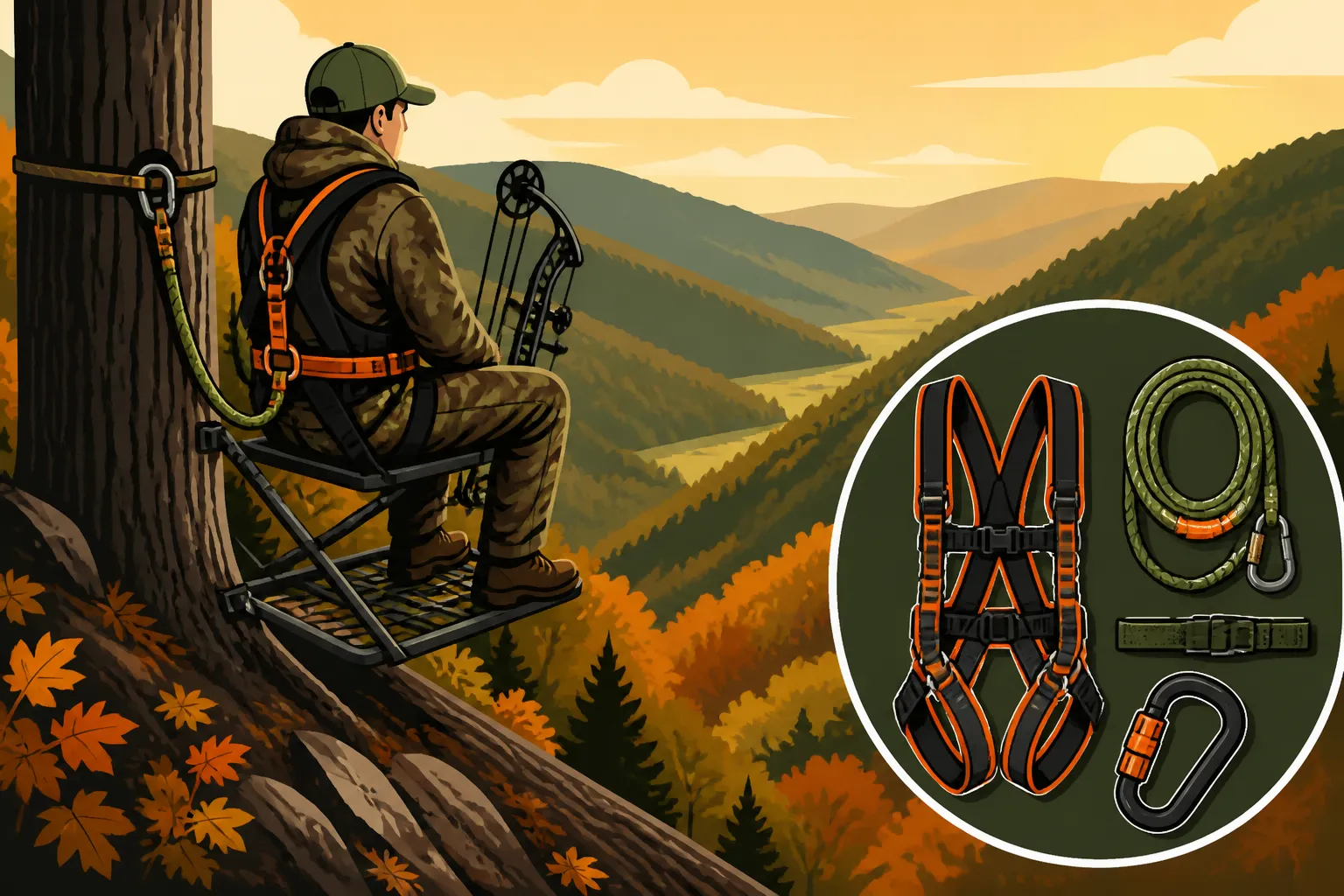
Forget those old-school waist belts; they are absolutely not safe for treestand hunting. The full-body safety harness is your first and most critical line of defense. It's designed to distribute the force of a fall across your entire body – your shoulders, chest, and legs – rather than concentrating it solely around your waist, which could cause severe injury or even death.
A proper full-body harness should fit snugly but comfortably. You should be able to move freely, shoot your bow, or shoulder your rifle without feeling restricted. Many hunters shy away from harnesses because they've had bad experiences with bulky, uncomfortable models, but modern harnesses from reputable brands are lightweight and designed for extended wear. Take the time to adjust all the straps correctly: leg straps should be snug enough that you can't slip out, but not so tight they cut off circulation. Shoulder straps should keep the harness high on your torso. Practice putting it on and adjusting it in your living room, long before you're fumbling with it in the dark, cold woods. Remember, it doesn't do you any good if it's not worn correctly or, worse, if it's left in the truck. You need to be wearing this harness from the moment your feet leave the ground until they are back on solid earth.
Continuous Connection: Tree Straps, Life Lines, and Prussic Knots
The concept of "continuous connection" is simple: you should never be unattached from the tree when you're off the ground. This means from the very first step onto a climbing stick until you are safely back on the forest floor.
Tree Straps and Lineman's Belts
When you're installing your treestand or Hanging a Stand on a Steep Allegheny Ridge, a lineman's belt is your best friend. This belt wraps around the tree and clips into loops on either side of your harness, allowing you to lean back and use both hands to work on your stand or climbing sticks. It keeps you secure as you ascend and descend, especially helpful when negotiating those tricky initial steps on a steep incline. Once your stand is installed and you're in it, a separate tree strap is used. This strap goes around the tree at your stand height, and your harness tethers to it. It’s crucial that this strap is snug and keeps your tether short, limiting how far you can fall. The goal is to prevent a fall entirely, or at least keep it to a minimum, rather than just catching you after a long drop.
Vertical Life Lines and Prussic Knots
For true continuous connection during ascent and descent, a vertical life line is indispensable. This is a rope that you attach to the tree above your stand, extending all the way to the ground. Before you even begin to climb, you attach your harness to this rope via a prussic knot or a similar sliding rope grab. As you climb, the prussic knot slides freely up the rope but will cinch tight and arrest a fall immediately if you slip. This means you are literally tied to the tree from the first step up to your stand, and all the way back down.
There are many great systems available, some with a rope grab already integrated. Brands like Hunter Safety System, for instance, offer complete systems that are easy to use. The peace of mind that comes from knowing you're always connected, even when dealing with wet boots or icy climbing sticks, is worth every penny, especially on steep, unforgiving West Virginia hillsides. For a more detailed look at the gear, check out Climbing Sticks for West Virginia Hardwoods as these are often used in conjunction with a lifeline system.
Stability and Maintenance of Your Treestand
Even the best safety harness won't matter if your stand fails. Choosing the right treestand for West Virginia's terrain and maintaining it rigorously are key.
Choosing a Stable Stand
For steep ground, stability is paramount. Look for stands designed for uneven trees or with features that allow for more secure leveling. Ladder stands offer great stability once set up but are often impractical for very steep or remote areas. Climbing stands can be great, but require a relatively straight, limb-free tree, which can be hard to find on some West Virginia slopes. Hang-on stands, used with climbing sticks, are often the most versatile for uneven terrain, allowing you to choose your tree more flexibly. Ensure any stand you select is rated for your weight, including your gear, and from a reputable manufacturer.
Proper Installation and Regular Inspection
Installation is where many accidents happen. Always use a lineman's belt during installation. Make sure your stand is level, even if the tree isn't perfectly straight, and all straps or chains are securely tightened. Don't rush this process, especially when trying to finish before dark or get set up quickly.
Throughout the season, inspect your stand and all your safety gear regularly. Check straps, cables, chains, and bolts for wear, rust, cracks, or any damage. Exposure to the elements, especially West Virginia's unpredictable weather, can degrade materials over time. Animal chewing can also be an issue in the woods. If anything looks suspect, replace it immediately. Your life literally depends on it.
| Safety Gear Component | Purpose | Key Feature for Steep Ground | When to Use |
|---|---|---|---|
| Full-Body Harness | Distributes fall force, prevents injury. | Comfortable fit for movement, easy adjustment. | From ground up, until feet are on solid ground. |
| Lineman's Belt | Hands-free security during stand installation. | Allows leaning, secure two-handed work. | During stand setup and removal. |
| Tree Strap | Short tether while in the stand. | Keeps fall distance minimal. | While seated or standing in the treestand. |
| Vertical Life Line | Continuous connection during ascent/descent. | Prussic knot or rope grab for instant arrest. | From first step up, to last step down. |
| Suspension Relief Strap | Prevents suspension trauma after a fall. | Quick to deploy, allows standing in harness. | After a fall, while awaiting rescue. |
Beyond the Basics: Advanced Safety Considerations
Having the right gear is fantastic, but true safety is a mindset, a series of habits, and a willingness to plan for the worst-case scenario. When you're Hunting Steep Allegheny Ridges, these "advanced" considerations are actually just smart hunting.
Understanding and Preventing Suspension Trauma
This is a silent killer that many hunters aren't aware of. Suspension trauma, also known as harness hang syndrome, can occur if you're suspended motionless in a harness for too long after a fall. The pressure from the leg straps can restrict blood flow, leading to a dangerous accumulation of blood in your legs. This can quickly cause unconsciousness, and within a relatively short period (sometimes as little as 10-20 minutes), it can be fatal.
The best way to prevent suspension trauma is to keep moving your legs after a fall, even if it's just wiggling your toes or pushing against the tree. Even better, carry a suspension relief strap, also sometimes called a foot stirrup or loop. This simple strap attaches to your harness and allows you to create a loop to stand in, relieving pressure on your femoral arteries and giving you time to think and act. Practice deploying it beforehand. You might also want to look into methods like Saddle Hunting in West Virginia Hardwoods as those systems are designed to put you in a comfortable, active position, which naturally helps mitigate suspension trauma risks.
Developing a Comprehensive Rescue Plan
"It won't happen to me" is a dangerous thought. A solid rescue plan is your ultimate safety net.
Communication is Key
Before you ever leave the house, tell someone exactly where you're going, your planned route, your stand location (use precise GPS coordinates), and when you expect to return. Be specific! "I'm heading to the Monongahela Forest" isn't good enough. "I'm going to my stand at N 38° 23.456', W 080° 12.345' on the north side of Tea Creek WMA, I'll be back by sunset" is much better. Tools like the GoHunt app allow you to mark your stand locations and share them digitally with trusted contacts, which can be a lifesaver if you're in an area with spotty cell service.
Consider carrying a satellite communication device (like a Garmin inReach or a Zoleo) for truly remote hunts. These devices allow you to send SOS messages, texts, and your GPS location even when you have no cell signal, which is common in many parts of West Virginia.
Self-Rescue Tools and Techniques
While waiting for help, you need to be able to help yourself. This could involve having a sharp knife to cut a rope (only as a last resort and with extreme caution if you understand rope dynamics and safety), or a small climbing ascender if you are trained in its use. Some advanced hunters will carry a small, light climbing rope with an emergency rappelling device, but this requires significant training and should not be attempted without proper instruction. Always assess the situation: if you can safely climb back into your stand, do so. If not, focus on staying conscious and signaling for help.
Pre-Season Prep and In-Season Habits
Your safety system isn't just gear; it's a routine.
Physical Fitness and Practice
Hunting West Virginia's steep terrain is physically demanding. Carrying your gear, climbing trees, and dragging out a deer all require a good level of fitness. Start exercising before the season, focusing on leg strength and endurance. Practice climbing with your stand and harness in a controlled environment (like your backyard) several times before opening day. Get comfortable with the feel of your harness and how all the components work together. You'll be glad you did when you're navigating a slippery slope in the dark. If you're planning on Dragging a Deer Off a Steep Ridge, you'll appreciate any extra fitness you've gained.
The Never-Rush Principle
So many accidents happen because hunters are rushing. Rushing to get to the stand before daylight, rushing to get down because it's getting dark, rushing because a big buck just showed up. Take your time. Every single step up and down that tree, every clip, every knot should be done deliberately and correctly. It's far better to miss a few minutes of hunting time or walk out in the dark (with a good headlamp, of course) than to take a fall. This is especially important when you're hunting in challenging conditions, like when Wind and Thermals on a Steep Ridge are making things difficult.
Regular Gear Inspection and Replacement
This cannot be stressed enough. Before every hunt, do a quick visual inspection of your harness, ropes, and stand components. At least once a season, do a thorough inspection of every stitch, buckle, and strap. Look for fraying, cuts, rust, or deformation. Exposure to UV rays, moisture, and even tiny critters can degrade materials over time. Most manufacturers recommend replacing harnesses and ropes every few years, regardless of apparent wear, as material degradation isn't always visible. Check the manufacturer's recommendations for your specific gear. Don't cheap out on safety; if it's compromised, replace it. You can find excellent information and gear reviews on sites like GoHunt when looking for new equipment.
Disclaimer
This article is for general informational purposes only and does not constitute professional advice. Laws, prices and regulations vary by location and change over time. Consult a qualified professional for guidance on your specific situation.