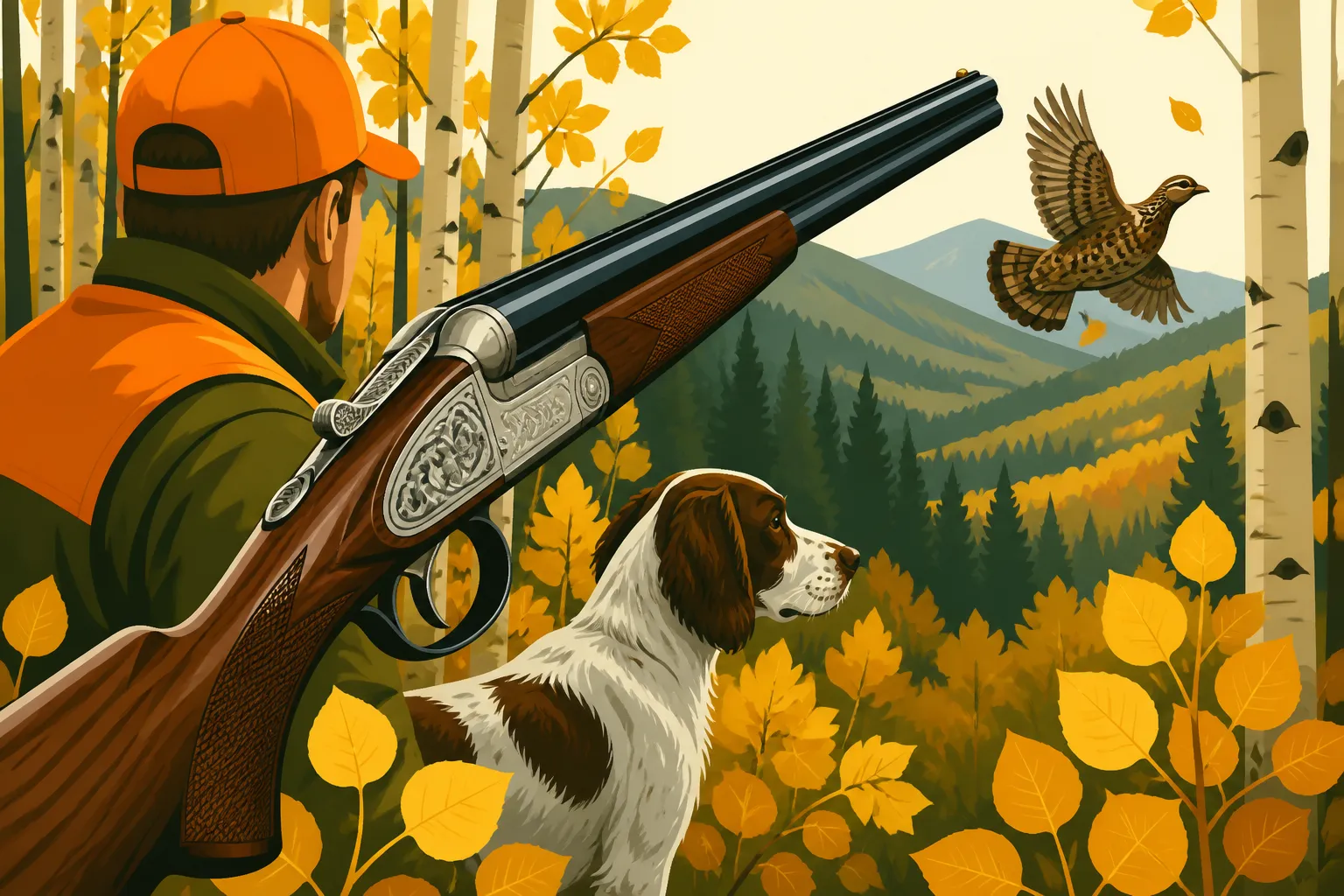
20 Gauge Doubles for Aspen Cover
Many West Virginia upland hunters know the struggle: you're walking through thick aspen cuts, laurel slicks, or dense rhododendron, your shoulders burning, your shotgun feeling heavier with every step. Suddenly, a grouse explodes from seemingly nowhere, and before you can even react, it's gone. This guide is for those who cherish the tradition and challenge of grouse hunting in our mountains and are looking to refine their approach, specifically focusing on the unique advantages of a 20 gauge double-barrel shotgun in this demanding terrain.
Why the 20 Gauge Double-Barrel Excels in West Virginia's Aspen
West Virginia's ruffed grouse habitat isn't for the faint of heart, or for the easily discouraged. We're talking about steep hillsides, tangled clear-cuts, and the thick, impenetrable cover that grouse absolutely thrive in. In this environment, your gear makes a real difference. While many debate rifle calibers for deer or ideal broadheads for timber, the choice of an upland gun often gets less scrutiny. However, for a bird that flushes like a feathered rocket, the tool in your hands matters, and a 20 gauge double-barrel shotgun offers several distinct advantages that can truly elevate your experience and success in these challenging covers.
Lightweight and Balanced for Mountainous Terrain
Let's face it, hunting grouse in the Allegheny Highlands means miles logged and vertical feet climbed. Every ounce counts when you're traversing steep hollows and thick brush. A quality 20 gauge double, especially a side-by-side or an over/under designed for upland hunting, is inherently lighter and often better balanced than many pumps or semi-autos. This isn't just about comfort; it's about endurance. A lighter gun means less fatigue, allowing you to cover more ground and maintain focus throughout a long day. You can stay nimble, push through that last patch of cover, and still have the energy for a quick, fluid mount when a bird finally gets up. The balance point of a well-made double often sits right between your hands, making it an extension of your body rather than a heavy, unwieldy burden. This becomes acutely apparent when you're making your way through the sort of young timber or brushy areas described in Grouse Hunting Highlands Aspen Cuts, where quick changes in direction and navigating obstacles are constant.
Two Instant Chokes for Variable Flush Distances
One of the greatest tactical benefits of a double-barrel shotgun is the immediate availability of two different choke constrictions. Ruffed grouse, notorious for their unpredictable flushes, can burst out at your feet or zip through a clearing 30 yards away. With a single-barrel gun, you're committed to one choke, often a compromise like Improved Cylinder. But a double gun allows you to choose your choke on the fly, without fumbling with screw-in chokes or sacrificing a potential shot. Imagine walking with an open choke, like Cylinder or Skeet, in the dense, close-quarters stuff, ready for those startling close flushes. Then, if a bird gets up a bit further out, or you swing on one that has put some distance between you and it, you instantly shift to your second barrel, which might be choked Modified or even Full. This versatility is a game-changer when you're trying to connect with those fleeting targets. It truly empowers you to adapt to the unpredictable nature of these explosive birds. For more on optimizing your pattern, consider the advice in Choke Choice for Fast Flushes.
Fast Handling in Tight Cover
West Virginia's aspen and alder runs are not open fields. They are tight, often claustrophobic environments where fast, instinctive shooting is paramount. The shorter overall length of many double-barrel shotguns, combined with their superior balance, makes them incredibly quick to shoulder and swing in these confined spaces. There's no pump to cycle, no long action to contend with; just a smooth, natural motion from carry to cheek. When a grouse rockets out of a thicket directly in front of you, you don't have time for a slow, deliberate mount. You need to be on target almost instantaneously. The compact nature of a double gun minimizes snagging on branches and allows for tighter turning arcs, which is critical when you're picking your way through head-high cover or trying to pivot quickly for a going-away shot. This ability to handle and point rapidly gives you a distinct edge over slower-handling firearms, especially when hunting the kind of dense cover that defines much of our grouse habitat.
Choosing the Right 20 Gauge Double for Mountain Grouse
Picking a shotgun is a very personal experience, much like choosing the right boots for a long hike. For grouse hunting in West Virginia, you're looking for a specific blend of characteristics that cater to both the physical demands of the terrain and the lightning-fast nature of the birds. It’s not just about what looks good; it’s about what feels good and performs when it matters most.
Over/Under Versus Side-by-Side
The classic debate among double-gun enthusiasts is over/under versus side-by-side. Both offer the two-choke advantage, but they handle and present differently.
-
Over/Under: Many modern over/unders have a single selective trigger, allowing you to choose which barrel fires first. They often have a narrower sighting plane, which some shooters find more natural, aligning with how a single-barrel gun feels. The recoil impulse tends to be more vertical, potentially making follow-up shots feel a bit quicker for some. Their balance can be slightly more forward, which might aid in a smooth swing, especially on those longer crossing shots if a bird sneaks out to the edge of the cover. Brands like Browning Citori, Beretta Silver Pigeon, or some offerings from CZ-USA are popular choices that offer solid performance without breaking the bank. When you’re scrambling up a steep bank in Hunting Steep Allegheny Ridges, an over/under can feel a bit more compact against your body.
-
Side-by-Side: The side-by-side, often seen as the quintessential bird gun, offers a wider sighting plane. Some hunters find this broader view helps them pick up fast-flushing birds more quickly in their peripheral vision. They often have a very natural, almost "point-and-shoot" feel. Many traditional side-by-sides feature double triggers, giving you ultimate control over which choke you deploy without any switch-flicking. This can be incredibly intuitive: front trigger for the open choke, rear for the tighter one. The balance is often more centered, creating a very lively feel in hand, which is ideal for the snap-shooting required when grouse erupt. The aesthetics and tradition of a side-by-side also add to the romance of the hunt for many. You'll find many excellent options from manufacturers like Fausti, or even older, well-maintained classics from the likes of LC Smith or Fox.
Ultimately, the choice between over/under and side-by-side often comes down to personal preference, how the gun mounts for you, and which style you find most intuitive for quick, instinctive shooting. Try shouldering both types at your local gun shop; close your eyes, bring the gun up, and see where your eye naturally aligns.
Barrel Length and Overall Weight
For dense West Virginia cover, a shorter barrel length is generally preferred. While a 28-inch barrel might be great for pheasants in open fields, it can be a liability when you're navigating through thick alder and young aspen stands.
-
Barrel Length: Most grouse hunters opt for barrel lengths between 26 and 28 inches for their 20 gauge doubles. A 26-inch barrel offers exceptional maneuverability in tight quarters, reducing the chance of snagging on branches and allowing for very fast swings. It's often the choice for those who hunt the densest cover. A 28-inch barrel provides a slightly longer sighting plane and a bit more forward balance, which can be helpful for smoother swings on birds that get out a little further or offer a clearer shot. However, anything longer can start to feel cumbersome in the really nasty stuff we have in West Virginia. The key is finding that sweet spot where maneuverability doesn't compromise your ability to point and swing smoothly. This is especially true when you're pushing through Grouse Hunting Allegheny Highlands Cover, where every inch of barrel can make a difference in navigating obstacles.
-
Overall Weight: Aim for a 20 gauge double that weighs between 5.5 and 7 pounds. Lighter guns are fantastic for long days in the mountains, but a gun that's too light can be whippy, making it harder to establish a consistent swing and absorb recoil comfortably. A gun in the 6 to 6.5-pound range often strikes an excellent balance, providing enough heft for a stable swing while still being light enough to carry all day without undue fatigue. Remember, the goal is to feel agile and unencumbered, not to haul a cannon through the woods. The less tired you are, the better your focus, and the quicker your reflexes when a bird explodes from cover.
Ammunition and Choke Considerations for Close-Quarters Flushes
Once you've got that beautiful 20 gauge double in your hands, the next step is dialing in your ammunition and choke combinations. This is where you really tailor your setup to the specific challenges of West Virginia grouse hunting, making sure that when you do get a shot, you've got the best possible chance of connecting. It’s a bit of a science and a bit of an art, and it demands some practice.
Recommended Shot Sizes and Loads
For ruffed grouse, you want loads that deliver a dense pattern with enough energy to cleanly bring down a fast-flying bird, but not so much that it's overkill at close range.
-
Shot Sizes: For the vast majority of West Virginia grouse hunting, #7.5 or #8 lead shot is ideal. These smaller shot sizes create a denser pattern, increasing your chances of hitting a small, fast-moving target in tight cover. At the typical flush distances of grouse (often under 25-30 yards), #7.5 or #8 shot carries more than enough energy to ensure a clean kill. Some hunters might even opt for #9 shot in their most open choke for incredibly close encounters in super dense cover, though #7.5 or #8 are the most versatile. Remember, we're talking about lead shot here, which is perfectly legal for upland game in most areas. If you're venturing near waterfowl areas or certain public lands that require non-toxic shot, you'll need to adjust your choice, often to steel equivalents in #6 or #7.
-
Load Weight: Standard 20 gauge loads typically come in 7/8 oz or 1 oz shot weights. For grouse, a 7/8 oz load is often plenty, especially in a modern double gun with a good pattern. It reduces recoil, which can be a factor if you're shooting a lot over the season, and still delivers a sufficient number of pellets. Some hunters prefer 1 oz loads for a slightly denser pattern, particularly if they're using a slightly more open choke or anticipate shots stretching a bit further. The key is to pattern your chosen load and shot size with your specific gun and chokes to see how it performs. Different guns will pattern differently with the same ammunition, so don't skip this crucial step!
Choke Combinations for Versatility
The beauty of the double gun lies in its dual chokes. You can truly optimize your pattern density for varied situations.
| Barrel | Choke Constriction | Typical Use Case |
|---|---|---|
| First | Cylinder or Skeet | Extremely close flushes (0-20 yards) in dense cover, thick laurel, or young saplings where birds burst at your feet. |
| Second | Improved Cylinder (IC) | Flushes between 15-30 yards, offering a broader, denser pattern for slightly further shots or follow-ups. |
| Third | Modified (MOD) | For birds that get out quickly, or for hunting slightly more open cover where shots might extend to 30-35 yards. |
Note: Double-barrels typically only have two barrels. "Third" is included for illustrative purposes if one were to consider a third choke, but the common double-barrel setup is a first and second barrel.
For West Virginia grouse, a common and highly effective combination is Cylinder or Skeet in the first barrel, and Improved Cylinder in the second. This setup covers the vast majority of grouse hunting scenarios. The open choke in the first barrel is perfect for those heart-stopping, close-range flushes where the bird is almost immediately behind a screen of branches. It throws a wide, forgiving pattern that increases your chances of connecting before the bird weaves its way out of sight. The Improved Cylinder in the second barrel provides a tighter, more effective pattern for birds that get up a bit further, or for follow-up shots on a missed close bird that has gained a little distance.
Another popular choice, especially if you hunt slightly more open aspen stands or anticipate some longer shots, is Improved Cylinder in the first barrel and Modified in the second. This offers a bit more reach overall but sacrifices some of the "close-in" forgiveness of a true Cylinder choke.
Remember, a choke's job is to constrict the shot pattern, making it denser at longer ranges. Too tight a choke at close range can result in "pattern burn" – where the pattern is so tight you miss entirely or damage the bird excessively. Too open at long range, and you'll have holes big enough for a grouse to fly through. Experimentation with different chokes and loads at the patterning board is essential. It's a key part of preparing for Grouse and Woodcock Hunting in West Virginia.
Tactics for Maximizing Your Double Gun's Advantage
Having the right tool is only half the battle; knowing how to use it effectively is the other. Your 20 gauge double-barrel, with its quick handling and dual chokes, is a formidable companion in West Virginia's grouse woods, but mastering it takes thoughtful application of strategy.
Hunting the Cover Smartly
Grouse are creatures of dense cover, and you need to hunt them where they live. That means pushing into the nastiest, thickest stuff you can find.
- Focus on Edge Habitat: Look for the edges where different types of cover meet, such as the transition from an old clear-cut to mature timber, or where dense aspen stands meet a creek bottom. These transition zones often provide grouse with both food and security.
- Work into the Wind: Grouse often flush into the wind. Hunting into the wind gives you a slight advantage, as the bird's initial flight path will be somewhat predictable. It also helps your dog (if you're hunting with one) scent birds more effectively.
- Pause and Listen: Don't just crash through the woods. Walk 20-30 yards, then pause for a few seconds. Grouse are often jumpy and can flush when you stop, thinking they've been spotted. These pauses also allow you to catch your breath, listen for distant flushes or drumming, and scan ahead for potential hotspots. The detailed maps and public land layers available through tools like GoHunt can help identify prime cuts and dense patches where these tactics are most effective.
- Utilize Natural Funnels: Keep an eye out for natural funnels or pinch points in the cover, like a narrow strip of thick stuff between two open areas, or a dense draw that leads up a hillside. Grouse moving through these areas can be concentrated, offering better opportunities. You might find similar concepts when considering Hunting a Funnel Between Two Hollows for deer, applied to birds.
Mastering the Quick Mount and Swing
In grouse hunting, speed and precision are paramount. You often only have a split second to react.
- Practice Your Mount: Dry-fire practice at home is invaluable. Practice mounting your gun quickly and smoothly, bringing it to your shoulder and cheek in one fluid motion, without fumbling. Your eye should naturally align with the barrel. Repeat this hundreds of times until it's second nature. The goal is an instinctive mount that feels like an extension of your thought.
- Point, Don't Aim: With grouse, you're not aiming precisely like you would with a rifle. You're pointing the shotgun at the bird, using your peripheral vision to track its flight and swing through it. Keep both eyes open if possible, as this maintains your depth perception and peripheral awareness, crucial for quick reactions in dense cover.
- Follow Through: Even after the shot breaks, continue your swing. Stopping your swing prematurely is a common mistake that leads to missing behind the bird. Maintain that smooth, continuous motion, mimicking the bird's path even as it falls.
Knowing When to Take the Shot
Not every flush is a shooting opportunity. Understanding when to pull the trigger and when to hold fire is a hallmark of an experienced grouse hunter.
- Clean Lane, Clear Shot: Resist the urge to "flock shoot" through heavy cover. Wait for a clear shooting lane where you can see enough of the bird to make an ethical shot. A quick, clear shot at 20 yards through a small opening is far better than spraying pellets into a thicket at 15 yards.
- Respect Your Range: Be honest about your effective range with your chosen choke and load. For a 20 gauge double in grouse cover, most shots are taken between 10 and 30 yards. Pushing beyond 35 yards significantly reduces your chances of a clean kill due to pattern thinning.
- Utilize the Double Trigger (if applicable): If your double has two triggers, practice using them instinctively. Front trigger for the open choke, rear for the tighter one. This allows for incredibly fast adaptation to the flush distance. For example, a bird gets up at your feet, you drop it with the open choke; if you miss, and it flies out to 25 yards, you instantly use the second trigger for the tighter choke. This immediate selectivity is a massive advantage over single-trigger guns in the grouse woods.
| Scenario | Recommended First Barrel Choke | Recommended Second Barrel Choke | Rationale |
|---|---|---|---|
| Dense Cover, Close Flush | Cylinder / Skeet | Improved Cylinder | Maximize pattern spread for quick, short-range shots; tighter choke for follow-up. |
| Open Aspen Stand, Medium Flush | Improved Cylinder | Modified | Good balance for slightly longer shots; tighter for birds getting out. |
| Dog Points, Anticipated Close | Cylinder / Skeet | Improved Cylinder | Prepare for an immediate, close flush; still have reach for a missed bird. |
| Walking Field Edge Adjacent to Cover | Improved Cylinder | Modified | Birds might hold or flush further out; wider pattern for tighter cover. |
Hunting West Virginia grouse with a 20 gauge double is more than just a method; it’s an appreciation for tradition, a commitment to agility, and a strategic advantage in some of the toughest upland cover anywhere. It’s about being truly connected to your firearm and the pursuit, making every shot count when those mountain rockets burst forth.
Disclaimer
This article is for general informational purposes only and does not constitute professional advice. Laws, prices and regulations vary by location and change over time. Consult a qualified professional for guidance on your specific situation.