Two-Way Radios on a Deer Drive
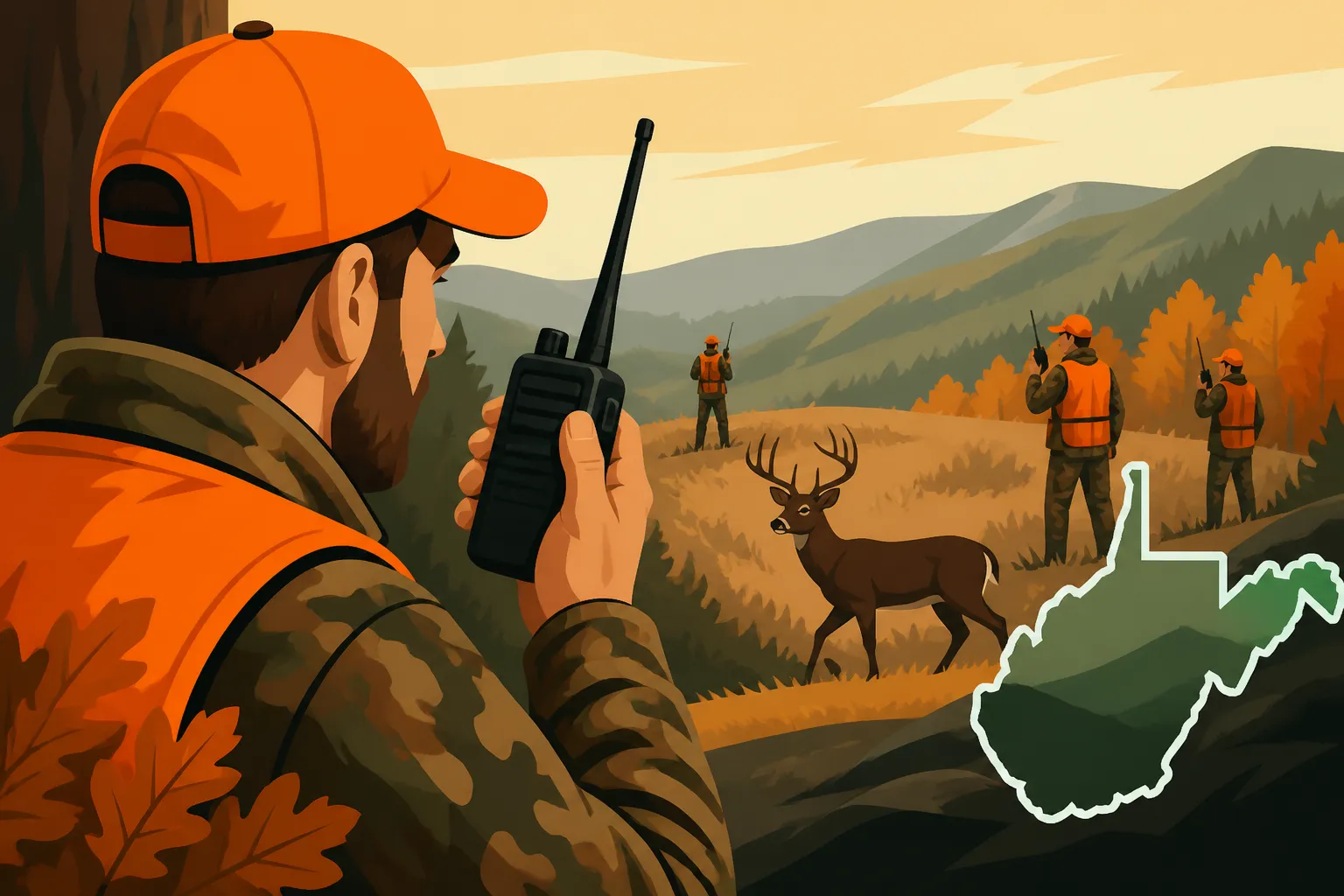
When you're out there chasing whitetails in the beautiful, rugged landscape of West Virginia, especially when tackling a deer drive, effective communication isn't just a convenience – it's absolutely critical for safety and success. There's nothing quite as frustrating, or frankly, as dangerous, as being spread out across a steep hollow or a dense laurel thicket with no idea where your buddies are or if a deer is heading your way. This guide is all about cutting through that static, helping you understand why two-way radios are essential for your West Virginia deer drives, what kind to look for, and how to use them to make your hunt safer and more productive.
Why Communication is Crucial on a West Virginia Deer Drive
Deer drives in West Virginia are often a necessary tactic, especially on public lands where deer might be pressured or the terrain dictates how you can effectively move game. But unlike flat, open country, our mountains, hollows, and dense cover present unique communication challenges. Sound doesn't travel far, line of sight is often nonexistent, and a simple yell can spook deer for miles. This is where reliable two-way radios become invaluable, bridging those gaps and keeping your hunting party connected.
The Dangers of Miscommunication in Steep Country
Imagine this: you're part of a small drive group, perhaps three or four hunters, trying to push a thick patch of timber on a steep ridge. The drivers are making their way down, and the standers are set up on the benches below. Suddenly, a driver hears movement, suspects a deer, and wants to alert the standers. Without a radio, they might yell, which could send the deer bolting in an unpredictable direction or, worse, alert other hunters who are not part of the drive and might be in the line of fire. In the dense cover and broken topography of West Virginia, especially if you're Posting a Drive Around a Steep Hollow, knowing exactly where each hunter is positioned and which direction they're facing is paramount for safety.
Furthermore, consider the physical challenges of hunting our mountains. Slips, falls, or unexpected medical emergencies can happen quickly. If a hunter gets injured in a remote area, and you can't reach them by cell phone (which is often the case deep in the Monongahela National Forest or other remote WMAs), a two-way radio can be a literal lifeline. Being able to immediately call for help or coordinate a rescue effort with your group could make all the difference. This immediate, clear communication minimizes risks that simply can't be ignored when you're far from paved roads and cell towers.
Maximizing Drive Effectiveness with Clear Channels
Beyond safety, effective communication dramatically boosts the success rate of a deer drive. On a typical drive, drivers move through cover, trying to push deer towards standers. If the standers know exactly what the drivers are seeing – whether it’s a lone doe, a small buck, or a wall-hanger – they can adjust their readiness and anticipation. Similarly, drivers can communicate if a deer breaks through a flank or if they've found fresh sign indicating a particular travel corridor, allowing standers to shift or reposition if feasible.
For example, if you're doing a drive with Deer Drives With Three or Four Hunters on a property where you've noticed deer favor a specific escape route, clear radio communication allows you to direct a driver to focus more heavily on that area or for a stander to quietly move to intercept. It prevents wasted effort, reduces the chance of deer slipping through unnoticed, and ensures that everyone is working in concert towards the common goal. This level of coordination, which is almost impossible with just hand signals or shouting, transforms a haphazard push into a strategic, calculated hunting maneuver, significantly improving your odds of putting venison in the freezer.
Choosing the Right Two-Way Radios for Mountain Hunting
Selecting the right two-way radios for your West Virginia deer drives means considering the unique environment you'll be hunting in. Our state isn't known for flat, open fields, but rather for steep inclines, deep hollows, and thick timber. These features can severely impede radio signals, making range and clarity top priorities. You need something robust, reliable, and capable of punching through some serious topography.
FRS/GMRS Radios: Pros and Cons for Hunters
When it comes to two-way radios, you'll primarily be looking at FRS (Family Radio Service) and GMRS (General Mobile Radio Service) units. Both operate on UHF frequencies, which are generally better for penetrating dense cover and varied terrain than VHF, which performs better over line-of-sight distances.
- FRS Radios: These are often smaller, more affordable, and don't require a license. They're great for short-range communication, typically up to a mile or two in ideal conditions. However, in West Virginia's rugged mountains and thick woods, their effective range can be significantly reduced, sometimes to just a few hundred yards. They're perfect for small groups staying relatively close, like two hunters Hunting a Funnel Between Two Hollows or tracking a deer in close proximity. The downside is that their power output is limited, so they might struggle to maintain clear communication across a wide hollow or over a major ridge line.
- GMRS Radios: These radios offer higher power output (up to 50 watts for mobile units, but typically 1-5 watts for handhelds) and therefore greater range, potentially several miles in optimal conditions. They also offer more channels and privacy codes. The catch? A GMRS license is required for operation, which is a one-time fee for your entire family. For serious hunters who consistently use radios for drives or larger group hunts, the extended range and improved clarity of GMRS radios often make the license fee a worthwhile investment. Many modern radios are FRS/GMRS combo units, allowing you to use both services depending on your needs and licensing.
Key Features to Look for in a Hunting Radio
Beyond just FRS/GMRS capability, several features are particularly useful for West Virginia hunters:
- Range and Power: As discussed, maximum range is critical. Look for radios with higher power output (measured in watts) for better penetration through hills and timber. Be realistic about advertised "up to X miles" claims; those are almost always in ideal, flat, open conditions. For our mountains, expect a fraction of that. A good rule of thumb is that 2-watt or 5-watt GMRS radios will give you the most reliable performance for longer distances across broken terrain.
- Durability and Weather Resistance: Your gear takes a beating in the woods. Look for radios that are rugged, impact-resistant, and, ideally, waterproof or at least water-resistant (IPX4 or higher rating). You don't want your communication going dead because of a sudden mountain rain shower or a fall into a creek.
- Battery Life: You'll be out there for hours, possibly all day. Long-lasting batteries are essential, or at least units that accept standard AA/AAA batteries in a pinch. Some radios offer rechargeable lithium-ion packs, which are convenient, but always carry spares or a portable charging solution if your hunt extends beyond a few hours. Checking battery levels before you head out is as important as checking your rifle's zero or your broadheads.
- Privacy Codes/Channels: While not strictly for "privacy," these codes (DCS or CTCSS) help filter out chatter from other radio users on the same frequency, ensuring your group can communicate without interruption. This is incredibly helpful when hunting public lands like Monongahela National Forest, where other hunters might be using radios.
- VOX (Voice-Activated Transmission): This feature allows hands-free operation, which can be a game-changer when you're actively carrying a firearm, climbing a steep incline, or trying to remain quiet. You can simply speak, and the radio transmits, freeing up your hands for crucial tasks.
- Vibrating Alert/Call Tone: Sometimes, a loud beep can spook deer. A vibrating alert or a discreet call tone can notify you of an incoming transmission without making excessive noise. Similarly, a headset or earpiece can allow for private, quiet communication, which is invaluable when a deer is approaching your stand.
GoHunt maps and apps can sometimes integrate with or help plan your radio use by showing you topography and potential line-of-sight issues, allowing you to anticipate communication challenges before you even step foot in the woods.
| Feature | FRS Radios | GMRS Radios |
|---|---|---|
| License Req. | None | Yes (one-time fee for family) |
| Power Output | Max 0.5 Watts | Up to 50 Watts (handhelds typically 1-5 Watts) |
| Range (Ideal) | Up to 2 miles | Up to 5+ miles |
| Range (WV Woods) | Limited, often <1 mile, depends heavily on terrain | Better, often 1-3 miles, still terrain-dependent |
| Channels | Limited (14-22 shared with GMRS) | More channels & privacy codes |
| Cost | Generally more affordable | Often slightly more expensive, plus license fee |
| Use Case | Close-range, small groups, casual use | Longer range, larger groups, serious hunting, improved clarity |
Best Practices for Using Radios During a Deer Drive
Just owning good radios isn't enough; you need to use them effectively and establish clear protocols to ensure everyone is on the same page. A radio can be a powerful tool, but in the wrong hands or with poor communication habits, it can cause confusion or even compromise safety.
Establishing Clear Communication Protocols
Before your hunt begins, especially before you start a drive, it’s crucial to sit down as a group and establish clear rules for radio use. This means choosing a primary channel and a backup, assigning specific roles, and agreeing on common terminology. For instance, when you're planning your Deer Drives on West Virginia Public Land, you might designate a "hunt leader" who is the primary point of contact for critical updates. Everyone else should transmit only when necessary to keep the channel clear.
Agree on clear, concise language. Instead of "I think I saw something over there by that big tree," try "Driver one to stander three, buck headed your way, moving east from my position, about 100 yards out." Use directional cues (North, South, East, West) if everyone has a compass or GPS, or agree on landmarks. Practice these protocols briefly before you head out, so everyone is comfortable. This might sound overly formal, but it reduces ambiguity and ensures critical information is conveyed quickly and accurately. When you're dealing with Wind and Thermals on a Steep Ridge, clear communication is even more important as deer can be unpredictable.
Radio Etiquette and Battery Management
Good radio etiquette is paramount to effective use. Avoid unnecessary chatter; keep transmissions brief and to the point. Remember, every time you press that transmit button, you're tying up the channel for everyone else. Think before you speak. If you need to relay a message, use call signs (e.g., "Driver Two to Stander One") rather than names, and wait for confirmation before continuing. For crucial messages, always ensure the recipient acknowledges receipt ("Stander One copies").
Battery management is another often-overlooked aspect. Always start your hunt with fully charged batteries. For longer hunts or multi-day excursions, carry spare battery packs or extra AA/AAA batteries if your unit supports them. Cold weather, common during West Virginia's buck gun season, can significantly drain battery life, so keep your radios close to your body heat if possible. Also, consider setting your radio to a lower power setting if your group is close, to conserve battery. A dead radio is just extra weight in your pack, so make sure you're prepared.
Beyond the Drive: Other Uses for Radios in the Woods
While invaluable for deer drives, two-way radios offer a host of other benefits for hunters navigating the wild terrain of West Virginia. Their utility extends far beyond just coordinating a push, making them a worthwhile addition to any hunter's gear list for general safety and coordination.
Safety and Navigation in Remote Areas
West Virginia's public lands, from the vast stretches of the Monongahela National Forest to the rugged expanses of Cranberry WMA, can be incredibly remote. Cell phone service is often spotty or non-existent in these areas. This is where two-way radios truly shine as a safety tool. If you're hiking into a new area for Scouting West Virginia Public Land Before Season, or simply still-hunting alone, having a radio can be a critical link to your hunting partners, family, or camp. Should you become disoriented, injured, or encounter unexpected wildlife, being able to call for help instantly can be a game-changer.
Furthermore, radios can aid in navigation. If one hunter has a good GPS or a map app like GoHunt, they can relay coordinates or directions to others who might be lost or need to rendezvous. For example, if you're trying to meet up after Hunting Into the Late December Archery Close, and visibility is low, a quick radio call can guide everyone to a designated meeting point. This is far more reliable than shouting or trying to send a text that might not go through. Having a radio as part of your essential First Aid Kits for Remote Highlands Ground is a smart move for any serious hunter.
Coordinating with Family or Camp Members
Hunting is often a communal activity, whether it's a family tradition at deer camp or a group of friends sharing a cabin. Two-way radios are excellent for coordinating daily activities, even if not actively hunting. Need to know when dinner will be ready? Wondering if someone made it back to the truck safely after Dragging a Deer Off a Steep Ridge? Radios provide instant communication without relying on cell towers or shouting across camp.
This is especially helpful for peace of mind. If you have younger hunters with you, or even just family members who prefer to stay closer to camp, radios offer a way to keep tabs on everyone. You can easily check in, ensure everyone is safe, and coordinate plans like lunch breaks or retrieving gear. While not directly part of the hunting strategy, this logistical support enhances the overall safety and enjoyment of your trip, ensuring that everyone can feel connected and accounted for in the beautiful, but sometimes challenging, West Virginia wilderness. Make sure your Packs for a Day on Public Land always includes a reliable radio, especially if you plan to be out past dark and need your Headlamps for Walking Out After Dark.
Disclaimer
This article is for general informational purposes only and does not constitute professional advice. Laws, prices and regulations vary by location and change over time. Consult a qualified professional for guidance on your specific situation.