Hunting Bears Over Natural Mast in the Mountains
Hunting black bears in West Virginia's rugged mountains is an incredible challenge, especially when you're trying to figure out where they'll be feasting on natural food sources. The mountains can feel vast and overwhelming, making it tough to pinpoint those elusive bruins. This comprehensive guide will walk you through the ins and outs of locating, scouting, and effectively hunting bears over the natural mast crops found throughout the Mountain State's wild landscapes.
Understanding West Virginia's Mast Crop Dynamics
The very heartbeat of a successful bear hunt in West Virginia often revolves around understanding what they're eating, and more specifically, where that food is located. Black bears are opportunistic omnivores, but in the fall, their diet becomes heavily reliant on what we call "mast" – the nuts, seeds, and fruits produced by trees and shrubs. When you're dealing with vast stretches of national forest or expansive WMAs, knowing which trees are producing and where can literally make or break your season.
The Importance of Hard Mast for Bears
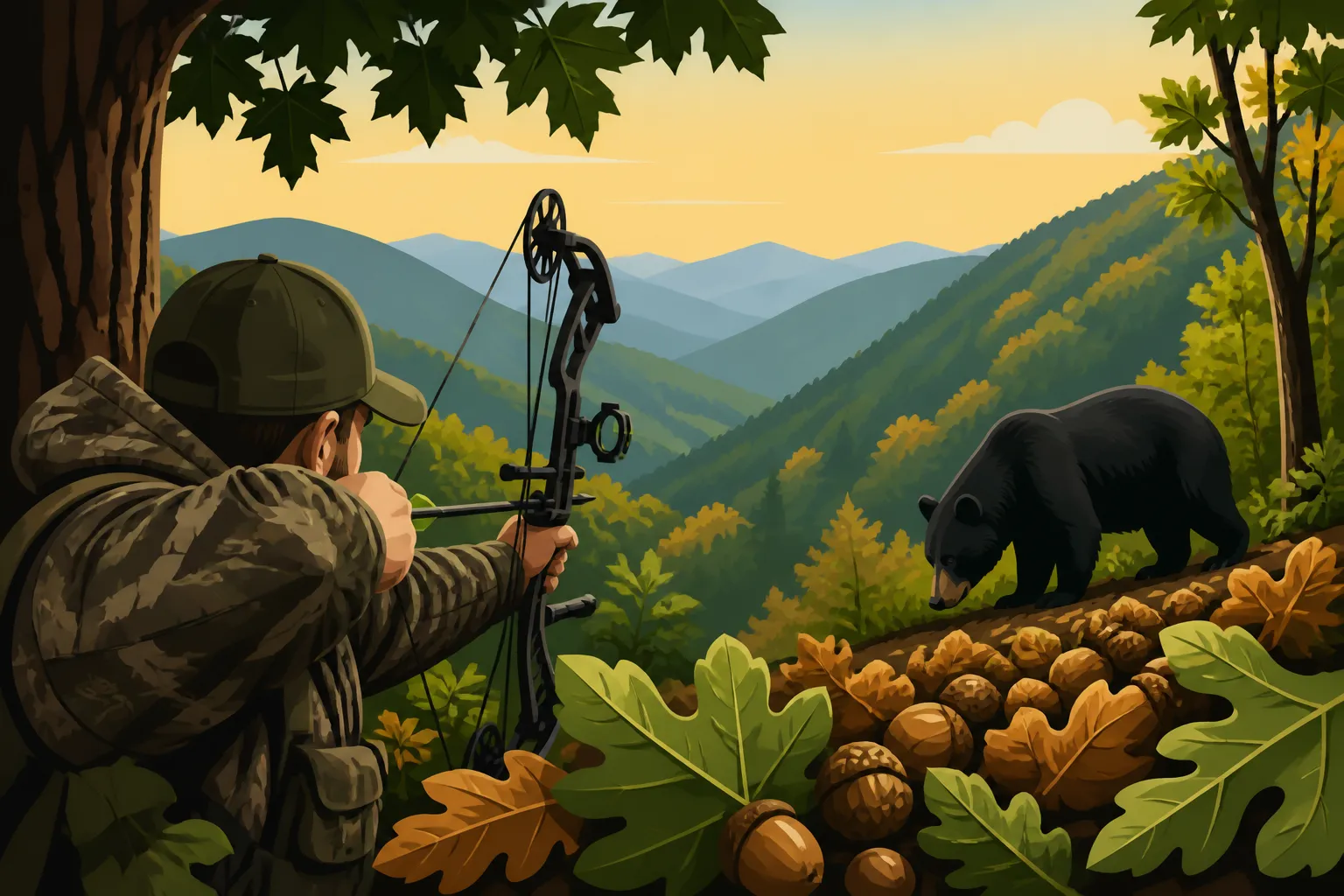
When most hunters talk about "mast," they're primarily thinking about hard mast: acorns from oaks and nuts from beech trees. These calorie-dense food sources are absolutely crucial for bears as they pack on the necessary fat reserves for winter hibernation. Without a good hard mast crop, bears can travel incredible distances to find food, making them harder to pattern. West Virginia's mountains are blessed with a wide variety of oak species, including white oaks, red oaks, chestnut oaks, and black oaks, each dropping their acorns at slightly different times. Beech nuts, while less common in certain areas, are also a highly sought-after food source for bears due to their high fat content. When you find an area with abundant hard mast, particularly white oaks which are often preferred by many wildlife species, you've likely found a bear magnet.
Identifying a strong mast crop isn't always easy. It involves paying attention to the trees throughout the spring and summer. A good year will see heavy flowering and subsequent nut production. Conversely, a poor mast year can scatter bears far and wide, forcing them to rely on alternative food sources or even agricultural fields if available. This variability is precisely why pre-season scouting is so vital. You can't just rely on last year's hotspots; you have to adapt to what nature is offering that particular fall. Understanding the differences between oak varieties is also key; white oak acorns mature and drop earlier and are less bitter than red oak acorns, often making them a primary early-season attractant.
Soft Mast and Early Season Opportunities
While hard mast gets all the glory, don't overlook the power of soft mast, especially during the early portions of West Virginia's liberal bear season. Soft mast includes berries, apples, grapes, and various other fleshy fruits. These can be particularly attractive to bears in the late summer and early fall before the majority of hard mast begins to drop. Areas with wild apple trees, blackberry thickets, or wild grapevines can be phenomenal early-season hotspots. Often, these soft mast sources are found along old logging roads, clear-cuts, or field edges that have grown up.
The challenge with soft mast is its transient nature. Berries ripen and are consumed quickly, and apples don't last long on the ground once they start falling. This means that if you're targeting bears over soft mast, your timing needs to be impeccable. A patch of ripe blackberries might be hot for a week or two, then completely played out. Scouting efforts must be ongoing and close to the season opener to capitalize on these fleeting opportunities. Think about elevation and aspect as well; south-facing slopes often ripen earlier, while higher elevations might hold soft mast later into the season. This staggered ripening can provide a moving buffet for bears, allowing you to follow their feeding patterns as the season progresses.
Reading the Annual Mast Report
One of the most valuable resources for any West Virginia bear hunter is the annual mast survey conducted by the West Virginia Division of Natural Resources (WVDNR). This report, usually released in late summer or early fall, provides an overview of mast production across different regions of the state. It's not a crystal ball, but it offers critical insights into general trends – whether it's projected to be a good acorn year overall, or if certain areas are experiencing a bust. This kind of macro-level information can help you decide which general areas of the state to focus your more detailed scouting efforts.
While the WVDNR mast report is an excellent starting point, remember it's a broad survey. There will always be localized pockets of excellent or poor mast production that differ from the statewide average. For example, the report might indicate an average white oak crop, but a specific ridge in the Monongahela National Forest could be absolutely loaded with acorns, while an adjacent ridge is barren. Use the report to narrow down your focus, but then commit to on-the-ground scouting to verify conditions. Websites like GoHunt can also offer tools and community insights that complement official reports, helping you cross-reference and get a more granular picture of conditions in specific regions, such as those covered in guides like Hunting Bears in the Cranberry Backcountry.
Scouting for Bear Sign in Mast-Heavy Areas
Once you have a general idea of where the mast might be, the real work of scouting begins. West Virginia's mountain terrain can be unforgiving, and bears don't leave neon signs pointing to their feeding grounds. You need to become a detective, meticulously searching for clues they leave behind. This isn't just a walk in the woods; it's a purposeful hunt for evidence.
Locating Prime Oak and Beech Stands
Identifying a good mast crop from a distance is a skill developed over time. You're looking for mature oak and beech trees, particularly in areas known for producing large crops. Often, these will be on benches, saddles, or less steep slopes within the rugged Allegheny ridges. During the late summer and early fall, use binoculars to scan tree canopies for heavy loads of developing acorns or beech nuts. A good pair of optics, like those discussed in Optics for Steep Allegheny Terrain, can make a huge difference here, allowing you to spot signs of a banner crop from afar.
Once you identify potential mast-producing areas, get on the ground. Pay attention to specific tree species. White oaks tend to drop earlier, making them attractive in the early season. Red oaks, which often drop later, can be a crucial food source once the white oaks are depleted. Look for areas where different oak species are intermixed, providing a continuous food source throughout the fall. Don't be afraid to walk well off the beaten path; often, the most productive mast stands are in harder-to-reach spots that receive less hunting pressure.
Identifying Bear Feeding Sign
Bears are messy eaters, and they leave plenty of evidence of their presence. When you're walking through a potential mast area, keep your eyes peeled for distinct bear sign.
- Scat: Bear droppings are perhaps the most obvious sign. In mast-heavy areas, their scat will often be full of acorn caps and nut shells. Fresh scat indicates recent activity.
- Tracks: Look for large, five-toed paw prints in soft ground, mud, or even leaf litter. Bear tracks are distinctive, and fresh tracks near a mast source are a clear indicator of current feeding.
- Rooting and Tearing: Bears will often dig up ground to get at buried nuts, grubs, or roots. Look for disturbed earth, overturned rocks, and claw marks on stumps or logs where they've torn apart rotting wood looking for insects.
- Broken Branches: While not exclusively bear sign, heavily browsed or broken branches on berry bushes or fruit trees can indicate a bear has been feeding. They'll often reach up, pull down branches, and strip them clean.
- Rub Trees: Bears will often rub against trees, leaving hair and claw marks, especially near active feeding or bedding areas. These "rub trees" are scent posts and can indicate a bear's travel corridor.
By combining these visual cues, you can begin to piece together a picture of bear activity. The fresher the sign, the more likely you are to encounter a bear. Pay particular attention to the density of sign; if you're finding scat, tracks, and disturbed ground all in a small area, you've hit a jackpot. This is where a detailed mapping tool from GoHunt becomes invaluable for marking these hotspots and planning your approach.
Utilizing Topographic Maps and Satellite Imagery
Before you even step foot in the woods, thorough map scouting is essential, especially when dealing with the vastness of West Virginia's public lands. Topographic maps reveal terrain features like benches, saddles, and drainages that bears often use for travel or bedding. Satellite imagery, which you can access through platforms like GoHunt, allows you to identify different timber types, which is critical for finding oak and beech stands. Look for distinct changes in canopy texture or color that might indicate stands of mature hardwoods.
When studying maps, visualize how bears might move. They often prefer to travel along benches that run parallel to ridge lines, or through saddles that connect two different ridges. Identify potential bedding areas – typically dense thickets or laurel patches on secluded slopes – and think about how a bear would move from these bedding areas to your identified mast sources. Understanding Wind and Thermals on a Steep Ridge is paramount when scouting and planning your hunt, as bears rely heavily on their sense of smell. Using the elevation data on your maps can help you predict thermal currents in the morning and evening, which is key for a successful ambush. Mark all potential mast areas, bedding sites, and travel corridors on your digital maps for easy navigation in the field.
Tactics for Still-Hunting and Stand Hunting Mast Zones
Once you've identified promising mast areas and confirmed bear activity, it's time to decide on your hunting strategy. The rugged nature of West Virginia's mountains means you'll likely be choosing between a more active still-hunting approach or a patient sit from a stand. Both can be highly effective when executed correctly.
Setting Up Near Active Feeding Areas
For stand hunting, the key is to be where the bears want to be, which, in the fall, is often right in the middle of a productive mast crop. Look for areas with fresh, concentrated bear sign – multiple droppings, torn-up ground, and fresh tracks. These are your prime candidates for a stand setup. Bears are creatures of habit, and if they're consistently feeding in a specific oak flat or beech grove, they'll likely return.
When selecting a tree for your stand, consider wind direction, thermals, and your approach and exit routes. You want a setup that allows you to get in and out undetected. Position your stand downwind or crosswind of the primary feeding area, keeping in mind that thermals in the mountains will typically rise in the morning and fall in the evening. A well-placed stand might be on a bench overlooking a heavily used oak flat, or perhaps along a travel corridor leading to such an area. Remember to utilize natural cover to break up your silhouette, and minimize noise during setup. For deep dives into specific stand placement strategies, you might find Treestand Setups in Monongahela National Forest to be an invaluable resource, even if your specific hunt isn't in that forest, as the principles apply across steep terrain.
Still-Hunting Through Mast-Rich Bottoms
Still-hunting is a more active approach where you slowly and deliberately move through the woods, looking and listening for game. This method can be incredibly effective in mast-rich bottoms or on wide benches where bears might be spread out, quietly feeding. The challenge lies in moving slowly enough to spot a bear before it spots you, especially when dealing with the crunchy leaf litter common in West Virginia's fall woods.
The pace for still-hunting should be agonizingly slow. Take a few steps, then stop and glass thoroughly, looking for any movement, a patch of black, or the flick of an ear. Use your binoculars constantly to pick apart dense cover. Focus on areas with varied topography – small draws, creek beds, or changes in elevation within a mast flat – as these can create natural funnels or obscure a feeding bear. Pay close attention to the wind, always trying to keep it in your favor. If the wind shifts, you might need to adjust your route or even abandon that particular approach. Being patient and methodical is far more important than covering a lot of ground quickly. When still-hunting, your gear choice, particularly your boots, becomes critical. Boots for West Virginia Hollows and Ridges can offer insights into footwear that will keep you quiet and comfortable.
Considering Wind and Thermals in Mountain Terrain
In West Virginia's rugged mountains, wind and thermals are not just factors; they are the determining factors for success. Bears have an incredible sense of smell, and a misplaced stand or a poorly planned still-hunt can send them scattering before you ever see them. Understanding how air currents move in mountainous terrain is non-negotiable.
Thermals: In the morning, as the sun warms the earth, air currents typically rise uphill. This means your scent will be carried upwards. In the evening, as the air cools, thermals fall downhill, carrying your scent down into the hollows.
Wind: Overlaying thermals is the general wind direction. While thermals dictate the up-and-down movement of air, the prevailing wind will carry scent horizontally.
Your goal is always to keep your scent out of a bear's nose. This often means positioning yourself so your scent is blowing away from the area you expect the bear to be, or in a direction that carries it safely over or under them. For morning hunts, consider setting up lower on a ridge, allowing your rising scent to drift over the top. For evening hunts, a higher position might be better, allowing your falling scent to sink into a hollow below. Always double-check your wind with a powder bottle or milkweed before making your final approach or settling into your stand. Ignoring these dynamics is a surefire way to educate a mature bear.
Key Considerations for a Successful Mountain Bear Hunt
Beyond finding the food and executing your hunt, there are several other critical factors that often separate a successful bear hunter from one who goes home empty-handed. From understanding bear behavior in response to weather to having the right gear, these details matter. West Virginia's bears are known for their resilience and intelligence, so every advantage helps.
The Role of Weather and Bear Movement
Weather plays a huge role in bear activity. Just like deer, bears are sensitive to changes in temperature, pressure, and precipitation.
- Cold Fronts: A strong cold front often triggers increased feeding activity as bears try to put on those last few pounds before denning. The days immediately following a cold front can be prime hunting days.
- Rain and Snow: Bears don't mind light rain, and overcast, drizzly days can be excellent for still-hunting as the rain dampens leaf litter, making for quieter movement. Heavy downpours, however, will often send bears to thick cover to wait it out. Early snowfall can also concentrate bears on remaining mast sources as other foods become unavailable. Understanding when West Virginia's Bear Season Opens in relation to these weather patterns is vital for planning your trip.
- Warm Spells: Unseasonably warm weather in the fall can slow bear activity, making them more nocturnal or causing them to bed down more frequently. During these periods, focus on hunting early mornings and late evenings, or try targeting cooler, shadier north-facing slopes.
Paying attention to the forecast and adapting your strategy accordingly is crucial. A hunter who insists on sitting a stand during a howling gale or trying to still-hunt during a torrential downpour is likely to be disappointed. Being flexible and adjusting to what Mother Nature throws at you will significantly increase your odds.
Essential Gear for Backcountry Bear Hunting
Hunting West Virginia's mountains, especially for bears, means you'll be covering rugged terrain, often far from a road. Your gear needs to be up to the task.
| Item Type | Key Features for WV Bear Hunting | Why It Matters |
|---|---|---|
| Footwear | Sturdy, waterproof, excellent ankle support, aggressive tread | Navigating steep, rocky, slippery terrain and maintaining quiet movement. |
| Clothing | Layered system (base, mid, outer shell), moisture-wicking, quiet | Adapting to rapid weather changes, staying warm/dry, minimizing noise. |
| Navigation | GPS unit/GoHunt app, physical map, compass, extra batteries | Essential for areas with no cell service, finding marked hotspots, safe travel. |
| Optics | 8x or 10x binoculars, rangefinder | Scanning dense cover, identifying distant game, precise shot placement. |
| Backpack | Comfortable daypack or frame pack for meat hauling | Carrying essentials, and crucially, for packing out heavy bear quarters. |
| Safety | First aid kit, bear spray, signaling device | Addressing emergencies, deterring unexpected encounters, calling for help. |
Remember, a bear can weigh hundreds of pounds and often needs to be quartered and packed out, sometimes over miles of steep terrain. Don't skimp on gear that will help you accomplish this safely and efficiently. Packs for a Monongahela Forest Day Hunt provides more detail on selecting appropriate carry solutions.
Safety and Regulations in Bear Country
Hunting bears, especially in remote mountainous areas, comes with inherent risks and specific regulations you absolutely must adhere to.
- Blaze Orange/Pink: During firearm seasons for deer, you'll need to wear blaze orange or blaze pink. Check current WVDNR regulations for specific requirements, as these can change.
- Reporting: All harvested bears in West Virginia must be reported to the WVDNR, typically within 24 hours of harvest. This is vital for population management and data collection. West Virginia Bear Checking Requirements details this process.
- Weapon Restrictions: Ensure your firearm or bow meets legal requirements for bear hunting in West Virginia.
- Buddy System: Whenever possible, hunt with a partner, especially in remote areas. Inform someone of your hunting plan, including your intended route and expected return time.
- Bear Spray: While rare, bear encounters can occur. Carrying bear spray is a wise precaution, especially if you're alone. Know how to use it.
- CWD Concerns: While Chronic Wasting Disease is primarily a concern for deer, stay informed about any related regulations for bears, especially if hunting in a CWD containment area. While bears do not contract CWD, special carcass transport rules might apply if you are also deer hunting in the same region.
Always consult the latest West Virginia Hunting and Trapping Regulations booklet for the most up-to-date information before heading afield. These regulations are designed to ensure safety and maintain healthy wildlife populations like How Many Black Bears West Virginia Has Today. Understanding their bear denning behavior also helps to predict movements later in the season.
Post-Harvest Care and Checking Requirements
Successfully harvesting a bear in West Virginia's mountains is a monumental achievement, but the work isn't over when the shot is fired. Proper field dressing and adherence to checking requirements are just as important as the hunt itself. Especially in early season, warm weather can quickly spoil meat, so speed and efficiency are key.
Field Dressing a Mountain Bear
Bears are large animals with a thick layer of fat, which acts as an insulator. This means they cool down much slower than deer, and their meat can spoil rapidly, particularly in warmer early-season temperatures. Therefore, prompt and thorough field dressing is absolutely critical.
- Evisceration: Get the guts out as quickly as possible. Roll the bear onto its back, prop it open, and remove all internal organs. This allows air to circulate and the body to cool.
- Skinning: If possible, skin the bear immediately. Removing the hide will dramatically speed up the cooling process. This is often a two-person job for larger bears. If you plan to have a rug or a full mount, be extra careful with the hide and consult a taxidermist beforehand about specific skinning instructions.
- Quartering: For bears killed deep in the backcountry, quartering the animal is usually the only practical way to get it out. This involves breaking the bear down into manageable pieces: four quarters, the backstraps, tenderloins, and the head (if you're keeping it for a skull mount). This is a heavy-duty task, so ensure you have a sharp, sturdy knife and a bone saw. Using the "gutless method" can also be highly efficient for remote recovery, as detailed in approaches like Field Dressing a Deer in Cold Weather, adapted for a larger animal.
- Cooling: Once quartered and skinned, get the meat cooled as quickly as possible. Hang it in the shade if you're not moving immediately, or pack it in game bags and get it to a cooler with ice.
Remember, the goal is to preserve the meat. The more fat a bear has, the more critical rapid cooling becomes. Don't hesitate to invest in good game bags and a reliable pack to facilitate this process.
Transporting Your Harvest from Remote Areas
Getting a bear, especially a large one, out of West Virginia's steep and remote terrain can be a monumental challenge. Unlike deer, you can't often just drag a bear out whole.
- Quartering is Key: As mentioned, quartering is often the most practical method. This means multiple trips or a team effort. A good frame pack designed for hauling heavy loads is invaluable here.
- Sleds and Carts: If the terrain allows for it – perhaps an old logging road or a relatively flat bench – a game sled or cart can be a lifesaver. However, in truly rugged, steep, and broken terrain, they are often impractical.
- Team Effort: If hunting with partners, coordinate how you will handle a successful harvest beforehand. Many hands make light work, and having help to pack out a heavy bear is a huge advantage.
- Planning Routes: When scouting, don't just plan your approach to the stand; plan your extraction route. Look for the path of least resistance for hauling out a heavy load, even if it's a slightly longer route.
Once you have the meat and required parts (often the skull for biological data collection), it's time to check in your harvest. The WVDNR mandates that all harvested bears be checked within 24 hours of kill or within 24 hours of exiting the field, whichever comes first. This can be done online through the Go Wild West Virginia portal or at designated checking stations. The WVDNR uses this data to monitor West Virginia Bear Harvest Trends and manage the population effectively, ensuring healthy numbers of bears for future generations of hunters.
Disclaimer
Hunting is an inherently dangerous activity. This guide provides general information and recommendations; however, it is not a substitute for professional training, adherence to all local, state, and federal hunting regulations, and personal responsibility. Always prioritize safety, respect wildlife, and obtain the necessary licenses and permits. Conditions and regulations can change, so always consult the most current West Virginia Division of Natural Resources (WVDNR) regulations before engaging in any hunting activities.