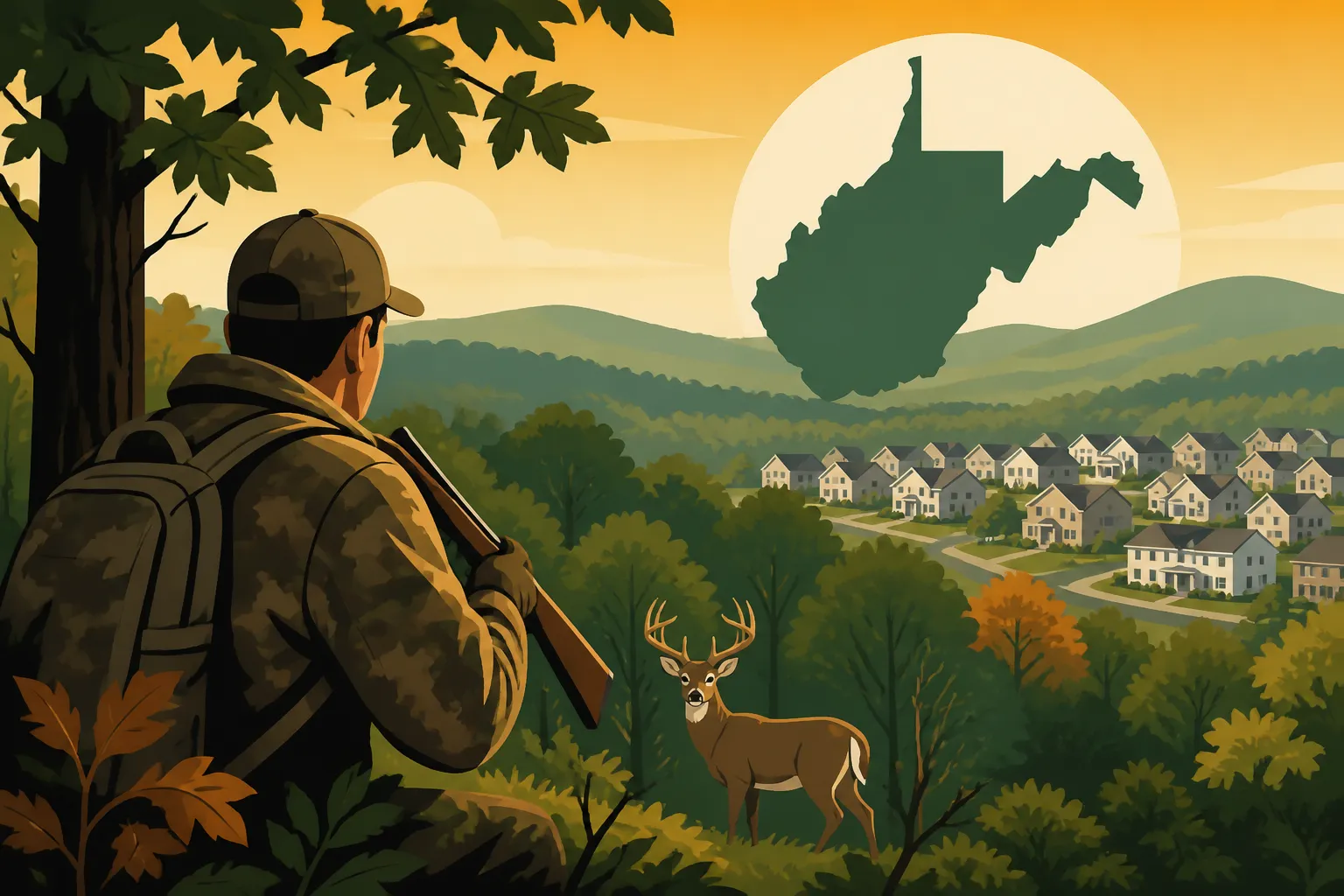
Hunting Small Woodlots Near Suburban Charleston
Hunting around suburban areas, especially near a bustling city like Charleston, can feel like a contradiction in terms. You see deer constantly, crossing roads, browsing in neighbors' flowerbeds, and yet finding a legitimate, ethical hunting spot feels impossible. The limited land, the constant human presence, and the sheer challenge of navigating property lines can be incredibly frustrating. But don't despair! This guide is here to show you how to identify, access, and successfully hunt those often-overlooked small woodlots nestled right on the edges of suburban Charleston, turning what seems like an obstacle into a unique hunting opportunity.
The Unique World of Suburban Deer Hunting Near Charleston
Hunting whitetails in the urban fringe isn't like heading into the deep woods of the Monongahela National Forest. The rules are different, the deer are different, and your approach absolutely has to adapt. It's a game of precision, patience, and politeness.
Understanding Deer Behavior in Developed Areas
Deer living on the outskirts of Charleston, whether it’s near South Charleston, Cross Lanes, or St. Albans, have a completely different playbook than their mountain cousins. They're basically city slickers of the deer world. They're constantly exposed to human activity—the drone of traffic, the rumble of lawnmowers, the excited barks of neighborhood dogs. Because of this constant exposure, they can often seem less skittish about certain human noises or sights. However, this familiarity doesn't make them easy targets; it makes them incredibly savvy at discerning actual threats from everyday nuisances.
They learn to navigate properties with surprising stealth, using every scrap of cover, every drainage ditch, and every thicket as a highway or a hideout. Their core patterns are often very tight, focused on small, secure pockets of cover for bedding during the day and specific, low-risk routes to move to feeding areas, which might include anything from an abandoned field to a neighbor's prize-winning hostas under the cover of darkness. This often means their most active movement, especially for mature bucks, shifts to nocturnal hours. Your best bet for encountering these deer during legal shooting light will often be right at dawn and dusk, when they're transitioning between these hidden bedding spots and their nighttime feeding grounds. You might also find them moving more freely during the peak of the rut or during a significant cold front that changes their urgency to feed.
Identifying Overlooked Woodlots and Green Spaces
The key to successful suburban hunting isn't about finding vast, untouched wilderness. It's about developing an eye for the overlooked, the neglected, and the "in-between" spaces that most people, including other hunters, simply drive past. These are the small woodlots, creek bottoms, and overgrown green spaces that exist as fragments within or adjacent to developed areas.
Think about those fingers of timber that stretch along a creek bed, snaking between a subdivision and a commercial strip mall. Or perhaps a powerline cut that runs through a parcel of woods, providing both cover and a travel corridor. Maybe it's a small, unkempt parcel of timber that a landowner just hasn't gotten around to clearing, bordering a larger agricultural field or a section of public land. These spaces are often irregular in shape, perhaps only a few acres, and might not look like prime hunting ground to the untrained eye. But for a whitetail that needs secure bedding and quick escape routes, they can be sanctuaries.
Tools like satellite imagery on mapping apps are your best friend here. Services like GoHunt allow you to zoom in and identify these critical pockets of cover. Look for dark green patches indicating dense woods, especially those that connect to other larger wooded areas, even if those connections are narrow. Pay close attention to changes in topography, like small hills or ravines, which can create natural funnels and travel routes. Don't discount areas adjacent to golf courses or parks, where hunting might be prohibited, but deer frequently stage and travel through to get to other areas. Many deer will bed down in the deepest, thickest cover they can find within these parcels, even if it's only a few hundred yards from a busy street.
Navigating Regulations and Securing Access
This is, without a doubt, the biggest hurdle to hunting successfully in suburban Charleston. It’s not just about finding the deer; it’s about finding a legal and ethical way to pursue them without causing issues. First and foremost, you absolutely must research local ordinances. Many incorporated cities and towns in the greater Charleston area have specific rules regarding the discharge of firearms, and sometimes even archery equipment, within city limits. A quick call to the municipal police department or county sheriff's office can clarify these restrictions. Always check the current West Virginia Department of Natural Resources (WVDNR) regulations as well, as they govern season dates and bag limits. Understanding West Virginia Archery and Crossbow Season Dates is particularly important here, as bowhunting is often the only viable option.
Once you’ve identified potential parcels and confirmed local legality, the real work begins: securing private land permission. This often involves a lot of pavement pounding and respectful conversations. Knock on doors, introduce yourself, and politely explain your interest in hunting. Many landowners, especially those with smaller, neglected woodlots, might be dealing with deer overpopulation issues and would welcome a responsible hunter who can help manage the herd. Offer to help with deer control, assure them of your commitment to safety, ethical hunting, and respect for their property. Emphasize that you will only take safe, ethical shots with a proper backstop and that you will always be aware of surrounding homes. Building trust is paramount; a good reputation can open many doors, sometimes leading to multiple small tracts in an area. Remember that Getting Private Land Permission in West Virginia is more than just a formality; it's about building a relationship.
Strategic Approaches for Effective Hunting in Small Tracts
Given the tight quarters and heightened human presence, your hunting tactics need to be precise, discreet, and highly adaptable. This isn't about covering miles of ground; it's about making every move count.
Low-Impact Scouting and Silent Entry/Exit
In small woodlots, deer are hyper-aware of any intrusions into their limited space. Heavy-handed scouting can spook them out of a parcel for weeks, or even permanently. Your scouting needs to be ultra-stealthy. Instead of crashing through the woods, try to glass from a distance using binoculars, focusing on the edges of the woodlot or any subtle openings. Look for natural funnels, pinch points, and cover changes. Pay attention to well-worn trails, rubs, and scrapes, even if they're only a few yards long. Scrape Lines Along a Logging Road can be great indicators, but even small ones along a hidden path can signal active deer.
When you do venture in, minimize your scent and noise. Use wind direction to your advantage, and consider going in after a rain, which dampens sound and washes away scent. Trail cameras can be incredibly useful for monitoring deer activity without constant human presence, but place them discreetly and check them infrequently.
Entry and exit routes are absolutely critical. You can't just walk in from the nearest road. Meticulously plan your path to and from your stand, aiming to disturb as little as possible. This might mean walking along a seldom-used property line (with permission, of course), slipping through a deep drainage ditch, or using a path that takes you directly away from any residential areas. The goal is to be a ghost – to enter and exit without alerting a single deer to your presence. If deer pattern your entry, they'll simply move to another piece of cover.
Optimizing Stand Placement for Limited Opportunities
With limited space, you won't have endless options for stand locations, so each one must be strategically chosen. Focus on natural pinch points where deer are funneled into a narrow corridor, or travel routes that connect bedding cover (often a thick, nasty briar patch) to a food source (which could be acorns, honeysuckle, or even neighborhood landscaping). Creek bottoms are often excellent travel corridors in suburban areas, providing cover and water. Look for saddles on small ridges or low spots where deer will naturally cross. Even a slight elevation change can create an effective funnel.
Concealment is paramount. These deer are used to seeing humans, so blending in is vital. Consider Using a Ground Blind on West Virginia Public Land if you can set it up well in advance and brush it in thoroughly. For treestands, choose a tree that offers good cover and tuck your stand away from obvious sightlines. Always be mindful of the wind direction and thermals. Even in relatively flat terrain, micro-thermals can occur, especially in the early morning as the ground warms or in the evening as it cools. You may need to consider how Wind and Thermals on a Steep Ridge impact small changes in elevation, even if not a true mountain. Your stand placement should allow for a shot at a deer moving naturally without it being able to smell or see you coming or going.
Choosing the Right Weapon and Adapting Tactics
In suburban settings, bowhunting is almost always the preferred and most often permitted method. The silent nature of a bow shot, combined with the limited range of an arrow, makes it a much safer option around homes and businesses. Make sure your bow is well-tuned, and you are proficient at close ranges, as many shots will be within 20-30 yards. Crossbow Rules During West Virginia Archery Season also apply, offering another viable silent option. If you're fortunate enough to find a tract where firearms are allowed, extreme caution and vigilance regarding backstops are mandatory. You must be absolutely certain of your target and what lies beyond it before taking any shot.
Still-hunting can be incredibly effective in small woodlots if done with extreme patience and quietness. Moving slowly, taking a few steps, then pausing to observe for several minutes, can allow you to spot deer before they spot you. This is especially true during the rut when bucks might be moving more during daylight hours, making Hunting the Rut in Mid-November a prime opportunity for still-hunting. Avoid deer drives, which are often impractical and unsafe due to the proximity of homes and other property lines. Focus on ambushing deer along their established travel routes.
Maximizing Success and Responsible Hunting in Suburban Settings
Success in these unique environments isn't just about the kill; it's about demonstrating respect, building community relationships, and ensuring safety for everyone involved.
Understanding Deer Movement and Peak Activity Times
As mentioned, suburban deer often become largely nocturnal. This means your best opportunities will be during low-light conditions – the first hour or two after dawn and the last hour or two before dusk. These are the windows when deer are most likely to be transitioning between their secure bedding areas and their evening feeding spots. Don't discount midday activity during the rut, when bucks are actively seeking does, or during periods of severe cold weather when deer are compelled to feed more frequently. Pay close attention to weather fronts; a sudden drop in temperature can really get deer moving.
Even in small areas, deer will leave sign. Look for fresh tracks in soft ground, newly rubbed trees, or fresh droppings. These clues, even if minimal, indicate recent activity. Use a mapping app like GoHunt to mark every piece of sign you find. Over time, a pattern will emerge, showing you where deer are likely moving, bedding, and feeding. Reading these signs is akin to Reading Aerial Photos for Eastern Panhandle Deer, just on a much smaller, more concentrated scale. The smallest cluster of deer sign in a tiny woodlot can be gold.
Ethical Shot Placement and Game Recovery
Given the close proximity to residential areas, ethical shot placement is not just a preference, it's a moral and legal imperative. Only take shots when you have a clear, unobstructed path to the vital organs and, critically, a safe backstop that will prevent your arrow or bullet from traveling beyond your intended target into an unknown area. This means passing on marginal shots you might take in more remote areas. Know your weapon's limitations and practice regularly to ensure maximum accuracy under pressure.
Game recovery in suburban settings presents its own set of challenges. If a deer runs off your permitted property, you cannot pursue it onto unpermitted land without explicit permission from that specific landowner. This is where those strong landowner relationships truly pay off. Before you hunt, discuss this possibility with all adjacent landowners if possible. Having their number on hand and making a quick, polite call can mean the difference between recovering your deer and losing it. If you need to track a deer after dark, remember the importance of Blood Trailing After Dark in West Virginia, but only with full permission from all involved landowners. Be prepared to quickly and discreetly remove your harvest, perhaps having a cart or sled ready to go.
Building Positive Relationships with Landowners and Neighbors
This aspect cannot be overstated. Your long-term access and the reputation of hunters in the community depend on it. Always be courteous, respectful, and keep your promises. If you say you’ll hunt only on certain days, or only with a bow, stick to it. Offer to share venison with landowners who grant you access; many appreciate the gesture and the opportunity for fresh, lean meat. Clean up any trash you find, whether it's yours or not, and leave the property better than you found it.
It's also a good idea to introduce yourself to immediate neighbors of the property you're hunting (if the landowner is comfortable with it). Explain what you're doing, assure them of your safety precautions, and respectfully address any concerns they might have. Many non-hunting neighbors may not understand the benefits of deer management or simply have misconceptions about hunting. By being a responsible, visible, and polite ambassador for hunting, you can help foster a more positive image of the sport in areas where it might be less understood or even viewed negatively. Your actions reflect on all hunters, so make them count.
| Aspect of Hunting Suburban Woodlots | Pros | Cons |
|---|---|---|
| Deer Abundance | High deer density, often less pressured | Deer can be more nocturnal, accustomed to human presence |
| Access | Private land permission possible, less competition | Requires extensive door-knocking, limited size of parcels |
| Regulations | Bowhunting often permitted where firearms aren't | Local ordinances can be restrictive, need careful research |
| Hunting Pressure | Often lower competition from other hunters | Perceived pressure from human activity (cars, dogs) |
| Ethical Considerations | Opportunity for controlled deer management | Critical need for safe backstops, meticulous shot placement |
| Logistics | Close to home, less travel | Game recovery can be challenging due to property lines and homes |
| Skill Set | Rewards stealth, patience, and adaptability | Requires different scouting and hunting tactics than big woods |
Disclaimer
The information provided in this guide is for general educational and informational purposes only, and does not constitute legal or professional advice. Hunting regulations, seasons, and access rules can change frequently. Always consult the most current West Virginia Department of Natural Resources (WVDNR) regulations and local municipal ordinances before engaging in any hunting activities. It is your responsibility to understand and abide by all applicable laws and regulations. Always prioritize safety, ethical hunting practices, and respect for landowners and the general public.