Deer Drives on West Virginia Public Land
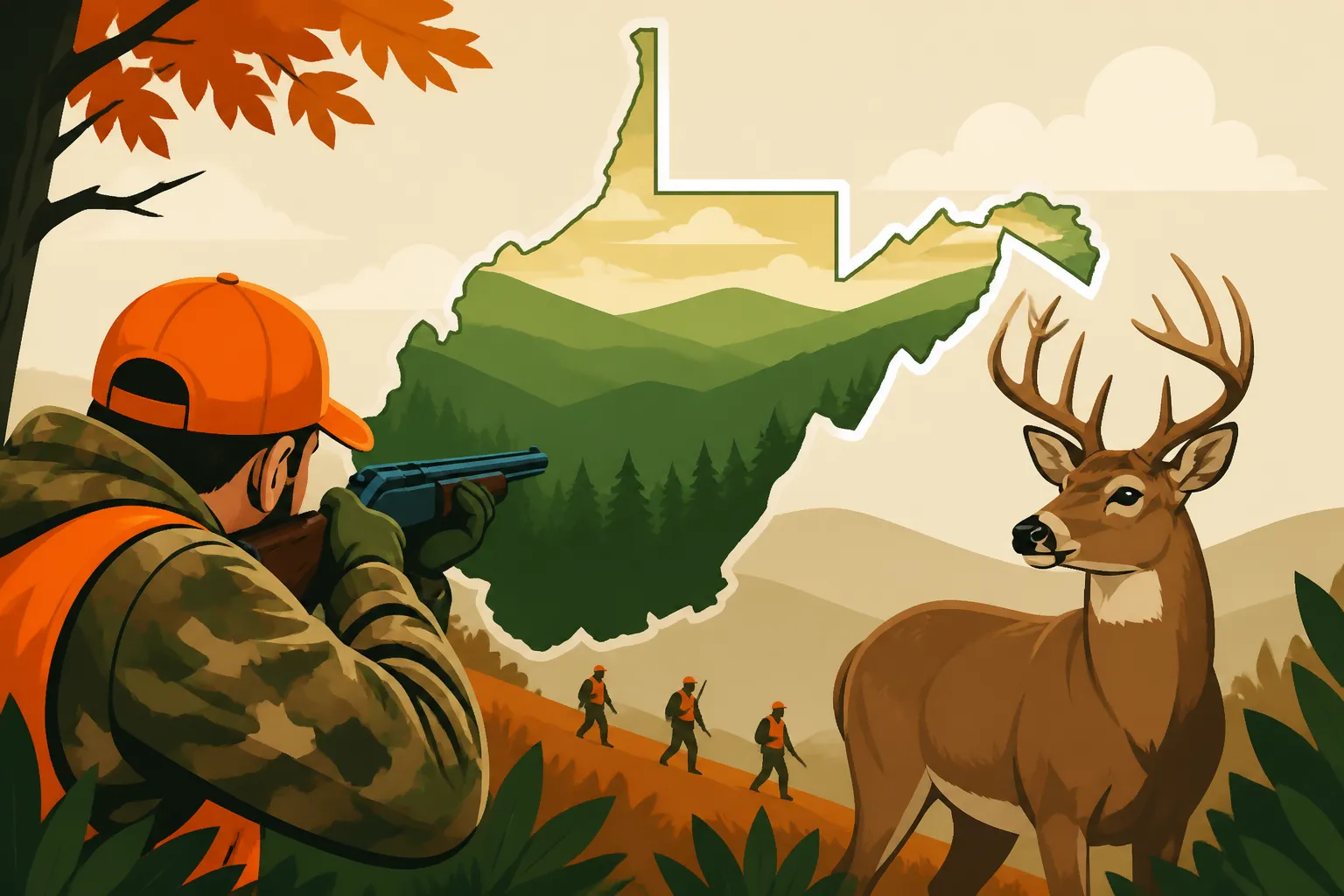
Hunting West Virginia's public lands can feel like a game of hide-and-seek where the deer always win. Those steep hollows, dense laurel thickets, and endless stretches of timber often hold whitetails that seem to vanish into thin air, leaving stand hunters frustrated and still-hunters feeling like they've walked miles for nothing. If you've been struggling to coax deer out of their impenetrable hideouts, especially on highly pressured public ground, then deer drives might just be the tactic you need to shake things up and put venison in the freezer. This comprehensive guide will walk you through everything you need to know about planning and executing effective deer drives on West Virginia public land.
Understanding the Basics of Deer Drives in West Virginia
Deer drives, when done correctly, are a time-honored tradition that can be incredibly effective, particularly in the challenging terrain West Virginia offers. They’re not just about making noise and hoping for the best; they’re a strategic maneuver that leverages deer behavior and the lay of the land to create shot opportunities.
Why Drives Work on Public Land
On West Virginia's public lands, deer often become incredibly adept at avoiding detection. They learn quickly where the pressure points are, and they have vast tracts of rugged country to disappear into. This is precisely where deer drives shine. Instead of waiting for a deer to come to you, you're actively putting deer in motion. When deer are holed up in thick cover – think those seemingly impenetrable rhododendron thickets or steep, brushy ravines – a well-executed drive can persuade them to move.
Drives capitalize on a deer's natural flight response. While some deer might try to sneak back through the line of drivers, many will eventually choose a path of least resistance, often following established game trails or natural funnels to escape perceived danger. Blockers, strategically positioned along these escape routes, can then intercept these moving deer. It's a way to turn those "unhuntable" sections of public land into productive hunting ground, especially when solo still-hunting or sitting a stand has come up empty.
Essential Safety Considerations
Before you even think about setting foot in the woods for a drive, safety must be your absolute top priority. West Virginia's public lands are often steep, dense, and can be full of other hunters, making clear communication and strict adherence to safety protocols non-negotiable. Every hunter involved, whether driver or blocker, needs to be on the same page.
First and foremost, blaze orange is mandatory in West Virginia during firearms seasons for both gun hunters and those accompanying them. This isn't just a legal requirement; it's a lifesaver in a deer drive scenario. Bright orange helps identify every member of your hunting party, distinguishing them from deer and making sure everyone knows where everyone else is. For more details on the specific requirements, check out our guide on West Virginia Blaze Orange Requirements. Beyond that, clear communication is crucial. Two-way radios are highly recommended, as cell service can be spotty in many parts of the state. If radios aren't an option, establish clear hand signals and loud, distinct verbal commands before the hunt begins. Maintain proper spacing between hunters, especially drivers, to prevent accidental shots and ensure that everyone has a safe field of fire. Always identify your target clearly and be absolutely sure of what lies beyond it before taking a shot.
Legalities and Ethics on Public Land
Deer drives are a perfectly legal hunting method in West Virginia; there are no state regulations specifically prohibiting them. However, conducting them ethically and within the bounds of general hunting laws is paramount. The goal is to move deer and create a shot opportunity, not to harass animals or endanger other hunters.
Ethically, you should aim for clean, quick kills. Don't push deer to the point of exhaustion, which is generally not an issue with well-planned drives, but something to keep in mind. Be respectful of other hunters you might encounter on public land. If you come across another party, communicate with them, explain your plan, and adjust if necessary to ensure everyone's safety and hunting experience. Never, under any circumstances, allow your drive to push deer onto private land where you don't have explicit permission to hunt or retrieve game. This is a quick way to cause trouble and damage the reputation of hunters. Understanding West Virginia Trespass and Permission Law is essential for any hunter navigating shared landscapes. Always carry your license and any required permits, and be prepared to explain your actions to any curious conservation officers.
Scouting and Planning Your West Virginia Deer Drive
A successful deer drive isn't about haphazardly walking through the woods. It's a carefully orchestrated maneuver, and the groundwork for success is laid long before opening day through meticulous scouting and planning.
Identifying Key Terrain Features and Escape Routes
West Virginia's landscape is a deer hunter's puzzle, full of steep ridges, deep hollows, and benches that serve as natural highways or hideouts for deer. To plan an effective drive, you need to become a student of the terrain. Deer, especially on public land, are masters at using topography to their advantage, often escaping pressure by dropping into the deepest hollows, circling around a ridge, or slipping through a saddle.
Start by poring over topographical maps and satellite imagery. Tools like GoHunt can be invaluable here, allowing you to visualize elevation changes, identify potential funnels where deer movement is concentrated, and pinpoint thick cover they'll use for bedding. Look for distinct features such as saddles between ridges, creek bottoms that act as natural travel corridors, and dense laurel or clear-cuts where deer will bed down. These are your potential starting points for drivers and strategic positions for blockers. Deer often have preferred escape routes, especially when pressured, and these routes tend to follow the contours of the land or the path of least resistance. For a deeper dive into map analysis, consider our guide on Reading Aerial Photos for Eastern Panhandle Deer, which offers valuable insights adaptable to other regions.
Choosing the Right Blockers and Drivers
The success of your drive largely depends on assigning the right roles to the right people. It's not a one-size-fits-all approach, and you need to consider each individual's fitness level, knowledge of the area, and hunting experience.
Blockers are your stationary hunters. They need patience, excellent concealment, and the ability to remain still and quiet for extended periods. Their role is to intercept deer pushed by the drivers, so they must be positioned in areas where deer are most likely to emerge or pass through. Good blockers understand shot angles and safe shooting lanes. Drivers, on the other hand, need to be physically capable of traversing rough, steep terrain, often for considerable distances. They need to understand how to move through the cover effectively, creating just enough pressure to push deer without sending them into a full panic that might cause them to break the line. They also need a strong sense of direction to maintain a straight line or follow a specific contour. The ideal group size for a drive varies. A smaller group, say three or four hunters, might focus on a more subtle, shorter drive in a specific thicket, whereas a larger group can cover more ground. For insights into managing smaller groups, explore our article on Deer Drives With Three or Four Hunters.
Adapting to West Virginia's Diverse Habitat
West Virginia's hunting landscape is incredibly diverse, and a one-size-fits-all drive strategy simply won't cut it. What works in the high-elevation hardwoods of the Monongahela National Forest will be different from the mixed agricultural and timber areas of the Eastern Panhandle, or the rugged, reclaimed lands of the Southern Coalfields.
In the vast, steep reaches of the Monongahela National Forest Hunting region, drives often need to be longer and more physically demanding. Here, you're dealing with massive timber, deep ravines, and extensive laurel thickets. Drivers might focus on pushing deer off a high ridge down into a hollow where blockers are strategically placed along benches or creek bottoms. Conversely, in the Hunting the Eastern Panhandle, where you might encounter more open farmland interspersed with woodlots, drives can be shorter, often pushing deer from a small woodlot into an adjacent field or across a fencerow where blockers are waiting. Meanwhile, in the Hunting the Southern Coalfields, you might be dealing with steep, brushy mountainsides and reclaimed mine benches. Here, drives can exploit the distinct edges and clearings created by previous mining operations, using them as natural funnels. Understanding these regional differences and adapting your plan accordingly is crucial for success.
Executing the Drive: Tactics for Success
Once your scouting and planning are complete, it's time for the execution. This is where communication, discipline, and understanding deer behavior truly come into play. A well-executed drive feels almost seamless, like a silent, slow-motion ballet designed to move deer right where you want them.
Strategic Positioning of Blockers
The blockers are the lynchpins of any successful drive. Their placement determines whether the deer you've pushed offer a shot opportunity or simply slip away unnoticed. Before the drive begins, all blockers should be in place, completely hidden, and aware of the plan. They should anticipate where deer are most likely to travel when disturbed and position themselves accordingly.
This often means taking advantage of natural funnels—a narrow section of a ridge, a pinch point between a steep drop-off and a thicket, or a crossing point on a logging road. Look for cover that allows for a clear shooting lane down the anticipated escape route, but also offers concealment from approaching deer. Pay close attention to wind direction; deer will almost always try to circle downwind to scent-check perceived threats. Blockers should aim to be crosswind or even slightly downwind of the anticipated deer path. Being in a tree stand can often provide an excellent vantage point and hide your scent, especially when considering a blocker position on a steep Allegheny ridge, as detailed in our guide on Hanging a Stand on a Steep Allegheny Ridge. Remember, patience is paramount for blockers. Often, the first deer pushed will be a doe or small buck, but a wise old buck might hang back, attempting to circle around the drivers or the initial escape route.
Effective Driving Techniques
The drivers’ role is to move deer, not necessarily to spook them into a flat-out sprint. The type of drive (fast and noisy, or slow and subtle) depends on the terrain, the number of hunters, and the known deer behavior in the area. On public land, where deer are often pressured, a slower, more deliberate push can often be more effective than a full-out charge.
Drivers should walk in a consistent line, maintaining communication (via radios or pre-arranged signals) and awareness of each other’s positions. The goal is to create a sense of unease that makes deer gradually move away from the drivers. In thick laurel patches or dense clear-cuts, drivers might need to be closer together and move a bit slower, methodically covering the ground. In more open timber, a wider spread and a slightly brisker pace might be appropriate. Drivers should pay attention to fresh tracks and signs of deer trying to slip back through the line, adjusting their path or speed as needed. The collective effort of the drivers forms a moving wall, gently nudging deer towards the waiting blockers. Even with a small group, effective techniques can yield results, as discussed in Deer Drives With Three or Four Hunters.
Post-Drive Actions and Recovery
The drive doesn't end when a shot is fired. What happens immediately after is crucial for a successful and ethical recovery. If a shot is taken, all hunters should immediately stop and listen. Mark the exact spot where the deer was standing and where it was last seen. Wait quietly for at least 15-30 minutes, especially if you suspect a gut shot, to give the deer time to lie down and stiffen up.
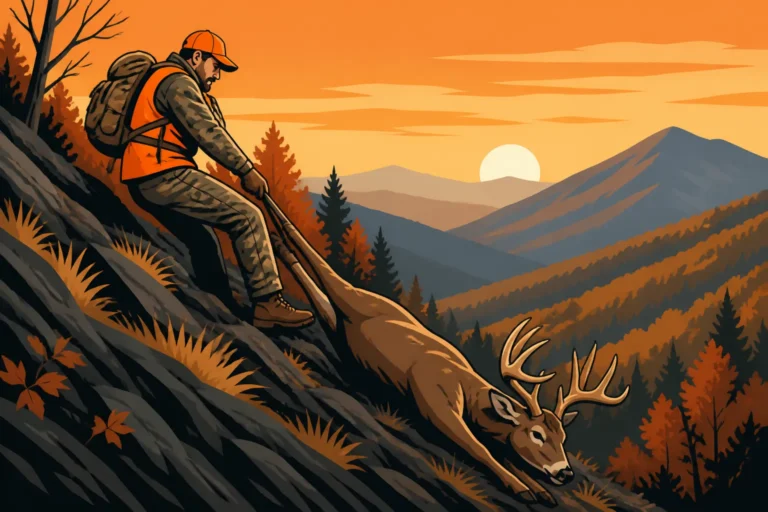
Once the waiting period is over, the entire group, or at least a dedicated tracking team, should begin the search. Start at the impact site and meticulously look for blood, hair, bone fragments, or disturbed earth. Even a tiny speck of blood can lead to a successful recovery. West Virginia's leaf litter can make blood trailing incredibly challenging, especially in dry conditions. For expert advice on this, consult Tracking a Deer Through West Virginia Leaf Litter. If darkness is approaching, or the trail is minimal, consider backing out and returning at first light with more people and fresh eyes. Recovering a deer from a steep hollow or a remote part of public land can be physically demanding. Be prepared with game carts, sleds, or strong backs. Our guide on Recovering a Deer From a Steep Hollow offers practical tips for this arduous task. Always mark the spot where the deer fell, report your harvest as required by the WVDNR, and celebrate the teamwork that led to your success.
Common Challenges and Troubleshooting
Deer drives, while effective, are not without their hurdles. West Virginia's public land presents unique challenges that require adaptability, perseverance, and sometimes a change in tactics.
Dealing with Pressured Deer and Other Hunters
One of the biggest realities of hunting public land in West Virginia is the presence of other hunters, especially during opening weekends or peak rut. Deer on public land are often highly pressured, meaning they've encountered hunters before and have learned to adapt. This can make them incredibly wary and difficult to push.
If you encounter other hunters in your planned drive area, communication is key. Politely explain your intentions and ask if they have a preference for how you proceed. Sometimes, adjusting your drive route or waiting for them to move can prevent conflicts. Alternatively, try to find areas that receive less pressure. This might mean walking further, getting into steeper or thicker cover that others avoid, or hunting on weekdays when crowds are thinner. Our article on Opening Weekend Crowds on West Virginia Public Land offers more insights into navigating busy times. When deer are heavily pressured, they might try to circle back through the drive line, or they might hole up in an even thicker cover and refuse to move. In these situations, a "soft push" (discussed below) might be more effective than a loud, aggressive drive.
Navigating Steep Terrain and Thick Cover
West Virginia is renowned for its rugged beauty, but that beauty often translates into incredibly challenging terrain for hunters. Steep climbs, treacherous descents, and dense, tangled thickets of laurel, rhododendron, and greenbrier are par for the course. These aren't just minor inconveniences; they directly impact the effectiveness and safety of your drive.
For drivers, navigating these areas requires significant physical fitness and durable gear. Boots with excellent ankle support and traction are a must, as are clothing layers that can withstand thorns and brush. Mapping out your drive on a detailed topo map, perhaps with a premium app like GoHunt, allows you to visualize the extreme elevation changes and plan routes that are challenging but achievable for your team. Don't try to fight the terrain; use it to your advantage. For instance, instead of driving straight up a near-vertical slope, look for a more gradual bench or draw that runs parallel to your desired direction. For blockers, finding a safe, stable shooting position in steep, uneven terrain is critical. This often means finding a large tree or rock to brace against. Patience is key. Sometimes, the deer will eventually come out, but it might take them longer to pick their way through the nasty stuff.
Weather Impact and Adaptations
West Virginia weather can be unpredictable, and conditions can change rapidly in the mountains. Rain, snow, fog, and strong winds all affect deer behavior and hunting conditions, requiring you to adapt your drive strategy on the fly.
A light rain can be beneficial, quieting footfall for drivers and washing away human scent, making deer less likely to detect the approach. However, heavy rain or fog can significantly reduce visibility, making safe shooting impossible and increasing the risk of getting lost. In such conditions, it’s often best to postpone or shorten your drive. Snow, especially fresh snow, can be excellent for drives. It makes tracking easier for drivers, reveals fresh deer sign, and often gets deer moving as they seek food. However, deep snow can also make movement extremely difficult for both hunters and deer. High winds can make it hard to hear approaching deer or communicate with your team. Deer also tend to bed down more in high winds to avoid blowing trees and conserve energy. Consider how cold temperatures impact both you and the deer. For blockers, a Cold-Weather Sitting Strategy in the Mountains will be essential to endure long waits. Always check the forecast, dress appropriately in layers, and be willing to adjust your plans if conditions become unsafe or unproductive.
Advanced Drive Strategies for Public Land
Beyond the basic push, there are nuanced drive strategies that can be particularly effective on West Virginia's public lands, especially when dealing with highly pressured deer or specific terrain features. These methods require a deeper understanding of deer movement and a well-coordinated team.
The "Soft Push" for Wary Whitetails
Sometimes, a full-on, noisy drive can actually be counterproductive, sending wary public land deer scattering in unpredictable directions or causing them to "hole up" even deeper in cover. This is where the "soft push" comes into its own. The idea is to apply just enough subtle pressure to get deer moving without putting them into a full panic.
In a soft push, drivers move quietly and slowly, almost like still-hunters. They might walk parallel to a known bedding area, occasionally making a slight noise – a soft cough, a gentle tap on a tree with a stick, or a quiet conversation – just enough to make deer feel uneasy and eventually get up and move. This approach works best with smaller groups and in areas where you know deer are present but are incredibly spooky. Blockers are still crucial, positioned on anticipated escape routes. The soft push often results in deer walking out rather than running, offering calmer, more ethical shot opportunities. It's about nudging, not stampeding, and can be incredibly effective when you want to avoid blowing deer out of an area entirely.
Utilizing Water Features and Roads as Barriers
West Virginia's landscape is crisscrossed with natural and man-made linear features that can be strategically incorporated into your drive plan. Rivers, creeks, powerline cuts, and old logging roads can act as natural barriers or funnels, dictating how deer will move.
Deer often hesitate to cross large, open areas like wide rivers or frequently used roads, especially if they've been pressured. This creates predictable crossing points or funnels. For instance, if you're driving a woodlot adjacent to a major creek or river like those found in the Hunting Ohio River Valley Bottomland, you might position your blockers along the banks where deer are likely to either follow the waterway or cross at a specific shallow point. Similarly, a powerline cut or an old gas well road traversing a ridge can be an ideal spot for blockers. Deer prefer to cross these exposed areas quickly and at specific points, making them predictable funnels. Using a mapping tool like GoHunt can help you identify these linear features and pinpoint those pinch points or crossing sites, making your blocker placement incredibly precise.
Drives as Part of a Larger Hunting Strategy
Deer drives don't have to be a standalone hunting method. They can be incredibly powerful when integrated into a broader, multi-day hunting strategy, especially on West Virginia's public land where deer movement patterns can be complex. Think of drives as a tool in your hunting toolbox, to be used when specific conditions or situations arise.
For example, an early-season drive can be used not just to harvest a deer, but to locate deer or confirm bedding areas. If you push a specific thicket and consistently see deer escaping along a particular bench or through a saddle, that intel can then be used to set up a stand for a solo hunt on a subsequent day. During the mid-season lull or late season, when deer are often bedded down tightly and less willing to move, a drive can be the perfect tactic to get them on their feet. Understanding How West Virginia's Season Runs Archery to December can help you time your drives for maximum impact, perhaps using them to target specific food sources in the late season when deer are concentrated. Drives can also be excellent for introducing new or younger hunters to active hunting, giving them a role in the process and a better chance to see deer moving. By using drives strategically, you're not just reacting to deer movement; you're actively creating it.
Deer Drive Planning Table for West Virginia Public Land
| Drive Type | Ideal Group Size | Noise Level | Ideal Terrain | Pros | Cons |
|---|---|---|---|---|---|
| Small Group Drive (3-5 hunters) | 3-5 hunters | Moderate to Loud | Smaller woodlots, thickets, single hollows, defined ridges | Highly effective for specific, smaller areas; easier communication; less impact on other hunters | Limited coverage area; drivers can get spread out; might not move very wary deer |
| Large Group Drive (6+ hunters) | 6-10+ hunters | Loud | Expansive timber, long ridges, large clear-cuts, multiple hollows | Covers significant ground; high probability of moving deer; can push deer out of dense cover | Requires excellent coordination and communication; higher risk if safety protocols aren't strict; can spook deer far away |
| Soft Push (2-4 hunters) | 2-4 hunters | Quiet to Minimal | Pressured areas, small isolated cover, near known escape routes | Moves wary deer subtly; deer often walk, offering calmer shots; less disruptive to other hunters | Requires more patience; not suitable for breaking deer out of truly impenetrable cover; might not move all deer |
| Terrain-Specific Drive | Varies | Varies | Utilizes natural funnels, creek bottoms, powerline cuts, saddles | Leverages deer's natural movement patterns; highly efficient; blockers have predictable shots | Requires extensive scouting and local knowledge; limited to specific terrain features |
Disclaimer
Hunting involves inherent risks, including but not limited to injury, illness, and property damage. The information provided in this guide is for informational purposes only and should not be considered a substitute for professional training, local regulations, or personal judgment. Always prioritize safety, adhere to all West Virginia hunting laws and regulations, and respect private property. The author and publisher assume no responsibility for accidents or injuries sustained while hunting.