Coyote Calling in West Virginia Farm Country
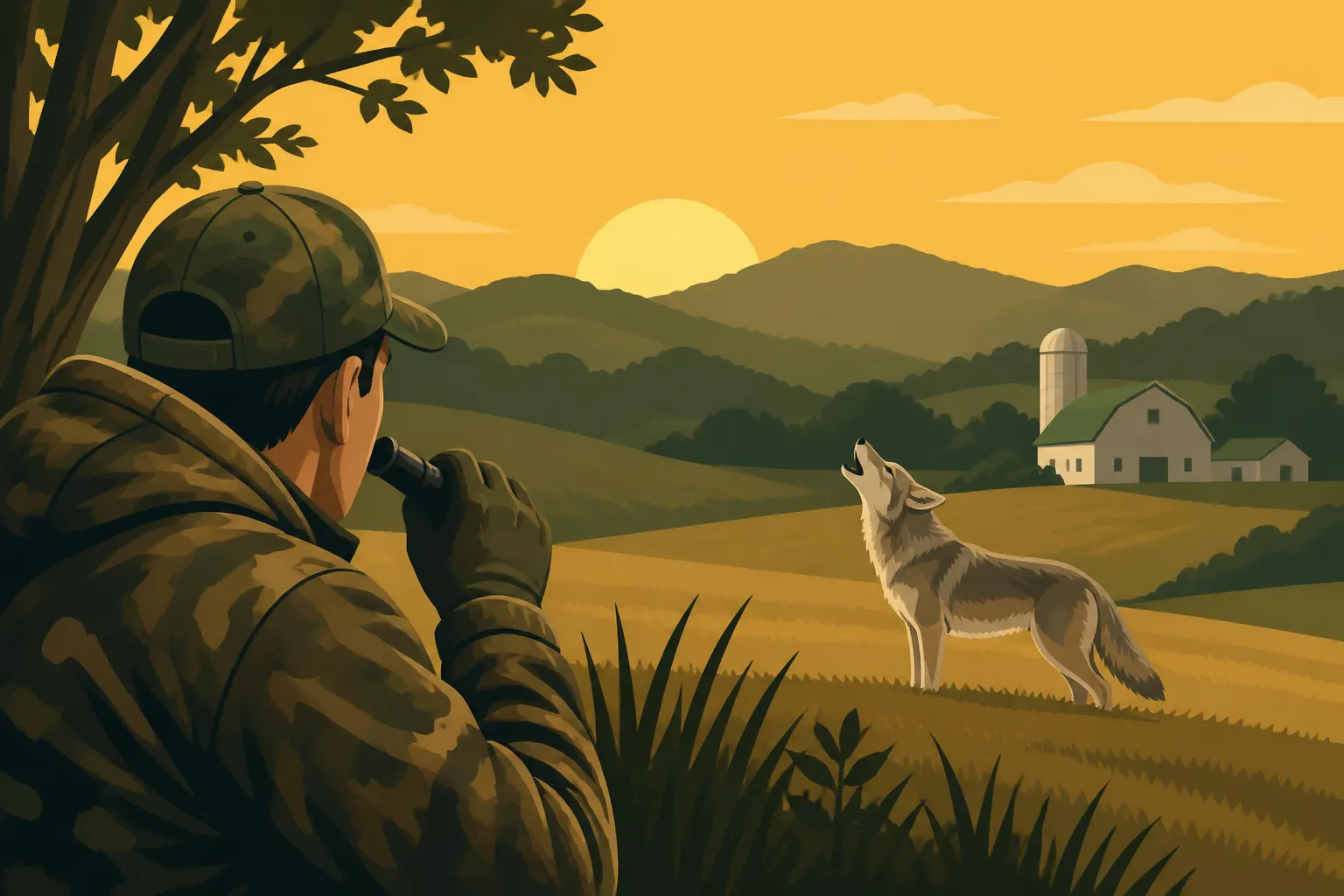
The distinct yip-howl of a coyote echoing across a crisp West Virginia farm field can be an exhilarating sound, but for many landowners and deer hunters, it signals a growing challenge. These cunning predators are becoming increasingly prevalent in our agricultural landscapes, impacting livestock and potentially putting a dent in local deer populations. This comprehensive guide will equip you with the knowledge, gear, and strategies to effectively call and harvest coyotes in the diverse farm country of West Virginia, offering realistic advice for both seasoned and novice callers.
Understanding West Virginia Farm Country Coyotes
Coyotes are incredibly adaptable animals, and their presence in West Virginia's farm country is a testament to their ability to thrive alongside human activity. Unlike their mountain-dwelling cousins, farm country coyotes often exhibit different behaviors and patterns that hunters need to understand to be successful.
Their Behavior and Diet in Agricultural Areas
In West Virginia's agricultural zones, coyotes have a smorgasbord of food sources at their disposal. While rodents like voles and mice, and lagomorphs such as rabbits, form a significant portion of their diet, they are also opportunistic predators. This means they'll readily target fawns during the spring and early summer, exploit easy meals like poultry, small livestock, or even carrion left from roadkill or hunting seasons. During the fall and winter, their diet might shift to include more deer, particularly those weakened or injured, or even agricultural waste left in fields. They learn quickly where food is abundant and safe. Their travel routes often follow natural cover like creek bottoms, hedgerows, and the edges of wooded plots bordering open fields, using these corridors to move discreetly between feeding and bedding areas.
Understanding these dietary preferences is key to selecting the right calling sounds. For instance, in spring and early summer, fawn distress calls can be incredibly effective, while in colder months, rabbit or rodent distress might be more appealing. Coyotes are constantly seeking the path of least resistance for a meal, and farm settings provide many such opportunities, making them prime hunting grounds if you can decipher their movements. The more you observe and scout, the better you'll become at predicting where a coyote might be heading for its next meal.
Recognizing Fresh Sign and Travel Routes
Before you even think about setting up a call, effective scouting is paramount in farm country. Look for fresh tracks in the soft earth along field edges, creek beds, and dirt roads. Coyote tracks are typically more oval and less splayed than a domestic dog's, and they often travel in a straight line, almost like they're walking on a tightrope. Scat is another excellent indicator; it often contains hair, bone fragments, and sometimes even crop residue, reflecting their opportunistic diet. Keep an eye out for rub marks on low-hanging branches or fence posts, which coyotes use to mark territory, especially during breeding season.
Perhaps most critically, identify their travel routes. These will often be linear features that offer cover or easy passage. Think about tree lines that connect two woodlots, brushy fencerows dividing fields, or overgrown ditches and creek bottoms. These are the highways coyotes use to move from bedding areas to hunting grounds. Utilizing scouting tools like the GoHunt app, combined with boots on the ground, can help you pinpoint these routes and potential ambush points. Pay attention to pinch points where cover narrows, forcing coyotes into predictable corridors. Identifying these subtle signs gives you a significant advantage, allowing you to position yourself where a coyote is most likely to appear after responding to your call. Remember, learning to read the land for these subtle clues is just as important as knowing how to use your call. You can learn a lot by Reading West Virginia Mud for Fresh Deer Movement and applying similar principles to coyote sign.
Impact on Livestock and Deer Herds
For West Virginia farmers, coyotes can be a significant nuisance and source of economic loss. While their primary diet isn't usually livestock, they will readily predate on vulnerable animals, especially young calves, lambs, and poultry. This makes coyote control a welcome effort for many landowners, opening up access opportunities for responsible hunters. Hunters often find that gaining Asking a West Virginia Farmer for Permission is easier when demonstrating an understanding of the challenges coyotes pose to their operations.
Beyond livestock, coyotes are also known to prey on deer, particularly fawns. During the fawning season in late spring and early summer, coyotes can be highly effective predators, potentially impacting local deer recruitment. While it's a natural part of the ecosystem, managing coyote populations can contribute to healthier deer herds, especially in areas with high coyote densities. This dual benefit – assisting farmers and potentially helping deer populations – makes coyote calling a valuable conservation tool in West Virginia's farm country, aligning hunter efforts with broader wildlife management goals. Understanding this impact can also help you communicate effectively with landowners when seeking permission to hunt on their property, highlighting how your efforts can benefit their land.
Essential Gear for Farm Country Calling
Successful coyote calling in West Virginia's farm country requires more than just a call and a gun. The right gear helps you remain concealed, spot incoming predators, and make ethical shots across varied distances.
Calling Devices: E-Callers vs. Hand Calls
When it comes to luring in a coyote, your choice of calling device is crucial. Each has its strengths and weaknesses, and often, the most successful callers carry both.
Electronic callers, or e-callers, are incredibly versatile. They come pre-loaded with a vast array of sounds, from various distress calls (rabbit, fawn, bird) to coyote vocalizations (howls, barks, pup distress). Brands like FOXPRO and Lucky Duck offer robust models with remote controls, allowing you to place the caller away from your position, drawing the coyote's attention away from you. This separation can be a huge advantage, as an incoming coyote is often focused intently on the source of the sound, making it less likely to spot a well-hidden hunter. E-callers allow for complex, realistic sequences and precise volume control, which is essential for adapting to different wind conditions and calling scenarios. For open farm fields where sounds can travel far and coyotes might hold up at a distance, the sheer volume and variety of an e-caller can be invaluable. The ability to program a full sequence and let it play while you stay focused on scanning the landscape, or using the remote to introduce a quick change in sound, makes them highly effective.
Hand calls, on the other hand, require more skill and practice but offer unparalleled realism and responsiveness. Open reed calls can produce a wide range of distress sounds by varying lip pressure and breath, while closed reed calls are simpler to use, often mimicking a specific animal like a rabbit. Howler calls allow you to mimic coyote vocalizations, which can be great for locating coyotes or challenging a territorial male. The primary benefit of hand calls is the immediate, instinctive control they offer. You can react instantly to a coyote's response, adjusting the volume, tone, or rhythm of your call to keep them engaged. This nuanced interaction can be the difference between a coyote committing to the call or hanging up just out of range. Many seasoned callers use an e-caller for the initial, loud sequence to grab attention, then switch to a subtle hand call once a coyote is spotted and closing the distance, or to add a realistic "whimper" as it nears.
Optics for Long-Range Detection
In the sprawling fields and rolling hills of West Virginia's farm country, coyotes can appear from seemingly nowhere, often at significant distances. High-quality optics are non-negotiable for spotting these wary predators before they spot you.
A good pair of binoculars, typically 8×42 or 10×42, is essential for scanning field edges, distant tree lines, and brushy draws. Look for binoculars with clear glass, a wide field of view, and good low-light performance, as many coyotes are most active during dawn and dusk. Steadily sweeping the landscape allows you to pick out subtle movements or shapes that a naked eye might miss. The ability to spot a coyote approaching from several hundred yards out gives you precious time to prepare for the shot, adjust your setup, or even change your calling strategy. For example, if you see a coyote skirting a distant fencerow, you might switch from a distress call to a more territorial howl to draw it closer. For hunters using platforms like GoHunt to scout and plan, integrating robust optics into their gear list is a natural extension of maximizing situational awareness in the field.
Additionally, a reliable rangefinder is critical. Knowing the exact distance to a fence post, a clump of weeds, or the far treeline allows you to precisely gauge the shot when a coyote finally appears. This is especially important when using a rifle, where bullet drop can be significant at longer ranges. Practice using your rangefinder before you hunt, quickly acquiring targets at various distances, so it becomes second nature when a coyote is on the move. Being able to range objects quickly and silently can prevent you from making a rushed, inaccurate shot, ensuring you only take ethical shots within your effective range.
Weapon Choices for Varied Shot Distances
The varied terrain and shot distances in West Virginia's farm country demand a versatile weapon choice. You might encounter a coyote at 30 yards sneaking through a fencerow or spot one at 300 yards paused on a distant ridge.
For longer shots across open fields, a flat-shooting rifle is often preferred. Calibers like .22-250 Remington, .204 Ruger, 6mm Creedmoor, or even a fast .223 Remington are popular choices. These calibers offer excellent velocity, minimal bullet drop, and enough energy to humanely dispatch a coyote at extended ranges. Pair your rifle with a good quality scope, ideally one with adjustable magnification (e.g., 3-9x or 4-12x) and a clear reticle for precise aiming. Understanding your rifle's ballistics and practicing shooting at various distances is paramount. Never take a shot beyond your comfortable and ethical maximum range, regardless of the rifle's capabilities. Remember that Rifle Ranges Realistic in Steep Terrain will differ from flat farm fields, so practice accordingly for your specific hunting area.
However, many encounters in farm country happen at closer distances, especially along wooded edges or in thick cover. For these scenarios, a shotgun loaded with buckshot (like #4 buckshot) or heavy lead turkey loads can be incredibly effective. A shotgun offers a wider pattern, increasing your chances of hitting a fast-moving coyote that suddenly bursts from cover. This is particularly useful in brushy areas or when a coyote responds aggressively and comes in quickly. A 12-gauge or 20-gauge shotgun with a modified or full choke can provide a lethal pattern out to 40-60 yards. Some hunters even choose to carry both a rifle for open areas and a shotgun for thick cover, or opt for an AR-style rifle in .223/5.56 that can be quickly adapted for close or distant shots with the right optic. Ultimately, the best weapon is the one you are most proficient and comfortable with, allowing for a quick, humane kill.
Calling Strategies for Open Farmland
Calling coyotes in open farm country presents unique challenges and opportunities. With fewer natural obstructions, coyotes can often see and hear for great distances, making your setup and calling sequence even more critical.
Setting Up for Wide Views
In open farmland, the first rule of calling is visibility – for you, not the coyote. You need to be able to see as much of the approaching terrain as possible, allowing you to spot coyotes early and react accordingly.
Position yourself on elevated ground if available, such as a slight ridge, knoll, or even a large hay bale that provides a clear vantage point. The goal is to maximize your field of view across the open field, along fencerows, and towards any distant woodlots. Always consider the sun's position to avoid glare that could obscure your vision or cast long shadows that might reveal your position. More importantly, prioritize a backdrop that helps you blend in. A lone hunter silhouetted against an open sky is an easy target for a coyote's keen eyesight. Sit against a dark treeline, a large clump of brush, or even a solid outbuilding to break up your outline. Using a ground blind, especially one brushed in with local vegetation, can be incredibly effective for concealment in these open environments. Learning to effectively use a Using a Ground Blind on West Virginia Public Land can translate well to private farm ground.
Wind direction is paramount. Coyotes almost always circle downwind to get a scent check before committing to a call. Position yourself so the prevailing wind blows across your setup, or ideally, slightly towards your back, forcing the coyote to expose itself before getting your scent. This means the coyote will have to cross your shooting lane to get downwind. However, a perfect setup is rarely achievable. Always be prepared for a coyote to appear anywhere, especially from downwind. Having a hunting partner positioned 50-100 yards downwind can act as a crucial 'blocker' for those cunning coyotes attempting to circle wide and approach undetected.
Aggressive vs. Subdued Calling Sequences
The type of calling sequence you employ can greatly influence a coyote's response, and knowing when to be aggressive versus when to be subtle is an art honed over time.
An aggressive calling sequence is designed to grab attention from a distance and elicit a strong, immediate response. This typically starts with loud, frantic distress calls – a screaming rabbit, a dying fawn, or a bird in distress – played at high volume, especially with an e-caller. The idea is to mimic a dramatic event that promises an easy meal. This works well in open country where sound carries, and coyotes may be spread out. After the initial loud burst (say, 30-60 seconds), you can back off the volume slightly and introduce some intermittent whimpers or a few short barks to add realism. The goal is to convey urgency and opportunity. An aggressive sequence is often effective in the early morning or late evening when coyotes are actively hunting. However, be cautious: overly aggressive calling in areas with high hunting pressure might make coyotes wary.
Conversely, a subdued calling sequence is about finesse and subtlety. This approach starts with softer, less urgent distress calls, or even soft pup-in-distress sounds. It's ideal for situations where coyotes are known to be close, or in areas with thicker cover where loud calls might be startling. If you've already spotted a coyote holding up at a distance and showing interest but not committing, a switch to a softer, more persistent call can sometimes seal the deal. This can also involve using more coyote vocalizations, like soft howls or lonesome pup whines, to pique their curiosity without triggering alarm. For these scenarios, a hand call can offer the precise control needed for subtle inflections. It's about drawing them in slowly, allowing their natural curiosity to overcome their wariness, especially if they are educated or pressured. The environment of Hunting the Eastern Panhandle Farmland Deer often presents situations where subtle calling can be highly effective for coyotes too, as these areas can see significant human activity.
Using Decoys Effectively
Adding a visual element to your calling setup can dramatically increase your success rate, especially in open farm country where coyotes rely heavily on sight. A decoy can draw a coyote's attention away from your hidden position and give them a target to focus on.
Motion decoys, particularly those mimicking a struggling rabbit or a flapping bird, are highly effective. The erratic movement catches a coyote's eye from a distance and can convince them that the distress call they're hearing is legitimate. Place your decoy 20-50 yards in front of your position, slightly off to the side, ensuring it's clearly visible. This placement draws the coyote's focus to the decoy, allowing you a better chance to remain undetected and position for a shot. Watch for coyotes to approach the decoy cautiously, often circling downwind to scent-check before committing. Having your shooting lane clear between you and the decoy is vital.
Another effective decoy is a coyote pup decoy, especially during breeding season or when using pup distress calls. This can appeal to territorial adult coyotes looking to eliminate a threat or investigate a potential rival. Static decoys, while less dynamic, can still be useful, particularly if they are realistic and placed to suggest an easy meal. For instance, a faux rabbit placed in a field could hint at a recent kill. No matter the type, always ensure your decoy is positioned to be seen and that it doesn't obstruct your view or shooting lane. The combination of an enticing sound and a convincing visual can be irresistible to a curious or hungry coyote, especially when they are trying to pinpoint the source of a sound in vast open spaces.
Tactics for Wooded Edges and Fencerows
While open fields are where coyotes often travel and hunt, the wooded edges and fencerows bordering West Virginia's farmlands are critical ambush points. These transition zones offer cover, travel corridors, and often the perfect setup for a close-range encounter.
Ambushing Coyotes Along Transition Areas
Transition areas—where open field meets timber, brushy fencerows slice through crops, or creek bottoms wind alongside pastures—are prime coyote hunting grounds. These locations provide the best of both worlds for coyotes: access to open feeding areas and immediate escape cover.
When setting up, focus on these seams. Position yourself just inside the timber line, looking out into the field, or tucked tight against a thick fencerow. The goal is to catch coyotes moving along these natural travel lanes or entering the field from cover. Always consider the wind; coyotes will typically follow the edge, staying just inside the tree line, trying to get downwind of your call. Your setup should anticipate this. If possible, pick a spot where the prevailing wind carries your scent away from the most likely approach routes, or use the terrain to your advantage, such as a slight rise that keeps your scent above their initial approach path. You need to be extremely well-concealed, as these encounters often happen at closer ranges where a coyote's sharp eyes are a major threat. Consider wearing full camouflage, including a face mask and gloves. Brushing In a Blind on a Field Edge is also a highly effective tactic here. The key is to be part of the landscape, not an intrusion.
These transition areas are also excellent spots to place an e-caller. By putting the caller further out in the field, near a brush pile or a distant tree, you can draw the coyote's attention away from your immediate position. As the coyote approaches the caller, it will often expose itself in the open before hitting the security of the woods again, giving you a clear shot. Be patient; coyotes often take their time to commit, frequently stopping to scan and listen before moving closer.
Strategic Sound Placement
The acoustics of wooded edges and fencerows are very different from open fields, requiring a more nuanced approach to sound placement. Thick cover can muffle sounds, but also contain them, making them seem closer and more urgent.
If you're using an e-caller, placing it strategically can be a game-changer. Instead of just setting it straight out in the field, consider placing it in a small opening within the wooded edge, or perhaps 10-20 yards out into the field from the edge. This can draw the coyote out of the dense cover and into a more open shooting lane, or bring them right past your concealed position. If you're calling from inside the woods, projecting the sound into the field or along a fencerow can be very effective, mimicking a struggling animal just beyond the cover. Sometimes, setting the caller slightly upwind of your position can draw the coyote to an area where they are more likely to get downwind of the sound source itself, rather than your human scent.
With hand calls, sound placement is about careful projection. In thick areas, you don't need to call as loudly as you would in open country. A softer, more insistent distress call can be more convincing, giving the impression of an animal in real, immediate trouble, rather than a distant, booming sound. Use the terrain to your advantage: if there's a small dip or rise, project the sound from slightly behind it, making the coyote come up and over to investigate. Pay attention to how sound carries in different conditions; on a still morning, even soft calls can travel surprisingly far, while on a windy day, you might need a bit more volume. The goal is always to make the sound appear genuine and to draw the coyote into a position where you have a clear, ethical shot.
Understanding Wind and Thermals in Varied Terrain
Understanding wind and thermals is critical in any hunting scenario, but it takes on added complexity in the varied terrain of West Virginia's farm country, where fields meet woods and hollows.
In open fields, the wind is generally more consistent, following the prevailing direction. However, as you approach wooded edges, fencerows, or creek bottoms, the wind can swirl and eddy, creating unpredictable scent cones. It's crucial to observe swirling leaves, grass movement, or use a wind-checker powder to get a real-time understanding of air currents. Coyotes, with their highly developed sense of smell, will almost always try to approach from downwind, so your setup must account for this. Aim to position yourself so that any approaching coyote will be forced to expose itself in a shooting lane before it gets your scent. This might mean setting up where the wind blows perpendicular to a fencerow they're likely following.
Thermals, which are rising or falling air currents caused by temperature changes, play a significant role, especially in hilly farm country. In the morning, as the sun rises and warms the earth, thermals tend to rise, carrying scent upwards. In the evening, as the air cools, thermals drop, carrying scent downwards into hollows and low spots. This means that an evening hunt in a hollow might carry your scent far downwind, while a morning hunt in the same spot could carry it high above. For example, if you're hunting a ridge overlooking a field in the morning, your scent will likely rise, keeping it away from coyotes in the field below. Conversely, in the evening, that same ridge might carry your scent straight down to them. Learning about Wind and Thermals on a Steep Ridge can really aid your decision-making. Paying close attention to the time of day and how it impacts air movement, especially along the many subtle changes in elevation found in farm country, will help you pick the best stand location to remain undetected.
Time of Day and Season Considerations
Coyote activity fluctuates throughout the day and year, and timing your hunts effectively can greatly increase your success in West Virginia's farm country. Understanding these patterns allows you to be in the right place at the right time.
Optimal Calling Times
Coyotes, like many predators, are crepuscular, meaning they are most active during dawn and dusk. These low-light periods offer them a tactical advantage for hunting, as their prey is less alert and visibility for them is often superior.
The first two to three hours after sunrise and the last two to three hours before sunset are generally the most productive times for coyote calling. During these windows, coyotes are often moving between bedding and feeding areas, making them more susceptible to a well-placed call. In the early morning, they might be hungry from a night of hunting or looking for one last meal before settling down. In the late afternoon, they are just beginning their nocturnal activities, actively searching for food. During these periods, sounds carry well, and the cooler temperatures can also mean more stable wind conditions, which is a significant advantage.
However, don't rule out midday calling, especially in colder weather or during the breeding season (late winter/early spring). On overcast or foggy days, coyotes might remain active longer. In winter, they may be more desperate for food, and a distress call might tempt them out even in the middle of the day. During the breeding season, coyotes are less cautious and more vocal, often responding to howls throughout the day as they seek mates or defend territory. While these midday hunts might be less frequent, they can still be incredibly productive if you hit the right conditions.
Seasonal Patterns and Calling Adjustments
Coyote behavior and calling effectiveness change dramatically with the seasons in West Virginia's agricultural landscapes. Adapting your strategy to these seasonal shifts is crucial.
Winter (December – February): This is often considered prime calling season. Food sources are scarcer, making coyotes more susceptible to distress calls. Their coats are also at their thickest and most valuable for trappers and hunters. The breeding season often peaks in late winter (January-February), making howls and lonesome female vocalizations highly effective for attracting territorial males. Snow cover can also make tracks and travel routes easier to identify. Be prepared for cold weather, and consider more aggressive calling sequences to reach coyotes moving across larger, more open landscapes.
Spring (March – May): As spring arrives, coyotes are denning and raising pups. This period sees an increased effectiveness of pup distress calls, as adult coyotes become highly protective and will aggressively investigate sounds of their young in distress. Fawn distress calls also become incredibly potent as fawns are born in late spring. This is a critical time for controlling coyote numbers to help fawn survival. Keep in mind that West Virginia Fawn Survival Rates can be heavily impacted by predator pressure during this time.
Summer (June – August): Calling can be more challenging in summer due to dense vegetation, making visibility difficult, and coyotes often being less reliant on hunting as easily. However, fawn distress calls remain strong, and younger, less experienced coyotes might be more prone to respond out of curiosity. Look for opportunities around fresh cut hay fields, where rodents and other small game are exposed, offering an easy meal for coyotes. Early morning and late evening are even more critical due to heat.
Fall (September – November): As temperatures cool and crops are harvested, coyote activity picks up. They are often hunting small game in harvested fields and preparing for winter. Distress calls remain effective, and general coyote vocalizations can also work well as they start to re-establish territories. This period often coincides with deer hunting season, so hunters need to be extra mindful of West Virginia Blaze Orange Requirements and other safety considerations. The transition from active agriculture to dormant fields can expose new travel lanes for coyotes, making scouting essential.
Post-Hunt Follow-Up and Scouting
Your work isn't done after a calling sequence, whether successful or not. Post-hunt follow-up and continuous scouting are vital for long-term success in farm country coyote hunting.
If you don't call in a coyote on your first stand, don't despair. Immediately after finishing a calling sequence, take a few minutes to silently scan the area. Coyotes are incredibly cautious and might have approached silently, hanging up just out of sight. They might reveal themselves after the "threat" of the call seems to have passed. If you see tracks, analyze them to understand the coyote's approach path and why it might have hung up. This information is gold for your next setup. Did it circle too far downwind? Did it spot your movement?
Beyond immediate observation, continuous scouting is paramount, especially in dynamic farm environments. As crops are planted, grow, and are harvested, the landscape changes dramatically, altering coyote travel patterns and food sources. Use satellite imagery on mapping apps like GoHunt or onX Hunt to identify changes in crop rotations, new cut fields, or areas where cover has been removed. Regularly drive or walk the perimeter of the farms you hunt, looking for fresh tracks, scat, and new areas of coyote activity. This allows you to adapt your calling locations and strategies to current conditions. For example, Entry Routes Through Standing Corn will become irrelevant once the corn is cut, and new opportunities along the stubble field edges will emerge. By consistently monitoring the terrain, you're not just reacting to coyotes; you're anticipating their movements and staying one step ahead.
Safety and Ethical Considerations
Hunting coyotes in West Virginia's farm country comes with significant responsibilities, particularly regarding safety and ethical conduct. Being a responsible hunter not only ensures your own safety but also helps maintain a positive image for all hunters, especially when operating near human activity.
Blaze Orange and Visibility
While West Virginia doesn't require blaze orange for predator hunting outside of deer, bear, and turkey seasons, it is highly recommended, especially when hunting during daylight hours in agricultural areas or when other hunters might be afield.
If you are hunting during a firearms deer season, for instance, you are absolutely required to wear at least 400 square inches of blaze orange or blaze pink on your outer clothing, visible from all sides. This includes a minimum of 100 square inches on both the front and back of your torso, and a hat visible from all sides. Even outside of these seasons, consider wearing a blaze orange vest or hat. This greatly increases your visibility to other hunters, landowners, and anyone else who might be in the area, significantly reducing the risk of an accidental shooting. Especially in open farm country, where hunters might be spread out or approaching from different angles, making yourself easily identifiable is paramount. Always assume there are other people in the woods or fields, even if you have permission to be there. Your safety, and the safety of others, is not worth compromising.
Private Land Etiquette and Permission
Hunting in West Virginia's farm country almost always means hunting on private land, which makes landowner relations and proper etiquette absolutely critical. This is perhaps the most important aspect of responsible coyote hunting.
Always, always, always obtain explicit permission from the landowner before you step foot on their property. Verbal permission is acceptable, but written permission is always better and can help avoid misunderstandings. When you speak with the landowner, be clear about your intentions – that you're hunting coyotes, the methods you'll use, and when you plan to hunt. Offer to share any game taken, or explain how your efforts can help mitigate their Deer Damage Permits for Farmers or protect their livestock. Being upfront and respectful goes a long way. After receiving permission, adhere strictly to any rules or restrictions the landowner sets. This might include specific parking areas, entry and exit points, areas to avoid (like near homes or livestock enclosures), or certain times of day you can hunt. Leaving gates as you found them, not driving off-road without permission, and avoiding damage to fences or crops are basic courteses that build trust.
Beyond the hunt itself, maintaining a good relationship is crucial. Consider offering to help the landowner with small tasks, or simply dropping off a thank you note or a small gift at the end of the season. A positive relationship ensures you'll have hunting access for years to come, and your responsible behavior reflects well on all hunters. Remember, the privilege of Hunting Small Private Tracts in West Virginia is earned through respect and responsible actions.
Night Hunting Rules for West Virginia Coyotes
Coyotes are highly active at night, and night hunting can be an incredibly effective method. However, West Virginia has specific regulations regarding night hunting that hunters must understand and follow.
Currently, West Virginia law permits the hunting of coyotes at night on private lands with a valid hunting license. Importantly, you can use artificial lights, including spotlights and thermal imaging devices, to locate and shoot coyotes on private property, provided you have explicit permission from the landowner. This is a significant advantage for night hunters, as these tools greatly enhance visibility in the dark. However, using artificial lights or thermal imaging for other species at night is generally prohibited, so ensure you are only targeting coyotes. It's also crucial to be absolutely certain of your target and your backdrop when hunting at night, as visibility is severely reduced. Never shoot at an unknown sound or movement.
It is illegal to hunt with a light from a vehicle on any public road. If you are hunting from a vehicle on private land, ensure you are not shining lights onto public roads or properties where you do not have permission. Always check the most current West Virginia hunting regulations booklet, published by the West Virginia Division of Natural Resources (WVDNR), as laws can change. Understanding and adhering to Night Hunting Rules for West Virginia Coyotes is not just about legality; it's about being safe and responsible, ensuring you don't inadvertently endanger others or violate trespass laws.
Conclusion
Coyote calling in West Virginia's farm country offers an exciting and rewarding challenge, contributing to wildlife management and assisting local landowners. By understanding the unique behaviors of these adaptable predators, equipping yourself with the right gear, and implementing strategic calling and setup tactics, you can significantly increase your chances of success. Always prioritize safety, uphold ethical hunting practices, and foster positive relationships with landowners. With preparation and persistence, you'll be well on your way to mastering the art of calling coyotes in the heart of the Mountain State's agricultural lands.
Disclaimer
The information provided in this guide is for informational purposes only and is not a substitute for professional advice. Hunting regulations, seasons, and licensing requirements are subject to change. Always consult the official West Virginia Division of Natural Resources (WVDNR) regulations and local laws before engaging in any hunting activities. Safety should always be your top priority in the field.