Entry Routes Through Standing Corn
Trying to hunt deer when they're bedded deep in a towering wall of standing corn can feel like trying to catch smoke in a net. It's a frustrating dance of trying to outsmart an animal that has seemingly endless cover and food, making your approach nearly impossible without giving yourself away. This guide will walk you through effective strategies and techniques for creating stealthy entry routes through and around standing cornfields in West Virginia, helping you get within range of those elusive whitetails.
Understanding the Deer's Sanctuary in Standing Corn
There's a reason why deer seem to vanish into thin air when hunting season rolls around, only to reappear when the corn is finally cut. Those vast fields of standing corn aren't just a buffet; they're an impregnable fortress, offering everything a whitetail needs to feel safe and thrive. It’s a bitter pill to swallow when you know deer are right there, but you can’t get to them.
Why Cornfields Are Deer Magnets
For a West Virginia whitetail, a mature cornfield is the ultimate luxury resort. From the moment the stalks are knee-high until they’re finally harvested, these fields provide an unparalleled combination of food, cover, and security. Early in the season, deer browse on the tender leaves and later on the developing ears, packing on critical calories. As the corn matures and dries, it becomes a literal wall of visual and acoustic cover, muffling sounds and concealing movement from predators, including us hunters.
Deer will often bed right in the middle of these fields, especially in larger tracts common in areas like the Eastern Panhandle. They feel incredibly secure there, knowing that anything approaching from the outside will likely make noise or be seen before it gets close. This makes planning your approach incredibly difficult because you're essentially trying to invade their private, fortified bedroom. Understanding this inherent sense of security they have within the corn is the first step to figuring out how to crack that code.
Beyond just bedding, cornfields serve as critical staging areas. Bucks might spend the better part of the day hidden deep inside, only venturing out to the edges or adjacent timber as dusk approaches. During the rut, these fields can also become prime cruising grounds, as bucks know does will be frequenting them for food. It’s not just a seasonal thing either; even after the harvest, dropped ears provide critical calories, making them vital Late-Season Food Sources for West Virginia Whitetails.
The Challenge of Human Scent and Noise
The dense environment of a cornfield, while great for deer, is a huge liability for hunters trying to move through it. Every rustle of a stalk, every misplaced footfall, and especially every wisp of human scent is magnified and easily detected by a deer's keen senses. Imagine trying to walk through a dry cornfield on a calm, crisp morning; the noise is often unbearable, alerting every creature for hundreds of yards. The frustration of trying to be quiet, only to sound like a bull in a china shop, is real.
Moreover, deer have a thermal advantage within the corn. The dense canopy often creates localized air currents and holds scent longer, giving deer ample warning. Your scent trail, even if you think the wind is in your favor outside the field, can swirl and settle inside the thick corn, betraying your presence. This means a carefully planned entry route can be ruined before you even reach your stand, leaving you disheartened and wondering what went wrong. It's a constant battle against the elements and the deer's natural defenses.
This challenge is compounded in areas where hunting pressure is high. Deer in West Virginia, especially those near agricultural fields, quickly learn to associate human presence with danger. They become incredibly wary, using the cornfield as a safe haven and only venturing out when they perceive no threat. This means your entry and exit strategies have to be flawless, otherwise, you're just educating the deer and making them even harder to hunt. That’s why paying attention to details, from scent control to every single step, is absolutely non-negotiable.
Strategic Entry Methods into Cornfield Edges
Successfully hunting a cornfield isn't about charging in; it's about being a ghost. It means moving with purpose and stealth, using every available advantage to get to your setup without alerting the deer. This often requires meticulous planning and a willingness to adapt to the specific conditions of the day.
Utilizing Natural and Artificial Cover
When approaching a standing cornfield, your primary goal is to remain unseen and unheard for as long as possible. The best way to achieve this is by utilizing any existing cover available. Think like a deer: what routes would they take to avoid detection? Often, these are natural features like drainage ditches, fencerows, creek bottoms, or brushy hedgerows that run parallel or perpendicular to the cornfield. These corridors allow you to move quietly, often with a lower profile, masking your silhouette against the skyline.
In some larger farm areas, you might find old farm roads, logging trails, or even powerline cuts that offer a path of least resistance. While these might seem too open, if they run downwind and offer some form of visual break, they can be excellent entry points. The key is to map these out beforehand during your scouting missions, ideally when the corn is shorter, so you know exactly where to go. Services like GoHunt are fantastic for overlaying property lines and topographic maps, helping you identify these hidden pathways even before you step foot in the field. Remember, the less you disturb the corn and the surrounding edges, the better your chances.
Sometimes, the corn itself can be your best friend. If the field is large enough and you're entering well before legal shooting light, sometimes walking just a few rows deep into the corn, parallel to the edge you intend to hunt, can provide superior concealment. This requires extreme caution with noise, but it shields you from any deer that might be watching the very edge. Just be absolutely certain of your route and exit strategy, as getting disoriented in a dense cornfield in the dark is easier than you might think. This is especially true if you're trying to hunt those bigger tracts you find when Hunting Eastern Panhandle Farmland Deer.
The Wind and Thermals Dictate Everything
If there's one universal truth in deer hunting, it's that the wind rules all, and this is exponentially true when hunting cornfields. Deer rely heavily on their sense of smell, and any trace of human scent drifting into the field will send them scattering. You simply cannot cheat the wind. Before every hunt, check the wind direction religiously. Better yet, use a tool like GoHunt to predict wind direction, speed, and even thermals for your specific location and time of day. This foresight is invaluable, especially in the variable conditions of West Virginia's terrain, where things can get tricky when considering Wind and Thermals on a Steep Ridge.
Thermals are the localized air currents that rise and fall with temperature changes, particularly noticeable around dawn and dusk. In the morning, as the sun warms the ground, air currents tend to rise. This means your scent will lift upwards. In the evening, as the air cools, thermals drop, carrying your scent downhill and into lower areas. When hunting a cornfield, this can mean the difference between a successful hunt and a busted one. If your stand is overlooking a cornfield from a slight elevation, in the morning your scent might be carried up and away, but in the evening, it will drop directly into the field where deer are likely to be staging.
Always plan your entry and exit routes to be completely downwind of where you expect deer to be. If the wind isn't right, don't hunt that spot. It's that simple. It's incredibly frustrating to spend time scouting and setting up, only to have the wind betray you, but pushing your luck almost guarantees failure. Sometimes, this means having multiple stand locations around the same field, each suited for a different wind direction. Being flexible and patient enough to wait for the right conditions is a hallmark of a successful cornfield hunter.
Timing Your Approach for Minimal Impact
Beyond wind and cover, the timing of your approach is absolutely critical. Deer are creatures of habit, and their patterns around cornfields are often predictable if you pay close attention. Entering a field at the wrong time is just as bad as entering with the wrong wind.
For an early morning hunt, you want to be in your stand well before first light. This means a pre-dawn hike, often in the pitch black. The goal is to arrive before deer have settled back into their beds within the corn, or before they've even returned to the field if they fed elsewhere overnight. If you're walking through adjacent timber, your scent and noise are less likely to carry as far in the cool, dense air before thermals start to lift. This might mean starting your journey an hour or more before sunrise, depending on the distance to your stand. Every minute counts to ensure you don't spook deer moving back into their daytime hideouts.
Midday offers a unique opportunity for hunters. If deer are already bedded deep within the corn, and the sun is high, you might consider a slower, more deliberate entry, especially if the wind is steady. The chances of bumping bedded deer are still there, but deer are often less alert during the middle of the day. This can be a good time to adjust a stand, Scouting West Virginia Public Land Before Season for new sign, or even still-hunt cautiously along an undisturbed edge if the conditions are absolutely perfect. However, avoid entering in the late afternoon, just before deer typically begin to emerge from the corn. They'll be on high alert, preparing to feed, and any disturbance will send them scurrying in the opposite direction. Knowing their patterns from observation or trail camera intel is key to making these timing decisions.
Specific Entry Techniques and Considerations
Once you've wrapped your head around the importance of wind, cover, and timing, it's time to dig into the actual physical techniques for getting into position. This often means making tough choices about how aggressive to be and where to position your setup.
The "Corn Row Creep" Method
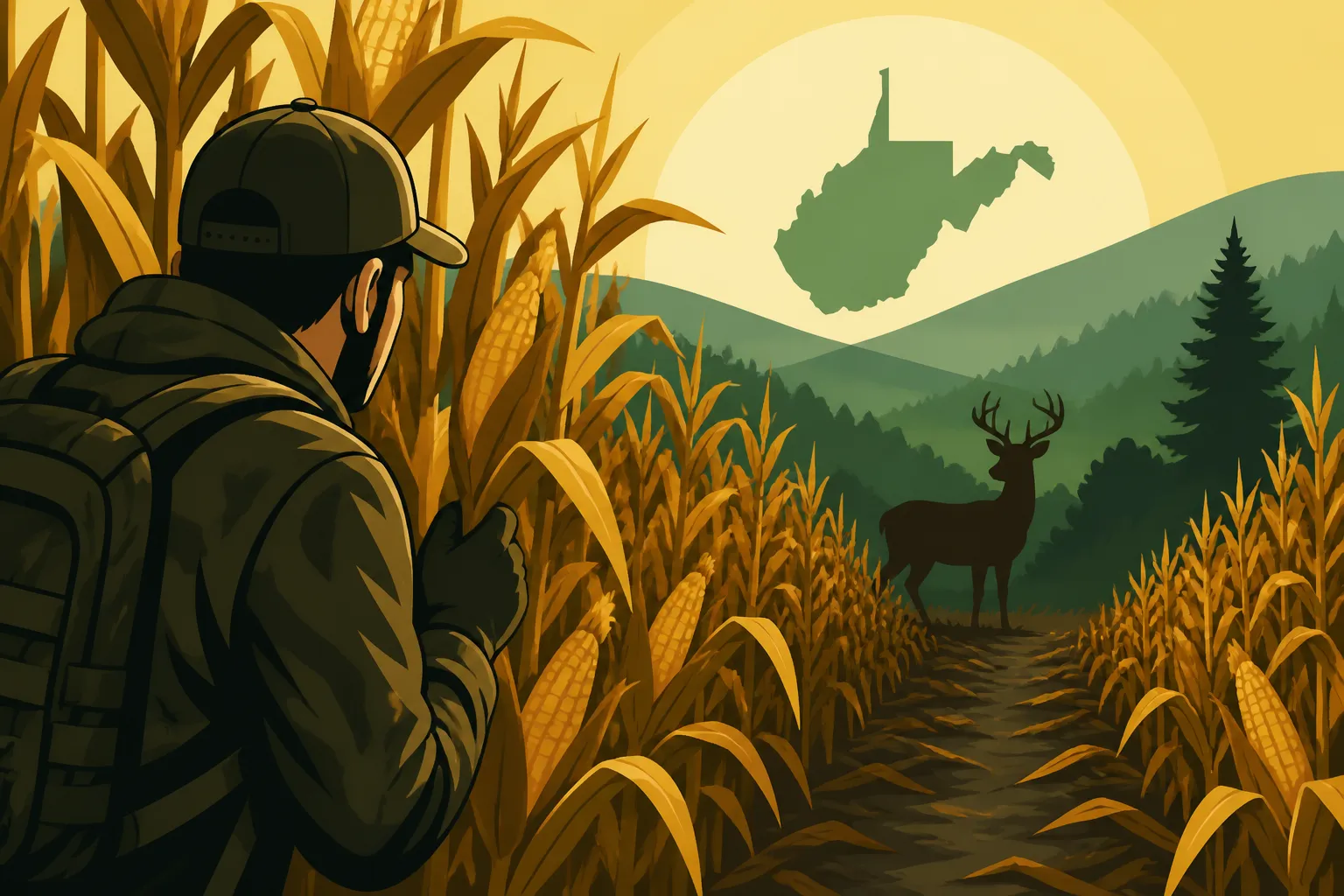
This is a high-risk, high-reward strategy that involves actually entering the standing corn itself to get to an ambush point within or very close to the field. It’s not for the faint of heart, and it’s certainly not for every situation, but when executed flawlessly, it can put you on a giant. The idea is to move slowly, almost imperceptibly, along a specific corn row, usually just one or two rows deep from the field edge you intend to hunt. You'll be using the cornstalks themselves as your visual concealment.
To execute this, you need a steady, consistent wind blowing into the cornfield, carrying your scent away from any potential deer in front of or to the side of you. Start by identifying the row you'll follow. Take extremely slow, deliberate steps, placing your foot down softly, almost rolling it from heel to toe. Use your hands to gently push cornstalks aside, rather than letting them snap back and create noise. Every few steps, stop, listen, and scan. You're trying to locate a deer by sound before it locates you. Your stand, if you're using a ground blind or a low-profile setup, would ideally be placed slightly inside the corn, facing out towards the field, or at a strategic intersection of deer trails within the corn. This method is generally best for morning hunts when deer might still be returning to the deep corn or bedded down.
The risks are obvious: one wrong step, one gust of wind, or one slight misjudgment, and you've blown your hunt. Getting turned around in a dense cornfield, especially in low light, is also a real possibility. This method requires absolute confidence in your ability to move silently and read the wind perfectly. It's often employed when hunting a specific, known travel corridor within the corn, or an area where deer frequently stage before popping out into an adjacent Hunting a Standing Soybean Field or green field. Always have a clear exit plan, just in case you bump deer or conditions change unexpectedly.
Edge Stands and Staging Areas
Often, the safest and most consistently effective strategy is to hunt the edge of the cornfield rather than venturing deep inside. Deer use the field edges as transition zones, often staging just inside the cover before stepping out into the open to feed, or cruising them when looking for does during the rut. Your goal here is to identify these common entry/exit points and set up a stand downwind of them.
Look for heavily used deer trails leading from the corn into adjacent timber, brush, or other food sources. These trails often act as funnels. Place your treestand or ground blind 10-20 yards off the corn edge, always ensuring you have the prevailing wind in your favor for that particular setup. Brushing In a Blind on a Field Edge effectively can provide excellent concealment, allowing you to watch the corn without being seen. Consider the sun's position throughout the day; you don't want to be silhouetted or have the sun directly in your eyes during prime hunting hours.
Deer will often "nose" the edge of the cornfield, testing the wind and surveying the open area before committing to stepping out. Your stand needs to be positioned to intercept them during this cautious movement. If you're on public land, especially a Wildlife Management Area (WMA) with corn plots, these edge stands are crucial. Remember that deer patterns around these food sources can change, so scouting regularly and having multiple setups ready for different winds can significantly increase your success. This strategy is also ideal for Setting Up on a Potomac Valley Field Edge where agriculture meets timber.
Understanding Deer Movement Patterns
To effectively hunt cornfields, you need to understand the rhythm of deer movement both inside and around them. During daylight hours, especially after pressure mounts, deer will often bed deep within the corn. They might move a few yards to browse but will rarely expose themselves fully. As evening approaches, they'll often start to move towards the edges, staging in the thicker cover before finally stepping out to feed in the open field or move towards other food sources like a Hunting a Green Field Planted for Deer.
Conversely, in the morning, deer will move from open feeding areas into the corn to bed down. Your morning entry should ideally intercept them as they transition. This requires being in place early and quietly. The specific timing of these movements can vary based on weather, moon phase, and especially hunting pressure. Heavily pressured deer in areas like the Monongahela National Forest, even if adjacent to small corn patches, will be more nocturnal and cautious, making your window of opportunity narrower.
Trail cameras are invaluable tools for understanding these patterns. Place them on trails leading into and out of the corn, or on the edges. They can reveal exactly when deer are using the field, their preferred entry/exit points, and even individual buck patterns. Platforms like GoHunt often integrate mapping features that let you mark camera locations and analyze data. Just be mindful of Trail Camera Rules on West Virginia Public Land if you're not hunting private ground. This intel allows you to make informed decisions about when and where to hunt, rather than just guessing.
Avoiding Common Pitfalls and Adapting to Conditions
Even with the best planning, hunting deer around cornfields can be challenging. It's about constant observation, adaptation, and avoiding habits that will quickly blow your chances.
Don't Hunt a Hot Edge Too Often
It's tempting, when you've found a "hot" edge where deer are consistently entering and exiting the corn, to hunt it every single chance you get. However, this is one of the quickest ways to educate deer and turn a great spot into a dead one. Deer are incredibly smart and will quickly pattern human activity. If you hunt the same stand day after day, week after week, your scent will accumulate, your entry and exit routes will become predictable, and deer will simply start using a different part of the field or becoming nocturnal in that area.
The best strategy is to let your spots "cool down." If you have multiple stand locations around a cornfield, rotate them based on wind direction and recent intel from trail cameras. Sometimes, after a successful hunt or even a busted one, it's best to stay out of that area for several days or even a week. This allows deer to regain their confidence and return to their natural patterns. Think of it like fishing a hot spot – you can’t catch all the fish in one sitting, and if you keep casting, they’ll eventually stop biting. Patience and discipline are paramount here.
| Strategy | Wind Direction | Time of Day | Ideal Conditions | Risks |
|---|---|---|---|---|
| Edge Stand | Downwind of field | Morning or Evening | Stable wind, known deer trails | Shifting wind, deer spotting entry |
| Corn Row Creep | Into the cornfield | Early Morning | Very light wind, high stealth required | High noise potential, disorientation |
| Natural Cover | Downwind of cover | Morning or Evening | Drainage ditches, fencerows, timber fringes | Limited cover options, unexpected turns |
| Midday Still-Hunt | Consistent, light | Midday | Deer bedded deep, quiet ground | Bumping bedded deer, exposing scent |
Rain and Fog as Cover
While many hunters shy away from hunting in inclement weather, conditions like rain and fog can actually be your greatest allies when trying to infiltrate cornfields. Rain, especially a steady drizzle or light shower, does wonders for masking human scent. The falling water washes odors to the ground and dissipates them quickly, making it harder for deer to pick up your trail. Crucially, rain also muffles sound. The patter of raindrops on cornstalks and leaves covers the subtle noises of your movement, making it much easier to execute a quiet entry.
Similarly, fog provides excellent visual concealment. A thick fog bank rolling in can allow you to move into position unseen, even in relatively open areas adjacent to the corn. Your silhouette is broken up, and the deer's vision is limited, giving you a distinct advantage. However, fog can also make it difficult for you to see and identify deer, especially at longer distances or in low light. It can also make blood trailing incredibly challenging if you do make a kill. So, while these conditions offer fantastic opportunities for stealthy entry, always weigh the pros and cons for the entire hunt.
It's during these less-than-ideal weather conditions that those highly pressured deer might feel a bit more comfortable moving, especially if they've become largely nocturnal during fair weather. By embracing the elements, you can sometimes catch deer off guard, particularly in West Virginia's mountainous regions where weather can change quickly. Just be sure to dress appropriately for the conditions to remain comfortable and focused throughout your hunt.
Scouting Beyond the Corn
While the standing corn is the immediate focus, successful cornfield hunting often involves understanding the broader landscape. Deer rarely spend their entire lives exclusively within a cornfield; they move between various habitat types. Scouting West Virginia Public Land Before Season is crucial here. Look for adjacent timber stands, creek bottoms, clear-cuts, or thick laurel patches that connect to the corn. These are often where deer will stage before entering the corn, or where they'll retreat to if pressured from the field.
Setting up your trail cameras in these peripheral areas, rather than directly on the corn's edge, can give you invaluable insights into deer movement. You might find that deer are using a specific bench or saddle in the timber that funnels them to a corner of the cornfield. Identifying these travel corridors and understanding how they relate to the corn allows you to intercept deer when they are a bit less wary, making for a more ethical and higher-percentage shot. Look for sign like rub lines, scrapes, and fresh Reading West Virginia Mud for Fresh Deer Movement to confirm these travel routes. By thinking outside the cornfield, you expand your hunting opportunities significantly.
Disclaimer
Hunting is an inherently dangerous activity. Always prioritize safety, follow all local and state hunting regulations, and ensure you have the necessary training and permits. The information provided here is for educational purposes only and should not replace professional guidance or personal judgment.