Setting Up on a Potomac Valley Field Edge
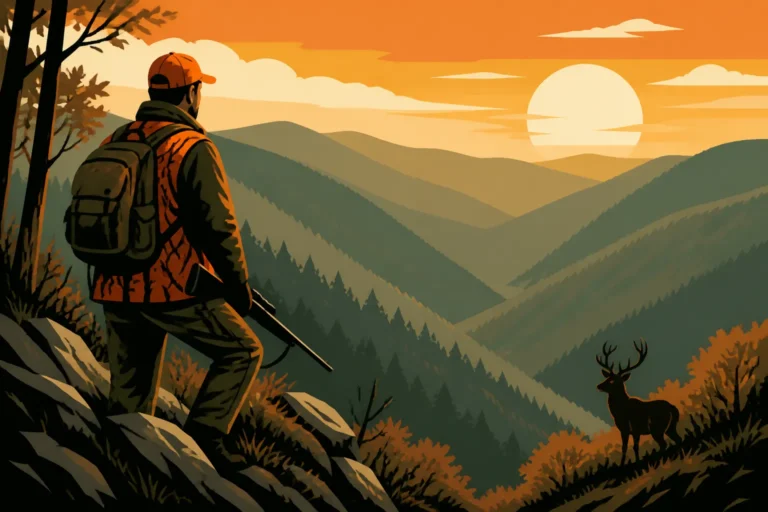
Hunting field edges in West Virginia's Potomac Valley can be one of the most rewarding, yet frustrating, endeavors for a deer hunter. These fertile agricultural pockets, bordered by dense timber and often rolling hills, hold a tremendous amount of deer, but getting within range of a wary buck can feel like cracking a secret code. This guide aims to demystify the art of setting up on these critical field edges, giving you the knowledge to confidently approach, assess, and position yourself for success in this unique region.
The Unique Allure of Potomac Valley Field Edges
The Potomac Valley, particularly in the Eastern Panhandle, presents a distinctive hunting landscape. Unlike the deep, rugged mountains further west, here you often find a mosaic of agricultural fields – corn, soybeans, alfalfa, winter wheat – interspersed with woodlots, creek bottoms, and rolling hills. This rich food source draws deer from miles around, making field edges prime real estate for hunters. However, the open nature of fields also means deer are often more alert and educated, making your approach and setup absolutely critical.
The Distinctive Landscape of the Potomac Valley
Imagine driving through counties like Berkeley, Jefferson, or Morgan, and seeing expansive fields stretching out, bordered by mature hardwoods or thick brush. This isn't the deep woods of the Monongahela National Forest, but rather a landscape shaped by both agriculture and timber. The deer here benefit from consistent, high-quality nutrition, leading to a healthy herd, often producing larger-bodied animals and impressive antlers. However, this also means deer are accustomed to human activity, farm machinery, and the presence of hunters. They're not necessarily "wilderness deer"; they're savvy creatures that have learned to adapt to a semi-developed environment. Understanding this blend of food sources and human pressure is the first step in successful field edge hunting.
Deer Movement Patterns on Field Edges
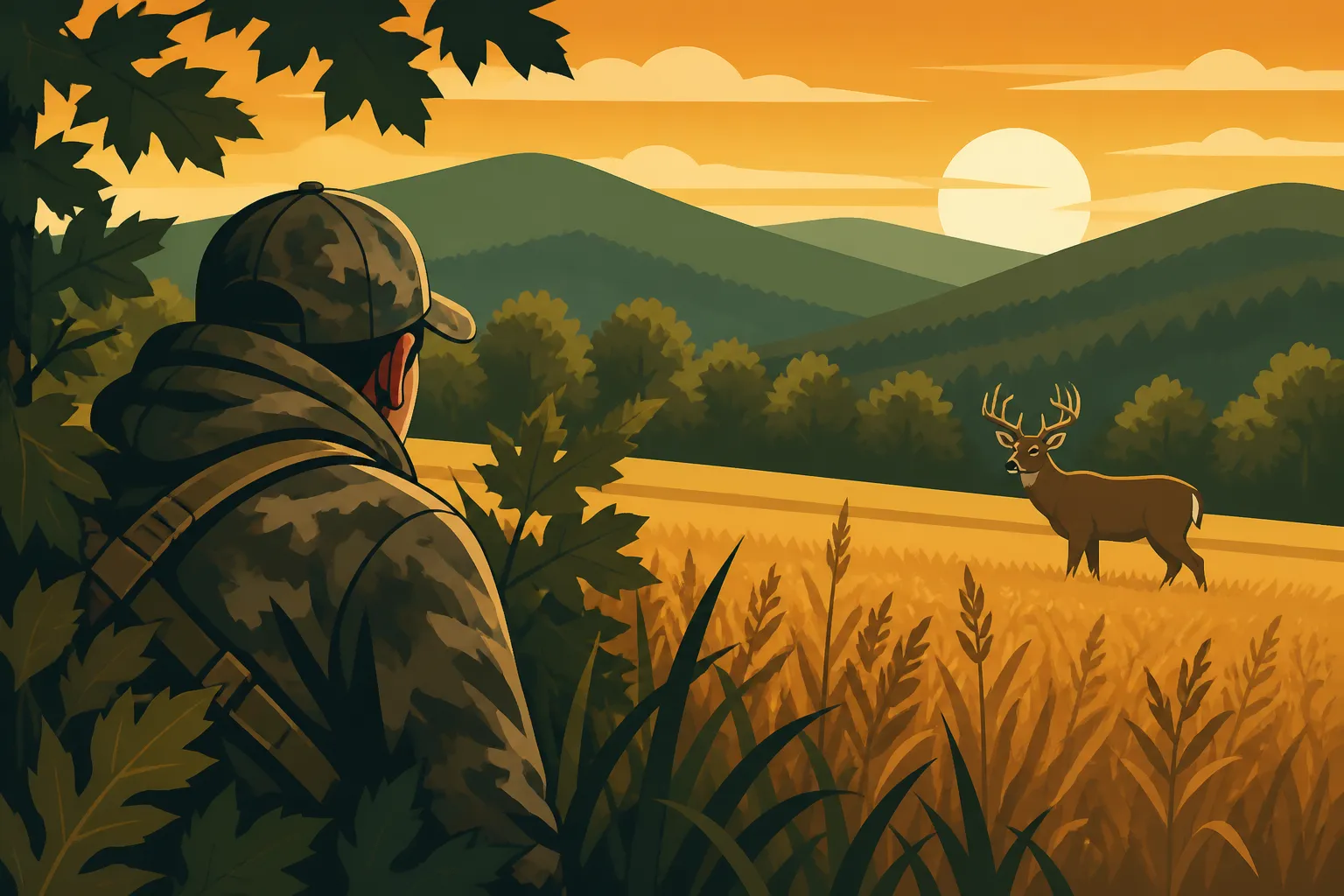
Deer, especially mature bucks, rarely just waltz out into an open field in broad daylight. Instead, they’ll use the cover of the timber edge, fencerows, or draws to stage up, often emerging just at dusk or retreating at dawn. They browse along these edges, testing the wind, and observing their surroundings before committing to the open. This creates natural travel corridors and pinch points along the field perimeter. You'll often see distinct trails where deer enter and exit, sometimes following a hedgerow or a slight depression in the terrain. Recognizing these subtle nuances in their movement, whether it's a well-worn path or a specific crossing point over a ditch, is paramount to placing your stand or blind in the most opportune spot. These patterns can also change based on crop rotation or harvest schedules, meaning what worked last year might not be effective this season. Scouting, both pre-season and in-season, is absolutely critical.
Key Considerations for Stand and Blind Placement
Once you understand the general movement, the next step is strategic placement. This isn't just about finding a tree with a good view; it's a careful calculation of wind, thermals, access, and the type of cover you're using.
Playing the Wind and Thermals Smartly
Wind is undeniably the hunter's most important factor, especially when you're perched on a field edge. Your scent, carried by the wind, can bust a hunt before it even begins. Always, and I mean always, hunt with the wind in your favor, blowing your scent away from where you expect deer to approach or cross. In the Potomac Valley, with its mix of open fields and rolling terrain, thermals also come into play. As the sun rises, warm air begins to lift, carrying scent upwards. Conversely, as the sun sets and temperatures drop, cold air sinks, carrying scent down into hollows and low-lying areas. This means a morning hunt might require a different setup than an evening hunt, even on the same field edge. For instance, if you're on a slight ridge overlooking a field, your morning thermals might carry your scent up and over the field, while evening thermals will carry it down into the field where deer are feeding. Using a tool like the GoHunt app can provide real-time wind and thermal predictions, helping you make informed decisions about which stand to hunt on a given day. Always be prepared to adjust your plan if the wind shifts unexpectedly.
Choosing Between Treestands and Ground Blinds
The choice between a treestand and a ground blind often comes down to personal preference, the available cover, and the specific field edge you're hunting.
Treestands offer a higher vantage point, which can provide a wider view of the field and allow your scent to dissipate higher above ground-level deer noses. They can be incredibly effective when you have suitable trees along the field edge – typically mature hardwoods that offer good cover and a clear shooting lane. Think about the angle of the sun, too, as an evening sun glare can make an otherwise perfect spot uncomfortable or hinder your vision. However, setting up a treestand requires a suitable tree and can be more exposed, making your entry and exit more noticeable if not planned carefully.
A ground blind, on the other hand, provides excellent concealment and a contained scent cone, which can be a huge advantage. They are particularly useful where suitable trees are scarce, or along fencerows and brush lines that offer natural cover to set the blind into. Just make sure to properly Brushing In a Blind on a Field Edge to break up its outline. Ground blinds also offer more comfort in inclement weather and are often a better option if you're hunting with youth or those with mobility issues. The downside is a limited field of view and the need for a very careful entry and exit to avoid spooking deer that might already be staging near the field. For either option, remember that the goal is to blend in, not stick out.
| Feature | Treestand | Ground Blind |
|---|---|---|
| Visibility | Excellent, wide field of view | Limited, confined view |
| Concealment | Depends on tree choice, typically less | High, full enclosure |
| Scent Control | Elevated, scent dissipates higher | Contained, but low to ground, careful entry needed |
| Mobility | Portable stands offer good mobility | Generally stationary once set up |
| Comfort | Exposed to elements | Protected from elements, more spacious |
| Setup Time | Can be quick for climbers, longer for hang-ons | Varies, fast to pop-up, more for brushing in |
| Deer Reaction | Less likely to notice movement at height | Movement more easily detected at ground level |
Planning Your Entry and Exit Routes
This is where many hunters unknowingly sabotage their own efforts on field edges. Your approach to and departure from your stand or blind should be as stealthy and scent-free as possible. Think of yourself as a ghost. If you have to walk across an open field, even at dawn or dusk, you're likely putting deer on high alert. Instead, use natural topography – creek bottoms, fencerows, draws, or the densest timber – to conceal your movement.
Try to plan routes that allow you to approach with the wind in your face or crosswind, never blowing your scent ahead of you into the area you intend to hunt. This might mean taking a longer, more circuitous route, but it’s worth the extra effort. For example, if deer are likely to enter a field from the north, and the wind is out of the west, you'd want to approach your stand from the south or east, utilizing a timber edge to stay hidden until you're in place. The same goes for your exit; waiting until full dark or choosing a route that doesn't disturb feeding deer is crucial to not "burning out" your spot. Utilizing the satellite imagery in your GoHunt app can be a game-changer for identifying these hidden access routes.
Tactics for Success on Potomac Valley Fields
Getting your stand or blind in the right spot is half the battle; the other half is what you do while you're there. Effective calling, proper timing, and adapting to pressured deer are vital.
Utilizing Decoys and Calls Effectively
Decoys can be a powerful tool on field edges, particularly during the rut. A single doe decoy, or a doe and small buck setup, placed strategically out in the field can draw in curious bucks. Position your decoy so that an approaching buck would naturally walk past your shooting lane to get to it, keeping the wind in mind. During the early season, simple deer sounds like a soft doe bleat or fawn distress call can sometimes pull in does and, occasionally, a curious young buck. However, the real magic often happens closer to when The West Virginia Rut in November peaks. That's when rattling and grunting can be highly effective. A quick, aggressive rattling sequence followed by some tending grunts can mimic a fight, drawing in dominant bucks looking to assert themselves. Remember to vary your calling and observe deer reactions; sometimes less is more, especially on pressured animals.
The Importance of Timing and Patience
Deer in the Potomac Valley are creatures of habit, often moving between bedding areas in the timber and feeding areas in the fields at predictable times. The golden hours of dawn and dusk are typically the most productive. Arriving at your stand or blind well before first light, and staying until well after dark, significantly increases your chances. It gives the woods time to settle after your entry and allows deer to feel comfortable moving before or after human activity. Patience is key; don't get discouraged if the field seems empty for hours. A mature buck could appear at any moment. During the middle of the day, deer are usually bedded, but you might catch a doe or younger buck casually browsing the edges, especially if there’s good cover. If you’re hunting during the early antlerless season, you might see more daytime movement, but the big boys usually stick to cover until low light.
Dealing with Hunting Pressure and Educated Deer
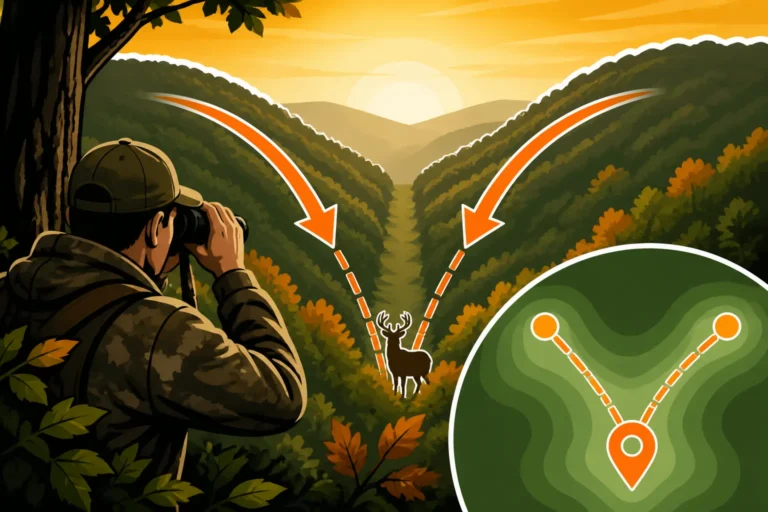
One of the biggest challenges in the more accessible Potomac Valley is hunting pressure. Deer quickly learn to associate human presence with danger. This means a direct approach to a field edge, or setting up in an obvious spot, might yield frustrating results. Instead, look for less obvious, harder-to-reach pockets. This might involve Hunting Small Private Tracts in West Virginia if you have permission, or finding overlooked corners of public land. Mature bucks, in particular, will often stage just inside the timber line, using thick cover to observe the field before stepping out. Instead of setting up right on the field edge, consider moving back 50-100 yards into the woods, especially if there's a natural travel corridor like Hunting a Funnel Between Two Hollows. This allows you to catch them before they're fully exposed and highly alert. Being adaptable and willing to change your setup based on observation is crucial for outsmarting these educated deer.
Adapting to Changing Conditions
The environment around a field edge is rarely static. Crops change, weather shifts, and deer behavior adjusts accordingly. Being able to adapt to these changes is what separates consistent success from sporadic luck.
Seasonal Adjustments for Crop Cycles
The agricultural cycle in the Potomac Valley directly dictates deer movement. In the early archery season, cornfields are often tall and green, providing both food and excellent bedding cover right in the field. Deer will move deep into the corn during the day and browse the edges at night. As the season progresses and crops are harvested, the food source changes. Standing soybeans, alfalfa, or newly planted winter wheat become prime targets. After corn is cut, deer will often move through the stubble, picking up dropped kernels, but the primary draw shifts to other active food plots or mast crops. This means your best setup location might need to shift not just seasonally, but even weekly as local farmers harvest their fields. Regularly scouting with binoculars from a distance, or checking aerial maps on GoHunt, can help you identify which fields are active food sources at any given time. Don't fall into the trap of hunting the same spot all season if the food source changes. Consider looking for Late-Season Food Sources for West Virginia Whitetails as winter approaches.
Hunting After a Cold Front or Precipitation
Weather dramatically influences deer activity. A significant cold front often brings a burst of deer movement, especially after a period of warm weather. When temperatures drop, deer need to feed more to maintain their body temperature, making them more likely to visit fields during daylight hours. Similarly, light rain or a light snow can be excellent times to hunt field edges. The precipitation helps mask your scent and dulls the sound of your movements, allowing for a more stealthy approach and quieter hunting. Deer often move just before or after a major weather event. For instance, right before a heavy rainstorm hits, deer might get up and feed aggressively. After a heavy snow, they'll often head straight for exposed food sources like winter wheat fields or leftover standing crops. Being aware of the forecast and planning your hunts around these weather patterns can significantly increase your odds of success. When Hunting Deer After a Cold Front, focus on the middle of the day as deer recover from the weather change and seek easy calories.
Disclaimer
Hunting is an inherently dangerous activity. Always prioritize safety by adhering to all West Virginia hunting regulations, wearing appropriate blaze orange (where required), and practicing ethical hunting methods. Ensure you have proper landowner permission when hunting private land and are aware of all rules on public lands.