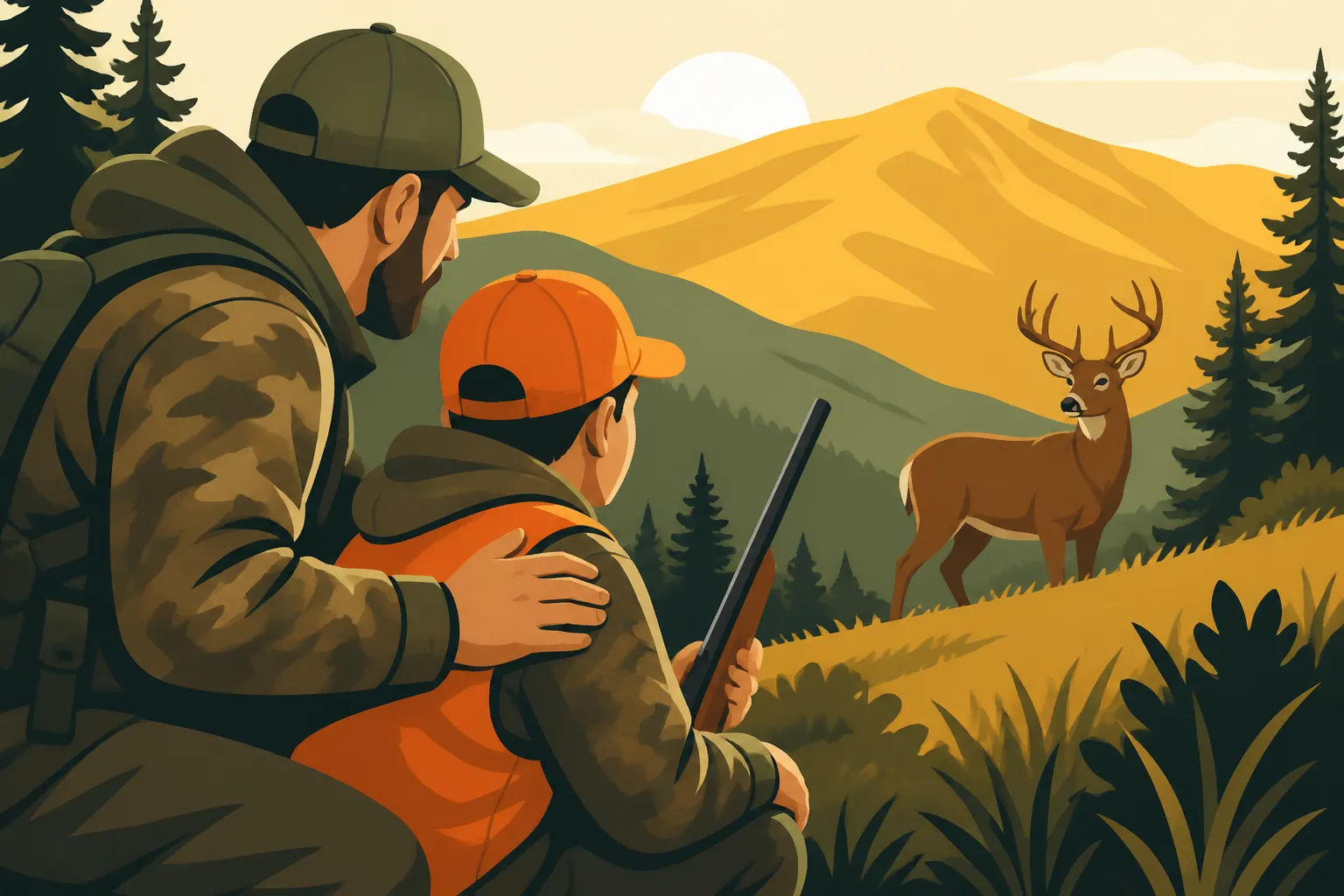
How Close a West Virginia Mentor Must Stay
For many seasoned hunters in West Virginia, bringing a new generation into the woods is a deeply cherished tradition. But for new mentors or parents wondering about taking their young ones afield, the rules surrounding youth hunting, especially the "direct supervision" clause, can feel like a confusing thicket of legal speak. This guide aims to clear up all that uncertainty, specifically focusing on how close a mentor must stay to their apprentice hunter in West Virginia, ensuring you have a safe, legal, and truly rewarding experience.
Navigating West Virginia's Mentored Youth Hunting Program
West Virginia's Department of Natural Resources (WVDNR) has put a lot of thought into how to safely introduce new hunters to our incredible outdoor traditions. The mentored youth hunting program, primarily facilitated through the Apprentice Hunter License, is designed to remove the initial barrier of hunter education for newcomers, allowing them to gain practical experience under the watchful eye of an experienced mentor. It's a fantastic pathway, but it comes with clear responsibilities, especially regarding proximity.
The Spirit of the Apprentice Hunter License
At its heart, the Apprentice Hunter License is about experience, not just about skipping a class. It acknowledges that some of the most valuable lessons in hunting are learned hands-on, in the field, with someone knowledgeable by your side. It allows an individual, regardless of age, to try hunting for up to two license years without first completing a hunter education course. This is particularly beneficial for younger hunters who might not yet be ready for a classroom setting or for adults new to hunting who want to "try before they buy" into the full hunter education commitment. It’s a bridge, not a bypass, to becoming a fully certified hunter. The goal is to make that first step into the woods less intimidating while maintaining paramount safety. Remember, this license doesn't grant carte blanche; it places the onus of safety and legal compliance squarely on the mentor.
Who Qualifies as a Mentor and Apprentice?
Understanding who can play these roles is fundamental. A mentor in West Virginia must be at least 18 years old and possess a valid hunting license for the current season, along with any required stamps for the game being hunted (like a deer or turkey stamp). They are the linchpin of the program, responsible for the safety and actions of their apprentice.
An apprentice hunter is essentially anyone who possesses a valid Apprentice Hunter License. While the program is often associated with youth, it's actually available to individuals of any age who have not yet completed hunter education. However, the proximity rules we'll dive into vary significantly based on the apprentice's age, making it especially crucial for those guiding younger children. The apprentice must also have any necessary stamps for the species they are pursuing. It's their tag that gets filled, not the mentor's, so ensuring they have the appropriate licenses and stamps purchased through the Go Wild West Virginia system is vital before heading out.
Unpacking the "Direct Supervision" Rule: Proximity Matters
This is where the rubber meets the road. The phrase "direct supervision" is the legal cornerstone of the Apprentice Hunter program, and its interpretation changes based on the apprentice's age. It's not a suggestion; it's a strict requirement designed for safety. Misinterpreting this can lead to dangerous situations or legal infractions, so let's break it down thoroughly.
The Critical Age Distinctions: Under 8 vs. 8-15
West Virginia law carves out a very important distinction based on the age of the apprentice. This isn't just arbitrary; it's based on developmental stages, attention spans, and the ability to react responsibly in a dynamic hunting environment.
-
Apprentices Under 8 Years Old: For our very youngest aspiring hunters, the rules are the most stringent. If your apprentice is under the age of 8, "direct supervision" means they must be within arm's length of the mentor. This isn't just a suggestion for a quick grab; it means you should be close enough to physically intervene immediately if there's an issue with the firearm, if the child trips, or if an unsafe shot is about to be taken. Imagine holding their hand or having them right next to you at all times. This rule reflects the understanding that children this young have limited understanding of firearm safety and situational awareness, and require constant, immediate intervention. This means hunting methods like still-hunting Cranberry WMA ridges or even setting up a ground blind often require the child to be right beside you, perhaps even sharing a seat.
-
Apprentices 8 to 15 Years Old: As children mature, so do the regulations, granting a little more flexibility while still demanding close oversight. For apprentices aged 8 through 15, "direct supervision" means the mentor must be within sight and normal voice communication of the apprentice. This allows for a bit more independence, perhaps allowing the apprentice to sit in a separate, but nearby, treestand or ground blind, or walk a few yards ahead or behind during a still hunt. However, it absolutely does not mean out of sight around a bend, or so far away that you have to shout. Let's delve deeper into what "within sight and normal voice communication" truly entails.
What "Within Sight and Normal Voice Communication" Truly Means
This is where many mentors might feel a bit of a grey area, but the intent of the law is quite clear: you need to be actively engaged and aware of the apprentice's every move.
-
Within Sight: This implies an unobstructed view. If the apprentice moves behind thick cover, a rise in the terrain, or dense timber where you cannot see them, you are no longer in compliance. This doesn't mean you need a direct line of sight every single second, but you should be able to look up and immediately locate your apprentice without effort. Think about it from a safety perspective: if they have a problem, you need to see it to react. When you're Hunting Steep Allegheny Ridges, this can be particularly challenging. You might be able to see them 50 yards away on a flat, open field, but in dense rhododendron thickets common in parts of West Virginia, 10 yards might be pushing it. The spirit of the rule is about instant visual confirmation and awareness.
-
Normal Voice Communication: This means you should be able to speak to your apprentice and have them hear and respond to you without raising your voice to a shout. Wind, rushing water, distant traffic, or even the rustling of leaves can impact this. If you need to yell to get their attention, you're likely too far. This isn't about using walkie-talkies or cell phones; it's about direct, auditory contact. This ensures you can give immediate instructions, advice, or warnings. For instance, if you're Setting Up Against a Big Oak and your apprentice is 30 yards away, can you whisper "don't move" or "buck coming" and be heard? If not, you're too far.
Consider the terrain. When Hunting a Funnel Between Two Hollows, sound can carry differently, and visual obstructions are common. A good mentor will consciously stay closer than the absolute maximum legal distance, erring on the side of caution.
Understanding the "Arm's Length" Requirement
For apprentices under 8 years old, the "arm's length" rule is absolute. This isn't a suggestion for casual contact; it's about immediate, physical control. Imagine walking through a busy street with a toddler – you wouldn't let them wander ahead. The same level of direct, constant supervision is expected here.
This means you are essentially joined at the hip. If you are sitting in a treestand, they are in the same stand with you, securely harnessed in. If you are in a ground blind, they are right beside you, perhaps even on your lap or sharing a seat. There's no scenario where they are in their own blind 10 feet away, even if you can see them. The ability to physically grab a weapon, pull them back from danger, or assist them instantly is the core principle. This intense proximity requires careful planning. If you're considering Using a Ground Blind on West Virginia Public Land, make sure it's spacious enough to comfortably accommodate both of you within arm's reach for an extended period.
Here's a quick summary table of the proximity rules:
| Apprentice Age | Proximity Requirement | Description | Example Scenarios |
|---|---|---|---|
| Under 8 | Within arm's length | Close enough for immediate physical intervention; constant direct physical presence required. | Sharing a single treestand, sitting side-by-side in a ground blind, walking hand-in-hand while still-hunting. |
| 8 to 15 | Within sight & normal voice communication | Able to see the apprentice clearly and communicate without shouting; physical separation is allowed. | Apprentice in an adjacent stand (visible), 10-30 yards apart in open timber, walking a short distance ahead/behind. |
| 16+ (Apprentice) | Within sight & normal voice communication | Same as 8-15, but requires mentor until hunter education is completed. | Similar to 8-15, focusing on clear sightlines and easy communication. |
Practical Strategies for Mentoring Young Hunters in West Virginia
Knowing the rules is one thing, but putting them into practice effectively requires planning, patience, and a genuine commitment to the experience. Mentoring is about far more than just legal compliance; it's about building a foundation for a lifelong love of the outdoors and responsible hunting.
Setting Up for Success: Stand Placement and Communication
When you're out there with an apprentice, your setup needs to be tailored for their needs and safety, not just your personal hunting preference.
-
Stand Selection and Safety: If using a treestand, choose a setup that is incredibly secure and offers ample room for both of you, especially if the apprentice is under 8. Double check harnesses, lifelines, and all connection points. For older youth (8-15) who might be in an adjacent stand, ensure their stand is safe, they understand how to use their safety harness independently, and that you maintain clear visual and verbal contact. Consider using larger, enclosed ladder stands or well-brushed-in ground blinds as primary options. If you're Hanging a Stand on a Steep Allegheny Ridge, consider a spot with a wider bench or flatter ground to simplify access and stability for the apprentice.
-
Communication is Key: Before you even leave the truck, establish clear communication signals. What does a "stop" signal look like? How will you indicate a deer is approaching? For younger kids, simple hand signals might work best. For older kids, a pre-arranged whisper code or phrase can be effective. Talk about the plan, what to expect, and what to do in different scenarios. This preparedness not only keeps you compliant with "normal voice communication" but also enhances safety and the apprentice's understanding. Discuss the shot process, when it's appropriate to raise a weapon, and what an ethical shot looks like.
-
Patience and Realistic Expectations: A mentored hunt, especially with younger children, is rarely about filling a tag. It's about teaching, observing, and experiencing nature together. Your apprentice might get bored, cold, or fidgety. Plan shorter sits, bring snacks, and engage them in quiet observation games ("What birds do you hear? What kind of tree is that?"). Remember that their experience is the priority. If you're always focused on the kill, you'll miss the opportunity to instill a love for the environment.
Prioritizing Safety Far Beyond the Regulations
While the proximity rules are about legal safety, a good mentor goes above and beyond. Safety should be the absolute bedrock of every hunting trip.
-
Firearm Handling: This is non-negotiable. Instill the four cardinal rules of firearm safety repeatedly: treat every firearm as if it's loaded, never point the muzzle at anything you're not willing to destroy, keep your finger off the trigger until ready to shoot, and be sure of your target and what's beyond it. Practice these rules at home, at a range, and constantly reinforce them in the field. When handling a muzzleloader for a West Virginia December, explain the care needed to keep the powder dry and how to safely load and unload.
-
Situational Awareness: Teach your apprentice to be aware of their surroundings. This includes identifying safe shooting lanes, understanding backstops, and recognizing potential hazards like other hunters, obstacles, or dangerous terrain. Explain how Wind and Thermals on a Steep Ridge can affect scent and animal movement, adding another layer to their awareness.
-
Emergency Preparedness: Carry a well-stocked first-aid kit, know how to use it, and teach your apprentice basic emergency procedures. Ensure you have a reliable way to communicate in case of an emergency (e.g., cell phone, satellite messenger if in remote areas like Monongahela National Forest). Make sure someone knows where you are hunting and when you expect to return. Always have a plan for Recovering a Deer From a Steep Hollow, which often involves extra safety precautions and equipment.
Beyond the Harvest: Fostering a Love for the Outdoors
The true success of a mentored hunt isn't measured in antlers or pounds of venison, but in the spark you ignite in a young person's heart for conservation and the natural world.
-
Nature Education: Point out animal tracks, identify different trees, explain the ecosystem, and talk about the role of hunting in conservation. If you're Squirrel Hunting West Virginia Bottomland Hardwoods, discuss different tree species and what they produce for wildlife. Help them identify bird calls or explain why certain plants grow where they do. These moments of quiet learning are invaluable.
-
Respect for Wildlife and Fair Chase: Emphasize ethical hunting practices, respect for the animal, and the concept of fair chase. Teach them about the life cycle of the game you're pursuing and the importance of only taking clean, ethical shots. Discuss the process of Field Dressing a Deer in Cold Weather and how to handle the meat respectfully.
-
Mentorship, Not Just Guiding: Be a true mentor. Answer their questions, listen to their observations, and share your passion. Talk about your own experiences, successes, and even failures. This builds a bond that extends far beyond the hunting season. The goal is to create positive memories and a foundation of knowledge and respect that will last a lifetime.
Common Challenges and Solutions for Mentored Hunts
Hunting in West Virginia, especially with a young apprentice, presents unique challenges. Being prepared for these can make all the difference between a frustrating trip and a cherished memory.
Managing Distractions and Maintaining Focus
Let's be honest: kids get distracted. And hunting often requires long periods of stillness and quiet, which can be tough for active young minds.
- The "Wiggles" Factor: For younger apprentices, especially those under 8 who are at arm's length, managing boredom and restlessness is critical. Bring snacks (quiet ones, of course!), a small book, or a quiet game for lulls in activity. Allow for short breaks if possible, moving around slightly to stretch. Frame the experience as an adventure, where every rustle in the leaves is a potential discovery. Explain that wildlife will come when it feels safe, and stillness helps.
- Technology Temptations: While it might seem counterintuitive to allow phones, for older apprentices (8-15) who are allowed a bit more separation (within sight and voice), a phone with a pre-downloaded map, like one you might find using the Go Wild West Virginia Map Tool, can be a useful tool for learning land navigation, provided it doesn't become a distraction from the primary task. The key is strict boundaries: no games, only essential communication or educational use. Better yet, engage them directly with your own map and compass to teach them about the Scouting West Virginia Public Land Before Season process.
- Reaffirm Focus: Periodically check in with your apprentice, quietly asking them what they're seeing or hearing. This brings their attention back to the hunting environment. Remind them of their role and the importance of being ready.
Addressing Weather and Terrain Considerations
West Virginia's mountains are beautiful, but they can be unforgiving, especially for newcomers.
- Layering for Comfort: Our weather can change on a dime, especially in the highlands. Emphasize layering for both yourself and your apprentice. Start warm, and peel layers off as needed. Always pack extra warm and waterproof outer layers. Nothing sours a hunt faster than being miserably cold or wet. Talk about the benefits of specific materials, like wool for wet snow and quiet movement.
- Footwear is Paramount: Good, comfortable, and waterproof boots are essential. Many young hunters haven't experienced long hikes over uneven ground, or cold, wet feet. Ill-fitting or inadequate footwear can quickly lead to blisters, cold, and a desire to go home. If you're Hunting Potomac Highlands Ridgelines, robust hiking boots are a must.
- Navigating Difficult Terrain: West Virginia is known for its steep, rugged terrain. When traversing these areas, ensure your apprentice is comfortable and physically capable. Slow down, offer a hand, and take frequent breaks. Explain how to safely move through laurel thickets or over rocky outcrops. If your apprentice is struggling, consider adjusting your hunting location to more accessible areas. Remember, their safety and enjoyment take precedence over reaching a specific spot.
Ultimately, mentoring a young hunter in West Virginia's beautiful woods is one of the most fulfilling aspects of our heritage. By adhering to the clear "direct supervision" rules, prioritizing safety, and focusing on the experience beyond just the harvest, you're not just creating a hunter; you're nurturing a lifelong conservationist and forging unforgettable memories.
Disclaimer
This guide is intended for informational purposes only and is not a substitute for official West Virginia Department of Natural Resources (WVDNR) regulations. Hunting laws and regulations can change, and it is the hunter's responsibility to review and comply with all current WVDNR rules and statutes before heading afield. Always consult the latest West Virginia hunting regulations pamphlet or the WVDNR website for the most accurate and up-to-date information.