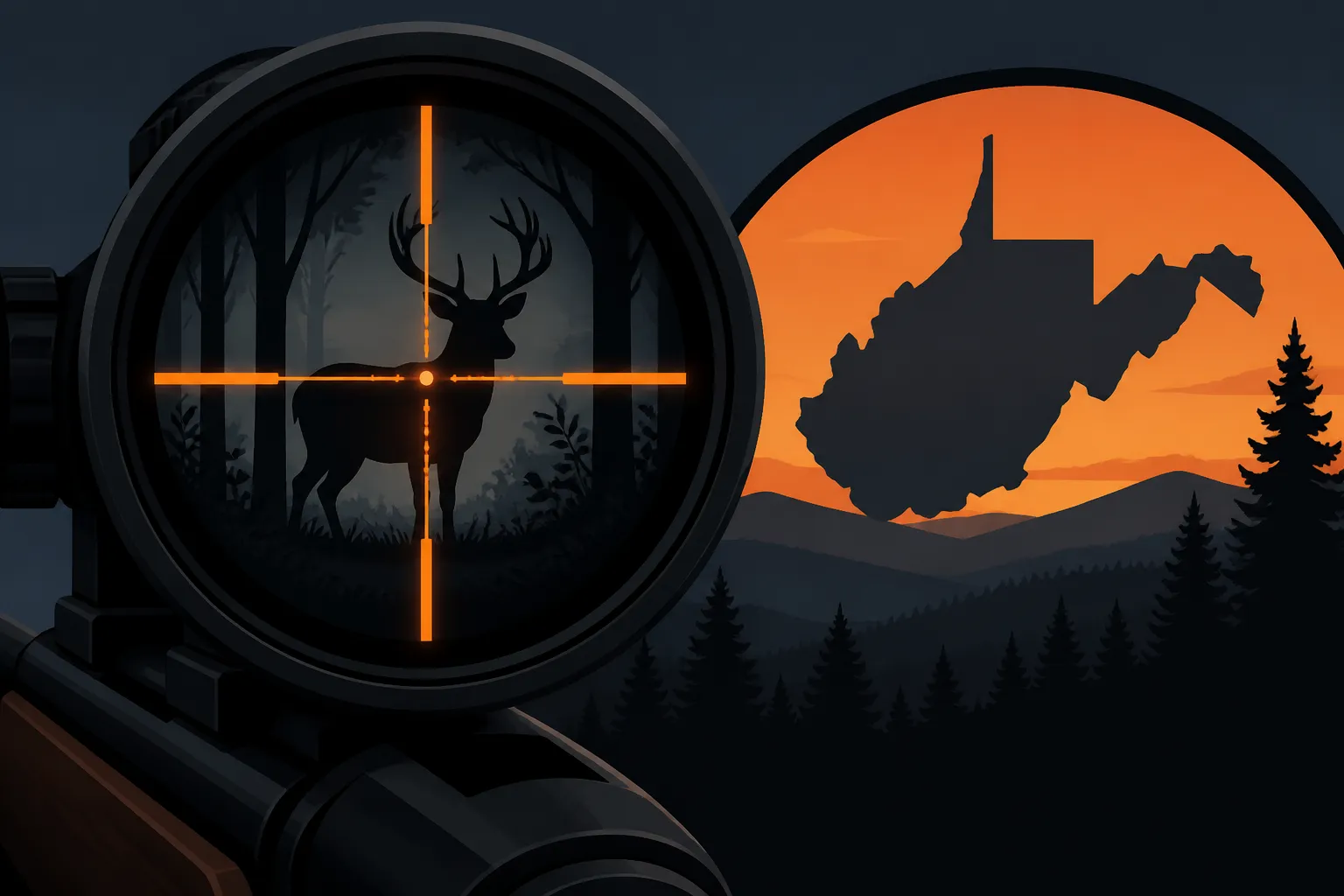
Illuminated Reticles for Dark Timber
Hunting in West Virginia means facing some truly challenging light conditions. Those deep hollows, dense stands of hemlock, and rhododendron thickets can feel like perpetual twilight, even at midday. When legal shooting light arrives in the morning or fades into evening, having a clear, visible reticle in your scope can be the difference between making an ethical shot and letting a good buck walk because you can't quite make out your crosshairs. This guide will dive deep into how illuminated reticles can give you that crucial advantage in West Virginia's dark timber, helping you understand their features, how to choose the right one, and how to use it effectively.
Why Illuminated Reticles are a Game-Changer in West Virginia's Challenging Light
West Virginia's topography and dense forest cover create some of the most beautiful yet difficult hunting environments. We're talking about incredibly steep ridges, shadowed hollows that never seem to fully brighten, and thick patches of cover where deer love to hide. This isn't wide-open farmland where light is abundant. We're often making shots in conditions where a standard black reticle can simply disappear against a dark tree trunk, a shadowed hillside, or the hide of a whitetail.
The Problem with Traditional Reticles in Low Light
Imagine you've been sitting on a stand since before dawn, patiently waiting. The sun is just starting to creep over the eastern ridge, but you're still in a deep, dark hollow. Suddenly, a mature buck slips out of a laurel thicket at 60 yards. You raise your rifle, find him in the scope, but your black crosshairs completely vanish against his dark body or the shadowy background. You can see the deer, but you can't discern your aiming point. It's a frustrating situation that many of us have faced in the Mountaineer State. This problem is compounded by the fact that many of West Virginia's whitetails prefer to move in those crepuscular hours, just as light is fading or emerging. If you're Hunting a Steep Hollow Head at First Light or catching deer Working a Creek Bottom for Late-Season Deer, you're often dealing with these exact conditions.
Traditional black reticles are fantastic in good light, providing crisp, fine aiming points. However, their reliance on contrast against a brighter background makes them problematic when that contrast disappears. The human eye struggles to differentiate fine black lines against dark, mottled patterns, leading to hesitation and potentially missed opportunities or, worse, an unethical shot due to uncertainty.
The Advantage in Dark Timber and Heavy Cover
This is precisely where an illuminated reticle shines, quite literally. Instead of relying on external light, a tiny internal LED projects light onto the reticle, making it glow. This glow provides the necessary contrast against even the darkest backgrounds. You can clearly see your aiming point, whether it's a fine crosshair or a distinct dot, regardless of how dim the environment is.
Consider hunting deep in the Monongahela National Forest, where mature hardwoods block much of the sunlight, and thick rhododendron can make the woods feel like night at 3 PM. Or perhaps you're perched on a ridge, glassing into a deep ravine, and you spot a bear just as the sun dips below the western peaks. An illuminated reticle gives you the confidence to place your shot precisely. It's not about making shots in pitch black, which is illegal anyway, but about extending your effective legal hunting time during those critical low-light periods that are so common here. This can be especially helpful when you're Hunting Bears Over Natural Mast in the Mountains or looking for deer in dense areas after Hunting After a Poor Acorn Year forces them into thicker cover.
Understanding Illuminated Reticle Types and Functionality
Illuminated reticles aren't a one-size-fits-all solution. There's a variety of designs and technical features that differentiate them, each with its own benefits depending on your hunting style and the specific West Virginia terrain you're traversing. Knowing the basics of how they work and the different patterns available is key to making an informed choice.
How They Work: From Simple Dials to Smart Controls
At its core, an illuminated reticle uses a small, battery-powered LED to project light onto or around the reticle pattern. This light makes the reticle stand out against any background, dark or bright. The intensity of this illumination is almost always adjustable via a dial or buttons on the scope's turret. High-quality scopes will offer a wide range of brightness settings, from extremely dim, almost imperceptible levels for those moments just before sunrise, to brighter settings that can cut through midday gloom in dense timber or even work against a bright, snowy backdrop.
Many modern illuminated reticles also feature an "auto-off" function to conserve battery life, or an "shake-awake" feature that reactivates the illumination when motion is detected. This is a blessing for those long, cold sits on a stand where you might forget to turn it off, only to find a dead battery when you need it most. Battery life is a critical consideration; a common CR2032 coin cell can last hundreds, sometimes thousands, of hours on lower settings, but will drain quickly on the brightest settings. Always carry spares, especially if you're out for a multi-day trip deep in the Monongahela National Forest Hunting. When you're researching options, a good resource like GoHunt can help you compare battery life claims and user reviews across different models.
Common Reticle Patterns and Their Best Use
The reticle pattern itself also plays a significant role. While illumination makes the reticle visible, the pattern determines your aiming precision and speed of acquisition.
- Simple Dot or Crosshair with Illuminated Dot: This is perhaps the most common and often preferred for fast, close-range shots in thick cover. The entire reticle might be black, with only a bright red or green dot at the center of the crosshairs. This provides a clear, uncluttered aiming point. For quick reactions to a deer slipping through thickets, this minimalist approach can be incredibly effective. If you're Hunting a Funnel Between Two Hollows where shots are often quick and under 100 yards, a simple illuminated dot is tough to beat.
- Illuminated Duplex/Plex: This is a classic crosshair pattern, but the center portion of the crosshairs is illuminated. It provides a familiar aiming point that glows, giving you both the traditional crosshairs for precision and the illumination for visibility. Many hunters appreciate this as a balance, offering versatility for both open and dark conditions.
- Ballistic Drop Compensating (BDC) Reticles with Illumination: These reticles have multiple aiming points (dots or hash marks) below the main crosshair, designed for holdovers at various distances. When illuminated, these additional aiming points also glow, making them visible for longer shots across clearings or valleys, even in low light. While not always necessary for West Virginia's often dense, shorter-range shots, if you're hunting areas with varying topography like Hunting Potomac Highlands Ridgelines, a BDC reticle with illumination can be a versatile choice. It’s a more complex aiming system, but the illumination ensures you can clearly pick out the correct holdover point no matter the lighting.
Selecting the Right Illuminated Reticle for Your West Virginia Hunts
Choosing the perfect illuminated reticle isn't just about finding the brightest one; it's about matching its features to the specific demands of West Virginia's varied hunting scenarios. From the dense, dark hollows to open power line cuts, your scope needs to perform reliably.
Essential Features for Mountain State Hunting
When you're looking at scopes with illuminated reticles, there are a few key features that really make a difference for us here in West Virginia.
- Brightness Range and Fine Adjustments: This is paramount. You need a scope that can be dialed down to a very dim setting for those pre-dawn and post-dusk moments, where too bright an illumination will "wash out" your target and hinder your natural night vision. Conversely, it needs enough brightness to be visible in the gloom of deep timber during the day. Look for scopes with at least 8-10 brightness settings, with very fine, subtle adjustments between the lowest levels. Some optics will feature an even broader spectrum, often with a dedicated "night vision" compatible setting which is typically the lowest.
- Reticle Color: The two most common colors are red and green. Red is generally favored because it's less disruptive to your natural night vision, especially when transitioning from looking through the scope to scanning the surroundings with your naked eye. Green can be very visible, but some hunters find it more jarring in truly dark conditions. Ultimately, it often comes down to personal preference, so if you have the chance to look through both, do it. Many hunters, when consulting resources like GoHunt, often filter by reticle color preferences, so you might find some interesting discussions and reviews there.
- Durability and Weatherproofing: West Virginia weather is notoriously unpredictable. One minute it's clear, the next you're in a downpour or snow flurry. Your scope needs to be completely waterproof and fog-proof. Look for nitrogen-purged or argon-purged optics, sealed with O-rings. The illumination mechanism itself should also be robust and designed to withstand the bumps and scrapes that come with navigating rough terrain, whether you're Dragging a Deer Off a Steep Ridge or just hiking to your stand.
- Battery Life and Accessibility: We touched on this, but it bears repeating. Good battery life is important, but equally important is the type of battery and how easy it is to replace in the field. Common coin cells like the CR2032 are readily available. Always carry multiple spares, and consider a scope with an auto-off feature to extend battery life between hunts.
First Focal Plane (FFP) vs. Second Focal Plane (SFP) for Illumination
This is a technical point that can significantly impact how you use your illuminated reticle, especially if you anticipate shots at varying distances.
- Second Focal Plane (SFP): In an SFP scope, the reticle stays the same size regardless of the magnification setting. This means that any ballistic holdovers (dots or hash marks) on the reticle are only accurate at a specific magnification, usually the highest. For thick timber hunting where shots are typically under 100-150 yards and you're mostly aiming dead-on, an SFP scope with an illuminated center dot can be perfectly fine. The advantage is that the illuminated dot remains a consistent size, which some find easier to acquire quickly.
- First Focal Plane (FFP): In an FFP scope, the reticle scales with the magnification. As you zoom in, the reticle appears larger, and as you zoom out, it appears smaller. The huge benefit here is that any ballistic holdovers on the reticle are accurate at any magnification. If you plan to take longer shots across hollows or clear-cuts, and use your illuminated reticle's holdovers, an FFP scope is generally preferred. The illuminated elements will also scale, ensuring they remain proportionate to your target picture. This can be critical when you're Rifle Ranges Realistic in Steep Terrain and might need a quick holdover. While FFP scopes are often more expensive, they offer greater versatility if you hunt diverse West Virginia terrain.
| Feature / Reticle Type | Simple Dot (SFP) | Duplex (SFP) | BDC (FFP) |
|---|---|---|---|
| Best Use Case | Fast, close-range shots | All-around, familiar | Longer range, varied distances |
| Reticle Visibility | Excellent, uncluttered | Good, traditional | Excellent, but can be busy |
| Low-Light Acq. | Very fast | Fast | Good, but requires more focus |
| Holdover Accuracy | None (aim dead-on) | None (aim dead-on) | Accurate at all magnifications |
| Complexity | Low | Low to Medium | High |
| Battery Life Impact | Minimal (small illumination) | Moderate | Higher (more illuminated points) |
Mastering Your Illuminated Reticle in the Field
Having the best gear is only half the battle; knowing how to use it effectively and maintain it in real-world hunting conditions is just as crucial. West Virginia hunting often pushes gear to its limits, so a bit of preparation and smart practice goes a long way.
Practical Tips for Optimal Performance
Once you've mounted your scope and Zeroing a Rifle for Mixed Distances, it's time to integrate the illuminated reticle into your hunting routine.
- Practice in Varying Light Conditions: Don't just zero your rifle at midday. Take it out to the range or a safe shooting spot during dawn and dusk. This will help you find the ideal brightness setting for different light levels and understand how your reticle appears against different backgrounds. Simulate hunting scenarios. How does the illuminated dot look against a dark target at 50 yards in deep shadow? How about against a brighter patch of woods? This kind of practice is invaluable, especially if you plan on Hunting Into the Late December Archery Close when light is often at a premium.
- Start Dim, Go Brighter (If Needed): Always begin with the lowest illumination setting that allows you to clearly see your reticle. A common mistake is to turn the reticle up too bright. This can cause "flaring" or "blooming," where the light halo obscures your target, and it will also diminish your natural night vision. Only increase brightness if you absolutely cannot distinguish your aiming point at the lower setting. Your eyes will adapt, and a subtle glow is usually all you need.
- Know Your Non-Illuminated Reticle: Batteries can die. Technology can fail. Always be familiar with how your reticle looks and functions when the illumination is turned off. Most illuminated reticles revert to a standard black reticle when off, which can still be perfectly functional in adequate light. Don't rely solely on the illumination; it should be an enhancement, not a crutch. This means doing some practice shots without the illumination activated.
- Carry Spare Batteries and Check Them Regularly: This sounds obvious, but you'd be surprised how often it's overlooked. Keep spare batteries in your pack, ideally in a small, waterproof container. Before each hunting trip, especially if you're venturing into the backcountry like when Hunting Bears in the Cranberry Backcountry, check your scope's battery or simply replace it with a fresh one if you're unsure of its age. A dead battery on a cold morning in the woods is a frustrating experience you can easily avoid. Many hunting apps, like GoHunt, include gear checklists where you can easily add "spare batteries" to ensure you don't forget.
Maintenance and Troubleshooting in the Field
Keeping your illuminated reticle scope in top working order ensures it performs when you need it most.
- Keep Lenses Clean: Smudges, dirt, or moisture on your lenses will severely impact your ability to see clearly, regardless of how bright your reticle is. Carry a lens cleaning cloth and solution (or pre-moistened wipes) and clean your lenses gently as needed. Fogged lenses are also a common issue in West Virginia's humid and cold conditions. While good scopes are fog-proof internally, external fogging can still occur. A good quality anti-fog treatment or simply letting your scope acclimate to the ambient temperature can help.
- Protect the Illumination Turret: The turret that controls your illumination, whether a dial or buttons, is crucial. Keep it free of debris and ensure it's not accidentally bumped to a high setting, which can drain your battery. Some scopes have locking turrets for this reason. If your illumination isn't working, first check the battery, then inspect the contacts for corrosion or debris.
- Environmental Considerations: Extreme cold can sometimes affect battery performance, reducing its effective life. Be mindful of this on those bitter December days when you're Cold-Weather Sitting Strategy in the Mountains. If your scope gets wet, always dry it thoroughly once you're back at camp, paying special attention to the turrets and battery compartment. While they're waterproof, drying them out prevents long-term issues. For any long walks through wet brush, consider using scope covers to protect the lenses from water and scratches.
Embracing the advantages of an illuminated reticle can truly enhance your hunting experience in West Virginia, helping you make confident, ethical shots even when the mountain shadows seem to conspire against you.
Disclaimer
This article is for general informational purposes only and does not constitute professional advice. Laws, prices and regulations vary by location and change over time. Consult a qualified professional for guidance on your specific situation.