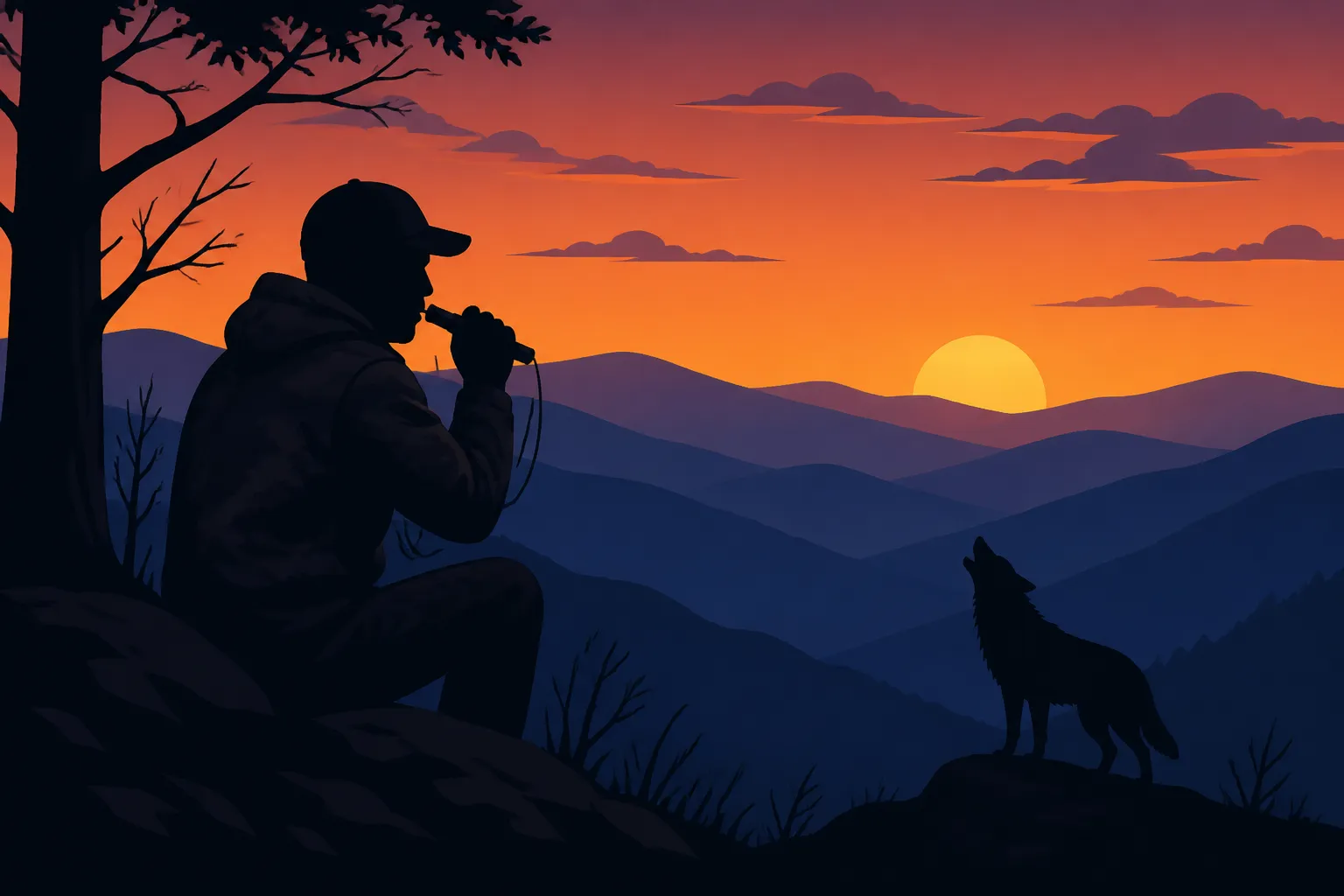
Predator Calling West Virginia Ridgelines at Dusk
Hunting predators in West Virginia, especially coyotes and foxes, can be a real grind. When you add the challenge of our rugged ridgelines and the fading light of dusk, it often feels like the odds are stacked against you. Animals seem to vanish into the shadows, and your calling efforts sometimes feel like they're just echoing into the void. But with the right strategy, gear, and calling techniques tailored specifically for these conditions, you can turn those tough situations into successful hunts. This guide will walk you through everything you need to know to effectively call predators on West Virginia ridgelines as evening sets in.
Understanding Predator Behavior and Habitat on West Virginia Ridgelines
Anyone who has spent time traversing the Mountain State's topography knows that our ridgelines are more than just geographical features; they are highways and observation decks for wildlife. For predators like coyotes and foxes, these elevated pathways offer distinct advantages for hunting and travel, making them prime locations for calling. But understanding why they use them, and how their behavior shifts at dusk, is key to your success.
How Coyotes and Foxes Utilize Ridgeline Corridors
Think about it from a predator's perspective. A ridgeline often provides the path of least resistance for travel, avoiding the thick, tangled laurel patches or steep, rock-strewn hollows below. Coyotes, in particular, are masters of efficiency. They'll use these natural corridors to cover ground quickly, patrolling for prey, marking territory, or simply moving between bedding areas and evening hunting grounds. On a high ridge, they can often catch a prevailing breeze, picking up the scent of potential meals or rivals from a distance. You'll often find them just off the very top, or along a bench below the crest, using the slight elevation for a vantage point while still having some cover.
Foxes, while smaller and perhaps more elusive, also benefit from ridgelines. They might use them to skirt the edges of open fields or clearcuts, moving stealthily into prime rodent hunting habitat as the sun begins to dip. They appreciate a good vantage point to spot unsuspecting rabbits or squirrels. Look for old logging roads or deer trails that follow these contours; these are often preferred travel routes for both species. If you've ever spent time Scouting West Virginia Public Land Before Season, you've likely noticed these subtle signs of regular use.
The Impact of Fading Light on Predator Senses and Movement
This is where the "dusk" part of our equation becomes critical. As the sun sets and the shadows lengthen, the world undergoes a subtle but profound shift. For predators, this is often their prime hunting window. Their low-light vision, which is significantly better than ours, becomes a huge advantage. They can see movement and shapes in conditions where we're struggling to even make out a distant tree trunk. This increased visual acuity in dim light, combined with their already phenomenal sense of smell and hearing, means they are incredibly dialed in during these hours.
What does this mean for us? It means they're more confident in their movements. They might venture out into slightly more open areas than they would during midday. It also means they are extremely sensitive to any unnatural movement or sound from a hunter. You need to be a ghost, a silent observer, melting into the landscape. This heightened sensory input also makes them more susceptible to distress calls – a vulnerable rabbit or fawn struggling in the fading light is an irresistible target for a hungry predator looking for an easy meal before full darkness. They're on the prowl, and a convincing call can often bring them in quickly and aggressively.
Interpreting Wind and Thermals for Optimal Scent Control
Hunting West Virginia's rugged landscape means you are constantly battling elevation, and elevation means thermals. These rising and falling air currents are your best friend or your worst enemy when calling predators, especially at dusk. During the day, thermals generally rise as the ground heats up. But as evening approaches, and the ground cools, those thermals reverse. The air begins to flow downhill. This is a critical factor for any hunter, but doubly so for a predator caller.
Your scent is your biggest giveaway. You absolutely cannot afford to have your scent drifting down into the hollow where a coyote might be approaching from, or across a bench where a fox is making its way. As you set up on a ridgeline for a dusk hunt, pay meticulous attention to the wind direction. Then, consider how the thermals will behave as the sun dips. Often, if you set up on the lee side (downwind) of a ridge, the slight evening downdraft might carry your scent straight into where you expect an animal to be. A good strategy is to set up just below the crest of the ridgeline, or on a crosswind bench, so that your scent is carried across the terrain, rather than directly down into potential approach lanes. Tools like the GoHunt app often have wind direction overlays that can help visualize this, but nothing beats observing a small piece of string or a milkweed seed to really see what the air currents are doing at your specific location. Understanding these dynamics is crucial, especially when you consider Wind and Thermals on a Steep Ridge can change dramatically within a few hundred yards.
Strategic Scouting and Stealthy Approach for Dusk Hunts
Calling predators effectively on West Virginia ridgelines at dusk isn't just about blowing on a call. It starts long before you even step foot in the woods with meticulous scouting and a disciplined, stealthy approach to your stand. The goal is to maximize your chances of success by putting yourself in the best possible position without alerting any wary eyes or noses.
Identifying Prime Calling Locations Using Topographic Maps
Before you even leave your couch, spend some quality time with topographic maps. Whether it's a paper map or a digital one on your computer or phone, this is your first line of defense. Look for distinct ridgeline features:
- Saddles: These are natural low spots between two peaks on a ridge. Animals will often funnel through these for easier travel. They're excellent ambush points.
- Funnels: Areas where the terrain narrows, forcing animals into a smaller corridor. This could be a pinch point where a logging road crosses a ridge, or where a thicket gives way to more open timber.
- Benches: Flat or gently sloped areas along a steep hillside. Coyotes and foxes will often use these to travel along, or even bed, offering you a good chance to call them in.
- Ridge Points: Prominent fingers of a ridge that extend into a hollow. These provide great vantage points for a predator, making them good places to set up so you can call animals approaching from the hollows below.
When you identify these spots on the map, consider your approach and exit routes. You want to get in and out as quietly and efficiently as possible, ideally keeping the wind in your favor. A valuable feature in many digital mapping systems, like the one offered by GoHunt, is the ability to mark potential stand locations, approach corridors, and even observe historical wind patterns for those specific points. This allows you to plan multiple scenarios depending on the day's conditions, helping you to find Where Monongahela Forest Bucks Bed (methods/where-monongahela-forest-bucks-bed) or even where coyotes might hole up. Don't forget to look for areas with less Hunting Pressure on West Virginia Public Land, as these animals will be less wary.
Mastering the Silent Entry and Exit
This cannot be stressed enough: a silent entry is paramount. Predators, especially coyotes, have incredible hearing. The crunch of dry leaves, the snap of a twig, or even the rustle of your clothing can send them scurrying before you ever get a chance to call. As you make your way to your chosen ridgeline spot, move slowly and deliberately.
- Foot Placement: Scan the ground ahead for loose rocks, dry leaves, or fallen branches. Place your feet carefully, testing each step before committing your full weight. Imagine you're walking on eggshells.
- Attire: Wear quiet clothing. Fleece or wool are excellent choices for their sound-dampening qualities. Avoid noisy synthetics.
- Gear Management: Keep your gear secured. Nothing makes more noise than a loose water bottle clanking against a rifle stock or a pair of binoculars swinging freely. Use padded straps and ensure everything is snug.
- Wind Direction on Approach: Always try to approach with the wind in your face or a crosswind, even if it means taking a longer, more circuitous route. Spooking an animal on the way in means your hunt is likely over before it even begins.
The same principles apply to your exit. If you manage to call in and harvest a predator, you still need to be mindful as you leave. Other predators might be in the area, or you might be disrupting future hunting opportunities. If you don't call anything in, exiting quietly ensures you don't educate the animals for your next attempt.
Setting Up Your Ambush Point for Success in Low Light
Once you've arrived at your prime calling location, the setup is critical, especially as the light fades. Your goal is to be invisible, comfortable, and have clear shooting lanes.
- Backdrop: Position yourself against a solid backdrop, like a thick stand of pines, a large oak tree, or a rock outcrop. This breaks up your silhouette and helps you blend into the surroundings. A good backdrop will help you avoid being skylined, which is a common mistake when Hanging a Stand on a Steep Allegheny Ridge.
- Wind Advantage: Double-check the wind. It should be blowing from your intended approach lanes towards you, or at a very slight crosswind. Never set up with the wind at your back, pushing your scent into where you expect the animals to come from.
- Shooting Lanes: Clear any small branches or bushes that might impede your shot, but do so minimally and quietly. You don't want to create a noticeable disturbance. In low light, a clear shooting lane is paramount. You need to be confident in your shot placement without anything deflecting your projectile.
- Elevation: Sometimes, being slightly elevated, either by finding a natural rise or by using a comfortable seat, can give you a better view and allow you to see over small obstructions without exposing yourself.
- Patience and Readiness: Be ready to shoot as soon as you start calling. Coyotes, especially, can come in fast and silently. Have your rifle shouldered and pointed in the most likely direction of approach.
The quality of your setup will dictate how close you can bring in a wary predator, and whether you get a clean shot or not. Remember, at dusk, you might only get a fleeting glimpse, so being prepared is essential.
Mastering Predator Calling Sequences for Dusk
The moment of truth for a predator hunt often boils down to your calling technique. At dusk, when animals are on high alert and actively seeking prey, your calls need to be particularly convincing. It's not just about making noise; it's about telling a believable story that entices a predator to come investigate.
Choosing the Right Calls: Distress, Howls, and Locator Sounds
There's a vast array of predator calls out there, from simple mouth calls to sophisticated electronic units. Understanding when and how to use them is key.
- Distress Calls: These are your bread and butter for predator calling, especially at dusk. They mimic an injured or panicked animal – a rabbit, a fawn, a bird, or even a rodent. The sound of an easy meal is incredibly enticing to a hungry coyote or fox. Electronic calls, often loaded with dozens of different sounds, offer incredible versatility. Brands like Foxpro or Primos Alpha Dogg are popular choices among serious predator hunters for their realistic sounds and remote operation capabilities. For instance, a rabbit-in-distress sound is almost universally effective. Experiment with different distress sounds – sometimes a bird distress will bring in a fox when a rabbit call won't, or a fawn bleat might trigger a response from a coyote.
- Howls: Coyote howls serve several purposes. They can be used as a locator call, provoking a response from coyotes in the area that are establishing territory. They can also be used as a challenge howl to bring in dominant males looking to defend their turf. At dusk, a lone howl might pique a coyote's curiosity, making them more likely to investigate distress calls later in your sequence. Remember, West Virginia's coyotes are smart; they've heard it all, so your howls need to sound authentic.
- Locator Calls: Beyond howls, other locator calls like an owl hoot or a crow caw can be effective. These sounds are often ignored by predators, but they often cause coyotes or foxes to respond with their own calls, revealing their location. This is especially useful in dense cover where visual confirmation is difficult. You can then use distress calls, knowing where the animal is positioned.
Choosing between an electronic call and hand calls depends on your preference. Electronic calls offer volume and variety, which can be great on windy ridgelines, while hand calls give you more control over subtlety and nuance, which can be critical for wary animals.
| Call Type | Primary Purpose | Effective Range (Dusk) | Notes for Ridgelines at Dusk |
|---|---|---|---|
| Rabbit Distress | Mimic injured prey, trigger feeding response | 100-300+ yards | High-pitched, urgent. Good for attracting both coyotes and foxes. Vary volume with wind. |
| Fawn Bleat/Distress | High-priority prey, especially for coyotes | 150-400+ yards | Can be very effective during fawning season or early fall. Use sparingly. |
| Bird Distress | Enticing, less common; works on foxes | 75-200 yards | Good change-up if other calls fail, often brings in curious foxes. |
| Coyote Howls | Locator, challenge, curiosity | 500+ yards | Use to locate distant animals or challenge close ones. Start soft, increase volume. |
| Pup Distress/Yips | Evokes protective or curious response from adults | 100-300 yards | Can infuriate adult coyotes, bringing them in aggressively to investigate. |
| Owl Hoot/Crow Caw | Locator calls, often trigger a coyote howl in response | 300+ yards | Best used subtly to pinpoint location before switching to distress. |
Developing an Effective Dusk Calling Cadence
A calling sequence isn't just a random assortment of sounds; it's a carefully orchestrated performance designed to draw in an animal. At dusk, you're playing on their primal instincts as they gear up for their night's hunt.
- The Initial Burst: Start with a relatively loud, urgent distress call. This is your attention-grabber. Play it for 30-60 seconds. Then, go silent for a few minutes. Animals that are close will likely come in quickly during this initial silence.
- Patience and Observation: After the initial burst, quiet down significantly. Wait 2-3 minutes, scanning the ridgeline and hollows intently. If nothing appears, repeat a softer, shorter distress sequence. Predators often approach cautiously, using cover, especially as light fades. They'll be listening, circling downwind.
- Varying Sounds and Volume: Don't stick to just one call. If a rabbit distress isn't working, switch to a bird distress or a fawn bleat. Vary your volume – sometimes a quiet, almost pleading sound is more effective for wary animals than an aggressive, loud one. Remember the adage: "If they don't respond to loud, go quiet. If they don't respond to quiet, go loud."
- Adding Howls: If you suspect coyotes are in the area but not responding to distress, try a series of lone howls or even pup yips to gauge a response, then switch back to distress. This can be especially effective on Predator Calling West Virginia Ridgelines where sound carries differently.
- Duration of the Stand: A typical stand should last at least 20-30 minutes, especially at dusk. Many hunters pack up too early. It's common for a coyote to hang up out of sight for 10-15 minutes, trying to figure out if the call is legitimate, before committing. As the light fades further, their confidence may increase.
Remember that predators on public land, or those that have been hunted previously, will be extremely wary. You might need to be more subtle and patient. It's often helpful to think of the predator's "story" – what would make them come running?
The Art of Patience and Observation During a Stand
This is perhaps the most challenging, yet most crucial, aspect of calling predators at dusk. It requires a level of discipline that many hunters struggle with.
- Be Still, Be Silent: Once you start calling, become absolutely motionless. Every twitch, every adjustment, every rustle can be seen or heard by an approaching predator. Their eyes are sharp, and their ears are finely tuned.
- Scan Constantly: Your eyes should be constantly moving, scanning every inch of your shooting lanes and beyond. Pay particular attention to natural funnels, breaks in cover, and the edges of any openings. Predators often appear as a fleeting movement, a subtle shift in color, or a pair of eyes reflecting the last bit of light. This is where quality optics, which we'll discuss next, become indispensable.
- The "Hanging Up" Phenomenon: Predators, especially coyotes, are notorious for "hanging up." This means they'll approach to a certain distance, often just out of sight or at the edge of your effective range, and stop. They'll stand there, watching and listening, trying to pinpoint the source of the sound and confirm it's not a trap. This is why patience is key. Often, another minute or two of silence, or a very soft, subtle call, is all it takes to draw them the last few yards.
- Wind Swings: Be acutely aware of any changes in wind direction. Even a slight shift can carry your scent to an approaching animal, causing it to bolt. Use a small powder bottle or a piece of string to constantly monitor the wind.
- Trust Your Gut: Sometimes, you just feel like an animal is watching you. Trust that instinct. Slowly, carefully scan the area where you feel the presence. You might just spot those tell-tale eyes. The quiet anticipation, the mental chess match with a wary animal, is truly what makes Hunting West Virginia's Year-Round Feral Hogs or even coyotes so engaging.
Essential Gear and Safety Protocols for Nightfall
Hunting at dusk on West Virginia's rugged ridgelines introduces unique challenges that require specific gear and a heightened awareness of safety. As the light dwindles, visibility decreases, and the environment becomes less forgiving. Being prepared for these conditions is not just about success; it's about getting home safely.
Optics and Illumination for Dim Conditions
Your ability to see clearly as day turns to night will be a major factor in your success and safety.
- Quality Binoculars: Don't skimp here. A good pair of 8x or 10x binoculars with large objective lenses (e.g., 8×42 or 10×42) will gather significantly more light than cheaper models. This allows you to pick out subtle movements or shapes in the fading light that your naked eye would miss. Brands like Vortex, Leupold, or Swarovski are known for their exceptional low-light performance. Carry them on a comfortable harness system so they're always accessible. When considering Optics for Steep Allegheny Terrain, think about weight and durability as well.
- Rifle Scope Performance: Just like binoculars, your rifle scope's low-light performance is paramount. Look for scopes with larger objective lenses (40mm-50mm), good quality glass, and potentially an illuminated reticle. An illuminated reticle, set to a low brightness, can make a huge difference in aiming at a dark target against a dark background. Make sure you practice acquiring targets in low light before the season. A scope that performs well in bright daylight might be completely useless when trying to take a shot just after sunset. Consider how Rifle Scopes for Low-Light Hollows can impact your ethical shot window.
- Headlamp: This is a non-negotiable safety item. You will almost certainly be walking out in the dark. A reliable headlamp with both a white light and a red light (to preserve night vision) is essential. Make sure it has fresh batteries, and it's not a bad idea to carry spares. Knowing you have a good headlamp will give you peace of mind when Walking Out After Dark in West Virginia.
Weapon and Ammunition Considerations for Predators
Choosing the right firearm and ammunition is crucial for an ethical and successful predator hunt.
- Rifle Caliber: For coyotes and foxes, fast, flat-shooting calibers are ideal. The .223 Remington (5.56 NATO), .22-250 Remington, or even the .204 Ruger are excellent choices. These calibers offer minimal recoil, allowing you to stay on target for follow-up shots if needed, and their high velocity helps with shot placement on small, fast-moving targets. While you might use a larger caliber for deer, for predators, precision and speed are key. For example, a .223 is widely accepted as an appropriate caliber. If you're using a rifle that also serves for deer, like a .243, it's certainly capable, but ensure your ammunition choice is geared for predators.
- Ammunition Type: Use bullets designed for rapid expansion and minimal pelt damage if you plan to salvage the fur. Varmint-specific bullets, often with hollow points or plastic tips, are excellent for this. They expend their energy quickly within the animal, minimizing pass-throughs and large exit wounds. Avoid heavy, slow-expanding bullets meant for larger game.
- Shotguns: A 12-gauge or 20-gauge shotgun loaded with buckshot (e.g., #00, #0, or #1 Buckshot) or heavy turkey loads can be incredibly effective in thick cover where shots are likely to be close and fast. The spread of the shot allows for a greater margin of error on a moving target. However, on ridgelines with longer potential shot opportunities, a rifle is usually preferred.
- Crossbows: While not common for calling, a crossbow could be used in very specific, thick cover situations if you can bring an animal in close. However, the limited range and slower reload time make it less ideal for general ridgeline predator calling. Be aware of the Crossbow Rules During West Virginia Archery Season if you plan to use one.
Always ensure your weapon is sighted in and you're proficient with it, especially at the distances you expect to shoot. Practice shooting in low light conditions to understand your limitations.
Prioritizing Safety in West Virginia's Rugged Terrain
Safety should always be your top priority, even more so when hunting alone or in fading light. West Virginia's mountains are beautiful but unforgiving.
- Tell Someone Your Plan: Always let a friend or family member know exactly where you are going, your intended route, and when you expect to be back. This simple step can be a lifesaver if something goes wrong.
- First Aid Kit: Carry a small, but comprehensive, first aid kit. Even a minor cut or sprain can become a big problem in the dark, miles from your vehicle.
- Navigation Tools: Do not rely solely on your phone. Cell service is notoriously spotty in many parts of West Virginia's mountains. Carry a dedicated GPS unit or a physical map and compass, and know how to use them. Mark your vehicle's location and your stand location on your GoHunt app or other mapping system before you leave home.
- Blaze Orange (if applicable): While not always required for predator hunting, if you're hunting during an overlap with other seasons (like deer gun season), be aware of West Virginia's Blaze Orange Requirements. Even if not required, wearing some orange on your walk in and out can increase your visibility to others, especially if other hunters are around.
- Secure Footing: West Virginia ridgelines are often steep, rocky, and covered in leaf litter. Wear sturdy, ankle-supporting boots with good traction. Move slowly and deliberately to avoid falls. A twisted ankle in the dark is a miserable experience.
- Ethical Shots: Only take shots you are absolutely confident in. With fading light, it's easy to misjudge distance or target vital areas. If you have any doubt, pass on the shot. It's better to go home empty-handed than to make an unethical shot that wounds an animal. Remember, safety isn't just about you; it's about respecting the game and the environment.
By combining careful planning, a stealthy approach, effective calling, and a strong focus on safety, you can greatly increase your chances of success when predator calling West Virginia ridgelines at dusk. It's a challenging hunt, but the rewards of outsmarting a wary coyote or fox in their element are truly gratifying.
Disclaimer
Hunting is an inherently dangerous activity. This guide provides general information and recommendations. Always consult the most current West Virginia hunting regulations, use appropriate safety gear, and exercise extreme caution in the field. The author and publisher are not responsible for any accidents, injuries, or legal issues resulting from the use of this information.