Keeping Powder Dry in Wet Snow
There are few things more frustrating than carefully planning a late-season muzzleloader hunt in West Virginia, braving the biting cold and unpredictable mountain weather, only to have your shot fail because your powder got wet. That dreaded click instead of a boom can ruin a hard-earned opportunity, especially when those late December whitetails are on the move. This guide is all about helping you keep your powder dry and your muzzleloader firing reliably, no matter how much wet snow or freezing rain the wild mountains throw your way.
The Unforgiving Nature of West Virginia's Wet Snow on Muzzleloaders
West Virginia's late muzzleloader season, often running through December, can be a magical time to hunt. The woods are quiet, visibility can be great with the leaves down, and big bucks are often seeking out remaining food sources. But it's also a time of notoriously fickle weather. One minute you could be walking in crisp, dry snow, and the next, a heavy, wet snowfall or even freezing rain might roll in, turning every branch and surface into a moisture trap.
Why Muzzleloaders are Especially Vulnerable to Moisture
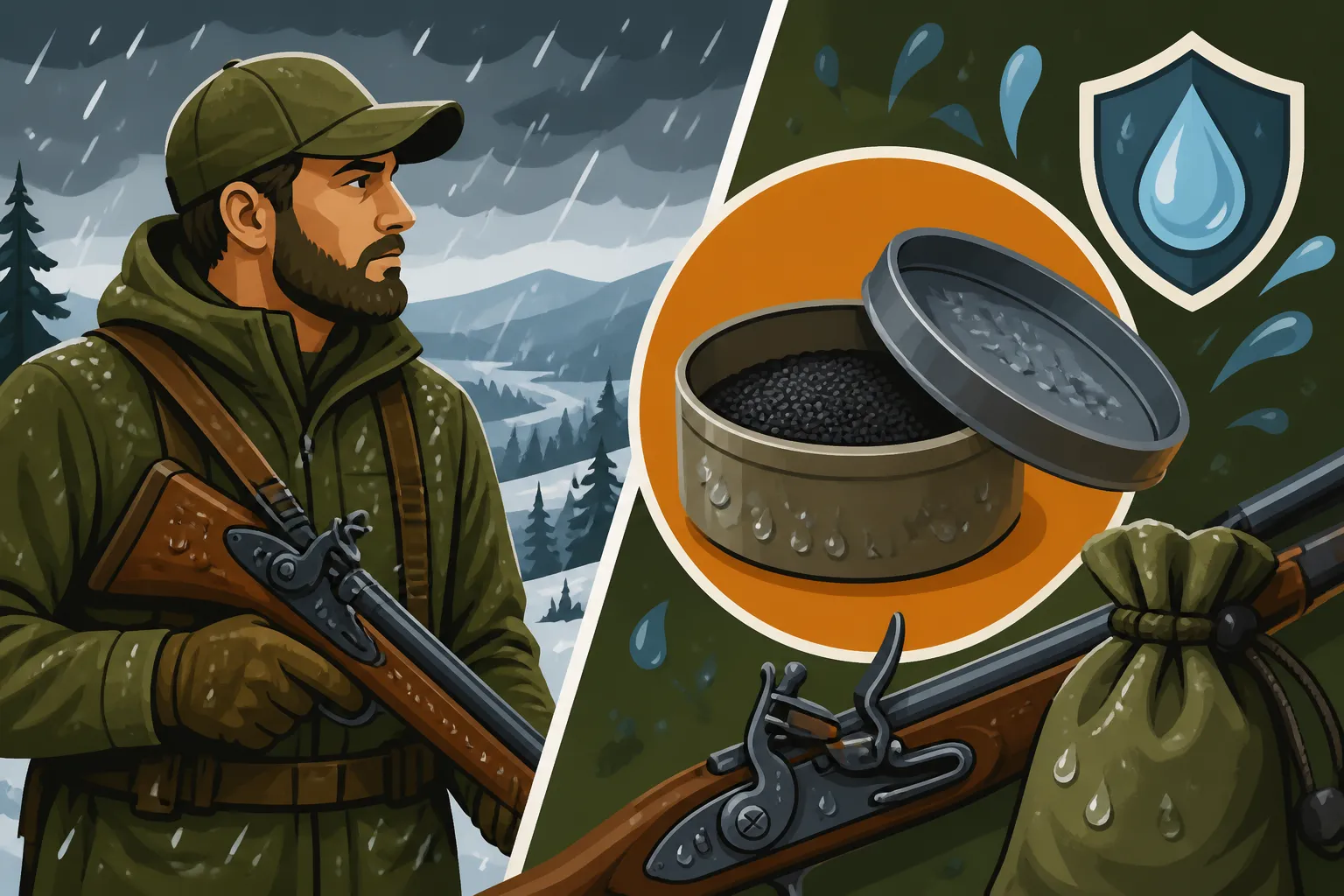
Unlike modern cartridge rifles where the primer, powder, and bullet are sealed within a brass casing, a muzzleloader is, by its very nature, more exposed. Black powder and its substitutes are hygroscopic, meaning they readily absorb moisture from the air. Even a tiny bit of water can significantly degrade its ignition properties or render it completely inert. Think about trying to light a damp campfire – it’s a similar challenge. The open muzzle, the flash channel leading to the breech plug, and the percussion cap or 209 primer can all be entry points for moisture. When you're dealing with the heavy, wet snow that often blankets our Allegheny ridges or the persistent drizzle in a deep hollow, these vulnerabilities are amplified tenfold.
Imagine you've spent hours climbing a steep slope, battling through thick laurel, and finally set up on a high bench overlooking a promising run. A big buck steps out, offering a perfect shot. You squeeze the trigger, and all you hear is the hammer fall with a dull thud. Your heart sinks. This isn't just a minor inconvenience; it's the culmination of effort, time, and dedication wasted, purely because a few snowflakes melted and found their way to your powder. That feeling is one we've all known, and it's precisely what we aim to prevent.
Common Scenarios Where Moisture Becomes a Problem
West Virginia offers a multitude of terrains and microclimates, each presenting its own moisture challenges. Hunting a broad, open ridge in Monongahela National Forest after a fresh, wet snowfall means heavy snow clinging to your barrel. As you walk, it melts, drips, and has ample opportunity to find its way down the bore. If you're still-hunting the dense rhododendron thickets of Cranberry WMA, every brush against a snow-laden branch can shower your rifle with a fine mist of melting water.
Even sitting on a stand in a light drizzle, water can seep into the most unexpected places. Consider the flash channel, which connects the primer to the powder charge. If water gets in there and freezes, or simply dampens the powder, your ignition will fail. The percussion cap itself, while designed to be somewhat weather-resistant, isn't foolproof against persistent moisture. Snow can accumulate around the cap, then melt and seep underneath, compromising the primer's ability to spark. This isn't just about a heavy downpour; prolonged exposure to even moderate wetness is often enough to cause a misfire. West Virginia Muzzleloader Tactics are effective, but only if your gun fires.
Proactive Protection: Shielding Your Muzzleloader in the Field
The best defense against wet powder is a good offense. Proactive measures taken before and during your hunt are absolutely crucial. This isn't about hoping for the best; it's about preparing for the worst, because West Virginia weather often delivers it.
Pre-Hunt Preparation and Loading Techniques
Before you even step foot in the woods, the preparation begins. Start by meticulously cleaning your muzzleloader, especially the bore and breech plug. Any residue can attract and hold moisture. When it comes to loading, it’s not just about the powder charge; it’s about how you seal it. Many experienced West Virginia hunters use a plastic "powder protector" or an unlubricated felt wad directly on top of the powder, before seating the bullet. This creates a physical barrier against moisture wicking down the bore. Some even use a small square of plastic film (like cling wrap) under the bullet to further seal the powder.
For your primers or percussion caps, consider using waterproof 209 primers if your rifle accepts them, or applying a dab of clear nail polish or liquid electrical tape around the base of a percussion cap after it's seated. This creates a seal that can significantly reduce water infiltration. Always make sure your breech plug is clean and tightly installed, as this is another common entry point. I’ve found that a quick check of resources like GoHunt, particularly user reviews on various muzzleloader accessories and waterproofing techniques, can offer practical insights into what works best in the field.
In-Field Carry and Cover Strategies
Once you’re out in the woods, how you carry and protect your muzzleloader makes a huge difference. A simple gun sock or sleeve, even if it's not fully waterproof, can prevent snow from accumulating on the barrel. Many hunters opt for a "muzzle cover" – a small piece of electrical tape, a finger cot, or even a specialized muzzle cover designed for muzzleloaders. This stops snow and moisture from entering the barrel from the front, which is a surprisingly common issue. Just remember to remove it quietly before taking a shot!
For extended periods of sitting, especially in falling snow or rain, an actual gun cover is invaluable. Some hunters simply use a large plastic bag, secured with a rubber band, to drape over the action and lock of their muzzleloader. Others invest in purpose-built waterproof gun covers. When walking, keep the muzzle pointed downwards as much as safely possible to prevent snow and water from funneling into the bore. If you're setting up a Treestand Setups in Monongahela National Forest, make sure your rifle is protected from above by overhead cover, or position it so falling snow doesn't settle directly on the action. This proactive approach ensures that when that moment of truth arrives, your firearm is ready.
Gear and Preparation for Wet-Weather Muzzleloading
Having the right gear and adopting smart habits can drastically improve your odds of keeping your muzzleloader operational in the nastiest West Virginia weather. This isn't just about the gun itself, but the accessories and your personal methodology.
Essential Waterproofing Accessories
Beyond the basics, several items can be truly game-changers for wet-weather muzzleloading. A small, dry plastic container for your primers or caps is non-negotiable. Even if your primers are waterproof, having a backup supply that's guaranteed dry is critical. Many manufacturers now offer "weather-resistant" breech plugs that have tighter tolerances and slightly different designs to minimize moisture entry. While they won't make your muzzleloader submersible, they certainly help.
Consider carrying a small, airtight pouch with a few pre-measured charges of powder in sealed tubes or vials. This allows for a quick reload with dry powder if your original charge gets compromised, without exposing your main powder supply to the elements. For those long, cold sits, especially when you're bundled up in layers for a Cold-Weather Sitting Strategy in the Mountains, fumbling with powder can be difficult. Having these ready-to-go charges makes the process smoother and keeps your hands out of the wet.
| Component | Waterproofing Strategy | Notes |
|---|---|---|
| Muzzle | Electrical tape, finger cot, specialized muzzle cover | Remove before shot; prevents water entry from front of barrel |
| Breech Plug | Ensure tight seal, weather-resistant models | Keep clean, check for snug fit, minimizes rear entry of water |
| Flash Channel | Small amount of bore butter/grease on nipple threads | Can help seal, but ensure not to block flash channel |
| Percussion Cap | Clear nail polish/liquid electrical tape around base | Creates a seal, protects against seepage |
| 209 Primer | Waterproof primers, sealed within breech plug | Some primers are inherently more water-resistant |
| Powder Charge | Plastic wad over powder, cling wrap under bullet | Physical barrier against moisture wicking |
| Spare Powder | Pre-measured charges in sealed vials | For quick, dry reloading in the field if needed |
| Rifle Overall | Waterproof gun cover, plastic bag, gun sock | Prevents snow/rain accumulation on action and barrel |
Hunting in the Elements: Mindset and Habits
Hunting in wet snow with a muzzleloader requires a particular mindset. You need to be extra vigilant about your gear, constantly checking for snow buildup and dripping water. It means being deliberate in your movements, avoiding unnecessary shaking of branches, and always being aware of where your muzzleloader is positioned. When taking a break or moving through thick cover, consciously shield the action of your rifle.
It also means being prepared for the cold. Your fingers need to be nimble enough to manipulate small caps and plugs, even when chilled. Good gloves that offer both warmth and dexterity are essential. Don't forget your West Virginia Blaze Orange Requirements, even with heavy snow, so you remain visible to other hunters. Consider using a backpack with a dedicated, waterproof compartment for critical items like extra primers, powder, and even a small rag to quickly wipe down your rifle. Utilizing insights from platforms like GoHunt for gear reviews can guide you toward durable, weather-resistant options that stand up to the rigors of a West Virginia winter hunt. Remember, the challenge of late-season hunting is part of the appeal, but success often hinges on meticulous preparation for the elements.
Troubleshooting and Post-Hunt Care for Wet Muzzleloaders
Even with the best precautions, sometimes the mountain weather simply overwhelms your efforts. A sudden downpour, an unexpected plunge into a creek, or a prolonged heavy wet snow can still find its way into your muzzleloader. Knowing what to do when your powder does get wet, and how to properly care for your rifle afterward, is just as important as prevention.
Field Fixes for a Wet Misfire
If you pull the trigger and get a misfire, do not immediately open the breech or attempt to remove the bullet. The powder might be damp but still smoldering, or it could be a hangfire. Keep the muzzle pointed in a safe direction for at least 30-60 seconds. If it doesn't fire, then you can begin to assess the situation.
First, replace the primer or percussion cap. Sometimes, it's just a faulty or damp primer. If it still doesn't fire, you're likely looking at wet powder. In the field, your options are limited. If you have access to a clean, dry, and safe environment (like a hunting cabin with a fireplace, but ideally not indoors with a loaded muzzleloader), you might be able to remove the breech plug and try to dry out the powder carefully. However, this is incredibly risky with a loaded firearm and generally not recommended. The safest approach is to discharge the rifle safely if possible (pointing it into soft earth, away from anything) or return home to properly unload it using a CO2 discharge tool or a specialized powder removal tool, often by removing the breech plug. Never try to force a patch down a loaded barrel. If you're Hunting Deer After a Cold Front, the cold can make everything stiff and difficult, so having these tools ready is crucial.
Post-Hunt Cleaning and Maintenance
Once you're back home, whether your muzzleloader fired or not, immediate and thorough cleaning is paramount, especially after a wet hunt. Moisture, combined with black powder residue, is a recipe for rust. Start by safely unloading your rifle if it's still charged. Then, remove the breech plug. Clean the bore thoroughly with warm, soapy water or a dedicated black powder solvent. Pay close attention to the flash channel in the breech plug, ensuring it's clear of any obstruction or corrosion. Pipe cleaners can be great for this.
Once the bore is clean, dry it meticulously. Patches should come out completely dry. Then, immediately oil the bore and all metal parts, inside and out. Don't forget the lock mechanism and other small springs and pins. Moisture loves to hide in these crevices. If you were using a scope, check for any fogging or water intrusion and dry it completely. Following a strict routine of Cleaning a Rifle After a Wet Sit is not just good practice; it's essential for the longevity and reliability of your muzzleloader. By taking these steps, you ensure that your trusty muzzleloader will be ready for your next West Virginia adventure, even if it's another one through the wet snow in pursuit of late-season game.
Disclaimer
This article is for general informational purposes only and does not constitute professional advice. Laws, prices and regulations vary by location and change over time. Consult a qualified professional for guidance on your specific situation.