6.5 Creedmoor for Allegheny Ridges
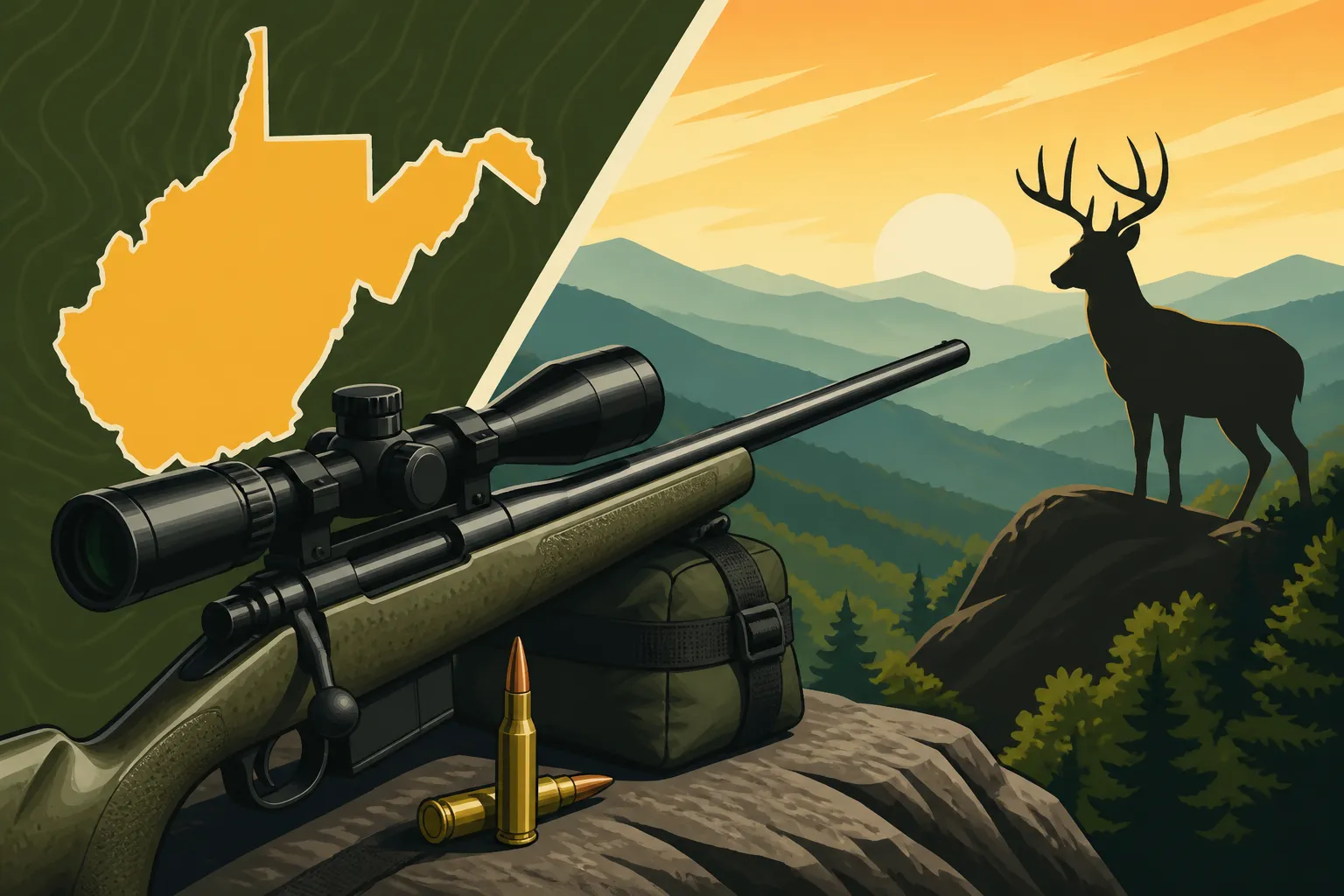
Hunting West Virginia's Allegheny ridges can be an incredibly rewarding experience, but let's be honest, it's also incredibly demanding. The steep climbs, the long views across hollows, and the sudden, close encounters in thick cover can make choosing the right rifle feel like a monumental task. You need something that can reach out when a buck steps into a distant clearing, yet still handle a quick shot in the timber, all while keeping recoil manageable after a strenuous hike. This guide is all about why the 6.5 Creedmoor has become such a compelling choice for navigating these unique challenges and how to make the most of it in our rugged mountain landscape.
Why the 6.5 Creedmoor Shines in West Virginia's Mountains
For years, the go-to calibers for deer in West Virginia were often the venerable .30-06 or .308, and for good reason – they're reliable, powerful, and effective. But the 6.5 Creedmoor has steadily gained a loyal following, especially among those who hunt our steep, unforgiving terrain. It’s not just hype; there are solid ballistic reasons why this cartridge feels right at home in the Alleghenies.
Ballistics Tailored for Long Shots and Steep Angles
When you're perched on a ridge overlooking a vast hollow, or when a deer appears on a distant bench, you want a bullet that defies gravity and wind as much as possible. This is where the 6.5 Creedmoor truly excels. Its high ballistic coefficient (BC) bullets are designed to cut through the air efficiently, meaning they retain more velocity and energy downrange compared to many traditional hunting cartridges.
Think about it: a flatter trajectory means less guesswork on those longer shots across the valleys. You might have a 200-yard shot one moment, and then need to reach out to 350 or 400 yards to an animal standing on the opposing slope. A cartridge with less bullet drop over these varied distances simplifies your aiming points considerably. This flat-shooting characteristic also means less influence from crosswinds, which are often unpredictable and swirling through our mountain gaps. The reduction in wind drift can make all the difference between a clean hit and a frustrating miss, especially when a good buck finally offers a shot after you’ve spent hours Hunting Steep Allegheny Ridges. The 6.5 Creedmoor’s ability to minimize these external factors gives you a significant advantage when every shot counts.
Manageable Recoil for Improved Accuracy
One of the often-understated benefits of the 6.5 Creedmoor, particularly after a grueling hike up a mountain, is its manageable recoil. Let’s be real, after climbing a thousand feet straight up, your heart is pounding, and your muscles are burning. The last thing you want is a rifle that’s going to punch you hard in the shoulder, causing you to flinch or break your concentration.
The relatively mild recoil of the 6.5 Creedmoor allows hunters to maintain better control of their rifle, leading to more accurate shooting. This means less flinching, more consistent trigger pulls, and the ability to spot your own impacts or see where your shot went, which is crucial for ethical hunting and game recovery. For younger hunters, or those who are recoil-sensitive, it's a game-changer. It means more comfortable practice sessions at the range, which translates directly to more confidence and better performance in the field. When you're out there on public land, potentially making a one-shot opportunity, confidence in your rifle's handling and your own ability to shoot it well is paramount. This comfort allows you to focus solely on the animal and the shot, rather than bracing for the jolt, ensuring you make the most of those precious moments.
Understanding Your Terrain: Allegheny Ridges and the 6.5 Creedmoor's Advantages
West Virginia's topography isn't just picturesque; it profoundly influences how and what we hunt. The Allegheny ridges present a unique set of challenges that can humble even the most experienced hunter. Understanding these challenges and how the 6.5 Creedmoor fits into the equation is key to consistent success.
The Challenge of Diverse Shot Distances
Hunting in our mountains isn't like hunting open plains where every shot might be 300 yards. Here, you could be peering through thick laurel and only get a 50-yard shot at a deer busting through the brush. Then, ten minutes later, you might glass a buck feeding on an oak flat 300 yards away on the next ridge. This variability demands a rifle that is versatile across a wide range of distances.
While the 6.5 Creedmoor is lauded for its long-range capabilities, it's equally effective at closer distances. The key is bullet construction; choosing a bullet designed for controlled expansion at various velocities means it will perform well whether it's a close-range timber poke or a longer shot across a hollow. The moderate velocity of the 6.5 Creedmoor, combined with good bullet design, often results in less meat damage than higher velocity cartridges, a welcome bonus for any hunter. The ability to trust your rifle at both extremes of typical hunting ranges simplifies your approach and reduces the need for constant mental calculations in the field. This adaptability makes it a fantastic choice for navigating the diverse shot distances encountered when still-hunting the dense forests or sitting over a clearing. It's truly a "do-it-all" round for West Virginia deer.
Wind and Thermals: How the 6.5 Creedmoor Copes
If you've spent any time Wind and Thermals on a Steep Ridge, you know they can be your best friend or your worst enemy. Up in the Alleghenies, these forces are magnified. Wind currents can shift dramatically over short distances, and thermals rise in the morning and fall in the evening, affecting scent and bullet trajectory. A bullet that battles wind efficiently is a huge asset.
The high ballistic coefficient of 6.5 Creedmoor bullets means they are less susceptible to wind drift than many common hunting calibers. This is critical in the mountains, where swirling winds can push a bullet off target more than you might anticipate. Even a slight breeze can cause a significant deviation at 250+ yards if your bullet isn't designed to resist it. Furthermore, understanding how to read the wind and thermals is vital for both stalking and stand placement. Combining that field craft with a cartridge that inherently reduces wind's impact on your shot gives you a significant edge. While no cartridge can completely negate the effects of a strong crosswind, the 6.5 Creedmoor minimizes the variable, allowing you to focus more on Reading a Ridge for Eastern Panhandle Deer and less on compensating for unpredictable air currents. This contributes to more consistent accuracy, especially on those challenging longer-range shots typical of mountain hunting.
Pairing Your 6.5 Creedmoor with the Right Gear and Mindset
Having the right rifle is only part of the equation. To truly unlock the potential of your 6.5 Creedmoor in West Virginia's rugged terrain, you need to think about complementary gear and, perhaps most importantly, your approach and practice routine.
Optics and Ammunition for Mountain Success
Choosing the right optics for your 6.5 Creedmoor is paramount for hunting in West Virginia. Given the varied distances and often low-light conditions in the hollows, a versatile rifle scope is essential. Look for a scope with a good magnification range, perhaps a 3-9x, 4-12x, or even a 3-15x, allowing you to dial down for close timber shots and zoom in for distant opportunities. Excellent low-light gathering capability is a must, as legal shooting hours often start and end in dim conditions. Consider scopes with an illuminated reticle for clarity against dark backgrounds, especially when you're glassing at first light or last light on a dark ridge. Companies like Vortex, Leupold, and Zeiss offer fantastic options for Rifle Scopes for Low-Light Hollows.
A quality rangefinder is almost as crucial as your scope, especially when shooting at steep angles. Our mountains can play tricks on your eyes, making a 250-yard shot feel like 150 yards, or vice versa. A rangefinder that provides angle compensation will give you the true ballistic distance, ensuring you hold correctly. For ammunition, focus on proven hunting bullets that offer good expansion and weight retention. Popular choices include Hornady's ELD-X, Federal's Terminal Ascent, or Nosler's AccuBond. These bullets are designed to perform reliably on deer-sized game across the 6.5 Creedmoor's effective range.
When you're out there, having a clear understanding of the terrain and potential shot opportunities can be greatly enhanced by tools that go beyond the traditional. Leveraging modern technology, platforms like GoHunt can provide invaluable scouting data, helping you understand topography, identify potential bedding areas, and plan optimal routes before you even step foot in the woods. This kind of advanced planning, coupled with reliable optics and ammunition, gives you a comprehensive advantage.
Practice Makes Perfect: Drills for Mountain Hunting Scenarios
Owning a great rifle like the 6.5 Creedmoor is wonderful, but without practice tailored to West Virginia's hunting conditions, you're leaving a lot on the table. Standard flat-range shooting is a start, but you need to push beyond that.
One critical aspect of mountain hunting is shooting at steep uphill and downhill angles. Gravity affects bullet trajectory differently on slopes. Practice shooting from various field positions – kneeling, sitting, and even prone (if you can find a safe backstop) – to simulate real-world scenarios. Don’t just shoot from a bench. Find a local range or safe property with some varied terrain and practice taking shots at 100, 200, and 300+ yards, both uphill and downhill. Understanding your rifle's point of impact at these angles and distances is vital. You also need to practice quickly acquiring targets and making clean shots, as opportunities can be fleeting. Timing yourself from spotting a target to making a safe, ethical shot can build crucial muscle memory.
It's also essential to Zeroing a Rifle for Mixed Distances that reflect the reality of our West Virginia woods. A 200-yard zero is often a great compromise for the 6.5 Creedmoor, allowing for minimal holdover or hold-under for most deer hunting ranges. Beyond just shooting, practice carrying your rifle comfortably for long distances, ascending and descending steep grades. This isn't just about physical fitness; it’s about becoming one with your gear. Consider using Trekking Poles for Steep Ridge Access to steady yourself on uneven ground, which can also aid in quickly getting into a stable shooting position.
Ethical Considerations and Limitations of the 6.5 Creedmoor
While the 6.5 Creedmoor is an incredibly capable cartridge for West Virginia deer hunting, it's not a magic bullet. Ethical hunting practices and understanding both the rifle's and your own limitations are paramount.
Knowing Your Personal and Rifle's Limits
The 6.5 Creedmoor has proven itself capable of taking deer cleanly out to significant distances, sometimes beyond 400 or even 500 yards in the right hands. However, your personal ethical hunting range might be much shorter, especially in the challenging conditions of our mountains. Things like adrenaline, wind, steep angles, thick cover, and the animal's movement all play a role. It's easy to get caught up in the excitement, but a responsible hunter knows when to pass on a shot.
Before heading into the field, you should be intimately familiar with your rifle's capabilities. Practice with the exact ammunition you plan to hunt with. Know your bullet drop at various ranges and practice shooting under pressure. Don't let social media or YouTube videos dictate your ethical range; only extensive practice and honest self-assessment can do that. For example, while the 6.5 Creedmoor can kill a bear, if you plan to go Hunting Bears in the Cranberry Backcountry, you might want to consider Rifle Calibers for West Virginia Bear that offer a bit more punch, depending on your comfort level and shot presentation. The goal is always a quick, humane harvest, and that starts with knowing what you and your chosen cartridge can reliably accomplish. Using tools like GoHunt to mark your shooting lanes and known distances on a digital map can help reinforce your understanding of the terrain and aid in making ethical shot decisions in the field.
West Virginia Regulations and Responsible Hunting
As with any hunting endeavor, it's crucial to stay up-to-date on West Virginia's specific hunting regulations. The 6.5 Creedmoor is a perfectly legal and appropriate cartridge for deer hunting in the state, but understanding overall rules, such as blaze orange requirements, legal shooting hours, and reporting requirements, is vital. Always confirm the current regulations before each season, as they can sometimes change.
Beyond legalities, responsible hunting encompasses respect for the land, wildlife, and fellow hunters. This means packing out everything you pack in, being mindful of other users on public land, and always striving for a clean kill and thorough recovery. Even with an excellent cartridge like the 6.5 Creedmoor, tracking can be a challenge in West Virginia's dense cover and steep terrain. Always follow up on your shots diligently, even if you think you missed. Bringing along essential gear like a quality headlamp for after-dark recovery and even a Sleds and Drags for Steep Country can make the arduous task of game retrieval more manageable and efficient. By combining the ballistic advantages of the 6.5 Creedmoor with rigorous practice and a commitment to ethical, responsible hunting, you'll be well-prepared to tackle the challenges and embrace the rewards of hunting West Virginia's beautiful Allegheny ridges.
Disclaimer
This article is for general informational purposes only and does not constitute professional advice. Laws, prices and regulations vary by location and change over time. Consult a qualified professional for guidance on your specific situation.