Is a .243 Enough for West Virginia Whitetails?
The question of whether a .243 Winchester rifle is truly "enough" for West Virginia whitetails is one that sparks endless campfire debates and can leave new hunters feeling a little lost. Many folks wonder if this lighter caliber can consistently and ethically take down a mountain buck, especially when faced with steep terrain, thick cover, and the sometimes-robust nature of our local deer. This guide aims to thoroughly explore the capabilities and limitations of the .243 for deer hunting in the Mountain State, offering clear insights to help you make an informed decision for your next season.
Understanding the .243 Winchester Cartridge
The .243 Winchester has earned a solid reputation over the years, often being lauded as a versatile cartridge. But what exactly does that mean for a West Virginia deer hunter? Let's break down its characteristics to see how they apply to our unique hunting environment.
Ballistics and Bullet Weight Considerations
At its core, the .243 Winchester is known for its high velocity and flat trajectory, especially with lighter bullets. It typically fires bullets in the 80 to 100-grain range. When you're talking about a 80-grain bullet, you're usually looking at something designed more for varmint hunting – think coyotes or groundhogs – where speed and explosive expansion are key. These lighter, faster bullets might zip through a deer without delivering enough energy transfer for a quick, ethical kill, or they might fragment on impact with bone, creating a nasty wound without penetrating vital organs.
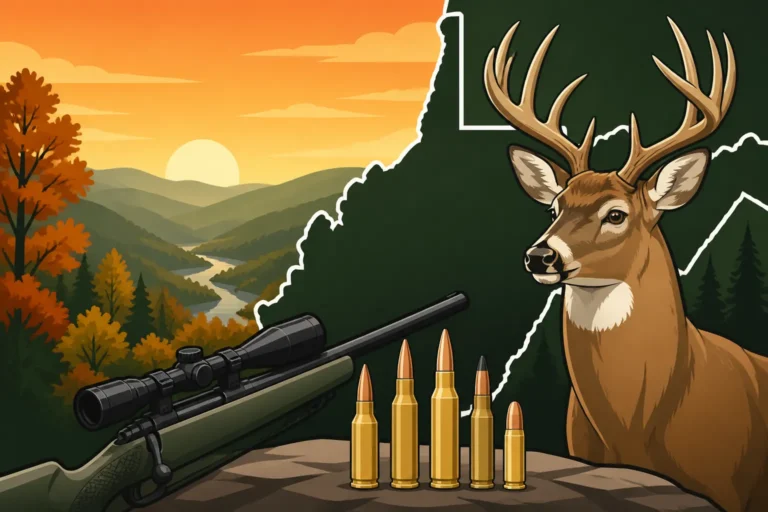
However, when you step up to the 90 to 100-grain bullets, specifically those constructed for deer or medium game, the .243 becomes a different beast entirely. These heavier bullets are designed for controlled expansion and deeper penetration, which is exactly what you need for a West Virginia whitetail. With a quality, well-constructed 90 or 100-grain bullet, the .243 can deliver plenty of energy to the vitals of a deer out to reasonable distances. The key, as with any caliber, lies in precision shot placement.
In West Virginia, where you might be shooting across a narrow hollow or through a relatively open timber stand, that flat trajectory can be a real advantage, making range estimation slightly less critical than with slower, arcing calibers. But make no mistake, even with a flat-shooting rifle, knowing your ethical range and practicing at varying distances is absolutely crucial.
Recoil and Shooter Comfort
One of the most appealing aspects of the .243 Winchester is its remarkably low recoil. Compared to popular deer cartridges like the .30-06 or even a .308, the .243 feels like a gentle push rather than a sharp kick. This characteristic is a massive benefit for several types of shooters.
For younger hunters or those with a smaller frame, the minimal recoil makes shooting enjoyable and helps prevent the development of a flinch, which is a common problem with heavier-recoiling firearms. This means more confident shooting and, ultimately, more accurate shot placement. And let's be honest, even seasoned hunters appreciate a rifle that's comfortable to shoot, especially during extended range sessions or if you find yourself needing a quick follow-up shot in the field.
The ability to shoot a rifle accurately and comfortably directly translates to ethical hunting. If you're not anticipating a painful kick, you're more likely to focus on your breathing, trigger pull, and sight picture, ensuring your bullet goes exactly where you intend it to. In the heat of the moment, with a big buck in your sights, that comfort can make all the difference between a clean kill and a frustrating tracking job.
West Virginia Whitetails: Size, Terrain, and Ethical Considerations
West Virginia offers some truly challenging hunting. Our deer, while not typically the behemoths you might find in certain Midwest states, are hardy, resourceful animals. Understanding their characteristics and the environment they live in is vital when considering any caliber.
The Average West Virginia Whitetail
When we talk about West Virginia whitetails, we're generally looking at deer that are perfectly respectable, but rarely truly massive. A mature buck might weigh anywhere from 150 to 200 pounds live weight, with some outliers being larger. Does are, of course, smaller. These aren't the 250-pound corn-fed giants that might truly test the limits of a lighter caliber, but they're still robust animals that require sufficient energy transfer for a clean kill.
It's also worth noting that deer size can vary across our beautiful state. Deer in the rich agricultural areas of the Eastern Panhandle Versus Southern Coalfield Deer might tend to be a bit heavier-bodied due to abundant food sources. Conversely, deer in the rugged, forested areas of the Southern Coalfields or deep in the Monongahela National Forest might be slightly leaner due to less diverse forage. Regardless of where you're hunting, a well-placed shot with a good .243 bullet will be more than capable of taking down these animals. You can get a better idea of the overall population and health by looking at West Virginia Deer Herd Size data.
The key takeaway here is that a .243, with the right bullet, has ample power for the average West Virginia whitetail, provided the hunter does their part in placing the shot correctly. It's not about brute force, but about surgical precision.
Shot Placement in Mountainous Terrain
Hunting in West Virginia means contending with elevation changes, thick timber, and often steep angles. This isn't flat farm country, and your hunting scenarios will reflect that. Practical Range in Steep Mountain Hollows can be surprisingly short or open up to longer distances across ridges, but getting a clear, unobstructed shot at a deer's vitals can be tough.
In these conditions, shot placement becomes absolutely paramount, perhaps even more so than in flatter, more open country. A deer standing on a steep hillside above or below you presents a different shot angle than one on level ground. Your bullet needs to travel through the animal's body to hit the heart and lungs effectively. While the .243 is inherently accurate, its smaller diameter and lighter bullet mass mean you have less room for error if you hit heavy bone, like a shoulder blade. Larger calibers might punch through bone more reliably, but the .243 demands precision.
A poor hit with a .243, especially on a steep angle or through thick cover, can lead to a long and difficult tracking job. Our dense rhododendron thickets and leaf-strewn forest floors can turn blood trailing into a true test of endurance, sometimes requiring you to Drag a Deer Off a Steep Ridge or even perform Blood Trailing After Dark in West Virginia. This isn't to say it can't be done, but it emphasizes the need for patience, careful shot selection, and thorough practice.
Pros and Cons of Using a .243 for West Virginia Deer
Every caliber has its strengths and weaknesses, and the .243 is no exception. Let's look at what makes it shine and where it might leave you wanting more when you're pursuing whitetails in the Mountain State.
Advantages of the .243
The .243 Winchester brings several significant benefits to the West Virginia deer hunter's arsenal:
- Accuracy and Precision: Without a doubt, the .243 is a very accurate cartridge. Its flat trajectory and mild recoil make it incredibly easy for most shooters to achieve consistent precision. This inherent accuracy means that with good shooting fundamentals, you can place your bullet exactly where it needs to go – in the vitals – leading to quick, humane kills. For a hunter who prioritizes precision over raw power, the .243 is a fantastic choice, allowing for those careful, deliberate shots that are often necessary in West Virginia's varied terrain.
- Low Recoil: We've touched on this, but it bears repeating. The minimal recoil of the .243 makes it a joy to shoot. This isn't just about comfort; it's about confidence and better shooting. Hunters who are not flinching or anticipating a heavy kick are simply more consistent. This low recoil also makes it an ideal choice for youth hunters, teaching them good habits without punishing them. It's truly a great caliber for fostering marksmanship.
- Versatility: While our focus here is deer, the .243 is a wonderfully versatile round. It excels at varmint and predator hunting, making it a "do-it-all" rifle for many West Virginia landowners who might need to deal with coyotes or groundhogs between deer seasons. This means you can get a lot of use out of one rifle, practicing year-round with the same firearm you'll take into the deer woods.
- Ammunition Availability: The .243 Winchester is one of the most popular cartridges globally, which means ammunition is generally readily available in most sporting goods stores across West Virginia. You'll find a wide variety of bullet types and manufacturers, allowing you to choose the perfect load for deer, from economical practice rounds to premium hunting ammunition. This widespread availability also means you're unlikely to scramble for ammo right before opening day. Many consider it an excellent overall choice for Best Rifle Caliber for West Virginia Deer.
Limitations and When to Consider Other Options
While the .243 has much to offer, it does come with certain limitations, especially when compared to larger calibers:
- Limited Margin for Error: This is perhaps the .243's most significant drawback for deer hunting. While capable of clean kills, it demands precise shot placement. If your shot is off by even a few inches, hitting a non-vital area or heavy bone, the lighter bullet may not deliver sufficient energy to incapacitate the animal quickly. This can result in wounded game and difficult tracking, which is every ethical hunter's nightmare. With larger calibers, a slightly imperfect shot might still be lethal due to greater energy transfer and bullet mass, offering a bit more forgiveness.
- Energy Transfer on Tough Angles: West Virginia's terrain often forces shots at less-than-ideal angles. A quartering-to or quartering-away shot might require the bullet to penetrate more muscle and bone to reach the vitals. While premium .243 bullets are designed to penetrate, they simply have less kinetic energy than a .30-caliber round. This means on those tough, angled shots, or if you encounter a truly large-bodied buck, a .243 might struggle to deliver the deep, through-and-through penetration needed for a quick kill, potentially leaving a less robust blood trail.
- Bone Impact Performance: Hitting heavy bone, like a shoulder blade, can be a challenge for any bullet, but especially so for a smaller diameter projectile. While good bullets will hold together, a .243 might have a harder time smashing through dense bone than a larger, heavier bullet, potentially deflecting or expending too much energy prematurely, reducing penetration to the vitals. If you anticipate shots that might involve breaking heavy bone, or if you prefer a greater margin for error, exploring calibers like those discussed for Rifle Calibers for West Virginia Bear might be beneficial, as they offer significantly more power.
- Potential for Longer Blood Trails: As a direct consequence of the limited margin for error and energy transfer, a non-ideal shot with a .243 can result in a deer that travels a considerable distance before succumbing. This leads to extended, sometimes frustrating tracking efforts, especially in dense West Virginia cover. If you prefer to drop deer "in their tracks" or have a very short blood trail, and are confident handling heavier recoil, you might lean towards a more powerful cartridge.
Making the .243 Work: Tips for Success
So, you've decided the .243 is for you, or you already own one and want to maximize its effectiveness in West Virginia. Great! Here's how to ensure it's an ethical and successful choice.
Ammunition Selection for Deer
Choosing the right ammunition is perhaps the single most critical factor in making your .243 a lethal and ethical deer rifle. Not all .243 bullets are created equal, and mistaking a varmint round for a deer round can lead to disastrous outcomes.
First and foremost, avoid lightweight varmint bullets (typically 55-70 grains) for deer. These bullets are designed to expand rapidly and explosively on small targets, often fragmenting upon impact with a deer's hide or bone. This leads to superficial wounds, poor penetration to vital organs, and a high likelihood of wounding loss. Seriously, don't do it.
Instead, focus on premium, heavier hunting bullets specifically designed for deer or medium game. Look for bullets in the 90 to 100-grain range. These typically feature bonded cores, thicker jackets, or controlled expansion designs that allow them to penetrate deeply before expanding reliably. Examples (without naming specific brands, as bullet designs change) include bullets known for retaining their weight, those with polymer tips designed to initiate expansion, or classic soft points with robust construction. These bullets are engineered to hold together, punch through hide and bone, and deliver maximum energy transfer to the vitals. Research different bullet designs and pick one known for its terminal performance on deer-sized game.
Practice, Patience, and Scouting
Even the best rifle and ammunition combination is only as good as the shooter behind it. For the .243, where precision is paramount, consistent practice is non-negotiable. Spend time at the range, not just shooting from a bench, but practicing from various field positions you might encounter in West Virginia – kneeling, sitting, even standing off a bipod or shooting sticks. Practice at different distances, from close-range timber shots to longer shots you might take across a clear-cut or powerline right-of-way. Ensure you can consistently hit a vital-sized target (a 6-8 inch circle) out to your maximum ethical range. Understanding how to perform Zeroing at 100 Yards for Woods Hunting is a great start, but practice at other distances too.
Patience in the field is another virtue that pays dividends, especially with a .243. Don't rush your shot. Wait for the deer to present a clear, unobstructed shot at its vitals. This might mean letting a deer walk if the angle isn't right or if there's too much brush in the way. A little patience for the perfect shot is far better than a hasty shot that results in a wounded animal.
Finally, effective scouting can put you in a position to take high-percentage shots. Knowing where deer are feeding, bedding, and traveling allows you to set up for closer, cleaner shots. Spend time in the woods before the season. Look for tracks, rubs, scrapes, and feeding areas. Use tools like topographical maps and aerial imagery, or even digital apps like GoHunt, to identify potential travel corridors, pinch points, and cover. Services that use onX Layers for West Virginia Land Status can be invaluable for understanding terrain and property lines. This kind of preparation, also detailed in Scouting West Virginia Public Land Before Season, helps you get within your rifle's effective range and ensures you have a good shot opportunity when it counts.
Shot Selection and Tracking
With a .243, your shot selection needs to be impeccable. Always aim for the heart-lung area – the "boiler room." This is a large, forgiving target that contains the most vital organs, ensuring a quick and humane death. The classic broadside shot, or a slightly quartering-away shot that angles the bullet through the vitals and out the opposite shoulder, are your best bets.
Avoid risky shots. This includes head shots, which are incredibly small targets and can lead to horrendous wounding if missed, and neck shots, which can be effective but also have a high margin of error. Straight-on chest shots are also generally discouraged, as they require significant penetration through the sternum and can result in the bullet not reaching the vitals. A good rule of thumb is: if you can't guarantee a shot to the heart-lung area, don't take the shot. Walk away, try another approach, or wait for another day. Ethical hunting means passing on a low-percentage shot.
After the shot, resist the urge to immediately run to where the deer was standing. Give the animal time. Even a mortally wounded deer can travel a surprising distance if pushed too quickly. A good rule of thumb is to wait 15-30 minutes for a good shot to the vitals, and an hour or more if you suspect a less-than-perfect hit. Use this time to calm down, replay the shot in your mind, and mark the exact spot where the deer was standing when you shot, as well as its direction of travel. Then, begin your tracking slowly and methodically, looking for blood, hair, and disturbed earth. Knowledge of Tracking a Deer Through West Virginia Leaf Litter and Blood Trailing After Dark in West Virginia will be immensely helpful. Always remember to check West Virginia Legal Firearms for Deer Hunting to ensure your setup is compliant.
| Caliber | Typical Bullet Weight (gr) | Recoil (Relative) | Trajectory (Relative) | Ethical Range (yds)* | Margin for Error |
|---|---|---|---|---|---|
| .243 Winchester | 90-100 | Low | Flat | 250-300 | Low |
| .30-30 Winchester | 150-170 | Moderate | More Arced | 150-200 | Medium |
| .308 Winchester | 150-180 | Moderate | Flat | 300-400 | Medium-High |
*Ethical range varies greatly with shooter skill, bullet choice, and hunting conditions. These are general guidelines for deer-sized game with proper ammunition.
In conclusion, the .243 Winchester is absolutely "enough" for West Virginia whitetails, but with a significant caveat: it demands a higher degree of precision and ethical judgment from the hunter. It's not a magical bullet, but rather a precise tool that, in skilled and patient hands, can deliver clean, humane kills consistently. By selecting the right ammunition, practicing diligently, choosing your shots wisely, and respecting the animal, you can confidently and successfully hunt deer in the Mountain State with your .243.
Disclaimer
This article is for general informational purposes only and does not constitute professional advice. Laws, prices and regulations vary by location and change over time. Consult a qualified professional for guidance on your specific situation.