Are Cheap Binoculars Good Enough?
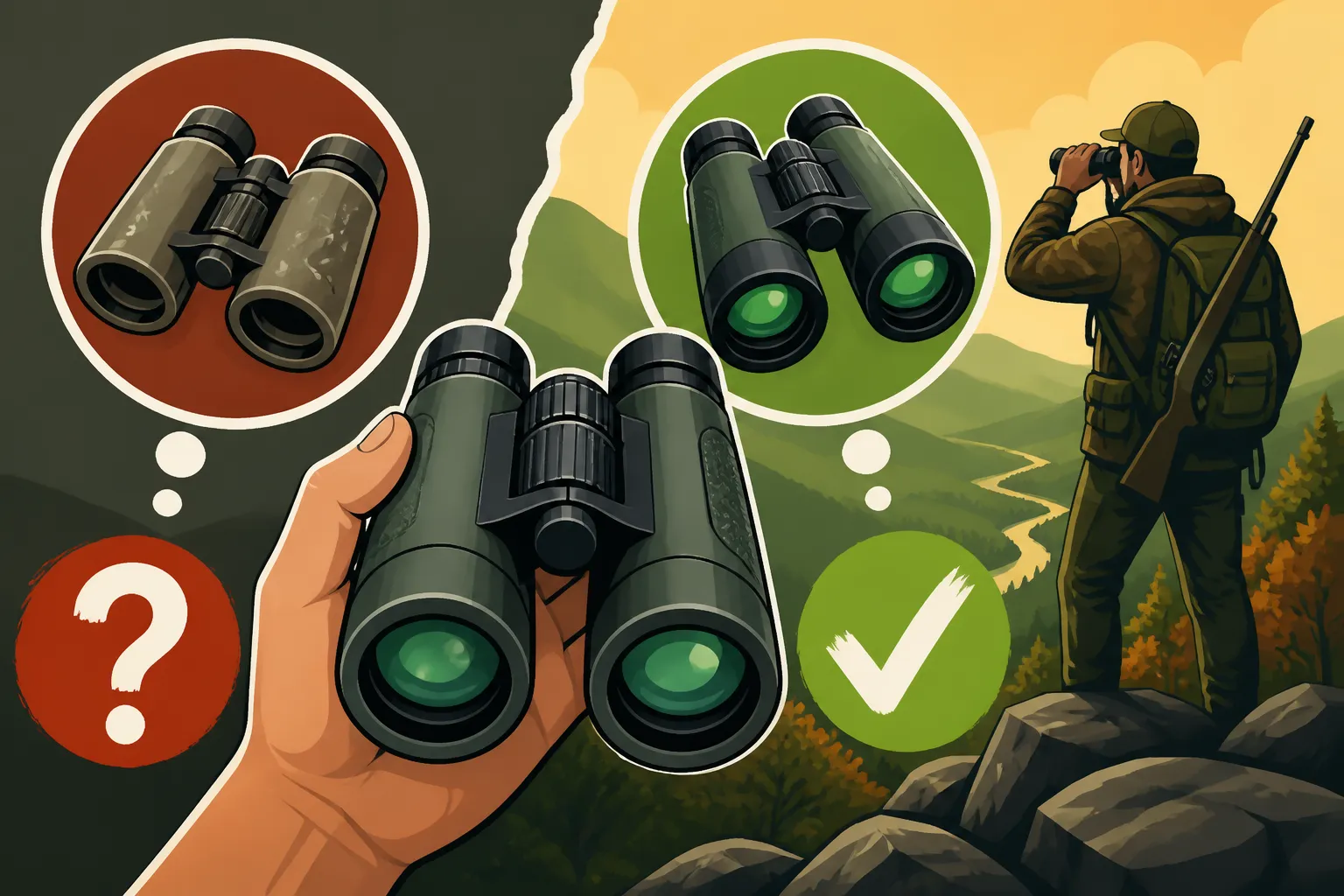
Every West Virginia hunter eventually asks themselves if they really need to shell out big bucks for optics, especially when a budget-friendly pair of binoculars seems to do the trick in the store. The truth is, the steep hollows, dense timber, and notoriously dim light of the Mountain State can quickly expose the limitations of cheap binoculars, leaving you wondering if you missed that fleeting glimpse of a buck or a distant gobbler. This guide will dive deep into whether those bargain binos are truly "good enough" for West Virginia hunting and help you understand the crucial trade-offs.
The Allure of Budget Binos – Why Hunters Consider Them
Let's be honest, hunting can be an expensive passion. Between licenses, tags, firearms or bows, stands, clothing, and all the little bits and bobs, the costs add up fast. It's completely understandable why many hunters, especially those just starting out or working with a tight budget, look for ways to save money, and binoculars often seem like an easy place to trim the fat.
Initial Cost Savings
The most obvious draw of cheap binoculars is, of course, the price tag. You can walk into almost any big box store or scroll through online retailers and find a pair for what seems like a steal. For someone just dipping their toes into hunting, or perhaps a parent outfitting a new youth hunter, the idea of spending a fraction of the cost on optics compared to a high-end pair can be incredibly appealing. It feels like a smart financial decision, allowing more funds for other critical gear like a new rifle or a quality treestand. This initial low investment means less risk if the hobby doesn't stick, or if you simply decide later that you want something better.
Think about a young hunter eager to hit the woods for the first time. Their parents might pick up a pair of inexpensive binoculars, figuring they're primarily for identifying game at closer ranges or just getting a feel for glassing. It's an accessible entry point that doesn't require a significant commitment of funds, which for many families, is a huge factor. The thought is often, "Let's see if they even like using them before we invest heavily." And truthfully, for very basic, close-range observation in good light, many cheap binoculars can provide a decent image.
Entry-Level Accessibility
Beyond just the price, cheap binoculars offer a gateway into the world of optics for those who might otherwise feel intimidated by the sheer variety and cost of higher-end options. When you're new to hunting, or perhaps trying a new type of hunting like predator calling or scouting, you might not even know what features are important or what "good glass" really means. A budget pair allows you to learn the basics of using binoculars in the field – how to adjust focus, set diopter, and hold them steady – without feeling like you've made an irreversible or overly expensive mistake.
For example, a hunter venturing out for Squirrel and Small Game Hunting in West Virginia might initially just want something to spot squirrels in a tree or rabbits along a fencerow. They're not necessarily planning on glassing distant ridgelines for trophy bucks. For these scenarios, where the distances are short and the light is generally good, a basic pair of binoculars might suffice for the initial learning curve. They provide an understanding of how binoculars can enhance the hunting experience, even if they don't offer top-tier performance. This accessibility can be crucial for fostering a love for the outdoors and the hunting tradition without feeling priced out from the start.
Where Cheap Binos Fall Short in West Virginia
Now, let's get real about West Virginia hunting. Our mountains are rugged, the woods are thick, and the light can play tricks on you. This is where those initial savings on binoculars can start to cost you opportunities, comfort, and sometimes even peace of mind.
Optical Performance in Low Light
This is, hands down, one of the biggest drawbacks of cheap binoculars in West Virginia's challenging terrain. Our hunting seasons, especially for deer, often involve prime activity during the magical, yet notoriously dim, periods of dawn and dusk. Picture yourself nestled deep in a hollow of the Monongahela National Forest Hunting as the sun barely cracks the horizon. A deer steps out of a thicket at 80 yards, but through your cheap binoculars, it's just a dark blob against the shadows. You can't make out antler points, or even confirm if it's a deer or something else entirely.
Good binoculars are designed with quality glass, advanced coatings, and precise prism systems that gather and transmit light efficiently. Cheap binoculars often use lower-grade glass, fewer or inferior coatings, and less-than-perfect prism designs. This means significantly less light reaches your eyes, resulting in a dark, fuzzy, and low-contrast image in anything but bright daylight. This lack of performance means you lose valuable minutes at the beginning and end of shooting light – precisely when deer and bear are most active. Missing an opportunity to identify game or make a clean shot because your optics couldn't cut through the gloom is a deeply frustrating experience, and one that many West Virginia hunters eventually upgrade to avoid. This is why many experienced hunters heavily invest in Rifle Scopes for Low-Light Hollows and complementary binoculars.
Durability and Weather Resistance
West Virginia weather is nothing if not unpredictable. One minute it's crisp and clear, the next a sudden rain shower rolls in, or a thick fog blankets the ridge tops. Cheap binoculars are rarely built to withstand these conditions. Their housings are often made of less robust plastics, and their seals against water and fog are usually minimal or nonexistent.
Imagine hiking through a late-season snowstorm while Hunting Steep Allegheny Ridges, only to find your binoculars fogged up internally or filled with condensation. Or perhaps a slip on a rocky ascent leads to a tumble, and your bargain binos crack or misalign, rendering them useless. Quality optics are nitrogen-purged and O-ring sealed to prevent internal fogging and waterproof to protect against rain and accidental drops in a creek. They also feature robust, often rubber-armored, housings that can take a beating. With cheap binoculars, you're constantly worrying about moisture ingress or damage from an inevitable bump or fall in the rugged Appalachian woods. Losing the ability to glass due to compromised optics isn't just an inconvenience; it can effectively end your hunt for the day. Trying to glass after a cold, wet morning can lead to Fogged Optics in West Virginia Cold with cheaper models, which is a significant handicap.
Eye Relief and Comfort
While it might seem like a minor detail, eye relief and overall ergonomic comfort are critical, especially when you're spending hours glassing from a stand or still-hunting through thick cover. Eye relief is the distance your eye can be from the ocular lens and still see the full field of view. For hunters who wear eyeglasses, insufficient eye relief means either hunting without glasses (and struggling to see clearly) or constantly pressing the binoculars uncomfortably hard against your glasses, often obscuring parts of the image.
Cheap binoculars often have very limited eye relief, making them a pain to use for anyone with corrective lenses. Beyond that, the overall comfort in hand, the smooth adjustment of the focus wheel, and the precise feel of the diopter setting are usually subpar. Flimsy focus wheels can stick or be difficult to adjust with gloves on, and the rubberized armor (if present) might feel cheap or become sticky. When you're trying to quickly identify a movement in the woods, fumbling with uncomfortable optics that don't adjust smoothly is a real hindrance. Good ergonomics mean you can hold them steady for longer, make quick adjustments, and focus on the hunt, not the frustration of your gear. If you're comparing something like 8×42 Versus 10×42 in the Woods, the comfort and usability will be vastly different between cheap and quality models, regardless of magnification.
The Mid-Range Sweet Spot and When to Upgrade
So, if cheap binoculars have these limitations, what's a hunter to do? The good news is there's a fantastic middle ground where performance, durability, and value meet. You don't always need to mortgage the farm for top-tier glass, but understanding what "good enough" truly means for your specific hunting pursuits is key.
Defining "Good Enough" for Your Hunting Style
"Good enough" isn't a universal standard; it's deeply personal and depends entirely on your hunting style and the conditions you face. For a hunter who primarily hunts dense, close-quarters woods for squirrels or small game, and rarely needs to glass beyond 50 yards, a relatively inexpensive pair of binoculars might genuinely be sufficient. Their needs for light gathering and long-range clarity are minimal.
However, if you're Hunting the West Virginia Rut in November and trying to pick apart thick laurel patches for a cruising buck, or Scouting West Virginia Public Land Before Season from a distant ridge to locate prime bedding areas, your "good enough" threshold suddenly jumps significantly. You need clarity, light transmission, and enough magnification to discern details. A hunter focused on Hunting Bears Over Natural Mast in the Mountains will need optics that can handle wide-open glassing scenarios as well as picking through shadows. Consider where and how you hunt most often. Are you mostly still-hunting in thick timber, or do you spend significant time overlooking clear-cuts and distant hillsides? Your answers to these questions will heavily influence what level of optical performance truly meets your "good enough" criteria.
Key Features to Prioritize for WV Hunting
When you're ready to step up from entry-level optics, or even if you're just starting and want to make a smart first investment, there are specific features that offer the most bang for your buck in West Virginia's hunting environment:
- Improved Glass and Coatings: Look for terms like "ED glass" (extra-low dispersion) or "fully multi-coated lenses." These technologies drastically improve light transmission, color fidelity, and contrast, making a huge difference in low light and the ability to differentiate game from background clutter. This is especially important for discerning antler points or a gobbler's head at a distance.
- Robust, Waterproof Construction: Seek out binoculars that are advertised as fully waterproof and fog-proof, often achieved through nitrogen or argon purging and O-ring sealing. A durable, rubber-armored housing will protect your investment from drops and bumps. Companies like Vortex, Bushnell, and Leupold often have excellent mid-range options that excel here.
- Optimal Magnification and Objective Lens Size: For most West Virginia deer and general hunting, an 8×42 or 10×42 configuration is ideal. 8x provides a wider field of view and is easier to hold steady, while 10x offers slightly more magnification for picking out details at longer ranges. Binocular Power for Mountain Hunting often leans towards 10x for long-distance glassing, but 8x is fantastic for thick timber.
- Comfortable Eye Relief: If you wear glasses, make sure to check the eye relief specifications. Look for at least 15mm, ideally more, to ensure a comfortable viewing experience. Adjustable twist-up eyecups are also a must.
Investing in these features doesn't mean breaking the bank, but it does mean moving beyond the absolute cheapest options on the market. These binoculars provide a clearer, brighter image, are more comfortable to use, and will withstand the rigors of our mountain woods.
Considering the Long-Term Investment
Thinking of binoculars as a long-term investment rather than a disposable item can change your perspective entirely. A quality pair of mid-range binoculars, often in the few-hundred-dollar range, can easily last a decade or more with proper care. Many reputable brands offer excellent warranties, sometimes even lifetime, which covers repairs or replacements if something goes wrong. This kind of peace of mind is invaluable when you're relying on your gear in the backcountry.
Compare that to buying a cheap pair every couple of years because they fog up, break, or simply don't perform. Over time, the cumulative cost of replacing those budget models could easily exceed the initial investment in a single, high-quality pair. Beyond the monetary aspect, there's the lost opportunity and frustration. How many times will you miss the chance to confidently identify a legal buck or a distant bear before you decide it's worth investing in optics that won't let you down? A reliable pair of binoculars becomes an indispensable tool, like your trusted rifle or bow, enhancing every hunting trip for years to come. Think about how often you'll be glassing while Hunting Potomac Highlands Public Land or Hunting the Southern Coalfields, and you'll quickly appreciate dependable optics.
Making an Informed Decision
Ultimately, the decision of what binoculars are "good enough" for your West Virginia hunting style comes down to being informed and understanding your own needs and priorities. It's not about brand snobbery, but about practical performance in the field.
Trying Before You Buy
One of the best pieces of advice for any gear purchase, especially optics, is to try before you buy. If possible, visit a local sporting goods store or a specialized optics dealer that has a good selection. Don't just look at them inside the store. Step outside, or at least look through a window, to gauge how they perform in natural light. Can you read fine print on a distant sign? Can you see detail in shadows? Compare several different pairs side-by-side.
Hold them up to your eyes, adjust the focus, and play with the diopter. Does the focus wheel move smoothly? Is the grip comfortable? If you wear glasses, test them with your glasses on. If you hunt with gloves, see how easy it is to manipulate the controls while wearing them. This hands-on experience is invaluable. What feels great in someone else's hand or looks good on a specification sheet might not be the best fit for you. Take your time, and don't feel pressured to buy the first pair that seems "okay."
Utilizing Resources like GoHunt
In today's digital age, there are incredible resources available to help hunters research and compare gear, even if you can't get to a physical store. Websites and apps like GoHunt offer a wealth of information, including reviews, comparisons, and detailed specifications for a vast array of optical products. You can often find user reviews from hunters who use gear in conditions similar to West Virginia's, providing real-world insights into performance.
GoHunt can help you filter by price range, magnification, and key features, allowing you to narrow down your options based on your specific needs and budget. Look for reviews that specifically mention low-light performance, durability, and comfort – these are the areas where cheap binoculars often fail. While nothing beats holding a pair in your hands, doing your homework through platforms like GoHunt can arm you with the knowledge to make a much more confident purchase, even if you end up buying online.
It's about making an educated choice that balances your budget with the demands of the West Virginia woods. You might find that a slightly higher investment now prevents a lot of frustration and missed opportunities down the road.
Comparing Binocular Tiers for West Virginia Hunting
To help visualize the differences we've discussed, here's a quick comparison of what you can generally expect from different tiers of binoculars, especially with West Virginia hunting in mind.
| Feature | Cheap Binoculars (Typically Under $100) | Mid-Range Binoculars (Typically $150-$500) | High-End Binoculars (Typically $700+) |
|---|---|---|---|
| Optical Quality | Basic glass, minimal coatings | Good quality glass, fully multi-coated | Premium ED/HD glass, advanced coatings |
| Light Transmission | Poor, especially at dawn/dusk | Good, handles low light well | Excellent, brightest images |
| Clarity/Resolution | Fuzzy, lack of fine detail | Sharp, good detail, minimal chromatic aberration | Razor sharp, true-to-life colors |
| Durability | Fragile, prone to damage | Robust, often rubber-armored | Built to last, rugged construction |
| Weather Resistance | Little to none, prone to fogging/water intrusion | Waterproof, fog-proof (nitrogen/argon purged) | Fully waterproof & fog-proof |
| Eye Relief | Often limited, uncomfortable for glasses wearers | Adequate to generous, good for glasses | Generous, excellent for all users |
| Ergonomics/Comfort | Clunky, stiff focus, uncomfortable | Comfortable in hand, smooth focus | Ergonomic design, effortless adjustments |
| Best Use in WV | Close-range, bright daylight, casual use | General hunting, deer, bear, turkey, scouting | Serious hunting, long-range glassing, low light |
| GoHunt Relevance | Entry-level guides | Featured in "Best Value" lists, detailed specs | Top-tier reviews, advanced comparisons |
As you can see, the "cheap" category has significant compromises that can impact your success and enjoyment in the diverse and often challenging hunting environments of West Virginia. While they might get you by for very casual observation, if you're serious about hunting and want to maximize your time afield, stepping up to a mid-range option is almost always a worthwhile investment. This allows you to truly benefit from detailed scouting, like Reading Aerial Photos for Eastern Panhandle Deer, or identify distant game that would otherwise remain a mystery.
Ultimately, the best binoculars for you are the ones that fit your budget, perform reliably in the conditions you hunt, and feel comfortable in your hands. Don't let a low price tag lead to buyer's remorse when a crucial moment in the field demands more from your optics than they can deliver.
Disclaimer
This article is for general informational purposes only and does not constitute professional advice. Laws, prices and regulations vary by location and change over time. Consult a qualified professional for guidance on your specific situation.