How Many Feral Hogs West Virginia Has
The sight of torn-up fields and busted-up forest floors is becoming an all-too-common frustration for landowners and hunters alike in West Virginia. Feral hogs are a serious concern, and understanding their presence, impact, and just how many of them are roaming our wild and rural lands can feel like a mystery. This guide aims to shed light on the elusive numbers and widespread impact of West Virginia's feral hog population, helping you grasp the scale of the challenge.
The Elusive Nature of West Virginia's Feral Hog Population
It’s a question on many hunters' and farmers' minds: "Just how many feral hogs are there in West Virginia?" The honest answer is that pinpointing an exact, real-time number for feral hog populations, especially in a rugged state like ours, is incredibly difficult, if not impossible. Unlike deer or turkey, which often have established survey methods and population estimates based on hunter harvest data and wildlife management studies, feral hogs are an invasive species with unique characteristics that make them notoriously hard to count.
These aren't native animals that fit neatly into ecological niches we understand well here. Instead, they're highly adaptable, intelligent, and reproduce at an astonishing rate. They often inhabit dense, remote areas, making aerial surveys tricky, and their nocturnal habits mean ground-based observations are equally challenging. We're talking about a species that can quickly expand its range and numbers when conditions are favorable, and West Virginia offers plenty of prime habitat. The sheer expansiveness of our wildlands, from the dense cover of the Monongahela National Forest to the river bottoms and farmlands, provides ample hiding spots and food sources for these opportunistic omnivores.
What we do know is that their presence is a growing concern, and while we might not have a precise tally, wildlife agencies and researchers are constantly working to understand their distribution and population dynamics. The focus often shifts from a single, statewide number to understanding where they are established, how rapidly they are spreading, and what impact they are having locally. This localized understanding is crucial because what might be a minor issue in one county could be a full-blown infestation just a few ridges over, and the resources available to Trapping West Virginia Feral Hogs or engage in other control methods vary greatly.
Factors Driving Feral Hog Expansion and Population Dynamics
The reasons why feral hog numbers are so hard to pin down are often the very same reasons they are such a problem: their incredible reproductive capacity and adaptability. These aren't your typical wild animals that have seasonal breeding patterns or strict habitat requirements. Understanding these underlying factors helps explain why their populations, while unquantified precisely, are undeniably growing in many areas.
The Breeding Machine: Rapid Reproduction and Survival Rates
Let's talk about their breeding. This is perhaps the most significant factor driving their population growth. Feral sows can breed year-round, starting as young as six months old. They typically have two litters a year, averaging four to six piglets per litter, but under ideal conditions, they can have even more. Do the math: one sow can produce a dozen or more offspring annually, and those offspring quickly reach breeding age themselves. This exponential growth is why a small initial population can explode into a significant problem in just a few years. It's not uncommon to see a sounder (a group of hogs) with multiple generations present, from tiny striped piglets to mature boars, all thriving in the same area. This rapid turnover and high survival rate of piglets, especially in areas with abundant food and cover, means that simply harvesting a few individuals often does little to stem the tide. We're up against an incredibly efficient biological machine.
Habitat Adaptability and Resource Availability
West Virginia's diverse landscape, while beautiful, is a perfect playground for feral hogs. They thrive in a wide range of habitats, from dense forests and rugged mountains to agricultural fields and swampy river bottoms. Our mixed hardwood forests offer abundant mast crops like acorns, which are a critical food source, especially in fall and winter. River drainages and bottomlands provide year-round water, thick cover for bedding, and soft ground for rooting. When combined with agricultural areas, where they can feast on crops like corn and soybeans, they have all the resources they need to not just survive, but to flourish. You'll find them just as happy rooting through a mature oak stand on a ridge as they are wallowing in a muddy creek bottom. This adaptability means they aren't confined to a specific geographic region; they can pop up almost anywhere that offers food, water, and cover, which, let's face it, is a lot of West Virginia. Their ability to exploit various food sources, including insects, tubers, carrion, and even small vertebrates, further solidifies their hold on an area.
Human-Facilitated Spread and Accidental Introductions
While a good portion of the current feral hog population stems from historical domestic stock that escaped and bred in the wild, new introductions are unfortunately a factor. Sometimes, it's accidental escapes from private enclosures. Other times, and this is a sensitive topic, there have been instances of intentional, illegal releases for hunting purposes in areas where they weren't present. This practice is incredibly irresponsible and detrimental to our native ecosystems and agricultural interests. Once established, these populations are incredibly difficult to eradicate. West Virginia has some clear West Virginia Feral Hog Regulations to address their presence, emphasizing eradication and control rather than management as a game species. Using tools like GoHunt for understanding land ownership and terrain can be invaluable for tracking known sightings and identifying potential new areas where hogs might establish themselves, especially if trying to connect reports of Feral Swine Sightings in Southern West Virginia.
The Challenges of Estimating and Controlling Feral Hog Numbers
Because feral hogs are not native and pose significant ecological and economic threats, the focus in West Virginia isn't on managing them for harvest like deer or turkey. Instead, the goal is often eradication or, at the very least, significant control. This goal, however, comes with a unique set of challenges that directly impact our ability to get a firm number on their populations.
Difficulties in Survey and Monitoring Methods
Traditional wildlife survey methods simply don't translate well to feral hogs. Aerial surveys, which work for open-country species, are often ineffective in West Virginia's dense, forested mountains and valleys. Thermal imaging from the air can help, but the cost and the sheer amount of ground to cover make comprehensive surveys a logistical nightmare. Ground surveys relying on visual observation are equally tough due to their nocturnal and secretive nature. You might see extensive rooting damage, but that doesn't tell you if it was one hog or twenty, or if they're still in the area. Remote cameras are useful for confirming presence and estimating local group sizes, but scaling that up to a statewide population is nearly impossible. These methods provide presence/absence data and insight into local densities, but a precise census remains out of reach. We rely heavily on reports from hunters, trappers, and landowners to get a general idea of where the problem areas are.
Resource Constraints and Eradication Costs
Controlling feral hogs is expensive and labor-intensive. Trapping, especially large-scale corral trapping, requires significant investment in equipment, personnel, and consistent monitoring. Trapping West Virginia Feral Hogs is one of the most effective methods, but it's not a set-it-and-forget-it solution. Hogs quickly become trap-shy if not managed correctly. Public funds for broad-scale eradication efforts are often limited, especially when competing with other wildlife management priorities. On private land, individual landowners often bear the burden of control, and while West Virginia has a West Virginia's Year-Round Hog Rule on Private Land that allows for year-round take, the average hunter or landowner may not have the resources, time, or specialized knowledge to effectively remove an entire sounder. This fragmentation of effort means that while local populations might be reduced, the overall statewide number remains difficult to quantify and control comprehensively. The scale of the problem often outstrips the resources available to combat it.
The Impact of Feral Hogs Across West Virginia
Even without a definitive statewide number, the impact of feral hogs is undeniable. Their constant rooting destroys agricultural crops, pastures, and delicate forest ecosystems. They spread disease, not just to livestock but potentially to native wildlife, and can compete with native species for critical food resources. They contaminate water sources and alter soil structures. The economic damage they cause to farmers through Crop Damage Hogs Cause in West Virginia can be substantial, leading to lost revenue and increased costs for replanting or repairs. For hunters, they can displace native game animals and alter habitat. This ecological and economic cost is a constant reminder that even if we can't count every single hog, their presence is a problem we need to take seriously. Using mapping tools like those offered by GoHunt can assist hunters and landowners in identifying high-impact areas where hog sign is prevalent, helping target efforts.
Where Feral Hogs Have Established a Foothold in West Virginia
While a precise statewide number is elusive, we have a much clearer picture of where feral hogs are most prevalent across West Virginia. Their distribution isn't uniform; it tends to concentrate in specific regions that offer the ideal combination of habitat, food, and often, initial points of introduction. These areas usually share characteristics that make them particularly attractive to these adaptable animals.
Southern and Southwestern West Virginia Concentrations
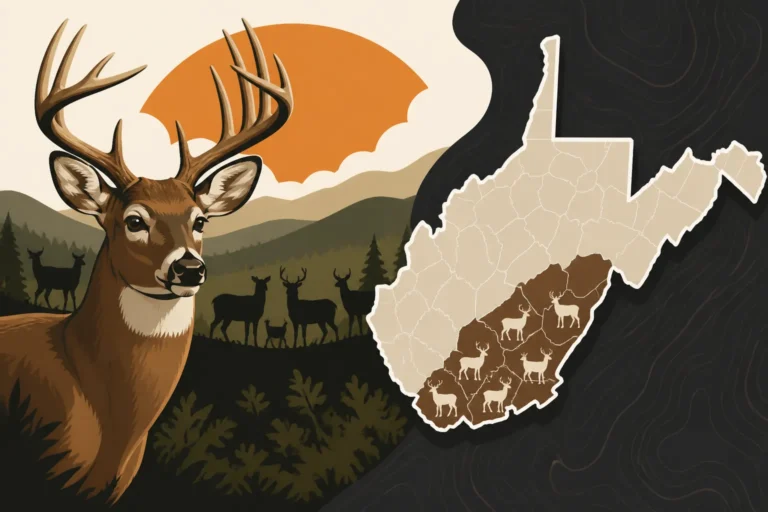
Historically, and currently, the southern and southwestern regions of West Virginia have seen some of the most consistent and dense populations of feral hogs. Counties in this part of the state, particularly those bordering Kentucky and Virginia, have been identified as primary areas for Feral Swine Sightings in Southern West Virginia. This is largely due to the landscape: a mix of rugged, remote forested areas, interspersed with abandoned mine lands that have undergone reclamation, and river bottom agricultural fields. The extensive forest cover provides excellent hiding and bedding areas, while the diverse topography offers plenty of pockets where hogs can thrive undisturbed. Furthermore, the history of hog farming in Appalachia, combined with some of the more recent, unfortunate illegal releases, has contributed to their establishment here. The "Mountaineer Heritage Season" for bear hunting, for example, often overlaps with areas where hogs are also present, and hunters frequently report hog sightings in these regions, showcasing the overlap in the rugged terrain they both inhabit.
River Valleys and Agricultural Corridors
Beyond the southern coalfields, feral hogs have shown a clear preference for river valleys and adjacent agricultural corridors throughout the state. Rivers like the Guyandotte, Big Sandy, and portions of the Ohio River and its tributaries provide year-round water sources, crucial for hogs, especially for wallowing to cool down and deter parasites. The rich bottomland soils are perfect for rooting, allowing them to easily access tubers, roots, and invertebrates. And, of course, the proximity to croplands offers a buffet of high-energy food sources, leading to significant West Virginia Feral Hog Diet and Rooting Damage to corn, soybeans, and other crops. These areas, while often privately owned, represent prime real estate for expanding hog populations. Hunters or landowners using tools like GoHunt to scout areas can often identify patterns of rooting damage along fencerows or field edges that indicate hog activity, providing critical intelligence for Night Hunting Hogs With Lights on Private Land or setting traps.
| Region of West Virginia | Likelihood of Feral Hog Presence | Typical Habitat Characteristics | Primary Concerns | Control Efforts Focus |
|---|---|---|---|---|
| Southern & Southwestern | High | Remote forests, reclaimed mine lands, river bottoms, mixed agriculture | Extensive rooting, crop damage, disease risk | Trapping, targeted removal, landowner cooperation |
| Central/Western River Valleys | Medium to High | Riverine forests, agricultural fields, dense creek bottoms | Crop depredation, habitat degradation | Trapping, opportunistic hunting |
| Eastern Panhandle | Low to Medium (increasing) | Farmland, woodlots, proximity to neighboring states (VA, MD) | Isolated sounders, agricultural damage | Prevention of spread, rapid response to sightings |
| Allegheny Highlands | Low | High-elevation forests, sparse agriculture, harsh winters | Rare but possible, often transient | Monitoring, immediate removal |
This table illustrates a general trend, but it's important to remember that sightings and new establishments can occur anywhere. The key takeaway is that these animals are not confined to one small pocket of the state; they are a mobile and persistent threat. Knowing where to focus efforts, and understanding the specific tactics needed for different types of terrain, from large-scale Deer Drives on West Virginia Public Land (though not specifically for hogs, the concept of pushing game through terrain is relevant for eradication efforts) to single-stand Treestand Setups in Monongahela National Forest for opportunistic takes, is critical for those looking to help curb their numbers. The dynamic nature of their populations means constant vigilance and adaptable strategies are required.
The challenge of "how many" becomes less about a definitive number and more about understanding the ever-present threat these animals pose. The West Virginia Department of Natural Resources (WVDNR) actively monitors reports and educates the public on identification and control, but it truly is an ongoing battle against a highly successful invasive species. It requires a concerted effort from wildlife professionals, landowners, and engaged hunters to make a dent in the West Virginia Hog Trapping Success Rates and ultimately protect our wild spaces.
Disclaimer
This article is for general informational purposes only and does not constitute professional advice. Laws, prices and regulations vary by location and change over time. Consult a qualified professional for guidance on your specific situation.