Night Hunting Hogs With Lights on Private Land
Feral hogs are a true plague on the landscape, tearing up fields, destroying crops, and impacting native wildlife, and for folks in West Virginia, dealing with these destructive creatures is a serious concern. They're notoriously elusive, often becoming almost entirely nocturnal in response to hunting pressure, which means that traditional daytime hunting methods often fall short. This comprehensive guide is here to shed some light, quite literally, on how to effectively and legally take on these pests through night hunting with lights on private land in West Virginia, giving you the tools and knowledge to reclaim your property.
Understanding West Virginia's Feral Hog Challenge
The spread of feral hogs across West Virginia isn't just an inconvenience; it's an ecological and agricultural crisis that hunters are increasingly called upon to address. These animals are incredibly adaptable, prolific breeders, and their rooting and feeding habits cause extensive damage. Trying to control them effectively requires understanding their behavior and utilizing every legal tool available, especially when they shift to a nocturnal existence.
The Destructive Nature of Feral Hogs
If you've ever seen a field or forest floor after a sounder of hogs has passed through, you know the devastation firsthand. Their incessant rooting for food sources like acorns, roots, and grubs turns productive land into a torn-up wasteland. This isn't just an eyesore; it impacts agricultural yields significantly, can destroy valuable timber stands by uprooting saplings, and even disrupts fragile ecosystems by destroying habitat for native species. We’re talking about thousands of dollars in damage to a farmer’s crops in a single night, and that’s a frustration many landowners in the state are intimately familiar with. They compete directly with native wildlife like deer, bear, and turkey for crucial food sources, especially in lean mast years. The sheer scale of their impact is often underestimated until you’re dealing with it directly on your own land.
Why Hogs are Nocturnal
Many hunters quickly discover that chasing hogs during daylight hours can be a lesson in futility. That's because, especially in areas with hunting pressure or high human activity, feral hogs quickly adapt to become almost entirely nocturnal. They'll spend their days bedded down in thick cover, only emerging under the cloak of darkness to feed and move. This switch is a survival mechanism, making them incredibly challenging to hunt by conventional means. Imagine trying to catch a ghost – that's often what it feels like when you're after a sounder that only moves after sunset. Their keen sense of smell and hearing also make daytime approaches incredibly difficult, as they can detect threats long before you get close. This nocturnal behavior is precisely why night hunting, with its specialized equipment and tactics, becomes not just an option, but often the most effective solution for control.
Population Dynamics and Eradication Challenges
Feral hogs are reproductive powerhouses. Sows can start breeding as young as six months old and can have two litters of four to eight piglets each year. Do the math, and you'll quickly realize that a small sounder can explode into an uncontrollable population in just a couple of years. This rapid reproduction rate means that simply harvesting a few hogs here and there won't make a dent in the overall population; you need to implement sustained, aggressive removal strategies. The goal isn't just to harvest individual animals but to eliminate entire sounders to truly impact their numbers. If you’re wondering "How Many Feral Hogs West Virginia Has" or what areas are most affected, you’ll find that their numbers are growing, and the challenge is significant.
Legal Framework for Night Hunting Hogs in WV
Before you even think about gearing up for a night hunt, it’s absolutely critical to understand the legal landscape in West Virginia. The rules for hunting feral hogs are unique, especially when it comes to hunting after dark and on private land. Misunderstanding these regulations can lead to serious penalties, so let's get into the specifics.
General West Virginia Hog Regulations
First and foremost, it's important to remember that West Virginia classifies feral hogs as an invasive species, not a game animal. This distinction is crucial because it means they are unregulated, and you can generally hunt them year-round without a closed season or bag limit on private land, with specific permissions and methods. This is a significant difference from deer or bear seasons, where strict dates and limits apply. However, there are still important considerations, particularly around private land access. Make sure you understand "West Virginia's Year-Round Hog Rule on Private Land" which underscores that while the season is open, permission is paramount. You can find more comprehensive details on the general rules in the "West Virginia Feral Hog Regulations" guide.
Specifics of Night Hunting and Lighting
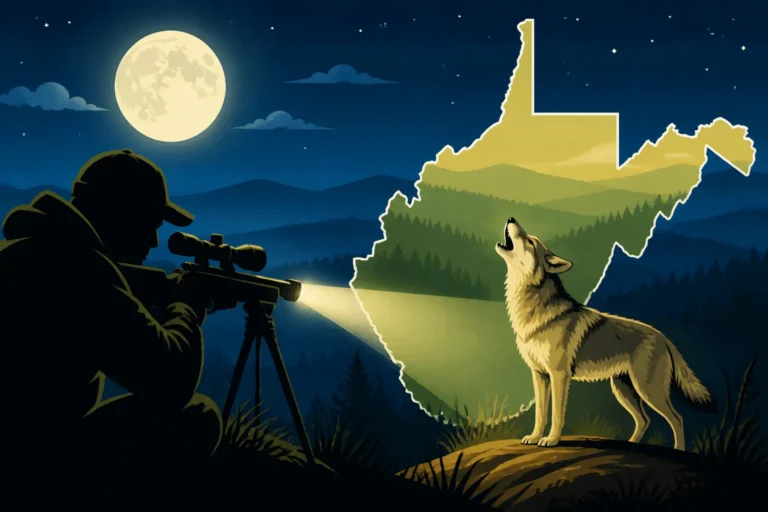
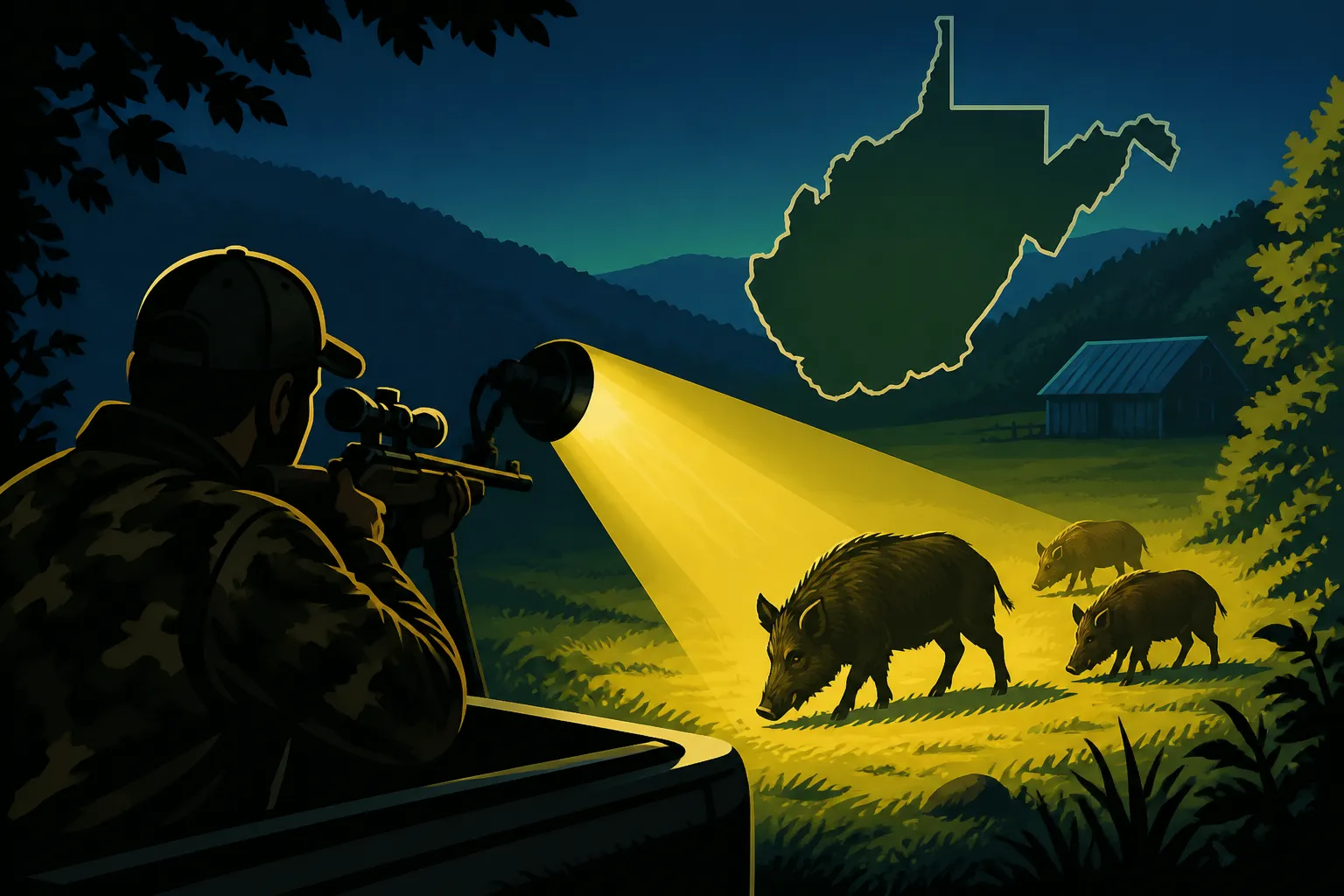
Now, for the really important part: night hunting with lights. In West Virginia, it is legal to hunt feral hogs at night on private land with the landowner's permission, and this explicitly includes the use of artificial lights. This is a privilege not extended to most other game species. You can use spotlights, headlamps, weapon-mounted lights, or even vehicle lights to illuminate your target. This is a game-changer for tackling those nocturnal sounders.
However, a critical nuance often overlooked is that while hunting with lights is permitted for hogs on private land, using lights to locate or spotlight other game animals at night from a vehicle or public road is generally illegal and considered poaching. Your intention must clearly be to hunt hogs. Be absolutely certain that you are on private land with express permission, and that your focus is exclusively on feral hogs to avoid any legal ambiguities. Unlike the rules for some predators like coyotes, where "Night Hunting Rules for West Virginia Coyotes" might vary or require different considerations, hog hunting offers this unique flexibility.
Permissible Weapons and Ammunition
When it comes to weapons, West Virginia's rules for feral hogs are quite permissive, allowing you to use a wide variety of firearms. Rifles, shotguns, handguns, muzzleloaders, and archery equipment are all generally legal. For night hunting, especially given the need for quick, clean kills and often multiple shots, centerfire rifles are usually the preferred choice. Calibers like .223/5.56, .308, 6.5 Creedmoor, or even larger options are common. The key is to choose a caliber that offers enough knockdown power for mature hogs, which can be surprisingly tough animals.
Shot placement is paramount, but a powerful enough round minimizes the risk of wounded animals escaping into the darkness, making recovery much harder. Unlike deer, where certain calibers like "Is a .243 Enough for West Virginia Whitetails?" are debated, for hogs, you generally want something with a bit more punch. For example, a good discussion around "Rifle Calibers for West Virginia Bear" might also provide insight into suitable calibers for large, resilient animals. Make sure your ammunition choice is appropriate for the task – expanding bullets are generally recommended for hunting to ensure humane kills.
Essential Gear for Night Hunting
Night hunting feral hogs is a specialized endeavor, and success hinges heavily on having the right equipment. You can't just grab your deer rifle and a flashlight; you need purpose-built gear that enhances your vision, ensures precise shooting, and prioritizes safety in the dark.
Illuminating the Night: Lights and Lasers
This is where the "lights" in night hunting come in. You'll need reliable, powerful illumination. There are several popular options, each with its pros and cons:
- Weapon-Mounted Lights: These attach directly to your rifle or shotgun and are ideal for keeping your hands free. Look for lights with high lumen output (1000+ lumens) and a focused beam for longer-range identification. Many come with pressure switches that allow for momentary activation, which can be crucial for scanning without alerting hogs too early. Colors like green or red can sometimes be less startling to animals, though white light is generally effective once you’ve committed to the shot.
- Spotlights/Handheld Lights: Powerful handheld spotlights can be used for initial scanning and locating hogs from a distance. Once a sounder is spotted, you can either switch to a weapon-mounted light or have a partner operate the spotlight to provide sustained illumination while you aim.
- Headlamps: Essential for walking in and out, setting up, and field dressing after the shot. A good headlamp with adjustable brightness and a red-light option (to preserve night vision) is invaluable.
- Laser Sights/Illuminators: Infrared (IR) lasers can be used with night vision devices to provide a visible aiming point only detectable through NV. Visible green or red lasers can also be mounted to weapons, offering a quick aiming solution, especially useful for fast-moving targets or when taking multiple hogs from a sounder.
The choice often comes down to personal preference and budget, but having at least a powerful weapon-mounted light and a reliable headlamp is non-negotiable for safety and effectiveness.
Advanced Optics: Thermal and Night Vision
While lights are effective, thermal and night vision (NV) optics take night hunting to an entirely new level. These technologies allow you to see in complete darkness, detecting the heat signatures of animals (thermal) or amplifying ambient light (night vision).
- Thermal Optics: Thermal scopes and monoculars are arguably the most effective tools for locating hogs at night. They detect temperature differences, making hogs stand out like beacons against a cooler background, even in thick brush. You can scan vast areas quickly and spot hogs that would be completely invisible to the naked eye or even a spotlight. Many hunters use a thermal monocular for scanning and then switch to a traditional rifle scope with a weapon light for positive identification and the shot. Keep in mind the specific "Thermal and Night Vision Rules in West Virginia" to ensure you are compliant with all regulations.
- Night Vision Optics: NV devices amplify existing light (starlight, moonlight, ambient glow) to create a green-tinted image. They offer better detail recognition than thermal, which can be important for positive identification of your target and assessing the background. NV scopes are excellent for shooting, while NV monoculars or binoculars can be used for scanning.
Both thermal and night vision significantly increase your detection and engagement range in the dark, allowing for more strategic approaches and often more successful hunts. While they represent a significant investment, many serious hog hunters consider them indispensable.
Weapon Systems and Ammunition Choices
Your choice of firearm and ammunition is critical for humane and effective night hunting. As mentioned earlier, centerfire rifles are generally favored due to their accuracy, range, and stopping power.
- Rifles: AR-platform rifles chambered in .223/5.56, .300 Blackout, or .308 are extremely popular for hog hunting. Their semi-automatic action allows for quick follow-up shots on multiple animals within a sounder. Bolt-action rifles in similar calibers are also excellent for precision. Ensure your rifle is zeroed correctly for the distances you anticipate shooting, which might be different from your typical deer hunting setup given the closer range potential of night hunting setups. Consider how you handle "Rifle Setups for West Virginia Deer Hunting" and adapt that knowledge.
- Ammunition: For hogs, expanding bullets like soft points, bonded bullets, or controlled expansion rounds are recommended. Avoid full metal jacket (FMJ) ammunition, as it often pokes a clean hole through without sufficient energy transfer for a quick kill. Consider the tough hide and bone structure of a hog; a bullet designed for penetration and expansion is key. You'll want to avoid leaving wounded hogs to suffer or escape, especially in the dark.
Having a sturdy bipod or shooting sticks can also be invaluable for stability when taking shots in the dark, especially from a kneeling or sitting position. Given the often rough terrain of West Virginia, this kind of stable shooting platform is more important than ever.
Tactics and Strategies for Success
Night hunting hogs isn't just about showing up with a powerful light; it requires careful planning, understanding hog behavior, and executing a well-thought-out strategy. The element of surprise is your greatest ally.
Pre-Hunt Scouting and Surveillance
Even though you’ll be hunting at night, your daytime scouting efforts are paramount. Feral hogs are creatures of habit, often following consistent travel routes between bedding areas and feeding grounds. You need to identify these patterns.
- Daylight Reconnaissance: Walk the property during the day, looking for fresh sign: rooting, tracks, scat, and rubbed trees. Pay close attention to areas around agricultural fields, creek bottoms, and dense thickets. These are prime areas where hogs feed and bed. A good mapping tool can be your best friend here. While GoHunt is a fantastic resource for general mapping and terrain analysis, especially for its detailed satellite imagery, remember to cross-reference with local WVDNR resources for West Virginia-specific regulations and public land boundaries if you're ever near the edge of a private parcel. Knowing exactly where the "Scrape Lines Along a Logging Road" are or identifying "Where Monongahela Forest Bucks Bed" (though for deer, the same scouting principles apply to hogs) can give you huge advantages.
- Trail Camera Deployment: Trail cameras with infrared flash are invaluable for confirming hog activity times and patterns. Set them up on trails leading to food sources or near active rooting areas. This intelligence will tell you exactly when the hogs are showing up, allowing you to time your hunt for maximum effectiveness. You might learn that hogs consistently hit a particular field between 11 PM and 2 AM, for example.
- Thermal Scanning: If you have access to a thermal monocular, use it to scan likely areas after dark before your actual hunt. This can give you a real-time understanding of where hogs are entering fields or moving through timber, allowing you to fine-tune your ambush locations.
Gathering this intelligence helps you pick the best approach, set up in the right spot, and be there when the hogs are most active, preventing wasted hours sitting in the dark.
Setting Up Your Ambush
Once you’ve done your scouting, it’s time to set up for the hunt. The goal is to position yourself where you can intercept hogs discreetly and have a clear, safe shot.
- Choosing Your Location: Good locations often involve field edges where hogs come to feed, pinch points in timber, or trails that hogs use to cross open areas. Consider the wind direction carefully; hogs have an incredible sense of smell, and a shifting wind can ruin your hunt in an instant. Avoid setting up directly downwind of known travel routes.
- Ground Blinds vs. Stands: Portable ground blinds are excellent for night hunting because they offer concealment, a stable shooting rest, and a barrier against detection. Brush it in well, as you would with a "Brushing In a Blind on a Field Edge" for deer, to break up its outline. Elevated stands can also work, especially if you have an established stand that provides a good vantage point and a safe shooting angle into a field. Remember to plan your entry and exit routes carefully to avoid spooking game, even before you start hunting.
- Creating a "Kill Zone": Identify landmarks or range specific points in your shooting lane during daylight hours. This allows you to quickly estimate distances in the dark once hogs appear. Clear any obstacles that might deflect a bullet. Having a good understanding of "Setting Up on a Potomac Valley Field Edge" or similar terrain can provide valuable insights.
The more prepared your setup, the less you'll have to adjust in the dark, which reduces your chances of being detected.
The Stalk and Shot Opportunity
This is the moment of truth. Patience and a calm demeanor are crucial when hogs finally appear.
- Patient Observation: Whether you’re using thermal, night vision, or just scanning with a spotlight, identify the hogs as early as possible. Watch their behavior. Are they feeding calmly? Are they moving quickly? Wait for them to settle into a pattern before making your move or preparing to shoot.
- The Approach: If you need to move closer, do so slowly and deliberately, using cover and paying attention to the wind. Take advantage of any noise they make while feeding to mask your movements. When using lights, a quick flash and then dimming or turning off can sometimes cause them to freeze briefly, giving you a chance to get set.
- Positive Identification and Shot Placement: Before you take any shot, positively identify your target as a feral hog. Never shoot at just "eyes in the dark." Once identified, aim for the "crease" behind the hog's ear or just behind the front shoulder for a vital shot. Hogs have a tough "shield" over their shoulders, so a well-placed shot is essential for a clean kill. If you're going to take multiple hogs, aim to take the largest or lead sow first, as this can sometimes disorient the sounder and give you more shooting opportunities.
- Follow-Up Shots: Be prepared for follow-up shots. Feral hogs are tough and can cover ground quickly even when mortally wounded. If possible, keep shooting until the hog is down and not moving. This is where semi-automatic rifles shine, allowing for rapid engagement of multiple targets.
The adrenaline will be pumping, but focusing on these steps will maximize your chances of success and ensure a humane harvest.
Safety First: Considerations for Night Operations
Hunting at night with lights adds several layers of complexity and risk compared to daylight hunting. It's not a casual undertaking; it demands heightened awareness, strict adherence to safety protocols, and clear communication, especially if you're hunting with a partner or group.
Communication and Team Safety
If you're hunting with anyone else, communication is absolutely paramount. The risks of friendly fire are significantly elevated in the dark.
- Pre-Hunt Briefing: Before you even step foot in the field, have a thorough discussion about roles, responsibilities, and shooting lanes. Clearly define each hunter's area of responsibility and lines of fire. Discuss contingencies for wounded animals and recovery.
- Radios or Hand Signals: Use two-way radios with earpieces or pre-arranged hand signals (if within close proximity and visibility) to communicate your location, target acquisition, and intentions. This is not the time for shouting across a field.
- Positive Identification Protocol: Establish a strict protocol for positive target identification. Never assume; always confirm. If using lights, ensure only the shooter or designated spotter is illuminating the target once a shot is imminent. Avoid sweeping lights across other hunters.
- Never Walk While Pointing: It sounds basic, but in the dark, it's easier to violate the cardinal rule of firearm safety. Always know where your muzzle is pointed, and never walk with a loaded firearm pointed in a direction that could endanger another person.
These measures might seem overly cautious, but they are absolutely essential for ensuring everyone goes home safe.
Positively Identifying Your Target and Backstop
This is the most critical safety aspect of night hunting, even more so than in daylight. The reduced visibility magnifies the potential for misidentification and unsafe shots.
- Confirm, Confirm, Confirm: Before pulling the trigger, use your light or optics to meticulously confirm that what you are aiming at is, in fact, a feral hog. Do not rely on sound or fleeting glimpses. Wait until you have a clear, unmistakable image of the animal. This might mean waiting a few extra seconds, but it's a non-negotiable step.
- Know Your Backstop: Just because you're shooting at night doesn't mean your bullets disappear into the void. Every shot must have a safe and identifiable backstop. This is incredibly challenging in the dark, so you must factor it into your setup. Are you shooting into a hill? A thick treeline? Make absolutely certain that your bullet will not travel beyond your target and into an unsafe area, potentially endangering people, livestock, or property. This is particularly important for those hunting near residential areas or with neighbors close by. Remember West Virginia's "West Virginia Firearms Discharge Setback Rules" which also apply to private land.
- Field of View and Situational Awareness: While your weapon light or thermal optic provides a narrow view, you must maintain broader situational awareness. Be aware of your surroundings, potential obstacles, and where other hunters (if any) are located. A tool like the GoHunt app can be useful for pre-planning your shots and understanding terrain features that could serve as natural backstops, or where trails lead off your property.
Never compromise on target identification or backstop safety. The consequences are too severe.
Post-Shot Recovery and Field Care
The hunt doesn't end when the hog hits the ground. Recovering your animal in the dark presents its own set of challenges.
- Marking the Shot Location: If a hog runs after the shot, immediately mark the exact location where the hog was standing when you fired. This could be with a piece of reflective tape, a light left on the ground, or a distinct landmark. This is crucial for initiating a blood trail or search pattern.
- Safe Tracking: Begin tracking only after you’ve ensured all firearms are made safe and unloaded, or at least pointed in a safe direction and on safety. Use your powerful headlamps and spotlights to look for blood, tracks, or disturbed vegetation. Feral hogs, especially wounded ones, can be dangerous, so proceed with caution.
- Field Dressing: Once recovered, field dressing in the dark requires good lighting and careful handling. A strong headlamp and a sharp knife are essential. Be mindful of surroundings and stay alert for other animals attracted to the carcass. Since hogs are an invasive species, the carcass handling rules are less stringent than for CWD-affected deer, but proper hygiene and swift processing are always recommended, particularly if you plan to consume the meat. Information on "West Virginia Feral Hog Regulations" will remind you that while you can't transport live hogs, processed meat and carcasses are typically fine. For more on "Feral Swine Sightings in Southern West Virginia" or details about their spread, remember these animals are not native, and their presence impacts the ecosystem.
Disclaimer
Always consult the latest West Virginia Division of Natural Resources (WVDNR) hunting regulations before any hunting activity, as laws can change. This guide is for informational purposes only and does not supersede official state regulations.